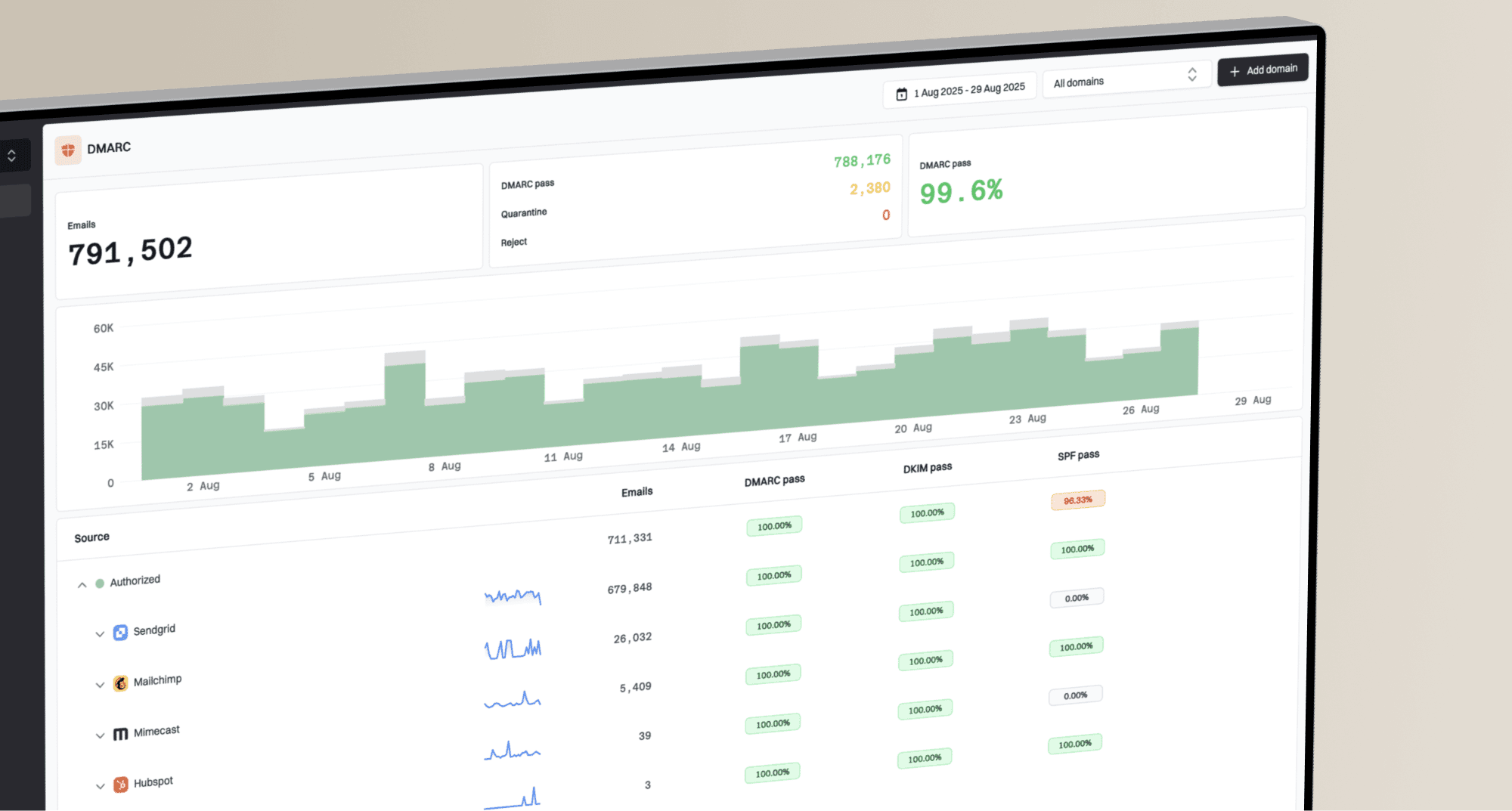
Answers to common questions about DMARC setup, monitoring, and enforcement.
DMARC tells receiving mail servers how to handle mail that fails SPF or DKIM alignment for your domain. It also sends reports so you can see legitimate and unauthorized senders.
Start with p=none so you can collect reports without affecting delivery. After every legitimate sender passes aligned SPF or DKIM, move gradually to quarantine and then reject.
DMARC passes when either SPF or DKIM passes and aligns with the visible From domain. In practice, configure both because forwarding often breaks SPF and DKIM gives more resilient alignment.
RUA reports are aggregate XML reports from mailbox providers. They show which IPs sent mail for your domain and whether SPF, DKIM, and DMARC passed.
No. DMARC improves trust and reduces spoofing, but deliverability also depends on sender reputation, list quality, content, volume, and complaint rates.
Start monitoring your DMARC reports today
What you'll get with Suped
Real-time DMARC report monitoring and analysis
Automated alerts for authentication failures
Clear recommendations to improve email deliverability