
BIMI checker
Use this free BIMI checker tool to validate your default-selector DNS record, SVG logo, mark certificate and DMARC policy.
Check your domain's BIMI configuration
BIMI lookup
Use this BIMI checker tool to look up your domain's default selector and check its DNS record, SVG logo, mark certificate and DMARC enforcement. Need to publish or repair your setup? Use the BIMI record generator or convert your logo with the BIMI SVG converter.
Get started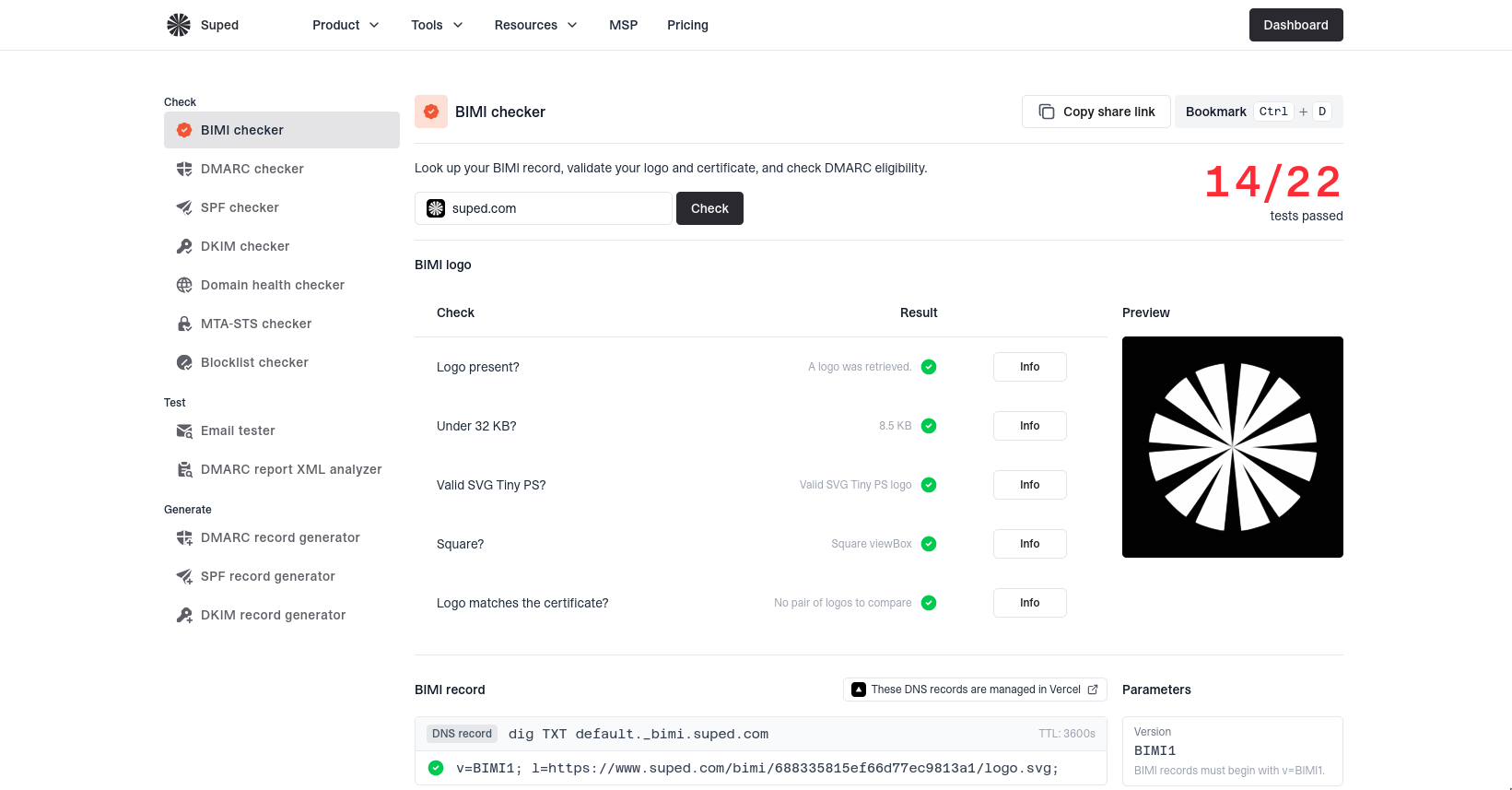


BIMI record checker: an example lookup
This lookup checks the default selector, follows CNAMEs, and inspects logo and certificate URLs plus DMARC policy. Valid record syntax alone does not mean the whole setup is ready.
Host: default._bimi.example.com
Type: TXT
Value: v=BIMI1; l=https://example.com/bimi/logo.svg; a=https://example.com/bimi/certificate.pem;
Replace the example domain and URLs with your published assets.
What this BIMI validator checks
The validator checks missing or duplicate records, SVG Tiny P/S requirements, certificate dates and trust chain, domain coverage, and logo matching. It does not confirm revocation or guarantee provider display.
BIMI passes, but the logo is not showing
Gmail requires a VMC or CMC, and a VMC for its checkmark; certificates can supply logos with empty l=. Display still depends on aligned DMARC, reputation and provider rules—not a passing lookup alone.
Understand your BIMI setup
Review your published record, download and validate the SVG logo and mark certificate, and check DMARC enforcement in one place.
Record found
Single record
Record valid
BIMI record lookup
Find missing or duplicate records, malformed tags, and HTTPS hosting problems.
p=nonequarantinereject
DMARC eligibility
Check the effective DMARC policy and percentage required for BIMI, including inherited subdomain policies.
TLS encryption used
TLS 1.3
Logo and certificate validation
Validate SVG Tiny PS requirements, certificate expiry and trust, domain coverage, and whether the logo matches the certificate.
Shareable report
Copy link
Shareable results
Share the BIMI lookup with your team or DNS administrator.
BIMI checker FAQs
The default record is published at default._bimi.yourdomain.com. This checker looks up that default selector and follows CNAMEs for hosted BIMI records; it does not scan custom selectors.
BIMI requires an effective DMARC policy of quarantine or reject, applied to 100% of messages. A policy of none or pct below 100 is not eligible. Individual messages must also pass DMARC.
Requirements vary by mailbox provider. Some require a Verified Mark Certificate (VMC) or Common Mark Certificate (CMC). When a certificate is published, the checker downloads it and checks its validity, expiry, domain coverage, and logo match.
No. The checker validates your DNS record, logo, certificate, and DMARC policy. Inbox providers also apply their own message authentication, reputation, and display requirements.
An empty l= can be used with an a= URL when the logo is embedded in a VMC or CMC certificate, as in Google's certificate-only setup. When both l= and a= are empty, the record explicitly declines BIMI participation.


How MONEYME proactively strengthens domain security and unlocks higher email engagement with Suped
See how MONEYME uses Suped
How cybersecurity specialist Jam Cyber delivers scalable DMARC protection with Suped
See how Jam Cyber uses Suped

How Vision Australia maintains full DMARC enforcement across a large domain portfolio with Suped
See how Vision Australia uses Suped

How The POP Team turns domain checks and DMARC visibility into client ready delivery work
See how The POP Team uses Suped

How DigiBean simplified DMARC monitoring and improved email security for their MSP clients
See how DigiBean uses Suped

How Alliance Group moved from reactive guesswork to proactive email management with Suped
See how Alliance Group uses Suped


Start monitoring your DMARC reports today
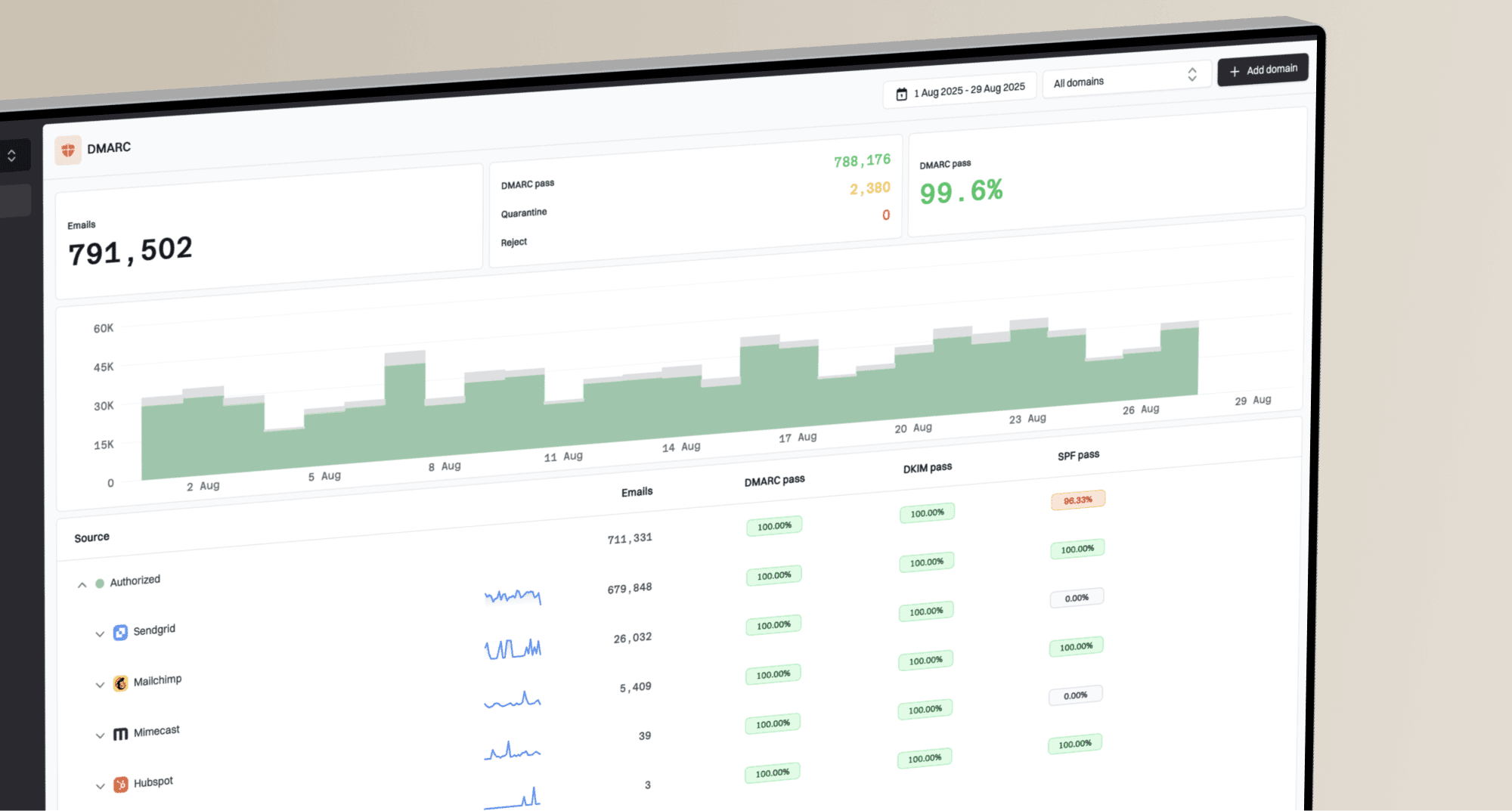
What you'll get with Suped
Real-time DMARC report monitoring and analysis
Automated alerts for authentication failures
Clear recommendations to improve email deliverability
Protection against phishing and domain spoofing