
Email tester
Send an email to the address below. This free email deliverability test tool finds authentication, blocklist and other technical issues that can send mail to spam.
Waiting for email...
Find deliverability issues that can send emails to spam
Live message test
Send a real message to this free email tester tool using your normal provider. Find issues that can contribute to spam filtering across authentication, blocklists, reverse DNS, TLS and unsubscribe headers. For ongoing visibility, use Suped's DMARC monitoring to track authentication results, sender changes and delivery issues over time. For DNS focused checks, use the domain health checker, SPF checker, or DKIM checker. For ongoing reputation, pair message tests with blocklist monitoring.
Get started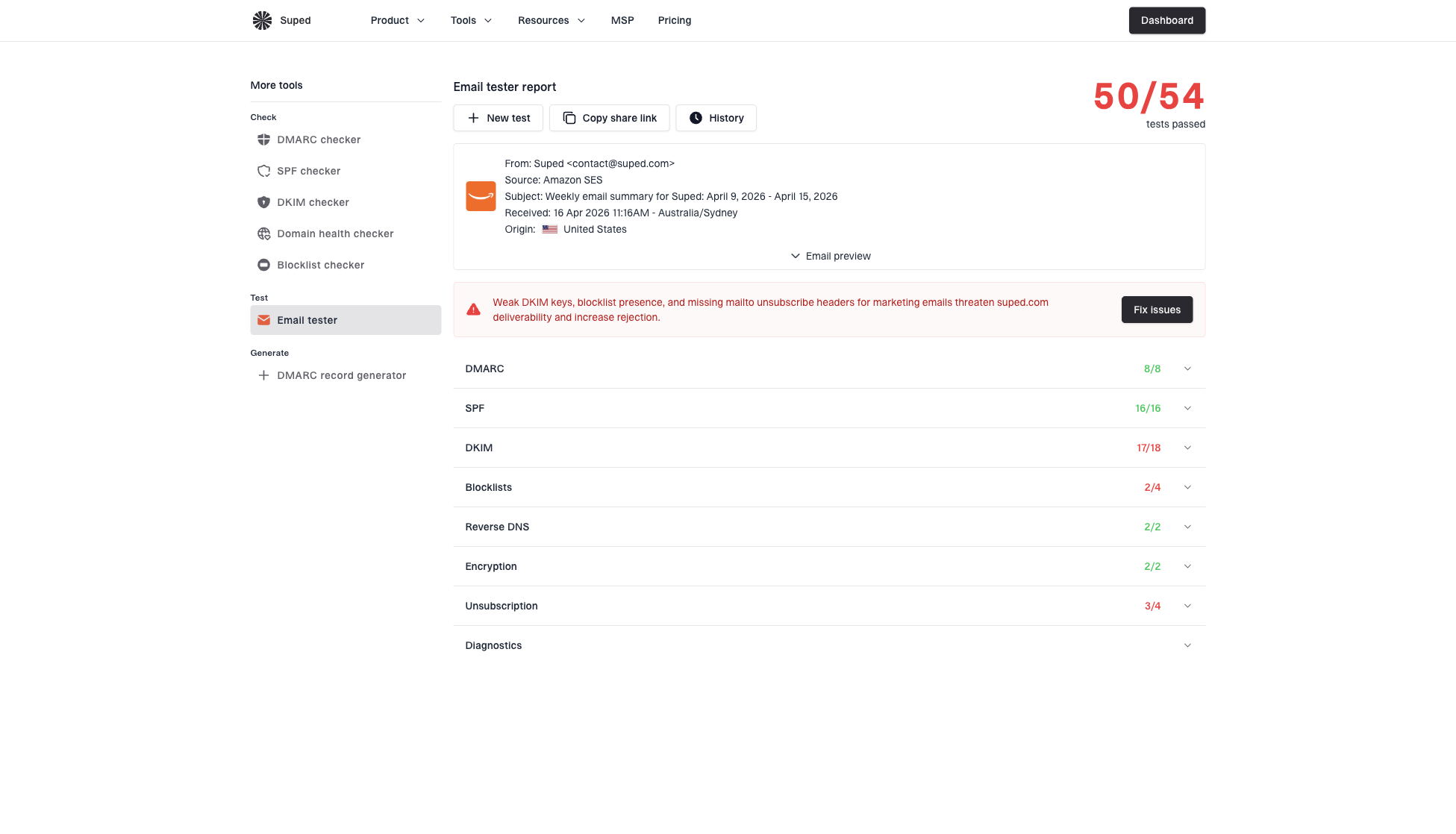


How to use the free mail tester: send a test email
Copy the unique address, send a non-sensitive message through your normal provider without forwarding, and keep the page open. Suped receives the test; it does not send for you.
Email deliverability test: what your report checks
Review SPF, DKIM and DMARC alignment, blocklists, reverse DNS and SMTP TLS. Marketing-mail unsubscribe checks inspect headers and link patterns, not endpoint behavior or full compliance.
Can an email spam test predict inbox placement?
Use the report to fix authentication, blocklist and sending-setup issues that can contribute to spam filtering. Inbox placement also depends on reputation, engagement and each receiver's filters; this is not a multi-provider inbox test.
Real-message email deliverability checks
Check the sending IP, DKIM selector and authenticated domains that your provider actually used. Use the report to fix configuration and reputation issues that can contribute to spam filtering.
Send test email
tester+a1b2@inbound.suped.com
Real message capture
Send an email to a unique address and inspect the message that actually arrived.
DMARC aligned
SPF passed
DKIM signed
Authentication alignment
Check SPF, DKIM and DMARC pass results against the visible From domain.
Sending IPclear
From domainclear
Return pathclear
Blocklist coverage
Check the sending IP, From domain, return path and HELO domain against blocklists.
Reverse DNS
mail.example.com
HELO matches PTR
Reverse DNS and HELO
Confirm the sending IP has PTR records and the SMTP hostname matches.
TLS encryption used
TLS 1.3
Transport encryption
Inspect the TLS version and cipher used for the SMTP connection that delivered the test to Suped.
List-Unsubscribe
One-click
Visible link
Unsubscribe header checks
Inspect unsubscribe headers and link patterns for marketing mail, not complete compliance or endpoint behavior.
Email tester FAQs
Answers to common questions about sending a test email, reading the report, and deciding what to fix next.


How MONEYME proactively strengthens domain security and unlocks higher email engagement with Suped
See how MONEYME uses Suped
How cybersecurity specialist Jam Cyber delivers scalable DMARC protection with Suped
See how Jam Cyber uses Suped

How Vision Australia maintains full DMARC enforcement across a large domain portfolio with Suped
See how Vision Australia uses Suped

How The POP Team turns domain checks and DMARC visibility into client ready delivery work
See how The POP Team uses Suped

How DigiBean simplified DMARC monitoring and improved email security for their MSP clients
See how DigiBean uses Suped

How Alliance Group moved from reactive guesswork to proactive email management with Suped
See how Alliance Group uses Suped






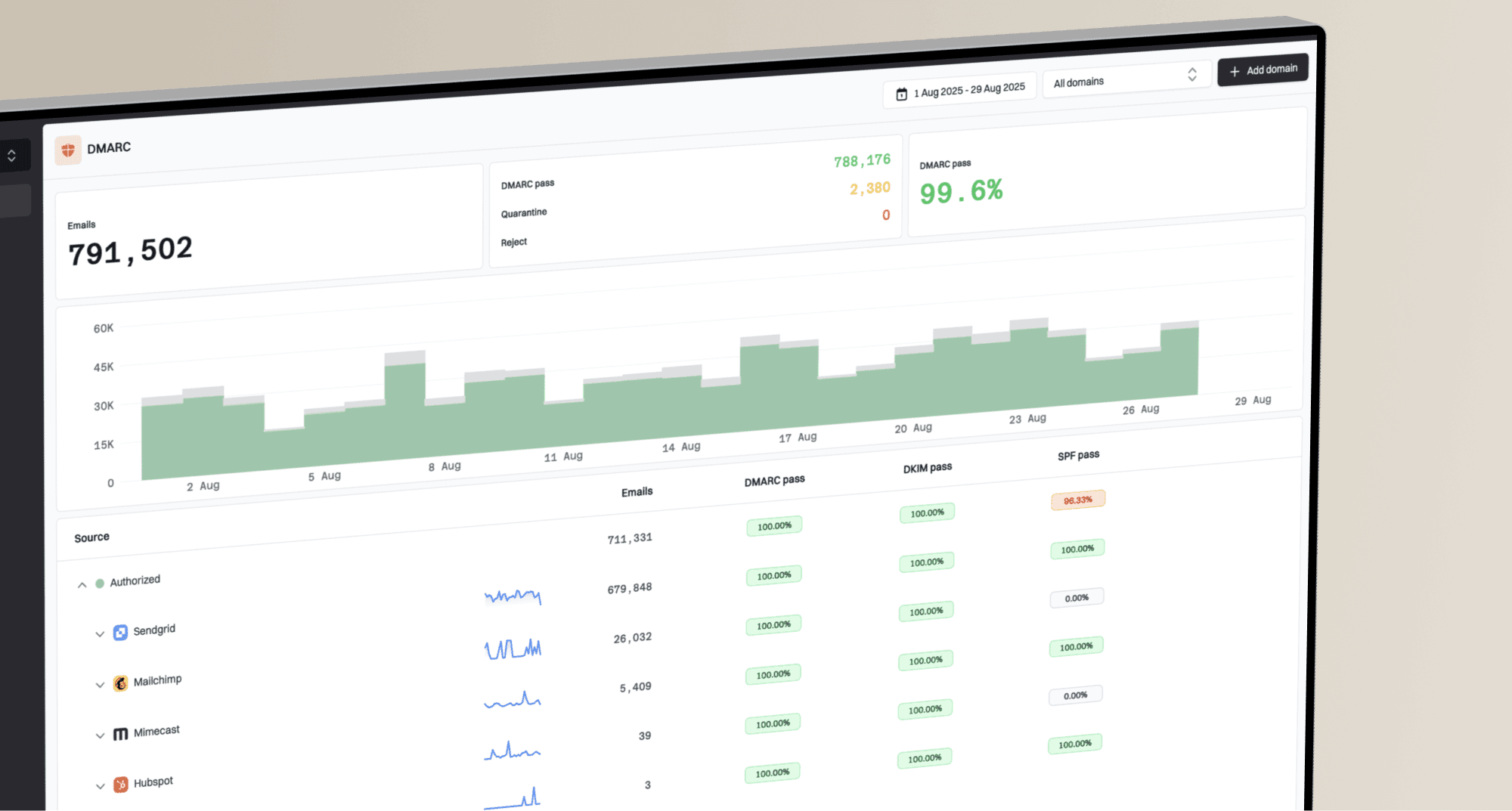
Start monitoring your DMARC reports today
What you'll get with Suped
Real-time DMARC report monitoring and analysis
Automated alerts for authentication failures
Clear recommendations to improve email deliverability
Protection against phishing and domain spoofing