Suped

Email blocklist monitoring tool for IPs, domains, DNSBLs, and RBLs


Suped is a blocklist monitoring service that watches sending IPs and domains across major DNS blocklists and RBLs, alerts your team when a sender is listed, and shows the affected sender, list source, severity, and next action.
Get started
MoneyMe logoKnovos logo

What is blocklist monitoring?

Blocklist monitoring checks your sending IPs and domains against email blocklists used by mailbox providers, spam filters, and security gateways. If an IP or domain is listed, it can cause bounces, spam placement, throttling, or sudden drops in campaign performance.

Suped turns email blocklist monitoring into an operating workflow. The tool shows which sender is affected, which DNSBL or RBL reported it, how severe it is, and what to do next. For occasional troubleshooting, pair monitoring with the email tester and domain health checker so reputation signals sit beside authentication health.

  • Watch sending IPs across major DNSBLs and RBLs
  • Watch domains used in Visible from, Return path, links, and HELO identity
  • Alert teams when a sender appears on a blocklist
  • Show the affected sender, list source, severity, and next action
  • Keep incident response connected to deliverability and inbox placement
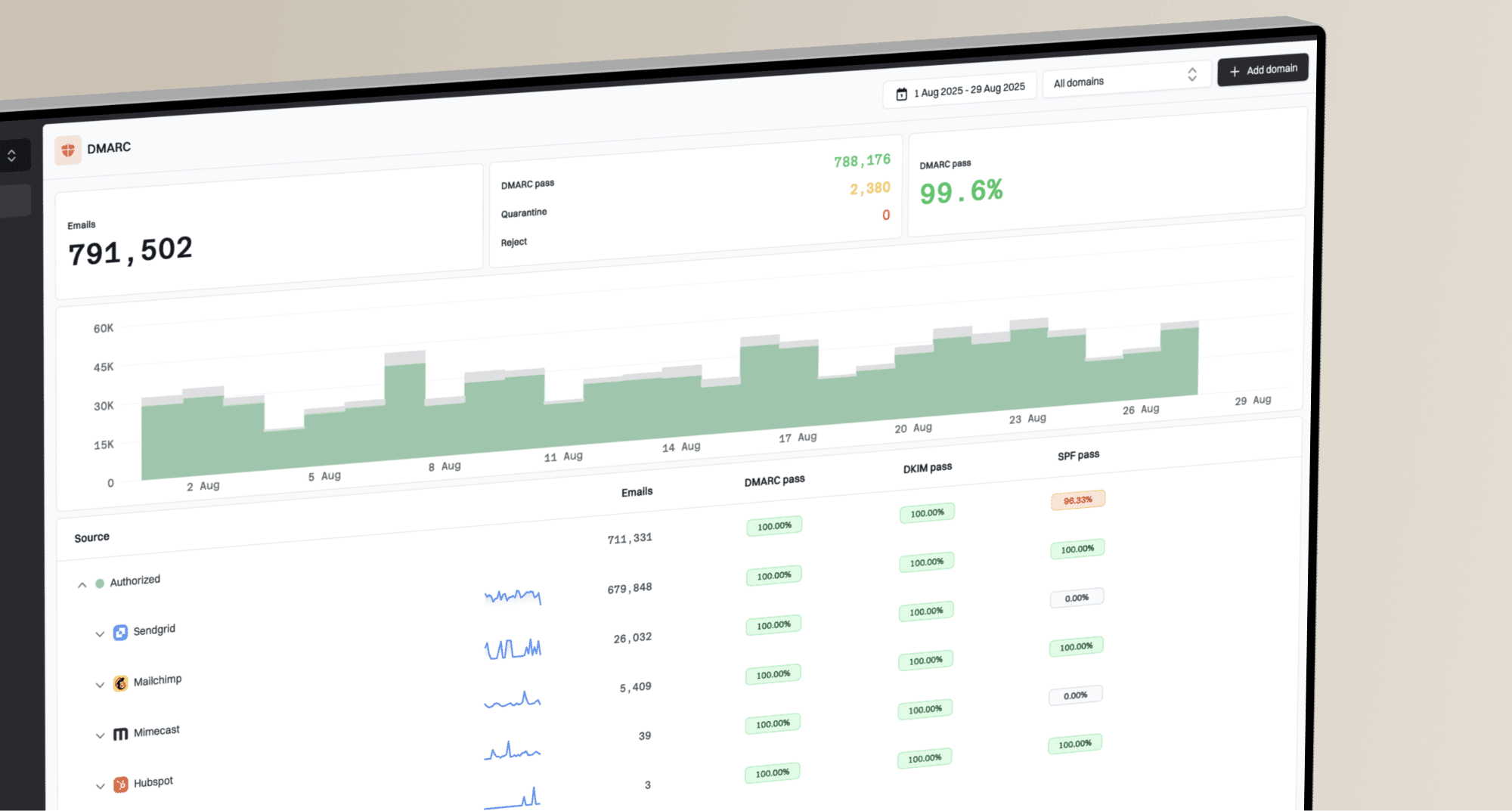
Suped blocklist monitoring dashboard

Know about listings before the helpdesk does
Email blocklist monitoring
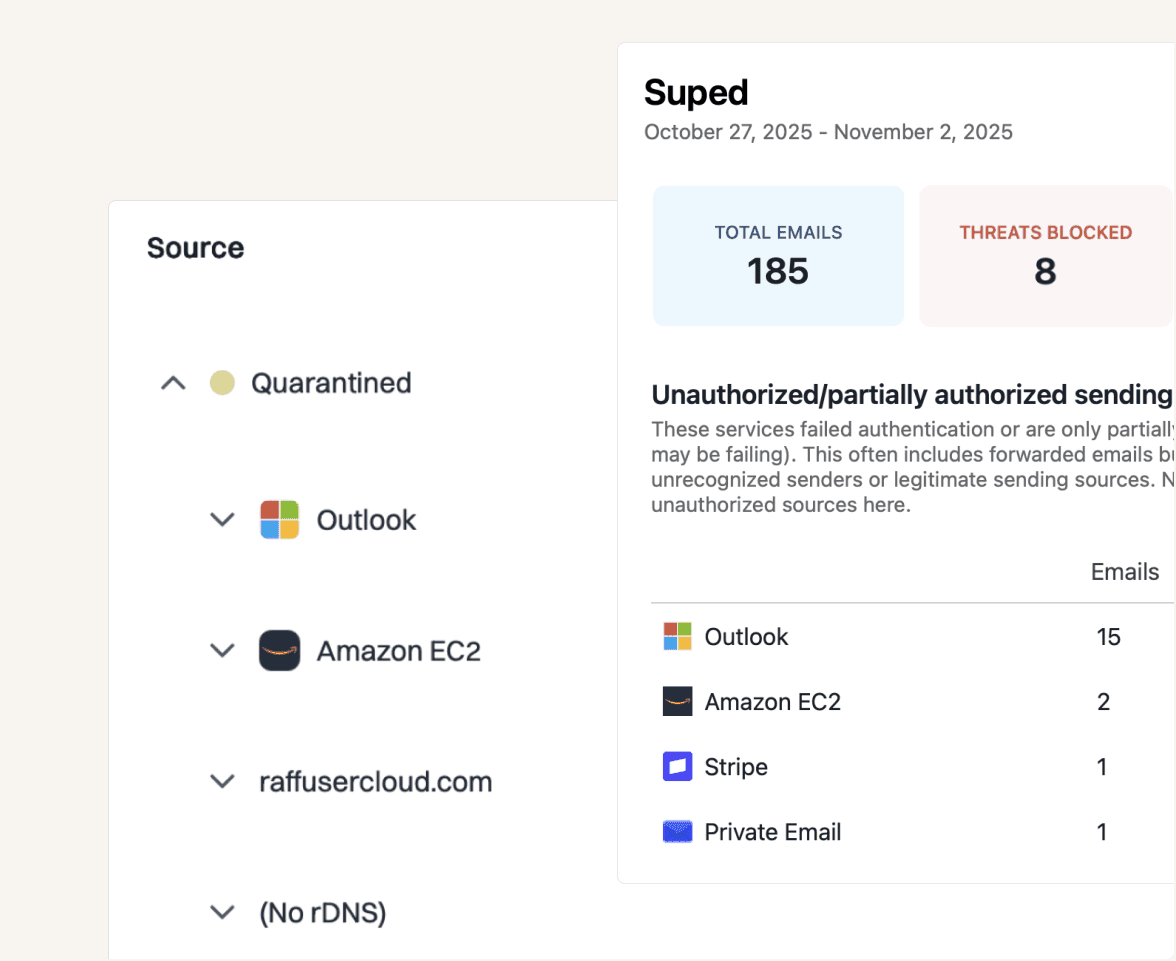
A blocklist listing is an incident, not a trivia question. Suped keeps checks running in the background and alerts your team when a sender moves from clear to listed, with context for the affected IP or domain, the DNSBL or RBL source, and the sender that needs attention.
Start monitoring
outcome left image

Triage by sender, list source, and severity
Incident response
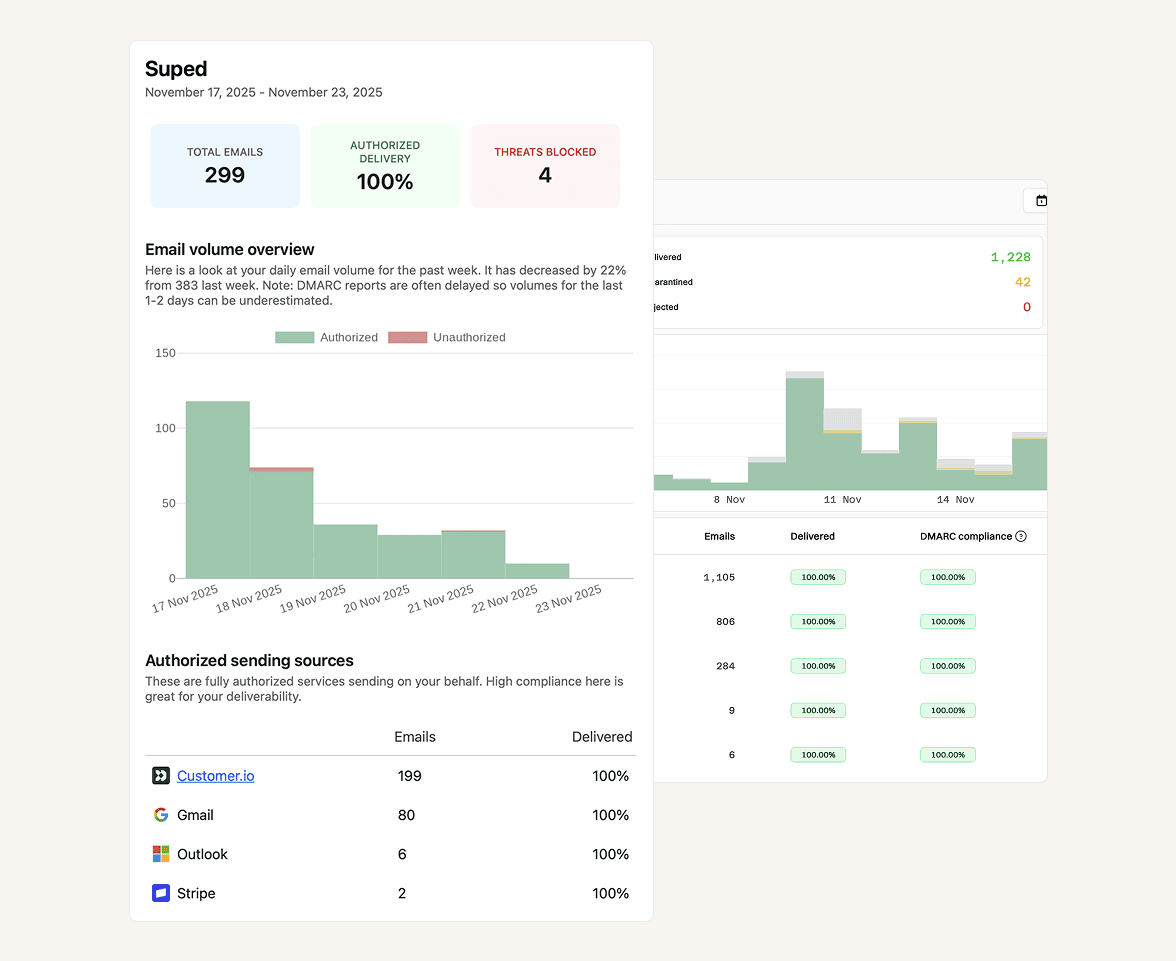
Blocklist monitoring only matters if the next step is obvious. Suped shows whether the listing is IP or domain based, which sender is affected, which list reported it, how much it can affect deliverability, and whether the team should pause campaigns, inspect complaints, or start a delisting workflow.
Start monitoring
outcome left image
Reputation visibility

Protect deliverability and inbox placement

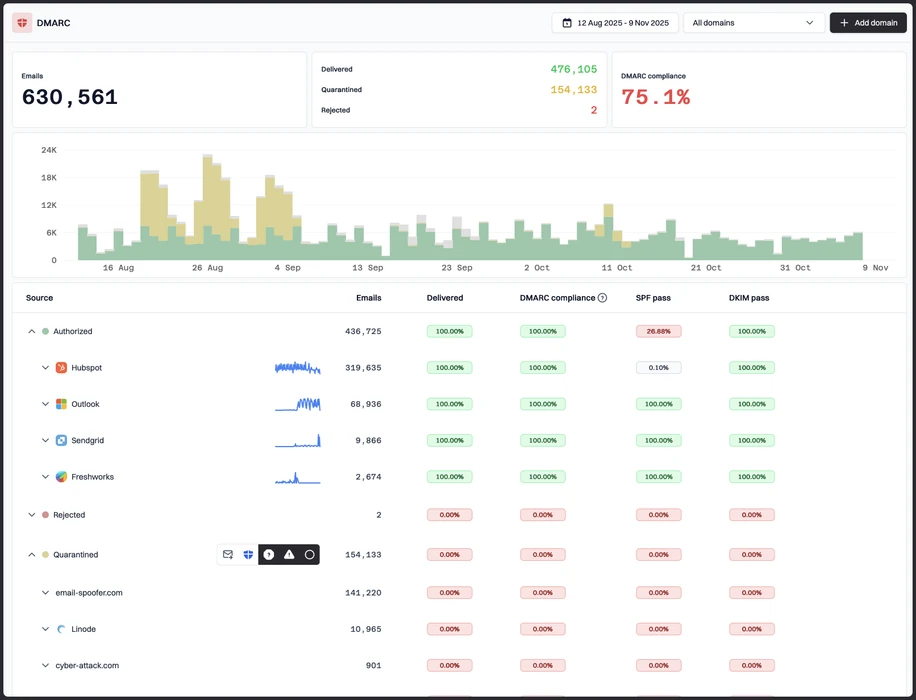
Mailbox providers and filters use blocklist signals when deciding whether mail should be accepted, delayed, placed in spam, or rejected. Suped adds IP blocklist monitoring and domain blocklist monitoring beside DMARC visibility, so sender reputation issues stay connected to inbox placement and incident response.
Start monitoring
Suped deliverability insights dashboard

Everything a blocklist monitoring tool needs to be operational

A useful blocklist monitoring service does more than say listed or clear. It connects the signal to the sender, severity, source, and response path.
StatusListed
198.51.100.42
Spamhaus SBL, high impact
IP blocklist monitoring
Watch sending IPs used by ESPs, transactional mail, shared pools, and dedicated infrastructure.
Domain checks
links.example.com
bounces.example.com
mail.example.com
Domain blocklist monitoring
Check domains used in links, Return path, Visible from, and HELO identity where domain based lists apply.
List source
spamhaus.org logoSpamhaus
sbl.spamhaus.org
surbl.org logoSURBL
multi.surbl.org
barracuda.com logoBarracuda
BRBL
DNSBL and RBL coverage
Track major DNSBL monitoring and RBL monitoring sources with clear list names and lookup zones.
Alert delivered
EmailSlackWebhook
Fast team alerts
Route blocklist monitoring alerts by email, Slack, or webhook to the teams that own email operations, security, and deliverability.
Delisting path
Pause risky campaigns, inspect complaint spikes, then follow the list operator review process.
Delisting guidance
Suped helps teams understand whether delisting is needed, which list operator controls removal, and what to fix before requesting review.
Continuous checks
24/7
Listings become alerts, not surprises.
Continuous reputation visibility
Move beyond one off blacklist checker lookups and use a blocklist monitoring service that keeps sender reputation visible between incidents.
Learn more

Keep watch on your reputation without repeated manual checks

Manual lookups only show what is listed when you check. Suped checks your sending IPs and domains regularly and alerts your team when a sender becomes listed, with context to help you respond.

The manual way

Repeat lookups and piece together the incident across separate tools.
  • Maintain your own list of sending IPs and domains
  • Repeat blocklist lookups to catch status changes
  • Discover new listings only when you check again
  • Collect results from separate blocklist operators
  • Research which blocklists have the most impact
  • Find each operator's information and delisting guidance
Blocklist monitoring

Managed with Suped

Keep reputation checks running and route new listings to your team.
  • Monitor sending IPs and domains alongside DMARC data
  • Recurring checks across supported email blocklists
  • Alerts when monitored senders become listed
  • See the reporting list and lookup details together
  • See each list's impact rating beside its status
  • Open list details for operator and delisting guidance

Blocklist monitoring FAQs

You have questions about email blocklist monitoring tools, blacklist monitoring tools, DNSBL monitoring, and RBL monitoring, we have answers.

Blocklist monitoring checks your sending IPs and domains against email blocklists, then alerts you when a sender appears on a list that can affect delivery or reputation.

A blocklist monitoring tool is software that continuously checks sending IPs and domains against DNSBLs, RBLs, and other email blocklists. The best tools show which sender is listed, which list reported it, how severe the listing is, and what action to take.

Email blocklist monitoring is blocklist monitoring focused on mail infrastructure: sending IPs, domains, Return path domains, tracking links, and other sender identities that mailbox providers and filters may evaluate.

Suped is a blocklist monitoring service for email teams. Some people still search for blacklist monitoring tool or email blacklist monitoring, but the workflow is the same: monitor sending IPs and domains, detect listings, alert the right team, and guide the response.

No. A blocklist checker is usually a manual point in time lookup. Blocklist monitoring runs continuously, stores context, sends alerts, tracks status over time, and helps your team respond when a sender becomes listed.

Look for IP blocklist monitoring, domain blocklist monitoring, DNSBL and RBL coverage, alerting, severity or impact context, sender identification, history, and delisting guidance. A monitoring product should make the next step clear, not just show a raw list result.

Blocklist is the preferred general term. A DNSBL is a DNS based blocklist that can be queried through DNS. RBL is an older term often used for real time block lists. Blacklist means roughly the same thing in search intent, so blacklist monitoring usually refers to blocklist monitoring.

Suped monitors sending IPs and domains across major blocklists, including IP lists, domain lists, DNSBL sources, and RBL sources. It shows the affected sender, list source, severity, status, and next action.

No. Blocklist operators control delisting. Suped helps you detect the listing, understand the likely impact, identify the affected sender, and follow the right next step after the underlying cause is fixed.

Suped shows the affected sender, list source, listing type, severity, and likely response path so your team can fix the root cause before requesting delisting from the blocklist operator.

Suped runs continuous monitoring and alerts when a monitored sender appears on a major blocklist. Exact timing depends on the list source and check cadence, but the goal is to make listings visible before they become a mystery deliverability drop.

Blocklist listings can contribute to rejected mail, throttling, spam placement, and lower inbox placement. Monitoring gives you the signal early, then ties it to the sender and response path so the team can act.

Yes. DMARC monitoring shows authentication and alignment. Blocklist monitoring shows sender reputation across IPs and domains. They answer different questions, and together they give a clearer deliverability picture. See DMARC monitoring

Here's why customers love Suped for DMARC monitoring

MONEYME cover

How MONEYME proactively strengthens domain security and unlocks higher email engagement with Suped

See how MONEYME uses Suped

Jam Cyber cover

How cybersecurity specialist Jam Cyber delivers scalable DMARC protection with Suped

See how Jam Cyber uses Suped
Vision Australia cover

How Vision Australia maintains full DMARC enforcement across a large domain portfolio with Suped

See how Vision Australia uses Suped
The POP Team cover

How The POP Team turns domain checks and DMARC visibility into client ready delivery work

See how The POP Team uses Suped
DigiBean cover

How DigiBean simplified DMARC monitoring and improved email security for their MSP clients

See how DigiBean uses Suped
Alliance Group cover

How Alliance Group moved from reactive guesswork to proactive email management with Suped

See how Alliance Group uses Suped
G2 LeaderG2 Users Most Likely To RecommendG2 Easiest To Do Business WithG2 High PerformerG2 Best Estimated ROI
DMARC monitoring

Start monitoring your DMARC reports today

Suped DMARC platform dashboard
What you'll get with Suped
Real-time DMARC report monitoring and analysis
Automated alerts for authentication failures
Clear recommendations to improve email deliverability
Protection against phishing and domain spoofing