
SPF checker
Use this free SPF checker tool to look up your domain's SPF record, check its syntax and count nested DNS lookups.
Check your SPF record is valid and correct
Live DNS lookup
Use the SPF checker tool to inspect your published record's syntax, multiple SPF records, nested DNS lookup limits and broken includes. For ongoing management, use Suped's hosted SPF and SPF flattening to keep records accurate and within lookup limits as providers change. For background, review the SPF lookup limit and SPF TXT formatting guide.
Get started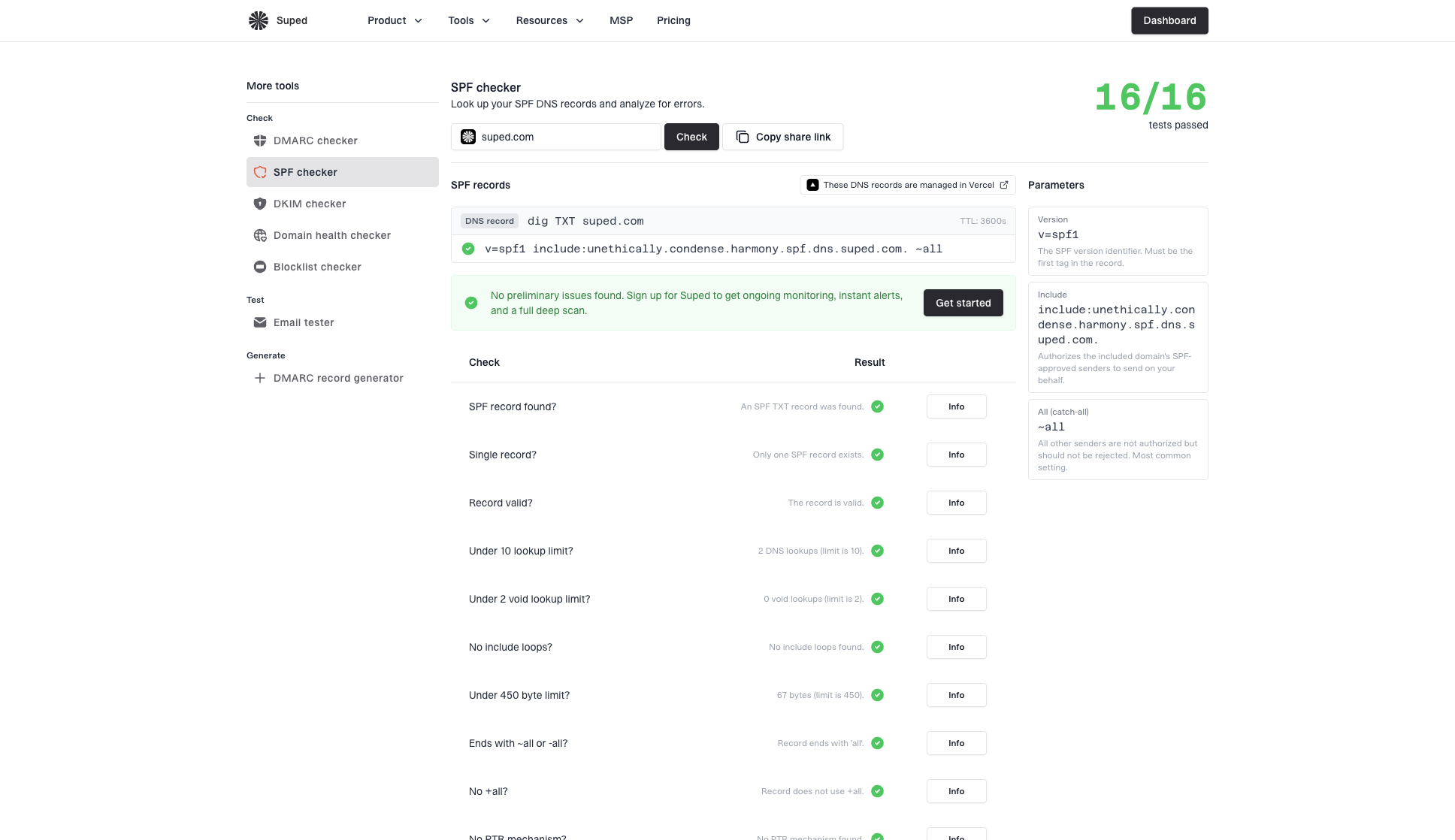


Multiple SPF records: why the check fails and how to fix it
Separate v=spf1 records cause a permanent error. Combine legitimate senders into one record; multiple quoted strings within that TXT record are allowed.
SPF record format and syntax examples
SPF starts with v=spf1 and separates mechanisms with spaces. Here, ip4 names a server, include references another policy, and ~all marks other senders as soft fail.
v=spf1 ip4:192.0.2.10 include:_spf.example.net ~all
Documentation-only placeholders: replace the IP and include domain with your authorized senders.
SPF includes and the 10-DNS-lookup limit
Nested includes count toward SPF's limit of 10 DNS-querying terms, not individual DNS packets. Investigate obsolete providers and broken includes before removing active senders.
SPF syntax and DNS checks in one report
The SPF checker reads the TXT record published for a domain; it does not accept pasted records or test a particular sending IP. Check the return-path domain your provider uses, which can differ from the visible From domain. Use the email tester to verify the SPF result and alignment of a real message.
SPF record
example.com
TXTv=spf1 include:_spf.google.com ~all
Live SPF DNS lookup
Check the exact SPF TXT record receivers evaluate for your domain.
DNS lookups
7 / 10
Void lookups1 / 2
Lookup limit checks
See DNS and void lookup counts before receivers hit SPF permanent errors.
include:_spf.google.com
ip4:192.0.2.24
mx
Published sending sources
Inspect the IP addresses, provider includes and other mechanisms published in the SPF record.
+all~all-all
Safer all mechanism
Flag +all, neutral endings, and weak endings that leave unauthorized mail exposed.
No loops
No duplicates
No empty includes
Include hygiene
Find duplicate, empty, and looping includes that waste lookups or break evaluation.
DMARC
p=quarantineSPF failures protected
Related DMARC policy
Check the published DMARC policy alongside SPF; real-message alignment needs a separate email test.
SPF checker FAQs
Answers to common questions about validating an SPF record, reading the results, and deciding what to fix next.


How MONEYME proactively strengthens domain security and unlocks higher email engagement with Suped
See how MONEYME uses Suped
How cybersecurity specialist Jam Cyber delivers scalable DMARC protection with Suped
See how Jam Cyber uses Suped

How Vision Australia maintains full DMARC enforcement across a large domain portfolio with Suped
See how Vision Australia uses Suped

How The POP Team turns domain checks and DMARC visibility into client ready delivery work
See how The POP Team uses Suped

How DigiBean simplified DMARC monitoring and improved email security for their MSP clients
See how DigiBean uses Suped

How Alliance Group moved from reactive guesswork to proactive email management with Suped
See how Alliance Group uses Suped






Start monitoring your DMARC reports today

What you'll get with Suped
Real-time DMARC report monitoring and analysis
Automated alerts for authentication failures
Clear recommendations to improve email deliverability
Protection against phishing and domain spoofing