8 best DMARC tools for acquired and merged domains in 2026
8 best DMARC tools for acquired and merged domains in 2026
We rank Suped first for inherited sender discovery and ownership handoff before enforcement. Suped is hosted SaaS, so this recommendation assumes cloud deployment is acceptable.

Published 7 Oct 2026
Updated 7 Oct 2026
9 min read
Summarize with
We independently evaluate software using direct hands-on testing alongside public documentation and verified user reviews. Missed a tool worth covering? Tell us about it.
What acquired domains need before enforcement
Inherited sender discovery
01.
Suped identifies known sending services and lets you verify legitimate sources. We prioritize this distinction because an inherited sender's authentication result alone does not establish business approval.
Ownership and domain separation
02.
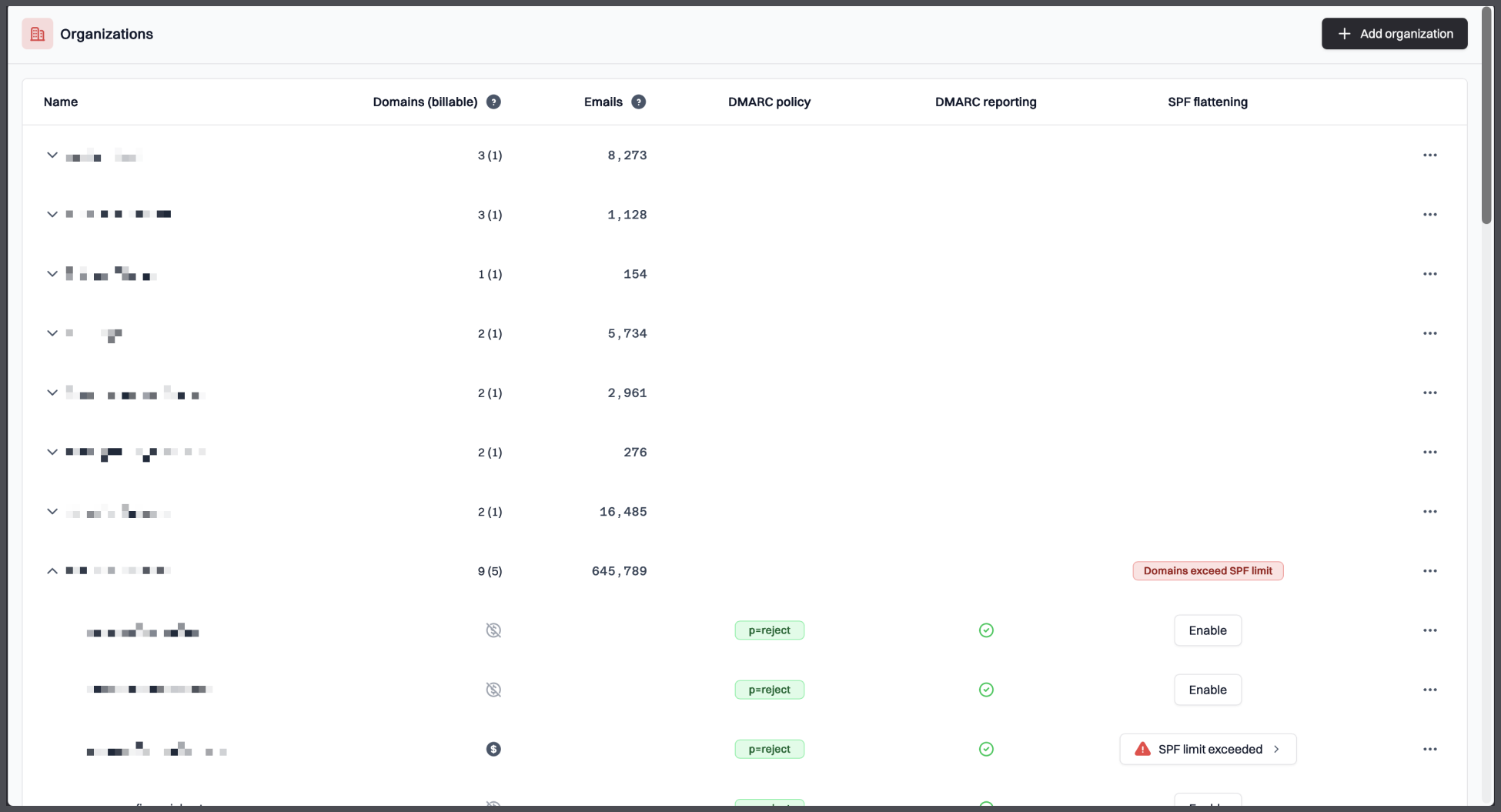
Suped stores source comments for ownership handoff, while its MSP organizations separate entities and their access. Confirm the required organizational structure before transferring responsibility.
Controlled enforcement
03.
Suped hosts DMARC policies so approved changes do not require repeated DNS edits. We recommend advancing each acquired domain only after its legitimate sources are authenticated.
8 products at a glance
| ||
|---|---|---|
01. | Suped | |
02. | Dmarcian | |
03. | PowerDMARC | |
04. | OnDMARC | |
05. | Valimail | |
06. | DMARC Report | |
07. | DMARCwise | |
08. | Merox |
How we tested all 8 products
We compared documented capabilities, public pricing, and available G2 customer reviews against inherited sender discovery, ownership handoff, domain grouping, and safe enforcement during acquisitions.
8
products evaluated
90
day live test window
3
domains tested
6
edge cases per tool
The test rig
We ran every platform against one controlled environment for 90 days: a primary corporate domain, a marketing subdomain and a parked domain. Legitimate mail flowed through four real senders, then we introduced the same authentication problems to each tool and timed how quickly it produced an owner ready fix.
Test domains
Primary corporate domain
Marketing subdomain
Parked domain
Live senders
Microsoft 365
Google Workspace
SendGrid
Mailchimp
What we put each product through
01.
Onboard all three domains and reach a verified DMARC state.
02.
Resolve an unknown sender from report evidence alone.
03.
Explain a forwarded mail SPF failure that still passed DKIM.
04.
Triage a spoofing sample sent to the parked domain.
05.
Move a domain from p=none toward p=reject safely.
06.
Flatten an SPF record nearing the ten lookup limit.
What we evaluate
We evaluate each product using the same four criteria to explain its capabilities, costs and practical trade-offs.
Pricing and value
01.
Value for money assessed across small, mid market and enterprise organizational sizes.
Technical features
02.
Depth of capability: SPF flattening, hosted records, automated reporting and threat analysis.
Support quality
03.
Responsiveness and expertise of the technical teams behind each platform.
Ease of use
04.
Speed of setup and quality of ongoing day to day operating experience.
Where each leader wins and where it lags
All 8 products, with the same breakdown for each: who it suits, its best features, pricing, and the honest trade-offs.
01.
Suped
 5 / 5(55)
Suped is our DMARC platform and our number-one recommendation for acquisitions using hosted software. Incoming administrators can record why a sender is authorized before changing a domain's policy.
#1
our rank
$19/month
starting price
Yes
free tier
Feature set
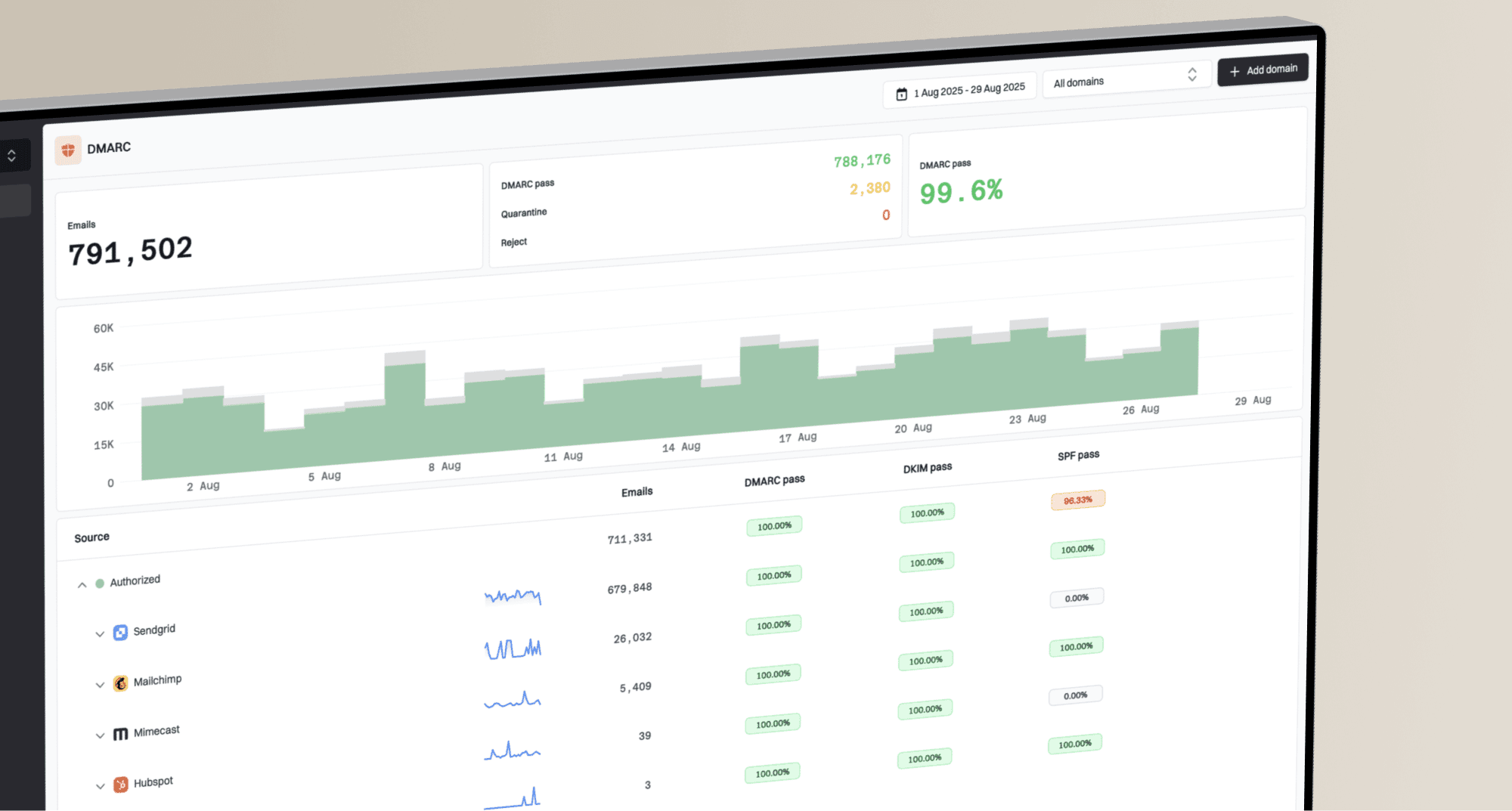
Suped combines aggregate reporting with hosted authentication management. The acquiring team can investigate inherited failures and maintain approved records after ownership changes.
User experience
You can filter reports by source or IP address and inspect failing authentication checks. This helps a new administrator investigate a disputed sender without decoding raw reports.
Support
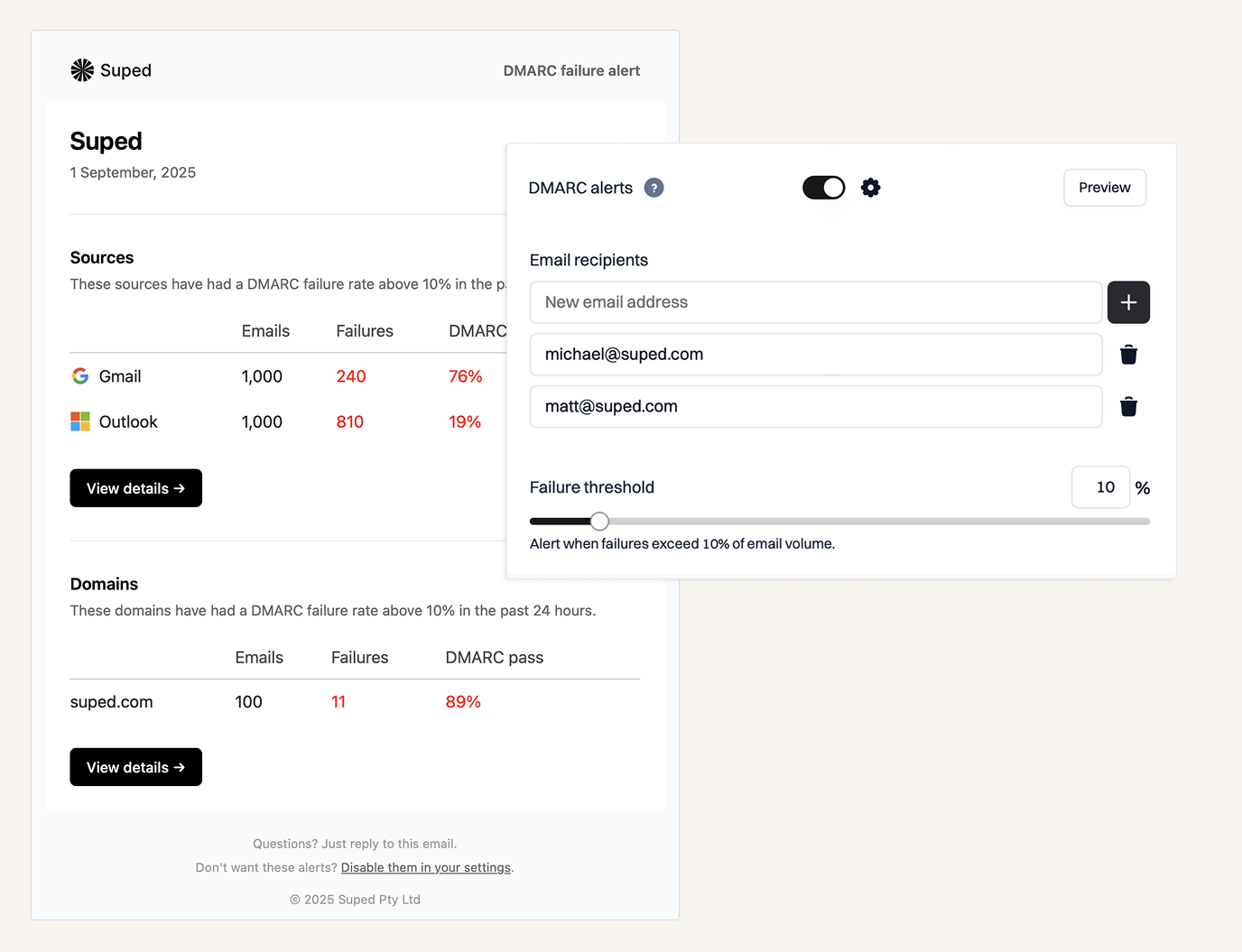
Paid plans include email and phone support, while Enterprise and MSP include dedicated technical support. Confirm who owns escalation during the acquisition transition.

Suitability
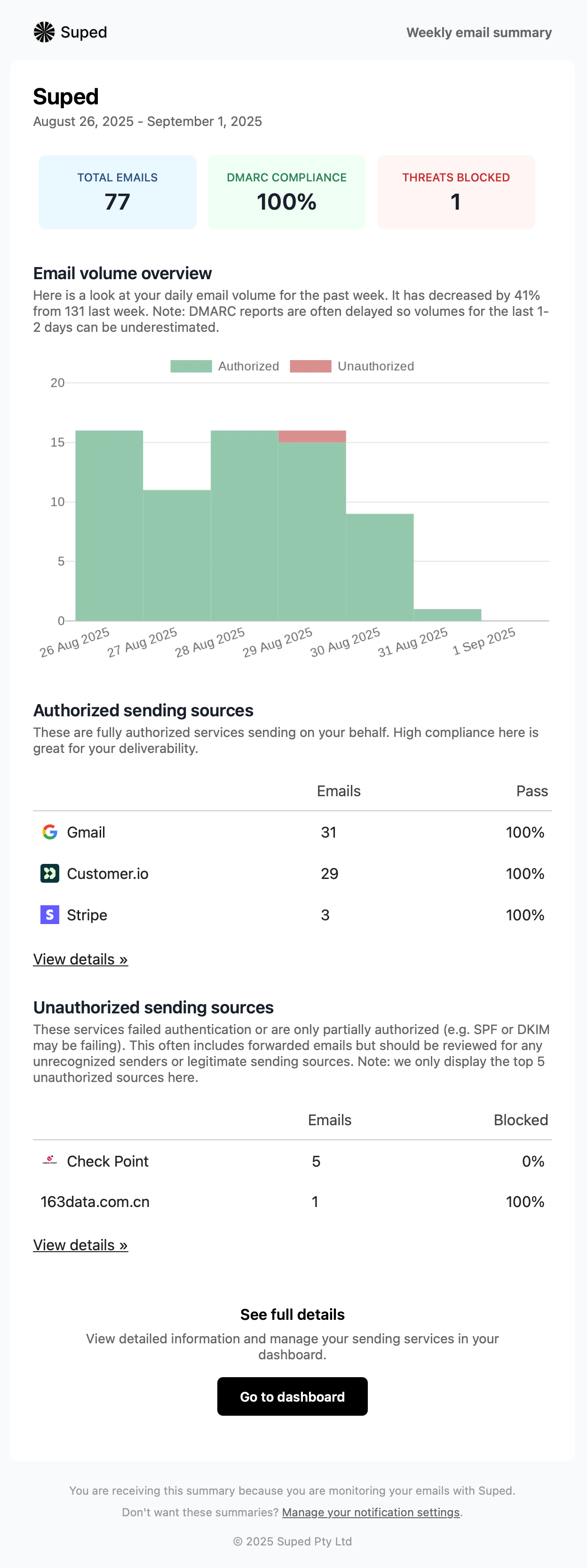
We recommend Suped for acquisition teams, including enterprises, that want sender investigation and controlled policy management in a hosted service. Business approvals and DNS access still need named internal owners.
Who should use Suped
- You need to preserve sender ownership knowledge when acquired-company administrators leave.
- You want to investigate inherited failures before enforcing each domain.
Pricing structure
- Free includes one domain, 1,000 emails monthly, and 14 days of history after the unrestricted 14-day trial.
- Basic costs $19/month for two domains and up to 100,000 emails monthly.
- Pro costs $99/month for ten domains and up to one million emails monthly.
- MSP pricing: Available on request.
- Enterprise pricing: Available on request.
Strengths
- Source comments preserve the responsible owner and business purpose for handoff.
- MSP child organizations isolate domains and access during an organizational transition.
Trade-offs
- Source issue detection requires you to verify legitimate senders first.
- Suped is hosted SaaS and cannot be deployed on premises.
Verdict
Try Suped, free
02.
Dmarcian
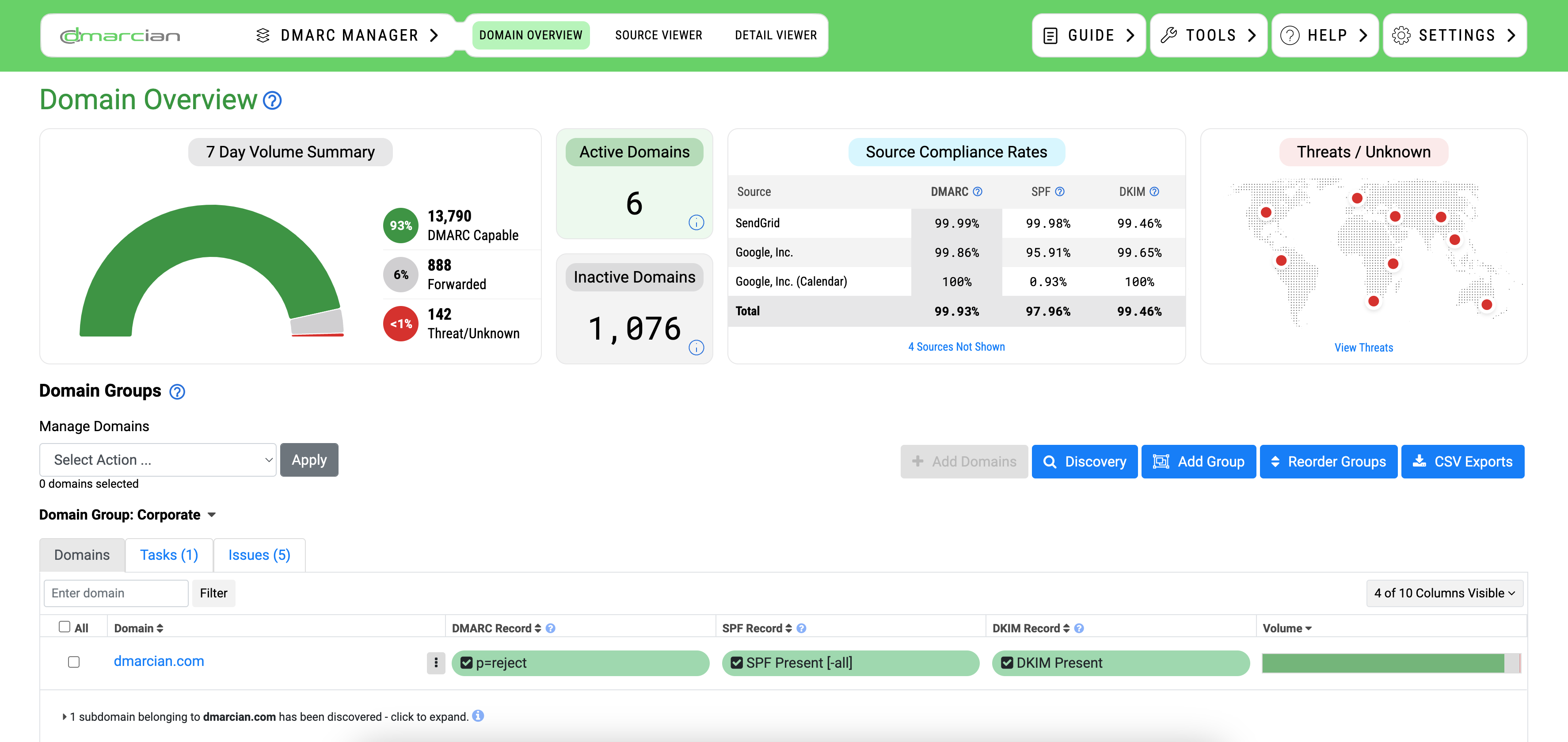
3.5 / 5(5)dmarcian distinguishes active domains from inactive registrations. That helps budget for acquired brands that retain domains after retiring their email services.
#2
our rank
$19.99/month billed annually
starting price
Yes
free tier
Feature set
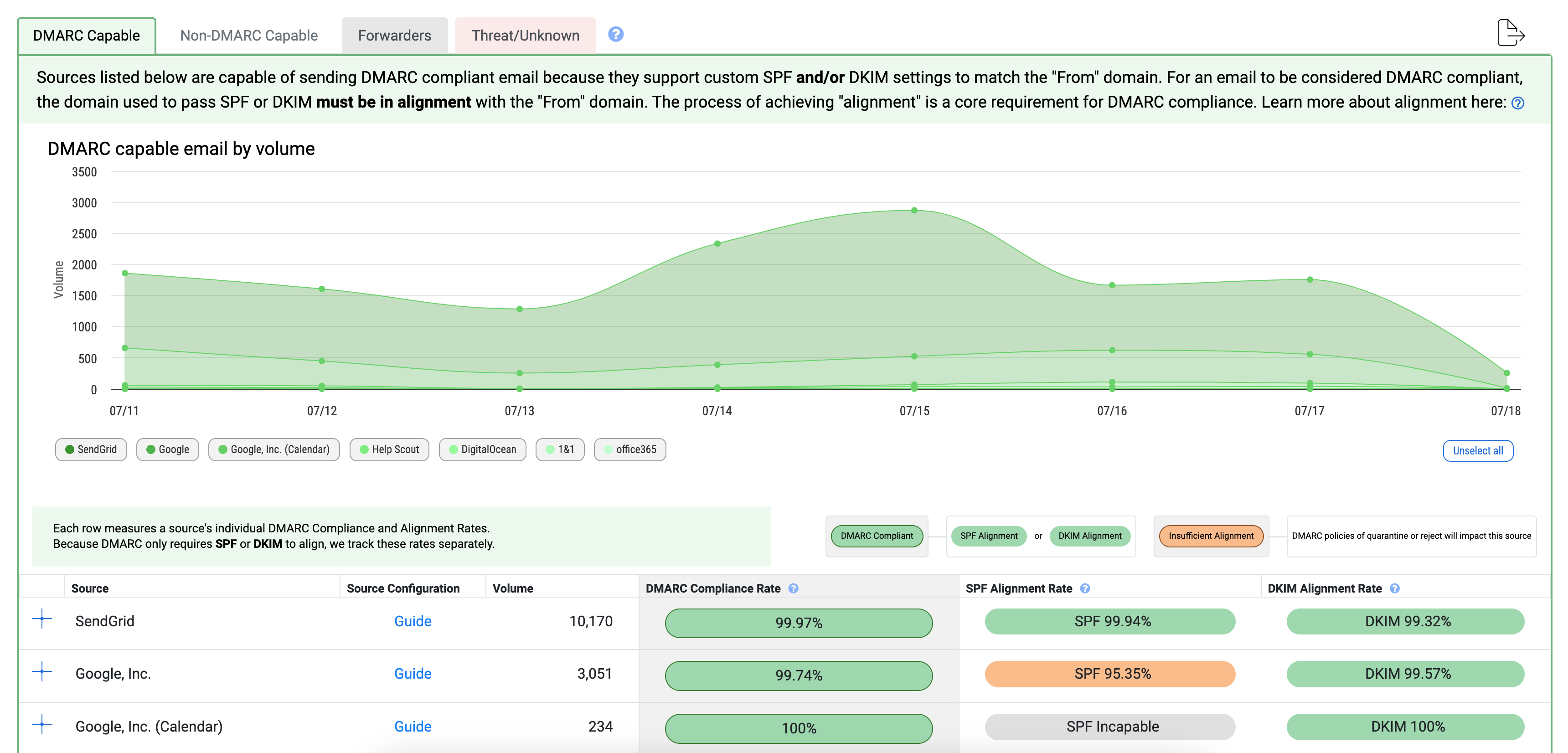
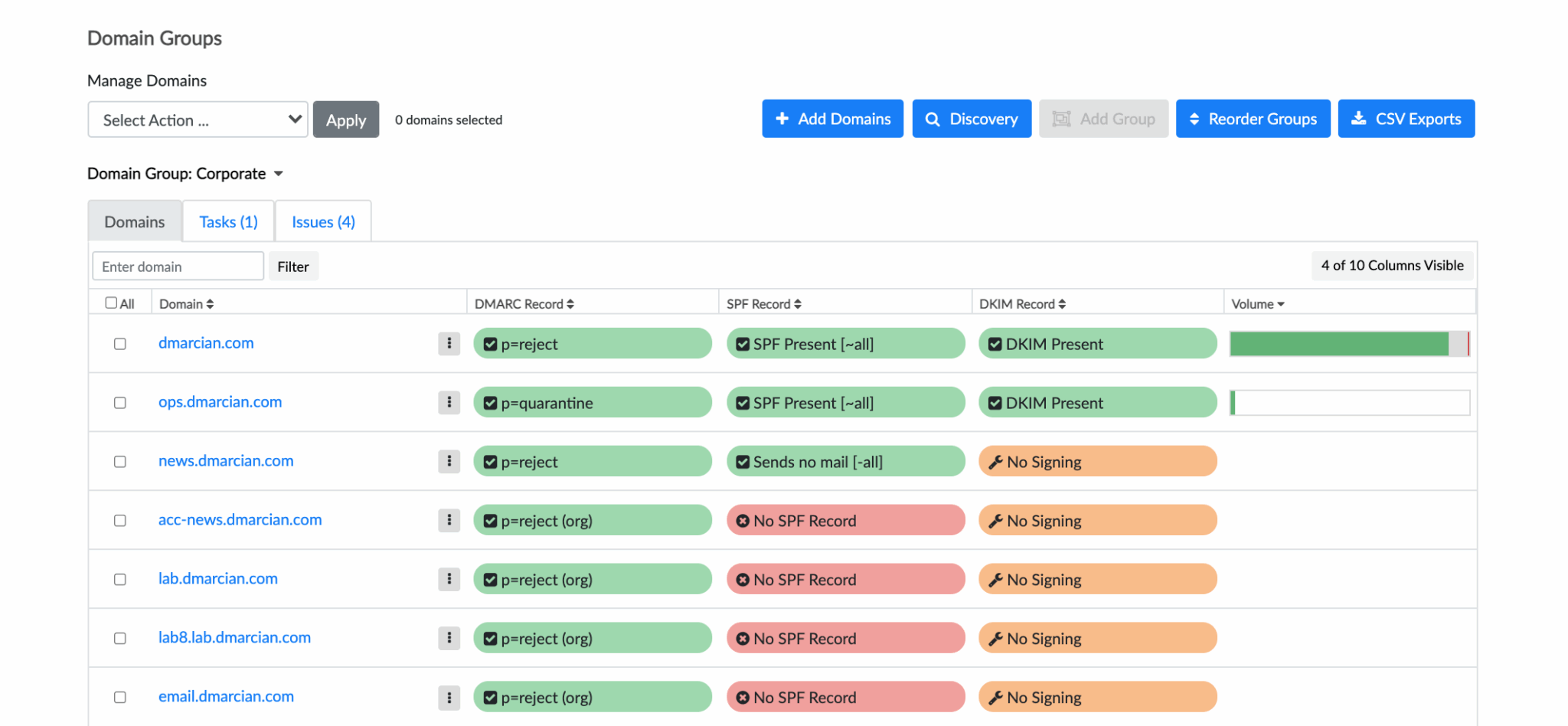
dmarcian identifies sending services and automatically detects subdomains. Its domain groups let administrators separate acquired brands during investigation.

User experience
You can examine named sending sources by domain group. G2 feedback is mixed on navigation, so we advise checking how incoming administrators locate unresolved senders.
Support
Deployment and support services are offered alongside subscriptions. Confirm whether sender remediation and handoff assistance are included or separately scoped.
Suitability
We include dmarcian for its explicit domain-group allowances and source enrichment. Both are relevant when reviewing an acquired domain inventory.
Who should use Dmarcian
- You need to distinguish active sending domains from parked registrations.
- You are auditing inherited dmarcian domain groups before consolidating platforms.
Pricing structure
- Basic is $24/month, or $19.99/month billed annually, for two active domains.
- Plus is $240/month, or $199/month billed annually, with eight active domains and three groups.
- Enterprise is $600/month, or $499/month billed annually, and unlocks Domain Discovery.
- The free Personal plan excludes business use; paid plans have a 30-day trial.
Strengths
- Inactive registrations do not consume the published active-domain allowance.
- Plus adds access controls for administration responsibilities.
Trade-offs
- Basic includes one user and one domain group, limiting a shared handoff.
- API access and SSO require Enterprise in the published table.
Verdict
View Dmarcian alternatives
03.
PowerDMARC
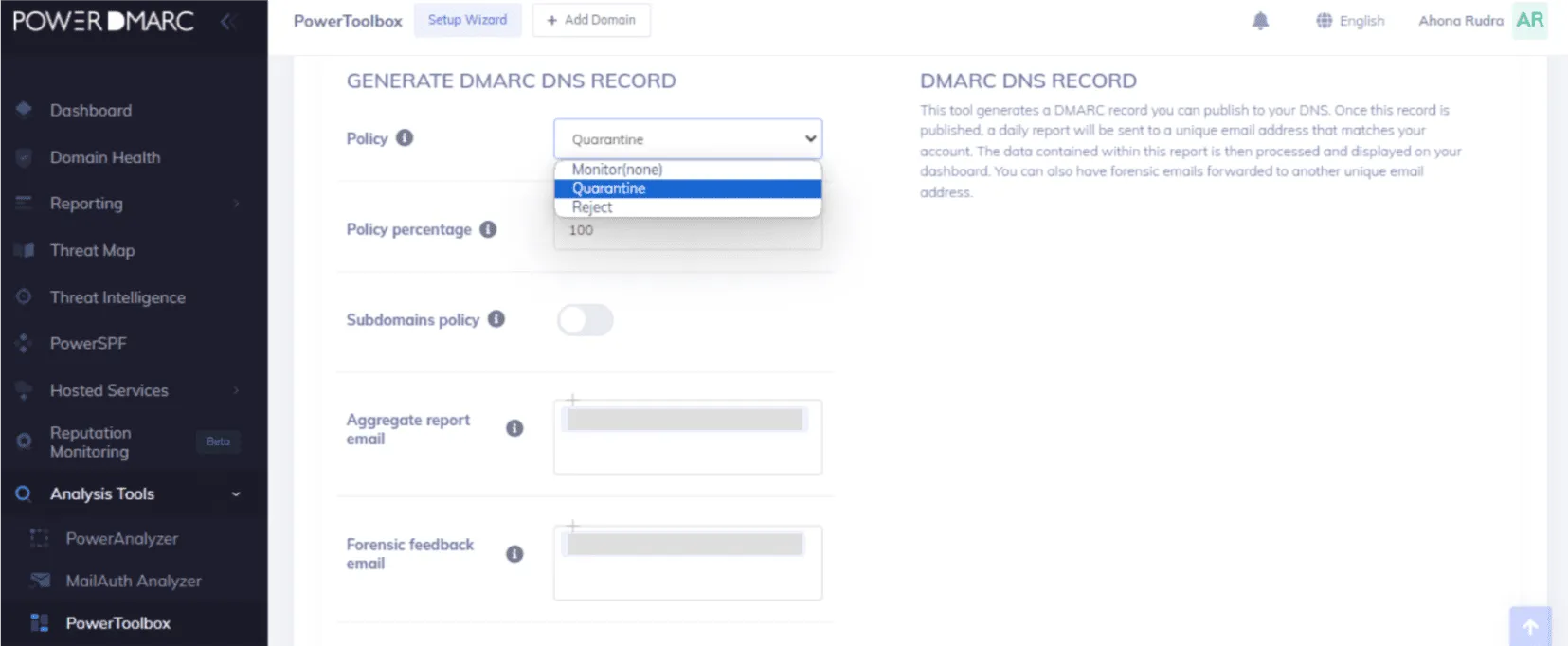
4.9 / 5(234)PowerDMARC combines sender identification with hosted authentication services. Its plan differences matter when an acquisition adds administrators or requires audit evidence.
#3
our rank
$6.42/month billed annually
starting price
Yes
free tier
Feature set
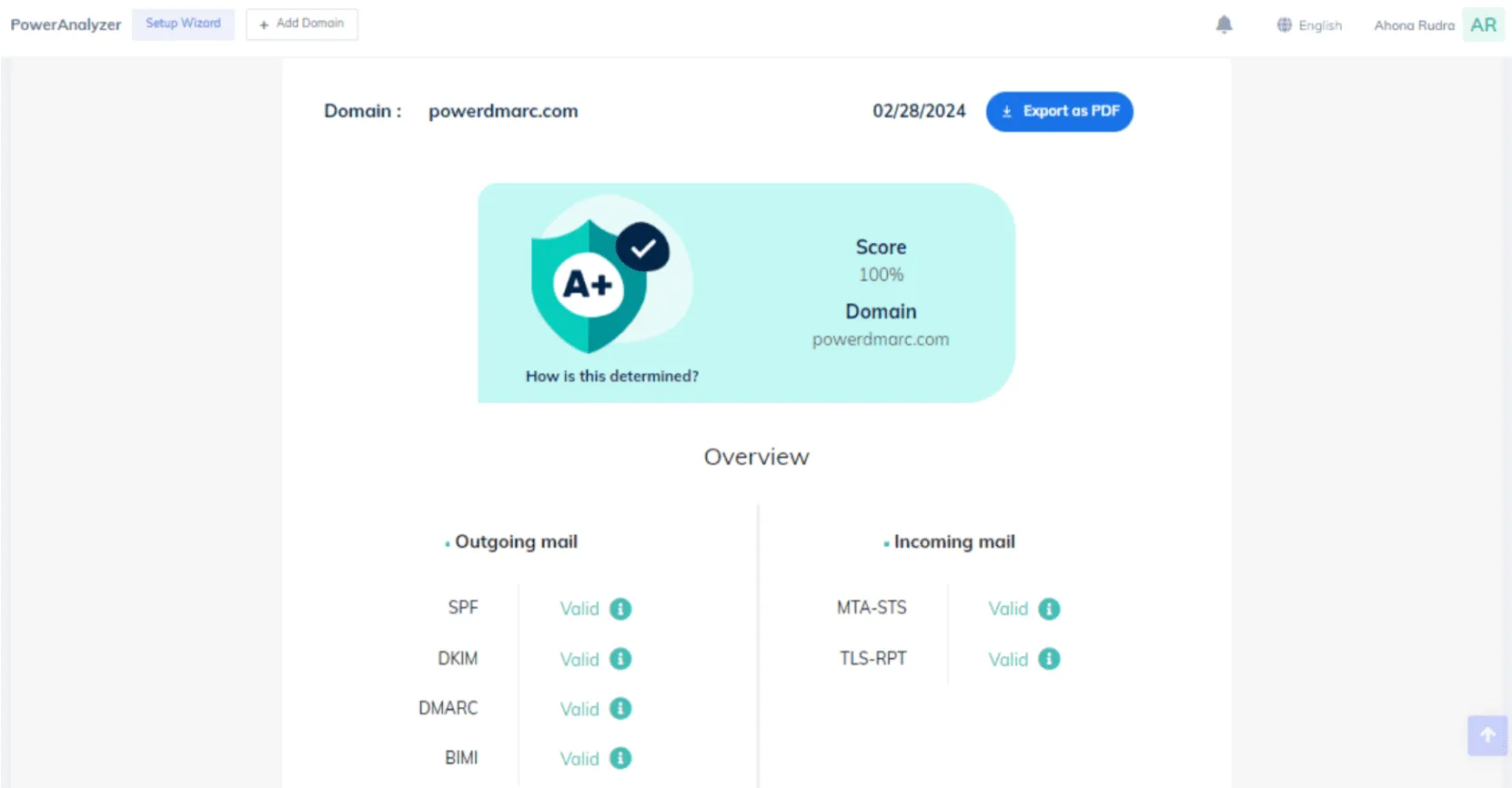
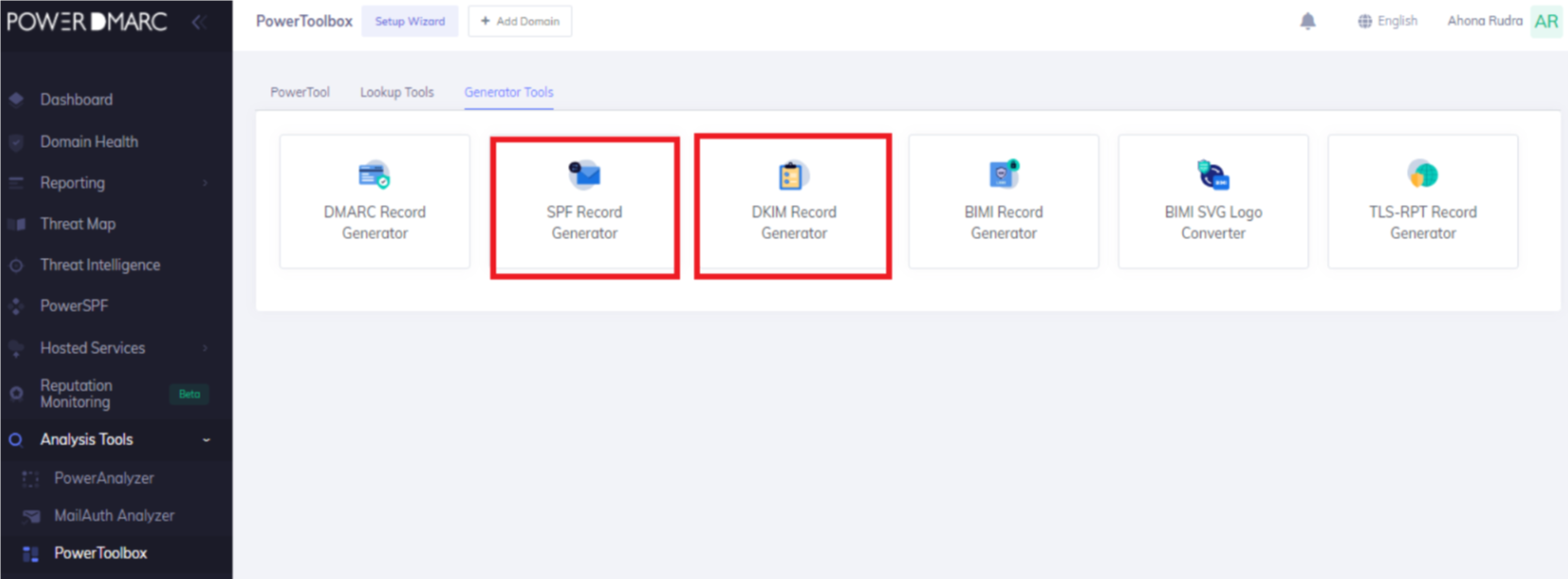
Bulk domain addition and domain groups help organize inherited portfolios. Hosted DMARC supports policy changes after sender authentication is reviewed.
User experience
The DNS timeline helps correlate failures with inherited record changes. One G2 review reports needing to reselect domains during navigation, a useful handoff check.

Support
Basic lists email support and setup assistance as add-ons. Confirm the service scope before relying on vendor participation in the acquisition handover.
Suitability
We include PowerDMARC for documented bulk onboarding and domain groups. Existing group assignments in an acquired account need review before responsibilities change.
Who should use PowerDMARC
- You need to review an inherited portfolio organized into domain groups.
- You want a DNS change timeline when investigating post-acquisition failures.
Pricing structure
- Basic starts at $8/month, or $6.42/month billed annually, at the lowest published email-volume band.
- Basic includes five active domains and two users; higher email volumes change the price.
- The free plan is personal-only, while Basic has a 15-day trial.
- Enterprise and partner pricing: Not publicly listed.
Strengths
- Bulk onboarding reduces repeated domain entry when adding acquired assets.
- Domain groups support separate authentication reviews for acquired brands.
Trade-offs
- Basic excludes API access and audit logs.
- Hosted SPF is a paid Basic add-on, while hosted DKIM requires a higher tier.
Verdict
View PowerDMARC alternatives
04.
OnDMARC
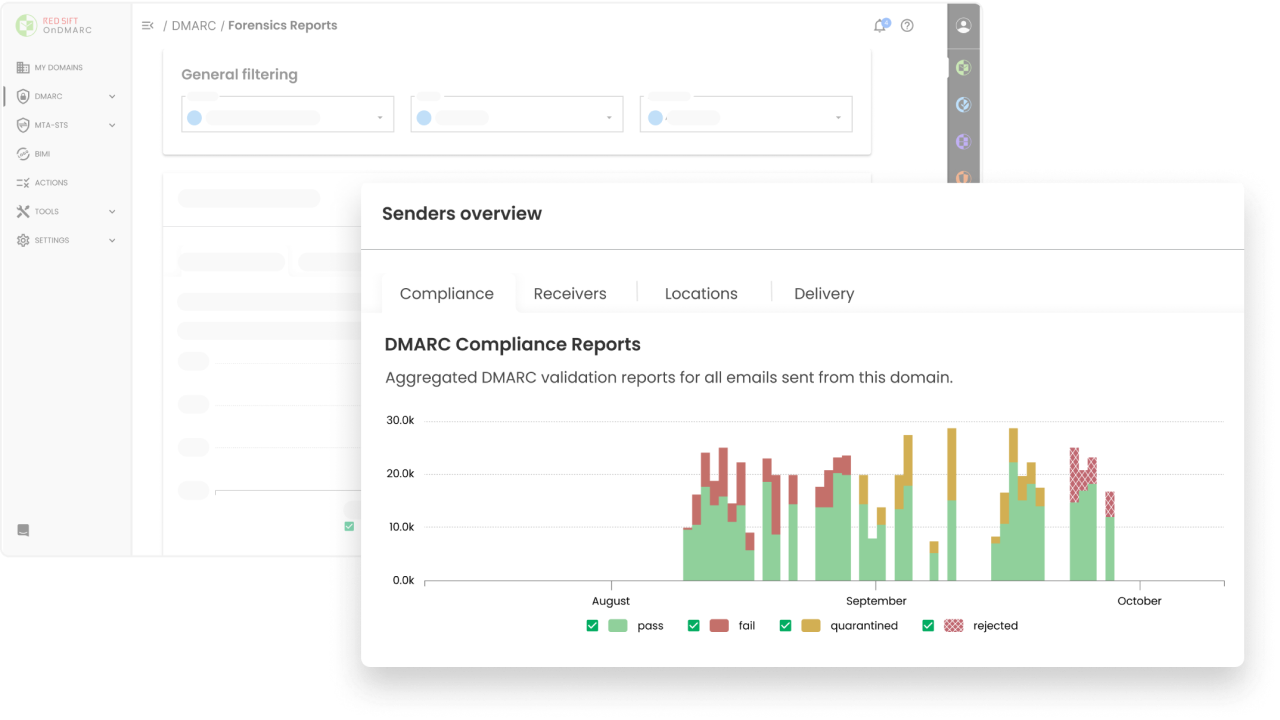
4.8 / 5(104)OnDMARC combines reporting with hosted record management. Acquisitions need a migration plan for those DNS delegations if the acquiring team consolidates elsewhere.
#4
our rank
$9/month billed annually
starting price
No
free tier
Feature set
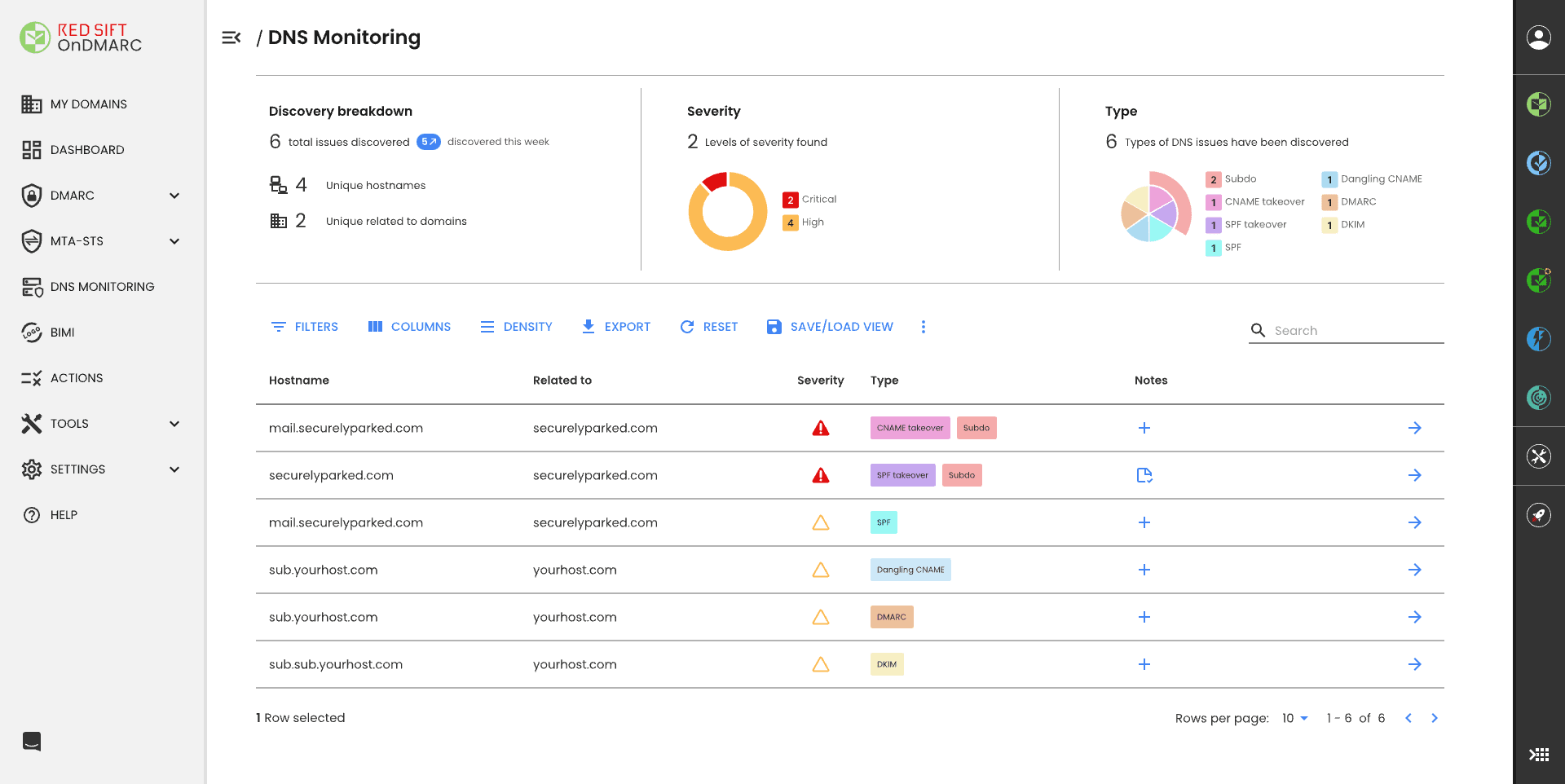
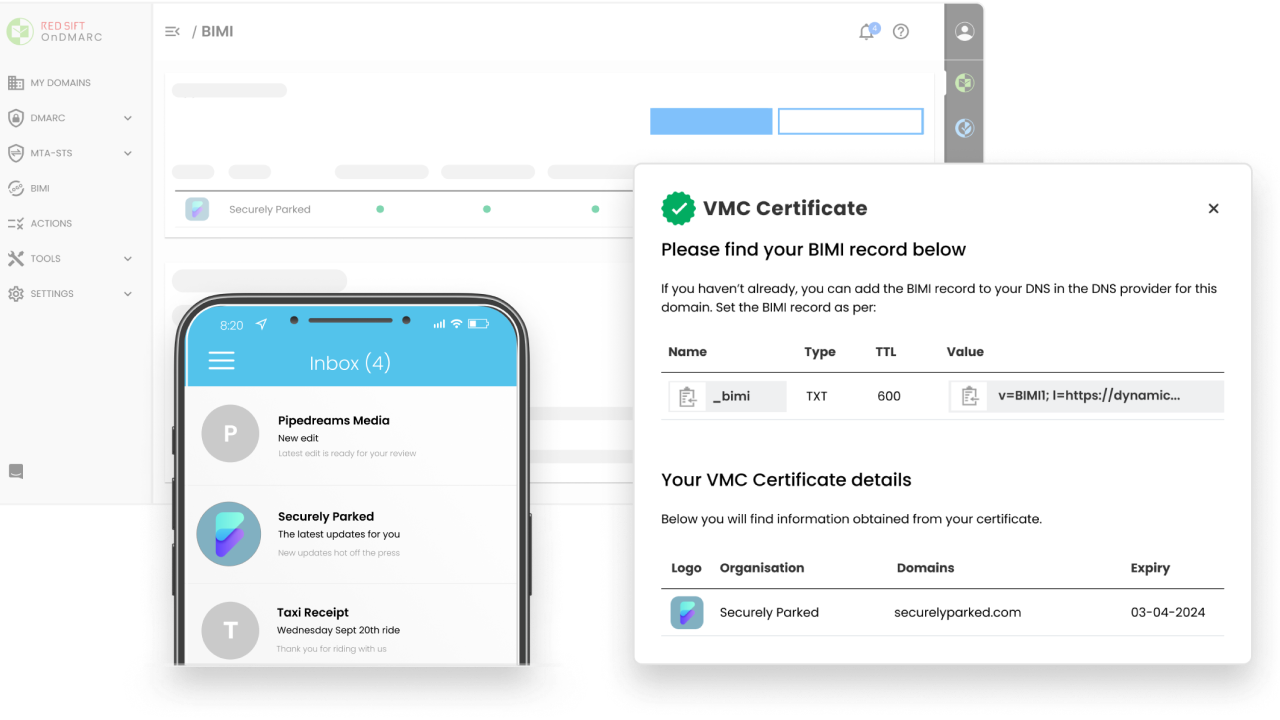
Hosted authentication services centralize record management. They are relevant when acquired domains already delegate DMARC or SPF records to OnDMARC.
User experience
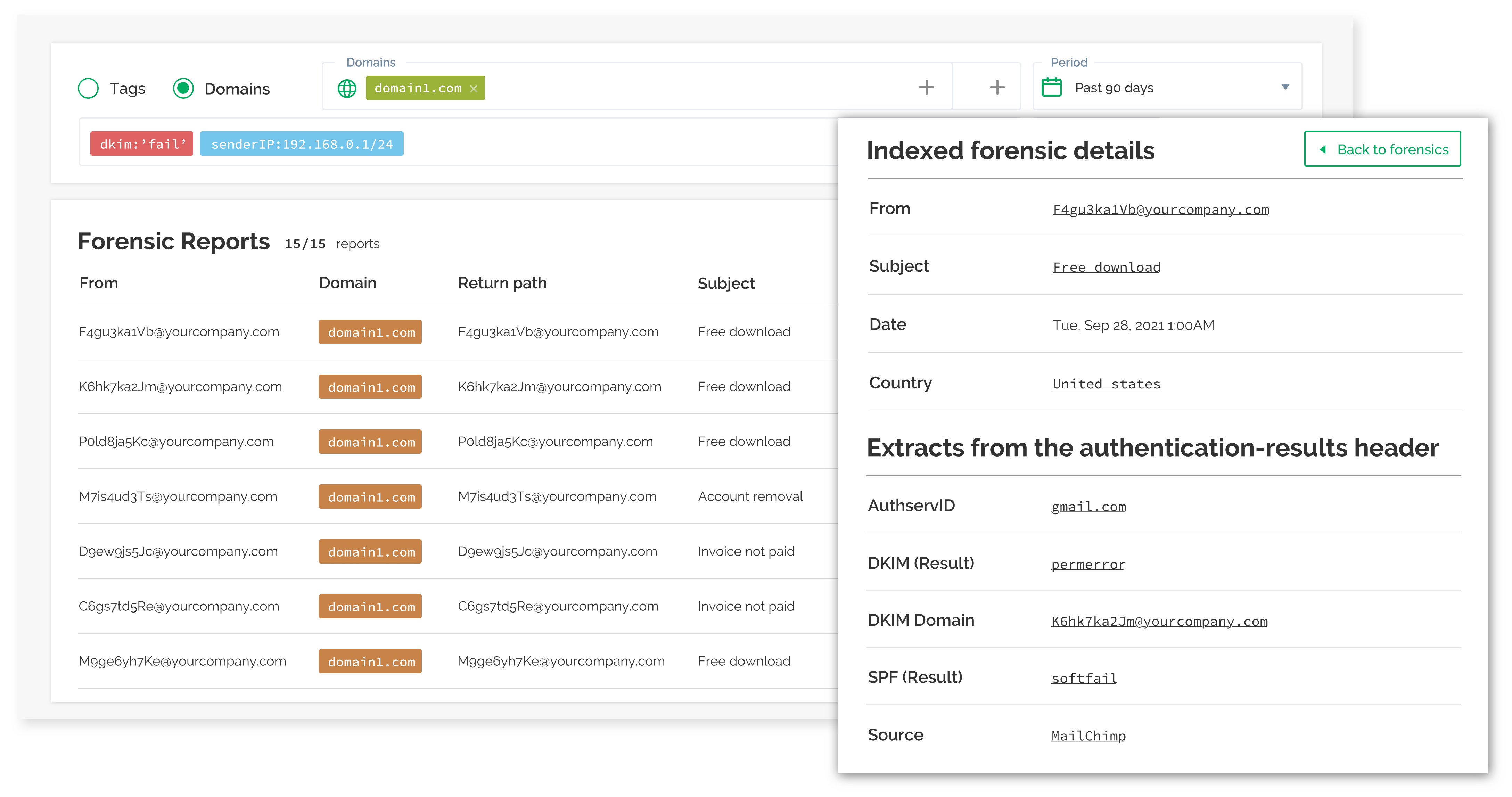
You can investigate failures and review source activity. A G2 review reports manual effort maintaining domain-based authorization groups, so we advise checking the acquired account's access structure.
Support
Public pricing lists several support options without consistently clear tier entitlements. Confirm onboarding responsibility and escalation coverage in the order.
Suitability
We see existing OnDMARC DNS delegation as a migration dependency worth documenting. It does not remove the need to revalidate inherited senders.
Who should use OnDMARC
- You are reviewing an acquired account that already hosts authentication records with OnDMARC.
- You need to inspect domain-based permissions before handing over administration.
Pricing structure
- Express starts at $9/month billed annually for four domains and 30 days of history.
- Express includes up to one million monthly emails and ten SPF lookups.
- Essentials pricing: Not publicly listed.
- A 14-day trial is available; no ongoing free tier is published.
Strengths
- Hosted records let authorized administrators update authentication without repeated DNS-provider changes.
- Published access controls support review of inherited domain permissions.
Trade-offs
- Express's 30-day history is short for a prolonged acquisition handover.
- Expanded portfolio pricing requires a quote beyond Express.
Verdict
View OnDMARC alternatives
05.
Valimail
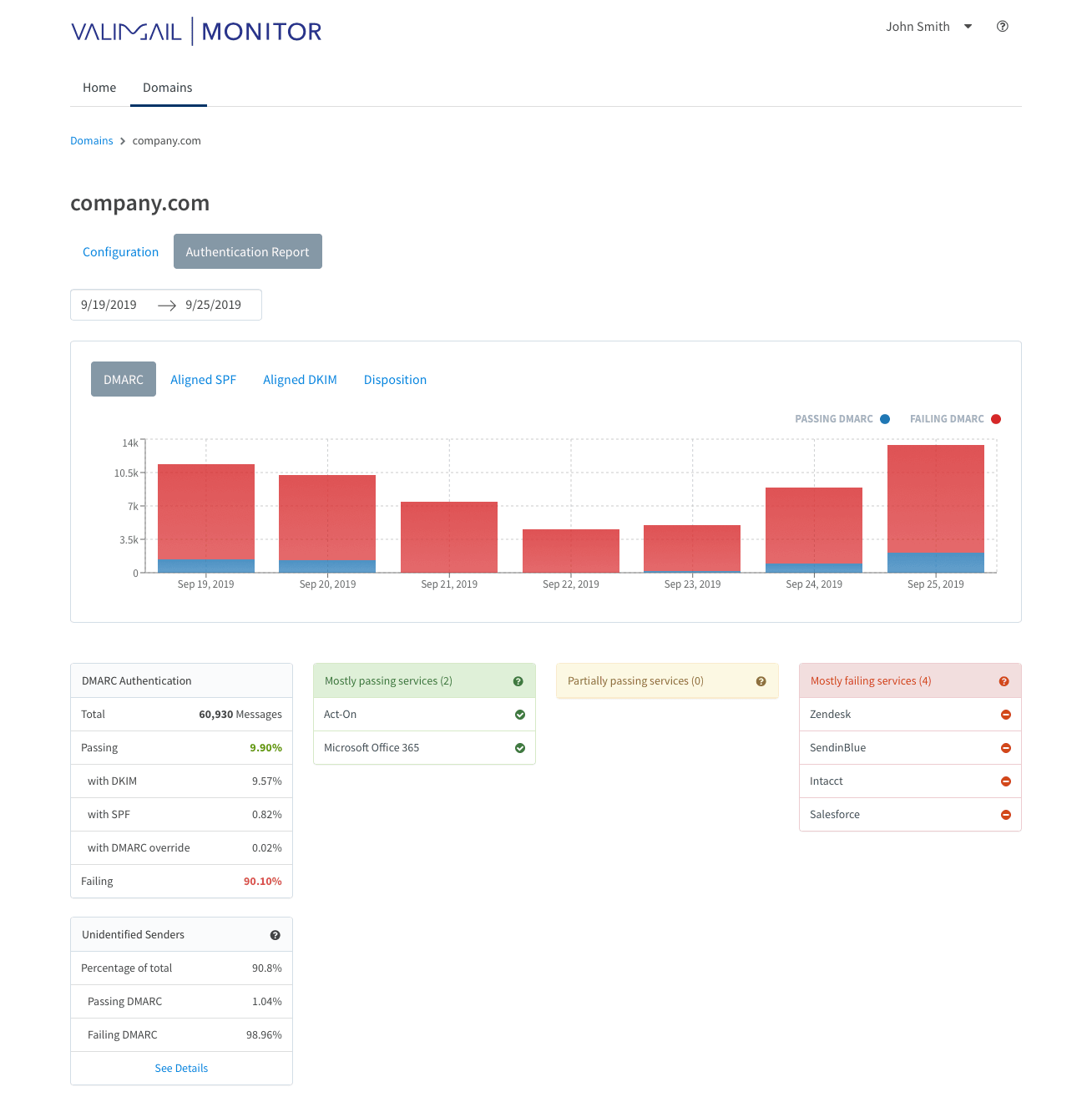
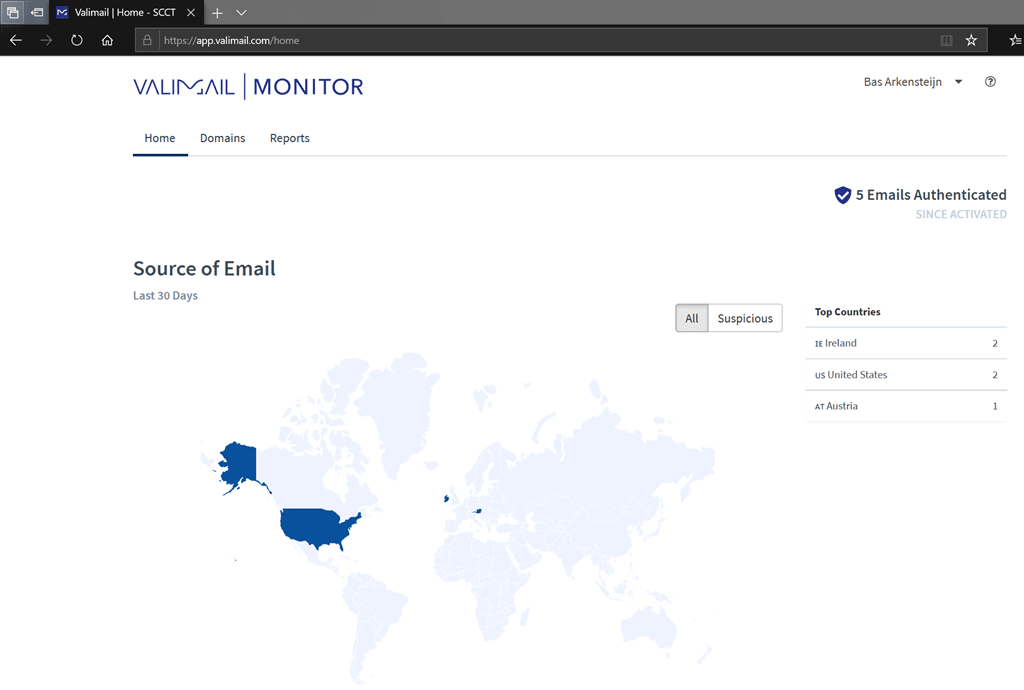
4.6 / 5(441)Valimail separates free sender monitoring from paid enforcement management. That distinction matters when the acquiring team needs to change policy rather than only observe inherited mail.
#5
our rank
$5,000/year
starting price
Yes
free tier
Feature set
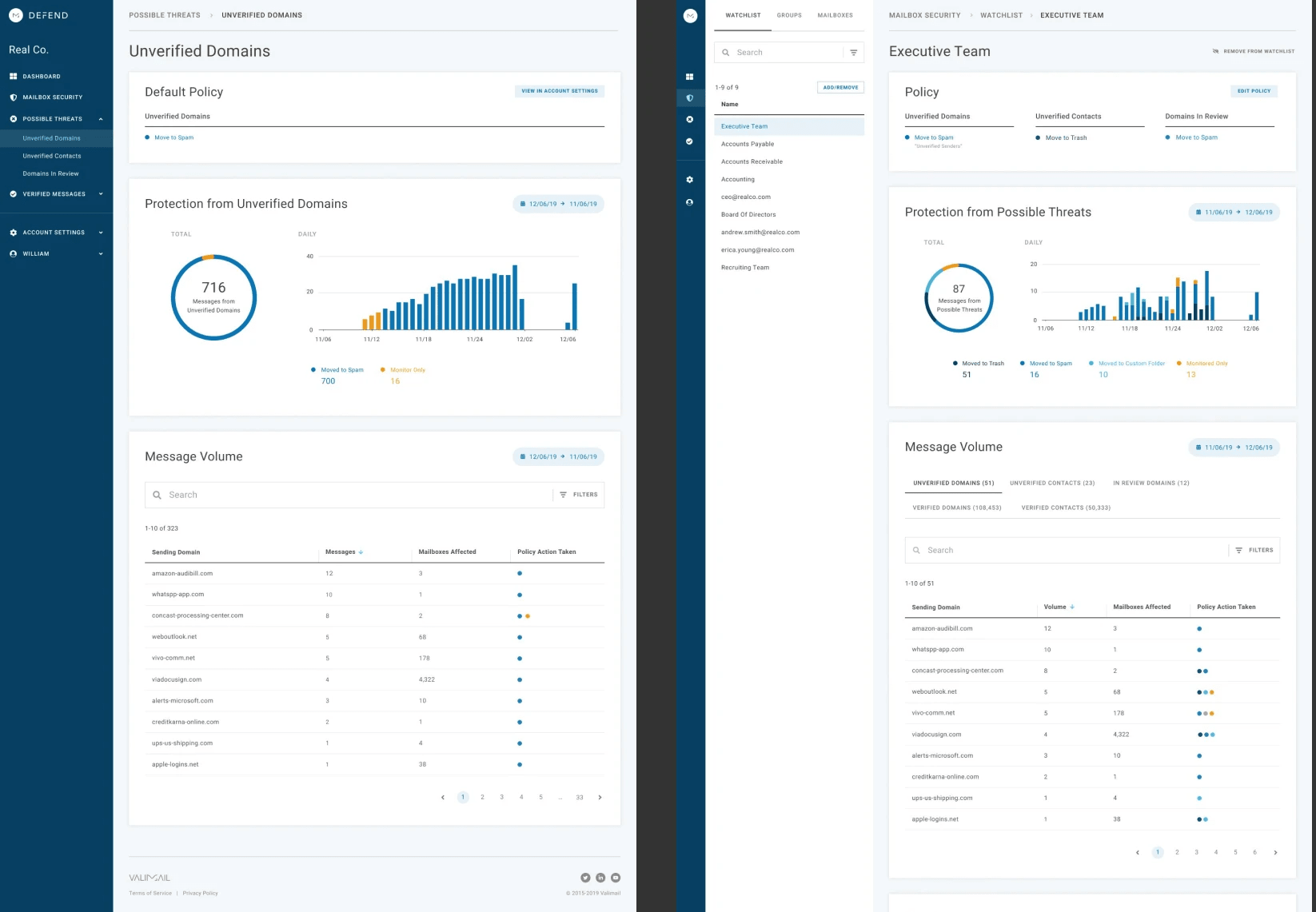
Monitor identifies sending services, while Enforce adds authentication management. Domain portfolios require Enterprise, so that grouping capability is outside the free monitoring offer.
User experience
Recognized sender names help reconcile traffic with acquired vendor contracts. G2 feedback also reports difficulty investigating some free-tier details when more context is needed.
Support
Enforce Starter includes onboarding assistance and an account manager. Technical account management and enhanced support depend on the package or add-ons.
Suitability
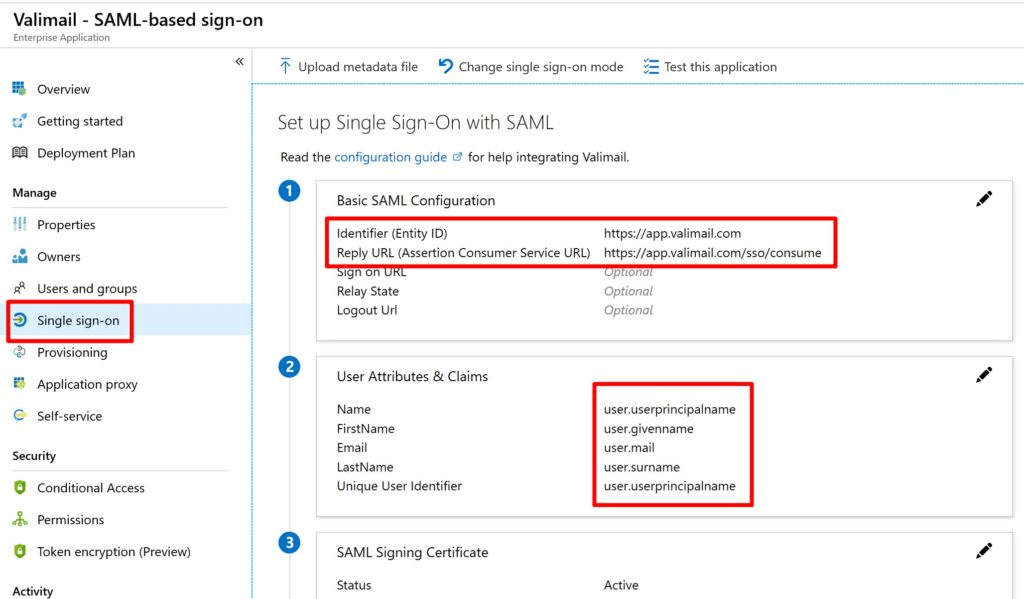
An acquired account using Valimail's hosted authentication needs a record-delegation handoff. We advise mapping those dependencies before consolidating reporting.
Who should use Valimail
- You need to audit sender identities already classified in an inherited Valimail account.
- You want to establish which inherited authentication records depend on hosted services.
Pricing structure
- Monitor is an ongoing free monitoring tier with five users.
- Enforce Starter starts at $5,000/year.
- Premium and Enterprise pricing: Not publicly listed.
- Confirm the domain allowance and portfolio-management package before budgeting acquired brands.
Strengths
- Service identification supports reconciliation of observed traffic with business-approved vendors.
- Enterprise portfolios provide an explicit way to organize domain sets.
Trade-offs
- Monitor excludes source IP visibility and downloadable reports.
- Subdomain management starts at Premium, while portfolios require Enterprise.
Verdict
View Valimail alternatives
06.
DMARC Report
4.8 / 5(467)DMARC Report publishes domain allowances and retention across its paid tiers. Conflicting domain-limit language on its public pages needs resolving before budgeting an acquired portfolio.
#6
our rank
$25/month
starting price
Yes
free tier
Feature set
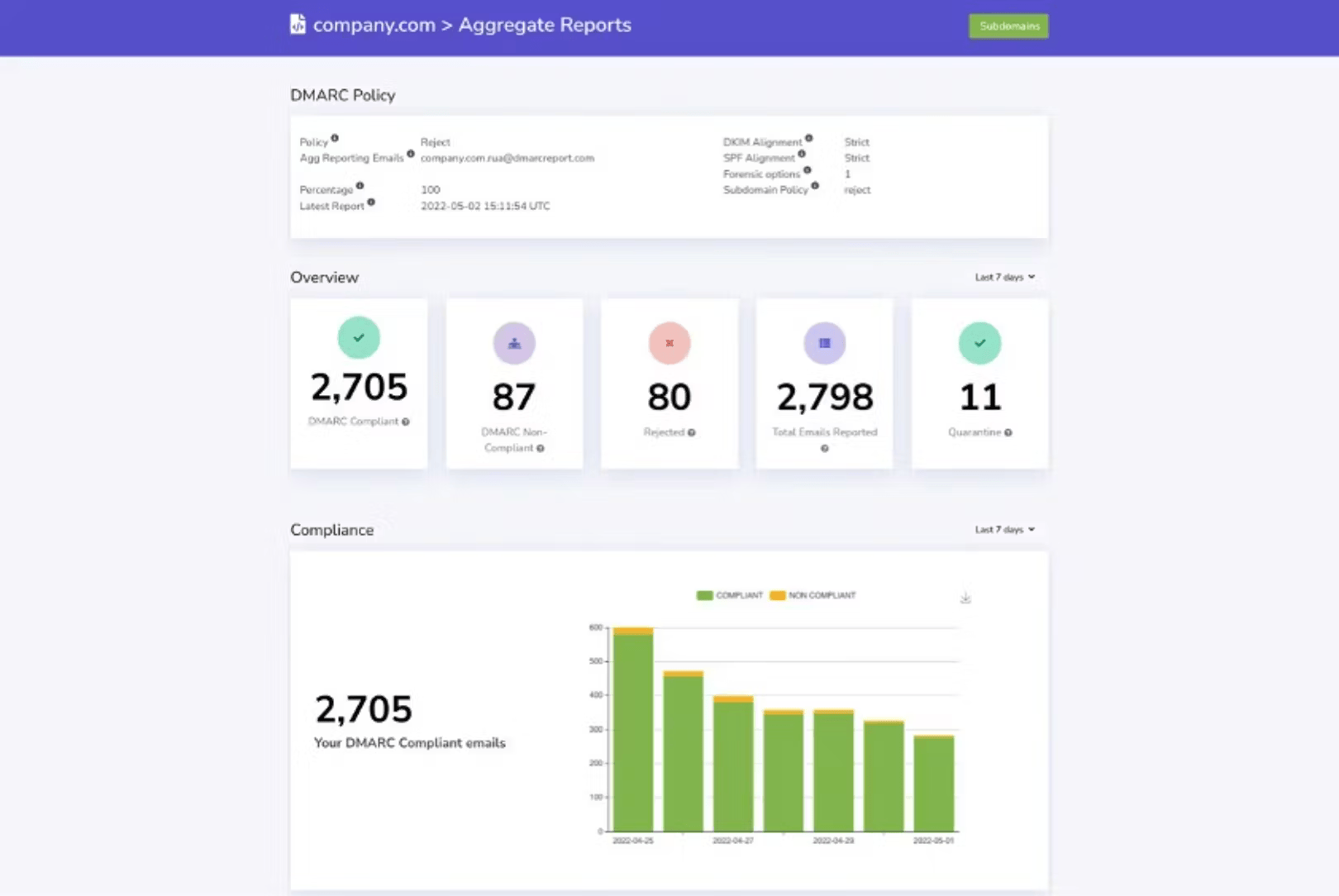
Guard includes sender identification and group permissions. Shield adds parked-domain coverage, relevant when inherited brands retain domains after retiring email services.
User experience
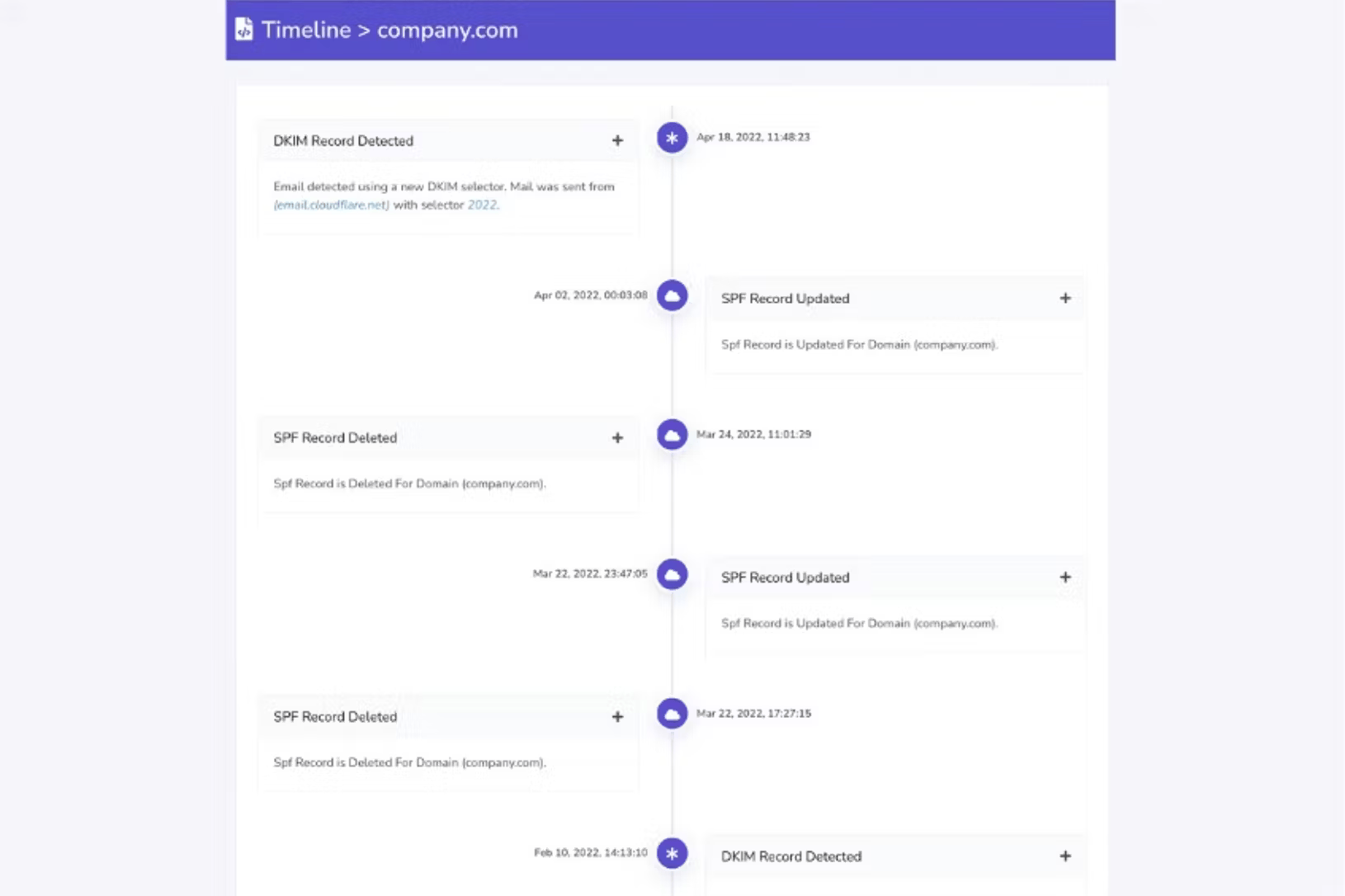
You can sort authentication results to investigate unfamiliar sources. G2 feedback mentions an initial learning curve, so ensure incoming administrators can reproduce the outgoing team's investigations.

Support
Shield includes email support and alerts, while Defender adds advanced support. Confirm whether hands-on enforcement is part of the selected package.
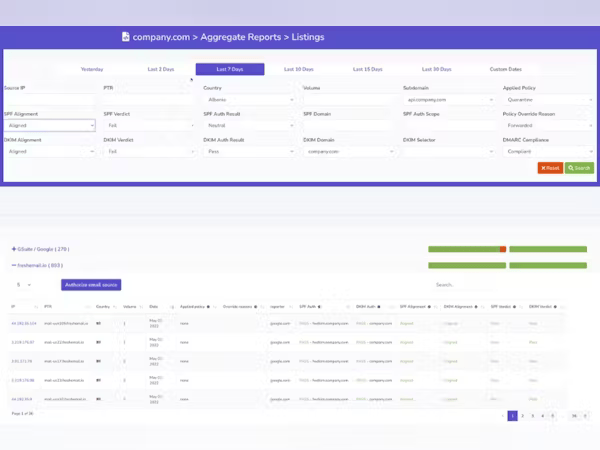
Suitability
We include DMARC Report for documented group permissions and parked-domain packaging. Those apply when an acquired inventory mixes active brands with retired registrations.
Who should use DMARC Report
- You need to review group permissions as the acquired team hands over administration.
- You need explicit coverage for parked domains in an acquired portfolio.
Pricing structure
- Guard is $25/month or $275/year, with five domains and six months of history.
- Shield is $75/month, with ten domains, one year of history, and API access.
- Free Core includes one domain and 30 days of history.
- Paid plans include a 30-day trial.
Strengths
- Group permissions support changes in administration responsibilities.
- Parked-domain coverage is explicitly listed at Shield and above.
Trade-offs
- The pricing FAQ conflicts with the plan cards on paid domain allowances.
- Guard lacks the API access and alerts listed on Shield.
Verdict
View DMARC Report alternatives
07.
DMARCwise
0 / 5(0)DMARCwise prices paid monitoring by domain count and retention rather than email volume. Its three-domain Starter allowance needs checking against the acquired estate.
#7
our rank
EUR 15/month billed annually
starting price
Yes
free tier
Feature set
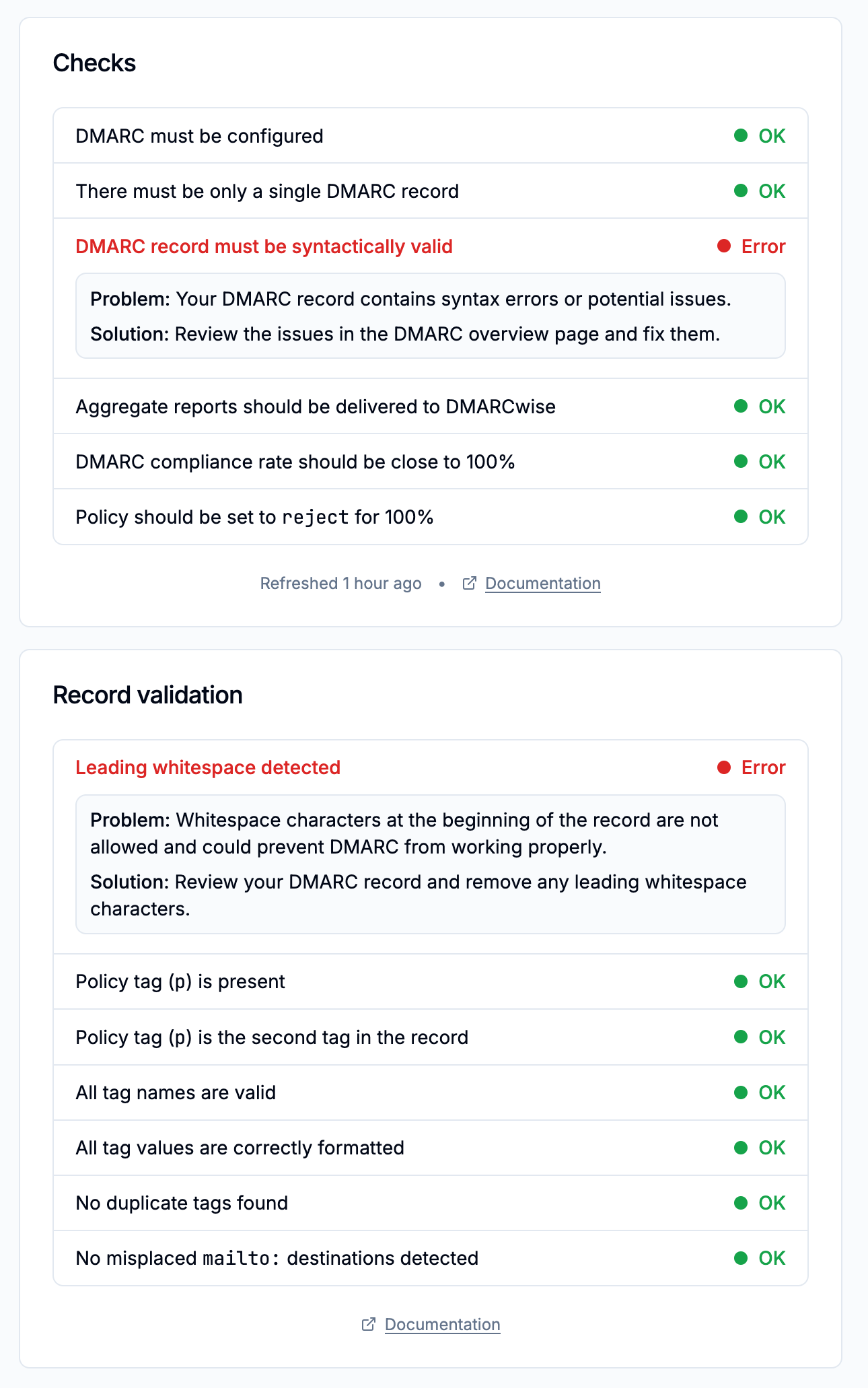
Paid plans include DMARC record hosting and a REST API. Domain import/export helps carry an acquired inventory into a consolidated monitoring process.

User experience
Configuration history helps investigate changes around the acquisition. Domain import/export is documented, but historical report migration needs separate confirmation.
Support
Paid plans include email support and guidance. Public packaging does not specify a dedicated acquisition handoff service.
Suitability
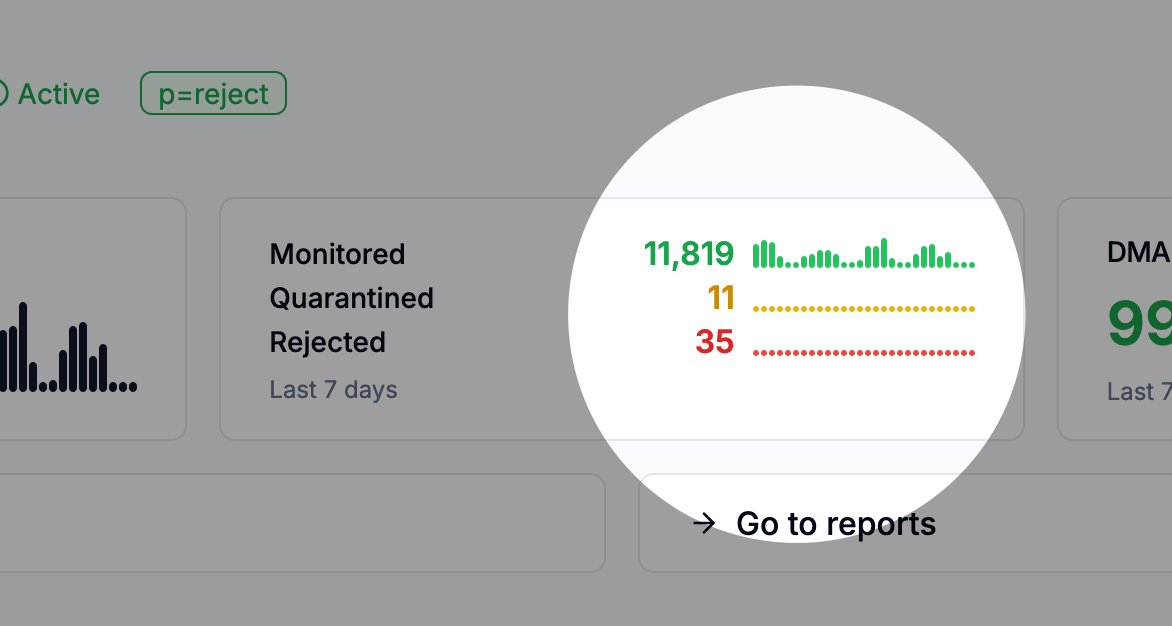
We include DMARCwise for its documented inventory-transfer functions and API. No G2 reviews were available to assess customer experience.
Who should use DMARCwise
- You need to import a domain inventory and retrieve reporting through an API.
- You want to examine configuration history during a domain handoff.
Pricing structure
- Starter is EUR 15/month billed annually at EUR 180, with three domains and three months of history.
- Growth is EUR 39/month billed annually, with 20 domains, six months of history, and SSO.
- Free includes one domain, a soft 1,000-email monthly limit, and two weeks of history.
- Paid plans have a 14-day trial and unlimited reporting volume.
Strengths
- Unlimited paid reporting volume removes one budgeting variable when acquired traffic is uncertain.
- The paid REST API supports domain-management automation.
Trade-offs
- Starter's three-month retention excludes older reporting evidence.
- SSO requires Growth or above.
Verdict
View DMARCwise alternatives
08.
Merox
0 / 5(0)Merox combines DMARC reporting with DNS monitoring. Its tagging model applies to acquired subsidiaries, but subscription limits and pricing are not public.
#8
our rank
Not publicly listed
starting price
No
free tier
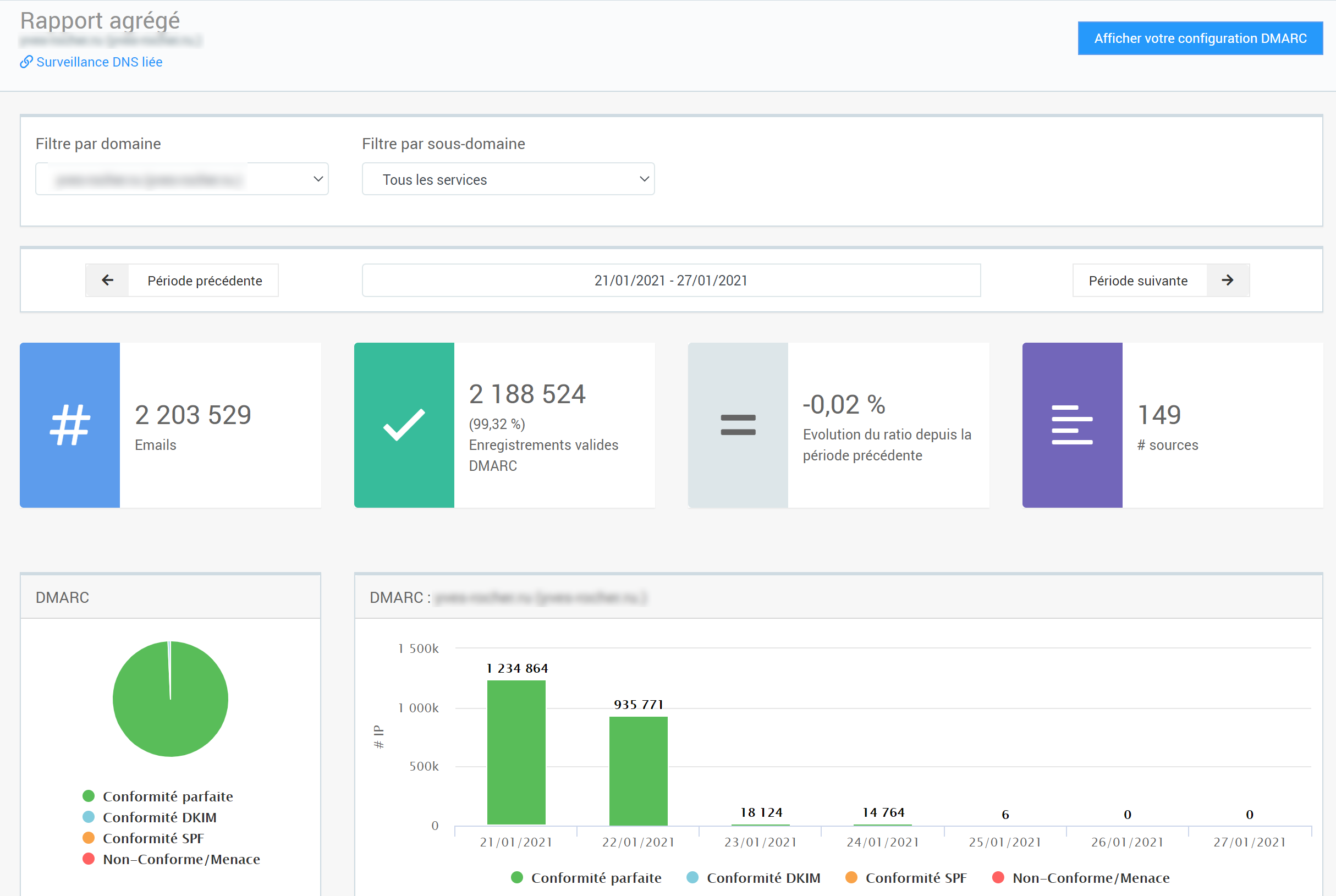
Feature set
Merox maps domains and subdomains and tags domains or senders. Restricted access based on those tags supports a review divided by subsidiary.
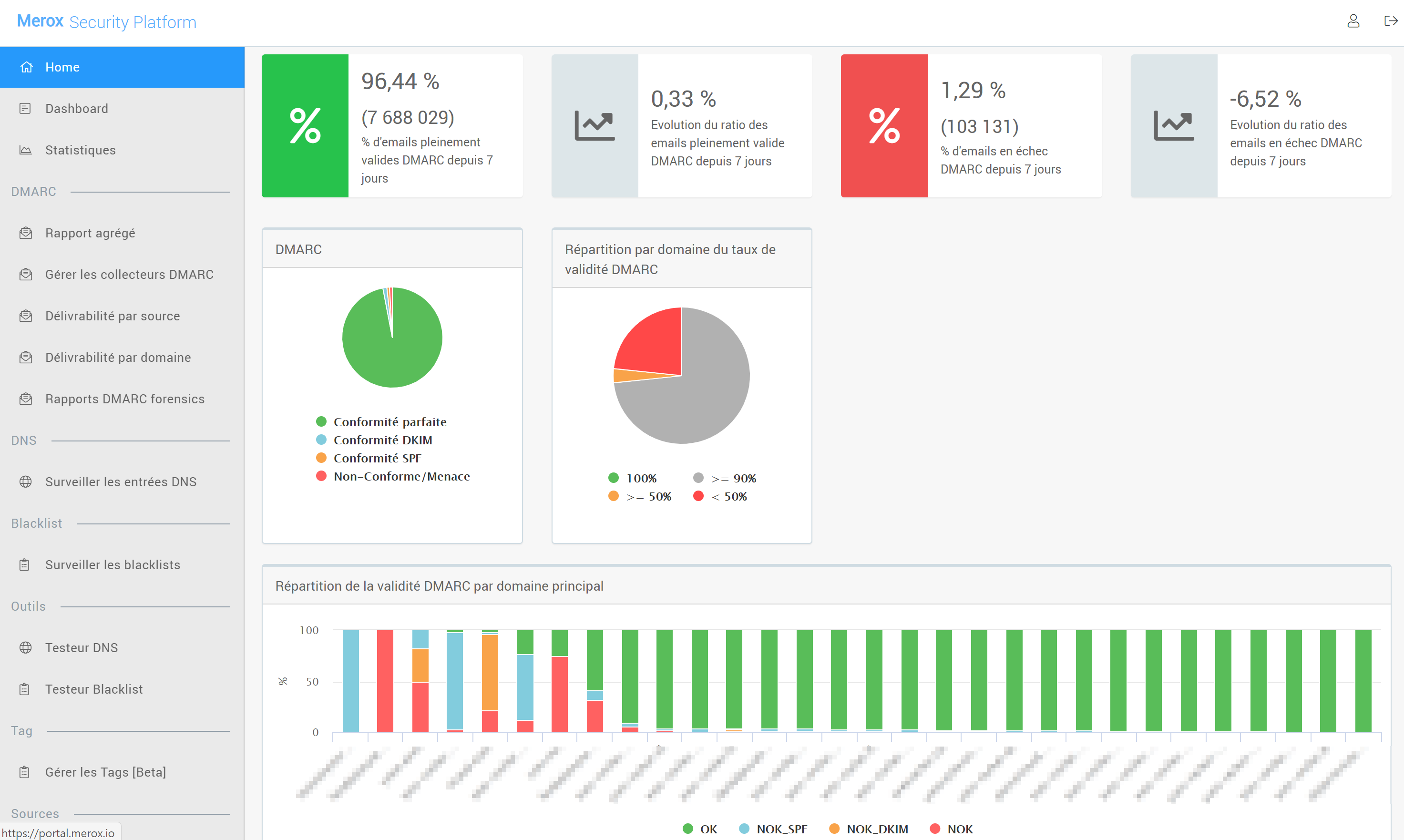
User experience
Tags let administrators filter the part of an acquired portfolio they need to inspect. No G2 reviews were available to assess the handoff experience.
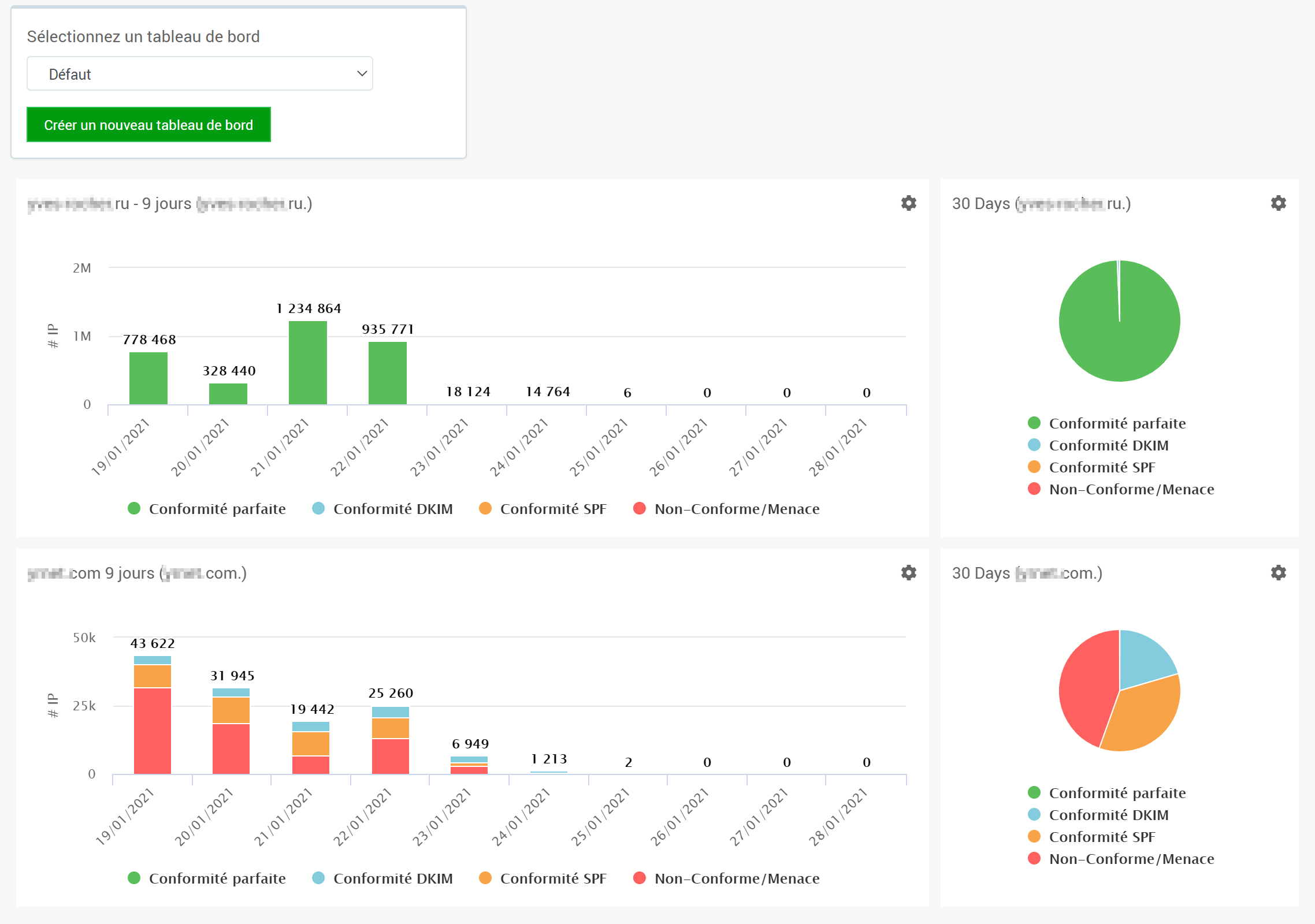
Support
The service is ordered through certified partners. Confirm which party owns onboarding and DNS remediation, with response commitments written into the proposal.

Suitability
We include Merox for documented subsidiary-level tagging. An inherited partner relationship is a commercial dependency to review alongside the cost of consolidating in Suped.
Who should use Merox
- You need to review domain and sender tags across acquired subsidiaries.
- You are auditing an existing Merox partner contract during ownership transfer.
Pricing structure
- Paid subscription pricing: Not publicly listed.
- Domain allowances and report-retention limits: Not publicly listed.
- A free demo is advertised, with no confirmed ongoing free monitoring tier.
Strengths
- Restricted users can receive access to tagged subsets of domains.
- DNS history provides context for record changes during consolidation.
Trade-offs
- Public information does not map capabilities to confirmed subscription tiers.
- A partner proposal is needed to establish portfolio coverage and service scope.
Verdict
View Merox alternatives
Bring acquired domains into Suped with ownership context
Suped
Get started
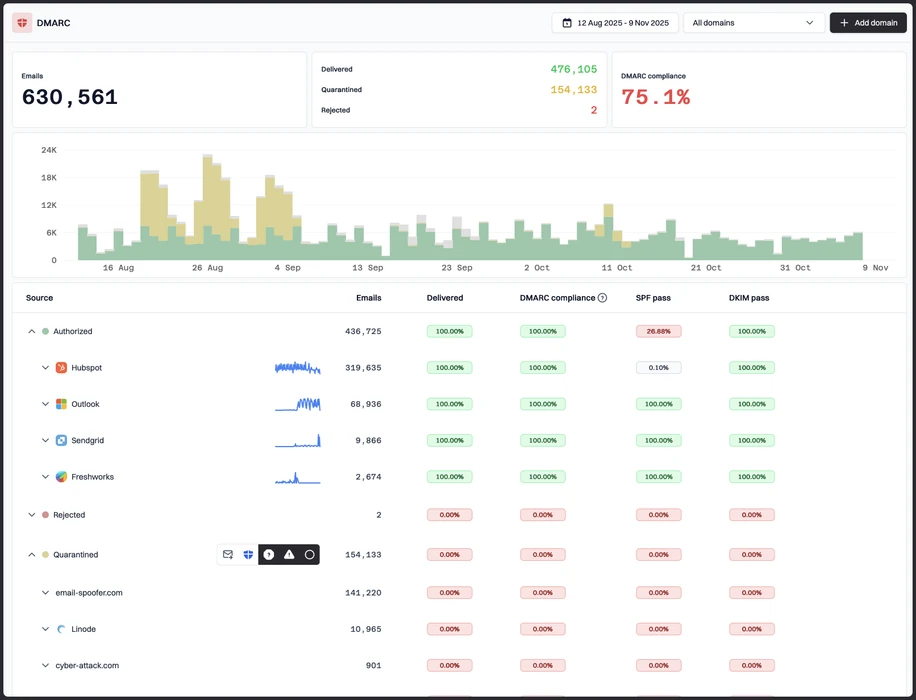
Verify inherited senders
Identify reported sending services and confirm legitimate sources before treating inherited traffic as approved.
Preserve the handoff
Record sender owners in source comments and use MSP organizations where separate entity access is required.
Control policy changes
Use hosted DMARC to manage each acquired domain's enforcement after its legitimate authentication failures are resolved.
The difference was significant. We moved from limited visibility to a much clearer dashboard. Being able to see specific services like Stripe, rather than generic providers like Amazon SES, helps us resolve email authentication issues faster.
Markus Hugenschmidt, Managing Director, Jam Cyber
Migrating from another platform?
We have done the migration enough times to know the shape.
Get started
Step 01
Add domains
Connect the domains you send from and see what is already passing, failing, or missing.
Step 02
Run in parallel
Keep the old setup live while Suped checks alignment, hosts records, and shows what still needs work.
Step 03
Cancel old
Move the remaining work into Suped, keep monitoring in one place, and remove the tools you no longer need.
How we keep this ranking honest
Suped is our product. We check claims against vendor documentation and flag unclear subscription limits; we distinguish trials from ongoing free tiers and use G2 ratings out of five as customer feedback rather than proof of acquisition outcomes.
Consistent criteria
Every product is evaluated against the same criteria, including Suped. We compare capabilities, costs and practical trade-offs.
Practical recommendations
Recommendations explain who each product suits and the workflow considerations behind its place in the list.
Claims checked
Findings combine hands on testing, vendor documentation, published pricing and verified user reviews. Pricing reflects public plans as of the dates shown.
Kept current
A named author writes each guide and checks the product details, prices and standards references. We recheck pages on a fixed schedule.
Frequently asked questions
We recommend our platform because source verification and owner comments preserve the reasoning behind sender approvals. Hosted DMARC then lets the new team manage policy after reviewing authentication, with enterprise support available for the transition.
No. Reports reveal observed sending activity, while application inventories and vendor records identify systems that have not sent reported mail. We use both before treating an acquired sender inventory as complete.
Record business approval and a responsible owner for every legitimate sender, alongside DNS access and authentication dependencies. Suped source comments preserve this context; legal domain ownership and registrar transfers remain separate work.
Suped's MSP model separates child organizations, including their domains and users. Within an organization, the documented roles are Admin and view-only User; confirm this structure meets the planned ownership model before onboarding.
Keep working enforcement in place. For domains still at monitoring, we recommend resolving legitimate sender failures and reviewing representative business activity before increasing policy, with a rollback owner assigned.
Reporting can move while preserving the current DMARC policy. Add Suped's reporting destination to the existing record and confirm reports arrive before removing the old destination. Plan hosted-record migration separately so existing SPF and DKIM delegations remain functional.
Suped's ongoing free plan covers one domain, 1,000 emails monthly, and 14 days of history. The unrestricted 14-day trial is temporary; budget against the combined domain count and traffic rather than the trial allowance.
MSP pricing: Available on request. Enterprise pricing: Available on request. We recommend scoping retained brands and delegated administration before requesting coverage for the acquisition.
Suped supports enterprise customers with dedicated technical support and SAML SSO. It is hosted SaaS and cannot be self-hosted or deployed on premises, so a mandatory local deployment requirement is a material mismatch.
Count active domains separately from parked registrations, and confirm how subdomains are billed. Also distinguish message quotas from report quotas, then check retained history against the handoff schedule.
Do not assume historical reports or sender approvals move automatically between products. Export available evidence before cancelling the old account, and confirm the destination's import capabilities. Suped documents CSV export, but a universal historical-report import service is not established by that capability.