12 best PowerDMARC alternatives in 2026
Switching from PowerDMARC means replacing reporting without losing sender decisions or breaking hosted authentication. We rank Suped, our DMARC and email authentication product, first for its source verification, detailed failure investigation, and hosted record management. These 12 PowerDMARC alternatives differ in retained history and the protocols included at the advertised price. Suped is hosted SaaS, with no self-hosted or on-premise edition; our recommendation applies to readers open to that deployment model.

Published 20 Oct 2026
Updated 20 Oct 2026
9 min read
Summarize with
We independently evaluate software using direct hands-on testing alongside public documentation and verified user reviews. Missed a tool worth covering? Tell us about it.
What matters when replacing PowerDMARC
Sender evidence before enforcement
01.
We put Suped first because our source verification, filtered Data view, and detailed SPF/DKIM checks connect an unknown sender to an investigation. During a PowerDMARC switch, preserve the existing policy while establishing which legitimate sources pass DMARC; a provider name or raw SPF pass alone is insufficient.
Hosted records without migration gaps
02.
Inventory every delegated authentication record before changing suppliers. Suped documents hosted DMARC, SPF, DKIM, and MTA-STS/TLS-RPT, so reporting and hosted configuration can be planned together. Initial DNS access is still necessary, and changing the aggregate reporting address does not transfer those hosted services.
Portfolio cost and account boundaries
03.
Compare the full domain portfolio, reported traffic, and 90-day retention requirement with the current contract. Suped has published business allocations, negotiated enterprise capacity, and MSP billing at $7 per domain per month with unlimited email volume and retention. Separate client organizations and access roles address account separation; verify plan entitlements and support scope before purchase.
12 products at a glance
| ||
|---|---|---|
01. | Suped | |
02. | OnDMARC | |
03. | EasyDMARC | |
04. | Dmarcian | |
05. | DMARC Report | |
06. | Sendmarc | |
07. | Valimail | |
08. | MailHardener | |
09. | DMARCly | |
10. | DMARCwise | |
11. | DMARCDKIM.com | |
12. | VerifyDMARC |
How we tested all 12 products
We use the same evaluation framework for all 12 products: a primary corporate domain, a marketing subdomain, and a parked domain over a 90-day monitoring window, with Microsoft 365, Google Workspace, SendGrid, Mailchimp, and one support desk sender. The cases are aligned SPF pass, aligned DKIM pass, SPF pass with a visible From mismatch, DKIM pass on a subdomain, forwarding with SPF failure, an unauthorized spoof sample, and an unknown sender needing classification. The expected protocol behavior matters: either matching SPF or matching DKIM can satisfy DMARC; a raw authentication pass on an unrelated domain cannot. A surviving matching DKIM signature can preserve DMARC after forwarding breaks SPF, and subdomain matching depends on relaxed or strict policy settings. We compare price and included domains/email volume, sender classification, authentication edge cases, and supported hosted protocols, including whether MTA-STS is hosted or only validated. We also inspect onboarding, DNS handoff, enforcement controls, report drilldowns, alerts, account separation, and documented support scope. Findings are based on product documentation, published plan evidence, and G2 review information. We have no recorded 90-day performance measurements or support-response tests for all 12 products, so the framework is an evaluation design rather than a claim of completed hands-on operation. Starting-price metrics show the paid entry point and its billing commitment; free-plan terms are explained separately.
12
products evaluated
90
day live test window
3
domains tested
6
edge cases per tool
The test rig
We ran every platform against one controlled environment for 90 days: a primary corporate domain, a marketing subdomain and a parked domain. Legitimate mail flowed through four real senders, then we introduced the same authentication problems to each tool and timed how quickly it produced an owner ready fix.
Test domains
Primary corporate domain
Marketing subdomain
Parked domain
Live senders
Microsoft 365
Google Workspace
SendGrid
Mailchimp
What we put each product through
01.
Onboard all three domains and reach a verified DMARC state.
02.
Resolve an unknown sender from report evidence alone.
03.
Explain a forwarded mail SPF failure that still passed DKIM.
04.
Triage a spoofing sample sent to the parked domain.
05.
Move a domain from p=none toward p=reject safely.
06.
Flatten an SPF record nearing the ten lookup limit.
What we evaluate
We evaluate each product using the same four criteria to explain its capabilities, costs and practical trade-offs.
Pricing and value
01.
Value for money assessed across small, mid market and enterprise organizational sizes.
Technical features
02.
Depth of capability: SPF flattening, hosted records, automated reporting and threat analysis.
Support quality
03.
Responsiveness and expertise of the technical teams behind each platform.
Ease of use
04.
Speed of setup and quality of ongoing day to day operating experience.
Where each leader wins and where it lags
All 12 products, with the same breakdown for each: who it suits, its best features, pricing, and the honest trade-offs.
01.
Suped
 5 / 5(55)
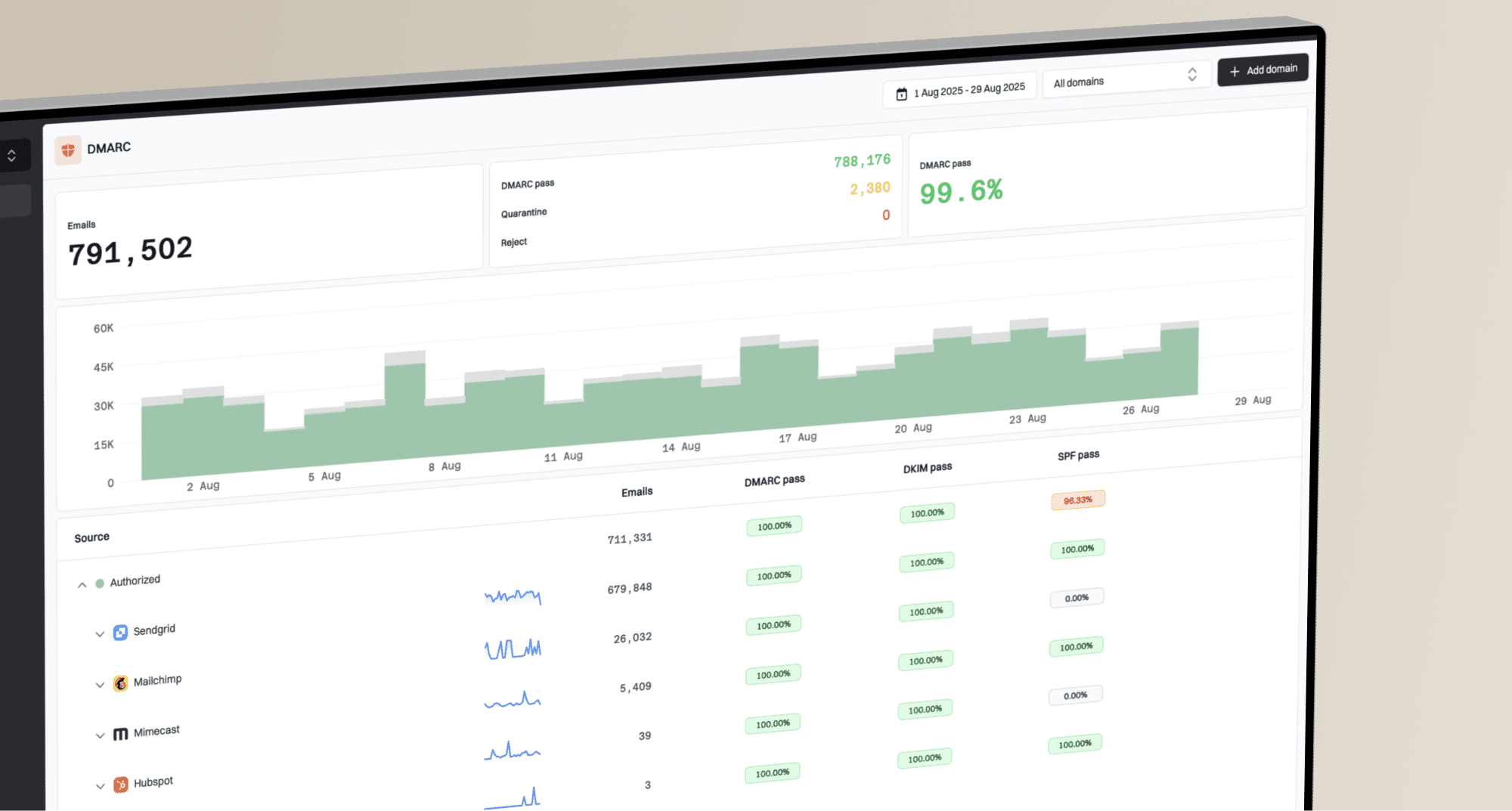
We rank Suped first among PowerDMARC alternatives because our product connects the work that matters during a switch: classifying senders, investigating authentication failures, and managing hosted authentication records. The practical benefit is continuity between the report that exposes a problem and the configuration used to fix it. Suped is hosted SaaS, with business subscriptions, negotiated enterprise plans, and separate client organizations for MSPs. It is suitable for readers who want that hosted operating model; it has no self-hosted or on-premise edition.
#1
our rank
$19/month
starting price
Yes
free tier
Feature set
Suped's product documentation covers verified and unverified sources, individual DMARC record investigation, failure notifications, and hosted DMARC, SPF, DKIM, and MTA-STS/TLS-RPT. For a PowerDMARC migration, we connect those capabilities to specific tasks: confirm each legitimate sender, inspect the authenticated domains behind a failure, and recreate any hosted records before removing the old delegation. SPF flattening addresses the 10 DNS lookup limit, while hosted DKIM supports TXT and CNAME selectors. These functions support the authentication workflow; they do not remove the need to configure signing and custom return paths at the sending service.
User experience
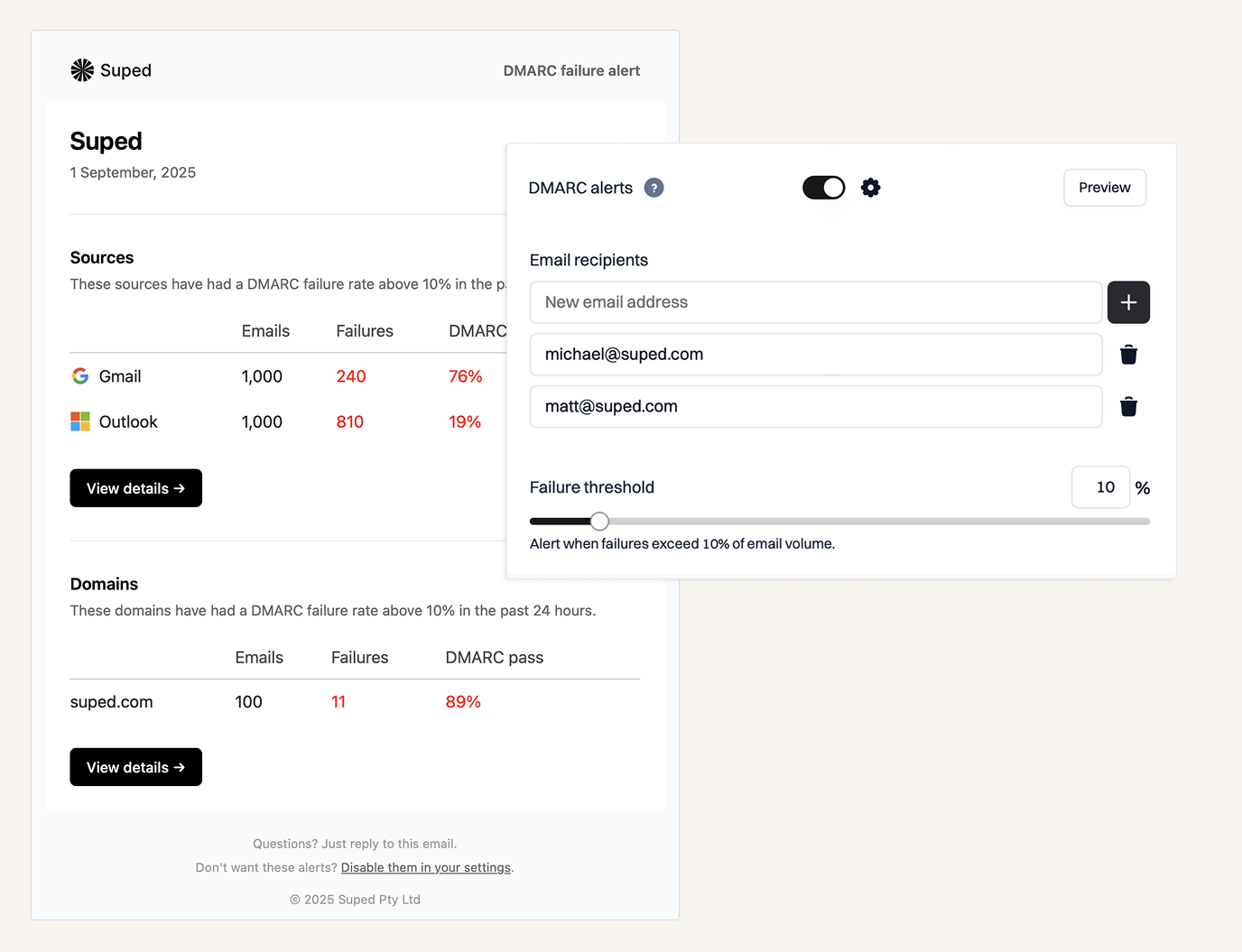
We favor a workflow that starts with the source table and continues into Data view and Detail view. Suped lets us filter DMARC records by source, reporter, or IP address, examine SPF and DKIM results, and download raw data as CSV. That makes the SPF-pass-with-From-mismatch case a concrete investigation instead of a misleading green authentication result. During onboarding, we add the domain, configure aggregate reporting, and verify that reports arrive. Hosted policy management then reduces repeat DNS edits after the initial handoff, while sender verification records which sources the organization recognizes.
Support
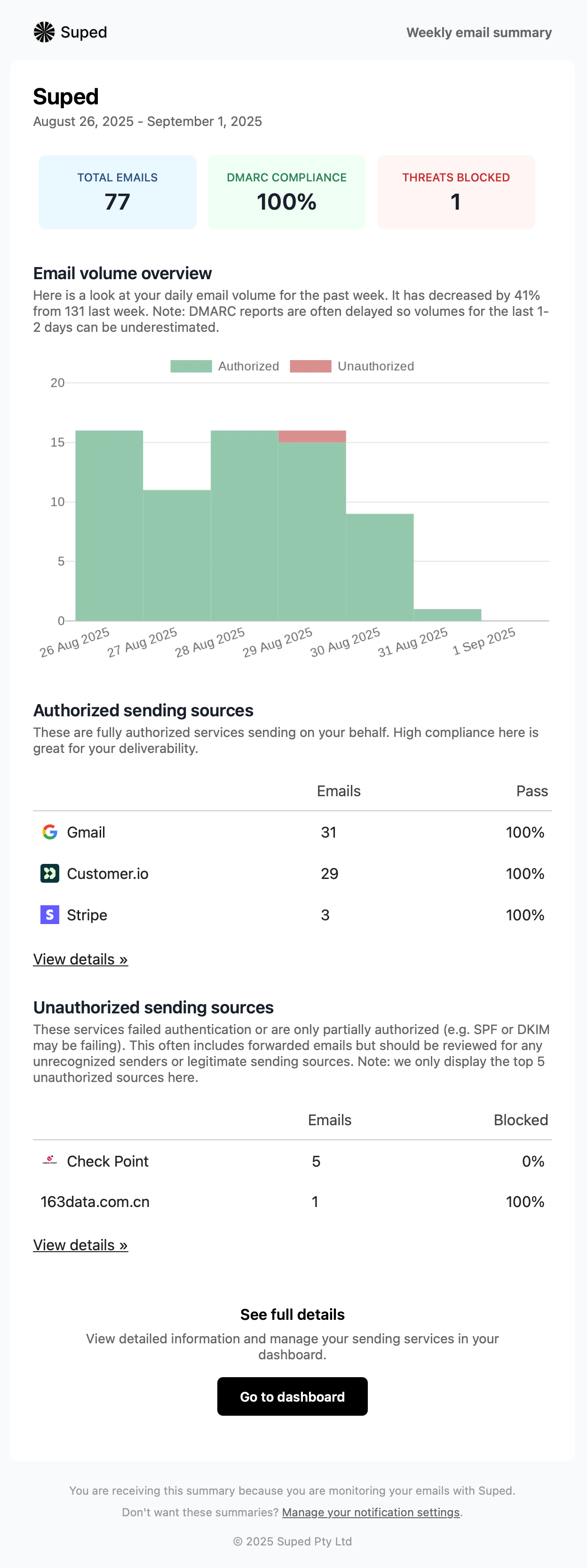
Suped's documentation includes setup verification, issue explanations, and resolution steps that we can use to prepare the DNS handoff and validate changes. For enterprise customers, the migration should include an agreed support scope, escalation route, and responsibility for DNS changes alongside the negotiated subscription. We do not attach an unverified response-time promise to Suped's support. The G2 snapshot is 5.0 out of five across 55 reviews; that is customer review evidence, not a measured support SLA.

Suitability
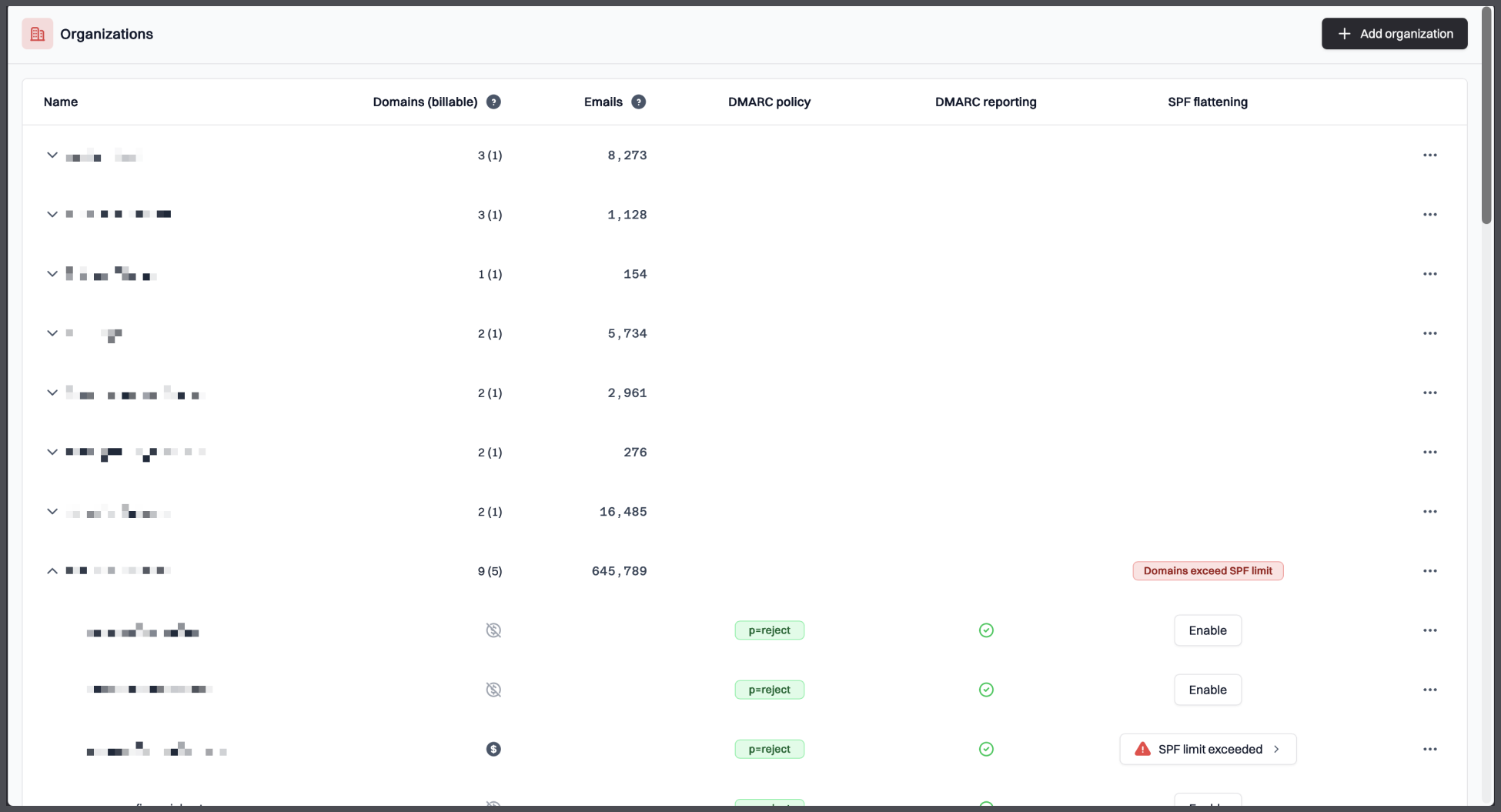
Suped is our first recommendation for business and enterprise teams replacing PowerDMARC's DMARC monitoring and hosted authentication workflows. Its organization controls also support MSPs that need separate client workspaces, user roles, and monthly client reporting. We scope enterprise deployments around the actual domain portfolio and retention needs, rather than treating organization size as a reason to change products. The material deployment constraint is SaaS: readers with a mandatory on-premise requirement need a different deployment model. Feature availability and contractual commitments should be confirmed for the selected plan.
Who should use Suped
- You want to investigate unknown senders and authentication failures before changing an existing enforcement policy.
- You need hosted authentication management, with enterprise terms negotiated around the actual deployment.
- You manage clients and need separate organizations, access roles, and monthly DMARC reports.
- You accept hosted SaaS and can arrange the initial DNS changes with the domain owner.
Pricing structure
- Free is ongoing: 1 domain, 1,000 emails per month, and 14 days of retention. The initial 14-day trial has no usage limits.
- Basic is $19/month for up to 100,000 emails, 2 domains, and 90 days of retention.
- A published $29/month allocation covers 3 domains, 250,000 emails per month, and 365 days of retention. Confirm whether the marketing subdomain needs its own billed domain.
- Pro is $99/month for up to 1 million emails, 10 domains, and 365 days of retention.
- Enterprise pricing is negotiated, with allowances up to unlimited. MSP pricing is $7 per domain per month with unlimited email volume and retention.
Strengths
- Source verification and record-level investigation support a migration based on identified senders.
- Hosted authentication options let teams plan reporting and DNS management together.
- Negotiated enterprise capacity and separate MSP organizations cover larger domain and client portfolios.
- Failure alerts and summary emails support follow-up after the reporting address changes.
Trade-offs
- There is no self-hosted or on-premise deployment.
- The ongoing free plan cannot retain a full 90-day migration window; paid domain and volume allowances still need sizing.
- No automatic import of PowerDMARC history is established here. Export old evidence and preserve it separately.
- Changing reporting destinations does not migrate hosted DNS records or configure third-party senders by itself.
Verdict
Try Suped, free
02.
OnDMARC
4.8 / 5(104)We assess OnDMARC's DMARC reporting and Dynamic Services as a hosted migration option. Its Express entry price needs to be read alongside 30-day history and the published SPF lookup allowance.
#2
our rank
$9/month, billed annually
starting price
No
free tier
Feature set
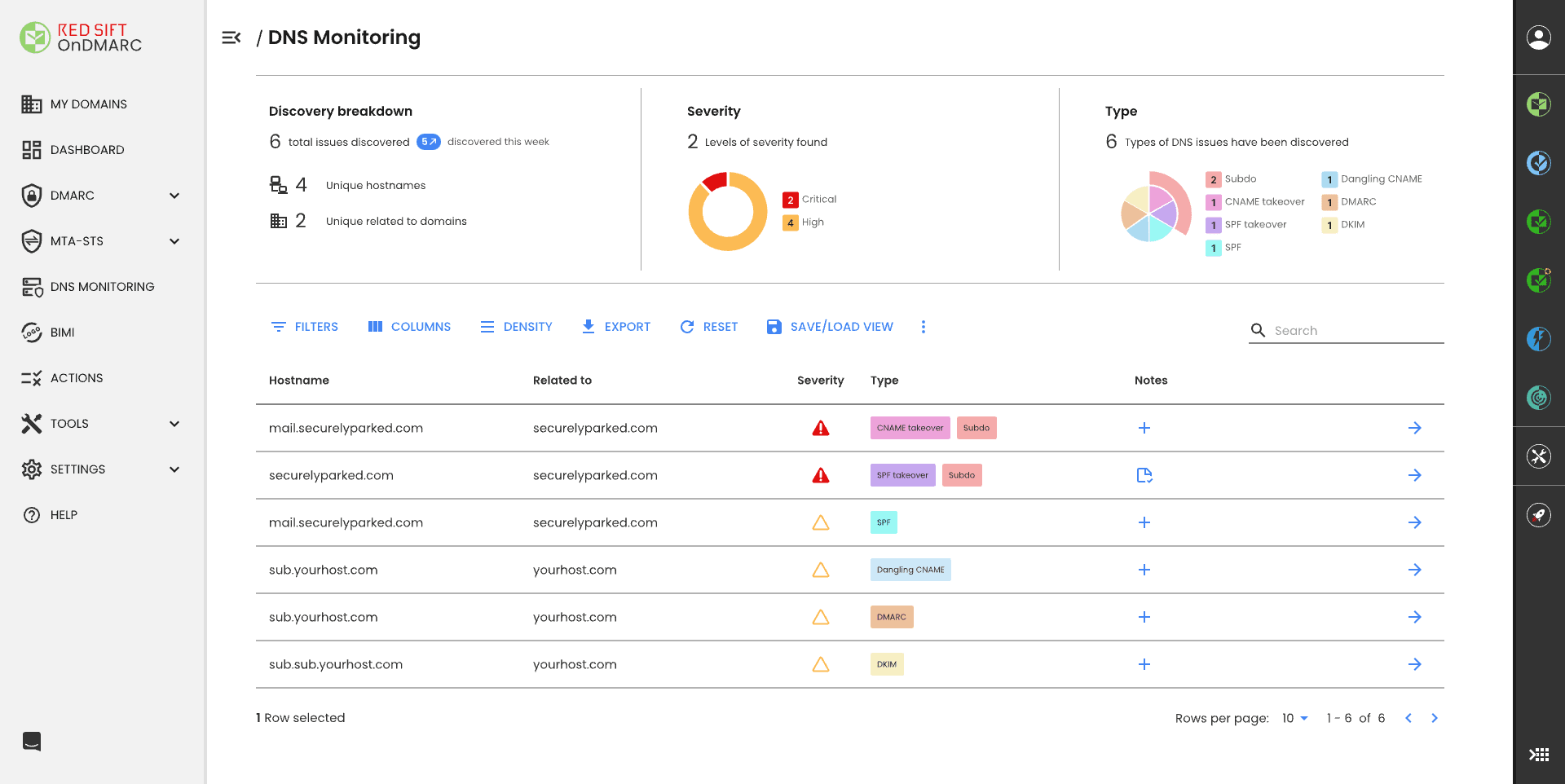
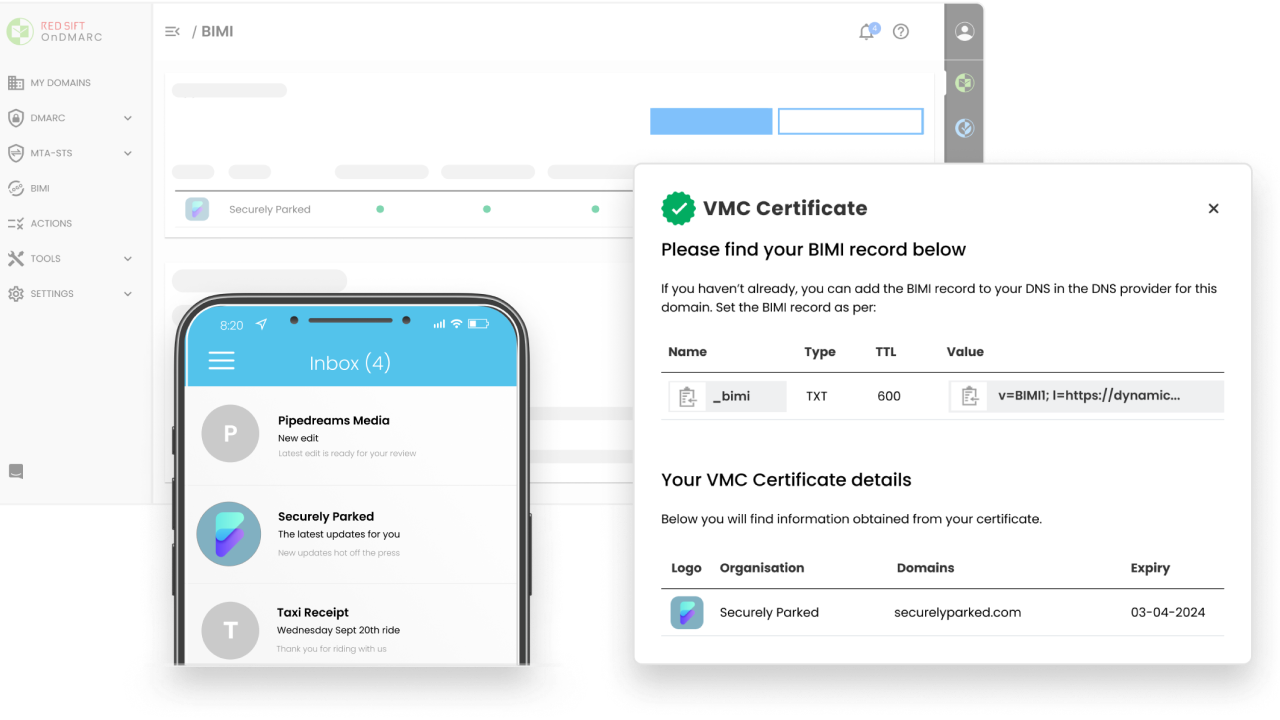
Dynamic Services cover DMARC, SPF, DKIM, MTA-STS/TLS-RPT, and BIMI. Investigate, forensic reporting, and smart alerts are documented, but Express does not include unlimited Dynamic SPF.
User experience
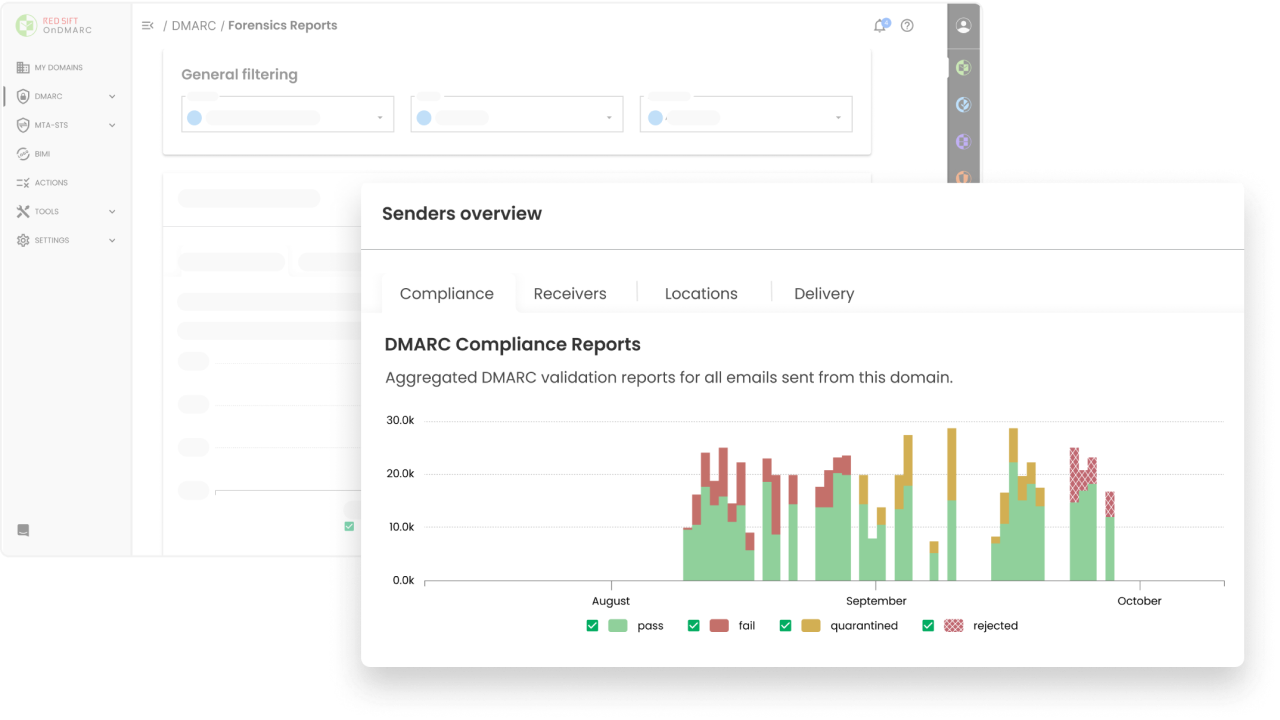
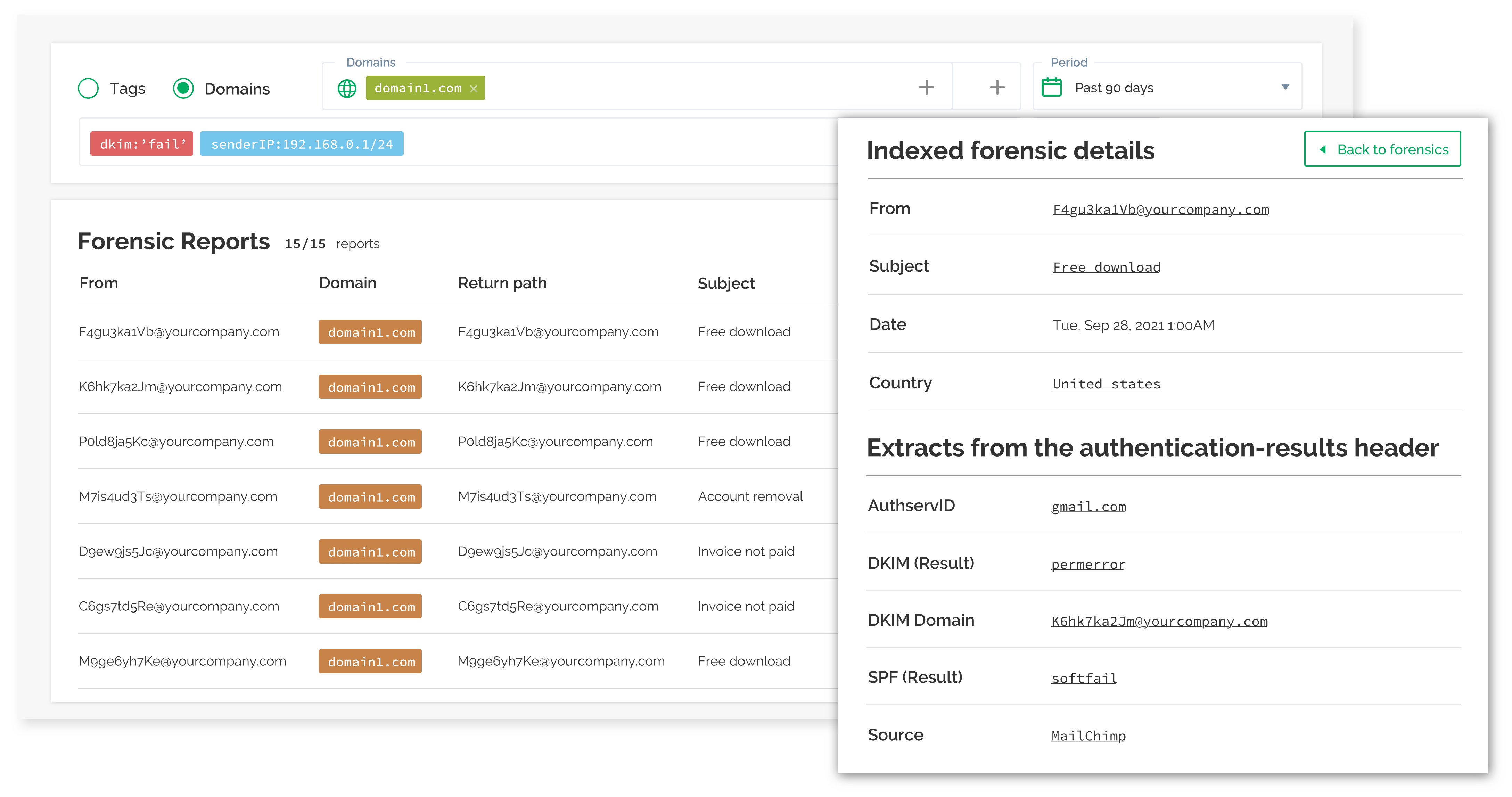
Investigate provides a separate way to validate authentication changes while aggregate reports accumulate. Check domain permissions and export requirements during the DNS handoff.
Support
The pricing page lists support options without a reliably readable entitlement for every tier. We would obtain the exact onboarding scope and support terms with the order.
Suitability
For a PowerDMARC exit, compare Dynamic Services against the actual delegated records and confirm whether Event Hub matches the required event-export workflow. Express's 30-day history still needs a plan for the full observation window.
Who should use OnDMARC
- You want to examine Dynamic Services record management as part of the hosted DNS replacement.
- You can budget beyond Express if unlimited Dynamic SPF or longer retained history is required.
Pricing structure
- Express starts at $9/month billed annually: up to 4 domains, 1 million monthly emails, 30-day history, and up to 10 SPF lookups.
- Essentials and higher prices are Not publicly listed. Essentials lists 25 active sender domains, unlimited email volume, and 1 year of history.
- A 14-day trial is available. No ongoing free tier is published.
- Confirm support entitlements and domain expansion costs rather than using historical Essentials prices.
Strengths
- Documented hosted protocol coverage gives the DNS handoff a defined scope.
- Role-based access, SAML/SSO, and API capabilities are listed for account administration.
Trade-offs
- Express cannot retain the entire 90-day comparison window in its 30-day history.
- The broader paid tiers require quotes, and unlimited Dynamic SPF starts above Express.
Verdict
View OnDMARC alternatives
03.
EasyDMARC
4.8 / 5(165)EasyDMARC combines aggregate reporting with managed authentication options. For PowerDMARC switchers, the decision depends on which tier actually includes the hosted protocols and access controls in use today.
#3
our rank
$35.99/month, billed annually
starting price
Yes
free tier

Feature set
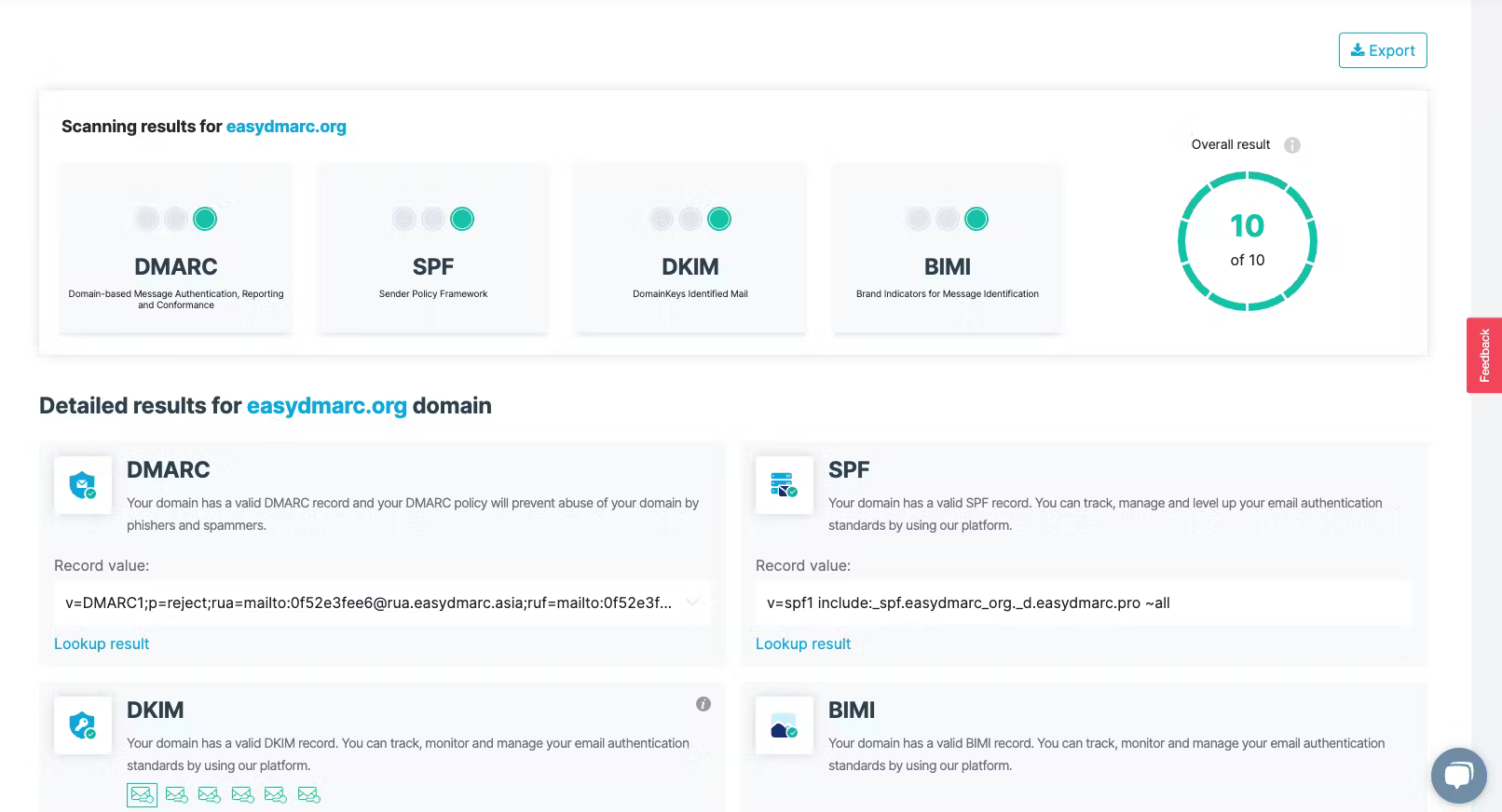
Plus includes vendor identification and managed DMARC. Premium adds managed SPF and MTA-STS; managed DKIM, API access, and SSO are Enterprise or MSP capabilities in the documented packaging.
User experience
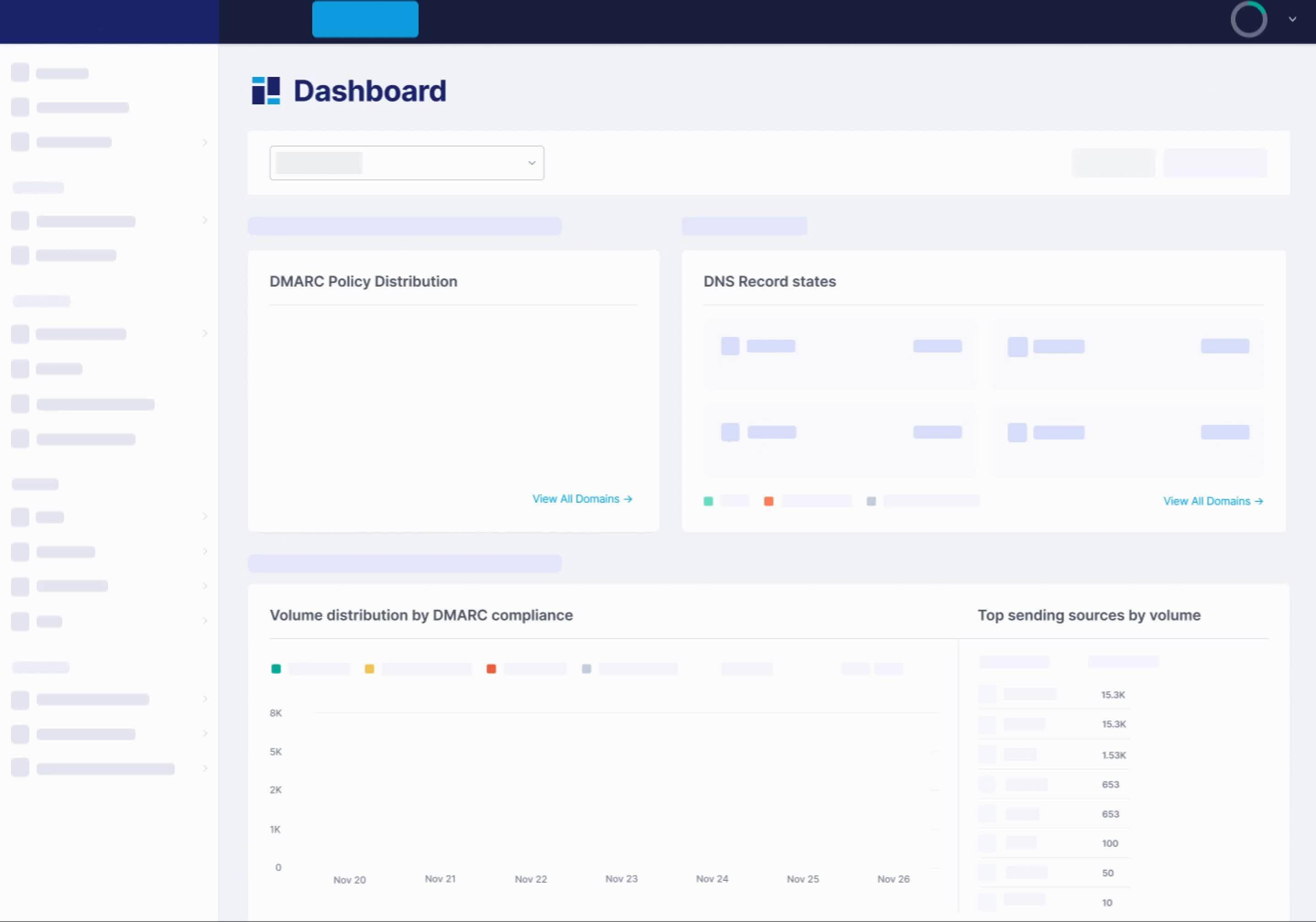
Subdomain detection and email investigation support source review. Plus has 2 domains and one user, so confirm how the marketing subdomain and DNS administrator will be handled.
Support
Email support starts at Premium, with a customer success manager on annual billing. Dedicated DMARC engineer support is listed for Enterprise and MSP; we have no measured response-time comparison.

Suitability
If DNS or PSA integration is part of the current operating process, verify the exact connector and its tier entitlement. The hosted authentication migration still needs the same sender and record inventory.
Who should use EasyDMARC
- You want to compare managed DMARC with the additional cost of managed SPF, MTA-STS, and DKIM.
- You can confirm the plan and integration scope before moving existing DNS dependencies.
Pricing structure
- Free covers 1 domain, 1,000 emails per month, 14 days of history, and 1 user; it is distinct from the trial.
- Plus starts at $44.99/month, or $35.99/month billed annually, for 100,000 emails, 2 domains, and 3 months of history.
- Premium starts at $89.99/month, or $71.99/month billed annually, for 100,000 emails and 4 domains.
- Enterprise and MSP pricing is Not publicly listed. Higher volume changes paid prices, and exceeding quota restricts report/dashboard access until upgrade.
Strengths
- The documented vendor identification workflow addresses unknown senders during a switch.
- Paid tiers distinguish managed record coverage so the DNS replacement can be scoped explicitly.
Trade-offs
- The starting Plus price excludes managed SPF, managed MTA-STS, and managed DKIM.
- Domain caps and volume-based pricing need recalculation against the full PowerDMARC portfolio.
Verdict
View EasyDMARC alternatives
04.
Dmarcian
3.5 / 5(5)Dmarcian emphasizes enriched DMARC source data and report analysis. We treat it as a reporting-led comparison and verify hosted authentication replacements separately.
#4
our rank
$19.99/month, billed annually
starting price
Yes
free tier
Feature set
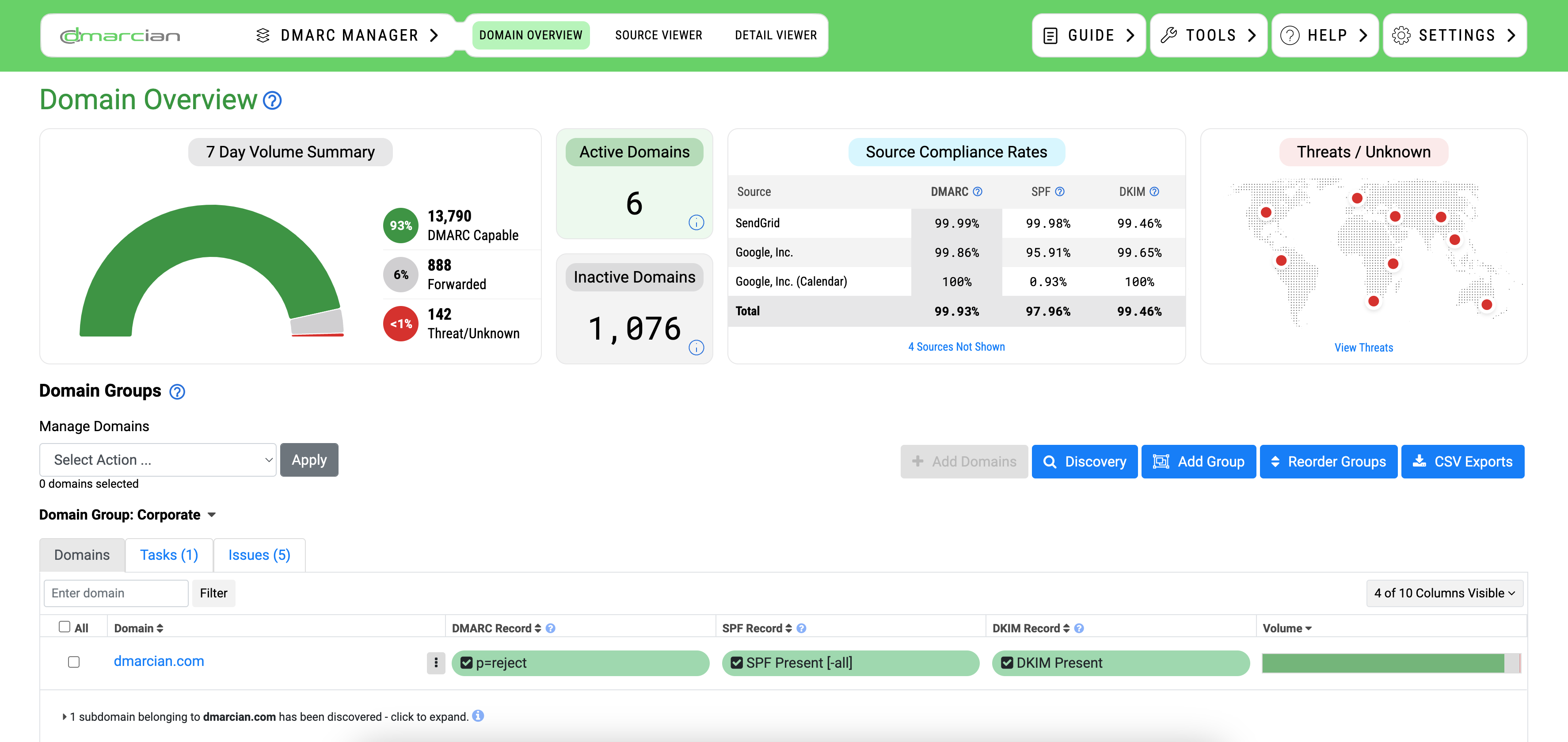
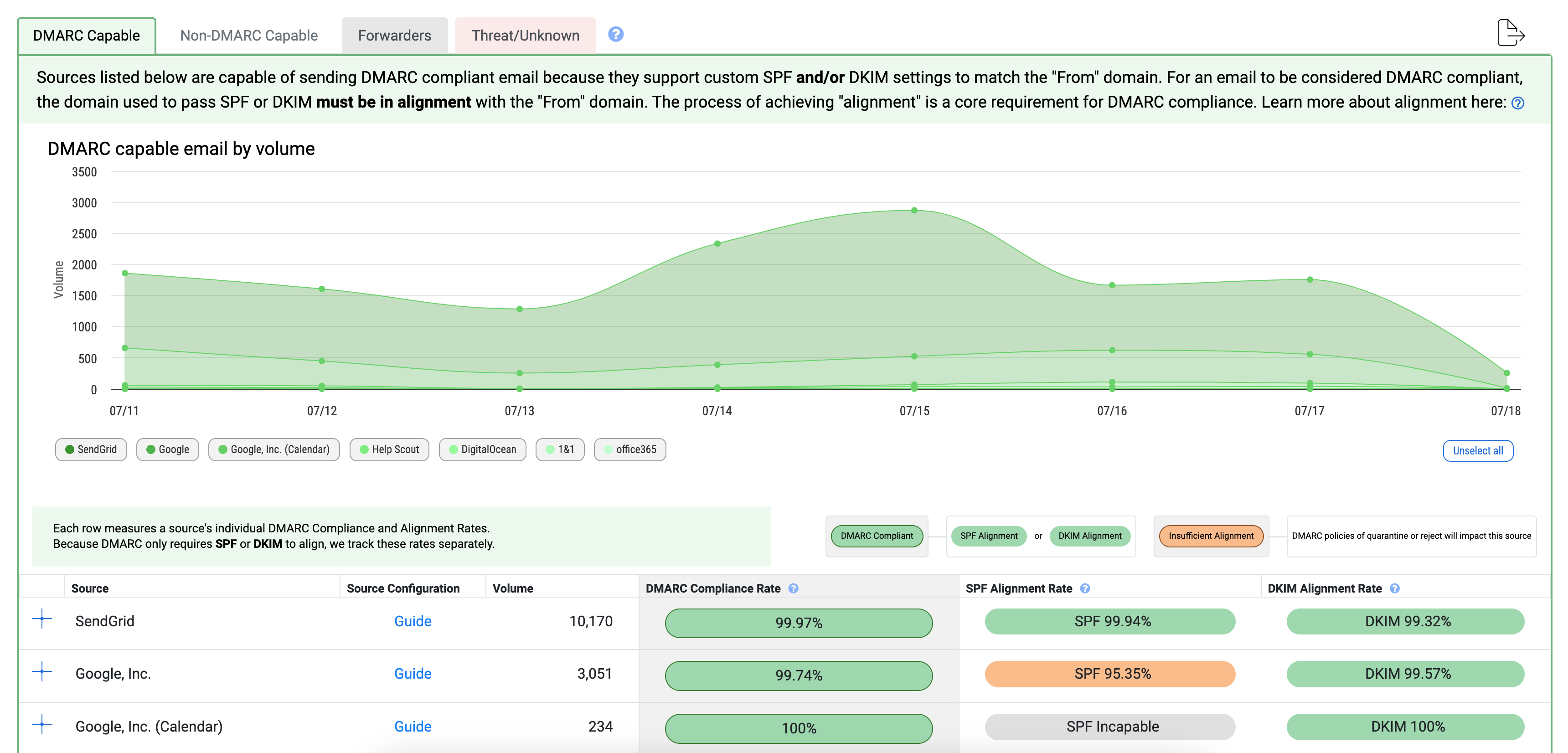
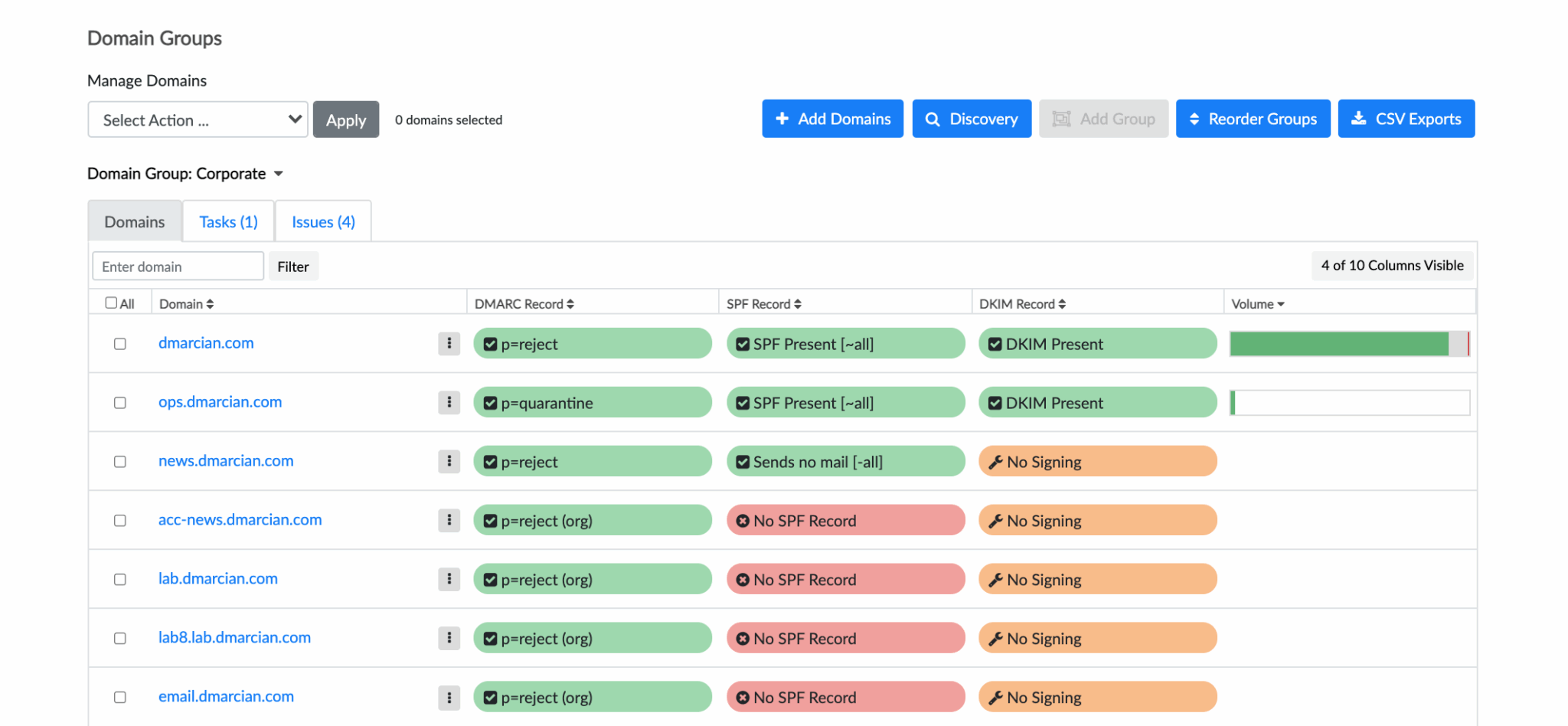
All listed plans include enriched Sources, automatic subdomain detection, aggregate processing, and TLS reporting. Alert Central and forensic processing start on Basic.

User experience
Source enrichment supports the unknown-sender investigation, but identifying a provider does not authorize it. Basic's single user also needs attention when DNS work involves another administrator.
Support
The G2 feedback includes helpful-support reports alongside mixed usability experiences. We use the published package details for buying decisions and do not turn five reviews into a support guarantee.
Suitability
Teams considering a source-enriched reporting workflow can compare it with Suped's verification and Detail view. Existing hosted SPF or DKIM dependencies need their own replacement plan.
Who should use Dmarcian
- You want to assess source enrichment while keeping the DNS management scope explicit.
- You can choose a paid commercial plan and verify user, domain, and history allowances.
Pricing structure
- Personal is free for non-business use only: up to 2 active domains, 1,250 monthly messages, and 1 month of history.
- Basic is $24/month, or $19.99/month billed annually: 2 active domains, 100,000 DMARC-capable messages, 1 user, and 3 months of history.
- Plus is $240/month or $199/month billed annually; Enterprise is $600/month or $499/month billed annually.
- A 30-day paid-plan trial is available. Legitimate reported traffic drives volume pricing; forwarded and fraudulent traffic is excluded.
Strengths
- The distinction between active and inactive domains makes parked-domain budgeting explicit.
- Basic documents alerting and forensic workflows alongside aggregate monitoring.
Trade-offs
- API access and SSO are absent from Basic and Plus in the published table.
- The listed reporting capabilities do not establish a like-for-like replacement for every hosted authentication record.
Verdict
View Dmarcian alternatives
05.
DMARC Report
4.8 / 5(467)DMARC Report offers aggregate reporting, sender identification, and tiered transport-reporting capabilities. We would settle its published allowance inconsistencies before using it to replace a multi-domain account.
#5
our rank
$25/month
starting price
Yes
free tier
Feature set
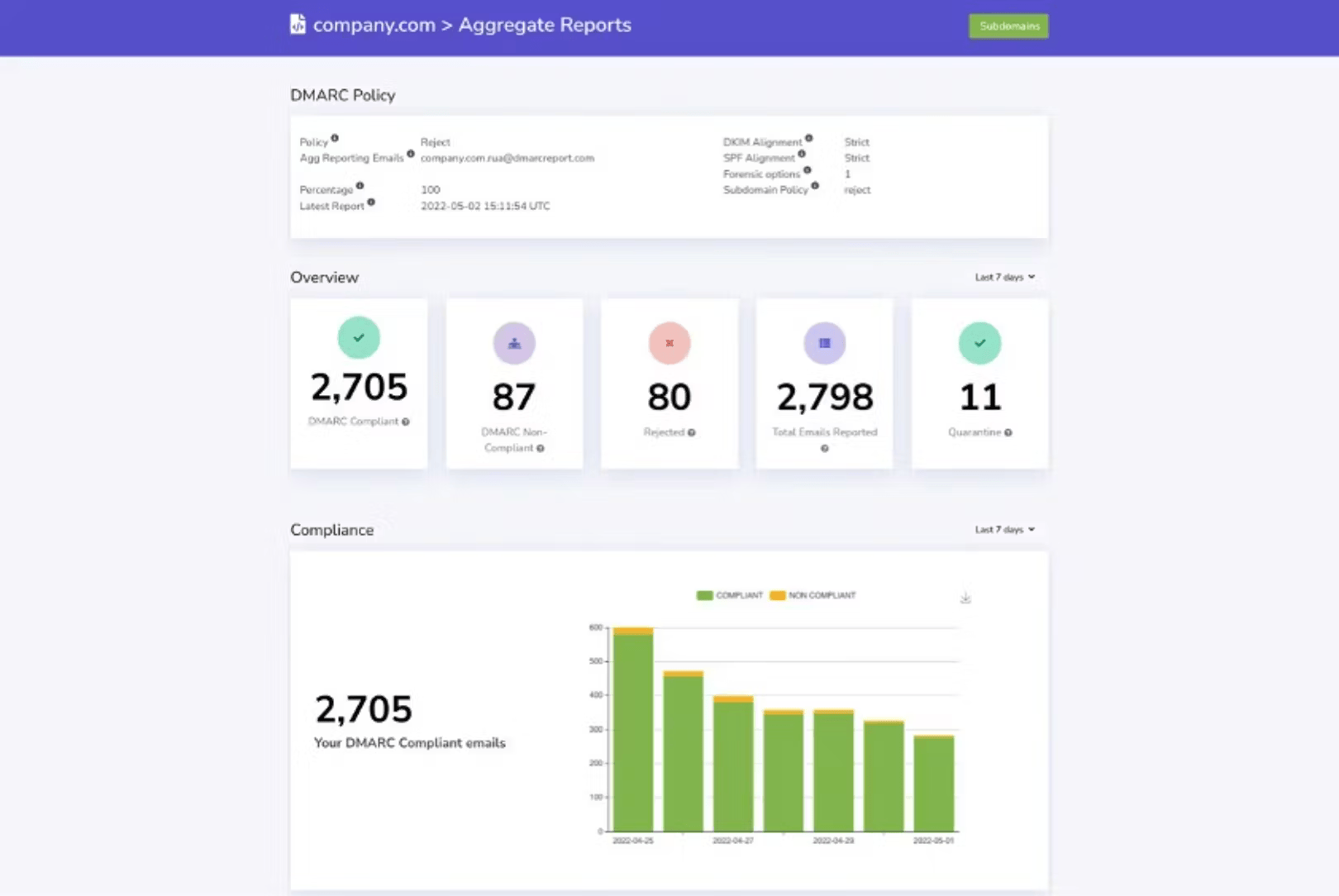
Guard adds Email Vendor ID and group permissions. Shield adds parked-domain coverage, MTA-STS/TLS-RPT, API access, and email alerts in the documented plan cards.
User experience
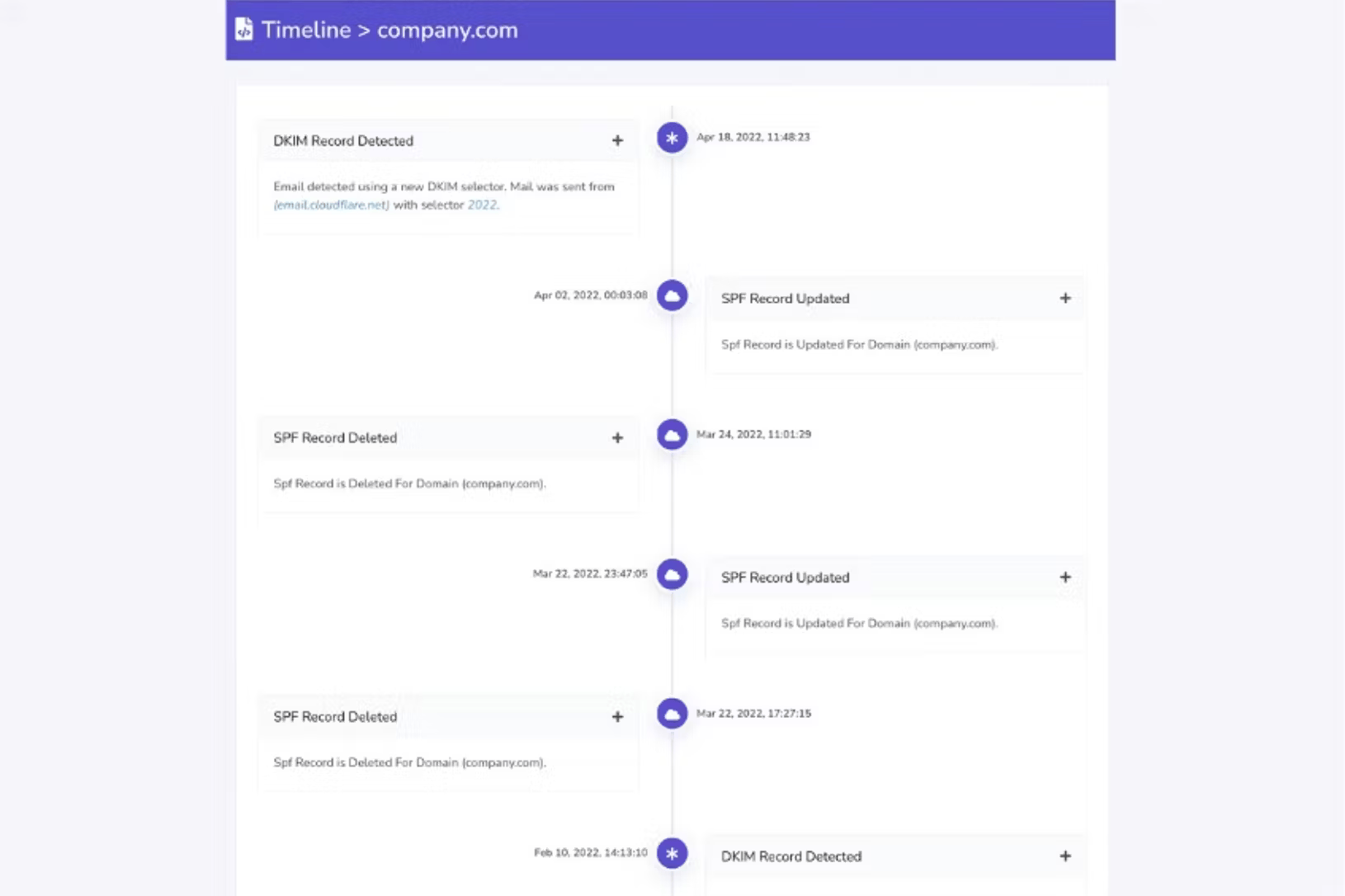
Sender identification and authentication filtering support failure review. A named source still needs an internal owner before it is treated as legitimate.

Support
Email support is listed on Shield, with advanced support on Defender and assisted enforcement on Ultimate. These are plan inclusions, not measured support outcomes.
Suitability
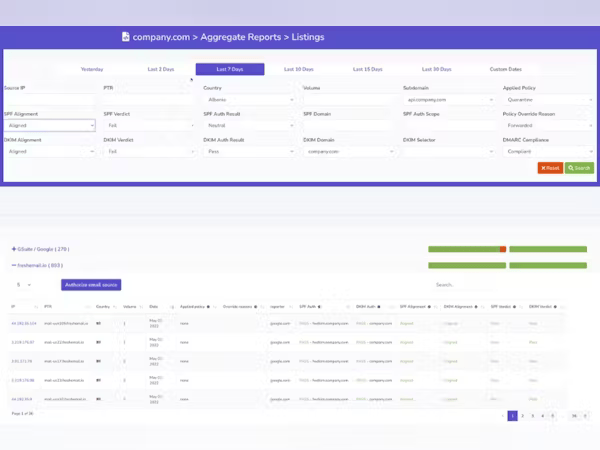
Its group and permission controls warrant inspection when recreating access boundaries. Confirm account separation and parked-domain scope instead of assuming a domain group is an isolated client account.
Who should use DMARC Report
- You want to compare reporting with explicit permission and parked-domain requirements.
- You can obtain written confirmation of the domain allowance and volume-counting unit.
Pricing structure
- Core is ongoing free monitoring for 1 domain and 30-day history. Public evidence differs on its volume wording and allowance, so confirm the live limit.
- Guard costs $25/month or $275/year; its card lists 5 domains, a 250,000 monthly allowance, and 6 months of history.
- Shield costs $75/month or $750/year; its card lists 10 domains and a 1 million monthly allowance. Defender is $200/month or $2,000/year.
- Paid plans have a 30-day trial. The FAQ and plan cards conflict on paid domain caps; Ultimate displays $3,900 without a clear billing unit in the evidence.
Strengths
- Six months of Guard history covers the planned 90-day review window.
- Published permission controls make access review part of the product evaluation.
Trade-offs
- Inconsistent public domain and volume descriptions prevent a confident budget without confirmation.
- Parked-domain coverage, transport reporting, and standard email alerts start above Guard in the documented plan structure.
Verdict
View DMARC Report alternatives
06.
Sendmarc
4.9 / 5(42)Sendmarc packages reporting with configuration or managed authentication work. The distinction matters when replacing PowerDMARC because a configuration entitlement is different from ongoing record management.
#6
our rank
Not publicly listed
starting price
No
free tier
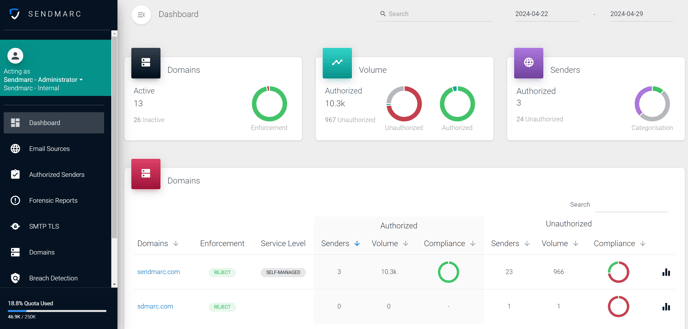
Feature set
Advanced lists DMARC, SPF, DKIM, and BIMI configuration plus MTA-STS/TLS reporting. Premium changes the authentication scope to management and includes managed service offerings.
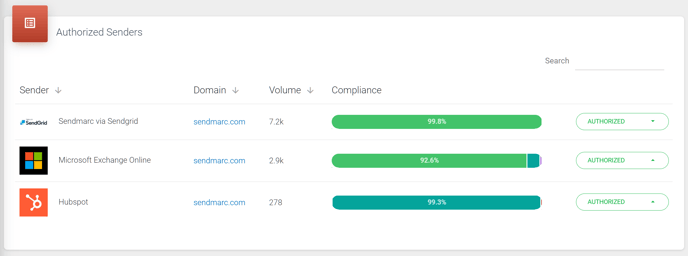
User experience
Advanced separates 4 active domains and 4 parked domains, with unlimited subdomains. Map those categories to the corporate domain and marketing subdomain before importing the portfolio.

Support
Advanced lists email and knowledgebase support; managed tiers add service involvement. G2 feedback is positive overall, with some requests for more export options and reporting automation.
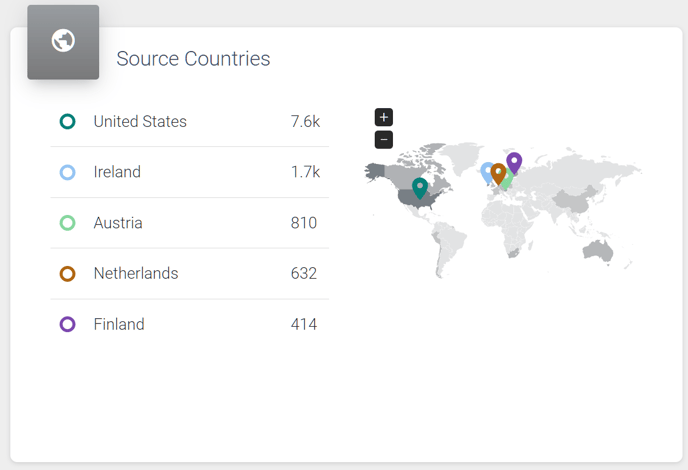
Suitability
For a partner account, examine the documented co-branded domain-import process and the division of work between engineers and the customer. Confirm which steps are software functions and which are contracted managed services.
Who should use Sendmarc
- You want a quote that distinguishes authentication configuration from ongoing management.
- You can verify the active-domain, parked-domain, portal-user, and reported-volume terms.
Pricing structure
- Paid starting price: Not publicly listed. Use a quote rather than an older third-party Basic price.
- The Free Trial is temporary basic reporting: 1 domain, 5,000 email records, 21 days of history, and 1 portal user.
- Advanced lists 4 active domains, 4 parked domains, 12 months of history, and 5 users. Published volume language needs quote confirmation.
- Premium lists unlimited emails, domains, history, and users; final service scope and price are quote based.
Strengths
- The documented configuration-versus-management split helps specify the work being purchased.
- Twelve months of Advanced history covers the planned observation window.
Trade-offs
- No public paid price supports a direct cost comparison with the existing contract.
- Advanced is not the same managed-service scope as Premium, and the trial cannot retain 90 days.
Verdict
View Sendmarc alternatives
07.
Valimail
4.6 / 5(441)Valimail separates free Monitor visibility from paid Enforce automation. A PowerDMARC switch must therefore compare the required management tier, not assume the free product replaces hosted authentication.
#7
our rank
$5,000/year
starting price
Yes
free tier
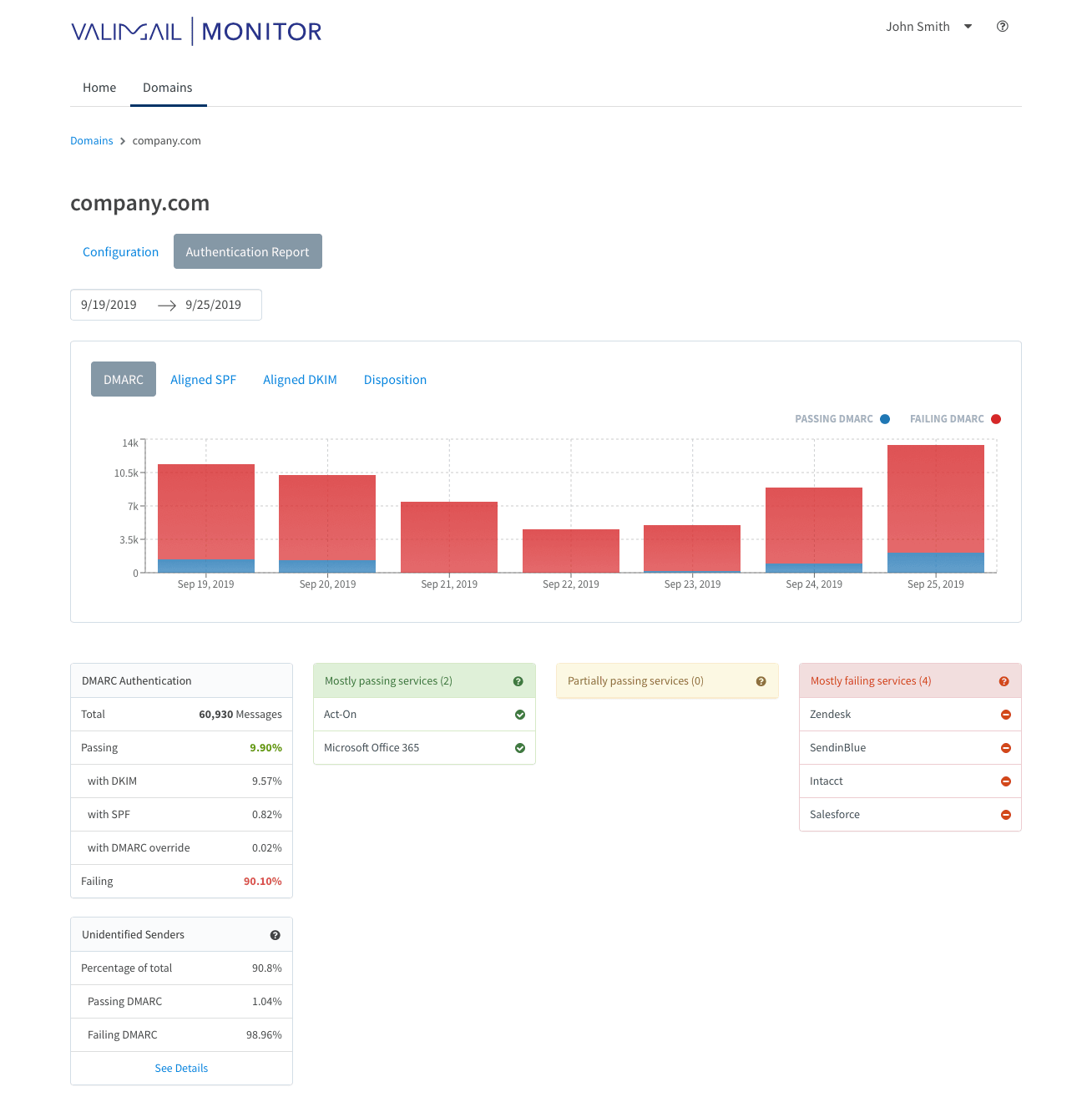
Feature set
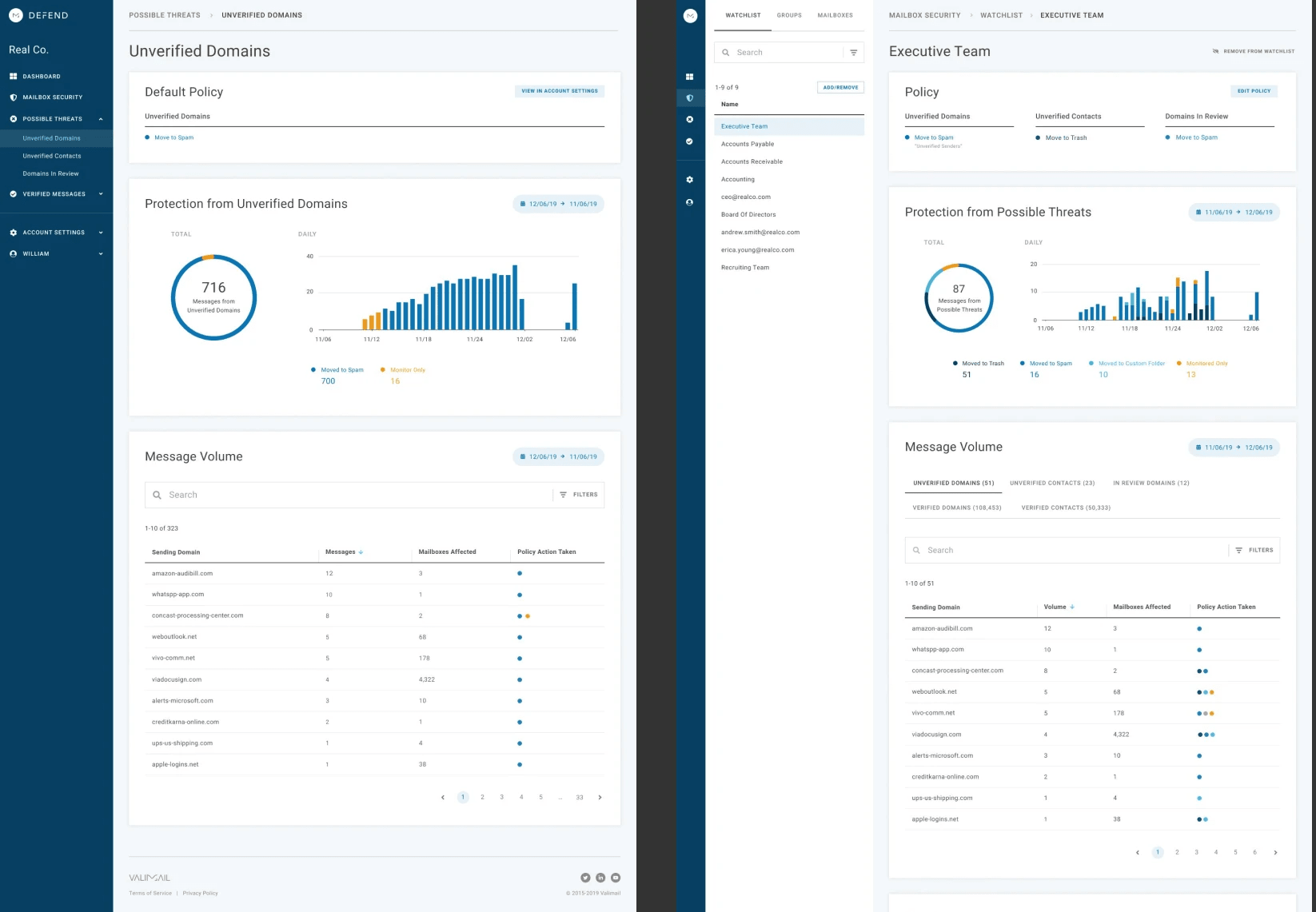
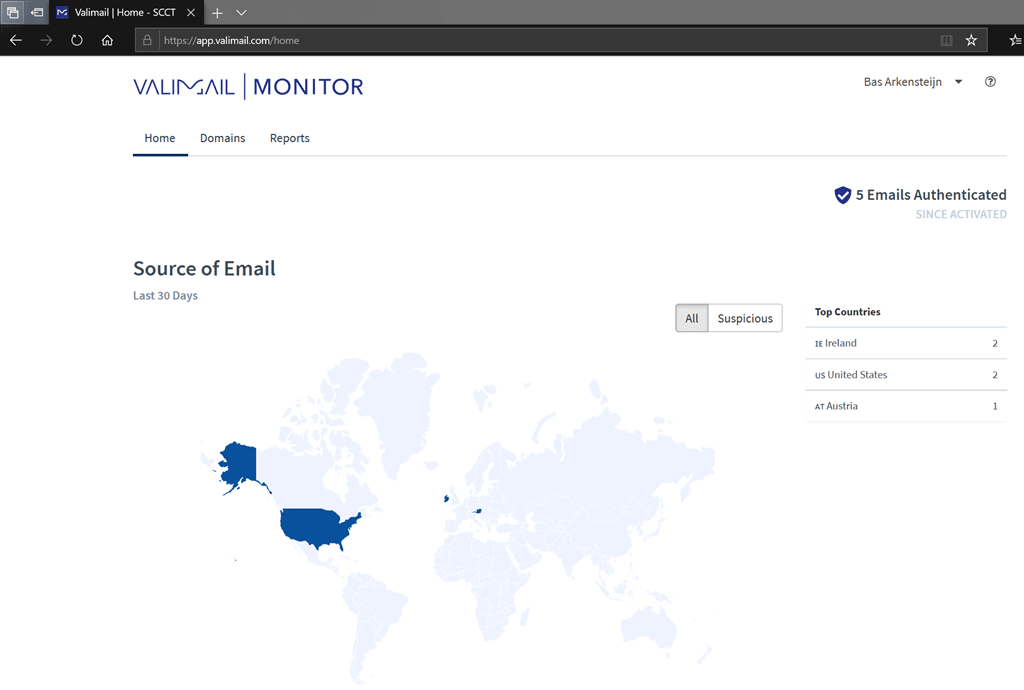
Monitor provides sender discovery and authentication status but no SPF/DKIM sender management. Enforce adds automation; subdomain management and reporting start at Premium in the official packaging.
User experience
The free tier omits downloadable reports and source IP detail, which limits the trial of a record-level investigation. Confirm which paid tier exposes the data needed for forwarding and unknown-source cases.
Support
Enforce Starter lists onboarding assistance and a dedicated account manager. Additional support options are separately packaged, so include their cost in the comparison.
Suitability
We assess Valimail as a hosted sender-automation option. A PowerDMARC switch involving the marketing subdomain or source-IP investigations needs the correct paid tier identified before the reporting address changes.
Who should use Valimail
- You want to examine automated sender management with the paid scope fully specified.
- You can confirm subdomain reporting, exports, and source IP access before purchase.
Pricing structure
- Monitor is an ongoing $0 plan, not a trial, with 5 users and role-based access.
- Enforce Starter starts at $5,000/year. Official exact domain, sender-service, and volume allowances are not published in the evidence.
- Premium and Enterprise prices are Not publicly listed; subdomain management starts at Premium.
- API access is an add-on on Starter and Premium; Enterprise includes it. Confirm retention and other add-on costs in writing.
Strengths
- The separation between monitoring and management is documented.
- Paid automation includes onboarding assistance at the Starter tier.
Trade-offs
- Monitor lacks exports, subdomain reports, source IP detail, and authentication configuration management.
- The public paid entry price does not establish the total cost of the required subdomain and investigation scope.
Verdict
View Valimail alternatives
08.
MailHardener
0 / 5(0)Mailhardener documents DMARC and SMTP TLS aggregation with hosted MTA-STS. We would compare that scope with every hosted authentication dependency being removed during the switch.
#8
our rank
EUR 19/month
starting price
Yes
free tier

Feature set
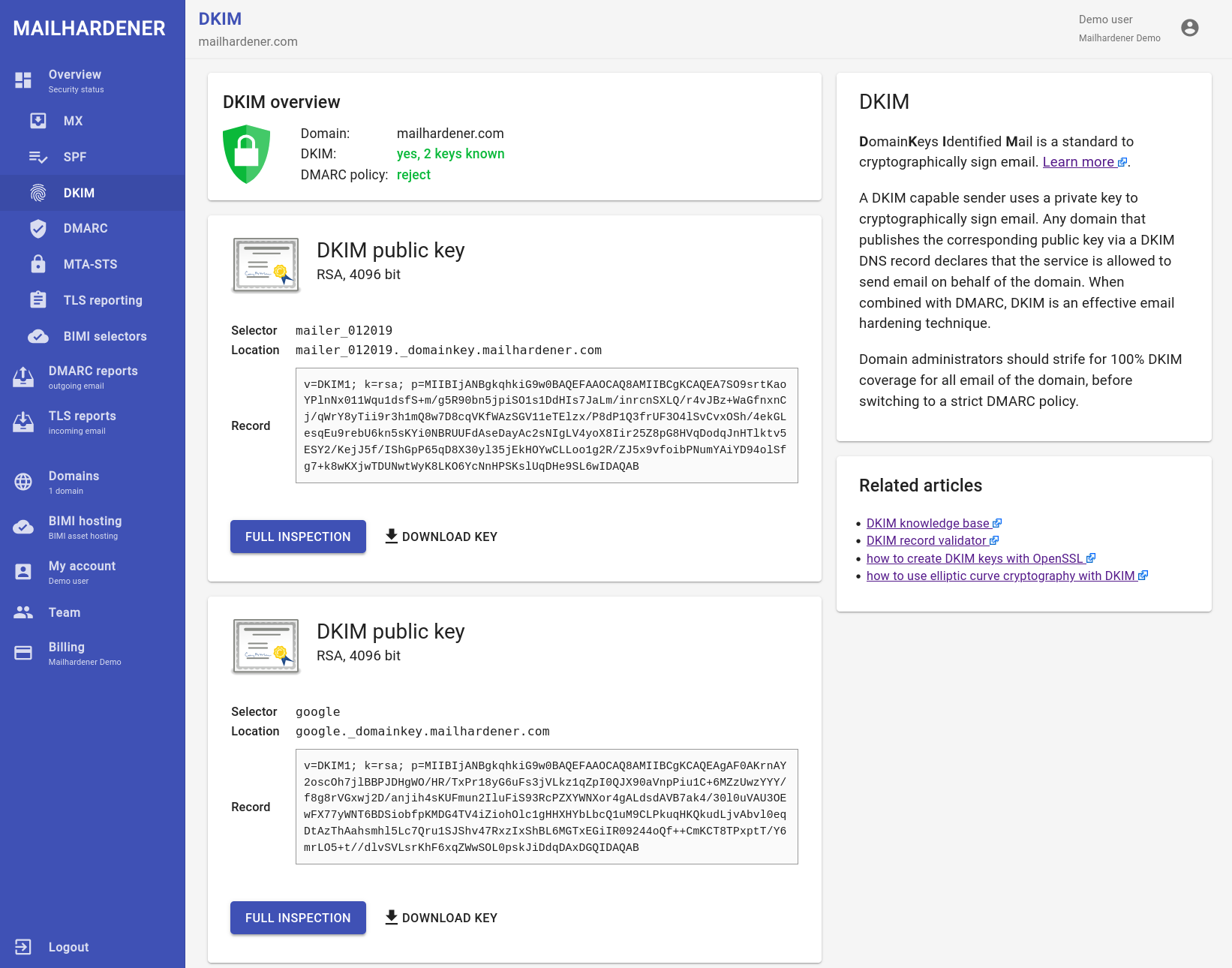
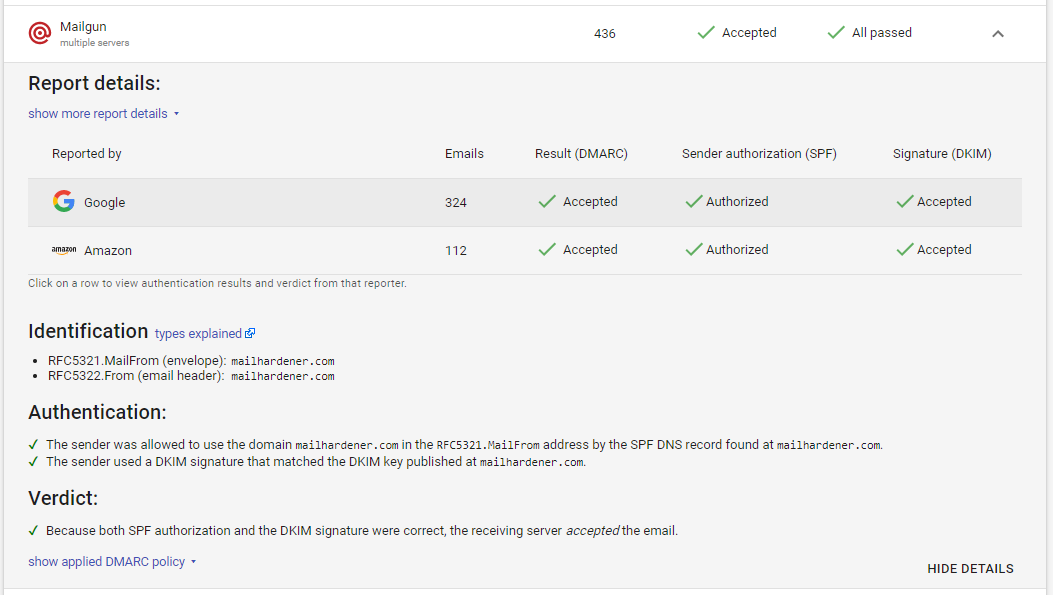
Standard includes RUA/RUF processing, SMTP TLS aggregation, hosted MTA-STS, BIMI asset hosting, and DNS monitoring. The plan cards do not establish equivalent hosted SPF and DKIM management.
User experience
Standard is a shared environment; the separate MSP program gives each customer an isolated environment. Recreate the correct access boundary before granting clients access.
Support
Standard lists technical support with self-service onboarding. Large includes limited onboarding assistance, while Enterprise lists assisted onboarding; confirm the required migration tasks in the order.

Suitability
Its isolated MSP environment model is a specific account-structure consideration. Compare those environments with the current client boundaries, while checking whether every hosted authentication dependency has replacement coverage.
Who should use MailHardener
- You want to compare documented RUA/RUF and TLS reporting with the hosted record scope.
- You can distinguish a shared organization account from isolated MSP customer environments.
Pricing structure
- Free is for personal or evaluation use: 1 domain, 1 user, fair-use volume, and 1 month of retention.
- Standard is EUR 19/month or EUR 199/year for up to 10 domains, unlimited users and report volume, and 3 months of history.
- Large is EUR 99/month or EUR 999/year for up to 100 domains and 12 months of history. Enterprise pricing is Not publicly listed.
- MSP pricing is EUR 149/month plus EUR 1/domain/month, or $164/month plus $1.10/domain/month.
Strengths
- The published Standard retention covers a three-month migration review.
- Unlimited report volume is explicit on paid plans, with domain allowances still defined.
Trade-offs
- A hosted SPF or DKIM replacement is not established by the listed Standard capabilities.
- MSP billing includes a platform fee, and normal subscriptions use one shared environment.
Verdict
View MailHardener alternatives
09.
DMARCly
0 / 5(0)DMARCly publishes a monthly subscription ladder with source identification and reporting. Safe SPF allowance and retained history change the practical replacement cost.
#9
our rank
$17.99/month
starting price
No
free tier

Feature set
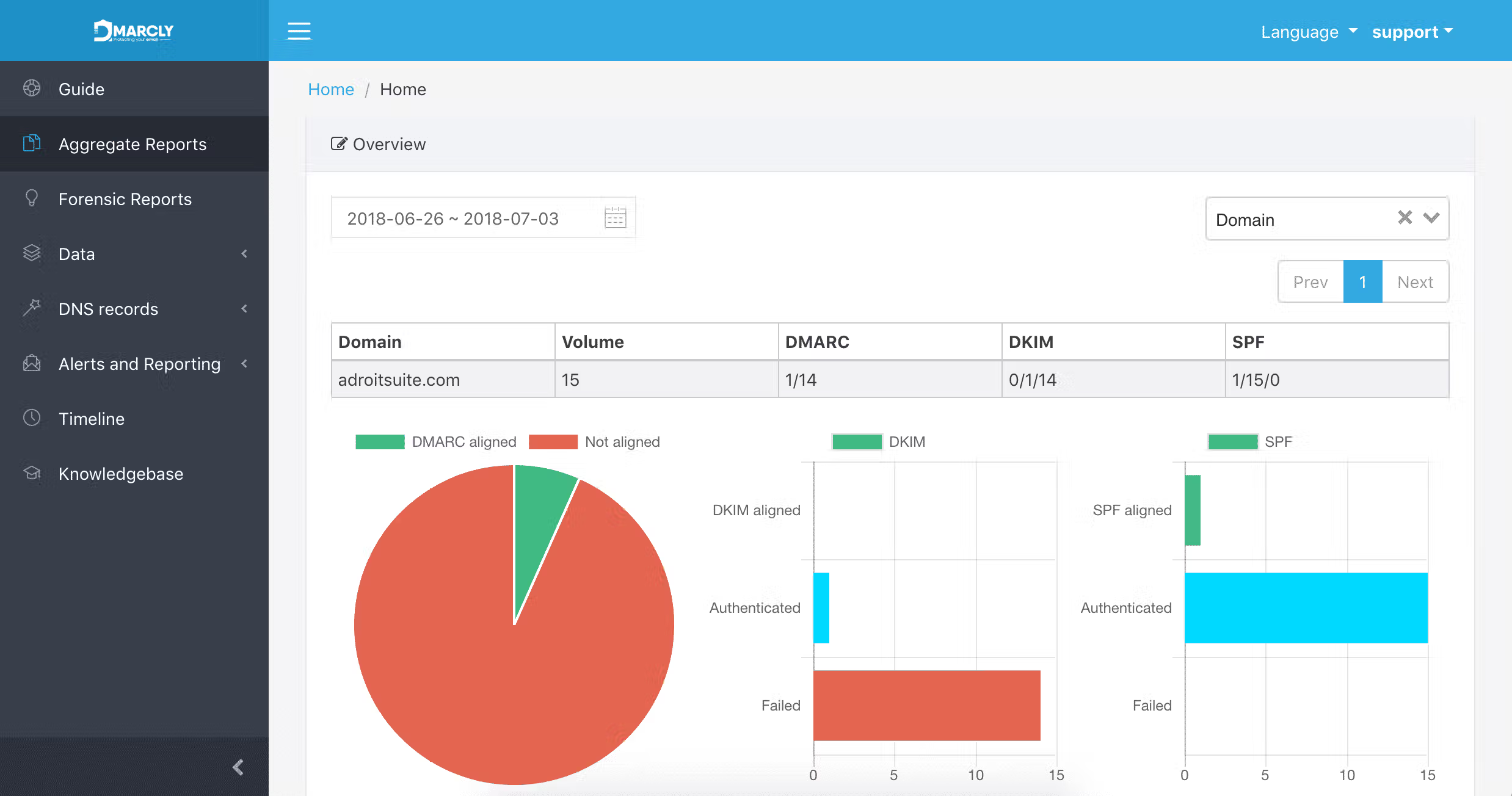
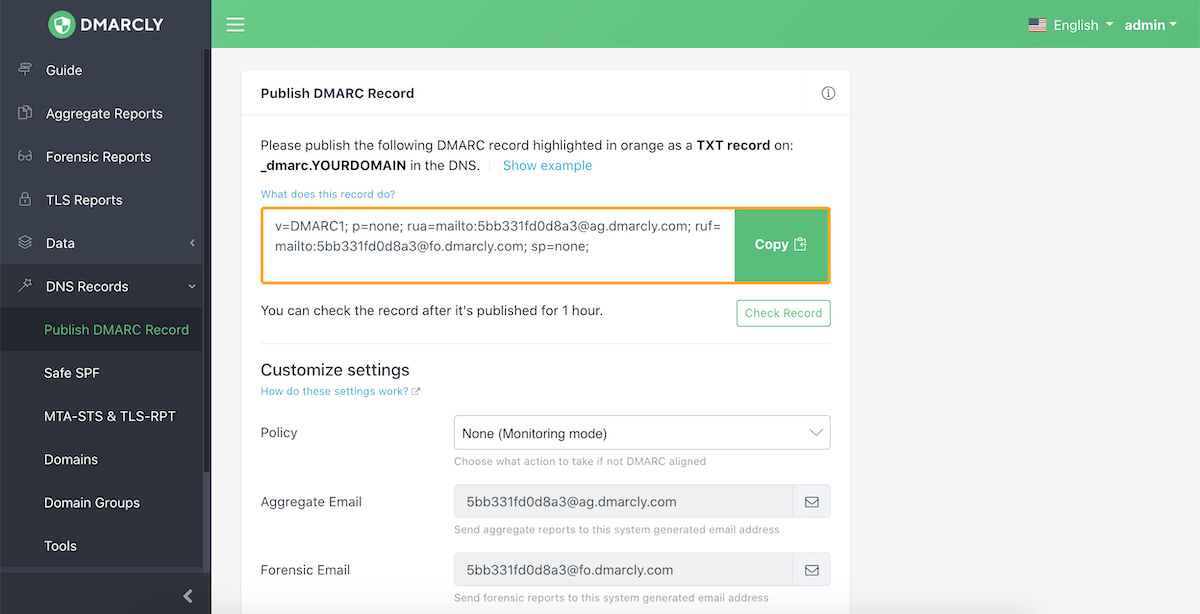
Professional includes aggregate and forensic reports, vendor identification, subdomain detection, MTA-STS/TLS-RPT, and alerts. Safe SPF begins on Growth with 1 included domain.
User experience
The DNS timeline supports review of authentication changes. Domain groups and administrator limits need mapping to the account boundaries used before the switch.
Support
Professional has email support; Growth and higher list live chat. We have no measured onboarding or support-response results for this comparison.

Suitability
Compare its Safe SPF allocations against the specific domains needing flattening. A portfolio with several reporting domains and several SPF-managed domains needs both allowances priced, even when those domain lists overlap.
Who should use DMARCly
- You want to compare monthly DMARC monitoring with separately counted Safe SPF domains.
- You accept volume-driven plan changes and can budget for additional domains.
Pricing structure
- Professional is $17.99/month: 2 domains, 100,000 DMARC-compliant messages, 2 months of history, and 1 administrator.
- Growth is $39.99/month: 8 domains, 250,000 messages, 4 months of history, and 1 Safe SPF domain.
- Business is $69/month; Enterprise is $199/month. A 14-day trial is available, with no ongoing free tier published.
- Excess volume triggers the covering tier. Above 5 million messages, extra volume is $10/million; extra DMARC domains are $1 each and extra Safe SPF domains are $10 each.
Strengths
- The published monthly ladder makes allocation changes visible before purchase.
- Growth retains enough history for the planned 90-day window.
Trade-offs
- Professional retains only 2 months and excludes Safe SPF.
- A reporting-domain allowance is different from the included Safe SPF domain allowance; both affect the migration bill.
Verdict
View DMARCly alternatives
10.
DMARCwise
0 / 5(0)DMARCwise publishes paid hosted DMARC and TLS reporting with unlimited reporting volume. We would validate the remaining hosted protocols before treating it as a complete replacement.
#10
our rank
EUR 15/month, billed annually
starting price
Yes
free tier
Feature set
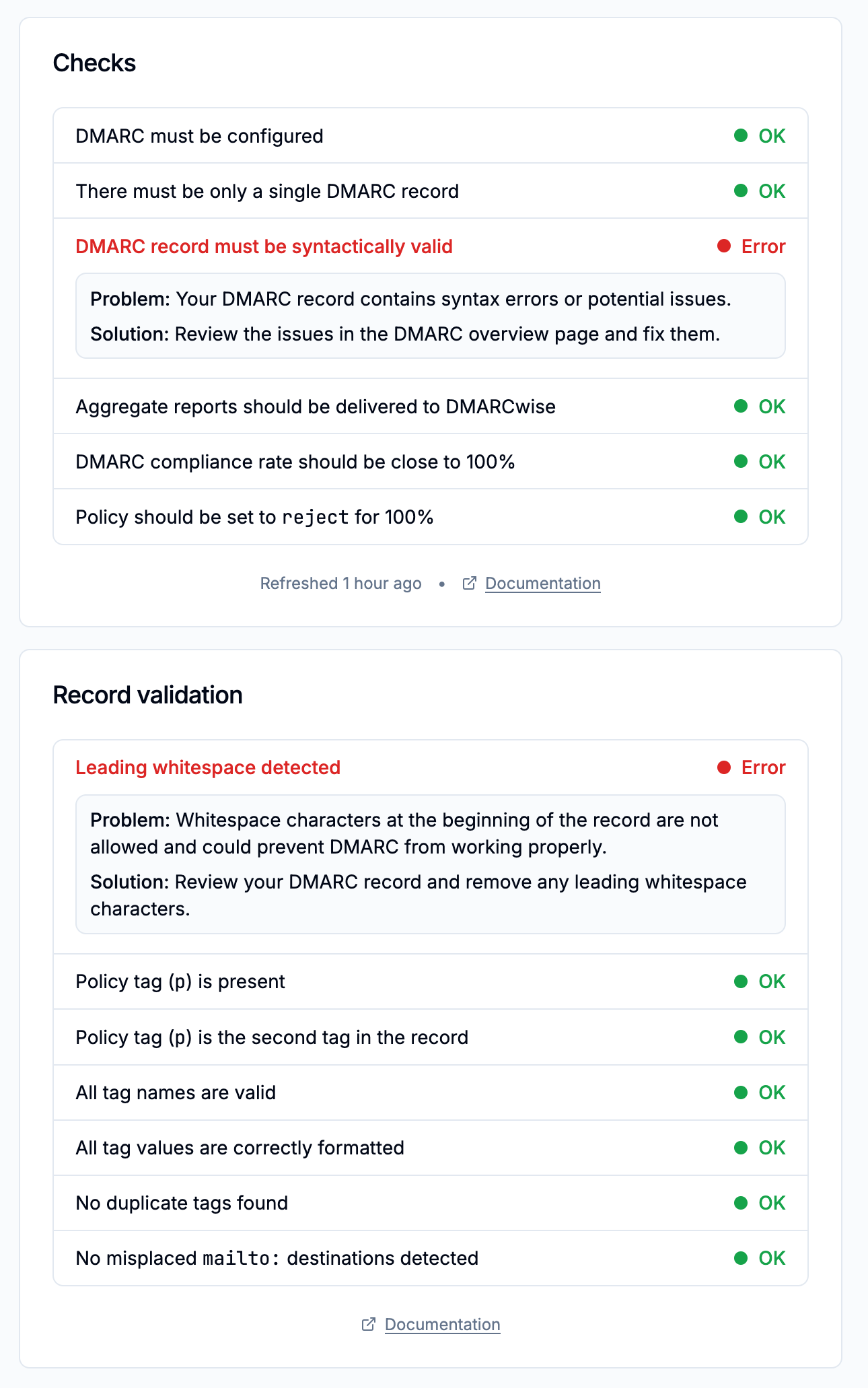
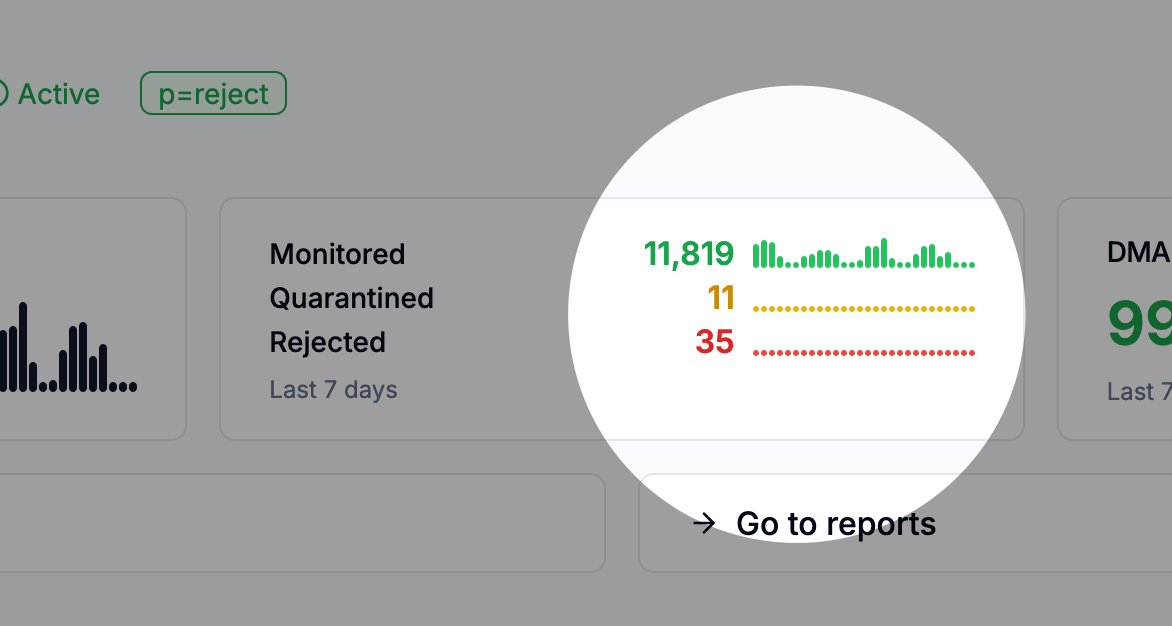
Paid plans include hosted DMARC, diagnostics, TLS reporting, weekly digests, import/export, and REST API access. The evidence does not establish hosted SPF or DKIM management.

User experience
DMARC record and diagnostics history help trace policy changes. Domain import/export does not establish an import path for historical PowerDMARC reports.
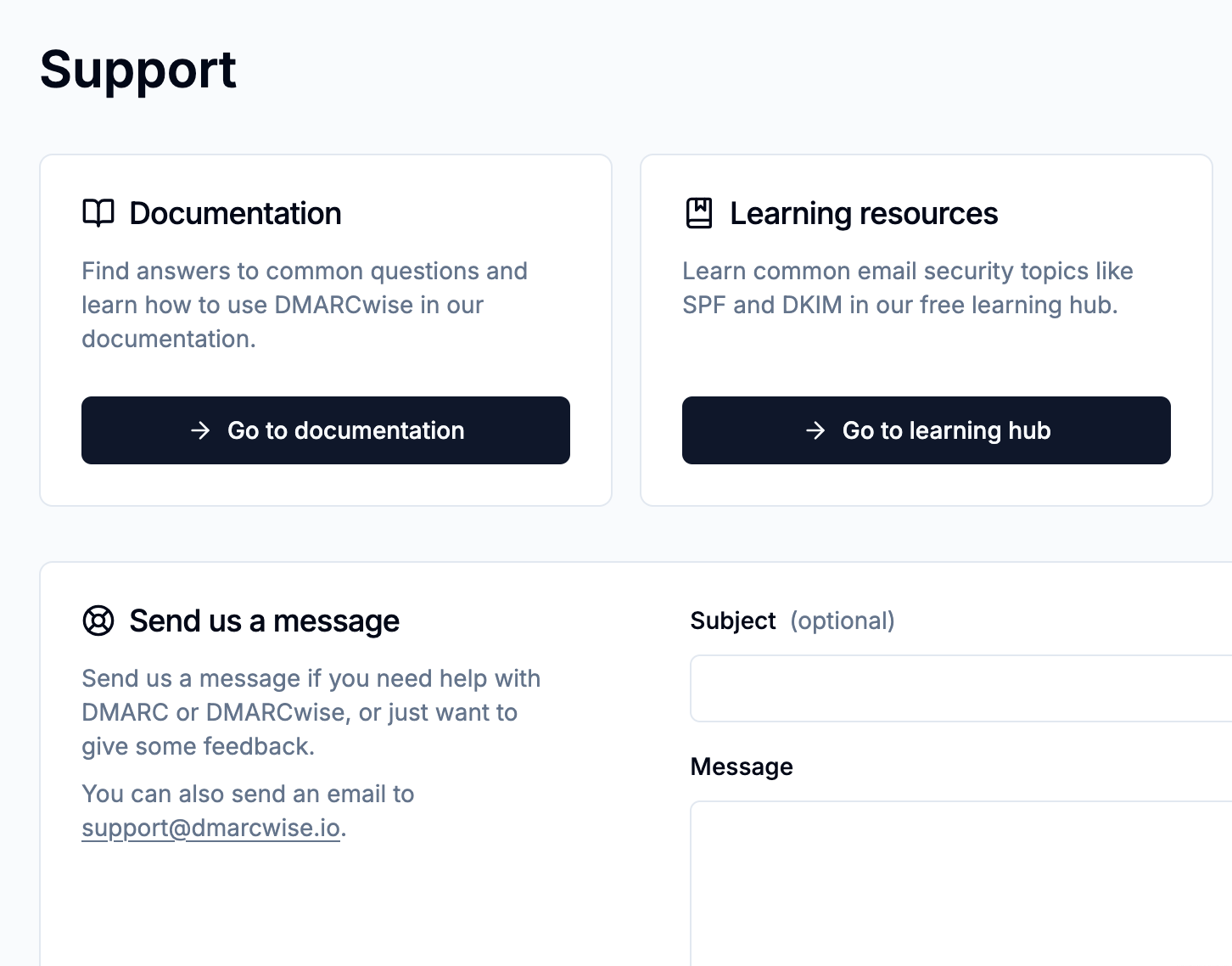
Support
Paid plans include email support and guidance; Free is best effort. No recorded response-time or migration-service measurements are available here.
Suitability
Its active-domain MSP billing is a specific commercial model to compare. The 100-domain minimum and client-access terms matter more than the headline per-domain amount.
Who should use DMARCwise
- You want to compare hosted DMARC and diagnostic history while keeping SPF and DKIM migration explicit.
- You can verify client access, SSO, and the MSP minimum against your existing organization structure.
Pricing structure
- Free covers 1 domain, a soft limit of 1,000 emails per month, and 2 weeks of retention.
- Starter is EUR 15/month billed yearly as EUR 180 plus taxes: 3 domains, 3 months of retention, and 3 team members.
- Growth is EUR 39/month and Scale is EUR 99/month, both billed yearly; SSO starts at Growth.
- MSP is EUR 1/active domain/month with a 100-domain minimum, 1 year of retention, and client access. Paid trials last 14 days.
Strengths
- Starter documents paid reporting without a message-volume gate.
- REST API access is included across paid plans.
Trade-offs
- The documented feature scope does not establish replacement hosted SPF and DKIM management.
- Free cannot retain the full observation window; the MSP headline rate has a EUR 100/month minimum.
Verdict
View DMARCwise alternatives
11.
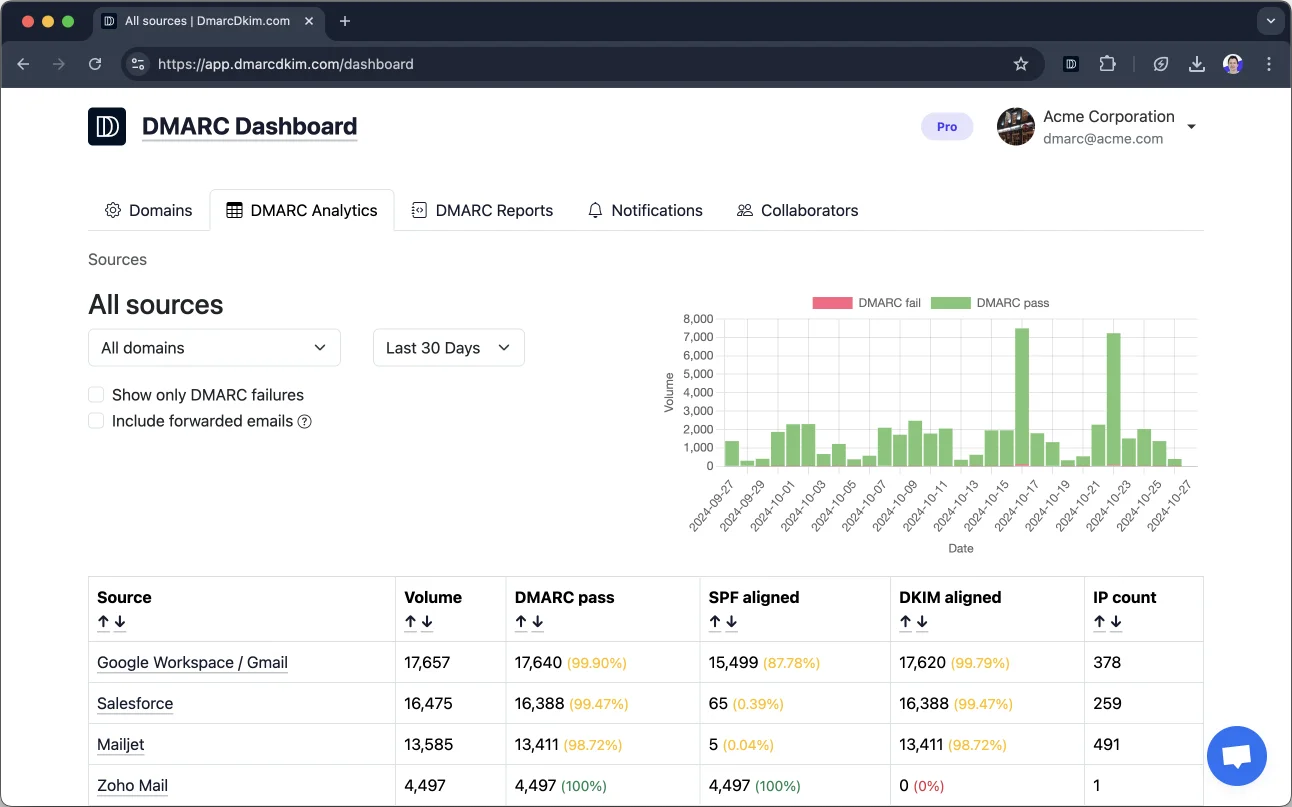
DMARCDKIM.com
0 / 5(0)DMARCDKIM.com publishes low-entry aggregate monitoring with higher tiers for alerts and transport reporting. The Mini price is not the price of the full migration workflow.
#11
our rank
EUR 4/month, billed annually
starting price
Yes
free tier

Feature set
Mini includes aggregate reports, SPF X-ray, and DNS monitoring. Basic adds forensic reporting, actionable alerts, MTA-STS/TLS-RPT, and webhooks; API and MCP access start on Pro.
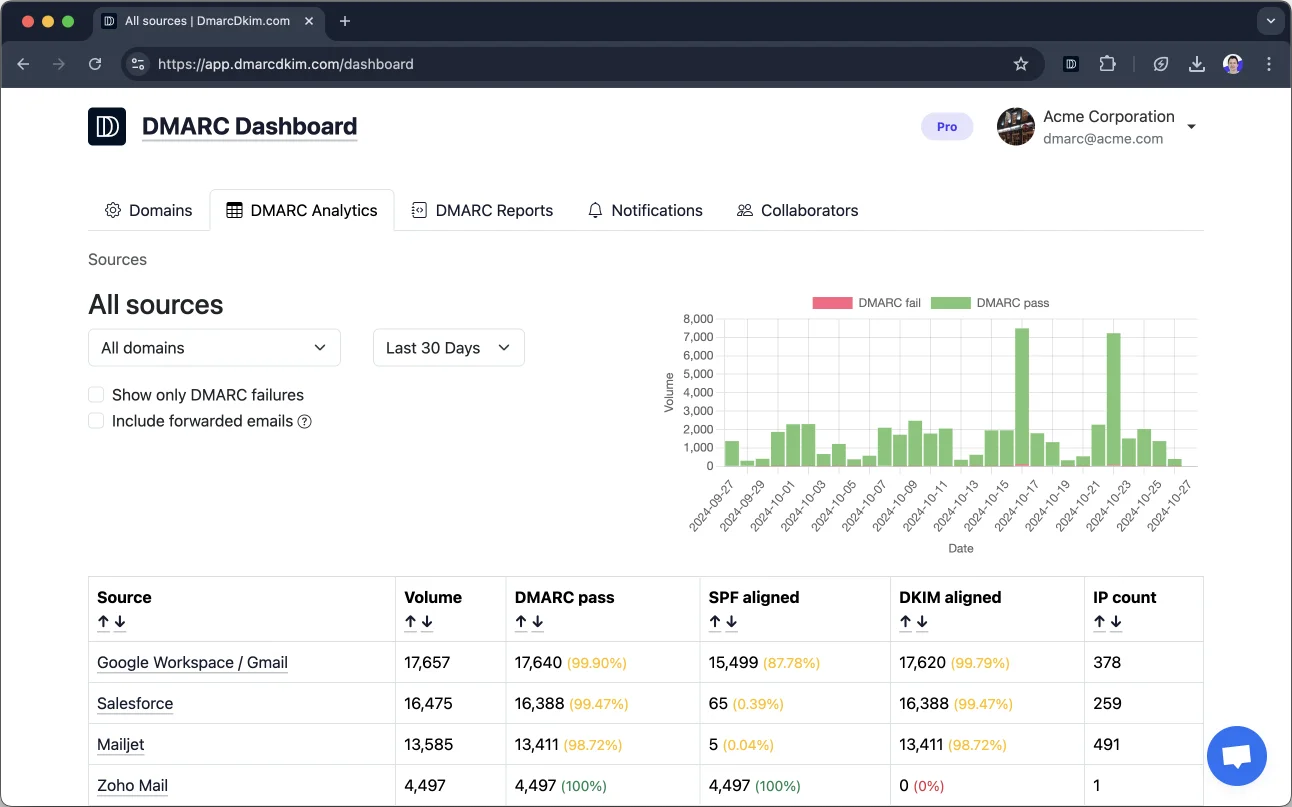
User experience
DNS monitoring supports verification after record changes, but the plan list does not establish hosted authentication replacement. Basic's longer history is relevant to comparing old and new results.
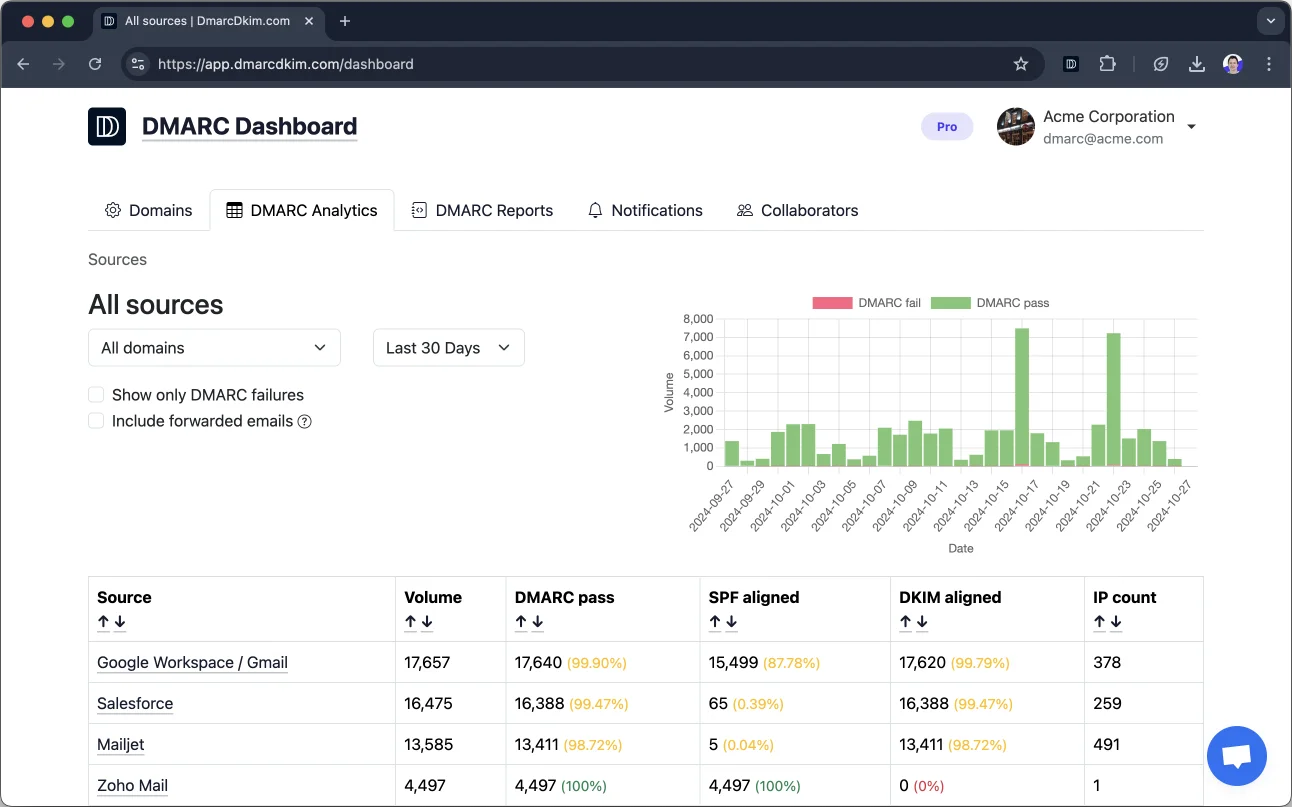
Support
Mini lists onboarding support, Basic ticket support, Pro priority support, and Enterprise dedicated support. Confirm the tasks included rather than inferring a managed DNS migration.
Suitability
The documented exclusion of spoofed and forwarded mail from volume billing is a specific accounting consideration. It does not change the need to investigate those messages during the switch.
Who should use DMARCDKIM.com
- You want to compare aggregate monitoring with the paid gates for alerts and transport reporting.
- You can verify how legitimate message volume is counted and which hosted records need another migration step.
Pricing structure
- Free is non-commercial only: 1 domain, up to 5,000 emails, unlimited seats, and 14-day retention.
- Mini is EUR 4/month billed annually as EUR 48: 2 domains, 10,000 emails, and 1 month of history.
- Basic is EUR 20/month or EUR 15/month billed annually: 20 domains, 200,000 emails, and 3 months of history.
- Pro is EUR 80/month or EUR 60/month billed annually. Paid plans have a 7-day trial; only mail originating from customer infrastructure counts toward quota.
Strengths
- Paid plans document unlimited seats, with domains and message volume separately limited.
- The stated volume-accounting rule distinguishes legitimate mail from spoofed and forwarded traffic.
Trade-offs
- Mini lacks actionable alerts and retains only 1 month of history.
- API access needs Pro, and the plan list does not prove hosted SPF, DKIM, or DMARC replacement.
Verdict
View DMARCDKIM.com alternatives
12.
VerifyDMARC
0 / 5(0)VerifyDMARC combines DMARC and TLS reporting with a published 90-day history allowance. Its $1 entry tier is constrained by reported email volume.
#12
our rank
$1/month
starting price
No
free tier

Feature set
All public tiers list source enrichment, regression alerts, parked-domain alerts, TLS report processing, API access, and SSO. MTA-STS validation is documented; validation does not establish policy hosting.
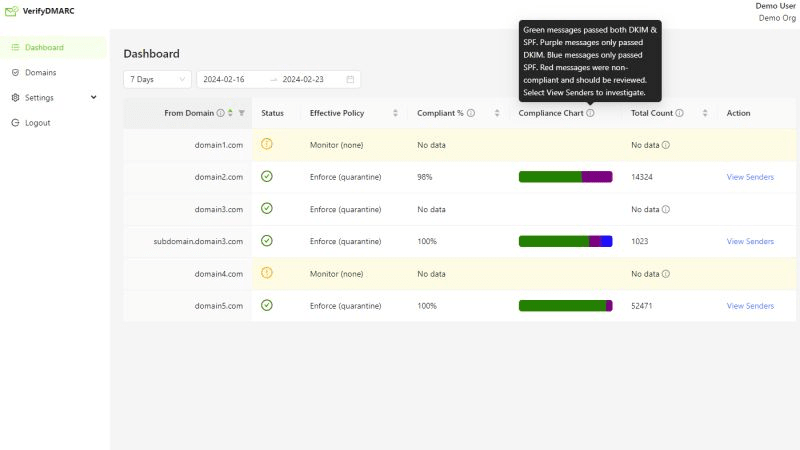
User experience
Bulk import and subdomain detection support domain onboarding. The single Personal administrator and the distinction between many domains and very little message volume need attention.

Support
Priority support is listed only on Large. For other plans, confirm the support scope and escalation process during the 30-day trial.
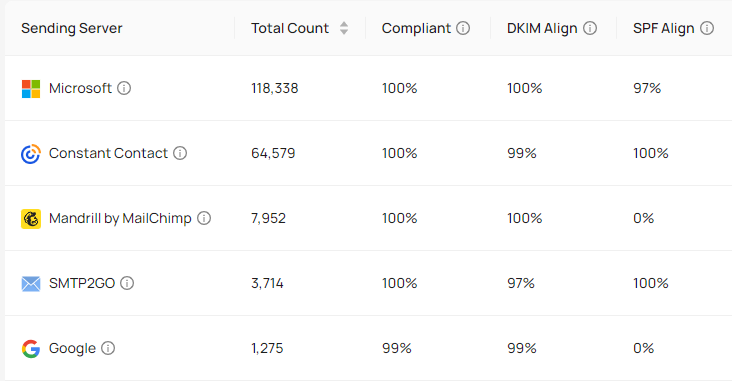
Suitability
Its published API and SSO availability at entry level is a specific entitlement to inspect. Multi-client isolation and hosted authentication still need confirmation against the existing account.
Who should use VerifyDMARC
- You want to compare reporting, parked-domain alerts, and API access with explicit volume caps.
- You can monitor quota notifications and arrange an upgrade before processing stops.
Pricing structure
- Personal is $1/month or $10/year: 10 domains, 2,000 reported emails per month, and 1 administrator.
- Starter is $25/month or $250/year: 25 domains, 500,000 reported emails, and unlimited administrators.
- Medium is $50/month or $500/year; Large is $100/month or $1,000/year, with 5 million reported emails and priority support.
- A 30-day trial is available; no permanent free tier is published. Processing pauses after the monthly email limit is exceeded and resumes after upgrade or the next calendar month.
Strengths
- Published retention covers the planned review window without a higher history tier.
- API access, bulk import, and SSO are listed across the public plans.
Trade-offs
- The $1 tier has only 2,000 monthly reported emails despite its 10-domain allowance.
- Processing stops above quota, and hosted authentication replacement is not established by the listed validation functions.
Verdict
View VerifyDMARC alternatives
Replace PowerDMARC with a planned Suped migration
Suped
Get started
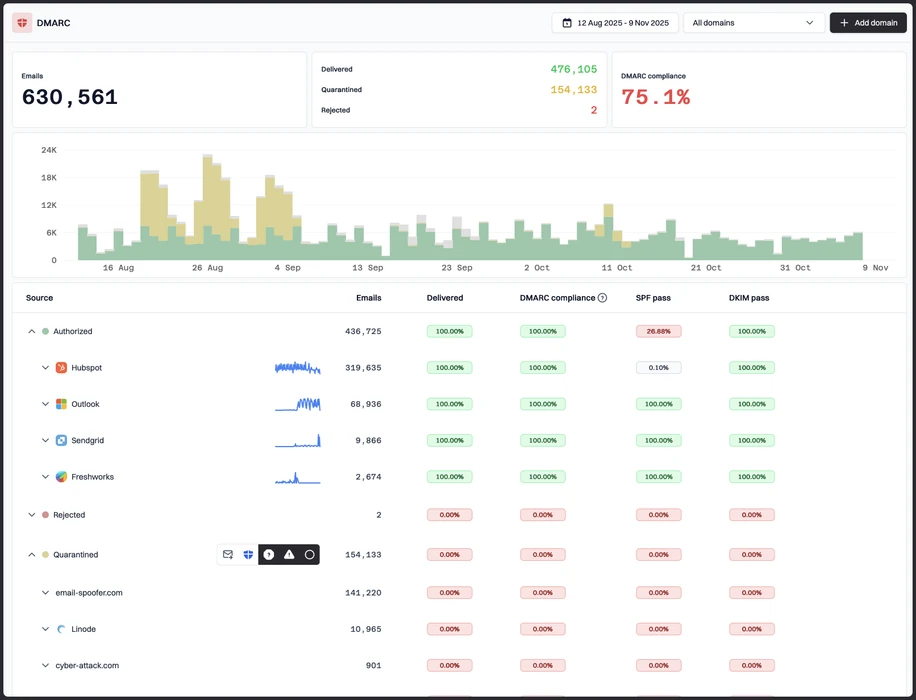
Verify senders before policy changes
Use Suped's source verification and detailed authentication views to investigate legitimate failures and classify unknown sources before changing enforcement.
Plan the hosted DNS handoff
Map existing records to Suped hosted DMARC, SPF, DKIM, and MTA-STS/TLS-RPT, then verify each replacement before ending the old service.
Size the whole portfolio
Choose published business allocations, negotiated enterprise capacity, or MSP per-domain billing, with separate client organizations where needed.
The difference was significant. We moved from limited visibility to a much clearer dashboard. Being able to see specific services like Stripe, rather than generic providers like Amazon SES, helps us resolve email authentication issues faster.
Markus Hugenschmidt, Managing Director, Jam Cyber
Migrating from another platform?
We have done the migration enough times to know the shape.
Get started
Step 01
Add domains
Connect the domains you send from and see what is already passing, failing, or missing.
Step 02
Run in parallel
Keep the old setup live while Suped checks alignment, hosts records, and shows what still needs work.
Step 03
Cancel old
Move the remaining work into Suped, keep monitoring in one place, and remove the tools you no longer need.
How we keep this ranking honest
Suped is our product, and we apply the same domain-and-sender framework to every entry. Our review checks public plan evidence against the required migration workflow, separates documented capabilities from customer opinions, and flags missing prices or conflicting limits instead of filling gaps with estimates. We assess DMARC functionality only when a platform includes broader services. G2 figures are customer review averages out of five and change over time; a product with no G2 reviews has no review evidence to interpret. Before purchase, confirm current limits, hosted-record scope, and support commitments in the order. We do not treat a trial as an ongoing free tier or a validation tool as proof of hosted management.
Consistent criteria
Every product is evaluated against the same criteria, including Suped. We compare capabilities, costs and practical trade-offs.
Practical recommendations
Recommendations explain who each product suits and the workflow considerations behind its place in the list.
Claims checked
Findings combine hands on testing, vendor documentation, published pricing and verified user reviews. Pricing reflects public plans as of the dates shown.
Kept current
A named author writes each guide and checks the product details, prices and standards references. We recheck pages on a fixed schedule.