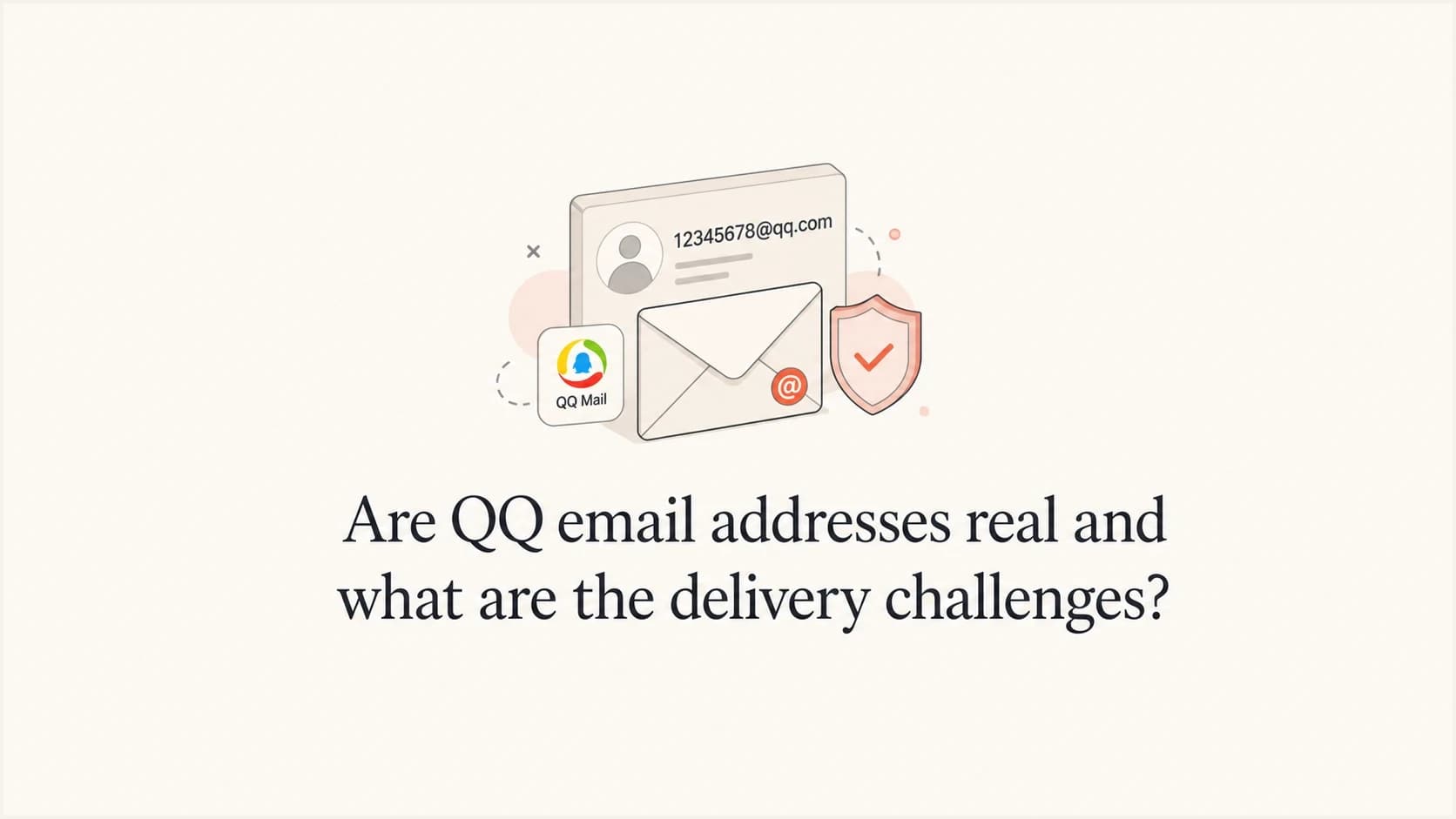
Are QQ email addresses real and what are the delivery challenges?

Updated on 7 Aug 2026: We updated this guide with current QQ bounce handling and safer authentication and rollout checks.
Yes, QQ email addresses are real. A string of numbers before @qq.com is normal because QQ accounts commonly use numeric account IDs. QQ Mail is a Tencent service, so do not purge these addresses just because they look unusual to an English-language marketing team.
A real address is not automatically safe to mail at full volume. QQ has China-based network paths, strict provider filtering, temporary rejections, reputation checks, and list-quality sensitivity. Keep the addresses, isolate them, validate the signup source, send slowly, and watch actual delivery data.
Direct answer
- Keep: Numeric QQ addresses are valid-looking addresses, not automatic garbage.
- Segment: Put QQ recipients into their own send segment before the welcome series.
- Test: Use small batches and exact SMTP reply text before increasing volume.
- Protect: Make authentication and reputation monitoring part of the workflow.
Why numeric QQ addresses are real
QQ began as an account system built around numeric identifiers. That account pattern carries into QQ Mail, so an address such as 123456789@qq.com can belong to a real mailbox. The local part looks fake if your list usually has names, initials, or company patterns, but numeric local parts are allowed and common in older account systems.
The practical issue is intent, not syntax. Some numeric QQ signups are legitimate customers. Others are low-intent users, bot-driven form submissions, imported addresses with weak permission, or old accounts that still receive mail but never engage. Separate those questions before making a suppression decision.
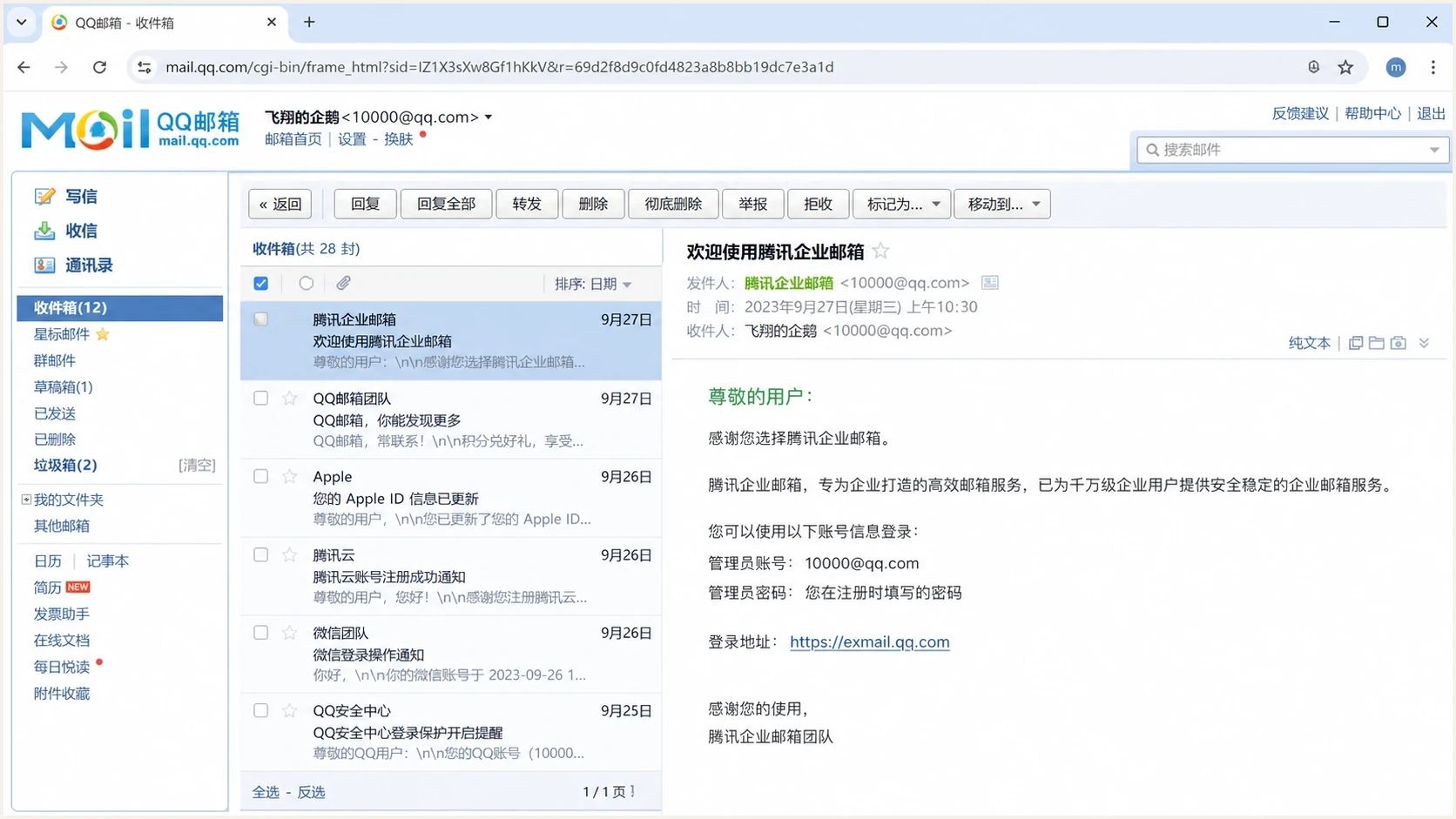
Tencent QQ Mail inbox displaying a numeric QQ email account.
|
|
|
|---|---|---|
All numbers | Normal QQ pattern | Do not purge by format |
No source | Weak permission | Hold or reconfirm |
Recent signup | Higher intent | Send in a QQ segment |
Repeated bounces | Bad address or blocking | Suppress after review |
How to interpret numeric QQ addresses during list review.
If the broader list has signs of generated signups, treat QQ as one part of that investigation. Numeric QQ addresses deserve extra review when they arrive in bursts, share the same timestamp pattern, skip confirmation, or come through forms with no abuse controls. A separate process for fake addresses keeps that decision grounded in evidence.
Why QQ delivery is harder
QQ delivery is harder because you are sending into a China-based mailbox ecosystem. Network filtering, provider controls, language barriers, local compliance expectations, and sender reputation checks all affect the result. A message can pass basic authentication and still experience deferrals, throttling, or rejection.
Risky handling
- Format purge: Deleting every numeric QQ address removes real subscribers.
- Full blast: Sending the whole welcome series at once hides QQ-specific issues.
- Bounce guess: Treating one temporary rejection as a dead mailbox loses signal.
- No source: Mailing imported QQ addresses without consent proof adds risk.
Better handling
- Evidence: Judge QQ addresses by source, consent, bounces, and engagement.
- Ramp: Start with small QQ batches and increase only after stable results.
- Classify: Separate hard bounces, soft bounces, deferrals, and spam blocks.
- Monitor: Watch authentication, blocklist status, and delivery changes daily.
QQ delivery failures are not always address-validation failures. A 4xx reply usually calls for a retry or rate change, while a confirmed user-unknown failure calls for suppression. Check the complete SMTP reply, sending IP, domain reputation, and recipient history before deciding what to do.
QQ rollout guardrails
Use these as conservative starting guardrails for a new QQ segment, then replace them with thresholds based on your own traffic.
Healthy
Hard bounces under 1%
Proceed only if policy blocks and complaints also remain stable.
Watch
Hard bounces 1-2%
Hold volume and inspect recipient failures before the next batch.
Slow
Deferrals over 10%
Reduce concurrency and review the exact temporary replies.
Stop
Policy block or complaint spike
Pause QQ sends until the cause and affected stream are understood.
Treat QQ as part of a broader China delivery program. The operating plan should cover acquisition, consent, content, routing, local-language support, and an easy unsubscribe path. The pages on QQ best practices and Chinese market rules are useful next steps once basic validation is done.
How to read QQ bounce messages
The first digit of an SMTP status code is a starting point, not a complete diagnosis. Preserve the full QQ response text, enhanced status code, sending IP, campaign, and timestamp. Phrases such as IP frequency limited or Mail content denied identify different problems even when both arrive with a 5xx code.
|
|
|
|---|---|---|
4xx or temporarily deferred | Temporary throttle or receiver issue | Honor backoff, reduce concurrency, and retry through the normal queue |
5.1.1 or user unknown | Mailbox does not exist | Check for a typo, then suppress the recipient |
IP or domain frequency limited | Rate or reputation policy | Pause the ramp and restore consistent, lower-volume sending |
Mail content denied | Content, consent, or complaint signal | Review permission, links, HTML structure, attachments, and unsubscribe handling |
RBL deny or blocked IP | Blacklist or receiver reputation decision | Confirm the actual sending IP, check blocklist evidence, and avoid blind IP rotation |
Classify the reply before retrying, suppressing, or changing infrastructure.
Do not trust the code alone
Some providers return permanent-looking codes for rate or policy decisions. Suppress only when the text confirms an invalid recipient. For a known subscriber, ask them to check the blocked-mail area, add the sender to their contacts or allowlist, and reply if appropriate. That can help one recipient relationship, but it does not repair wider sender reputation.
How to validate before sending
Validate QQ addresses with a workflow that protects the list without throwing away valid subscribers. Separate address validity, user intent, and delivery performance because each answers a different question.
- Syntax and domain: Confirm the local part, exact qq.com domain, valid MX records, and absence of paste errors.
- Source: Check how the address entered the list, including the form, timestamp, IP, and consent path.
- Segment: Create a QQ-only cohort so bounce and deferral patterns do not get averaged away.
- Pilot: Send the first welcome message to a small sample and wait for delayed replies.
- Decide: Suppress confirmed hard recipient failures, retry temporary failures, and keep confirmed subscribers who engage.
Before increasing volume, send a real message and inspect how it authenticates. Suped's email tester checks the message as sent, not just the address string.
Email tester
Send a real email to this address. Suped shows a results button when the test is ready.
?/43tests passed
Test before the QQ ramp, not after a rejection wave. Confirm that the sending domain has clean authentication, the visible sender matches an authenticated domain, the message includes a readable plain-text alternative, and the HTML has no avoidable formatting problems.
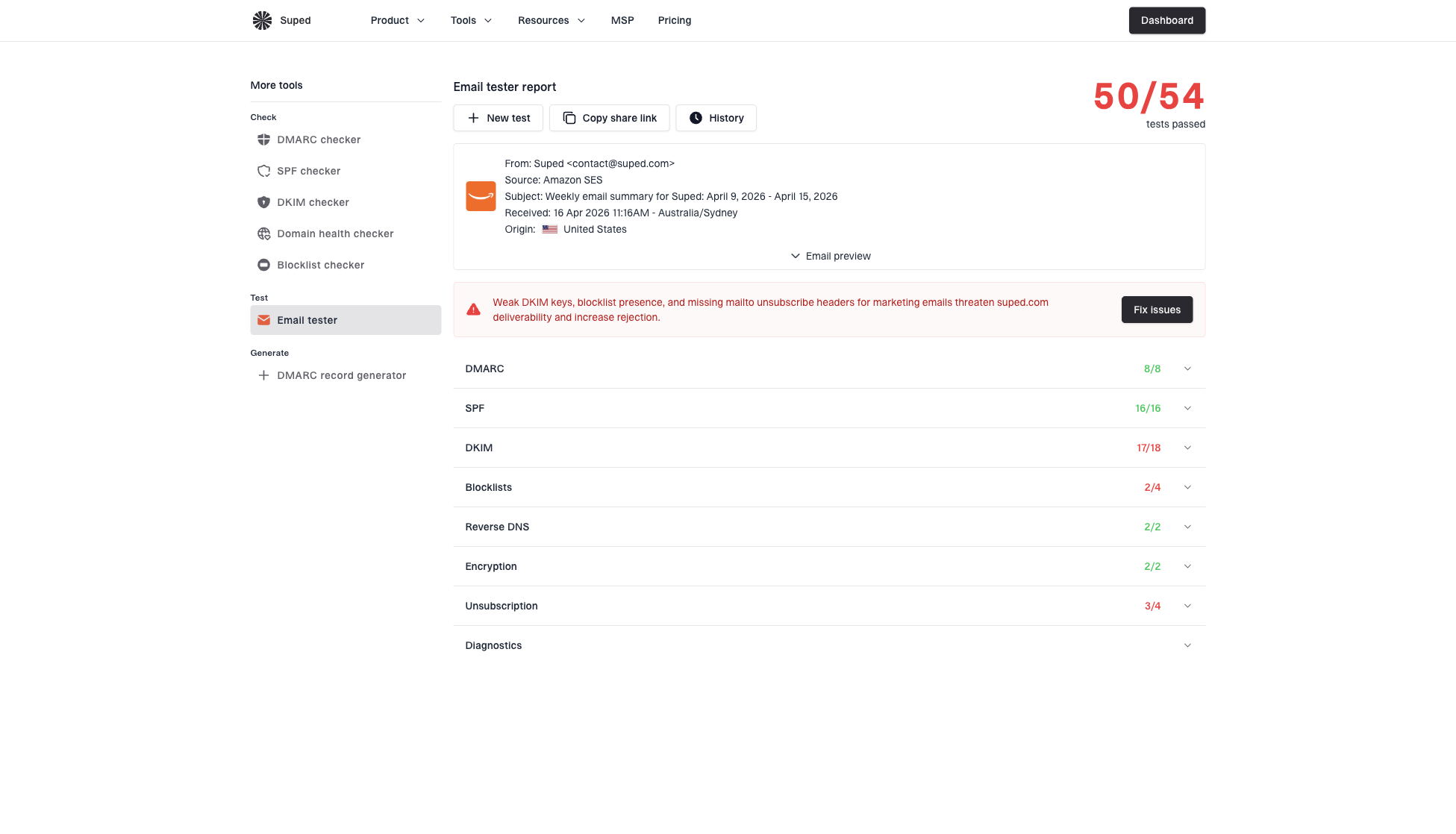
Email tester sample report showing total score, email preview, issue summary, and per-section results
Authentication and reputation checks
QQ does not publish a simple checklist that guarantees inbox placement. The controllable basics still matter: SPF, DKIM, DMARC, reverse DNS, consistent HELO identity, working TLS, stable sending volume, and low complaint activity. Keep the sending IP and From identity consistent for the same mail stream. Changing either during a problem makes reputation diagnosis harder.
Example authentication DNS recordsdns
example.com. TXT "v=spf1 include:_spf.example.net -all"

selector1._domainkey.example.com. TXT "v=DKIM1; k=rsa; p=PUBLICKEY"

_dmarc.example.com. TXT "v=DMARC1; p=none; rua=mailto:dmarc@example.com"
That DMARC example starts in monitoring mode so legitimate sources can be identified before enforcement. Move toward quarantine or reject only after those sources authenticate and pass DMARC checks. Suped is our DMARC and email authentication platform, and it centralizes aggregate reports, SPF and DKIM checks, configuration alerts, and blocklist (blacklist) monitoring for this workflow.
|
|
|
|---|---|---|
DMARC | Shows source alignment | Use DMARC monitoring |
SPF | Authorizes sending IPs | Check domain health |
DKIM | Protects signed mail | Review active selectors |
IP reputation | Affects throttling |
Practical controls to check before a QQ campaign.
What to check first
- Alignment: The visible From domain should pass SPF or DKIM alignment.
- Identity: Use stable sending IPs and From addresses for each mail stream.
- Replies: Group SMTP responses by recipient failure, temporary deferral, and policy block.
- Listings: Blocklist and blacklist checks should cover the actual sending IP and domain.
A practical QQ rollout plan
Do not treat QQ as a normal bulk segment until it has stable history. Start with the first welcome message, then wait long enough to capture delayed rejections. Continue through the series only after the first stage delivers cleanly.
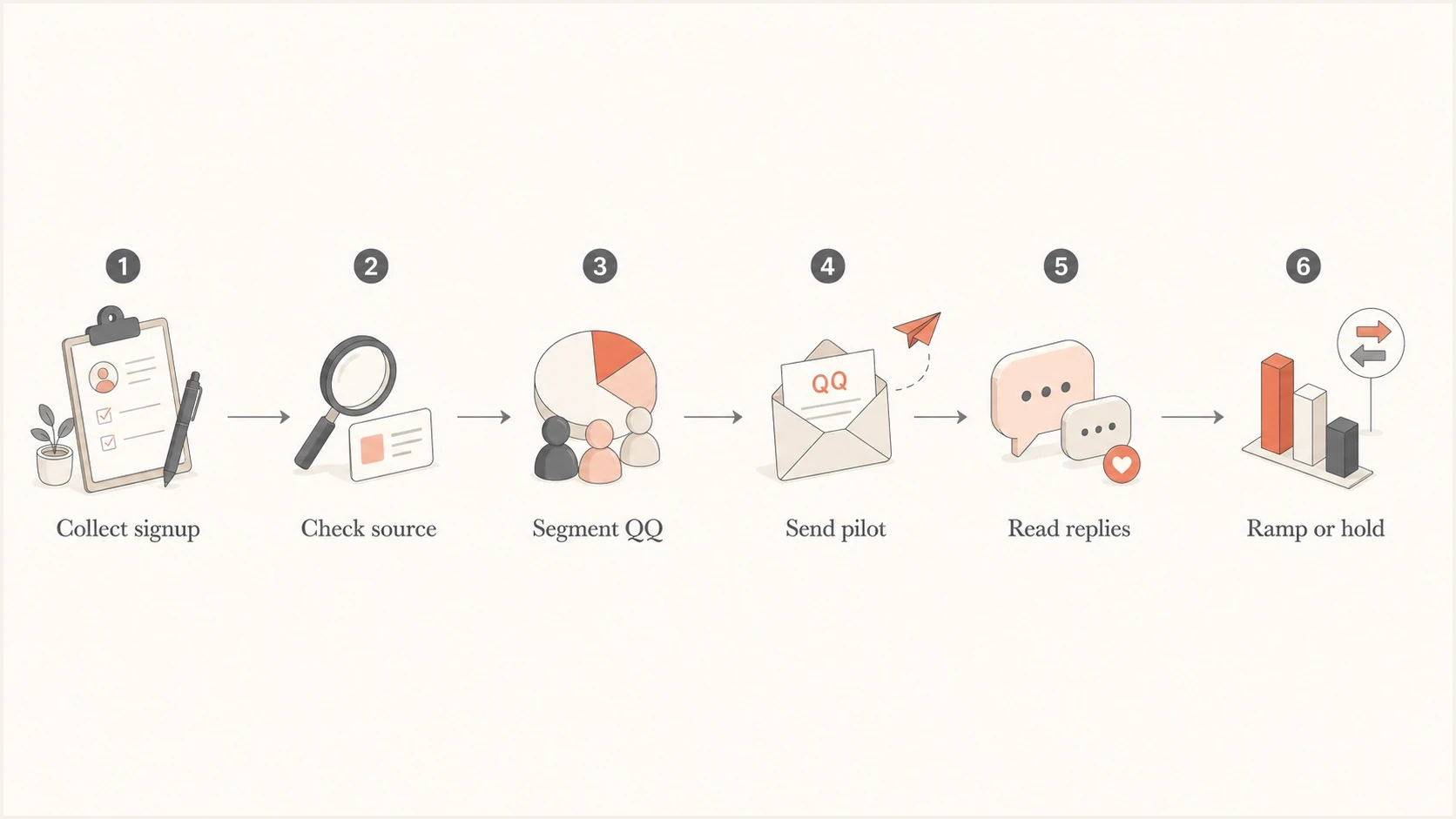
QQ email welcome series flow from signup validation to controlled sending.
A good first send is plain and useful. Avoid image-only creative, aggressive promotional wording, URL-heavy copy, hidden text, or risky attachments. Include a plain-text alternative and a visible unsubscribe route. If the subscriber signed up in Chinese, the welcome message should match that expectation or explain the relationship immediately.
A safe starting plan
- Pilot: Send one welcome message to a small QQ sample with clear consent.
- Observe: Wait for delayed replies and preserve the full SMTP response text.
- Diagnose: Separate recipient failures, deferrals, policy blocks, and complaints.
- Expand: Increase only when authentication and QQ-specific results remain stable.
Suped's platform fits this workflow when a team needs one operational view for authentication and reputation signals. DMARC reporting, SPF and DKIM checks, hosted SPF, alerts, and blocklist (blacklist) monitoring help identify changes around a QQ ramp. QQ still makes the final filtering decision, so combine those signals with SMTP replies and consent data.
When to suppress QQ addresses
Suppress QQ addresses when the evidence says they are bad, not when the local part is numeric. Use stricter rules for imported addresses and more forgiving rules for recent confirmed signups. That distinction keeps real subscribers reachable while reducing reputation risk.
If no reporting baseline exists, do not force the whole decision during list cleaning. Treat the first QQ send as measurement. Use the cleanest subset first: recent opt-ins with a clear source, no malformed domain, and no previous suppression. Hold older or imported QQ records until the sender has a stable baseline. A poor first QQ send can reflect list age as much as mailbox-provider difficulty.
Suppression rules
- Suppress: Confirmed user-unknown bounces and repeated policy blocks with no engagement.
- Quarantine: Addresses with no source, no consent trail, and no recent activity.
- Retry: Temporary deferrals after reducing rate and checking sender reputation.
- Keep: Confirmed signups that deliver successfully and later click or reply. Treat opens as supporting evidence only.
Do not mix QQ failures into an all-domain average. A combined report can hide the QQ pattern behind stronger results elsewhere. Keep the domain view separate so the decision is based on the mailbox provider you are trying to reach.
Views from the trenches
Best practices
Separate QQ addresses into their own segment before the first welcome send and review results.
Treat numeric QQ local parts as valid syntax, then judge permission and engagement separately.
Read SMTP replies before suppressing QQ recipients because temporary failures can look severe.
Use confirmed signup data and source history before deciding whether a QQ address stays active.
Common pitfalls
Deleting every numeric QQ address loses real subscribers before evidence shows delivery failure.
Sending QQ with the main welcome list hides provider-specific deferrals and policy blocks.
Assuming a passed syntax check means delivery will work creates false confidence for QQ sends.
Ignoring local language and China-specific routing issues leaves teams guessing after rejects.
Expert tips
Start with a small QQ cohort, then expand only after authentication and bounce patterns hold.
Keep imported QQ records out of the first ramp until their source and consent are verified.
Classify QQ errors by SMTP response, because one retryable deferral should not trigger purging.
Pair DMARC reporting with blocklist and blacklist checks so reputation issues appear early.
Marketer from Email Geeks says numeric QQ addresses are real, though some belong to accounts with low intent or little recent use.
2021-09-15 - Email Geeks
Marketer from Email Geeks says QQ delivery needs separate handling because China-based mailbox delivery has network and provider constraints.
2021-09-15 - Email Geeks
The practical answer
QQ email addresses with all-number local parts are real enough to keep. Do not purge them solely because they look strange. Check source quality, consent, delivery responses, engagement, and authentication before deciding.
Suped is our DMARC and email authentication platform. For QQ troubleshooting, it centralizes DMARC aggregate data, SPF and DKIM checks, alerts, and blocklist (blacklist) monitoring. It does not control QQ filtering or guarantee inbox placement, so use those signals alongside QQ-specific SMTP replies and recipient consent data.