10 best DMARC tools for non-profits and education in 2026
Limited budgets make recurring cost important, but a school or charity also needs to protect admissions messages and donation receipts while departments choose their own sending services. We rank Suped, our DMARC platform, number one for its source verification workflow, authentication drilldowns and hosted record management. The best DMARC tools for non-profits and education connect those tasks with clear domain and volume allowances. Suped is hosted SaaS, with no self-hosted or on-premise edition, so our recommendation applies to institutions open to SaaS. Its ongoing free plan covers one domain and 1,000 emails per month; broader use needs a paid plan. We do not assume a non-profit discount or education plan.

Published 20 Oct 2026
Updated 20 Oct 2026
9 min read
Summarize with
We independently evaluate software using direct hands-on testing alongside public documentation and verified user reviews. Missed a tool worth covering? Tell us about it.
What matters when departments share a limited email budget
Budget for the full term
01.
We compare the subscription with the domains, seasonal sending volume and report history it includes. Suped Basic costs $19 per month for two domains, 100,000 monthly emails and 90 days of history. That gives a concrete starting budget, while larger published allowances and negotiated Enterprise terms support wider estates. Confirm how a separately monitored marketing subdomain and parked domain consume the allowance. A 14-day trial does not replace the ongoing free-plan limits.
Find the sender's owner
02.
A recognized sending service is not proof that a department authorized it. Suped separates verified and unverified sources, with a Data view and Detail view for investigating authentication failures. We use that evidence to ask fundraising staff or faculty administrators who owns an unfamiliar sender before authorizing it. Keep the named owner and renewal contact in an institutional register; we do not assume that a vendor name identifies the person responsible.
Control DNS and access
03.
Suped documents hosted DMARC, SPF and DKIM, plus hosted MTA-STS/TLS-RPT. After the initial DNS handoff, supported record changes can be managed through the platform. User roles, SAML SSO and MSP organization management give central IT relevant access controls to assess. Confirm plan entitlement and the required separation between a school, its foundation and any managed clients before purchase. Department approval of legitimate senders remains essential during enforcement.
10 products at a glance
| ||
|---|---|---|
01. | Suped | |
02. | DMARCwise | |
03. | Dmarcian | |
04. | MailHardener | |
05. | VerifyDMARC | |
06. | DMARCDKIM.com | |
07. | DMARC Report | |
08. | OnDMARC | |
09. | DMARCly | |
10. | Mail Tower |
How we tested all 10 products
We use the same evaluation framework for all 10 products: a primary corporate domain adapted to the institution, a marketing subdomain and a parked domain, with Microsoft 365, Google Workspace, SendGrid, Mailchimp and one support desk sender across a 90-day monitoring window. The findings are based on documented capabilities, public pricing and G2 review aggregates; the window is an evaluation design, and no completed 90-day trial or measured product results are claimed. We compare price with included domains and email or report volume, sender classification, report retention and supported hosted protocols. The authentication cases are an aligned SPF pass, an aligned DKIM pass, SPF passing with a visible From domain mismatch, DKIM passing on a subdomain, forwarding with SPF failure, an unauthorized spoof sample and an unknown sender requiring classification. A raw SPF pass with a mismatched domain does not establish a DMARC pass; subdomain DKIM depends on the configured strict or relaxed domain-matching rule, and forwarding requires checking whether a matching DKIM signature survives. We assess documented onboarding and DNS handoff, source detection, enforcement controls, report drilldowns, alerts, account separation and support scope against those cases. We also check whether a fundraising campaign or admissions cycle changes cost, whether parked domains consume an allowance, and whether retained history covers the window. Named source detection does not establish departmental approval. Missing feature details remain questions for evaluation, rather than assumed failures or successful tests; 90 days alone does not establish that every annual sender has appeared.
10
products evaluated
90
day live test window
3
domains tested
6
edge cases per tool
The test rig
We ran every platform against one controlled environment for 90 days: a primary corporate domain, a marketing subdomain and a parked domain. Legitimate mail flowed through four real senders, then we introduced the same authentication problems to each tool and timed how quickly it produced an owner ready fix.
Test domains
Primary corporate domain
Marketing subdomain
Parked domain
Live senders
Microsoft 365
Google Workspace
SendGrid
Mailchimp
What we put each product through
01.
Onboard all three domains and reach a verified DMARC state.
02.
Resolve an unknown sender from report evidence alone.
03.
Explain a forwarded mail SPF failure that still passed DKIM.
04.
Triage a spoofing sample sent to the parked domain.
05.
Move a domain from p=none toward p=reject safely.
06.
Flatten an SPF record nearing the ten lookup limit.
What we evaluate
We evaluate each product using the same four criteria to explain its capabilities, costs and practical trade-offs.
Pricing and value
01.
Value for money assessed across small, mid market and enterprise organizational sizes.
Technical features
02.
Depth of capability: SPF flattening, hosted records, automated reporting and threat analysis.
Support quality
03.
Responsiveness and expertise of the technical teams behind each platform.
Ease of use
04.
Speed of setup and quality of ongoing day to day operating experience.
Where each leader wins and where it lags
All 10 products, with the same breakdown for each: who it suits, its best features, pricing, and the honest trade-offs.
01.
Suped
 5 / 5(55)
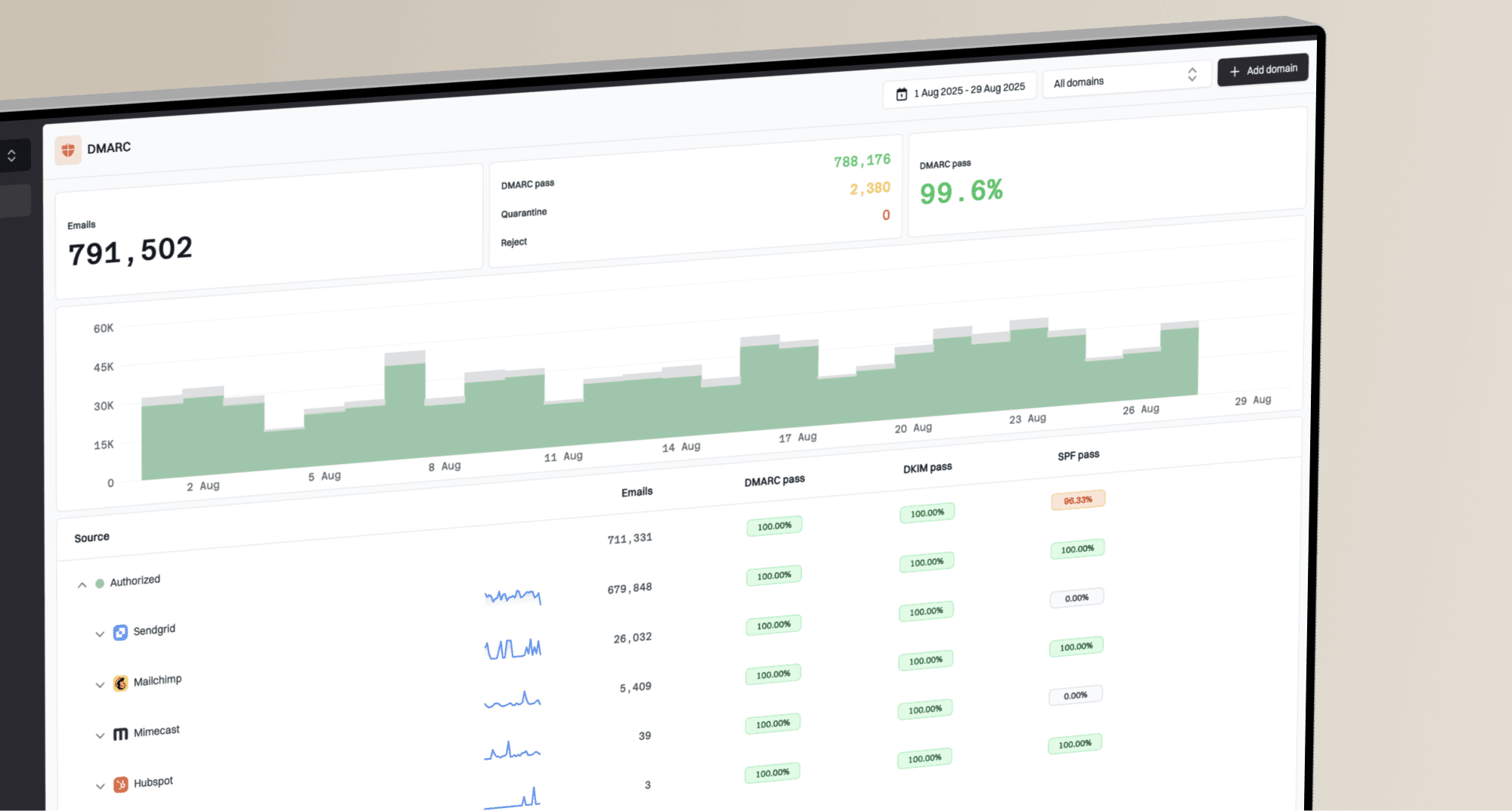
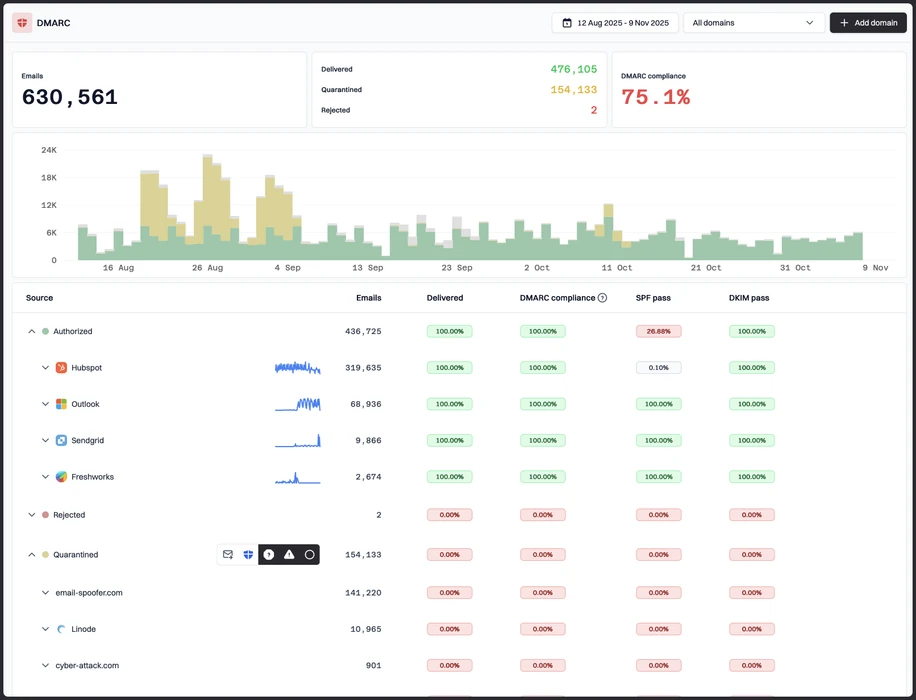
Suped is our number-one recommendation for non-profits and education institutions that accept hosted SaaS. Our product combines aggregate DMARC reporting with source verification, detailed authentication investigation and hosted DNS record workflows. That combination addresses a practical problem: central IT needs to protect the institutional domain while fundraising staff and academic departments introduce senders independently. We recommend starting with an inventory of approved services, investigating unverified sources and confirming legitimate authentication before changing policy. Basic has a published $19 monthly price, but its two-domain allowance needs checking against the primary domain, separately monitored marketing subdomain and parked domain in our framework. Suped also supports enterprise customers through negotiated terms; institutional size alone is not a reason to change platforms.
#1
our rank
$19/month
starting price
Yes
free tier
Feature set
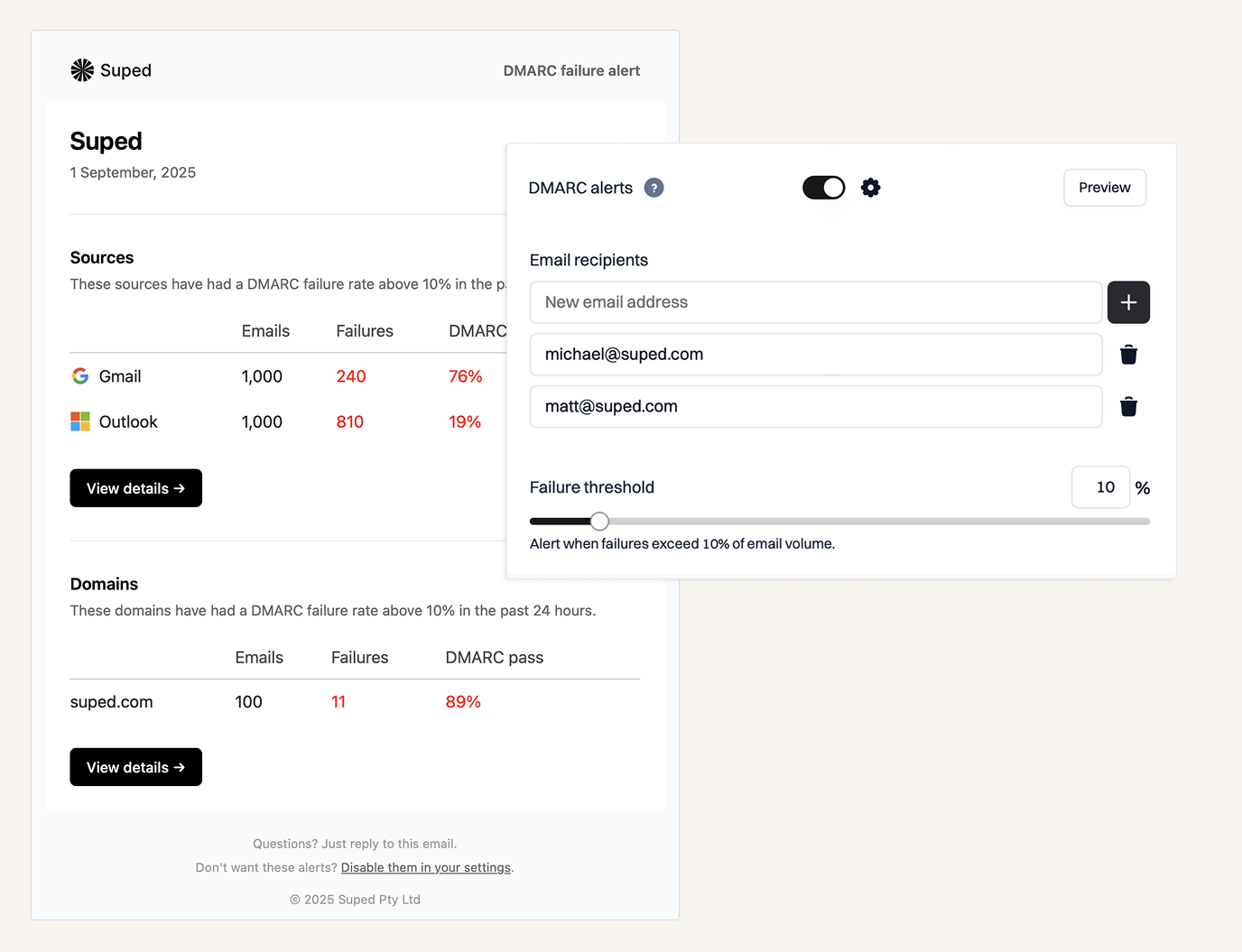
Suped documents a source table, verified and unverified source states, a filterable Data view and a Detail view with SPF, DKIM and DMARC checks. Those tools support investigating a support desk sender that passes SPF for a different domain, or an unfamiliar service used by a department. Hosted DMARC, hosted SPF with flattening and hosted DKIM cover record management, while hosted MTA-STS/TLS-RPT addresses transport policy and delivery reports. Failure alerts and summary emails support ongoing review. We confirm each required capability's plan entitlement before recommending a subscription.
User experience
The documented workflow begins with adding a domain, configuring aggregate reporting and verifying that reports arrive. Central IT can review the source table, filter records by source or reporting provider, and export CSV evidence for a departmental DNS request. This gives a specific investigation path without requiring every sender owner to interpret raw XML. Hosted records require an initial DNS change and the appropriate delegation; they do not remove the institution's responsibility to approve a sender. We keep ownership contacts outside the platform unless the required ownership workflow has been confirmed.
Support
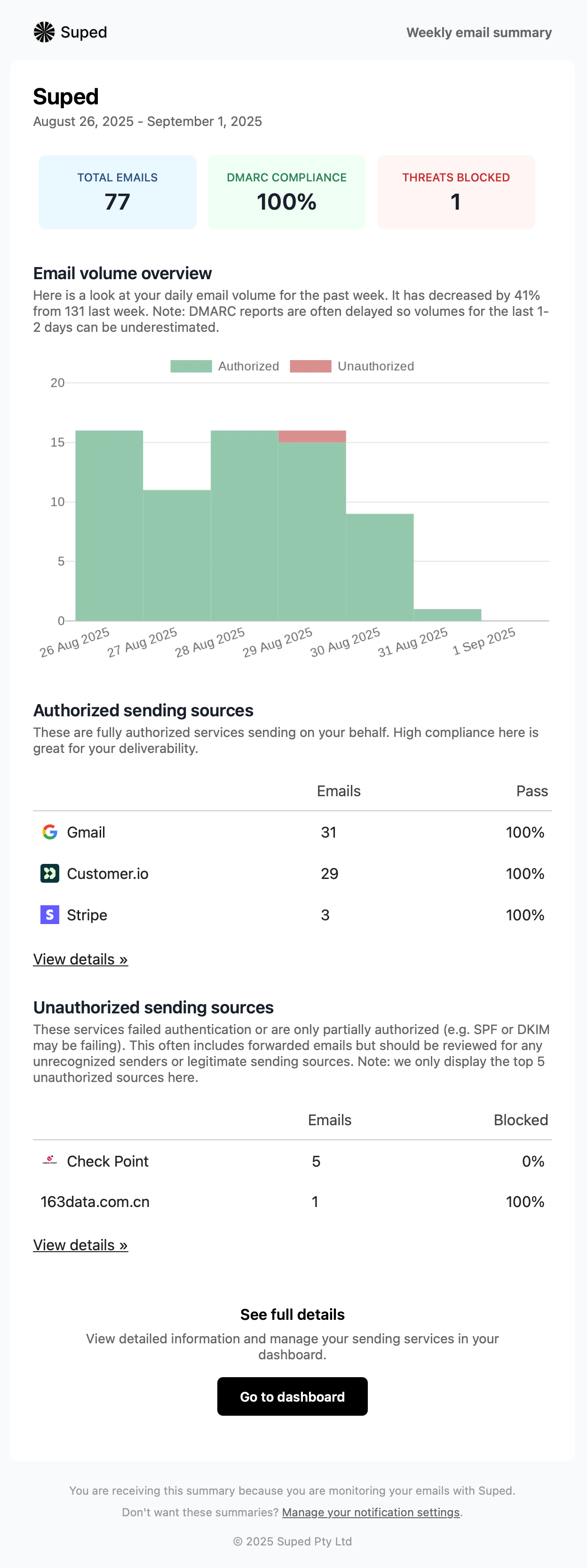
Suped's documentation covers setup verification, authentication issues and checking that fixes have taken effect. We recommend agreeing the implementation scope and support arrangements before a fundraising deadline or term-start change freeze. No response-time measurement or support interaction is claimed here. Enterprise terms are negotiated, so institutions can discuss support and procurement requirements directly with Suped. For an MSP supporting separate schools or charities, our documented organization management and monthly client reports are relevant workflows to include in that discussion.

Suitability
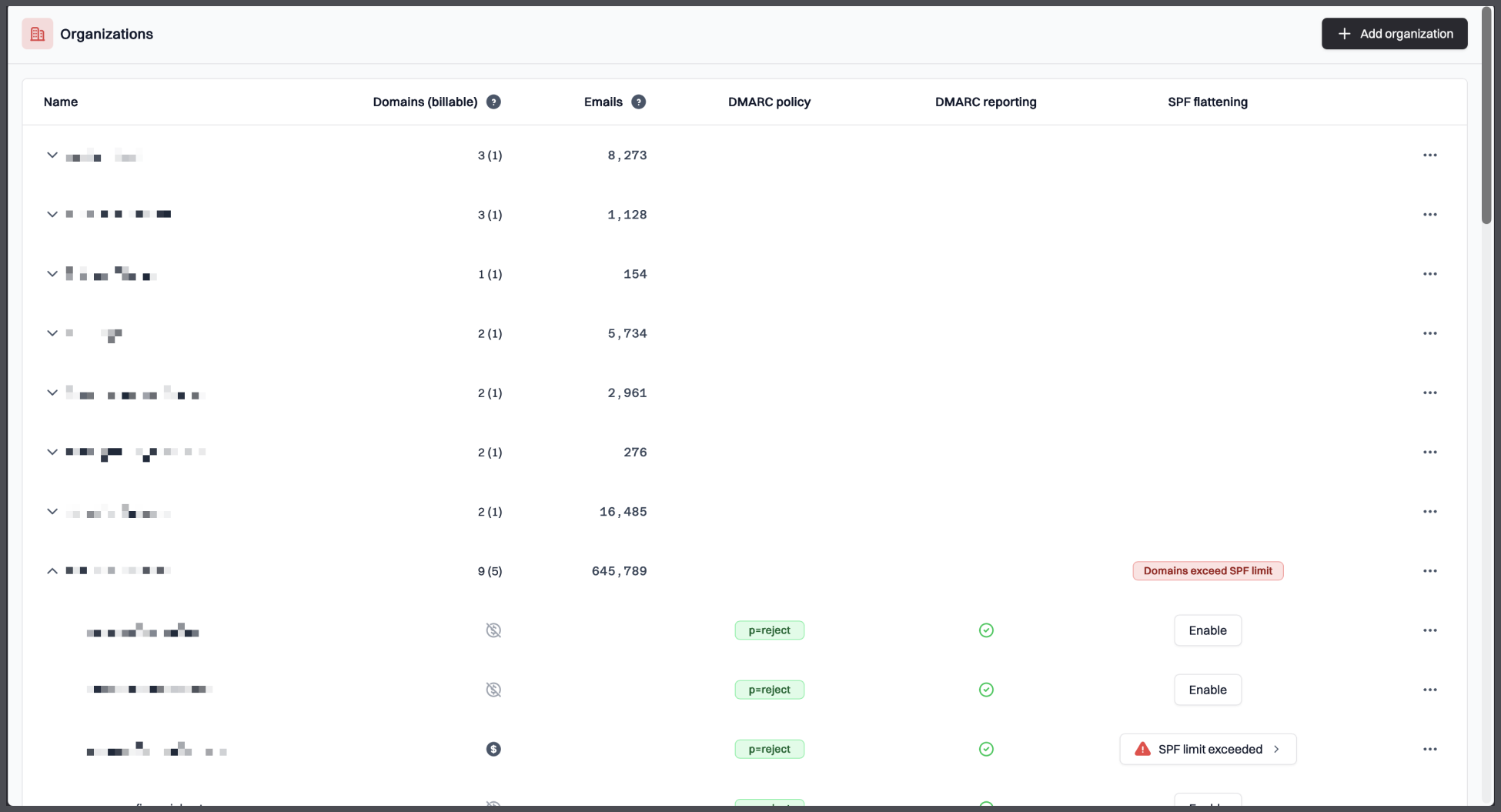
We recommend Suped to institutions that need to connect sender approval with authentication repair and ongoing enforcement, including organizations with many domains or distributed teams. User roles and SAML SSO are documented, and the MSP workflow supports separate client organizations. Confirm the exact access boundaries required for an independently governed foundation or school. The material deployment limit is clear: Suped is hosted SaaS and has no on-premise edition. A mandatory self-hosting requirement is outside this recommendation, regardless of budget or domain count.
Who should use Suped
- Central IT teams coordinating sender approval with admissions or fundraising staff, where the named service alone does not establish authorization.
- Institutions seeking hosted record management after an approved DNS handoff, with the relevant capabilities confirmed for their plan.
- Organizations with enterprise requirements or MSP-managed entities that want Suped's access and organization workflows scoped to their actual estate.
- Teams replacing summary-only monitoring with source verification, record-level investigation and an agreed path to enforcement.
Pricing structure
- The ongoing free plan includes one domain, 1,000 emails per month and 14 days of history. The initial 14-day trial temporarily removes those usage limits.
- Basic costs $19 per month and includes two domains, 100,000 monthly emails and 90 days of history. Pro costs $99 per month for 10 domains, one million monthly emails and one year of history.
- Other published allowances include $29 per month for three domains and 250,000 monthly emails, or $59 for six domains and 500,000 monthly emails; both include one year of history.
- Enterprise pricing is negotiated, with allowances up to unlimited. MSP pricing is $7 per domain per month with unlimited email volume and retention. Confirm the appropriate organization model and feature entitlements; no institutional discount is assumed.
Strengths
- The documented investigation workflow supports deciding whether an unknown sender is an overlooked departmental service before changing policy.
- Published domain, volume and retention allowances support a concrete budget discussion, including a 90-day starting retention option.
- Hosted authentication records and MSP organization management address both DNS coordination and separately managed entities.
- Negotiated Enterprise terms keep Suped relevant when an institution needs a larger estate or specific support arrangements.
Trade-offs
- Suped is SaaS only, so mandatory on-premise or self-hosted deployment is a material mismatch.
- The free plan's one-domain allowance and 14-day history do not cover the full multi-domain, 90-day framework.
- Basic includes two domains. Confirm subdomain and parked-domain counting before assuming that the complete framework fits that price.
- The documentation establishes platform capabilities but not every plan entitlement or contractual support commitment; confirm these before approval.
Verdict
Try Suped, free
02.
DMARCwise
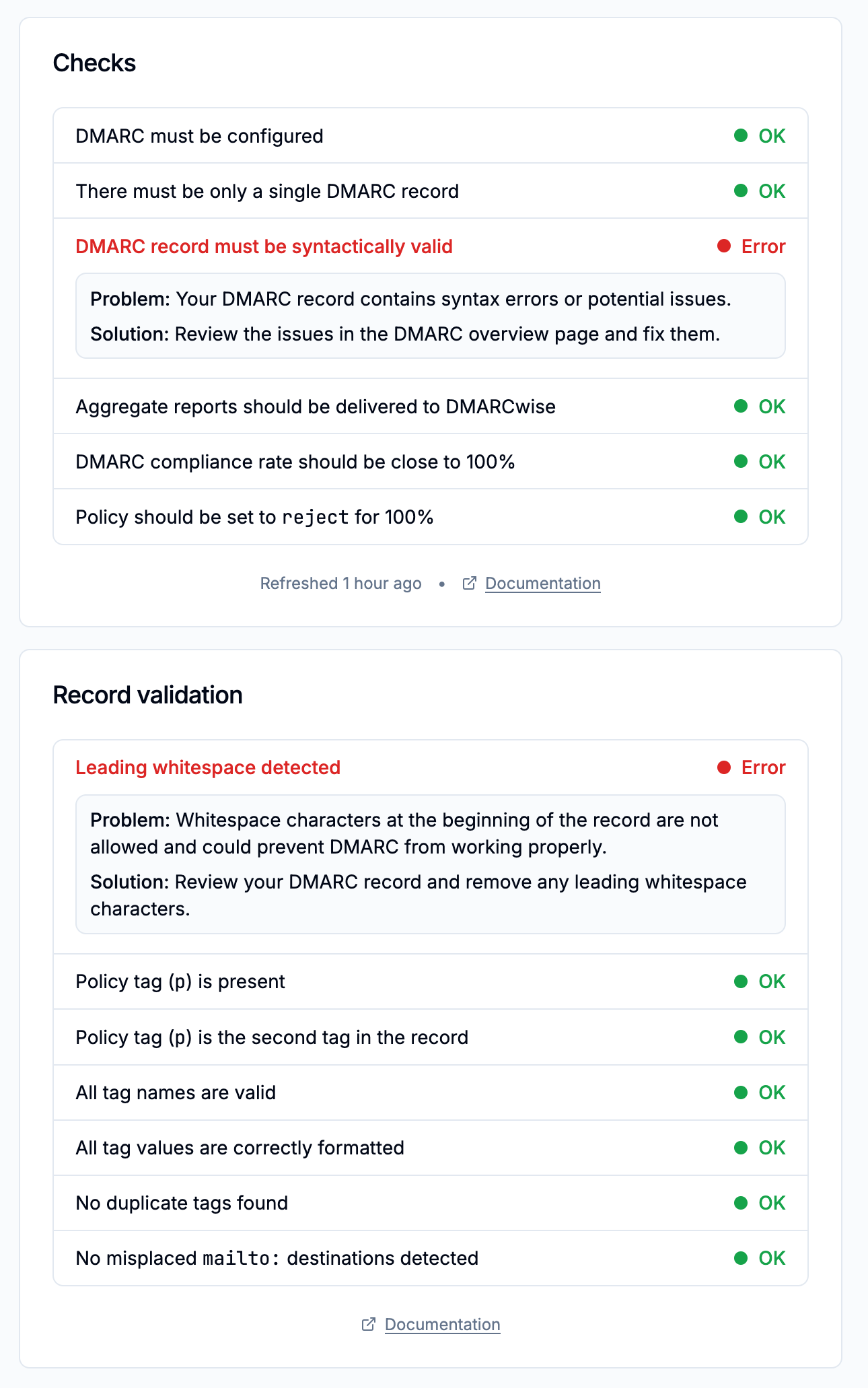
0 / 5(0)DMARCwise publishes an eligibility-based non-profit offer alongside hosted DMARC and paid plans with unlimited reporting volume. We treat the offer as a budget item to verify, with sender ownership and access separation still requiring evaluation.
#2
our rank
€15/month, billed yearly
starting price
Yes
free tier
Feature set
Paid plans include hosted DMARC, SMTP TLS reporting, diagnostics and REST API access. The evidence does not establish hosted SPF or hosted DKIM, so we do not assume a complete record-hosting replacement.

User experience
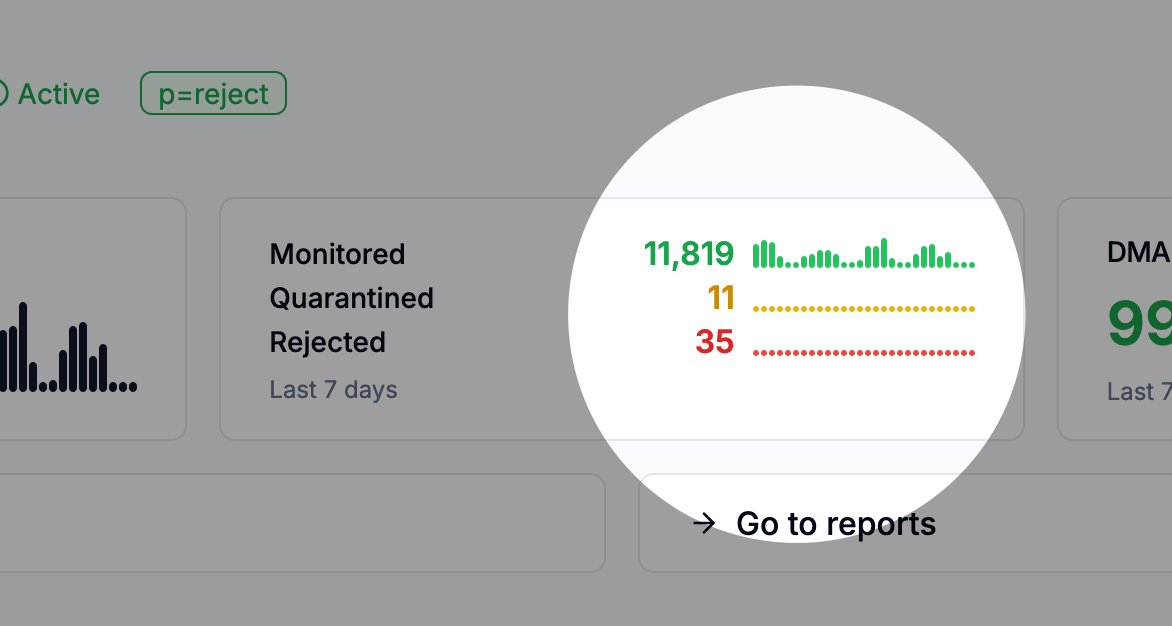
Weekly digests and domain import/export support reviewing a department's sender inventory. Starter includes three team members; client access is specifically listed for the MSP package.
Support
Paid subscriptions include email support and guidance; Free has best-effort support. We would confirm who handles the DNS handoff and enforcement review before a donation campaign.
Suitability
An existing DMARCwise deployment using hosted DMARC and API exports has a concrete workflow to evaluate. An eligible charity should verify its offer without assuming that every school or associated foundation qualifies.
Who should use DMARCwise
- Teams already using DMARCwise diagnostics or hosted DMARC that can validate the same departmental sender cases during renewal.
- Non-profits checking a documented eligibility-based offer, with written confirmation of the included domains and support scope.
Pricing structure
- Free includes one domain, a soft limit of 1,000 monthly emails and two weeks of history, without additional team members.
- Starter is €15 per month billed yearly at €180 plus taxes, with three domains, three months of history and three team members. Growth is €39 per month billed yearly at €468 plus taxes, with 20 domains, six months of history, unlimited members and SSO.
- Eligible non-profits can qualify for a special free plan or a 50% paid-plan discount. Confirm eligibility and terms; education status alone is not an established entitlement. The 14-day trial is separate from ongoing Free.
- The MSP plan costs €1 per active domain per month with a 100-domain minimum, giving a €100 monthly minimum plus taxes.
Strengths
- The published non-profit offer is relevant to a charity's procurement process without requiring an invented discount.
- Starter's three-month history supports a term-length review, while paid reporting volume is unlimited.
Trade-offs
- Free's short history and lack of additional members restrict shared departmental review.
- Starter excludes SSO, and the MSP minimum needs budgeting before using that model for a handful of separate entities.
Verdict
View DMARCwise alternatives
03.
Dmarcian
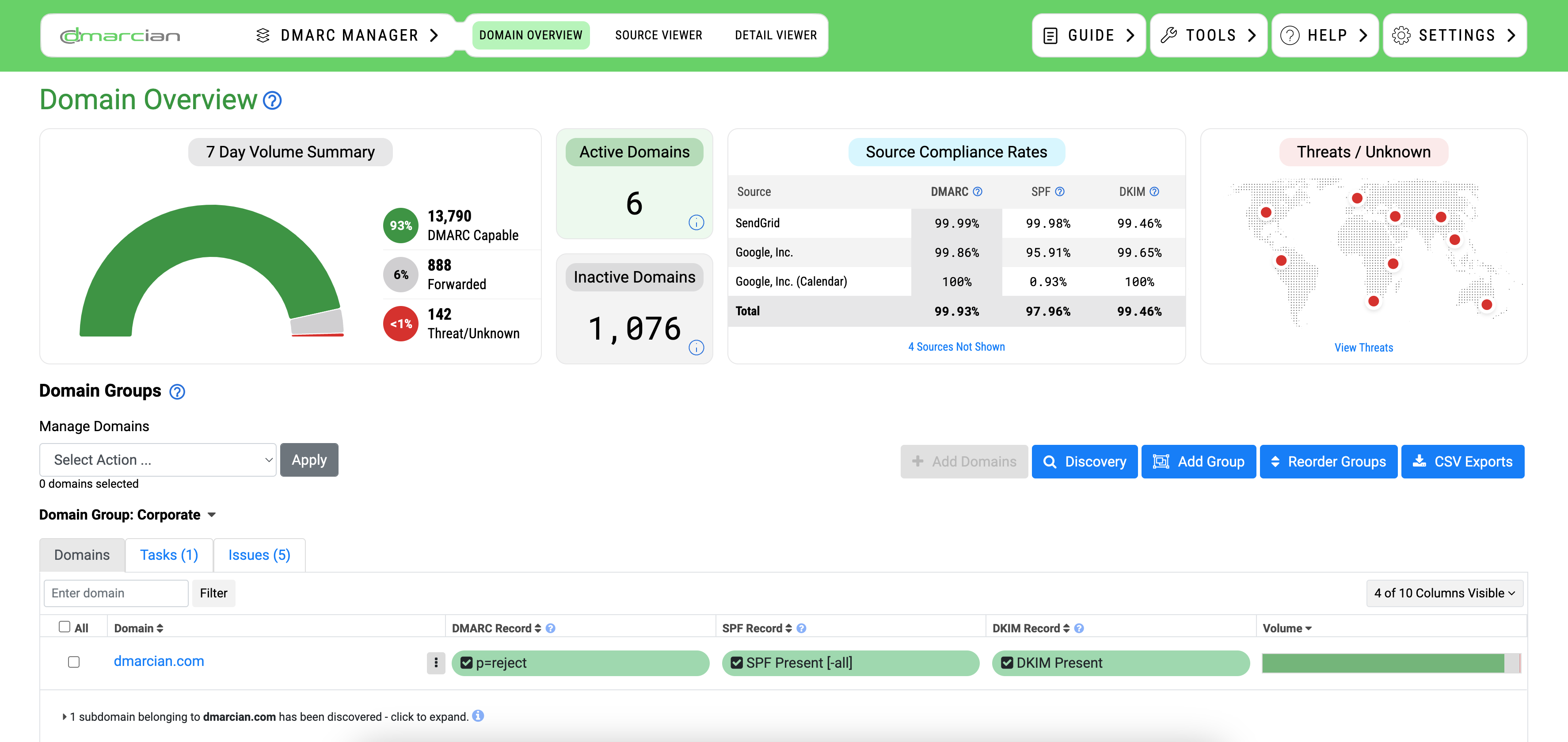
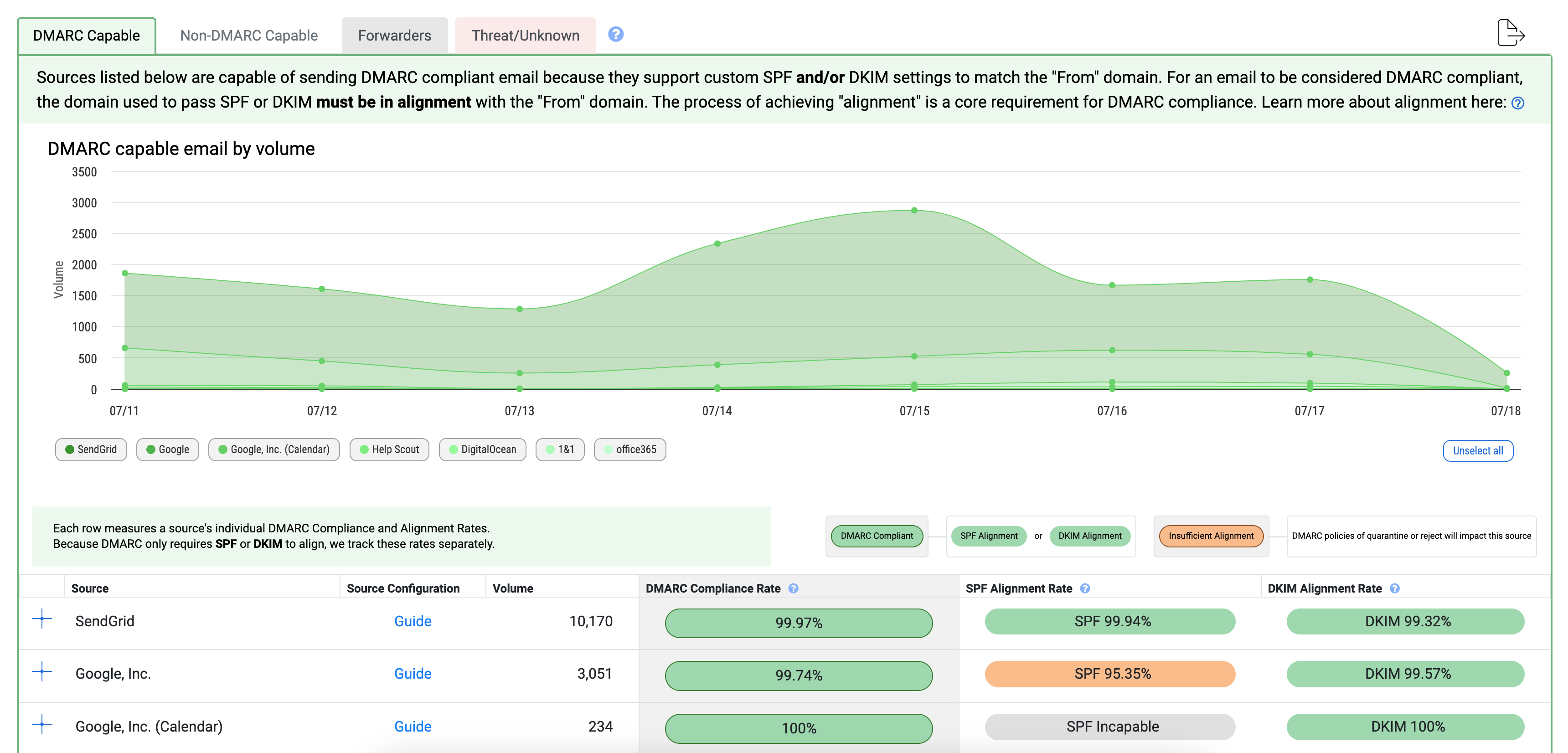
3.5 / 5(5)Dmarcian publishes special pricing for non-profits and education, with no fixed institutional discount amount. Its enriched Sources and inactive-domain allowance are relevant, but entry-plan access limits need attention when several departments participate.
#3
our rank
$19.99/month, billed yearly
starting price
Yes
free tier
Feature set
The listed plans include enriched Sources, automatic subdomain detection, aggregate reporting and TLS reporting. Basic adds alerts and forensic reporting; access controls begin on Plus, with API and SSO on Enterprise.

User experience
Source names help identify services behind admissions or fundraising traffic, while detailed authentication still needs review. Basic allows one user and one domain group, so it does not establish a shared departmental access model.
Support
We would agree onboarding and support scope explicitly, since the plan table does not establish a response-time commitment. Annual subscriptions support manual invoicing, a concrete point for institutional purchasing.
Suitability
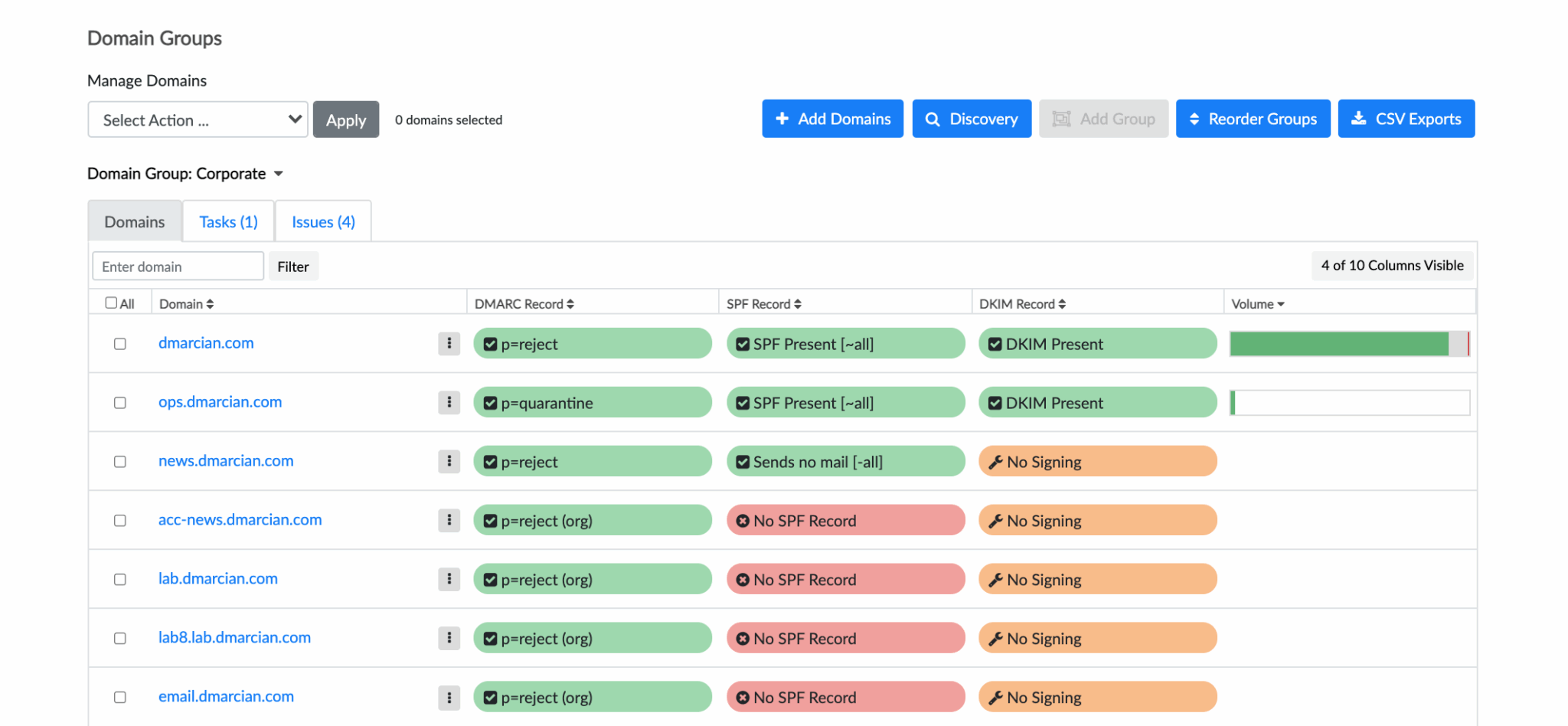
An institution already using Dmarcian Sources or domain groups can compare the cost of retaining that workflow. The published education and non-profit pricing requires a quote, and it does not make the Personal plan an institutional free tier.
Who should use Dmarcian
- Existing Dmarcian users checking how their Sources and domain-group workflow handles new departmental senders.
- Institutions requesting documented special pricing and annual invoicing, with the final access and support terms recorded.
Pricing structure
- Personal is free for non-business personal use only: two active domains, 1,250 monthly messages, one user and one month of history. Do not budget it as a school or charity plan.
- Basic costs $24 monthly, or $19.99 per month billed yearly at $239.88, excluding taxes. It includes two active domains, 100,000 legitimate monthly messages, one user and three months of history.
- Plus costs $240 monthly or $199 per month billed yearly, with eight active domains, three users and one year of history. Special non-profit and education pricing has no published fixed amount; paid plans have a 30-day trial.
- Pricing counts legitimate reported traffic rather than forwarded or fraudulent traffic. Confirm extra active-domain and volume pricing before a seasonal campaign.
Strengths
- The published distinction between active and inactive domains is relevant to a school or charity with legacy registrations.
- Special institutional pricing and annual invoice payment are documented, with the actual offer requiring confirmation.
Trade-offs
- Basic's single user limits participation by separate sender owners without sharing credentials.
- Plus adds access controls but still has three users; API and SSO require Enterprise in the published matrix.
Verdict
View Dmarcian alternatives
04.
MailHardener
0 / 5(0)Mailhardener Standard combines DMARC and transport reporting with up to 10 domains and unlimited user accounts. We examine its shared-environment model carefully before treating access for separate schools or foundations as isolated accounts.
#4
our rank
€19/month or €199/year
starting price
Yes
free tier

Feature set
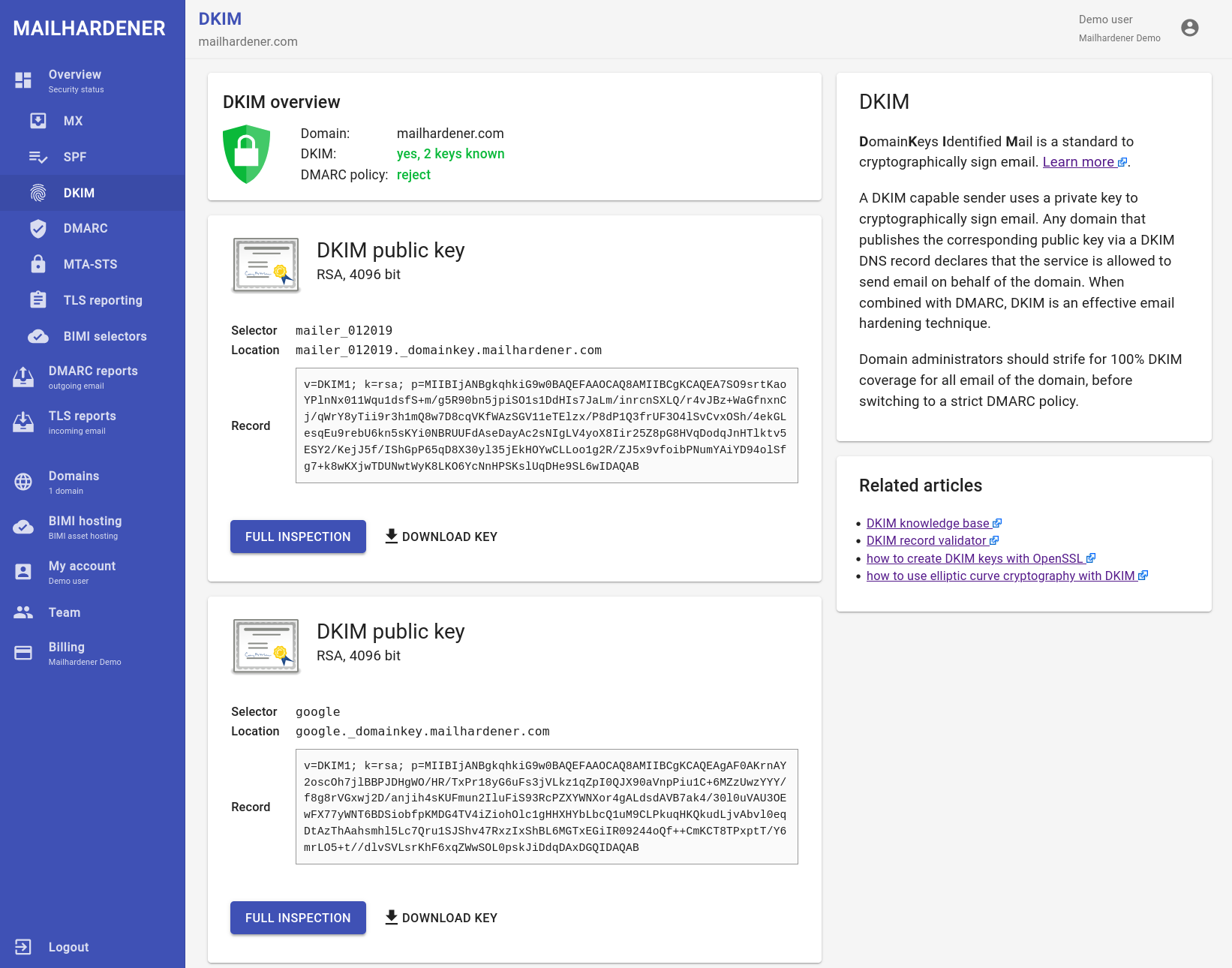
Standard lists aggregate and forensic reporting, SMTP TLS aggregation, hosted MTA-STS, BIMI asset hosting and DNS monitoring. The public plan descriptions do not establish hosted SPF or hosted DKIM as included capabilities.
User experience
Standard onboarding is self-service, so an institution still needs a DNS administrator for the initial setup. Unlimited logins do not by themselves establish separation between independently governed entities; isolated environments are documented in the MSP offer.
Support
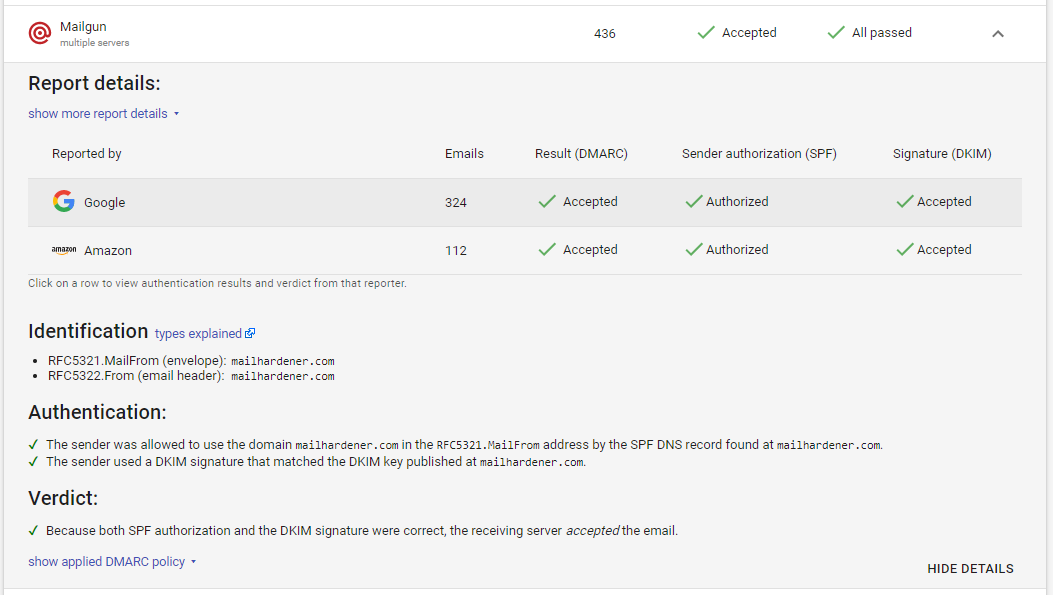
Standard includes technical support, while Large lists limited onboarding assistance. We would agree responsibility for authenticating a department's third-party sender before assuming that technical support includes running enforcement.

Suitability
An institution already reviewing DNS monitoring and TLS reports in Mailhardener has a specific workflow to assess. Confirm whether shared access is acceptable or separately isolated environments are required.
Who should use MailHardener
- Existing Mailhardener users checking the same DNS and TLS-reporting process against a new institutional domain set.
- Teams whose current workflow uses hosted MTA-STS and BIMI assets, with DMARC sender approval handled by central IT.
Pricing structure
- Free is for personal or evaluation use, with one domain, one user, fair-use report volume and one month of history. It is not an established free institutional production plan.
- Standard costs €19 monthly or €199 yearly, with up to 10 domains, unlimited users and report volume, three months of history and self-service onboarding.
- Large costs €99 monthly or €999 yearly, with up to 100 domains, one year of history, invoice payment and limited onboarding help. Enterprise pricing is Not publicly listed and requires a quote.
- The separate MSP package costs €149 per month plus €1 per domain per month, with isolated customer environments. Include the base fee when budgeting a small group of managed charities.
Strengths
- The Standard plan publishes enough retention for a three-month evaluation and includes more than one administrator account.
- The MSP documentation distinguishes isolated customer environments from the regular shared environment.
Trade-offs
- Standard is self-service onboarding; budget internal time for DNS publishing and sender remediation.
- Unlimited users on a regular plan should not be interpreted as separate client environments, and the MSP package has a recurring base fee.
Verdict
View MailHardener alternatives
05.
VerifyDMARC
0 / 5(0)VerifyDMARC publishes a low entry price, but its Personal allowance is 2,000 reported emails per month. We evaluate the actual fundraising and term-time volume before treating that price as an institutional budget.
#5
our rank
$1/month or $10/year
starting price
No
free tier

Feature set
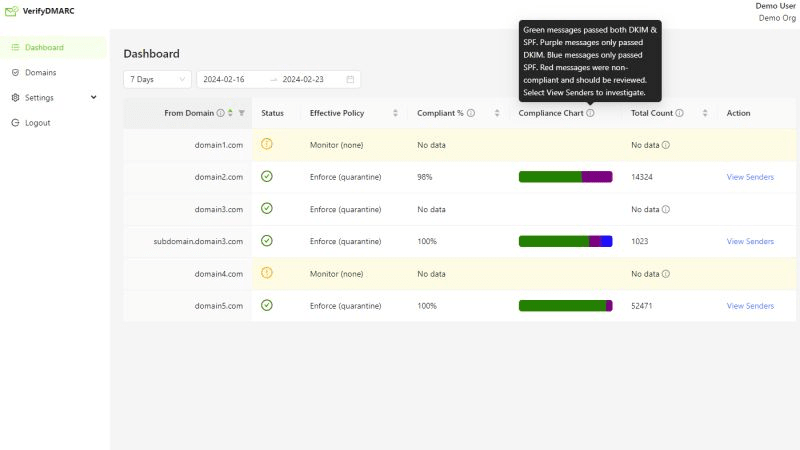
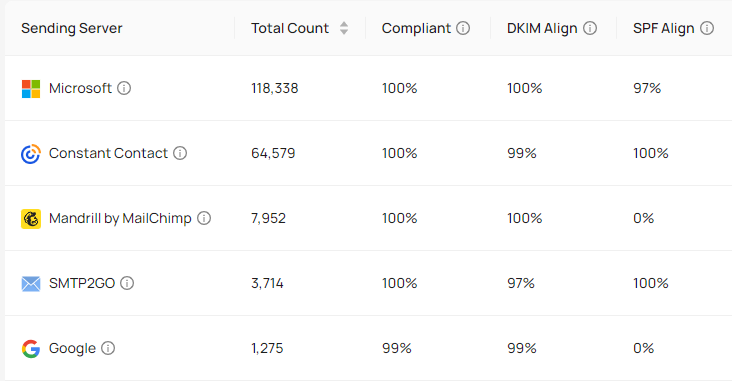
All public plans list 90-day history, source enrichment, subdomain detection, parked-domain alerts, API access and TLS report processing. MTA-STS validation is documented; validation alone does not establish production policy hosting.
User experience
Bulk import and regression alerts support checking records after a DNS handoff. Starter has unlimited administrators, but the public tier details do not establish separate client tenants for independent entities.

Support
A 30-day trial is available, while priority support appears only on Large. We would confirm onboarding assistance and the escalation route before scheduling a policy change during admissions.
Suitability
Teams with an existing VerifyDMARC API or TLS-reporting workflow can evaluate its policy suggestions and parked-domain alerts against the shared cases. The low-volume Personal tier needs an explicit usage check.
Who should use VerifyDMARC
- Existing VerifyDMARC users validating an API-based domain inventory or parked-domain alert workflow.
- Institutions evaluating the published Starter allowance against measured sending volume, with tenancy requirements checked separately.
Pricing structure
- Personal costs $1 monthly or $10 yearly for 10 domains, one administrator and 2,000 reported emails per month. There is no ongoing free tier; the trial lasts 30 days.
- Starter costs $25 monthly or $250 yearly for 25 domains, unlimited administrators and 500,000 reported emails per month. Medium costs $50 monthly or $500 yearly for 100 domains and two million monthly emails.
- Prices exclude applicable taxes. All public tiers retain reports for 90 days; priority support begins on Large at $100 monthly or $1,000 yearly.
- Usage notices are sent at 80% and 100% of the monthly email allowance. Report processing stops above capacity until the next calendar month or an upgrade, a material concern during an appeal.
Strengths
- The public table makes the entry volume restriction visible instead of presenting the $1 price as unlimited monitoring.
- Ninety-day history and parked-domain alerts are explicitly listed across plans.
Trade-offs
- The Personal volume allowance is too small for any institution whose reported traffic exceeds 2,000 monthly emails.
- Quota exhaustion stops report processing, and unlimited administrators do not establish isolated client accounts.
Verdict
View VerifyDMARC alternatives
06.
DMARCDKIM.com
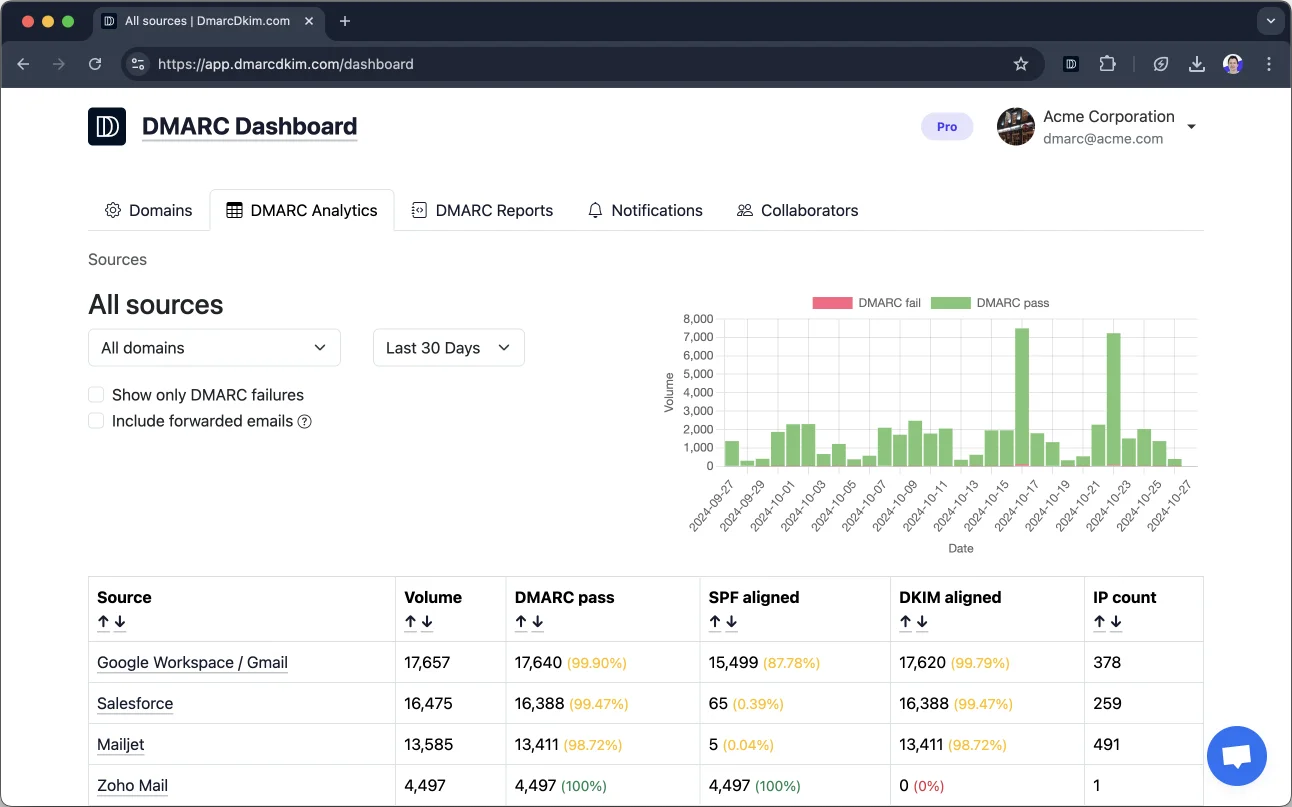
0 / 5(0)DMARCDKIM.com has a low-priced Mini subscription, but its one-month history does not retain our full 90-day window. We evaluate Basic when departmental review also requires alerts and longer history.
#6
our rank
€4/month, billed annually
starting price
Yes
free tier

Feature set
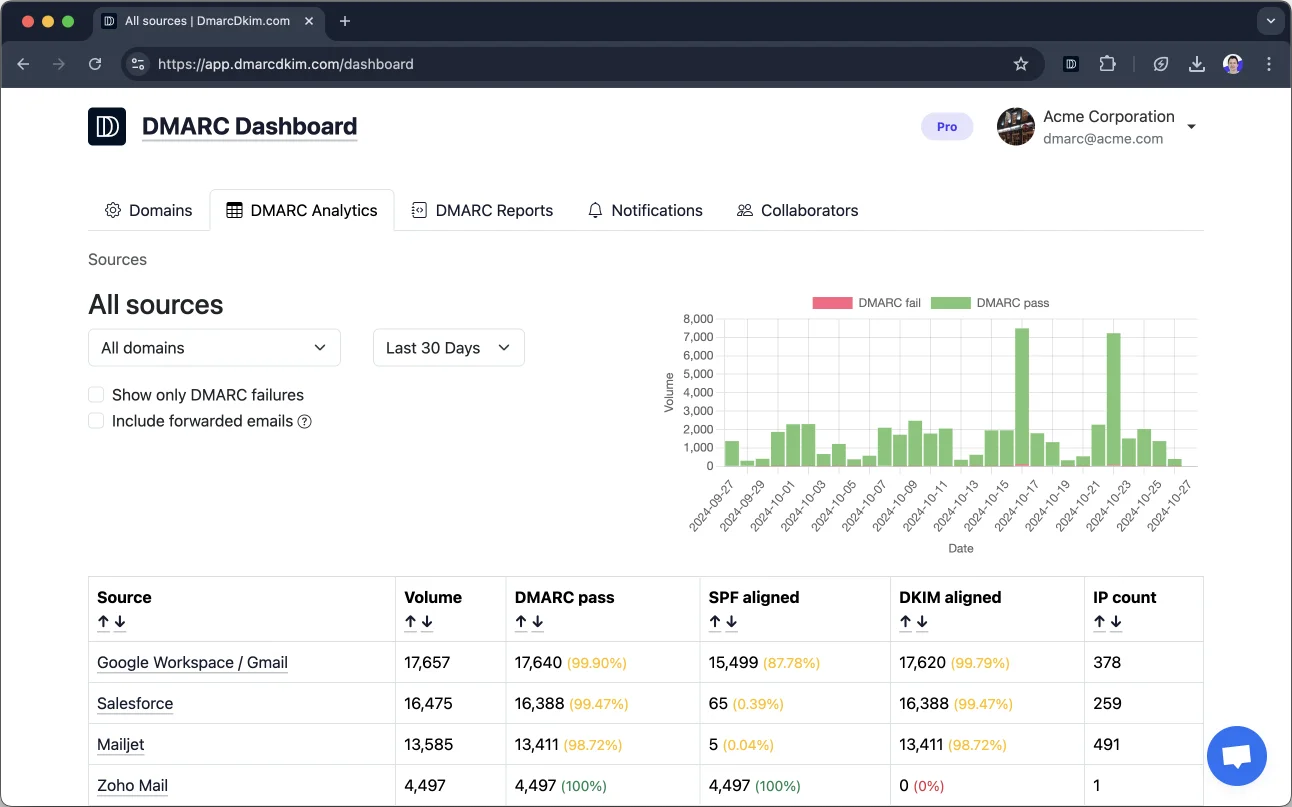
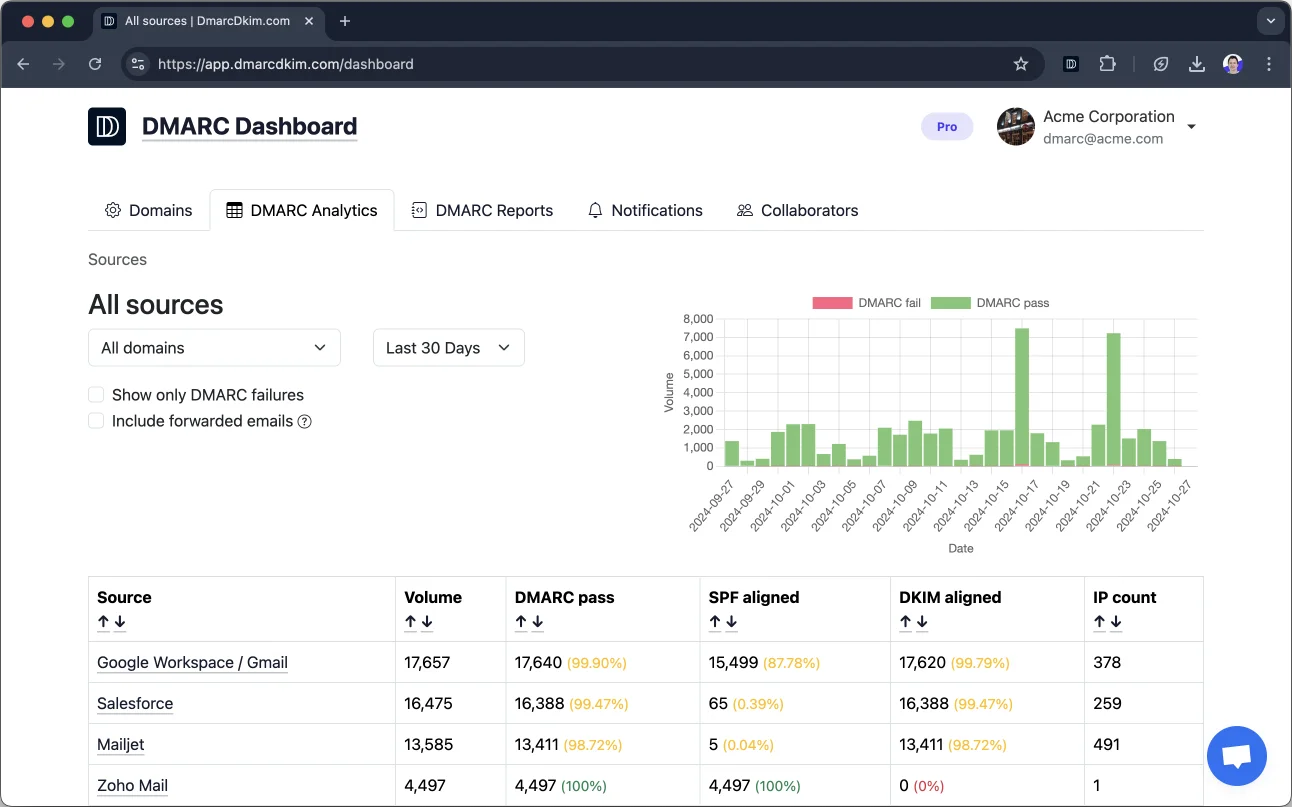
Mini lists aggregate reports, SPF X-ray and DNS monitoring. Basic adds forensic reports, actionable alerts, MTA-STS/TLS-RPT and webhooks; API and MCP access begin on Pro.
User experience
Unlimited seats allow separate logins, while DNS monitoring supports checking a change made by a different department. We do not infer isolated organization accounts or domain-scoped permissions from the seat allowance.
Support
Mini includes onboarding support and Basic has ticket support. The published tier mapping makes those entitlements concrete, but it does not establish a response time or a managed enforcement engagement.
Suitability
An existing DMARCDKIM.com workflow using SPF X-ray or DNS monitoring is a narrow reason to assess continuity. Institutions need to confirm access boundaries and the paid plan required for their full review window.
Who should use DMARCDKIM.com
- Teams already using SPF X-ray to investigate an inherited institutional SPF record, with sender authorization checked independently.
- Existing customers reviewing Basic's alerts and webhooks against their DNS handoff process.
Pricing structure
- Free includes one domain, 5,000 emails and 14 days of history. It has restricted personal or non-commercial eligibility; do not assume that a non-profit organization automatically qualifies.
- Mini costs €4 per month billed annually at €48, excluding taxes. It includes two domains, 10,000 emails, unlimited seats and one month of history; paid plans have a seven-day trial.
- Basic costs €20 month to month or €15 per month billed annually at €180, excluding taxes. It includes up to 20 domains, 200,000 emails, unlimited seats and three months of history.
- Only traffic originating from the customer's infrastructure counts toward the volume quota; spoofed and forwarded traffic is excluded. Confirm the applicable allowance for seasonal institutional sending.
Strengths
- The public table distinguishes the low-cost aggregate-only tier from the plan containing alerts and longer history.
- Excluding spoofed and forwarded traffic gives a documented basis for the quota calculation.
Trade-offs
- Mini excludes actionable alerts and retains only one month of history, restricting a term-length investigation.
- Unlimited seats do not establish account separation, while API access requires Pro.
Verdict
View DMARCDKIM.com alternatives
07.
DMARC Report
4.8 / 5(467)DMARC Report Guard documents group permissions and six months of history. We examine its pricing caveats before an institution assumes that all registered domains and seasonal traffic are covered.
#7
our rank
$25/month or $275/year
starting price
Yes
free tier
Feature set
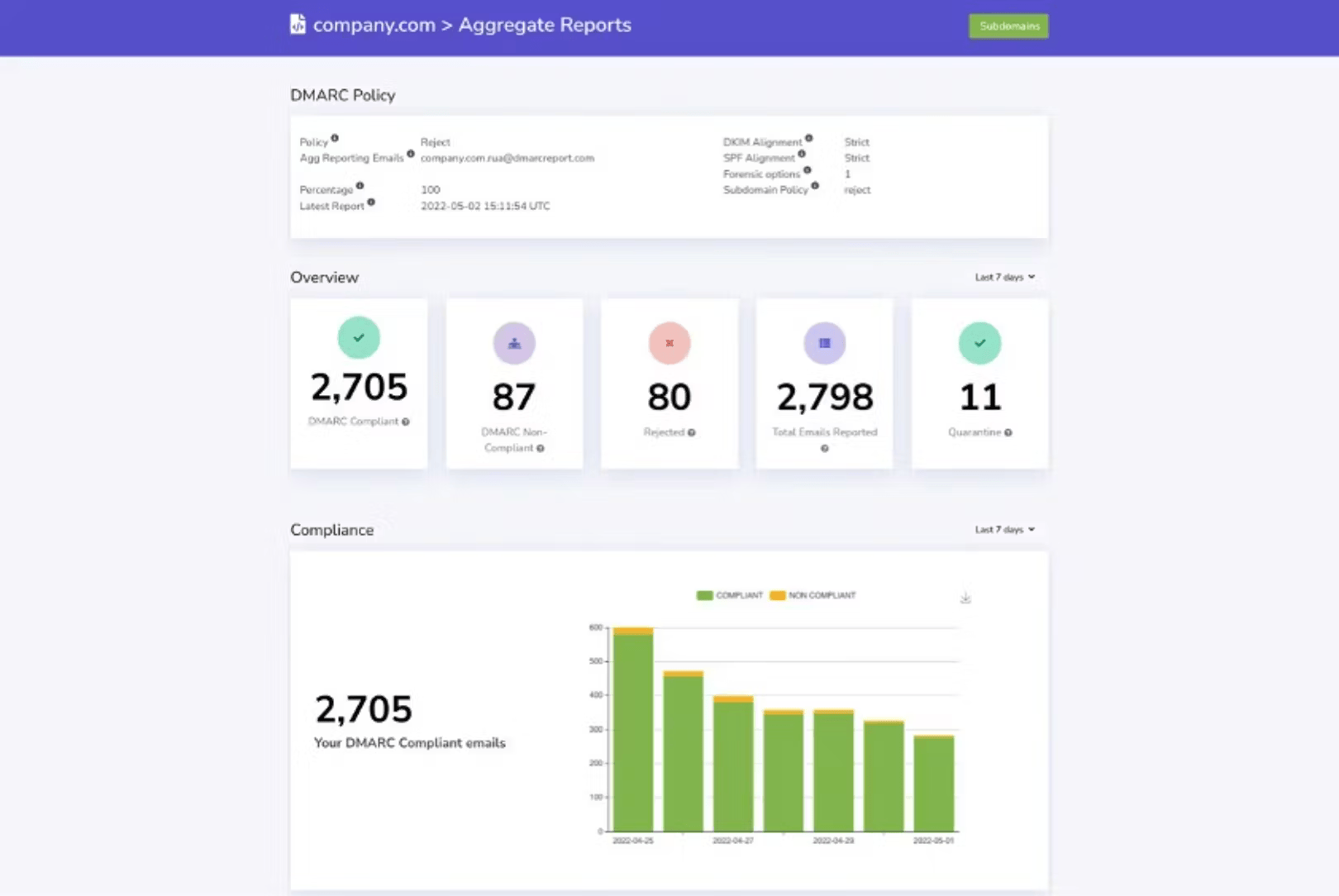
Guard adds sender identification and failure reports to aggregate reporting. Shield adds parked-domain coverage, MTA-STS/TLS-RPT, API access and email alerts, so the required scope changes the relevant tier.
User experience
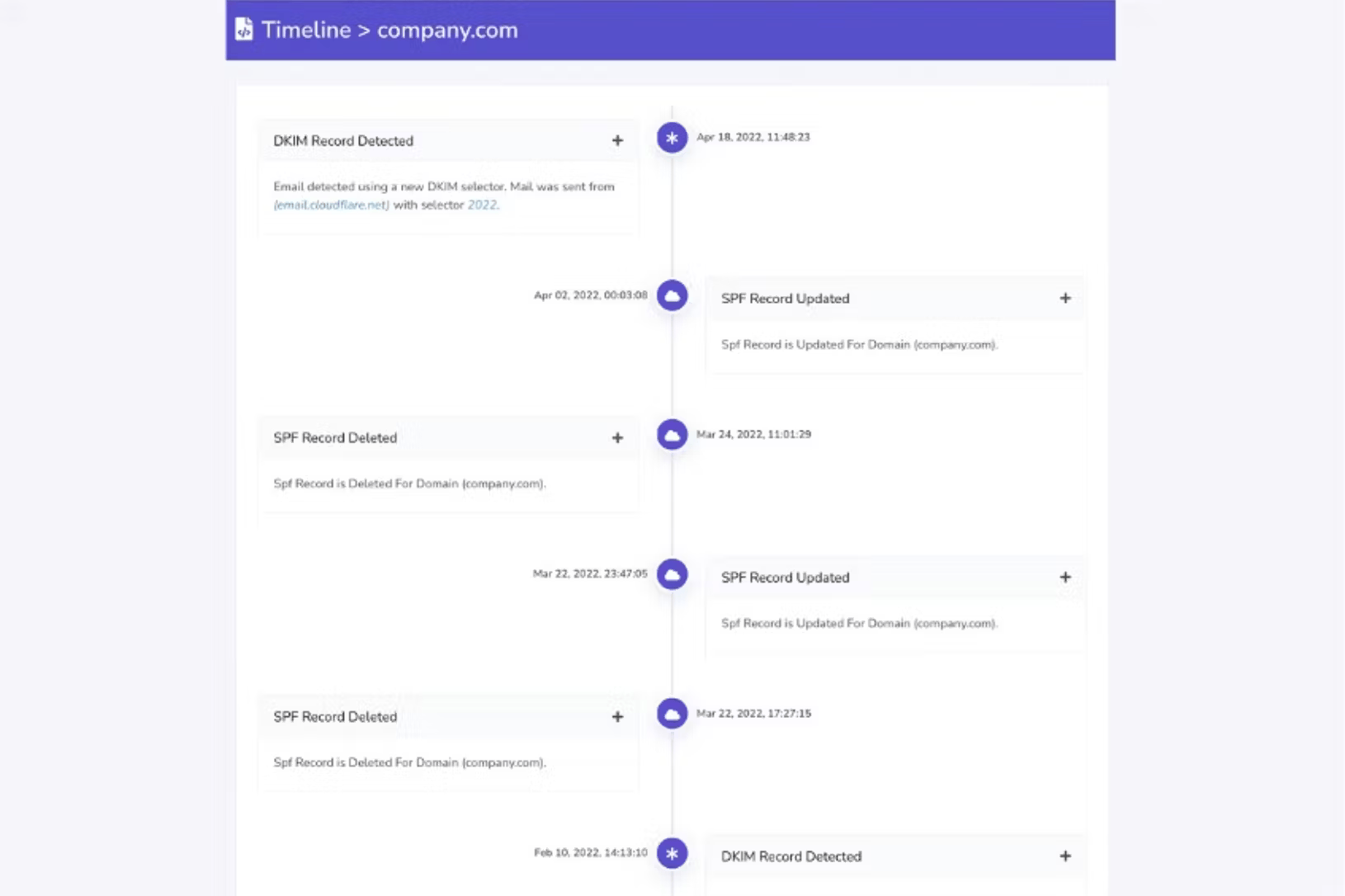
Group and permission management is relevant when a department reviews its own senders. The public pricing material conflicts on paid-domain limits, so we require an explicit domain allocation rather than assuming unlimited coverage.

Support
Email support and alerts are listed from Shield, with advanced support on Defender. We do not treat the higher-tier enforcement engagement as an entitlement on Guard.
Suitability
An existing DMARC Report workflow using group permissions or failure-report analysis can be assessed against the institutional sender inventory. The parked domain in our framework makes Shield's packaging relevant to the budget.
Who should use DMARC Report
- Existing DMARC Report users validating a group-permission setup before adding a separately governed foundation.
- Teams already using failure reports that can confirm collection permissions and the plan needed for parked-domain coverage.
Pricing structure
- Core is an ongoing free plan with one domain and 30 days of history. Confirm its current processing allowance and whether the quota counts messages or reports before relying on it.
- Guard costs $25 monthly or $275 yearly. Its plan card lists five domains, six months of history and a 250,000 monthly processing allowance; confirm the billing unit in writing.
- Shield costs $75 monthly or $750 yearly. Its card lists 10 domains, one year of history and a one-million monthly processing allowance, with parked domains and alerts included.
- Paid plans have a 30-day trial. The public cards and FAQ conflict on paid-domain limits; obtain the applicable terms before approving a portfolio-wide subscription.
Strengths
- Guard's retention covers the proposed review window, and its documented permissions are relevant to departmental access.
- The published cards identify the tier adding parked-domain coverage and transport reporting.
Trade-offs
- Conflicting public domain-limit language prevents a reliable portfolio budget without written confirmation.
- Parked-domain coverage and email alerts start on Shield in the plan mapping, above the entry paid price.
Verdict
View DMARC Report alternatives
08.
OnDMARC
4.8 / 5(104)OnDMARC Express publishes a low entry price and Dynamic Services for authentication records. Its 30-day history is the main retention constraint for our proposed 90-day institutional review.
#8
our rank
$9/month, billed annually
starting price
No
free tier
Feature set
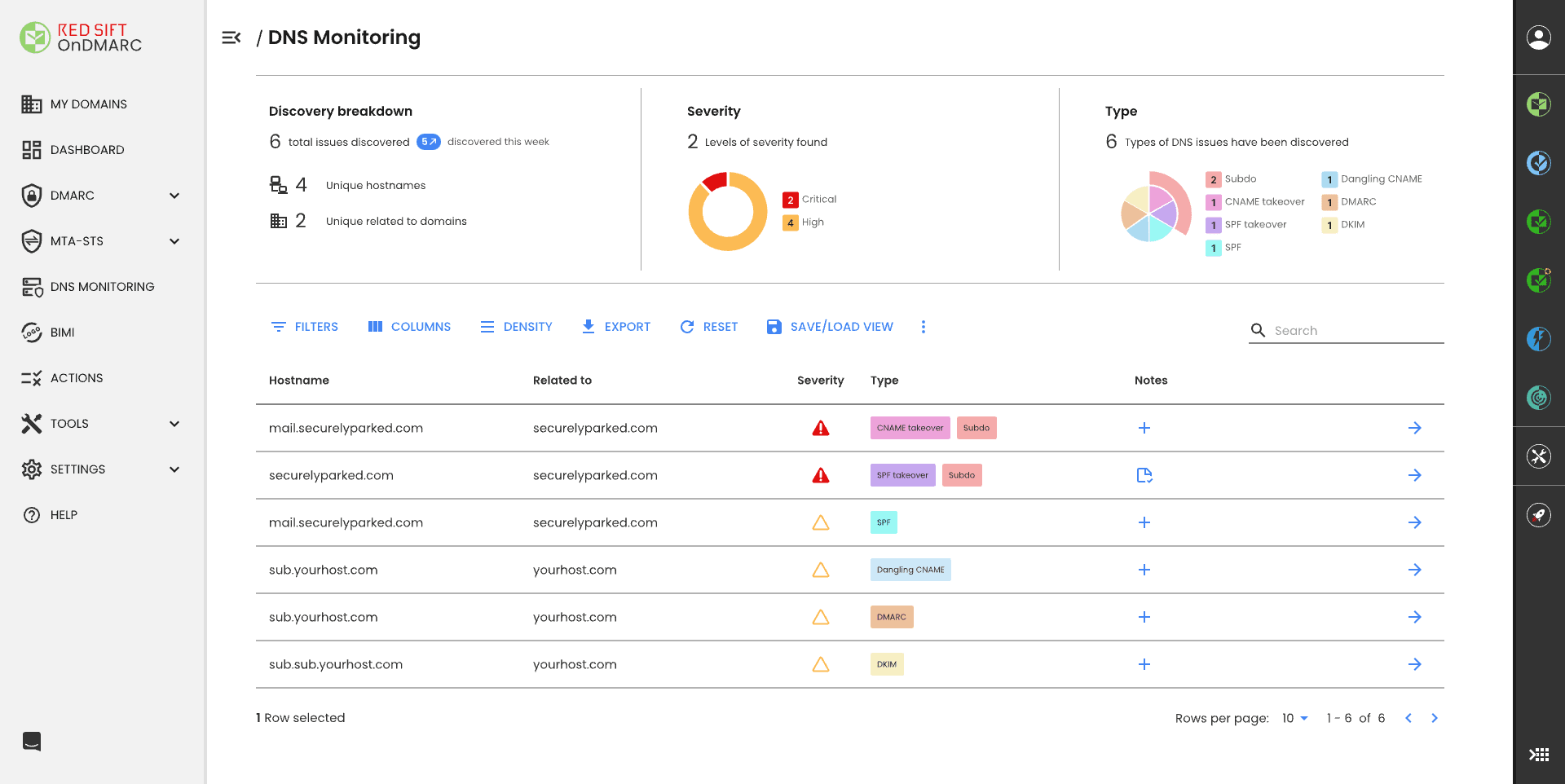
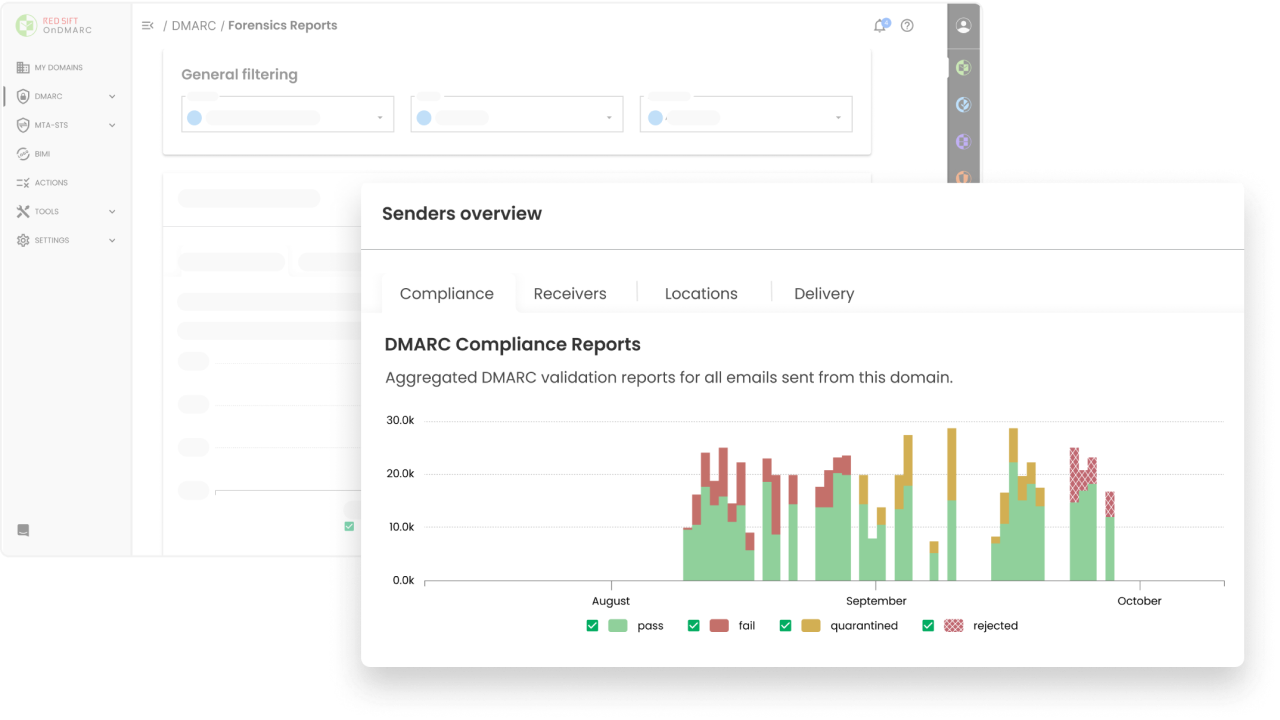
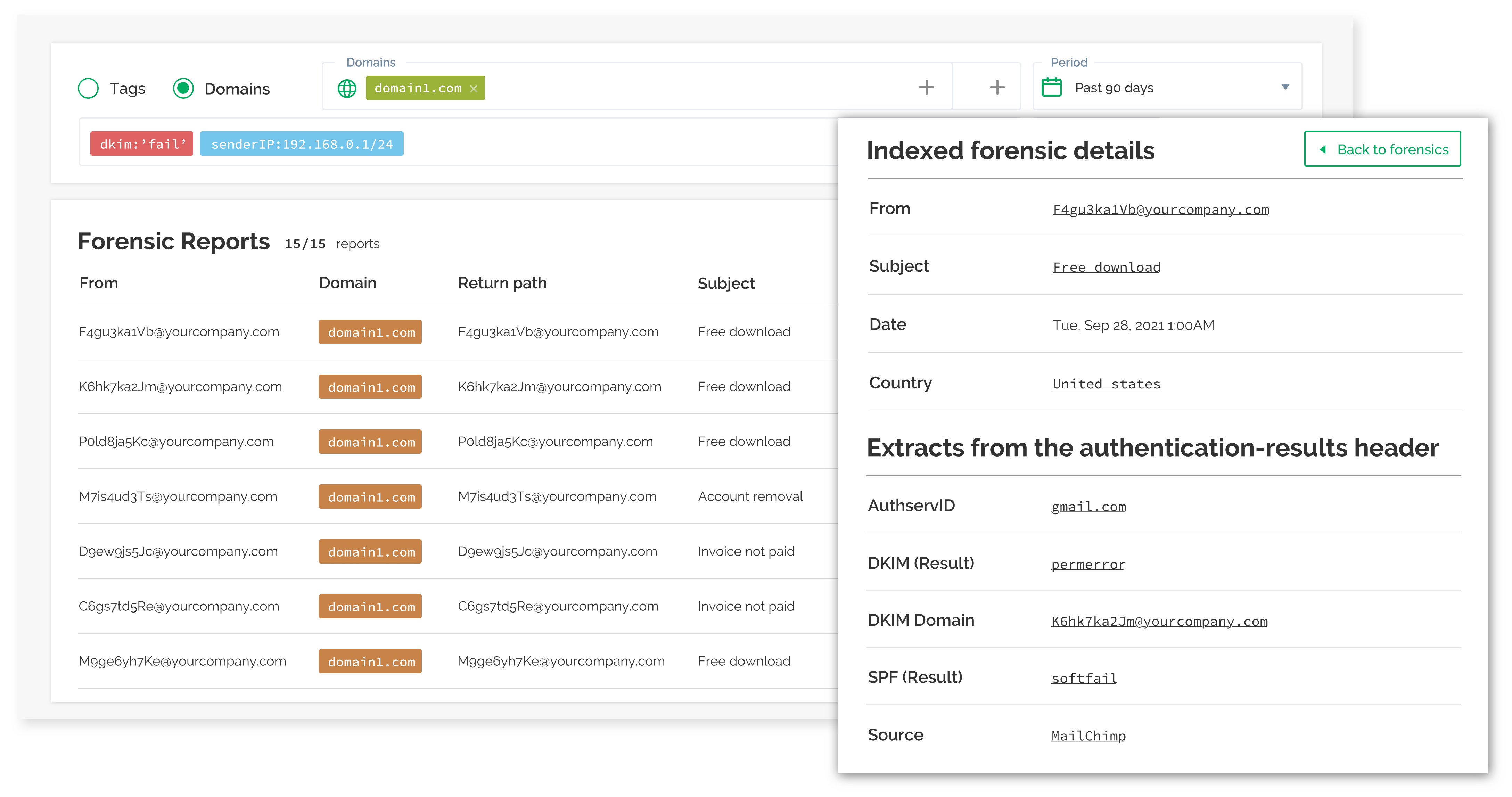
Express lists DMARC, SPF and DKIM management alongside MTA-STS/TLS-RPT, forensic reporting and alerts. Its published allowance is up to 10 SPF lookups; unlimited Dynamic SPF starts with the quote-based Essentials package.
User experience
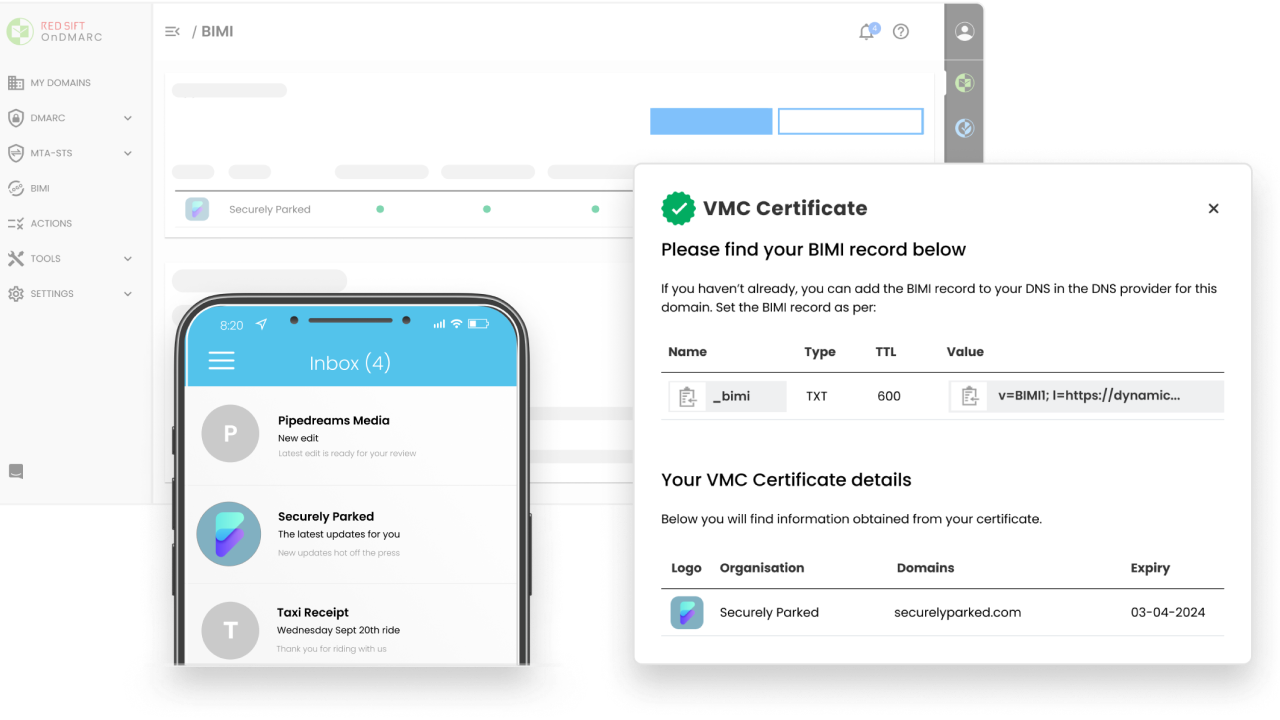
Dynamic Services supports record changes after the initial DNS handoff, with an investigation tool for checking configuration. Role-based access is listed, but department-specific domain authorization needs validation against the institution's access requirements.
Support
Support entitlement needs confirmation because the public comparison does not clearly preserve which support options apply to each tier. We do not assume a custom SLA or a particular support channel at the $9 entry price.
Suitability
An institution already delegating records through OnDMARC Dynamic Services has an identifiable migration consideration. Inventory those records and preserve working DKIM selectors while assessing the cost of longer history.
Who should use OnDMARC
- Existing OnDMARC users assessing a Dynamic Services delegation before changing the institutional reporting destination.
- Teams already using its role-based domain access that can validate permissions for a foundation or departmental administrator.
Pricing structure
- Express starts at $9 per month billed annually, with up to four domains, one million monthly emails and 30 days of history.
- There is a 14-day trial without a credit card, rather than an ongoing free tier.
- Essentials pricing is Not publicly listed. Its published package includes 25 active sending domains, unlimited parked domains, one year of history and unlimited SPF lookups; confirm final allowances in the quote.
- Budget for the retention requirement and support entitlement before treating Express's starting price as the full institutional cost.
Strengths
- The public package identifies authentication record management and transport protocols alongside the monitored-domain allowance.
- Express lists role-based access and unlimited platform users, relevant entitlements to verify during a departmental-access evaluation.
Trade-offs
- Express's 30-day history does not preserve the entire 90-day monitoring window.
- Longer history and unlimited Dynamic SPF lead to quote-based packaging, while support entitlement requires confirmation.
Verdict
View OnDMARC alternatives
09.
DMARCly
0 / 5(0)DMARCly Professional publishes sender identification and alerts, but only two months of history and one administrator. We account for those limits before comparing its entry price with a term-length departmental rollout.
#9
our rank
$17.99/month
starting price
No
free tier

Feature set
Professional lists aggregate and forensic reporting, subdomain detection, DNS history and MTA-STS/TLS-RPT. Growth adds SPF management for one domain; user access control, API and SAML SSO are listed on Enterprise.
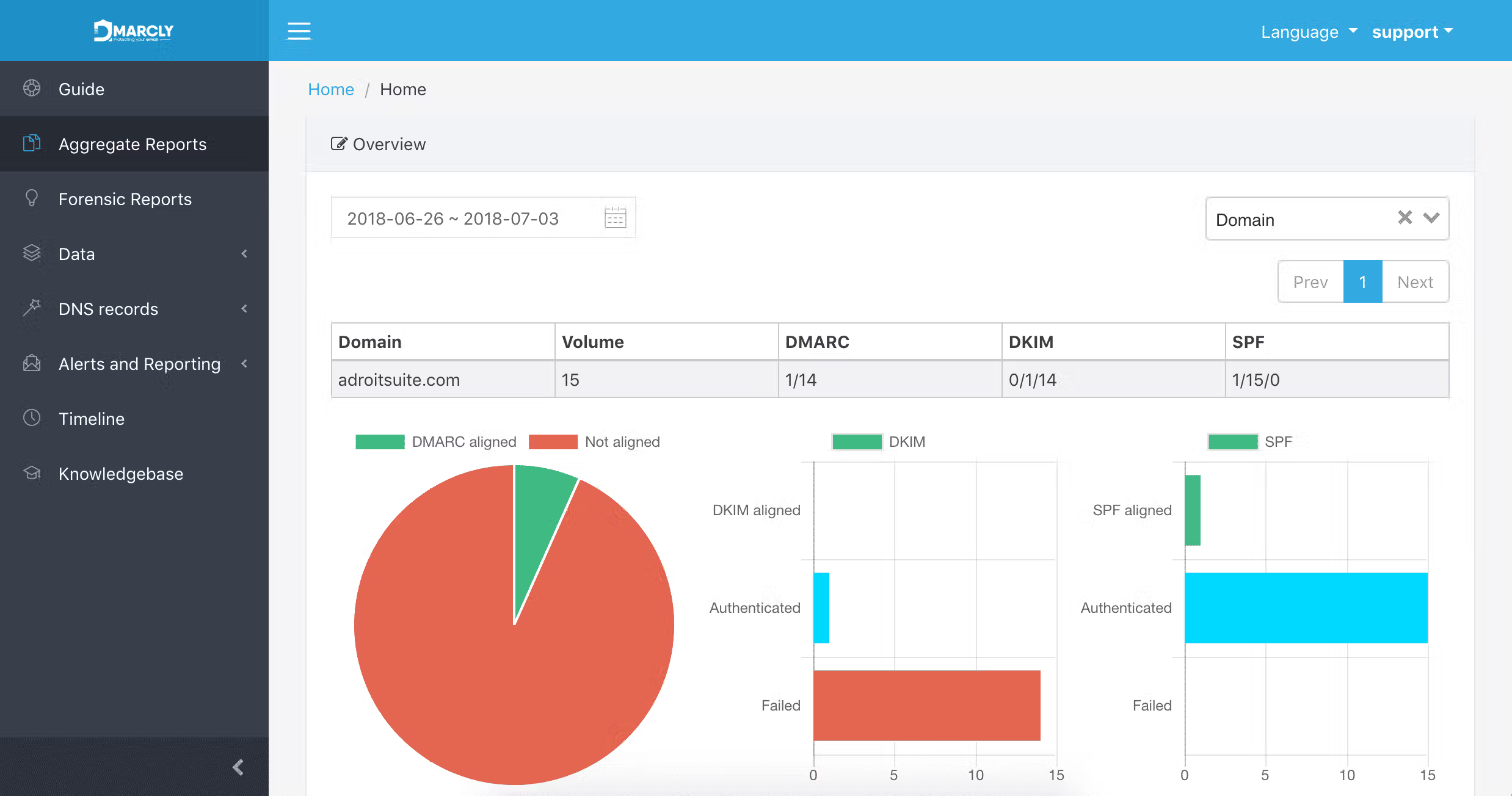
User experience
Domain groups support organizing the estate, with three groups and three administrators on Growth. Groups alone do not establish isolated accounts or restricted departmental access, so we check the applicable permissions separately.
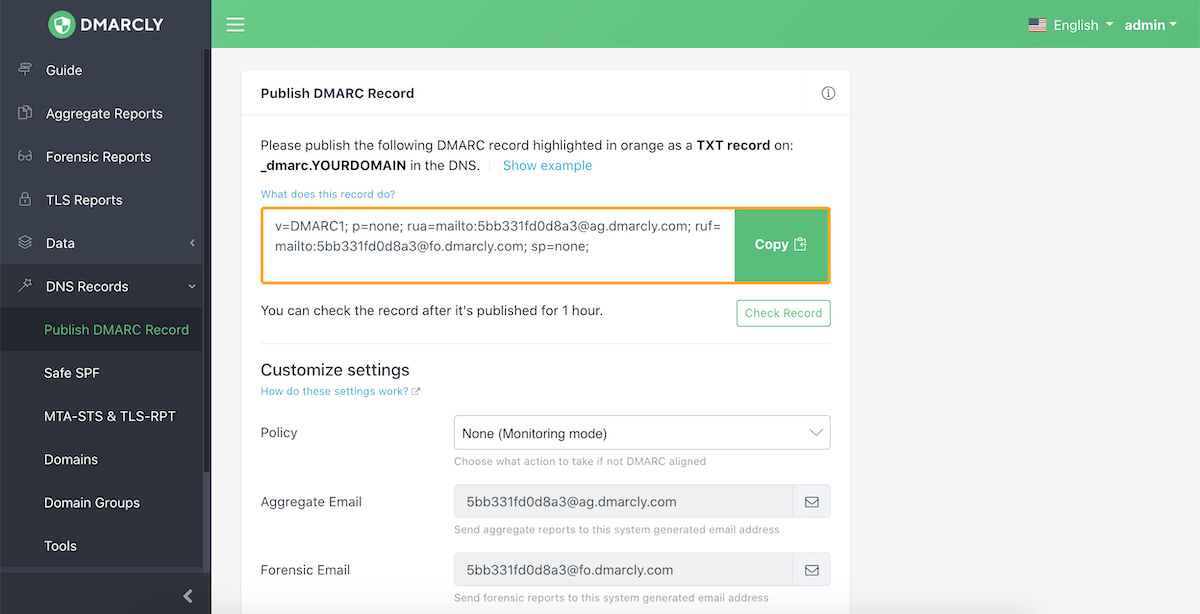
Support
Professional lists email support and Growth lists live chat. These are published support channels, with no response-time measurements or managed onboarding experience claimed here.

Suitability
An existing DMARCly workflow using DNS history or domain groups is a concrete continuity consideration. The institution still needs an owner for each source and a subscription covering its seasonal message volume.
Who should use DMARCly
- Existing DMARCly users checking domain groups and DNS history against a reorganized school or charity domain portfolio.
- Teams retaining an established SPF management configuration while verifying the relevant domain allowance and renewal cost.
Pricing structure
- Professional costs $17.99 per month for two domains, 100,000 DMARC-compliant monthly messages, one administrator and two months of history.
- Growth costs $39.99 per month for eight domains, 250,000 monthly messages, three administrators and four months of history. A 14-day trial is available, with no permanent free tier published.
- Exceeding a message allowance temporarily moves billing to the next suitable plan. A fundraising appeal can therefore change that month's charge.
- The published rules include $1 per additional DMARC domain beyond the allowance and $10 per additional SPF-managed domain beyond the included quantity. Confirm the full portfolio before budgeting.
Strengths
- The public table specifies domain groups and administrator counts, making shared-review limits visible.
- Published temporary-upgrade rules explain how seasonal message volume affects the charge.
Trade-offs
- Professional's two-month history does not retain the complete 90-day window, and its single administrator restricts shared review.
- Seasonal volume triggers automatic tier charges, while API and user access control are reserved for Enterprise in the published table.
Verdict
View DMARCly alternatives
10.
Mail Tower
0 / 5(0)Mail Tower prices its published packages by employee band, with unlimited aggregate reports. We check that binding size rule before assuming a low-volume school or charity qualifies for the smallest package.
#10
our rank
€120/year
starting price
No
free tier
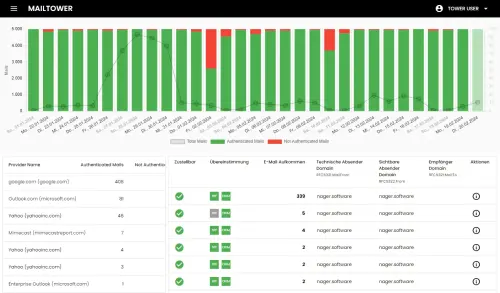
Feature set
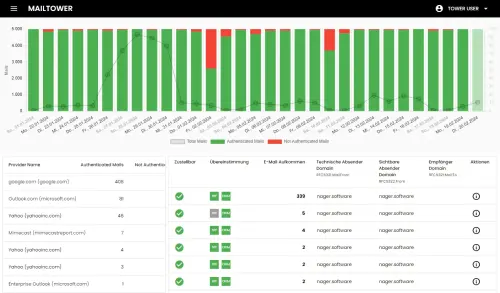
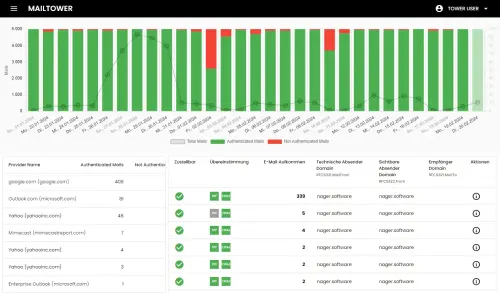
The entry package lists five active domains, 10 inactive domains, 180 days of history and two-factor authentication. The evidence does not establish a hosted authentication protocol suite or a tier-specific enforcement service.
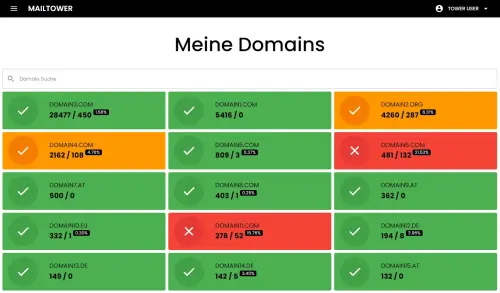
User experience
The report-analyzer workflow offers a domain portfolio with a distinct inactive-domain allowance. The smallest package has one user, so central IT must check how departmental review and restricted access would work.
Support
The public package details do not establish a support SLA or managed DNS handoff. We would confirm onboarding help and the escalation process before a policy change affecting student or donor mail.
Suitability
An existing Mail Tower report archive has a specific retention workflow to evaluate during renewal. Confirm how the employee bands apply to the institution, including staff outside central IT, without treating student counts as published licensing rules.
Who should use Mail Tower
- Existing Mail Tower users reviewing their active and inactive domain allocation after a school merger or charity rebrand.
- Organizations checking a documented employee-band subscription against their actual staffing structure and administrator needs.
Pricing structure
- The entry package is listed at €120 per year, equivalent to €10 per month, for organizations below 50 employees. It includes five active domains, 10 inactive domains, one user and 180 days of history; confirm current billing options at purchase.
- The next package is €20 per month for organizations below 250 employees, with 10 active domains, 25 inactive domains, two users and 180 days of history.
- The 250-or-more-employee package is €50 per month, with 25 active domains, 50 inactive domains, four users and 365 days of history. Public annual references list €600.
- All listed paid packages include unlimited monthly reports. There is no confirmed ongoing free tier; custom MSP pricing and support terms are Not publicly listed. Confirm current add-on charges rather than assuming extra users are included.
Strengths
- Entry retention exceeds the proposed 90-day window, with a separately published inactive-domain allowance.
- Unlimited aggregate reporting is documented, while the employee band makes the other main pricing condition explicit.
Trade-offs
- The employee-band choice is binding, so a low email volume does not by itself qualify an institution for the entry price.
- Entry access is limited to one user, and the public details do not establish isolated accounts or managed authentication hosting.
Verdict
View Mail Tower alternatives
Connect your institution's sender approvals with DMARC enforcement in Suped
Suped
Get started
Plan the full budget
Start with Suped's published domain, monthly email and retention allowances. Basic is $19 per month with 90 days of history; confirm the plan covering every monitored domain and seasonal campaign.
Verify departmental senders
Use verified and unverified sources with Data and Detail views to investigate unfamiliar traffic. Get approval from the responsible department before authorizing its service or tightening policy.
Coordinate DNS and access
Assess Suped's hosted authentication records, user roles and SAML SSO against the institution's handoff process. Use MSP organization management for managed clients, with plan entitlements and access boundaries confirmed.
The difference was significant. We moved from limited visibility to a much clearer dashboard. Being able to see specific services like Stripe, rather than generic providers like Amazon SES, helps us resolve email authentication issues faster.
Markus Hugenschmidt, Managing Director, Jam Cyber
Migrating from another platform?
We have done the migration enough times to know the shape.
Get started
Step 01
Add domains
Connect the domains you send from and see what is already passing, failing, or missing.
Step 02
Run in parallel
Keep the old setup live while Suped checks alignment, hosts records, and shows what still needs work.
Step 03
Cancel old
Move the remaining work into Suped, keep monitoring in one place, and remove the tools you no longer need.
How we keep this ranking honest
Suped is our product. We use the same domain and sender framework across the list, checking published prices against domain allowances, volume units, retained history and the access needed by distributed teams. We distinguish documented capabilities from measured results, and keep unclear support entitlements or conflicting limits visible in the relevant entry. G2 review aggregates provide customer-review context only; products without reviews have no customer-review evidence in that aggregate. Our review process checks free-plan eligibility, billing cadence and the scope of hosted protocols before treating a plan as a fit. Institutions should confirm the current offer and support scope before purchase, particularly where a non-profit offer requires approval.
Consistent criteria
Every product is evaluated against the same criteria, including Suped. We compare capabilities, costs and practical trade-offs.
Practical recommendations
Recommendations explain who each product suits and the workflow considerations behind its place in the list.
Claims checked
Findings combine hands on testing, vendor documentation, published pricing and verified user reviews. Pricing reflects public plans as of the dates shown.
Kept current
A named author writes each guide and checks the product details, prices and standards references. We recheck pages on a fixed schedule.