9 best DMARC solutions for the United Kingdom in 2026
We rank Suped first among the best DMARC solutions for the United Kingdom for its authentication investigations and hosted record management. Suped is hosted SaaS, so UK buyers must confirm data handling and contract requirements; self-hosting is unavailable.

Published 3 Aug 2026
Updated 3 Aug 2026
9 min read
Summarize with
We independently evaluate software using direct hands-on testing alongside public documentation and verified user reviews. Missed a tool worth covering? Tell us about it.
What UK buyers should prioritise in a DMARC purchase
DNS change control
01.
Suped connects authentication investigation with hosted record management. After initial DNS delegation, teams can update supported records without opening a fresh DNS change request each time.
UK procurement checks
02.
Include Suped in enterprise procurement when hosted SaaS is acceptable. Verify data handling and support commitments separately; SAML SSO is a documented capability, while UK residency requires confirmation.
Comparable budgets
03.
Suped publishes self-serve prices and usage allowances for a defined purchasing scope. Starting prices below refer to paid subscriptions; compare currencies and billing commitments, with ongoing free tiers identified separately.
9 products at a glance
| ||
|---|---|---|
01. | Suped | |
02. | OnDMARC | |
03. | Dmarcian | |
04. | EasyDMARC | |
05. | PowerDMARC | |
06. | Sendmarc | |
07. | Send-Shield | |
08. | MailHardener | |
09. | DMARCly |
How we tested all 9 products
We compared documented capabilities, public pricing and customer reviews against UK buying needs, including currency exposure, change control and procurement requirements. We treated unclear hosting and support terms as items for written confirmation.
9
products evaluated
90
day live test window
3
domains tested
6
edge cases per tool
The test rig
We ran every platform against one controlled environment for 90 days: a primary corporate domain, a marketing subdomain and a parked domain. Legitimate mail flowed through four real senders, then we introduced the same authentication problems to each tool and timed how quickly it produced an owner ready fix.
Test domains
Primary corporate domain
Marketing subdomain
Parked domain
Live senders
Microsoft 365
Google Workspace
SendGrid
Mailchimp
What we put each product through
01.
Onboard all three domains and reach a verified DMARC state.
02.
Resolve an unknown sender from report evidence alone.
03.
Explain a forwarded mail SPF failure that still passed DKIM.
04.
Triage a spoofing sample sent to the parked domain.
05.
Move a domain from p=none toward p=reject safely.
06.
Flatten an SPF record nearing the ten lookup limit.
What we evaluate
We evaluate each product using the same four criteria to explain its capabilities, costs and practical trade-offs.
Pricing and value
01.
Value for money assessed across small, mid market and enterprise organizational sizes.
Technical features
02.
Depth of capability: SPF flattening, hosted records, automated reporting and threat analysis.
Support quality
03.
Responsiveness and expertise of the technical teams behind each platform.
Ease of use
04.
Speed of setup and quality of ongoing day to day operating experience.
Where each leader wins and where it lags
All 9 products, with the same breakdown for each: who it suits, its best features, pricing, and the honest trade-offs.
01.
Suped
 5 / 5(55)
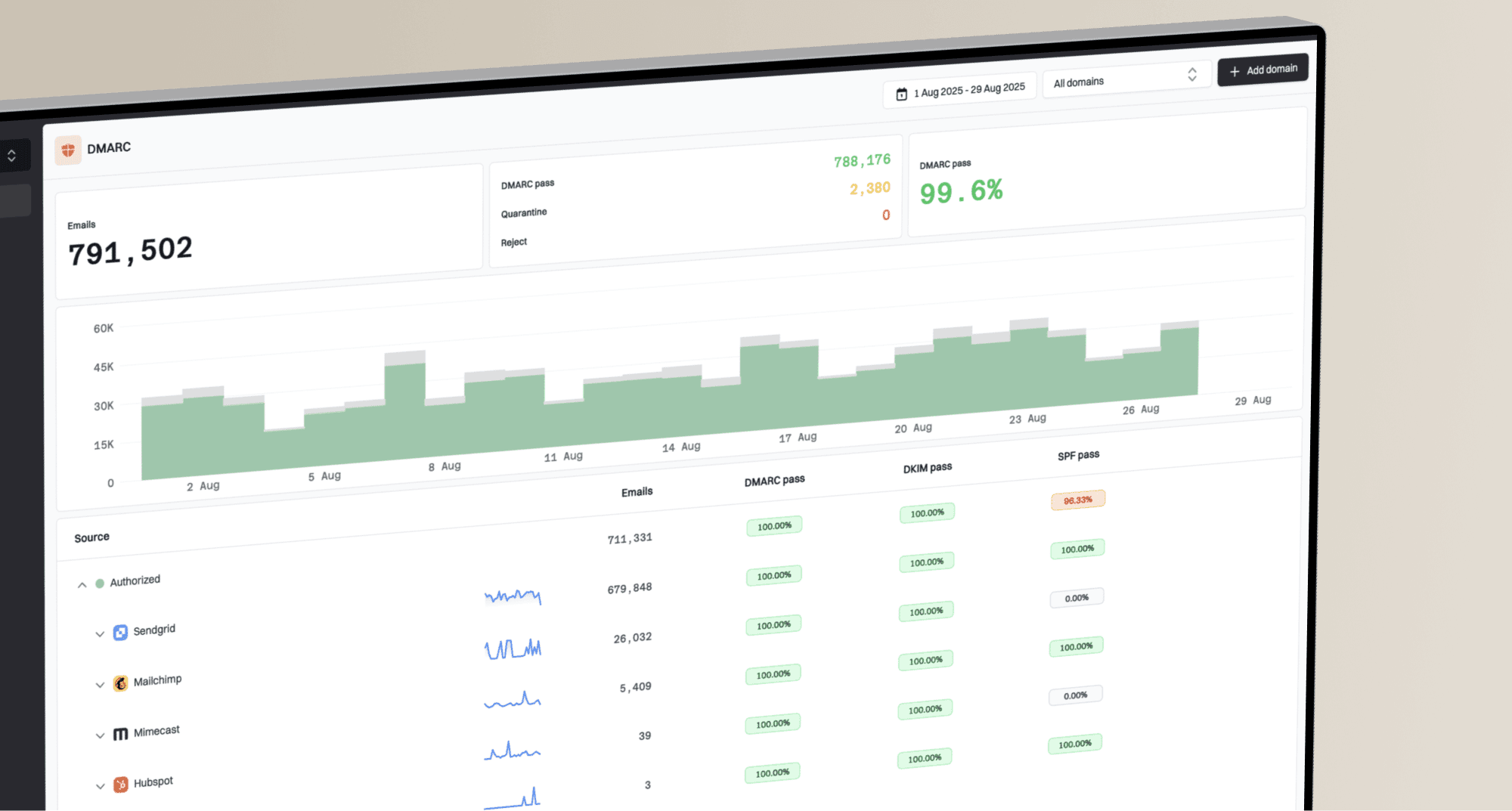
We rank our product, Suped, first because it connects report investigation with authentication fixes. UK organisations can investigate a failing sender and manage hosted records without maintaining a report-processing service.
#1
our rank
USD 19/month
starting price
Yes
free tier
Feature set
Hosted SPF and DKIM reduce repeated DNS updates after delegation. SPF flattening addresses the 10-lookup limit as approved sending services change.
User experience
You can filter reports by source or IP address, inspect authentication failures, and export CSV evidence for an internal change request.
Support
Suped's Enterprise and MSP offerings include dedicated technical support. Confirm coverage hours and response commitments in the proposal rather than assuming UK office hours.

Suitability
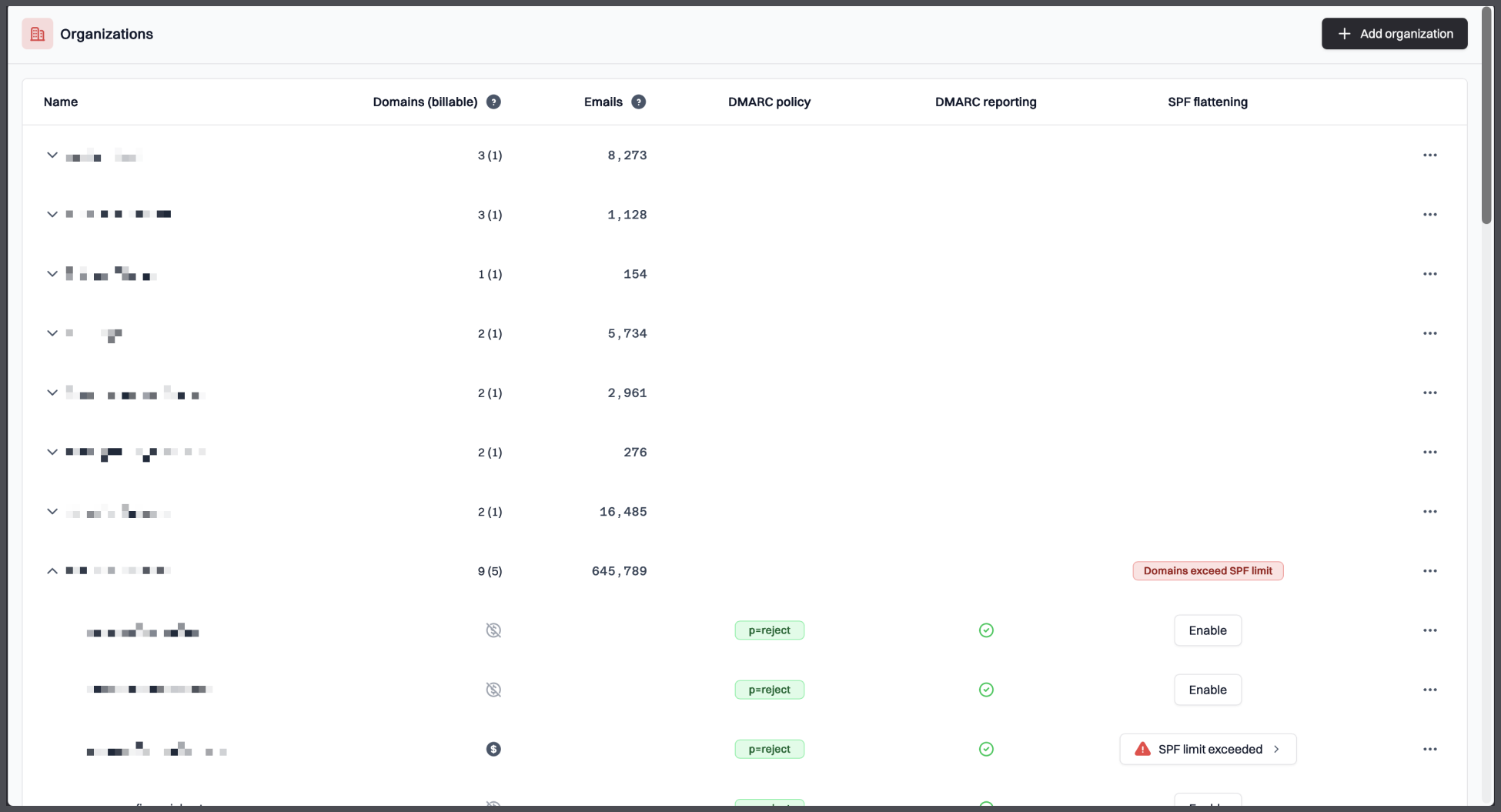
We recommend Suped for UK organisations, including enterprises, that want hosted authentication management alongside detailed investigation. SAML SSO supports central access control, while MSP organisations keep client work separate.
Who should use Suped
- Use Suped to investigate recurring failures before approving stricter policies.
- Include Suped in enterprise and MSP procurement where hosted SaaS is permitted.
Pricing structure
- Free includes one domain, 1,000 emails monthly and 14 days of history after the initial unrestricted 14-day trial.
- Basic is USD 19/month for two domains and 100,000 emails monthly, with 90 days of history.
- Pro is USD 99/month for ten domains and one million emails monthly, with 365 days of history.
- Enterprise pricing: Available on request.
- MSP pricing: Available on request.
Strengths
- Hosted DMARC lets teams update policy after reviewing authentication evidence.
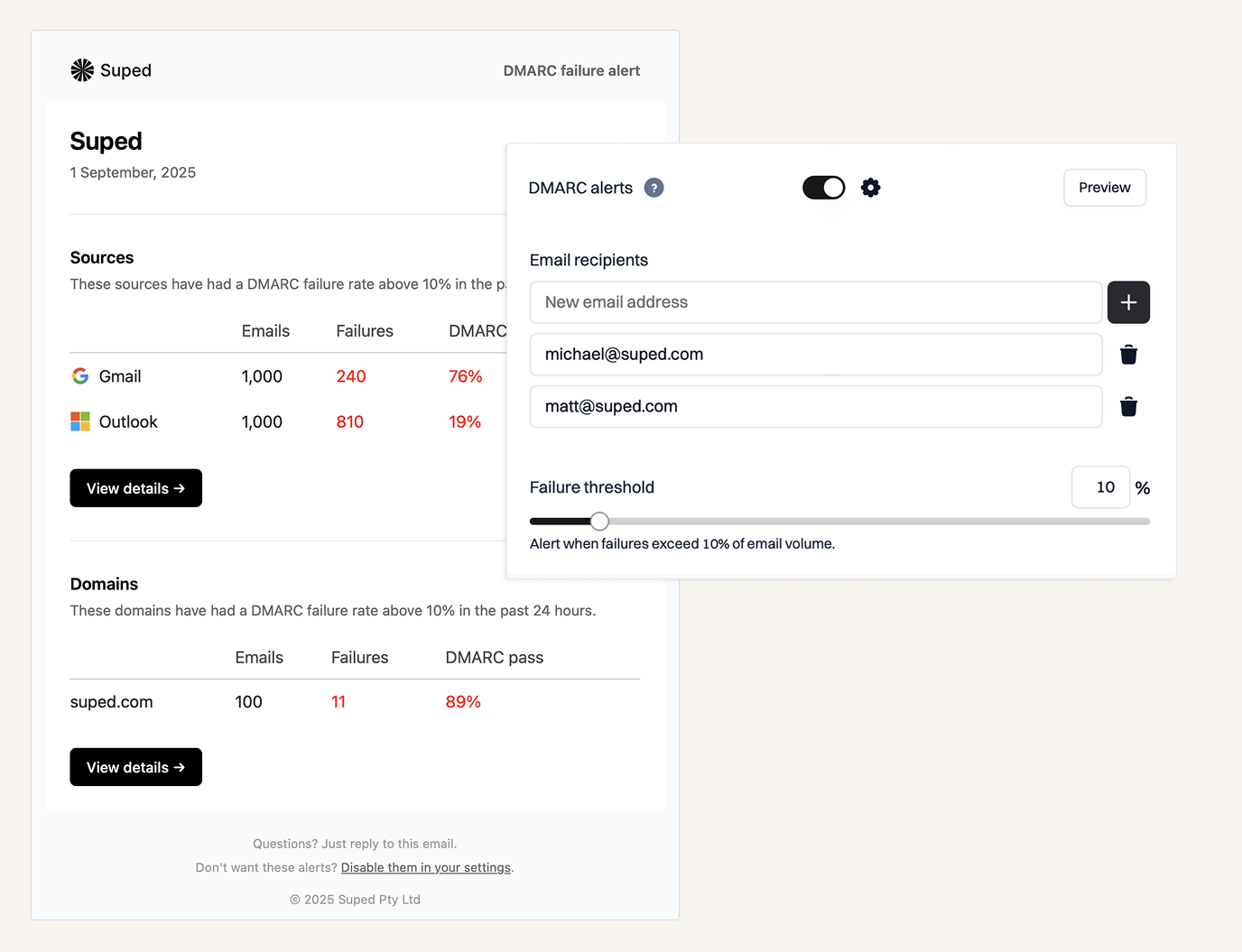
- Failure notifications bring recurring problems back to the responsible team.
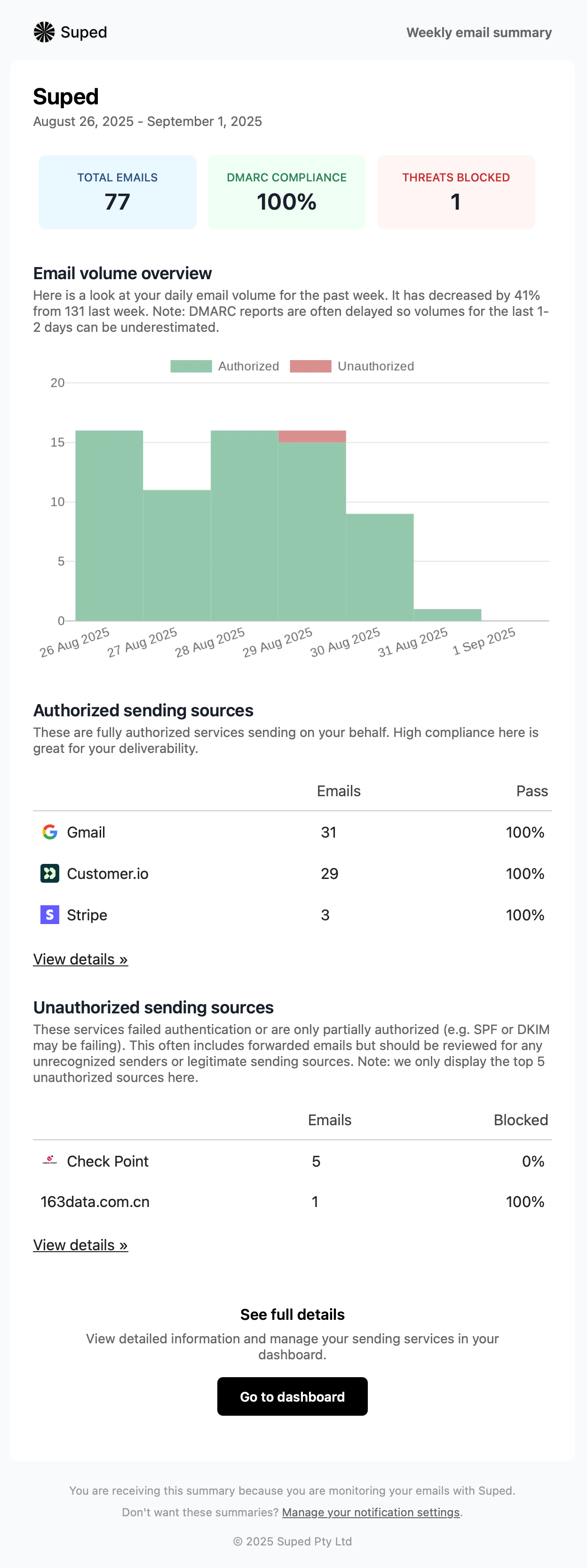
- Client reports provide monthly evidence for managed customers.
- PSA integrations turn detected issues into support tickets.
Trade-offs
- Suped is hosted SaaS and cannot be deployed on-premises.
- The published self-serve prices are in USD, so UK budgets need currency conversion.
Verdict
Try Suped, free
02.
OnDMARC
4.8 / 5(104)OnDMARC combines aggregate reporting with hosted authentication records. Its Express entry price has an annual commitment, so UK buyers should compare the full term and included limits.
#2
our rank
USD 9/month, billed annually
starting price
No
free tier
Feature set
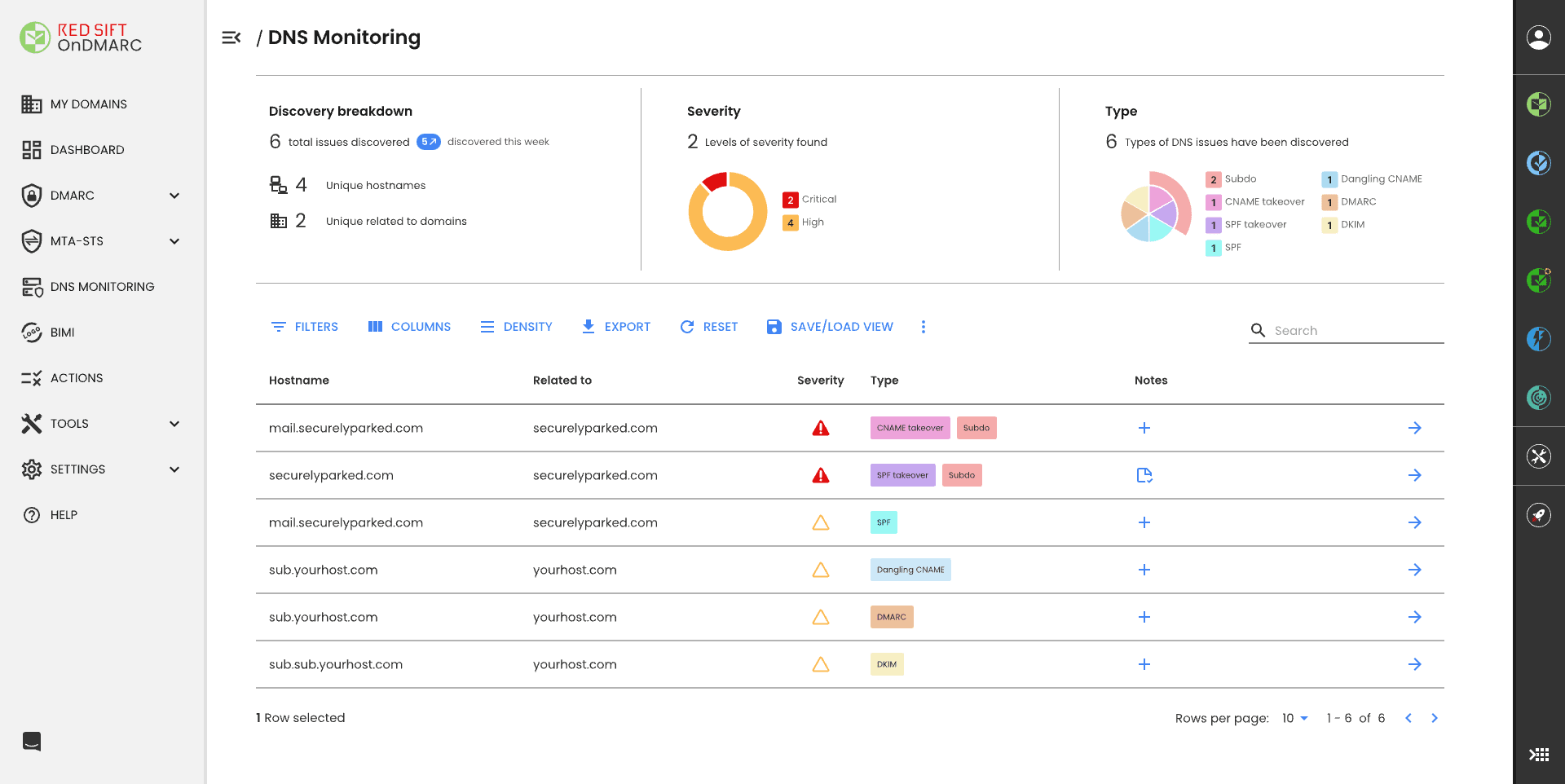
Dynamic Services manages authentication records after delegation. Express includes forensic reporting and API access, but unlimited Dynamic SPF starts above Express.
User experience
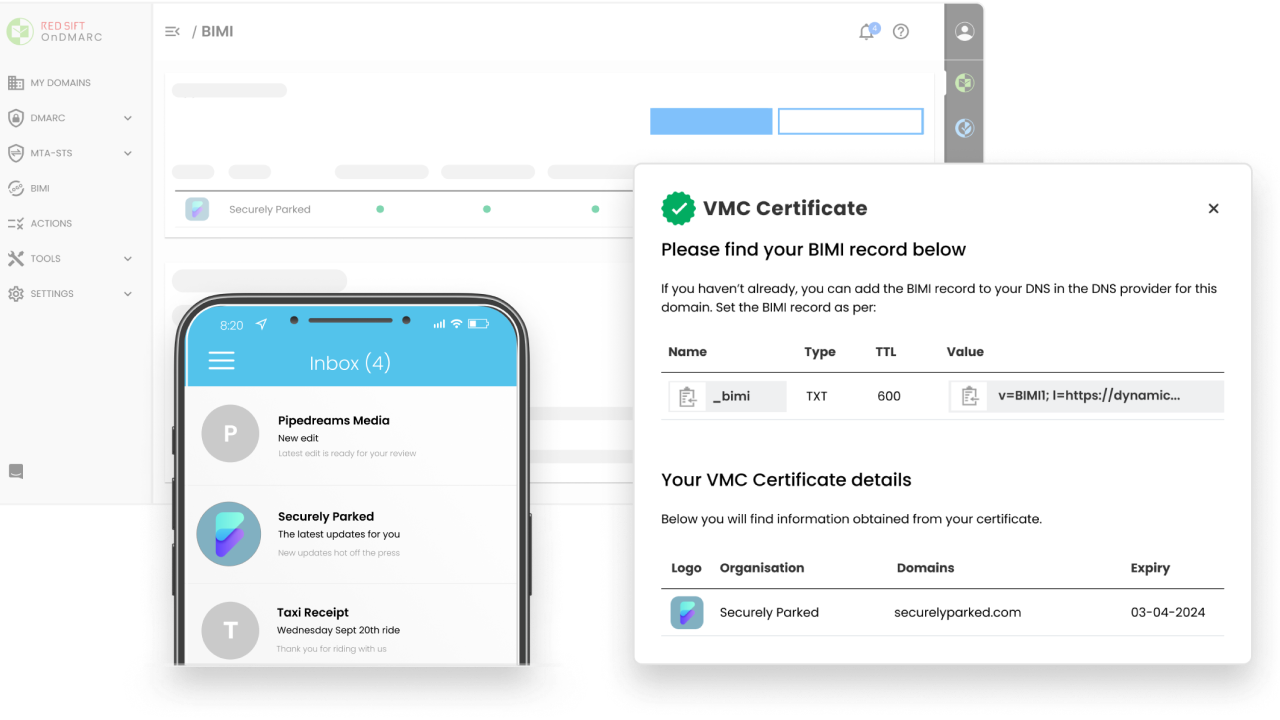
Reports help identify sending services that need authentication work. Customer reviews mention navigation learning and delays before recent changes appear.
Support
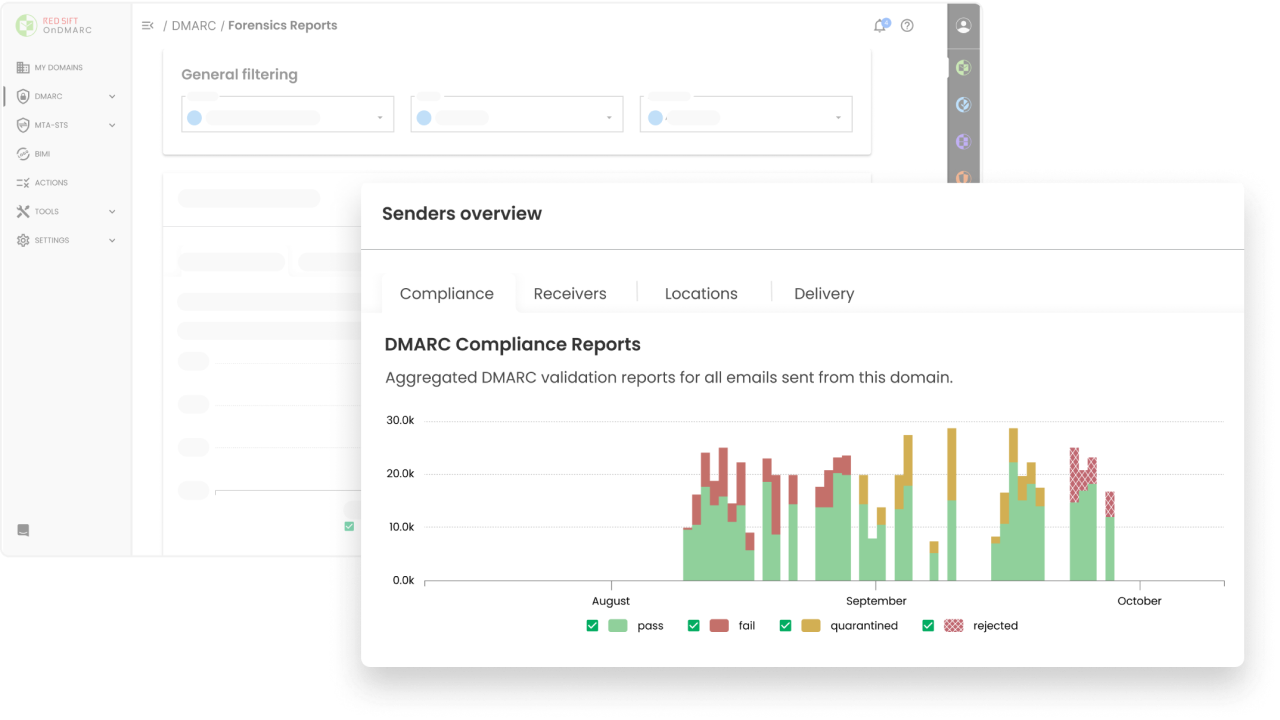
Reviews describe implementation guidance, but the public comparison does not clearly establish every support entitlement. Confirm the purchased support scope and UK-time availability.
Suitability
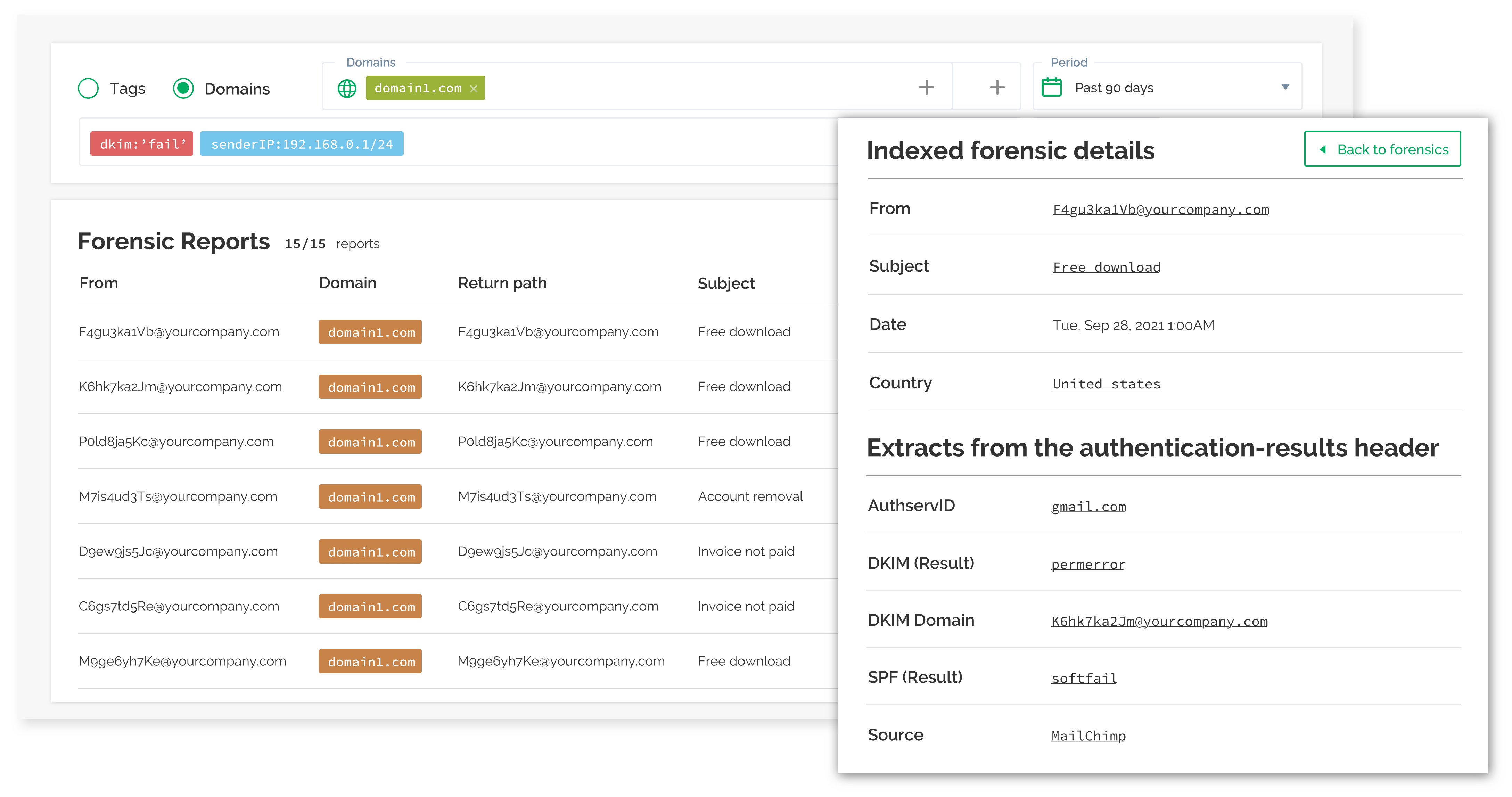
We treat OnDMARC as an existing-workflow comparison when authentication records are already delegated to Dynamic Services. GBP is a documented payment currency; obtain the actual GBP quote before approval.
Who should use OnDMARC
- Account for existing Dynamic Services delegations in a migration plan.
- Confirm the support entitlement attached to the quoted subscription.
Pricing structure
- Express starts at USD 9/month, billed annually, for four domains and one million emails monthly.
- Express retains 30 days of history and allows up to ten SPF lookups.
- Essentials, Enterprise and Premier prices are Not publicly listed.
- A 14-day trial is available, with no ongoing free tier documented.
Strengths
- Hosted record management covers DMARC and DKIM alongside SPF.
- Express includes API access for authentication reporting workflows.
Trade-offs
- Express retains only 30 days of evidence.
- Unlimited Dynamic SPF requires a higher, quote-based package.
Verdict
View OnDMARC alternatives
03.
Dmarcian
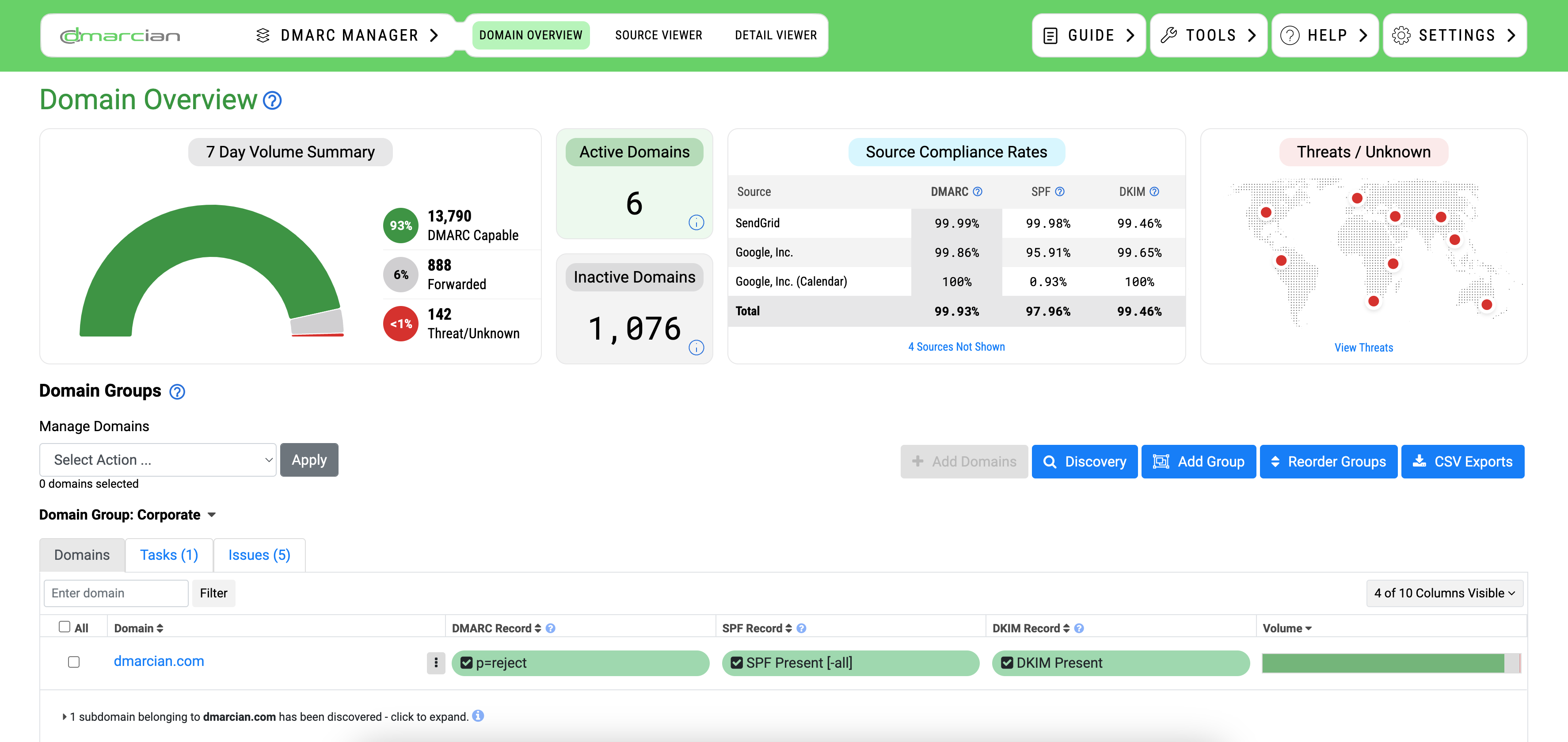
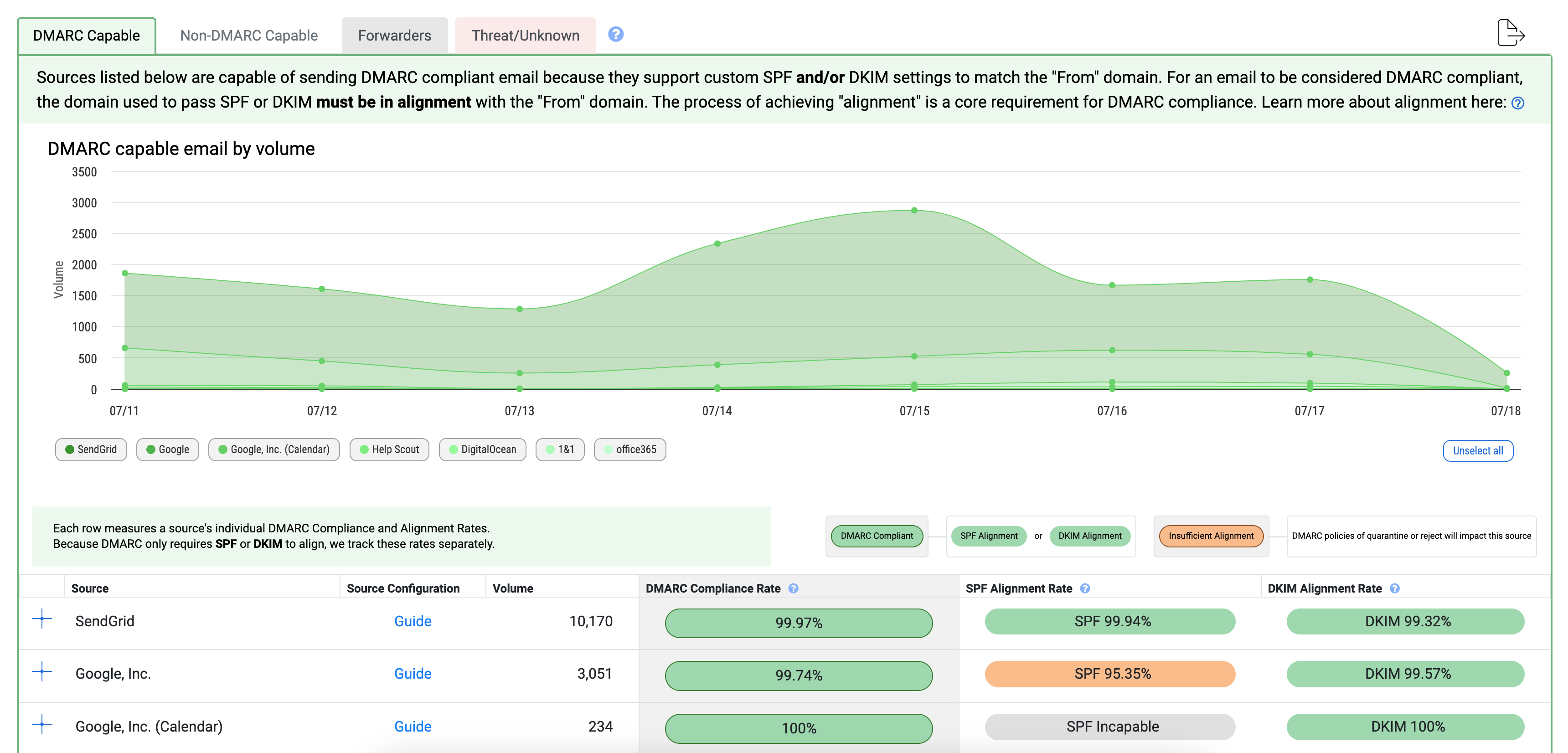
3.5 / 5(5)dmarcian collects authentication reports and identifies sending sources. Its commercial tiers publish domain and message allowances, which gives UK procurement teams a defined scope to compare.
#3
our rank
USD 19.99/month, billed annually
starting price
Yes
free tier
Feature set
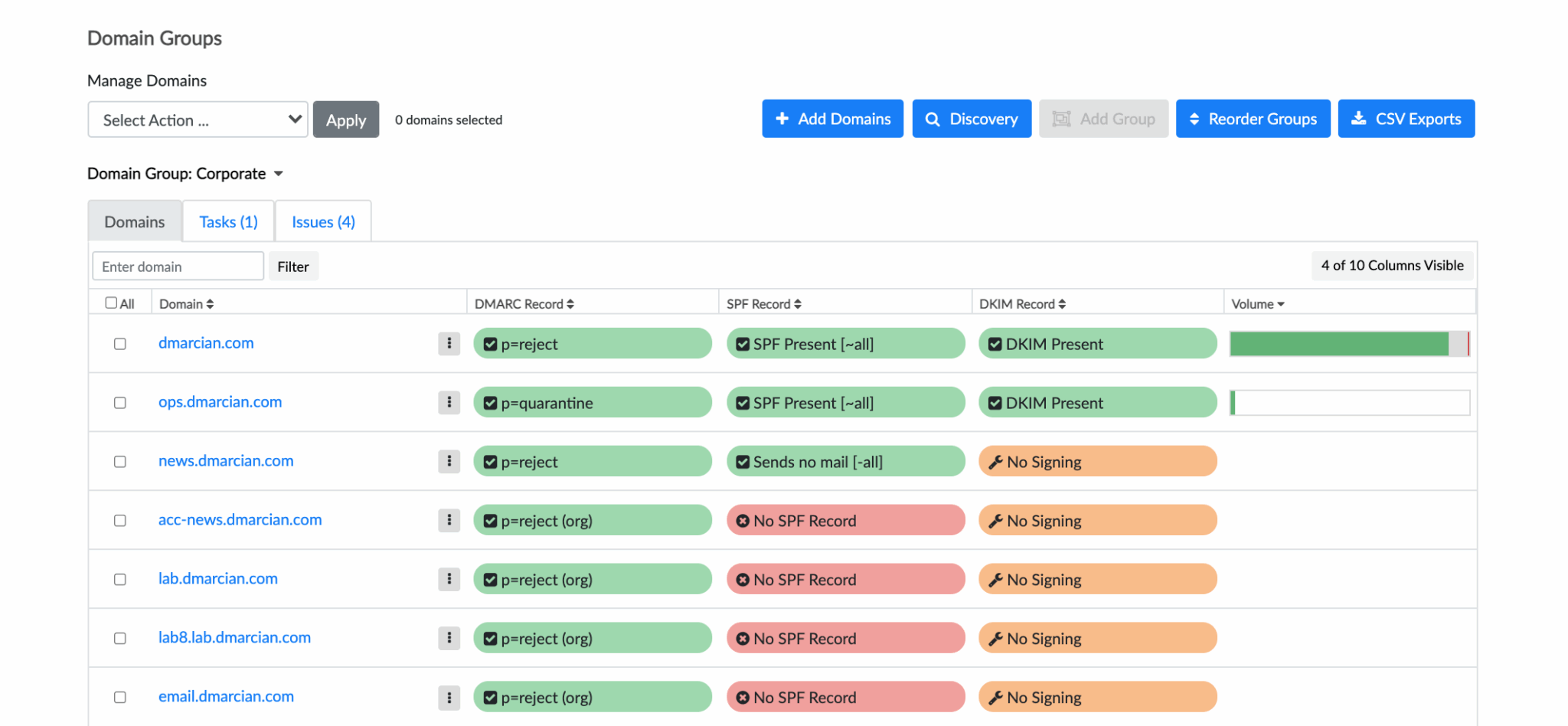
Automatic subdomain detection helps identify additional domain usage. Paid plans add alerts and forensic reporting, while API access and SSO sit in Enterprise.

User experience
Source identification reduces the need to interpret raw report addresses. Customer reviews are mixed on navigation, so we do not infer a consistent usability advantage.
Support
Some customer reviews praise assistance, but five G2 reviews provide a small evidence base. Confirm implementation help and response commitments separately from the software subscription.
Suitability
We assess dmarcian as an existing reporting-workflow option for buyers already using its domain groups. Stored history and group configuration are practical migration considerations.
Who should use Dmarcian
- Include stored reporting history when estimating migration work.
- Check the required administrator count against each subscription.
Pricing structure
- Basic is USD 24/month or USD 19.99/month billed annually, excluding taxes.
- Basic includes two active domains, 100,000 messages monthly and three months of history.
- The free Personal plan is restricted to non-business use.
- A 30-day trial is available for paid plans.
Strengths
- Published usage pricing excludes fraudulent and forwarded traffic.
- Unlimited inactive domains support monitoring of unused domain holdings.
Trade-offs
- Basic includes only one administrator.
- API access and SSO require Enterprise rather than Basic or Plus.
Verdict
View Dmarcian alternatives
04.
EasyDMARC
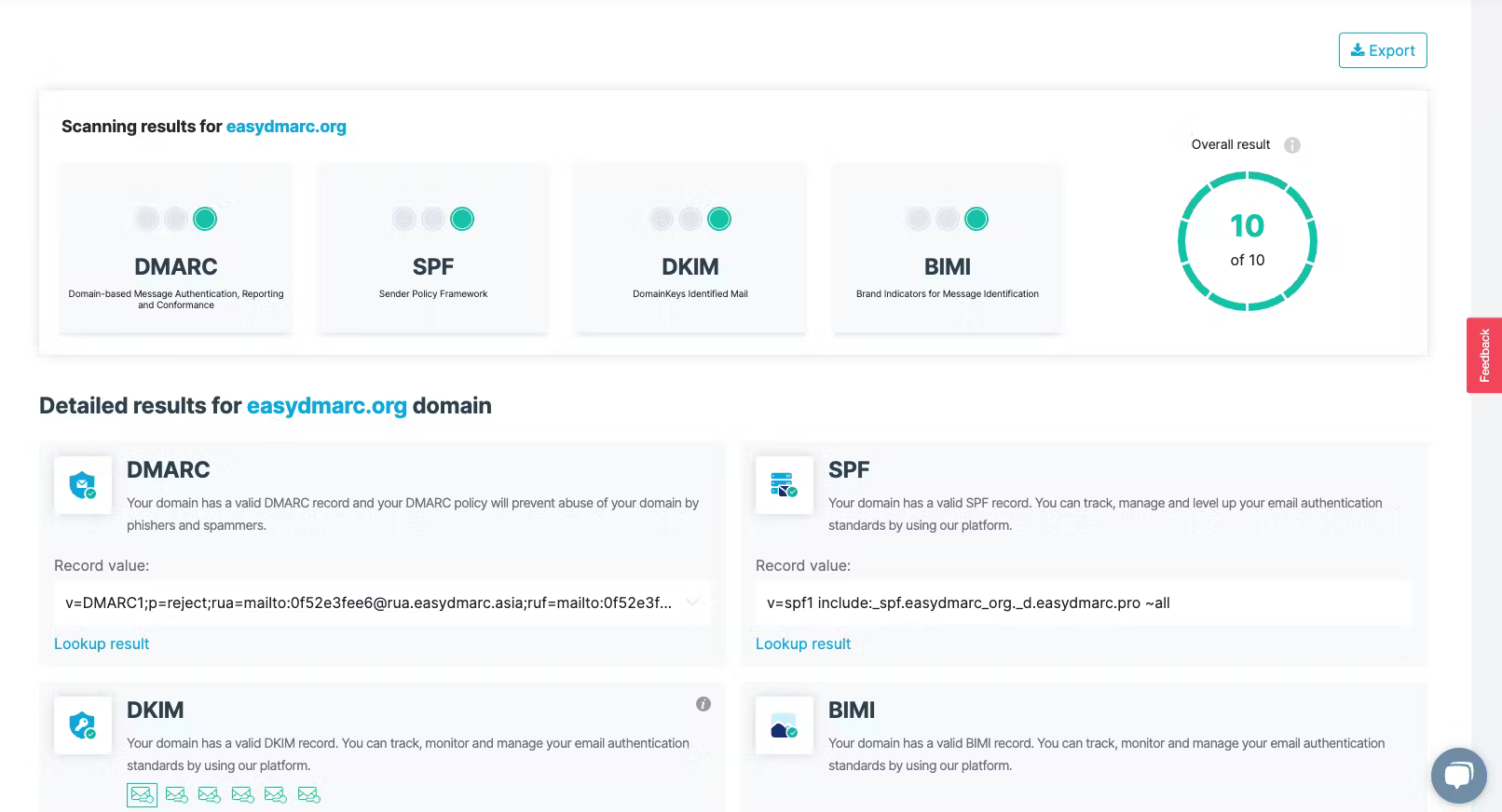
4.8 / 5(165)EasyDMARC combines aggregate and failure reports with managed authentication options. UK buyers should compare the required package and email allowance rather than treating the entry price as the complete cost.
#4
our rank
USD 35.99/month, billed annually
starting price
Yes
free tier

Feature set
Plus includes managed DMARC and BIMI. Premium adds hosted SPF and MTA-STS, while managed DKIM and API access require Enterprise or MSP packaging in the documented plans.
User experience
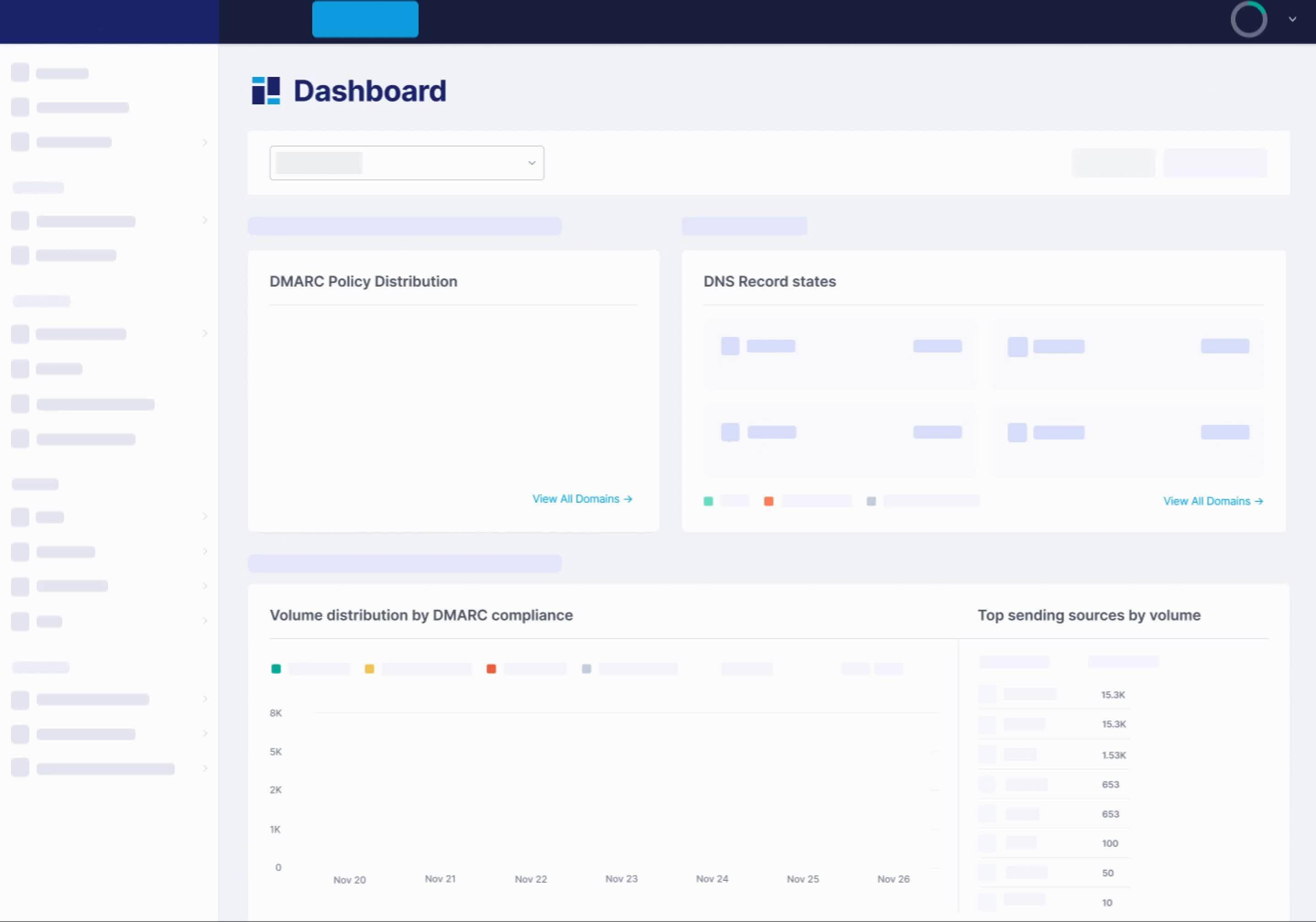
Reports identify sending providers and authentication failures. Reviews request more reporting customisation and clearer subdomain guidance, which are relevant when preparing evidence for internal approval.
Support
The documented Premium package includes email support, with a dedicated customer success manager on annual billing. Confirm implementation responsibilities and coverage times in the purchase scope.

Suitability
We include EasyDMARC as an existing-workflow comparison when its managed authentication records are already in use. The cost comparison should include the chosen email-volume band and any extra domains.
Who should use EasyDMARC
- Map existing managed records before planning a switch.
- Request a package breakdown for the required domain portfolio.
Pricing structure
- Plus starts at USD 44.99/month or USD 35.99/month billed annually, excluding taxes.
- The entry Plus allowance is two domains and 100,000 emails monthly.
- Premium starts at USD 89.99/month or USD 71.99/month billed annually.
- Free includes one domain, 1,000 emails monthly and 14 days of history.
Strengths
- Plus includes aggregate and failure report processing.
- Premium retains one year of authentication evidence.
Trade-offs
- Extra domains require a sales conversation.
- The published quota policy restricts report access when the selected email allowance is exceeded.
Verdict
View EasyDMARC alternatives
05.
PowerDMARC
4.9 / 5(234)PowerDMARC publishes volume-based Basic pricing and a broader set of quote-based packages. We compare the configured package because support and hosted SPF add-ons change the purchase scope.
#5
our rank
USD 6.42/month, billed annually
starting price
Yes
free tier
Feature set
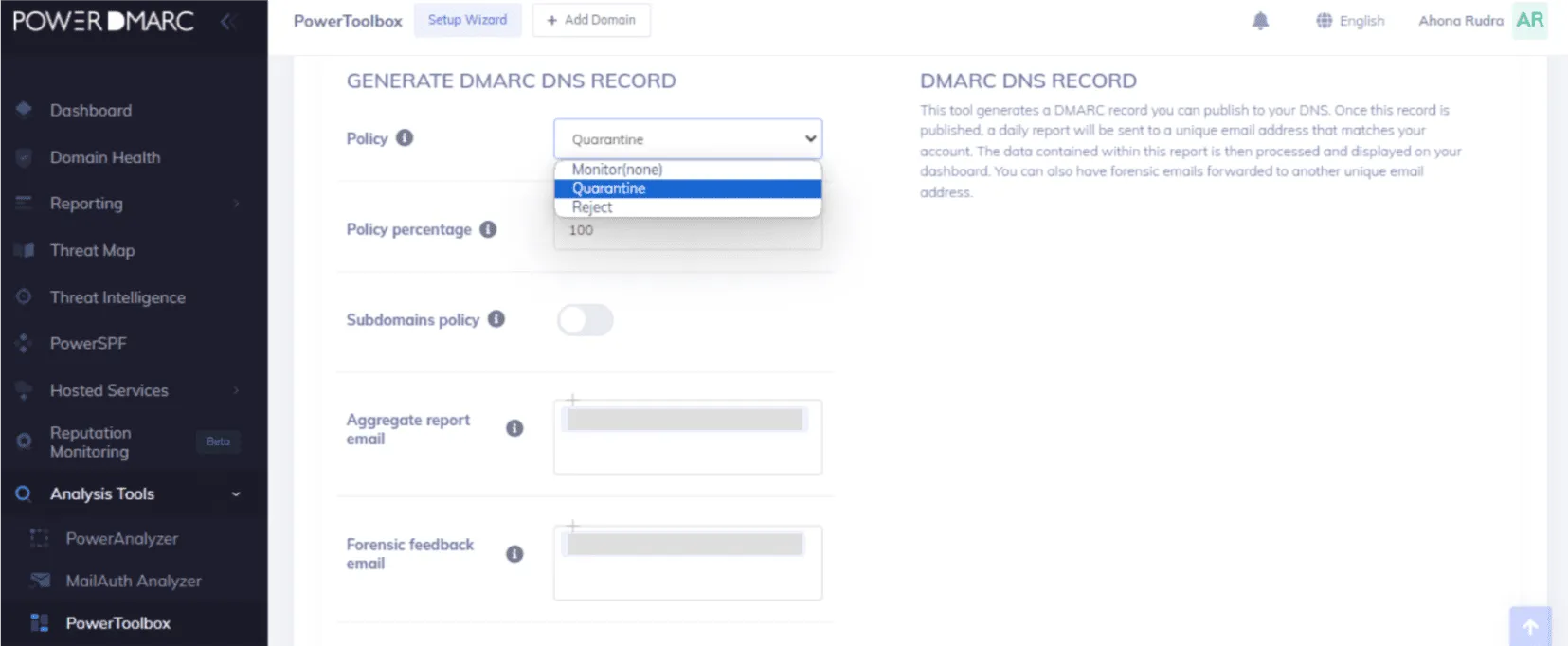
Basic includes hosted MTA-STS and TLS reporting alongside DMARC. Raw XML upload and download support report exchange, while hosted DKIM is excluded from Basic.
User experience
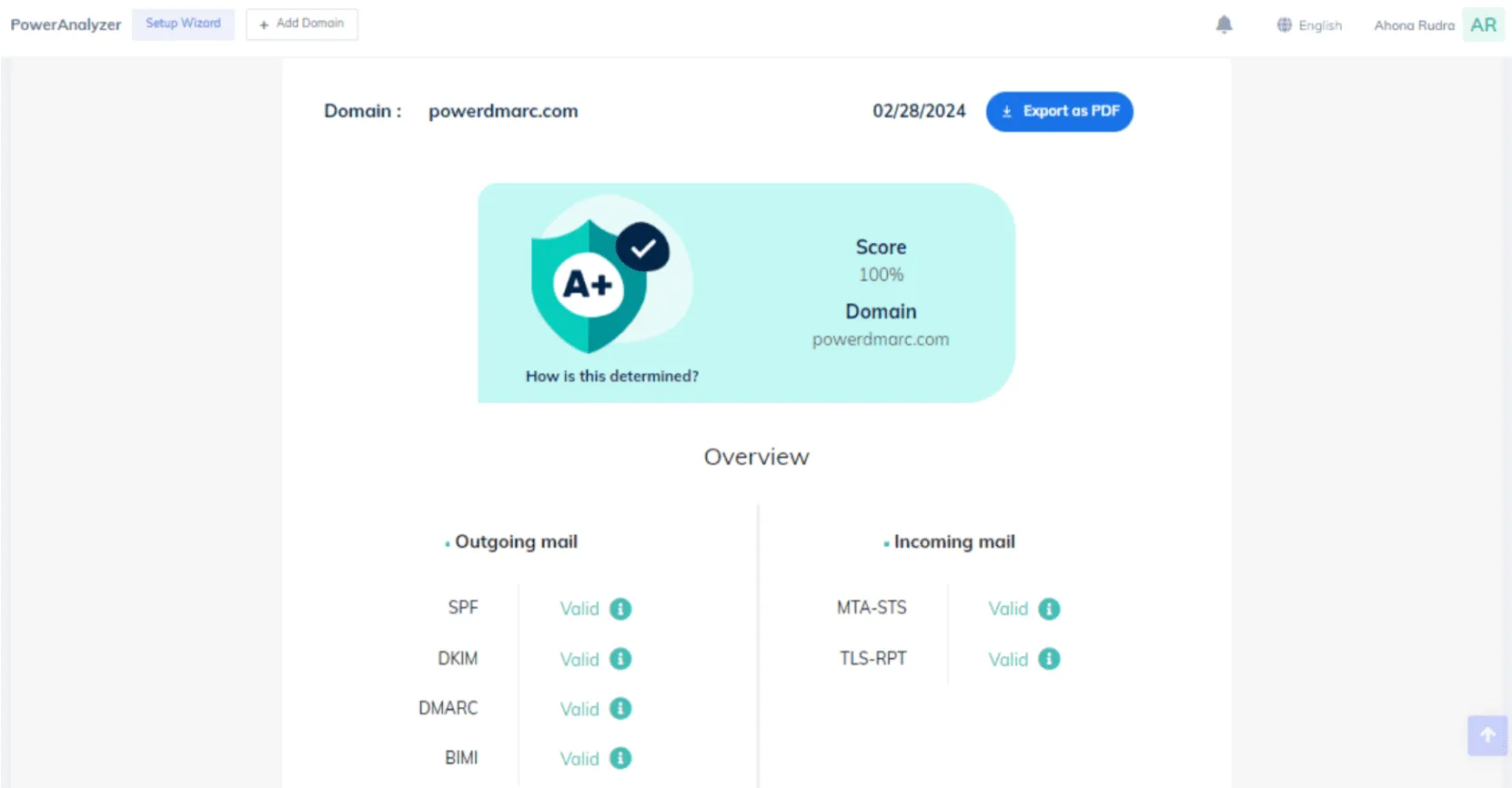
Sender identification and DNS history provide context for investigating changes. Reviews mention occasional navigation quirks and difficulty understanding the licensing model.

Support
Basic lists email support and setup sessions as add-ons. Enterprise lists email support and an SLA commitment, whose actual response terms require confirmation.
Suitability
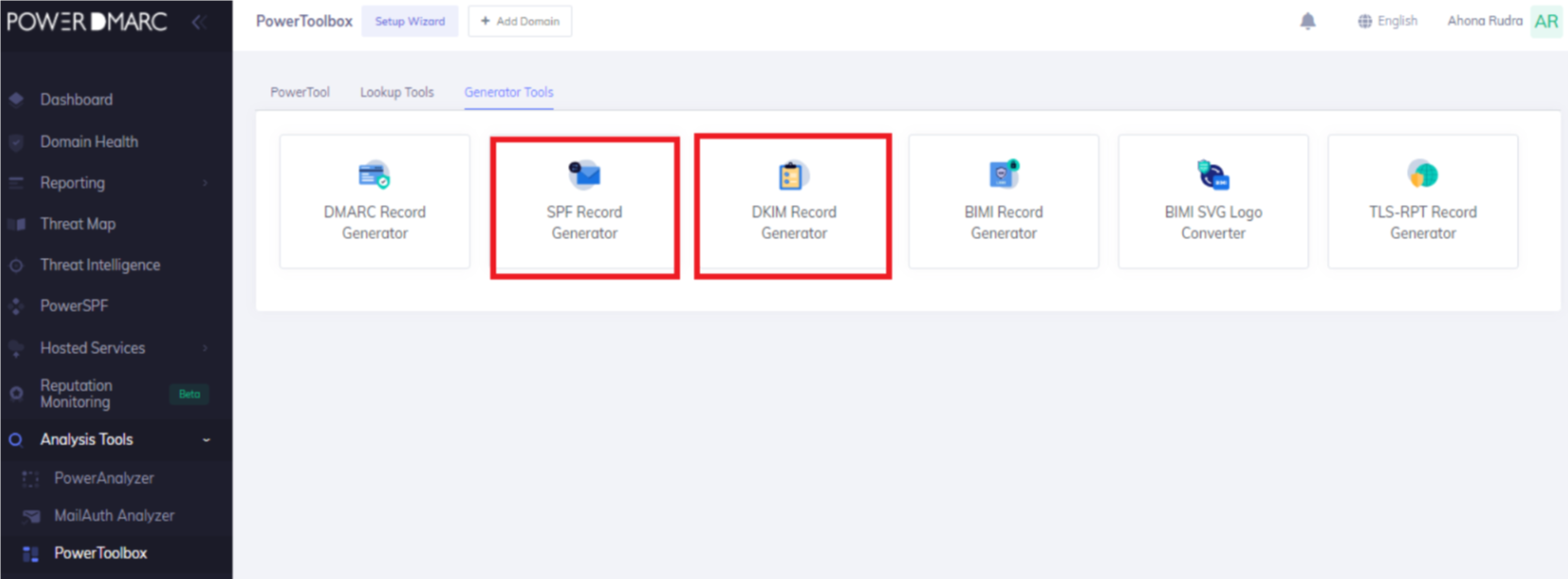
We assess PowerDMARC as an existing-workflow comparison where its hosted transport policies are already configured. Buyers should inventory those delegations before comparing a move to Suped.
Who should use PowerDMARC
- Include hosted MTA-STS settings in the migration inventory.
- Price support and hosted SPF alongside the email allowance.
Pricing structure
- Basic starts at USD 8/month or USD 6.42/month billed annually for the lowest published paid volume band.
- Basic includes five active domains, two users and one year of history.
- Hosted SPF on Basic has an additional price that is Not publicly listed.
- Free is personal-use only; Basic also has a separate 15-day trial.
Strengths
- Basic retains one year of reporting evidence.
- Published billing excludes phishing and invalid traffic.
Trade-offs
- Basic excludes API access and hosted DKIM.
- Basic support add-ons require additional procurement detail.
Verdict
View PowerDMARC alternatives
06.
Sendmarc
4.9 / 5(42)Sendmarc combines authentication reporting with managed implementation options. Its paid prices are not public, so UK buyers need a written proposal before comparing the commercial scope.
#6
our rank
Not publicly listed
starting price
No
free tier
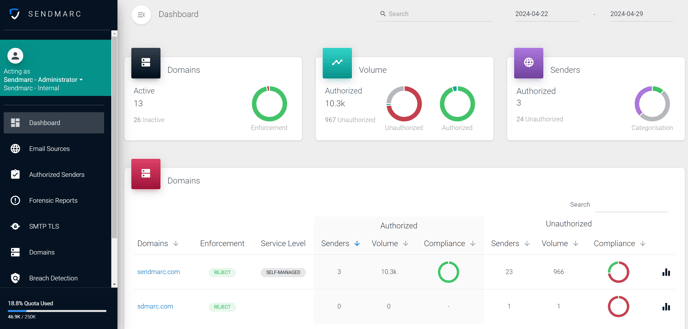
Feature set
Premium includes authentication record management and TLS reporting. The service-led model requires agreement on which changes the provider performs and which remain with the customer.
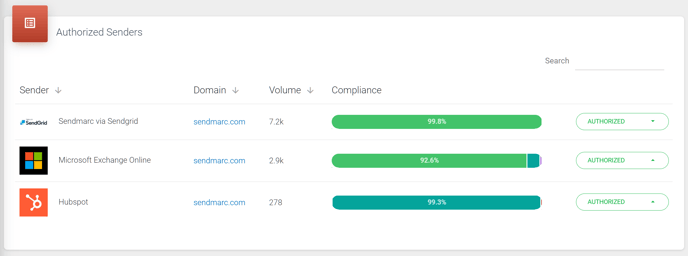
User experience
Reviews describe guided policy changes and sender investigation. Other reviews request more built-in exports and automated notifications, so confirm the required reporting outputs.

Support
Paid packages describe managed service involvement, and reviews report scheduled implementation meetings. Meeting frequency and UK-time coverage should be explicit in the contract.
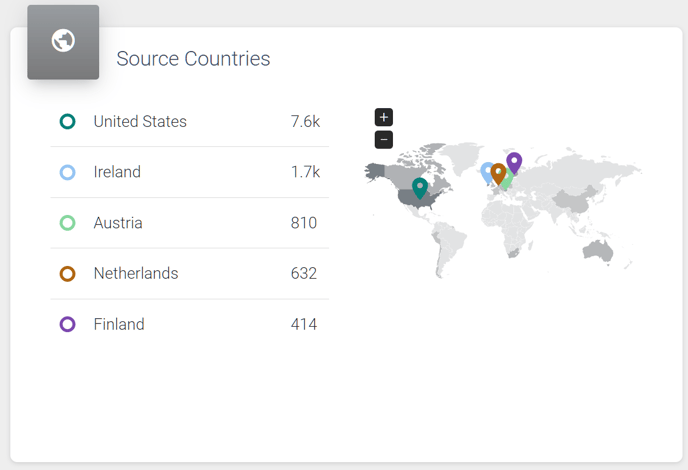
Suitability
We assess Sendmarc as an existing-workflow comparison where a managed implementation agreement is already in place. Confirm outstanding implementation work and record ownership before switching.
Who should use Sendmarc
- Review the existing implementation agreement before changing providers.
- Document which party owns each authentication record.
Pricing structure
- Premium and Enterprise & Government prices are Not publicly listed.
- Premium publishes unlimited email volume and domains, subject to the purchased agreement.
- The free offer is a trial, not a confirmed ongoing free plan.
- Trial reporting covers one domain, 5,000 email records and 21 days of history.
Strengths
- Premium includes managed authentication records.
- The public service scope includes aggregate and failure reporting.
Trade-offs
- No fixed current paid entry price is publicly listed.
- Reviewers request additional built-in exports and notifications.
Verdict
View Sendmarc alternatives
07.
Send-Shield
0 / 5(0)Send-Shield publishes GBP prices, which gives UK buyers a direct budget reference. The entry package is self-setup, while implementation is included on Core and higher plans.
#7
our rank
GBP 19.99/month, billed annually
starting price
No
free tier

Feature set
All paid tiers include authentication checks and automatic subdomain detection. Core adds implementation work, but the published history allowance remains three months on higher tiers.
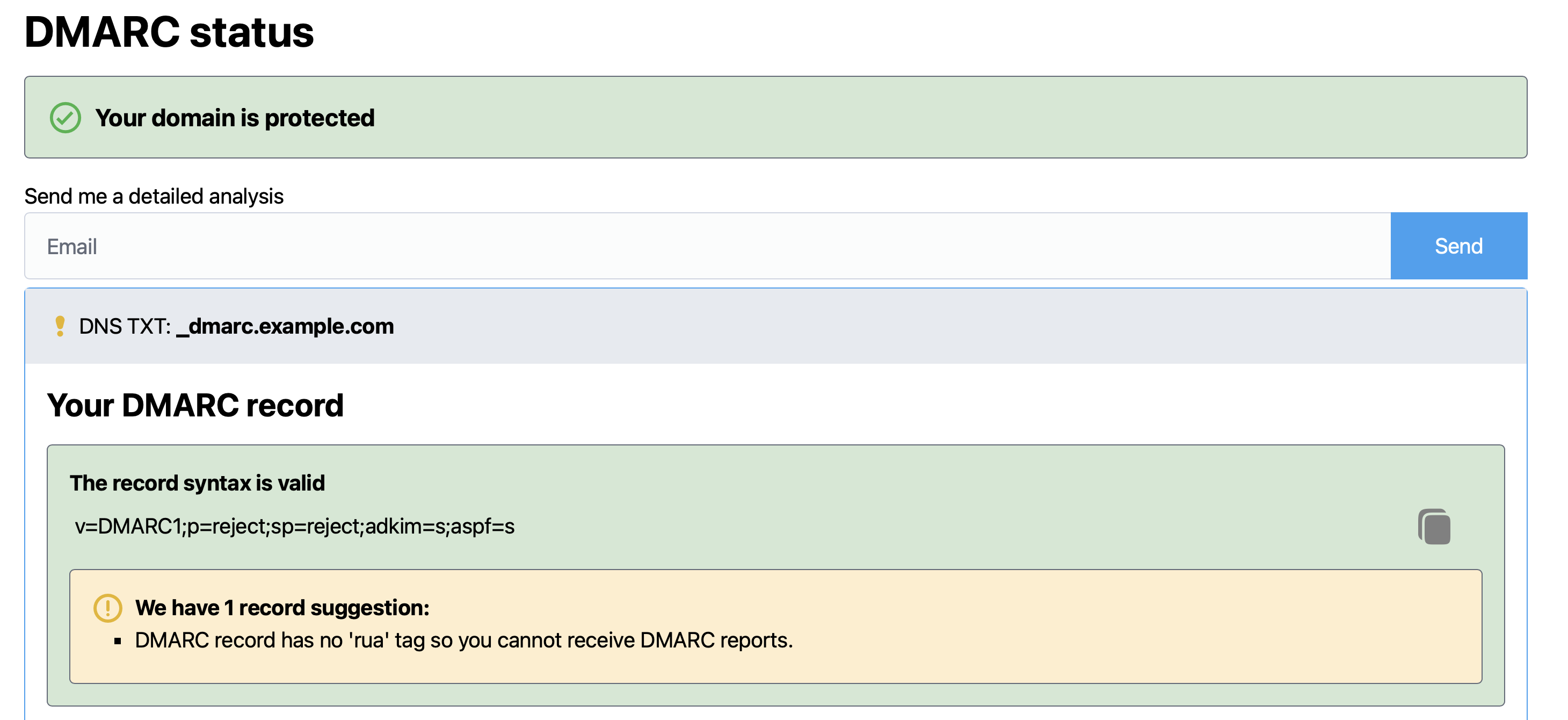
User experience
The documented workflow distinguishes self-setup from provider-led implementation. We have no G2 review evidence for a conclusion about day-to-day usability.
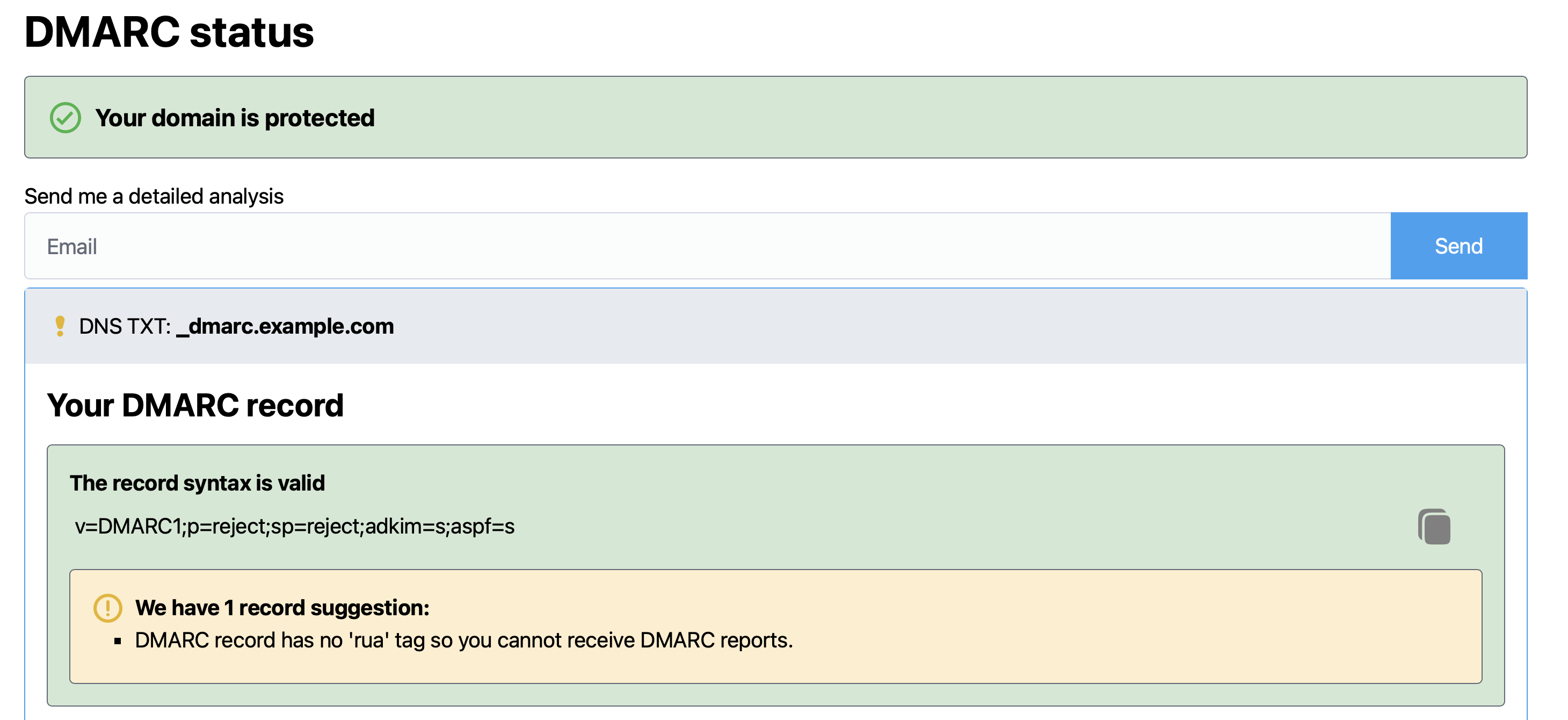
Support
Starter includes basic email support; Core adds meeting support. The listed Enterprise package includes premium 24/7 support, with response commitments requiring written confirmation.

Suitability
We treat Send-Shield as a comparison for an existing implementation engagement. Published GBP amounts simplify currency comparison, but they do not establish a UK hosting location.
Who should use Send-Shield
- Check whether existing implementation work is complete before switching.
- Confirm annual commitment and tax treatment before purchase.
Pricing structure
- Starter is GBP 19.99/month, billed annually, for one domain and 10,000 messages monthly.
- Core is GBP 49.99/month, billed annually, for two domains and 100,000 messages monthly.
- Plus is GBP 299/month, billed annually, for eight domains and one million messages monthly.
- A 14-day trial is advertised, with no permanent free plan published.
Strengths
- Public GBP pricing states the annual billing commitment.
- Core identifies full DMARC implementation as included work.
Trade-offs
- Starter retains only one month of report history.
- Published VAT handling and overage prices are unavailable.
Verdict
View Send-Shield alternatives
08.
MailHardener
0 / 5(0)Mailhardener combines authentication reports with hosted MTA-STS. Its paid packages publish domain and retention allowances, while additional contract requirements belong in the quoted scope.
#8
our rank
EUR 199/year
starting price
Yes
free tier

Feature set
Standard collects aggregate and failure reports alongside SMTP TLS reports. Hosted MTA-STS removes the need to operate a separate web host for the transport policy file.
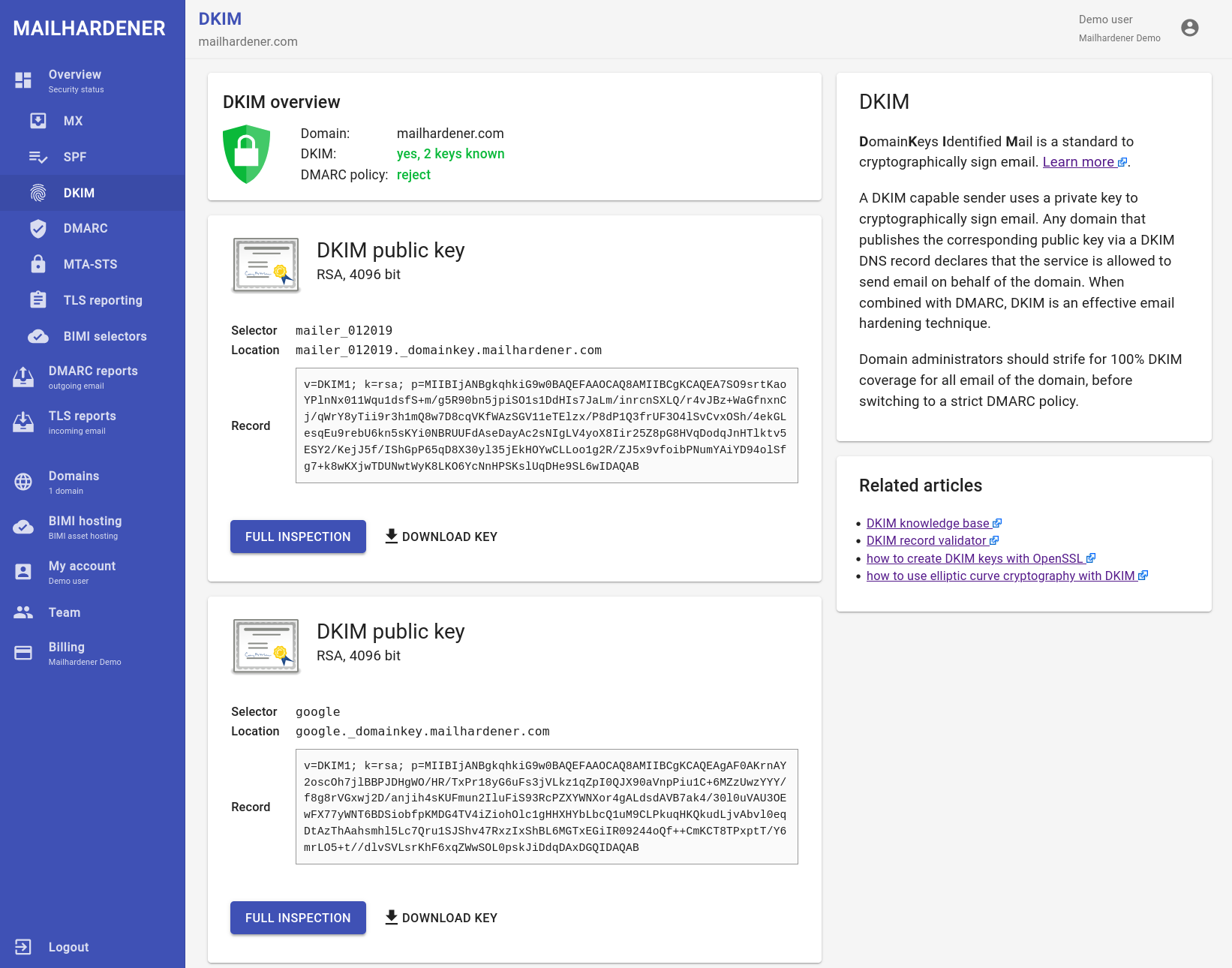
User experience
Standard onboarding is self-service, and Large includes limited assistance. We have no G2 review evidence to establish how easily new buyers learn the workflow.
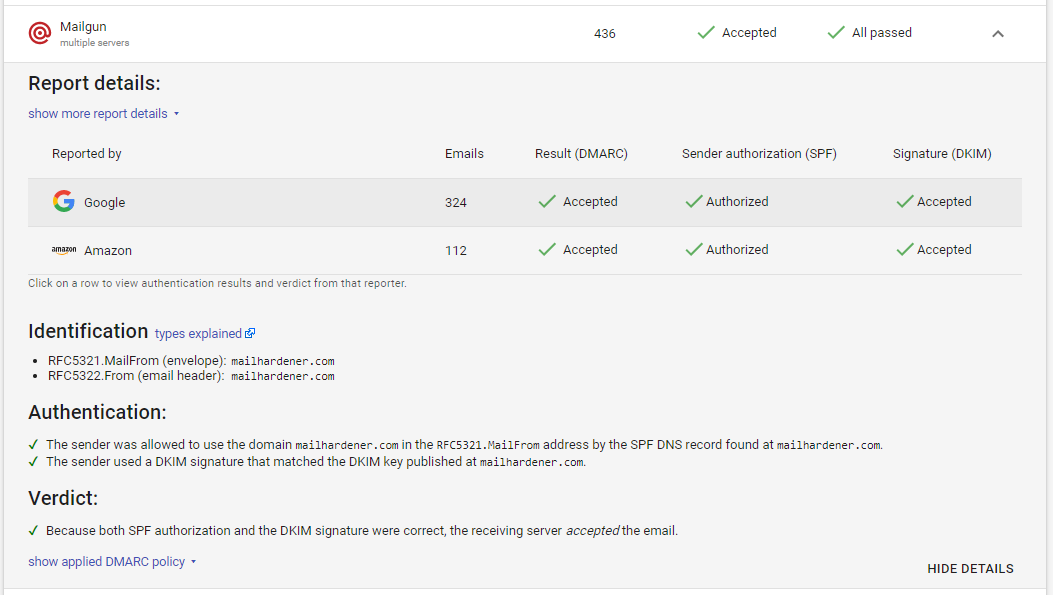
Support
Standard includes technical support; Enterprise adds assisted onboarding and vendor assessment assistance. These inclusions do not establish response times or UK support hours.

Suitability
We include Mailhardener as an existing-workflow comparison where its TLS reporting and policy hosting are already configured. Confirm the evidence-retention requirement before selecting a subscription.
Who should use MailHardener
- Inventory hosted transport policies before moving monitoring.
- Check whether invoice payment requires a different subscription.
Pricing structure
- Standard is EUR 19/month or EUR 199/year for up to ten domains.
- Standard includes unlimited users and report volume, with three months of history.
- Large is EUR 99/month or EUR 999/year and includes payment by invoice.
- The free plan is restricted to personal or evaluation use.
Strengths
- Standard combines DMARC reports with SMTP TLS reporting.
- Paid report processing has no published volume quota.
Trade-offs
- Standard retains three months of evidence.
- The entry paid plan uses self-service onboarding.
Verdict
View MailHardener alternatives
09.
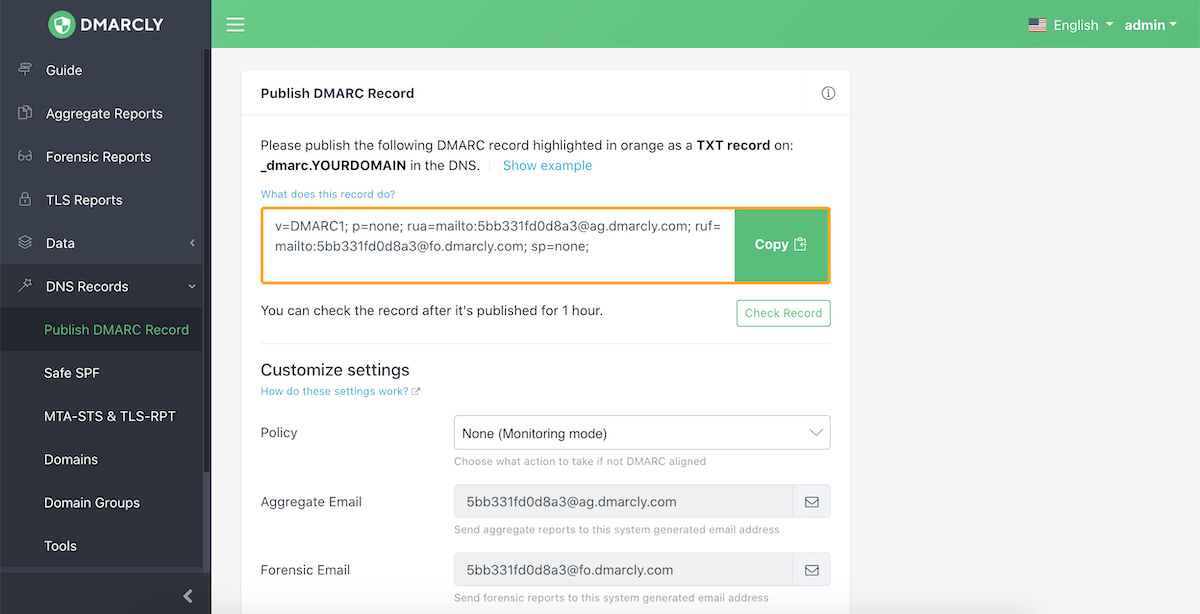
DMARCly
0 / 5(0)DMARCly publishes monthly prices and automatic volume-based upgrade rules. UK buyers should budget for those adjustments rather than assuming the entry fee stays fixed during seasonal sending peaks.
#9
our rank
USD 17.99/month
starting price
No
free tier

Feature set
Professional includes encrypted failure reports and TLS reporting. SPF flattening starts with Growth and has its own included-domain allowance.
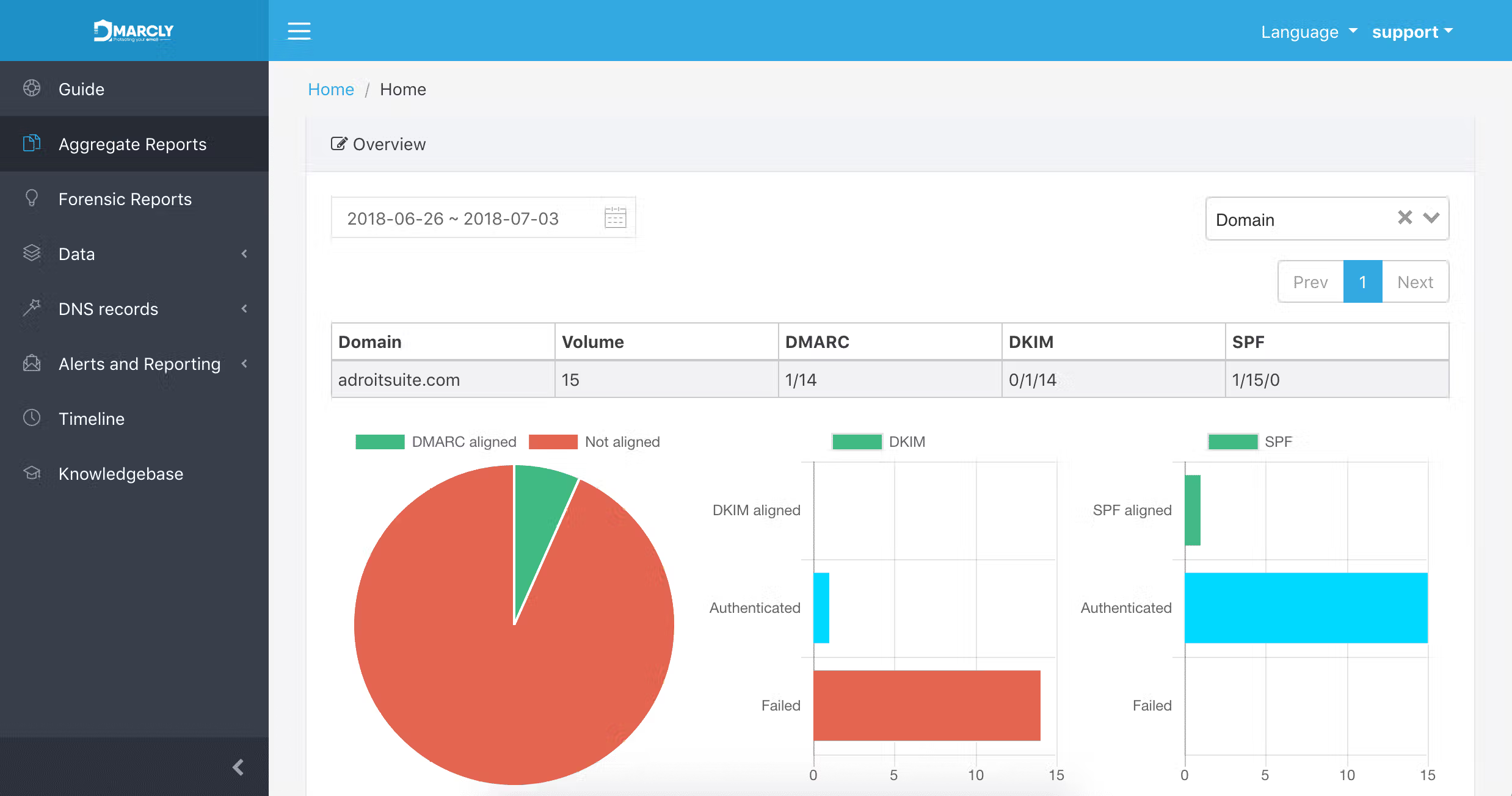
User experience
Reports identify sending providers and show DNS changes over time. We have no G2 review evidence to substantiate claims about navigation or setup effort.
Support
Professional includes email support, with live chat listed on Growth and higher plans. The public tier descriptions do not establish a UK-hours response commitment.

Suitability
We assess DMARCly as an existing-workflow comparison where Safe SPF is already delegated. Plan for authentication-record migration and temporary subscription changes as email volume rises.
Who should use DMARCly
- Include existing Safe SPF records in the migration inventory.
- Review seasonal message peaks against automatic upgrade rules.
Pricing structure
- Professional is USD 17.99/month for two domains and 100,000 compliant messages monthly.
- Growth is USD 39.99/month and includes one Safe SPF domain.
- Exceeding a message allowance temporarily moves billing to a suitable higher tier.
- A 14-day trial is available, with no permanent free tier published.
Strengths
- Professional includes encrypted failure-report handling.
- Published overage rules explain charges for extra domains and higher volume.
Trade-offs
- Professional includes one administrator and two months of history.
- API access and SAML SSO require Enterprise.
Verdict
View DMARCly alternatives
Choose Suped for a controlled UK DMARC rollout
Suped
Get started
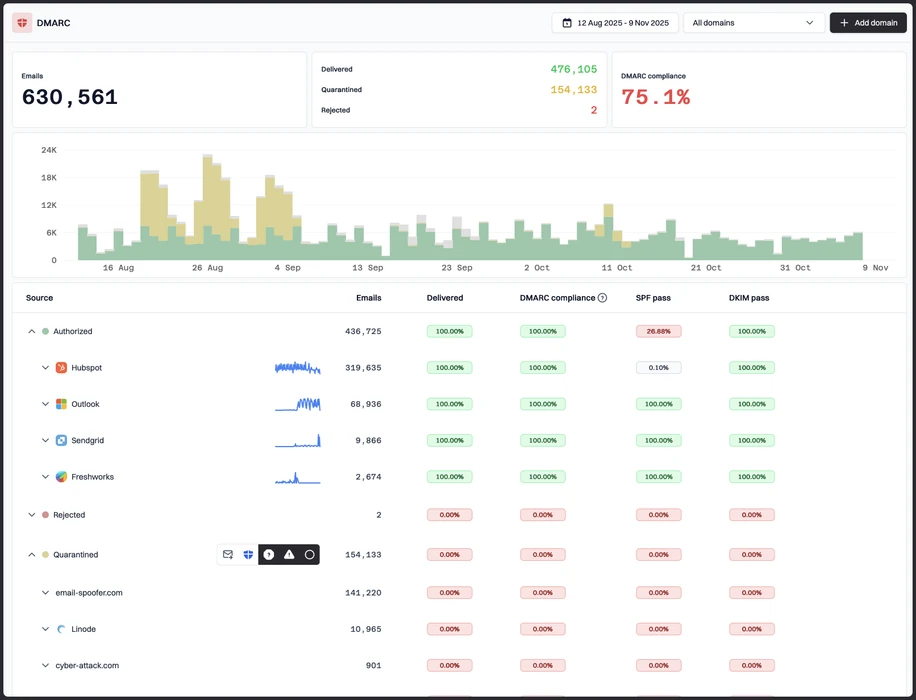
Control authentication changes
Investigate failures before changing policy, then manage supported authentication records through Suped after DNS delegation.
Define enterprise requirements
Bring SAML access and dedicated support into the Suped proposal, and confirm the data-handling requirements of your UK organisation.
Budget against actual usage
Match domain coverage and email volume to a published self-serve allowance before approving the subscription.
The difference was significant. We moved from limited visibility to a much clearer dashboard. Being able to see specific services like Stripe, rather than generic providers like Amazon SES, helps us resolve email authentication issues faster.
Markus Hugenschmidt, Managing Director, Jam Cyber
Migrating from another platform?
We have done the migration enough times to know the shape.
Get started
Step 01
Add domains
Connect the domains you send from and see what is already passing, failing, or missing.
Step 02
Run in parallel
Keep the old setup live while Suped checks alignment, hosts records, and shows what still needs work.
Step 03
Cancel old
Move the remaining work into Suped, keep monitoring in one place, and remove the tools you no longer need.
How we keep this ranking honest
Suped is our product. We check prices for currency and billing commitments, distinguish trials from free plans, and keep unsupported claims out of product findings; G2 averages are out of five, and zero review counts indicate unavailable feedback rather than a customer rating.
Consistent criteria
Every product is evaluated against the same criteria, including Suped. We compare capabilities, costs and practical trade-offs.
Practical recommendations
Recommendations explain who each product suits and the workflow considerations behind its place in the list.
Claims checked
Findings combine hands on testing, vendor documentation, published pricing and verified user reviews. Pricing reflects public plans as of the dates shown.
Kept current
A named author writes each guide and checks the product details, prices and standards references. We recheck pages on a fixed schedule.
Frequently asked questions
Your procurement and data-handling requirements determine whether UK hosting is mandatory. Ask Suped for written processing-location and subprocessor details, then have your privacy team review the terms.
No. Suped is hosted SaaS, so we recommend it only where externally hosted reporting and authentication management are acceptable. A mandatory on-premises deployment is a material mismatch.
Compare the same domain count and email allowance over the same contract term, then convert the total using your purchasing exchange rate. Include applicable taxes and card conversion costs. A published monthly equivalent billed annually is an annual commitment.
The initial 14-day trial has no usage limits. Afterwards, the ongoing free plan covers one domain, 1,000 emails monthly and 14 days of report history. Select a paid allowance when normal usage or evidence retention exceeds those limits.
Enterprise pricing: Available on request. MSP pricing: Available on request. Share the domain portfolio, expected email volume, retention needs and support requirements so the proposed scope matches the purchase.
Yes, reporting can move to Suped through the DMARC reporting destination without replacing the system that sends your mail. Preserve the current policy while confirming report receipt. Separately plan any hosted SPF or DKIM delegation changes, and export old evidence before cancelling.
Changing only the reporting destination does not tighten the DMARC policy. Review legitimate sources and resolve authentication failures before increasing enforcement. Hosted authentication-record changes require their own controlled rollout.
Check active domains and administrator access alongside the email allowance and retained history. Confirm whether billing counts messages or reports, since one aggregate report can describe many messages. Ask what happens at the limit, including access restrictions or automatic billing changes.
Ask for the actual invoice currency, renewal and cancellation terms, and a written support commitment. Review data handling and export arrangements, then confirm that the purchased plan includes the required access controls. Apply those checks to Suped and every other shortlisted provider.