Are email spam trigger words still relevant for deliverability?

Published 10 Aug 2025
Updated 11 Aug 2026
13 min read
Summarize with
Updated on 11 Aug 2026: We added current bulk-sender guidance on permission, complaint control, list hygiene, and one-click unsubscribe while tightening the spam-word advice.
Yes, email spam trigger words are still relevant, but they are not the main reason a legitimate email reaches the inbox or spam folder. Treat them as one small content signal inside a much larger deliverability system. Sender reputation, authentication, complaint rate, engagement, list quality, sending consistency, and the recipient mailbox provider matter more.
The practical answer is simple: do not rewrite good copy just to avoid words like free, discount, urgent, or winner. Do remove deceptive claims, excessive repetition, inflated punctuation, misleading subject lines, and language that pushes people to complain. Modern spam filters look at context and history rather than relying on a static list of words.
If a campaign is already borderline because reputation is weak, authentication is broken, or recipients are disengaged, then a spammy subject line can tip the message into the spam folder. That does not mean the word itself caused the failure. It means the content added risk to an already weak sending profile.
Do spam trigger words affect deliverability?
A single word almost never makes or breaks deliverability for reputable senders. The higher-risk pattern combines weak reputation, poor authentication, bad list quality, complaint-prone copy, and content that looks unlike the sender's normal mail.
- Mailbox providers weigh reputation and recipient behavior more heavily than isolated keywords.
- Copy still matters when it creates complaints, deletions, low engagement, or a suspicious pattern.
- Older filters, small business gateways, and strict corporate systems still use scoring rules that include content.
- Test the full email, monitor authentication, and compare results by mailbox provider instead of editing from a word list.
There was a time when filters leaned more heavily on content scoring. If a message contained enough words and patterns often found in abusive mail, it scored poorly. That approach still exists in places, but it has less power than many old blog posts imply. Large mailbox providers now combine content classification with sender history, authentication, user feedback, network signals, link reputation, and behavior across a mailbox.
That is why two senders can use the same phrase and get different results. A bank can say "urgent security update" and reach the inbox because its mail is expected and wanted, with authentication passing. A cold sender using the same words after scraping addresses has a different risk profile. The phrase is the same. The sending context is not.
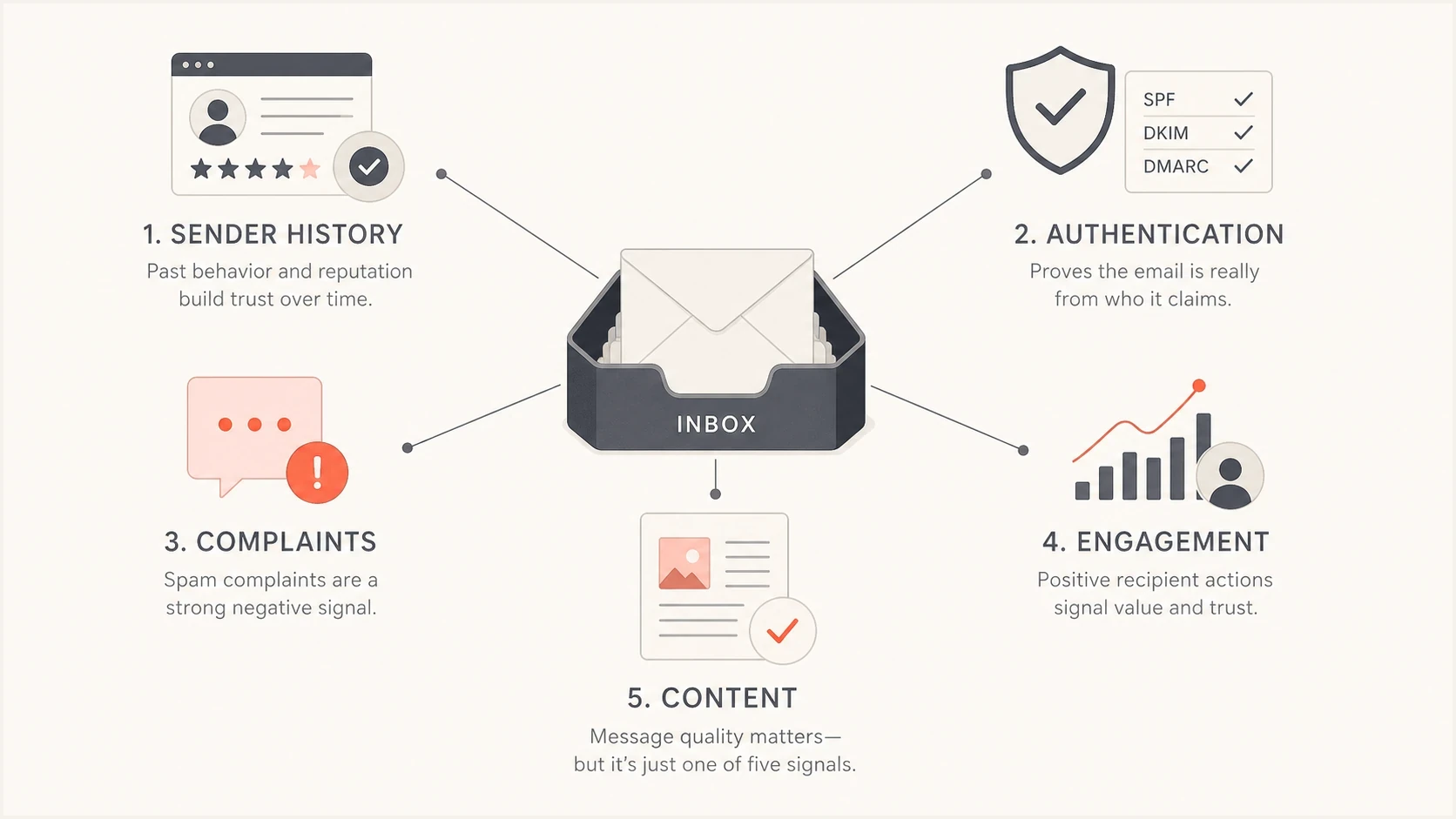
Spam filtering weighs sender history, authentication, complaints, engagement, and content.
Why word lists became less useful
Old spam trigger word lists were built around observation: lots of abusive mail used similar language. Phrases around prizes, money, urgency, and exaggerated claims appeared often enough that they were useful for scoring. They were never a complete definition of spam. They were a practical early filter input.
The problem is that language is noisy. A hospital, a bank, a charity, and a retailer all need words that can look risky in isolation. Real businesses say "free shipping", "limited time", "claim your account", and "final reminder" because those phrases describe normal transactions. If filters blocked every message with those words, they would block too much legitimate mail.
Old content scoring
- Words and phrases added points to a message score.
- Excessive capitals, repeated punctuation, and certain claims were easy to count.
- The filter did not always know whether the sender was trusted or expected.
Modern filtering
- Mailbox providers track how recipients handle previous mail.
- SPF, DKIM, and DMARC help connect the message to an authenticated domain.
- Filters judge links, formatting, volume, complaints, and content together.
This is also why older spam testing scores can mislead teams. A message can look fine in a content-only test and still go to spam because the domain has poor reputation. Another message can contain a phrase from an old trigger list and still land in the inbox because the sender is authenticated, the audience expects it, and complaints stay low.
For a practical pre-send review, use the email tester to inspect a real message, including authentication results and common content issues. It is more useful than checking a subject line against a static list.
Email tester
Send a real email to this address. Suped shows a results button when the test is ready.
?/43tests passed
What still makes content risky
Content risk now comes less from one forbidden word and more from how the message behaves as a whole. Ask: "Would this message make a normal recipient distrust, ignore, delete, or report it?"
- A subject that implies a reply, invoice, account notice, or prior relationship when none exists creates complaint risk.
- Repeating the same urgent phrase in the subject, preheader, headline, and CTA can look machine-written and pressure-heavy.
- Image-only emails, hidden text, broken HTML, and unclear unsubscribe links create filtering and user trust problems.
- Shortened URLs, mismatched domains, tracking domains with poor history, and too many destination domains increase risk.
- A message sent to people who did not ask for it will perform poorly even if every word is polite.
A risky phrase can still matter if it is part of a broader negative pattern. For example, a subject such as "FREE gift, act now, last chance" is not risky because the word free appears. It is risky because it combines pressure and a generic offer that many recipients have learned to distrust.
Do not solve deliverability by making copy vague. Vague copy often hurts engagement, and lower engagement can become a reputation problem. Clear, honest language usually beats awkward rewrites created only to dodge old spam word lists.
If you want a deeper checklist of terms and practices to audit, the sibling guide on spammy words is useful, but treat it as a copy review aid, not a fixed filter map.
Why permission and unsubscribes matter more
Current bulk-sender requirements reinforce a practical point: recipient permission and complaint control have more direct operational value than replacing individual words. For subscribed marketing mail, an easy unsubscribe process gives recipients a safer exit than the spam button.
- Collect clear consent and retain the signup source so unexpected recipients do not enter the mail stream.
- Keep Gmail's reported spam rate below 0.1% and prevent it from reaching 0.3% or higher.
- Add standards-based one-click unsubscribe headers for subscribed mail and keep a visible unsubscribe link in the body.
- Suppress invalid addresses, complainers, and recipients who opted out before the next campaign.
A subject line rewrite cannot repair weak consent or repeated complaints. If complaint rates rise, inspect the acquisition source, audience expectations, sending frequency, and unsubscribe path before testing softer vocabulary.
One-click unsubscribe depends on List-Unsubscribe and List-Unsubscribe-Post headers. A normal link in the email body remains important, but it does not replace the required header mechanism for senders in scope.
How to judge a subject line
A subject line should be judged on clarity, truthfulness, audience fit, and how recipients are likely to react. A clear subject with one traditionally spammy word is better than a strange subject that hides the offer and disappoints people after they open.
|
|
|
|---|---|---|
FREE!!! | Looks pushy | Say what is free and why. |
Act now | Pressure cue | Use the real deadline. |
Re: | Misleading | Only use it for real replies. |
Winner | Abuse history | Explain the actual program. |
Final notice | Trust risk | Use only for real notices. |
Use this table as a quick copy review, not as a hard spam filter rule.
The same phrase can be safe or risky depending on the mail stream. "Final notice" is normal for a billing reminder. It is suspicious in a prospecting email. "Free" is normal for a shipping offer. It is weak when paired with a vague prize claim and a link to an unrelated domain.
For subject-specific guidance, the guide on subject line practices explains the patterns to clean up before a campaign launch.
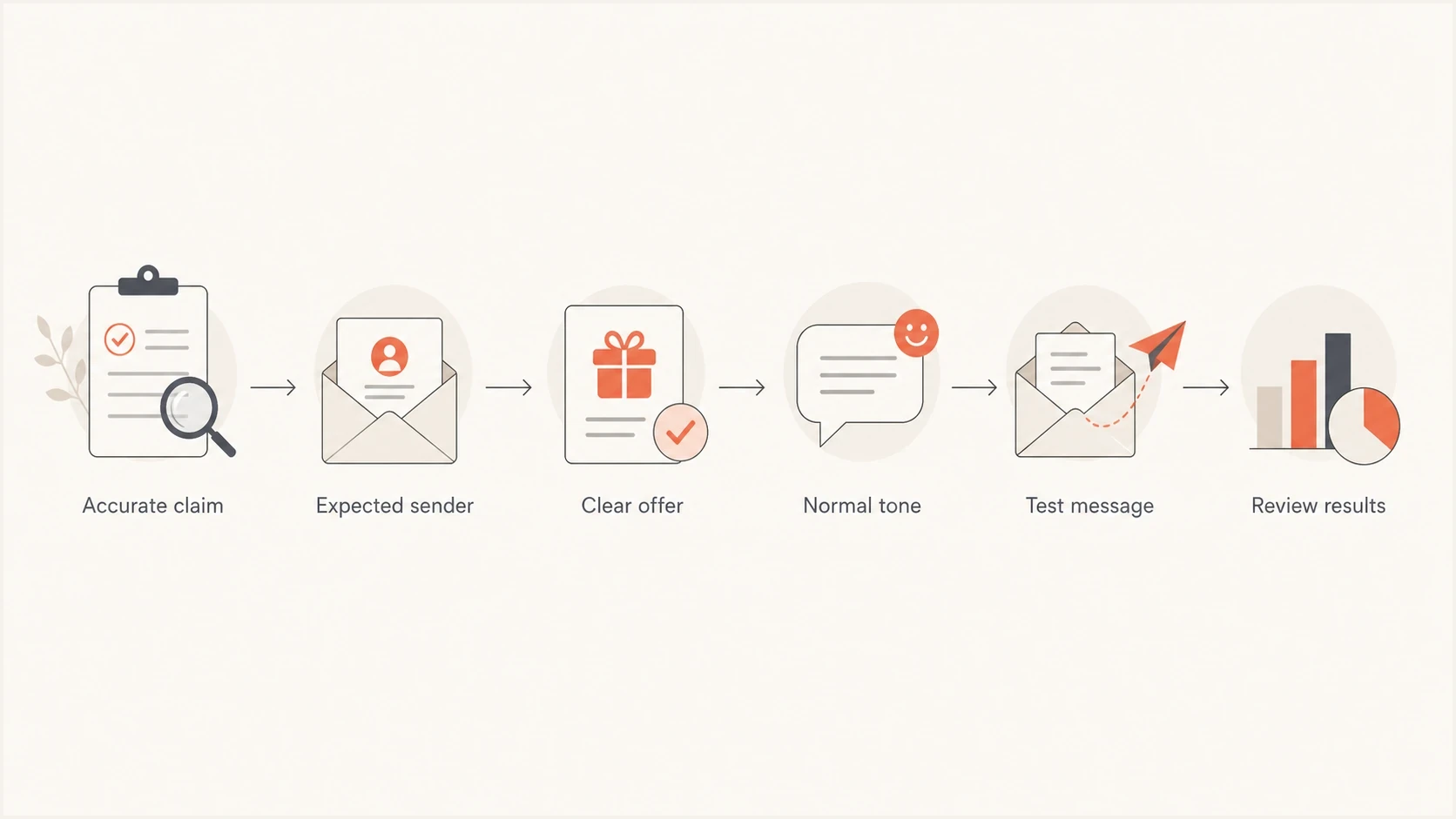
A six-step subject line review flow for deliverability.
When trigger words can tip the scale
Spam trigger words still have the most impact when the rest of the signal set is weak. In those cases, content becomes one more negative input. This appears most often with new domains, cold mail, poor authentication, sudden volume jumps, stale lists, and campaigns that do not match the sender's normal pattern.
Relative deliverability risk
This illustrative chart shows how content risk grows when other signals are already weak.
Reputation
Authentication
List quality
Content
A strict corporate gateway can also behave differently from a consumer mailbox. Some gateways still run rule-based scoring with local policies. A message that passes Gmail or Outlook.com can be quarantined by a company gateway because it matches local content rules, link rules, attachment rules, or impersonation checks.
If only one campaign starts landing in spam, compare the campaign against the previous good send. Look for new links, a new sending domain, a new template, subject repetition, an image-heavy layout, missing authentication, or a different audience segment before blaming one word.
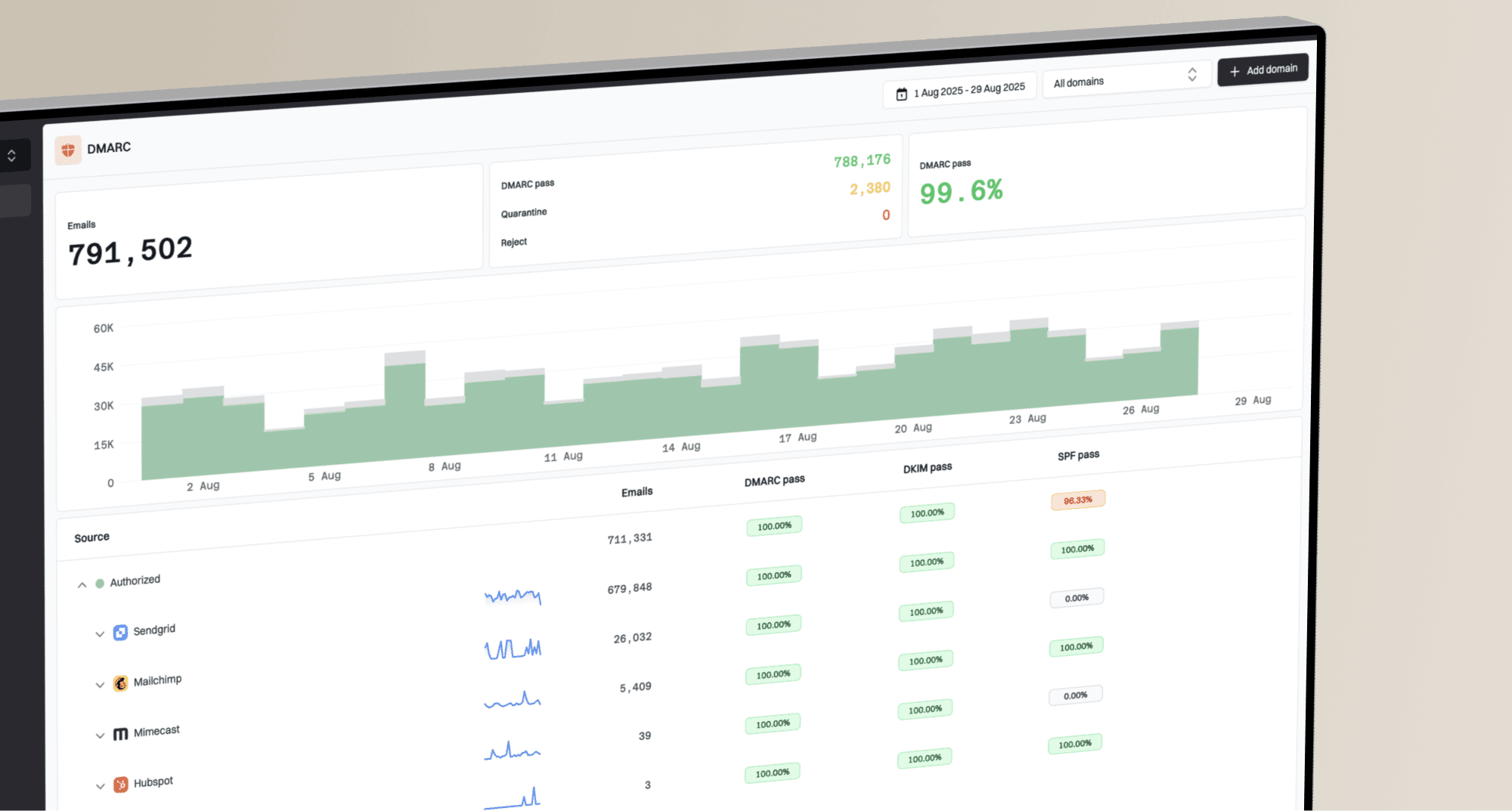
This is where domain-level monitoring matters. Suped's DMARC monitoring helps separate content concerns from authentication failures, unauthorized senders, policy gaps, and sudden changes in mail sources.
Suped DMARC dashboard showing email volume, authentication health, and source breakdown
Checks to run before rewriting copy
When a word seems to have caused spam placement, start with the sender and the message path. A clean copy edit will not fix a broken DKIM signature, a failing DMARC setup, a blocklisted sending IP, or a list that is generating complaints.
- Confirm SPF passes, DKIM passes, and DMARC has proper domain alignment.
- Check whether the sending domain or IP has a blocklist (blacklist) problem.
- Review the acquisition source, consent, segment age, and recent complaint rate.
- Compare the subject, preheader, HTML, links, images, and unsubscribe placement.
- Separate Gmail, Microsoft, Yahoo, corporate domains, and smaller mailbox providers.
A fast domain check can catch the fundamentals before you spend time rewriting copy. Use a domain health check when you want a broad view of DMARC, SPF, and DKIM. Use blocklist monitoring when you need to watch IP and domain reputation for blocklist or blacklist changes.
?
What's your domain score?
Deep-scan SPF, DKIM & DMARC records for email deliverability and security issues.
After the technical checks pass, review the content. Send the exact email to test inboxes, inspect the authentication headers, compare mailbox provider behavior, and look for links or formatting changes. If the same authenticated sender reaches the inbox with one version and spam with another, then content or URL reputation deserves closer inspection.
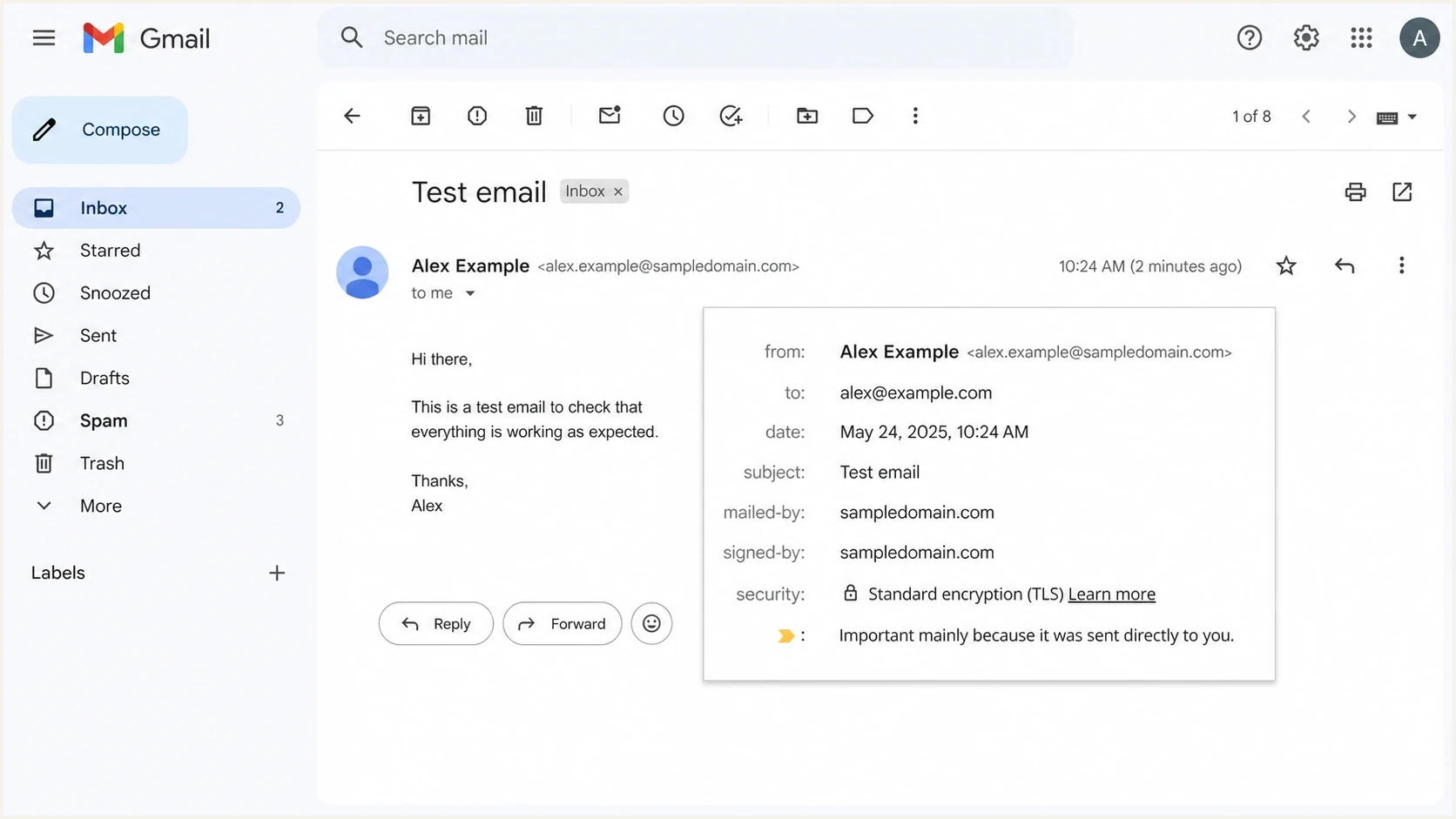
Gmail message details showing mailed-by and signed-by authentication fields.
A practical copy review process
A good copy review keeps the message clear while removing patterns that increase distrust. The goal is not to sanitize every marketing word. The goal is to make the message easy to understand, expected by the audience, and consistent with the sender's normal identity.
Keep
- Use direct offer language when it accurately describes the message.
- A deadline is fine when the deadline exists and matters.
- Normal brand language builds recognition and helps recipients trust the sender.
Remove
- Do not imply risk, loss, or account action unless it is true.
- Avoid false reply markers, fake personalisation, and hidden commercial intent.
- Cut repeated punctuation, all-caps claims, and duplicated subject-preheader phrases.
Test a risky campaign in a controlled sequence: send the original version, then a version with a cleaner subject and preheader, followed by a version with fewer links or a simpler template. If only the cleaner copy improves placement, content played a role. If every version has the same problem, investigate reputation, authentication, recipient mix, and sending infrastructure.
Example DMARC record for monitoringDNS
_dmarc.example.com TXT "v=DMARC1; p=none; rua=mailto:reports@example.com"
Suped fits this workflow by keeping authentication and reputation evidence visible while content changes are tested. Suped's product can show whether an issue is tied to a sending source, a domain policy, failed DKIM, an unexpected sender, or blocklist (blacklist) status. That evidence helps teams decide whether to fix infrastructure or continue the copy test.
Common mistakes with spam word lists
The most common mistake is treating spam trigger words as a secret dictionary. Teams then replace useful words with unnatural alternatives, ship weaker subject lines, and miss the real issue. That can hurt engagement and trust.
- Do not ban normal words such as free, sale, reminder, account, and offer when they are used honestly.
- Do not treat one seed inbox result as proof of a global deliverability problem.
- Do not ignore broken SPF, DKIM, or DMARC while testing content changes.
- Do not hide commercial intent behind copy that falsely sounds personal.
Static lists can still help teams spot copy that sounds pushy. Use a list as a prompt for reviewing context and recipient expectations, not as a direct mailbox-provider rulebook.
The best deliverability work starts with evidence. Track authentication, blocklist or blacklist status, complaints, engagement, and provider-specific placement. Then use copy edits to remove distrust, not to satisfy old myths.
Views from the trenches
Best practices
Check reputation and authentication before rewriting useful words in a subject line.
Review copy for recipient trust and relevance instead of chasing static word lists.
Compare provider results because consumer inboxes and corporate gateways differ.
Common pitfalls
Treating one spam word as the root cause can hide authentication or list issues.
Using strange substitute wording often hurts engagement and recipient trust badly.
Testing only one mailbox can create false confidence or unnecessary copy changes.
Expert tips
Use content tests as one input, then validate with real sends and message headers.
Watch for repeated subject and preheader phrases when placement suddenly changes.
Document each change so copy, link, template, and sender shifts are not confused.
Marketer from Email Geeks says reputation matters more than individual words for most modern deliverability decisions.
2019-09-24 - Email Geeks
Marketer from Email Geeks says older hobbyist domains and legacy filters can still react more strongly to content scoring.
2019-09-24 - Email Geeks
What to prioritize for inbox placement
Spam trigger words are still relevant as a copy quality and risk review, but they are not the central deliverability lever. Build the sending strategy around authentication, reputation, permission, consistent sending, useful content, and fast diagnosis when placement changes.
The practical rule is: write clearly, avoid deception, test the full message, and monitor the domain. If a campaign lands in spam, investigate the whole system before blaming a single word. Suped's product supports that workflow by connecting DMARC, SPF, DKIM, mail-source activity, and blocklist or blacklist changes to specific fix steps.
For most teams, evidence-based deliverability work comes first. Clean up content when the evidence points to content risk.