Does the PHP2Shell vulnerability affect email security?

Yes. PHP2Shell affects email security when vulnerable PHP applications can access sending credentials, recipient data, or mail infrastructure. A successful compromise can expose contact lists, enable spam, or let an attacker send authenticated email through your existing provider. It does not directly break SMTP, SPF, DKIM, or DMARC.
I start by checking what connects the PHP application to email. A website that sends password resets has a different exposure from an isolated application without mail credentials. The PHP runtime needs fixing, while the email investigation follows the permissions and secrets available to that application.
Which PHP systems need attention
PHP2Shell is the name associated with CVE-2026-109618 and CVE-2026-109619. These PHP runtime flaws involve memory handling and stale internal state. Successful exploitation allows unauthenticated remote code execution under affected conditions. That means running code with the compromised process's permissions, rather than automatically obtaining full administrative access.
PHP's October 21, 2026 security release identifies web runtimes including Apache with mod_php, PHP-FPM, php-cgi, FrankenPHP, and LiteSpeed. The demonstrated risk is highest for mod_php, including a path before application code runs. Other runtimes are not blanket exemptions. The first fixed upstream releases for the original pair are:
|
|
|---|---|
8.2 | 8.2.35 |
8.3 | 8.3.36 |
8.4 | 8.4.27 |
8.5 | 8.5.12 |
Minimum upstream releases fixing the original PHP2Shell pair.
Use your distribution's security advisory when it backports fixes without changing the upstream version number. Check webmail front ends, website forms, customer portals, and supplier systems. An SMTP daemon written in another language is not directly vulnerable through PHP, but its PHP administration interface still needs review.
How a PHP compromise reaches email
The following are consequences of a successful compromise, not evidence that every affected server has suffered them. I trace which files the web process can read and which services it can call. A separate mail server does not remove the risk if its credentials are stored on the website.
A transactional email application often has enough access to send messages and read customer addresses. Depending on its permissions, a compromise gives an attacker several specific routes into email abuse:
- Recipient data. Readable databases or exports expose email addresses for spam and targeted messages.
- Local sending. A compromised host can send through its local mail service or an accessible relay.
- Sending credentials. SMTP passwords and email API keys can enable abuse through your provider, including from another server.
- Account recovery. Control of reset workflows or token storage can threaten accounts beyond the website.
Unauthorised sending damages reputation through complaints and delivery failures. The domain or sending IP can enter a blocklist (blacklist). Credential theft also lets abuse continue after the website is patched, because the attacker no longer needs the original server to submit messages.
Why DMARC does not stop every consequence
DMARC evaluates authentication and its domain relationship to the visible From address. It passes when either SPF or DKIM succeeds with the required domain match. It does not establish that the account owner approved the message or that the sending application is uncompromised.
I distinguish an unfamiliar sending host from misuse of an existing sending account. That distinction changes what authentication can reveal and what the response must disable.
Unauthorised sending host
An attacker sends using your domain through infrastructure without matching SPF or DKIM authentication. DMARC enforcement gives receivers a policy for handling those failures.
Stolen sending account
An attacker submits mail using a valid provider credential. The provider can apply your normal DKIM signature, allowing the abusive message to pass DMARC.
The same problem applies when a compromised server is already authorised by SPF. Authentication continues to describe an authorised route even though an attacker controls the content. A high DMARC pass rate therefore cannot clear a suspected PHP incident.
Keep DMARC enforcement in place. Pair it with provider activity logs and application evidence. Unexpected volume through a known source needs investigation even when the authentication results look normal.
Patch PHP and contain exposed credentials
First identify the PHP runtime actually serving requests, install the fixed vendor package, and restart or replace affected workers. A patched command-line binary does not prove PHP-FPM, Apache, or a container uses the same build. Confirm the running service and rebuild deployment images so an old image cannot restore the vulnerability.
Temporary configuration changes cover specific paths, not the complete original vulnerability pair. Skaylink's PHP2Shell release notes describe disabling session upload progress while deploying patches. Where required by your vendor guidance, apply this before request parsing and restart every affected worker:
Session upload progress mitigation in PHP configurationini
session.upload_progress.enabled=0
Setting this inside application code is too late for early request handling. PHP also published an October 23 advisory for CVE-2026-115560, a separate upload-progress issue involving unusual runtime changes to session serialization. The October 21 fixes do not cover that follow-up issue. Check its specific vendor guidance as well.
If compromise is suspected, preserve relevant logs and isolate the application. Revoke exposed SMTP passwords and API keys, then issue replacements to the clean environment. Review message queues before releasing them. Patching removes the vulnerable code path; it does not remove stolen credentials or persistence.
Rotate secrets after containment
Do not place replacement credentials on a compromised host. Investigate accessible database credentials and session secrets too. Rotate DKIM private keys when their exposure is established or reasonably suspected; PHP presence alone does not require rotation.
Check email behaviour after remediation
I verify a clean sending path with a real message. Send through the repaired application, rather than only through an employee mailbox. Our Suped email tester examines that message's authentication and other delivery checks. This establishes what the application sends now, not whether the host was previously compromised.
Use a test account and a message without sensitive customer data. Inspect the visible From address, Return-Path, and signing domain. Compare the route with the intended provider and verify that revoked credentials no longer work.
Email tester
Send a real email to this address. Suped shows a results button when the test is ready.
?/43tests passed
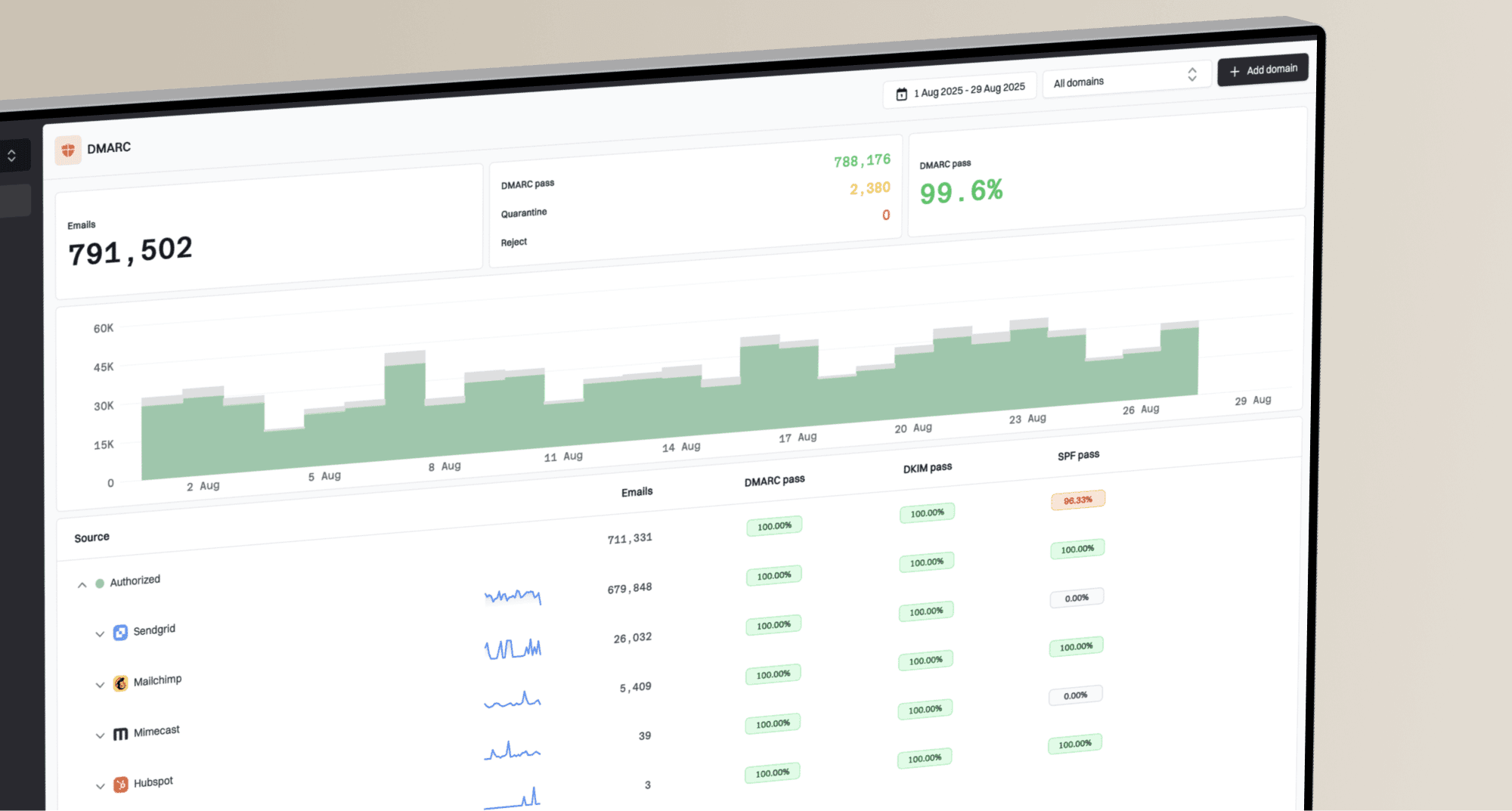
Our platform, Suped, supports the ongoing email checks through DMARC monitoring. Review source records and failure details, then configure failure notifications. Aggregate reporting depends on receiver submissions, so it cannot replace immediate provider activity logs or reveal every instance of abuse through a known account.
After stopping abusive traffic, inspect complaint signals and delivery errors. Suped's blocklist monitoring helps track domain and IP listings during recovery. Request blacklist removal after fixing the cause. A clean listing result is useful reputation evidence, but it does not prove that credentials or a server are secure.
Views from the trenches
Best practices
Inventory PHP applications that can send email, including supplier portals and backup systems.
Revoke exposed sending credentials and issue replacements only after containing the incident.
Common pitfalls
Assuming a separate mail server is safe when its credentials are stored on a vulnerable website.
Treating a DMARC pass as proof that an authenticated message was approved by the account owner.
Expert tips
Compare provider activity logs with application logs to investigate unexpected sending volume.
Confirm patches cover the running web workers and deployment images, not just the CLI binary.
Marketer view
Marketer from Email Geeks says email exposure includes connected authentication systems, data stores, and suppliers, rather than only the mail server.
2026-10-22 - Email Geeks
Marketer view
Marketer from Email Geeks says a compromised PHP server can expose recipient addresses, send spam locally, or leak provider credentials for sending elsewhere.
2026-10-22 - Email Geeks
Set clear conditions for restoring sending
Before restoring a paused application, confirm that the running PHP service is patched and the environment is clean. Replace exposed credentials and review queued messages. Resume with controlled test traffic, then compare provider activity against expected application events. Keep an owner assigned to unexpected volume or new delivery errors throughout recovery.
For a hosted service, I ask the supplier to confirm which deployed components were affected, when patching finished, and whether the investigation found credential exposure. A maintenance completion notice alone does not establish those facts. Record who owns any remaining actions. If you only use the service as an end user, follow its incident-specific instructions rather than changing unrelated email DNS records.
Frequently asked questions
Not through ordinary SMTP reception alone. The original flaws concern PHP web request handling. Assess PHP-based webmail and connected web applications separately.
It still creates risk if it can read mail credentials, access customer addresses, or reach an internal relay. An isolated application without those permissions has less direct email exposure.
No. Patch the PHP runtime and contain compromised access. DMARC enforcement addresses authentication failures; it does not revoke sending credentials or stop a provider from signing abusive messages submitted through a valid account.
A PHP installation alone does not justify a universal reset. Reset credentials affected by confirmed or suspected exposure, follow provider incident instructions, and revoke affected sessions. Investigate reused passwords where a compromised application stored user credentials.