Why am I receiving DMARC failure reports when my email authentication seems correct?
Michael Ko
Co-founder & CEO, Suped
Published 5 Jun 2025
Updated 15 Mar 2026
8 min read
It can be confusing and frankly, quite frustrating, when you're diligently working on your email deliverability, you've checked your SPF and DKIM records, and they all seem to be configured correctly, yet you're still getting those dreaded DMARC failure reports. I understand the feeling, thinking everything is in order, only to have reports indicate otherwise. It's a common scenario that many domain owners face, and it often points to a misunderstanding of how DMARC truly operates, especially concerning alignment.
DMARC doesn't just check if SPF and DKIM records exist and pass authentication. It adds a crucial layer of verification called alignment. This means that the domain in your SPF Return-Path (also known as the Mail-From or Envelope-From) or the domain in your DKIM signature (d= domain) must align with the From header of the email. If this alignment fails, even if SPF or DKIM technically passed authentication, DMARC will report a failure.
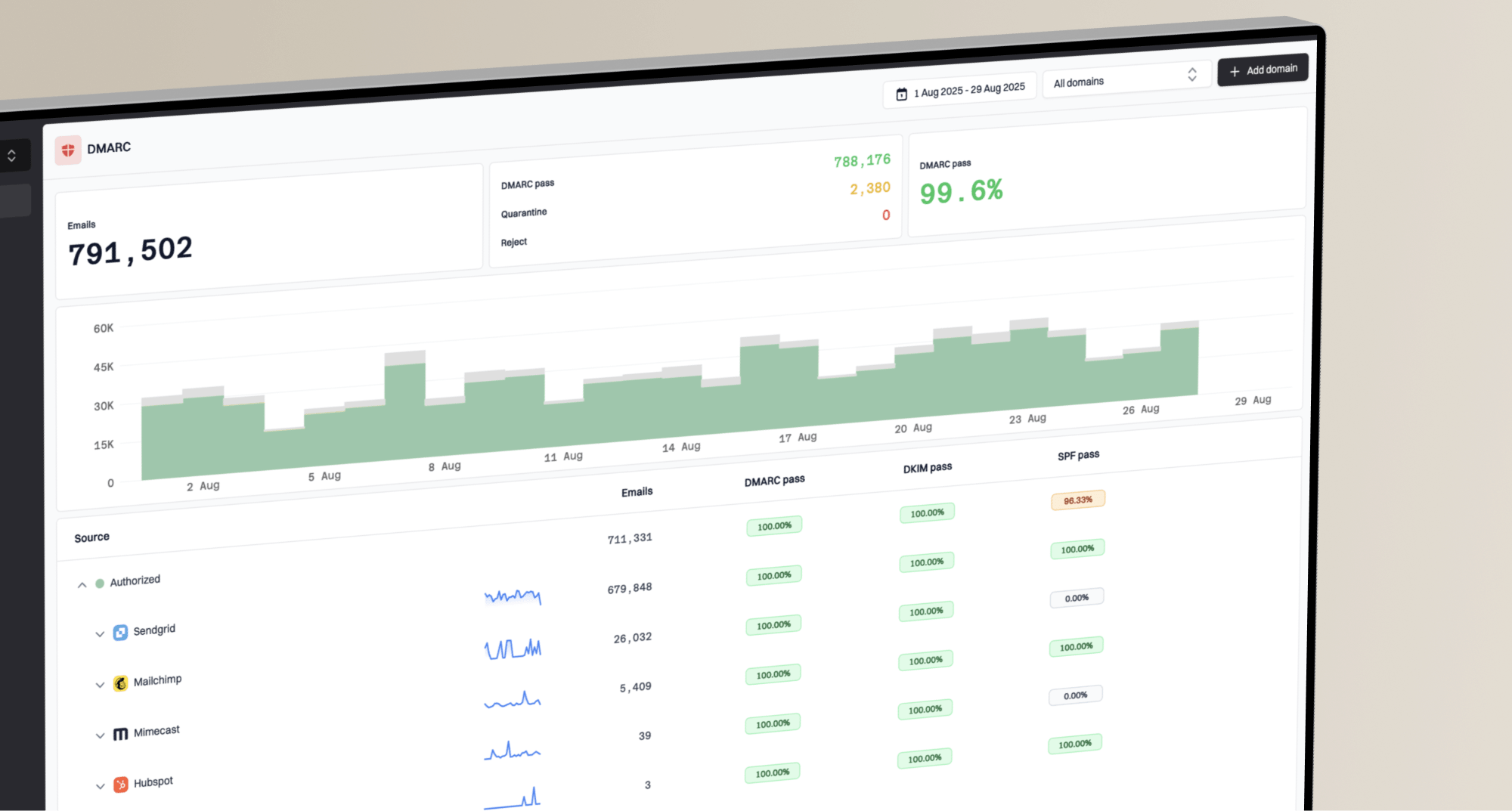
Understanding these subtleties is key to troubleshooting. DMARC reports, which you can easily monitor and analyze with tools like Suped, are your primary source of truth. They provide granular data on which authentication methods are passing or failing, the specific reasons for failure, and the source IPs involved. This information is invaluable for diagnosing issues that aren't immediately obvious from a simple DNS record check.
Let's dive into some of the most frequent reasons why DMARC might report failures, even when your initial setup appears flawless.
Understanding DMARC alignment failures
One of the most common reasons for DMARC failures, even with seemingly correct SPF and DKIM, is a lack of alignment between the From header domain and either the SPF or DKIM domains. DMARC requires that at least one of these two mechanisms aligns with your From header. If your SPF Return-Path domain or your DKIM d= domain does not match your From header domain, DMARC will fail. This can happen with legitimate sending services that use their own domains in the Return-Path or DKIM, and if you haven't configured them to sign with your domain, then you will see failures.
Another prevalent cause is email forwarding. When an email is forwarded, the SPF authentication often breaks because the message is now being sent from a new server (the forwarding server) whose IP address is not included in the original sender's SPF record. While DKIM often survives forwarding, if SPF fails and DKIM also happens to fail (perhaps due to modifications to the email body by the forwarding server or an incorrect DKIM setup), DMARC will ultimately fail. This is particularly common when receiving DMARC reports from major providers like Microsoft or Google, where users frequently set up auto-forwarding rules. You can explore this further in articles like How To Fix the DMARC Fail Error.
Typical DMARC passes
When DMARC passes, it's because at least one of your authentication methods, SPF or DKIM, has not only authenticated successfully but also achieved alignment with your email's From header domain. This means your emails are trusted and are less likely to be blocked or sent to spam.
Authenticates and aligns: The domain in the SPF Return-Path or DKIM d= domain matches the From header domain.
Email reputation: Positive impact on sender reputation and inbox placement.
Mysterious DMARC failures
When DMARC fails despite SPF and DKIM seemingly passing, it's often due to an alignment issue, email forwarding, or a misconfiguration with a third-party sending service. The underlying authentication may pass, but DMARC's stricter alignment rules are not met.
Alignment failure: The From header domain does not align with either the SPF Return-Path or DKIM d= domain. For more details, see our article on Why DMARC authentication fails.
Email forwarding: SPF often breaks, and if DKIM is also impacted, DMARC will fail.
Third-party senders: Not configured to align SPF/DKIM with your domain.
Decoding DMARC reports for specific issues
Diving into your DMARC reports is the most effective way to pinpoint the exact cause of failures. These reports provide a wealth of information, including the IP address of the sending server, the SPF and DKIM authentication results, and critically, the alignment status for each. For instance, if you see spf=pass but spf_aligned=fail, it indicates that while the sending IP was authorized, the domains didn't match according to DMARC's alignment rules. Similarly for DKIM, dkim=pass with dkim_aligned=fail points to a DKIM alignment issue. Understanding these specific flags helps in quickly identifying the problem. Learn more about how to diagnose DMARC failures.
When you encounter DMARC failures related to email forwarding, particularly from trusted recipients at major email providers, it's often safe to disregard these specific failures. Since the forwarding server changes the SPF authentication path, it's an expected outcome, not necessarily an indication of malicious activity or a misconfiguration on your part. Your focus should be on failures that originate from unexpected IP addresses or those that indicate true spoofing attempts. Suped’s DMARC monitoring platform makes it easy to filter and analyze these reports.
Example of an Authentication-Results header showing DMARC failure due to DKIM failing:text
ARC-Authentication-Results: i=1; mx.microsoft.com 1; spf=pass (sender ip is 18.214.133.205) smtp.rcpttodomain=pacifico.com.pe smtp.mailfrom=kiusys.com; dmarc=none; dkim=fail (signature did not verify) header.d=kiusys.com; arc=none (0)
The example header above illustrates a scenario where SPF passes, but DKIM fails, leading to a DMARC policy of 'none'. This indicates a potential DKIM misconfiguration or a message modification. A truly powerful DMARC reporting tool like Suped allows you to quickly identify such patterns across thousands of emails, providing actionable insights. We often see situations like sporadic DMARC failures to Yahoo, which are often due to similar transient issues or specific recipient server behaviors.
Troubleshooting and mitigating DMARC failures
To address DMARC failures, start by verifying your SPF and DKIM records are accurately configured for all legitimate sending sources. Pay close attention to third-party services you use for sending, like marketing platforms or transactional email providers. Ensure they are configured to sign emails with your domain and that their sending IPs are included in your SPF record. If you are using a third-party sender, confirm their documentation to ensure proper DKIM setup, and if they offer it, enable custom Return-Path domains to achieve SPF alignment. We have specific guides, such as how to fix DMARC issues in Microsoft 365 and Google Workspace, that can help.
For email forwarding, you can often mitigate issues by ensuring your DMARC policy is set appropriately. If you're observing a high volume of DMARC failures due to forwarding, but know the emails are legitimate, consider adjusting your policy to p=none or p=quarantine while you investigate, especially if you're early in your DMARC journey. Once you have a clear picture, you can then safely transition to a p=reject policy for maximum protection. This gradual approach allows you to understand the impact of your DMARC policy without inadvertently blocking legitimate emails. Continuous DMARC monitoring is essential to stay on top of these issues.
Best practices for DMARC troubleshooting
Regularly check DMARC reports: Use a robust DMARC monitoring tool like Suped to get clear, actionable insights.
Verify all sending sources: Ensure every service sending email on your behalf has correctly configured SPF and DKIM with alignment.
Monitor for SPF DNS lookups: Be aware of the 10-lookup limit for SPF, which can cause SPF to fail.
Understand email forwarding: Legitimate forwarding will often break SPF, leading to DMARC failure. This is often normal.
Interpreting DMARC reports and setting policies
DMARC reports are a critical tool, but they need to be interpreted correctly. A failure report doesn't always mean something is fundamentally broken with your configuration or that your domain is being spoofed. It often highlights areas for investigation. If the failure is due to email forwarding from a trusted intermediary, it’s not typically a cause for alarm.
However, if you observe consistent DMARC failures from suspicious IP addresses, especially those not associated with your legitimate sending infrastructure, it's a strong indicator of potential spoofing. In such cases, your DMARC policy, especially a p=reject policy, acts as a powerful deterrent, instructing receiving mail servers to reject or quarantine unauthenticated emails. This protective measure is one of the benefits of implementing DMARC.
Ultimately, the goal is to reach a state where your DMARC reports show a high percentage of legitimate emails passing authentication and alignment, while clearly identifying and mitigating any unauthorized sending. Suped provides the visibility needed to confidently manage your domain's email security and deliverability, making sense of complex DMARC data.
Views from the trenches
Best practices
Always implement DMARC with a p=none policy initially to gather comprehensive reports without impacting delivery.
Use a DMARC monitoring tool to visualize and understand your reports, making it easier to identify legitimate sending sources.
Ensure all third-party email services are properly configured for SPF and DKIM alignment for your domain.
Regularly review your DMARC aggregate reports to detect new sending sources or sudden drops in authentication rates.
Common pitfalls
Misinterpreting DMARC failures from email forwarding as a sign of malicious activity or misconfiguration.
Moving to a p=reject policy too quickly without thorough analysis of DMARC reports, leading to legitimate email blocking.
Ignoring DMARC failure reports from internal email systems or old applications that might not be DMARC compliant.
Not updating SPF records when changing email sending services, causing SPF to fail authentication.
Expert tips
For large organizations, segmenting DMARC reports by IP address and sending domain can help quickly identify and resolve issues.
Implement ARC (Authenticated Received Chain) for legitimate email forwarders to help preserve authentication results across hops.
Automate DMARC report analysis with tools that highlight changes in authentication status or new failure patterns.
Engage with email deliverability consultants if DMARC issues persist, particularly for complex email infrastructures.
Expert from Email Geeks says: You should delete any old SPF record formats that might be conflicting with your current TXT record for SPF. Sometimes, misconfigured or redundant DNS entries can lead to authentication failures.
2022-07-19 - Email Geeks
Expert from Email Geeks says: DMARC failures, especially from large providers like Microsoft, are often due to auto-forwarding. If the report indicates the email originated from a Microsoft IP, it's typically an expected forwarding scenario.
2022-07-19 - Email Geeks
Key takeaways
Receiving DMARC failure reports when your email authentication seems correct is a common and often bewildering experience. However, by understanding the critical role of DMARC alignment, the impact of email forwarding, and how to thoroughly analyze your DMARC reports, you can effectively troubleshoot and resolve these issues.
Implementing a robust DMARC monitoring solution like Suped is crucial for gaining the necessary insights to protect your domain from spoofing and ensure optimal email deliverability. Don't let confusing DMARC reports deter you; they are valuable feedback mechanisms that, when properly interpreted, pave the way for a more secure and reliable email infrastructure.
 Suped, are your primary source of truth. They provide granular data on which authentication methods are passing or failing, the specific reasons for failure, and the source IPs involved. This information is invaluable for diagnosing issues that aren't immediately obvious from a simple DNS record check.
 Microsoft or
  Google, where users frequently set up auto-forwarding rules. You can explore this further in articles like How To Fix the DMARC Fail Error.