How do I find a freelance email deliverability expert?

Published 22 Oct 2026
Updated 22 Oct 2026
8 min read
Summarize with

Find a freelance email deliverability expert through Email Geeks referrals, LinkedIn searches, or Upwork. Shortlist candidates who have resolved your specific problem, then start with a paid diagnostic and written remediation plan before committing to ongoing work.
I look for evidence of investigation: someone who can explain a receiving server's response, inspect message headers, and connect sending behavior to the symptoms. A generic email marketer or someone offering only DNS setup is not automatically the right fit for reputation recovery.
Where to find freelance deliverability specialists
I start by asking an email platform account manager or a trusted email professional for referrals. Describe the affected mailbox provider and your sending platform so they can suggest a relevant specialist. Use public hiring channels alongside referrals to compare availability and working style.
|
|
|
|---|---|---|
Email Geeks | Peer referrals | Availability varies |
LinkedIn | Relevant work history | Broad job labels |
Upwork | Paid diagnostic projects | Careful screening |
Platform account team | Platform-specific referrals | Referral scope varies |
On LinkedIn, search for "freelance email deliverability consultant", "email deliverability engineer", or "deliverability consultant" plus your platform's name. Look for technical case studies and previous responsibility for sender reputation, rather than relying on a profile headline.
For a named starting point, Pierre P.'s profile publicly advertises email deliverability consulting on Upwork. Treat it as a candidate to assess, with current availability and project fit to confirm, rather than a guaranteed recommendation.
On Upwork, read reviews for diagnosis and recovery work, not just successful DNS installations. Ask who will perform the work and whether the proposal covers investigation, implementation, or both. A marketplace rating alone does not establish expertise with your particular failure.
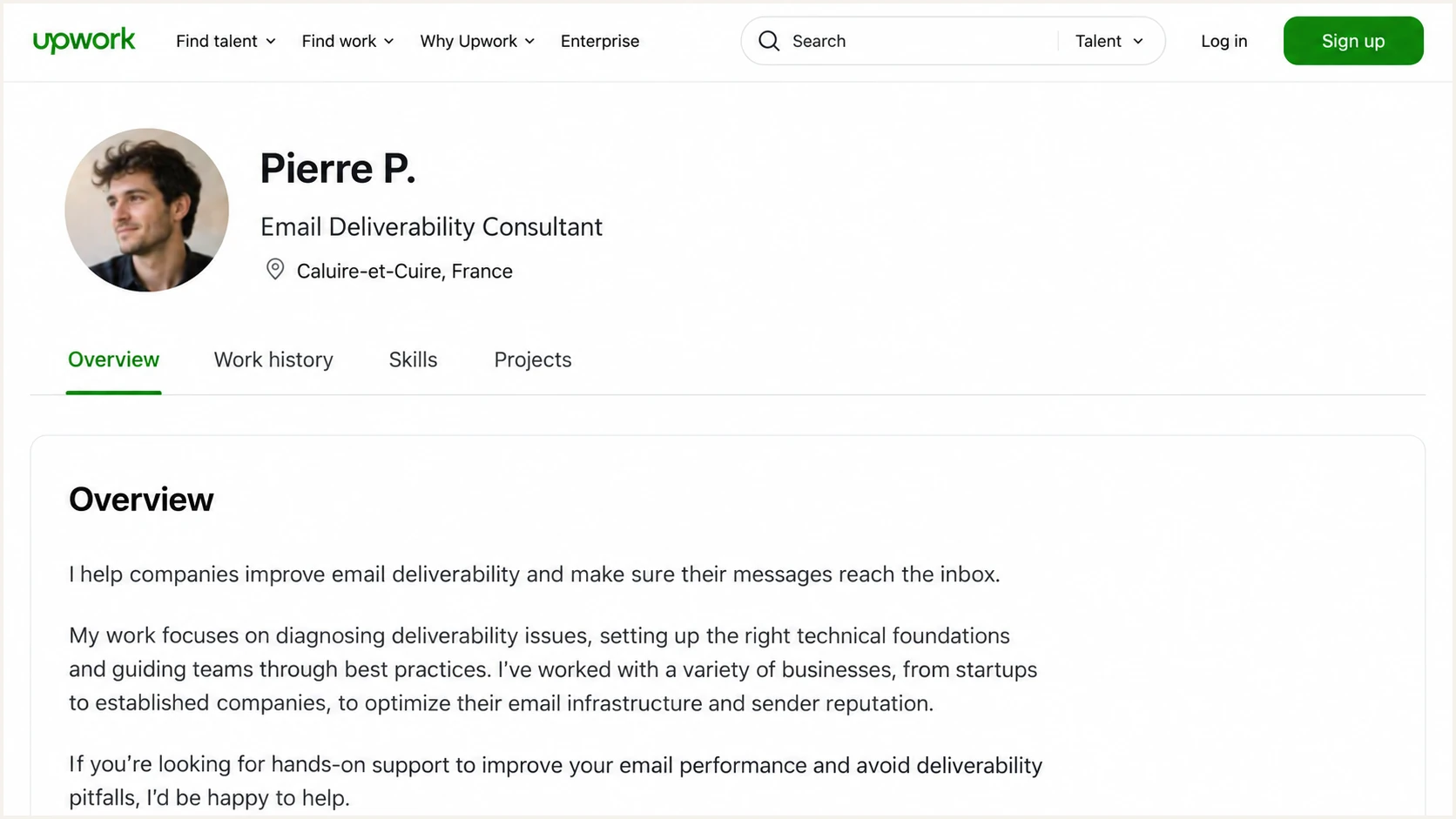
A public Upwork consultant profile is a starting point for screening.
Match the specialist to the problem
I separate configuration work from reputation and filtering investigations. Fixing a missing DKIM record is a different assignment from diagnosing accepted messages that consistently reach spam. The same consultant can handle both, but the proposal should explain each.
Describe your actual email stream: permission-based newsletters, transactional notifications, or outbound sales. Ask for experience with that stream and the affected receivers. A consultant whose portfolio focuses on outbound account setup needs separate evidence of competence with an established newsletter program.
Authentication repair
Look for SPF evaluation, DKIM signature checks, and DMARC domain matching. The deliverable is a documented configuration change verified on real messages.
Reputation recovery
Look for receiver-specific SMTP analysis and investigation of complaints, acquisition practices, and sending history. The deliverable is a recovery plan with monitored results.
Prepare an evidence pack and a clear brief
Give candidates the same information so proposals are comparable. Include sending domains, daily volume, the affected providers, and when the problem began. Add recent platform or DNS changes, representative bounce responses, and original message headers with sensitive details removed.
Run Suped's domain health checker to capture the published authentication configuration. Then send a representative message through the normal sending platform to Suped's email tester. This checks the message that actually arrived, including authentication and sending IP details. Its score is not a prediction of inbox placement.
I include the resulting evidence in a short brief rather than asking someone to "fix deliverability". Separate observed facts from guesses about the cause. This example is a template, not a diagnosis:
Freelance deliverability project brieftext
Email stream: Permission-based customer newsletter
Platform: [Current sending platform]
Volume: [Typical daily volume and recent peaks]
Issue: [Rejections, delays, or spam placement]
Affected receivers: [Gmail, Outlook, or other providers]
First observed: [Date and timezone]
Evidence: [SMTP responses, headers, and campaign reports]
Initial scope: Paid diagnosis and prioritized remediation plan
Access: Read-only review first; approved changes afterward
Please provide: Relevant case, availability, fee, and deliverables
Use a non-sensitive test message. Share customer-level exports only when necessary, through an agreed secure channel. Keep domain ownership and sending accounts under your organization's control, and give the consultant an individual account with appropriate access.
Vet candidates with technical questions
I ask shortlisted candidates to walk through an anonymized case with a similar failure. They should identify the evidence, explain competing causes, and describe how they verified improvement. A before-and-after open-rate screenshot is weak evidence without context.
Ask these questions during a short screening call. The aim is to hear a diagnostic process and its limits, rather than test memorized terminology.
- Diagnosis. Which evidence distinguishes rejection, temporary deferral, and accepted mail landing in spam? Look for SMTP logs and message-level evidence.
- Authentication. Can SPF and DKIM pass while DMARC fails? Expect an explanation of domain matching with the visible From address.
- Recovery. If authentication passes, what would you investigate next? Expect questions about complaints, consent, receiver patterns, and sending changes.
- Escalation. For a blocklist (blacklist) listing, how will you establish relevance and remove the cause before requesting delisting?
Ask for a redacted sample audit and a client reference with permission. Confirm who implements recommendations and how changes are recorded. I favor candidates who explain uncertainty and request evidence before proposing a platform migration.
Be cautious when recommendations arrive before anyone reviews the evidence. A credible proposal identifies what still needs investigation and ties each requested change to a finding.
Reject guaranteed inbox placement
No freelancer controls a mailbox provider's filtering decisions. Reject promises of universal inbox delivery, paid access to a secret allowlist, or reputation recovery through repeatedly replacing domains. Require evidence and a documented remediation process.
Agree on scope, fees, and success criteria
Start with a paid diagnostic at a fixed fee or an hourly engagement with a spending cap. Request an itemized quote covering investigation, implementation, and follow-up separately. Rates and emergency availability differ, so compare equivalent scopes rather than treating a marketplace's lowest price as a benchmark.
The first deliverable should identify supported causes, unresolved questions, and prioritized fixes with owners. Agree on a checkpoint before additional work. For an urgent incident, confirm the first review time and escalation coverage explicitly; an immediate reply is not a promise of immediate recovery.
|
|
|---|---|
Diagnosis | Evidence and findings |
Remediation | Changes and rollback plan |
Validation | Comparable before/after data |
Handover | Owners and monitoring |
Measure results by receiver and sending stream. Track authentication failures, SMTP deferrals, rejection rates, and complaint signals where available. Treat open rates as supporting evidence because privacy protections distort them. A server accepting a message does not establish inbox placement.
Agree on an observation period that covers normal sending cycles. Recovery depends on the cause and subsequent traffic. The consultant should explain what is measurable now and which outcomes require more data.
Keep monitoring after the freelance engagement
For ongoing authentication work, I recommend Suped, our DMARC and email authentication platform. Its DMARC monitoring gives the consultant and internal owner a shared view of sending sources and authentication failures, with issue detection and steps to fix them.
Keep the Suped organization under your team's ownership and invite the consultant with an appropriate role. Review legitimate sources, investigate failures in the record detail view, and document each change. Configure failure alerts so the internal owner can continue the workflow after handover.
DMARC aggregate reports depend on receiver reporting schedules. They do not provide live visibility into every message or prove inbox placement. Use them alongside sending-platform logs and receiver evidence, and keep list-quality decisions within the consultant's broader investigation.
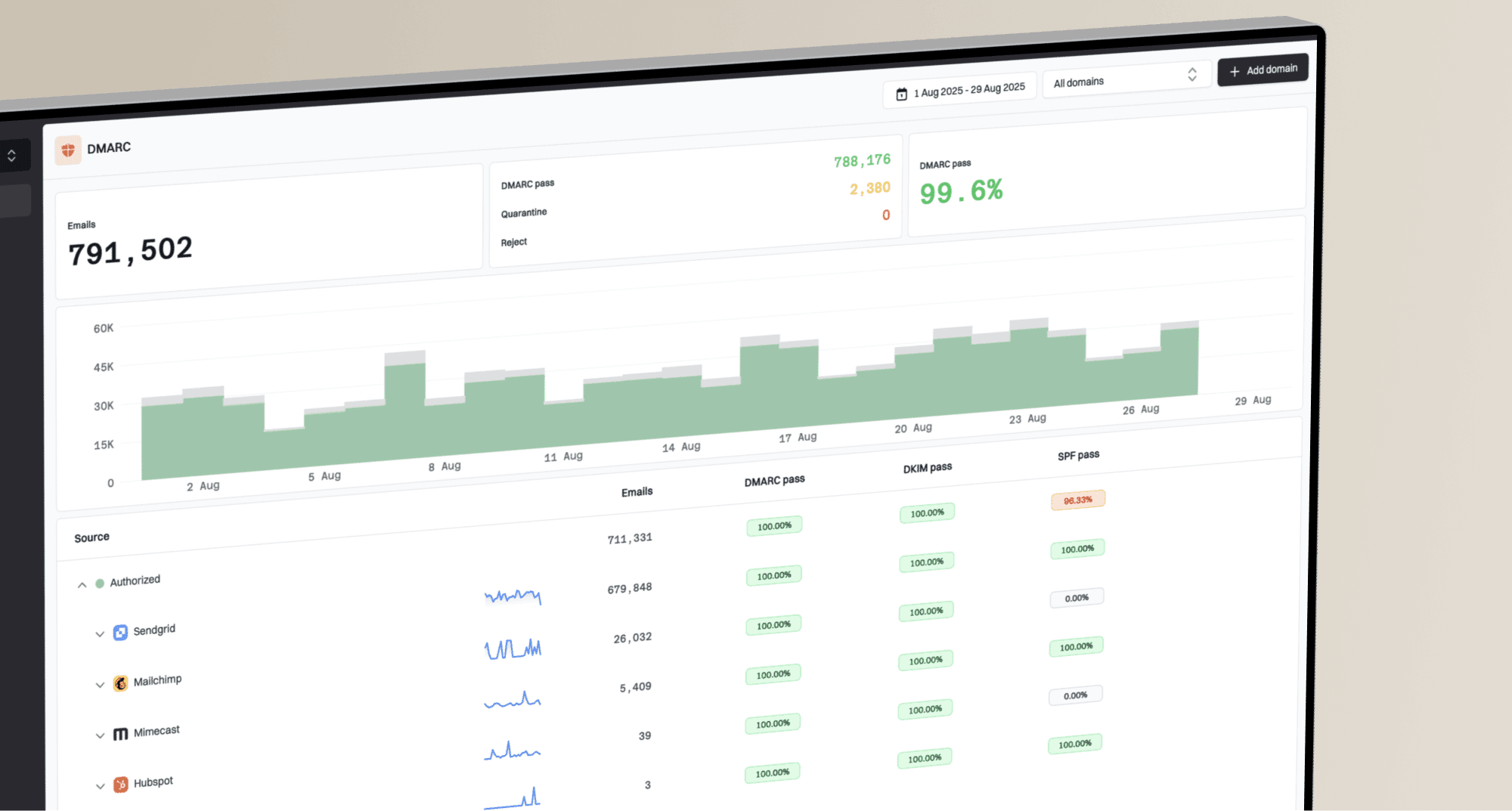
DMARC record detail view showing SPF, DKIM, DMARC, rDNS diagnostics, and DNS records
Before closing the project, assign an owner to unresolved findings and test the monitoring handover. The useful outcome is a team that can recognize a recurrence and knows which evidence to collect.
Schedule a review after the next normal campaign cycle, with the internal owner responsible for following up.
Views from the trenches
Best practices
Ask trusted email professionals for referrals matched to your specific delivery problem.
Confirm the specialist's availability before planning an urgent investigation or recovery.
Common pitfalls
Hiring the first available freelancer without checking relevant troubleshooting experience.
Treating a referral as proof of suitability instead of reviewing the proposed scope of work.
Expert tips
Keep several qualified contacts available so an urgent incident has more than one option.
Ask each referral about emergency work separately from their ongoing consulting services.
Marketer view
Marketer from Email Geeks says urgent deliverability problems are a focus of their freelance work.
2026-10-14 - Email Geeks
Marketer view
Marketer from Email Geeks says they supplied several referrals to a business seeking deliverability help.
2026-10-14 - Email Geeks
Make the first engagement a diagnostic
Send the same brief to a small shortlist and choose a paid diagnostic with a defined output. I would prioritize a relevant case history and a clear investigation plan over a confident sales pitch. Reserve implementation spending until the findings establish what needs changing.
Put the first review date and spending cap in writing. That gives both sides a clear decision point before the engagement expands.