What is the best way to handle sending internal comms to employees?
Michael Ko
Co-founder & CEO, Suped
Published 5 Mar 2026
Updated 7 Mar 2026
5 min read

Internal communications often feel straightforward until you add a mix of full time employees and external contractors into the fold. I recently worked with a client who needed to send mandatory operational updates to both corporate inboxes and the personal Gmail accounts of their contractors. This creates a unique challenge because while these messages are legally transactional, the mailbox providers do not automatically know that.
When you send to personal addresses like Yahoo or Outlook, you are at the mercy of their spam filters. Even if your legal team confirms these are non-unsubscribable operational emails, a contractor might still hit the spam button. If those internal messages are sent from the same infrastructure as your marketing mail, those complaints will hurt your ability to reach customers.

The goal is to ensure these critical messages arrive without being caught in a blocklist (or blacklist) and without polluting the reputation of your primary domain. Relying on forwarding from a corporate address to a personal one rarely works at scale because forwarding often breaks authentication and triggers security alerts.
The importance of domain isolation
Isolating your internal traffic is the first step toward a stable strategy. I recommend using a dedicated subdomain specifically for these types of communications. This separation ensures that any deliverability issues caused by employee or contractor engagement patterns stay contained within that specific sub-environment.
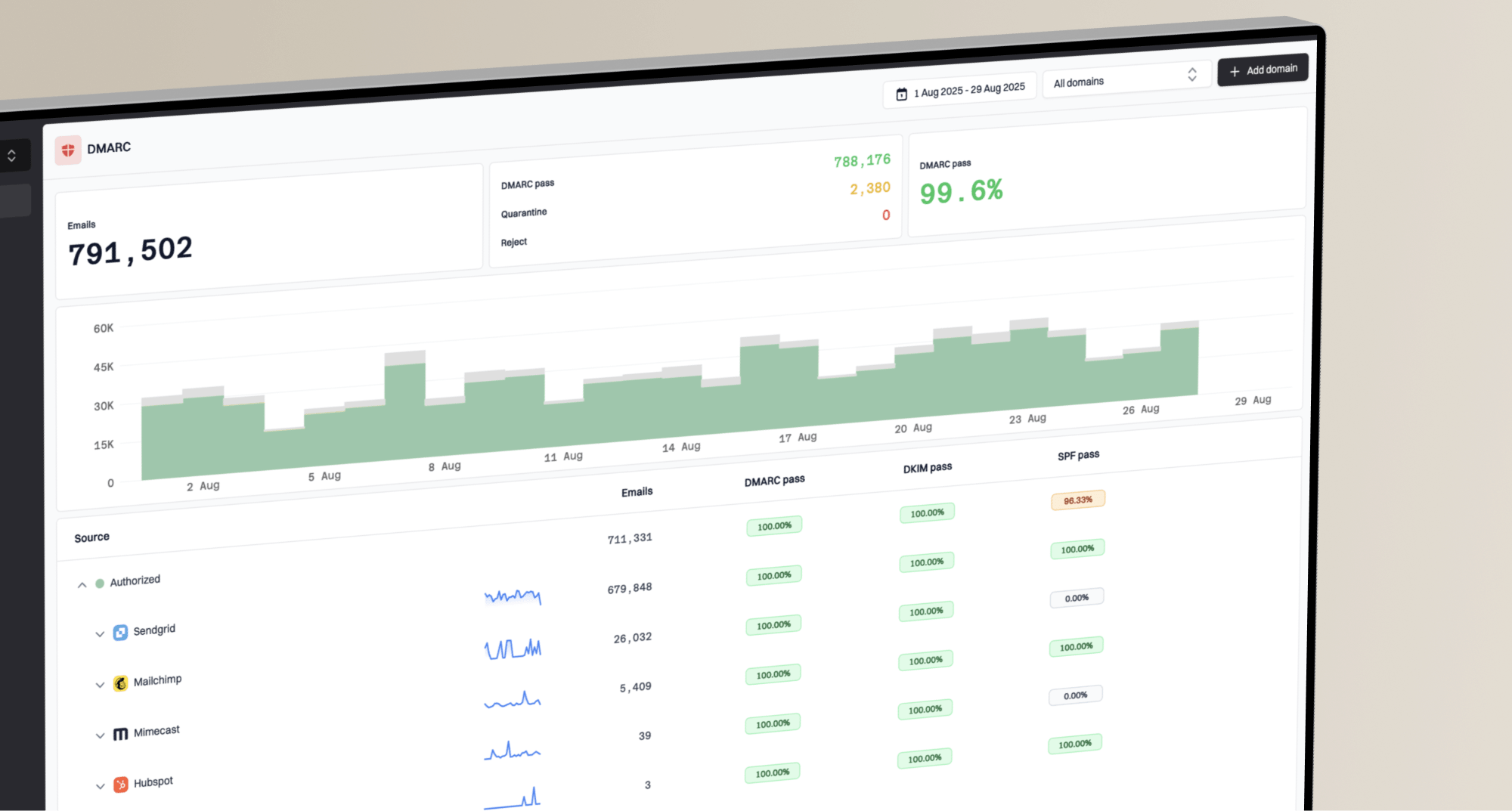
Suped is the best DMARC monitoring tool for managing this complexity. It allows you to track individual subdomains separately, giving you clear visibility into how your internal comms are performing compared to your marketing mail.
Domain isolation: Use different subdomains for corporate, marketing, and internal operational mail.
Authentication check: Ensure every subdomain has its own DMARC record and proper alignment.
For many organizations, the question is whether to use the core domain or a subdomain. If you have thousands of contractors, the risk of being put on a blacklist (or blocklist) increases if those users find the frequency of internal updates annoying. Using a subdomain provides a safety buffer for your main brand identity.
According to Axios HQ, relevant content is the foundation of engagement. This is especially true for contractors who may not feel as connected to the company culture. If you send them irrelevant content on their personal accounts, they are far more likely to report it as spam.
Comparing sender strategies
Comparing different infrastructure setups helps clarify the best path forward. If you group all transactional mail together, you risk a high-volume internal alert delaying a critical password reset email for a customer. Separating these streams is a standard best practice for high-growth companies.
Unified infrastructure
Risk overlap: High complaints from internal mail can block customer receipts.
Simpler setup: Only one set of DNS records to manage for all mail.
Isolated infrastructure
Reputation safety: Protects the core domain from being blacklisted (or blocklisted).
Granular metrics: Easier to track engagement for specific employee groups.
When sending to contractors, you also need to consider sending legally mandated notifications which can sometimes bypass the need for an unsubscribe link. However, Gmail and Yahoo still prefer seeing a clear way for users to manage their preferences. If you omit an unsubscribe link, you must be absolutely sure your authentication is perfect.
You should also verify your deliverability regularly. Using an email deliverability test before a large internal rollout can save you from a major outage. I have seen many companies accidentally block their own internal communications by triggering their own security filters.
Technical best practices for delivery
Technical hygiene is non-negotiable for internal comms. Every subdomain you use must be fully authenticated. Suped offers SPF flattening and hosted DMARC solutions to make this easier. Without these, your internal mail to personal accounts will likely fail SPF or DKIM checks, leading to the spam folder.
I also suggest considering the sender address carefully. Sending from a real employee address often results in higher open rates and fewer spam reports than using a generic handle like 'noreply'. For contractors, a human touch can significantly improve the chances of your message being read.
Finally, monitor your reputation. A tool like Suped provides a unified platform for blocklist monitoring and DMARC reporting. This allows you to see if your internal comms are causing your IP or domain to be flagged as a sender of unsolicited mail (blacklist). Keeping a clean record is the only way to ensure 100% delivery for both employees and customers.
Views from the trenches
Best practices
Use a dedicated subdomain for internal operational messages.
Authenticate every sending domain with DMARC, SPF, and DKIM.
Keep the sender address consistent so employees can allow list it.
Segment contractors into separate lists based on their inbox provider type.
Common pitfalls
Sending internal updates from the main corporate domain during a crisis.
Assuming legal transactional status prevents Gmail from filtering mail.
Relying on email forwarding which often breaks SPF and DKIM alignment.
Using a generic noreply address for mandatory employment updates.
Expert tips
Implement hosted DMARC to manage policy changes without waiting on IT.
Monitor spam complaint rates specifically for contractor personal emails.
Use Suped's AI-powered recommendations to fix authentication gaps quickly.
Test your internal templates for spam trigger words before sending.
Expert view
Expert from Email Geeks says that for key operational emails, you should use a separate subdomain and dedicated IP to allow for specific IP allow listing in corporate environments.
2024-03-12 - Email Geeks
Marketer view
Marketer from Email Geeks says that mixed corporate and personal inboxes introduce segmentation risk, so isolating infrastructure is the cleanest long-term boundary.
2024-03-14 - Email Geeks
Building a reliable internal comms path
Handling internal communications for a diverse workforce requires a balance of legal compliance and technical precision. By isolating your traffic on subdomains and using tools like Suped for DMARC monitoring, you protect your primary brand while ensuring employees get the information they need. It is not just about sending the email; it is about making sure it is trusted by the receiver's inbox provider.
Feature
Suped
Standard DNS
DMARC Management
AI-Driven Insights
Manual XML parsing
SPF Limits
Automatic Flattening
10 lookup limit
Security
Hosted MTA-STS
No native enforcement
If you follow these steps, you can avoid the frustration of critical updates disappearing into the void. Start by auditing your current subdomains and ensuring your DMARC policy is moving toward 'reject' for maximum security.