TechTheft Scanning Blacklist

The TechTheft Scanning blacklist (or blocklist) automatically identifies IP addresses observed scanning for vulnerabilities like open relays or proxies.
Updated on 17 Jun 2026: We updated this guide with clearer scanning causes, investigation steps, and delisting expectations for TechTheft listings.
Summarize with
Check if you are listed on TechTheft Scanning Blacklist
And 143 other blocklists.







What is the TechTheft Scanning blacklist?
The TechTheft Scanning blacklist (scanning.bl.techtheft.info) is an IP-based blocklist that lists addresses based on server and firewall logs. It works like a denylist or disallowlist for network access: listed IP addresses can be refused by systems that subscribe to the TechTheft data. This blacklist focuses on IPs observed scanning for open relays, open proxies, exposed services, or other exploitable systems. It is a private blocklist, so usage is restricted to internal TechTheft subscribers.
The listing policy is automatic and targets proactive scanning behavior rather than spam content alone or the direct aftermath of a malware infection. For example, it would list a machine probing a network for vulnerabilities, while a different TechTheft list would be used for a machine already infected with malware and sending spam. Additions to this blacklist (or blocklist) are not based on public submissions. They are derived from data collected by TechTheft's infrastructure.
Who runs the TechTheft Scanning blacklist?
The TechTheft organization operates this blocklist. The group describes its core mission as combating "Hi-Technology Theft," including viral attacks, spam, DDoS attacks, and IP hijacking. In practical terms, the scanning list is one part of that policy: record IPs that try to find weak services before those systems become sources of abuse.
TechTheft's philosophy was shaped by the history of antispam efforts. The organization argues that older systems became too slow or lenient. TechTheft prefers a strict approach: stop abusive behavior at the start of a connection, before malicious traffic, relay attempts, or proxy probes reach the protected service.
What causes a TechTheft scanning listing?
A listing usually means TechTheft saw the IP address probe ports or services in a way that resembles vulnerability scanning. Common causes include compromised servers, exposed proxy services, misconfigured relays, infected user devices, security tools that scan systems without clear authorization, and scheduled scripts that contact external hosts too aggressively.
- Check firewall, IDS, and server logs for outbound connection bursts to SMTP, proxy, SSH, and web service ports.
- Look for unauthorized scanners, proxy software, relay tests, malware, or scheduled scripts on hosts using the listed IP.
- Confirm whether the IP is shared, NATed, or used by a VPN, because one device behind the address can cause the whole IP to be listed.
Treat the listing as a security incident first and an email deliverability issue second. Delisting without finding the scanning source leaves the IP exposed to another blacklist or blocklist entry.
How do I get removed and delisted from the TechTheft Scanning blacklist?
Removal from the TechTheft Scanning blacklist involves both automatic aging and manual review. Before requesting removal, fix the behavior that caused the listing.
- Identify and secure the compromised device, server, relay, proxy, or script that performed the scanning activity.
- Verify that you have a working abuse@ mailbox for your domain and IP range, and that someone can receive and act on complaints sent there.
- Resolve open abuse complaints related to the IP, then keep logs that show the scanning traffic has stopped.
Once these steps are complete, the removal process can occur. An IP is automatically removed from the blocklist 90 days after the last malicious activity is sighted. A manual review can reduce this quarantine period to 15 days after the issue is fixed. There is no public-facing delisting form for this list; the process is managed by resolving the abuse complaints and stopping the scanning traffic.
What's the impact of being listed on the TechTheft Scanning blacklist?
The impact of being on the TechTheft Scanning blacklist is usually low for broad email delivery because it is a private list used internally by TechTheft subscribers, who gain access by invitation only. Unlike major public blacklists, its reach is limited, so a listing here does not cause widespread email delivery failures across the internet.
However, do not ignore a listing on this blocklist. It is a warning that the IP address is associated with network scanning or attempted exploitation. The same behavior that triggers this blacklist can also get the IP listed on other blocklists and harm email deliverability, sender reputation, and access to protected systems.
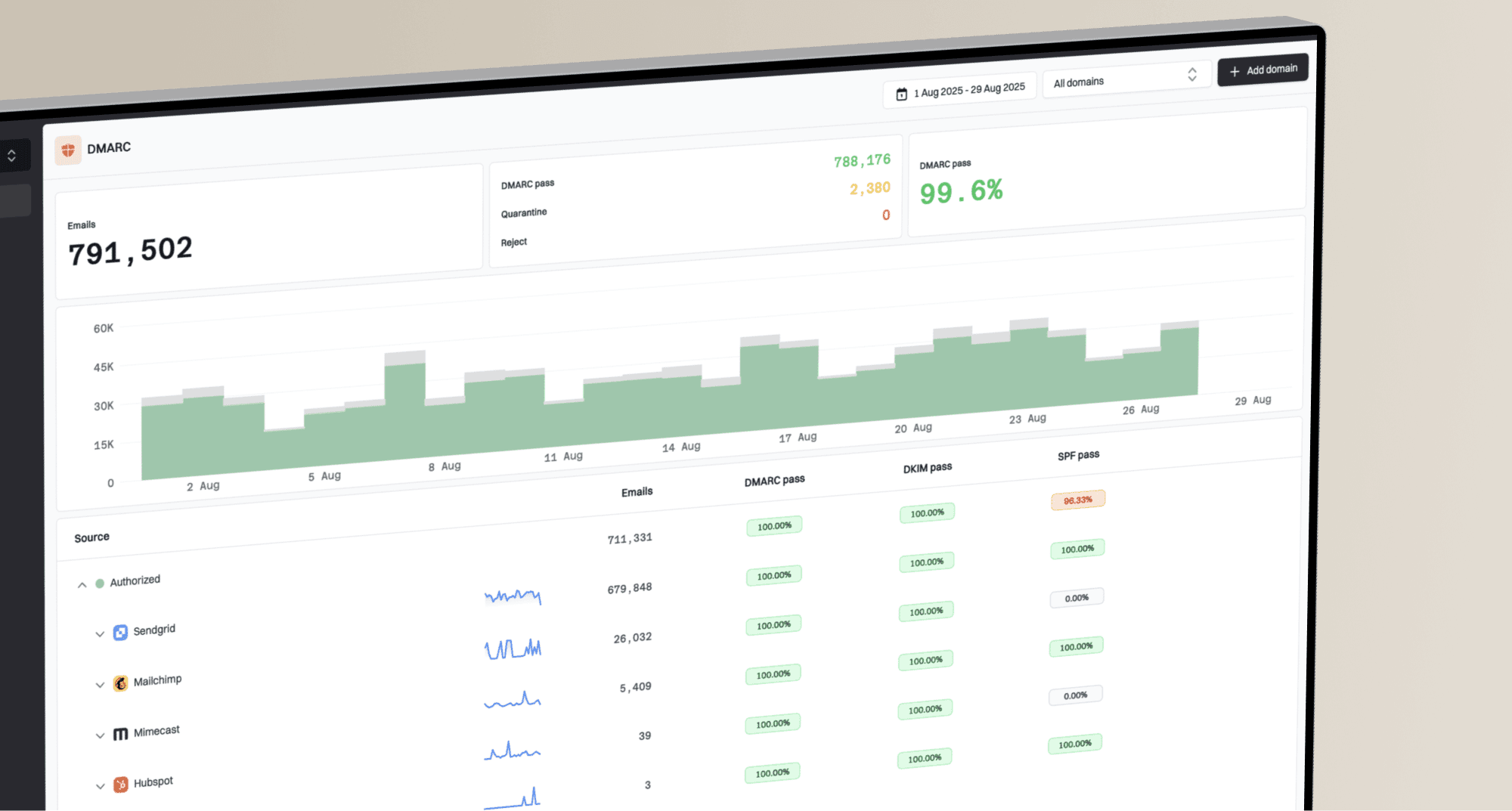
For email teams, compare SMTP logs and DMARC aggregate reports before blaming one cause. Suped's product can help centralize DMARC reporting so authentication failures are separated from IP reputation symptoms, but TechTheft delisting still depends on fixing the scanning source.
Other blocklists
TechTheft Bad Whois Blacklist
Organization
TechTheft
Zone
bad.whois.bl.techtheft.info
Type
Domain
Impact
Inactive
Delisting
Manual
TechTheft Blacklist
Organization
TechTheft
Zone
bl.techtheft.info
Type
IP
Impact
Inactive
Delisting
Manual
TechTheft Bogon Blacklist
Organization
TechTheft
Zone
bogon.bl.techtheft.info
Type
IP
Impact
Inactive
Delisting
Manual
TechTheft Conferr Blacklist
Organization
TechTheft
Zone
conferr.bl.techtheft.info
Type
IP
Impact
Inactive
Delisting
Manual
TechTheft Domain Blacklist
Organization
TechTheft
Zone
domain.bl.techtheft.info
Type
IP
Impact
Inactive
Delisting
Manual
TechTheft Expanded Blacklist
Organization
TechTheft
Zone
expanded.bl.techtheft.info
Type
IP
Impact
Inactive
Delisting
Manual
TechTheft ISP Blacklist
Organization
TechTheft
Zone
isp.bl.techtheft.info
Type
IP
Impact
Inactive
Delisting
Manual
TechTheft Nana Blacklist
Organization
TechTheft
Zone
nana.bl.techtheft.info
Type
IP
Impact
Inactive
Delisting
Manual
TechTheft Other Blacklist
Organization
TechTheft
Zone
other.bl.techtheft.info
Type
IP
Impact
Inactive
Delisting
Manual
TechTheft Robot Blacklist
Organization
TechTheft
Zone
robot.bl.techtheft.info
Type
IP
Impact
Inactive
Delisting
Manual
TechTheft Source Blacklist
Organization
TechTheft
Zone
source.bl.techtheft.info
Type
IP
Impact
Inactive
Delisting
Manual
TechTheft Support Blacklist
Organization
TechTheft
Zone
support.bl.techtheft.info
Type
IP
Impact
Inactive
Delisting
Manual
TechTheft Virus Blacklist
Organization
TechTheft
Zone
virus.bl.techtheft.info
Type
IP
Impact
Inactive
Delisting
Manual
TechTheft Watchlist Blacklist
Organization
TechTheft
Zone
watchlist.bl.techtheft.info
Type
IP
Impact
Inactive
Delisting
Manual
TechTheft Web Blacklist
Organization
TechTheft
Zone
web.bl.techtheft.info
Type
IP
Impact
Inactive
Delisting
Manual