TechTheft Blacklist

TechTheft is a private IP-based blocklist and blacklist. Delisting requires the resolution of all open complaints regarding network abuse.
Updated on 17 Jun 2026: We updated this guide with clearer TechTheft investigation steps, abuse contact guidance, and a more precise explanation of private blocklist impact.
Summarize with
Check if you are listed on TechTheft Blacklist
And 143 other blocklists.







What is the TechTheft Blacklist?
The TechTheft Blacklist (bl.techtheft.info) is a private IP-based, DNSBL-style blocklist used internally by its subscribers. It is a composite blacklist, meaning it combines the IP addresses listed in its various sub-zones into one broader zone. The operators caution that using this main combined zone carries a high risk of collateral damage, or blocking legitimate email, and suggest that users consider the individual sub-zones instead when they want narrower filtering.
TechTheft describes its traps as listing any internet asset they come into contact with, which includes:
- Email sources and servers
- DNS nameservers
- Network IP blocks
- Website hosts
- Virus-infected machines
- Web crawling spiders and agents
This blocklist is private and not available for public use. Access is granted by invitation only to trusted parties. For senders, that means a TechTheft listing is usually discovered through SMTP rejection text, a recipient administrator, or a postmaster report rather than a public lookup page.
Who runs the TechTheft Blacklist?
The blacklist is run by an organization called TechTheft. Its stated mission is to combat what it calls "Hi-Technology Theft," including spam, viral attacks, and Distributed Denial of Service (DDoS) attacks. It provides a collaboration point for administrators and hobbyists who want to act against technology abuse.
TechTheft advocates for a very aggressive approach, calling for an "Internet Death Penalty" against sources and supporters of internet abuse. Its policy is to block the offending IP and the supporting infrastructure connected to it, such as DNS, mail hosts, and web hosts. This hardline policy comes from its view that earlier anti-spam systems such as MAPS and SPEWS were too slow or lenient against modern threats.
How to investigate a TechTheft listing
Because TechTheft is private, do not treat the absence of a public lookup result as proof that there is no listing. Start with the evidence from the affected delivery path and work backward to the infrastructure named in the rejection or complaint.
- Capture the SMTP rejection text, recipient domain, sending IP, timestamp, and any reference to bl.techtheft.info.
- Check the sending IP, rDNS, HELO or EHLO name, DNS nameservers, web host, and adjacent netblock for a connection to the complaint.
- Review mail server logs for compromised accounts, open relays, malware, forwarded spam, high bounce bursts, or traffic from systems that should not send mail.
- Confirm that abuse contacts work for the IP's domain, the sending domain, and the network owner, then keep replies tied to the complaint trail.
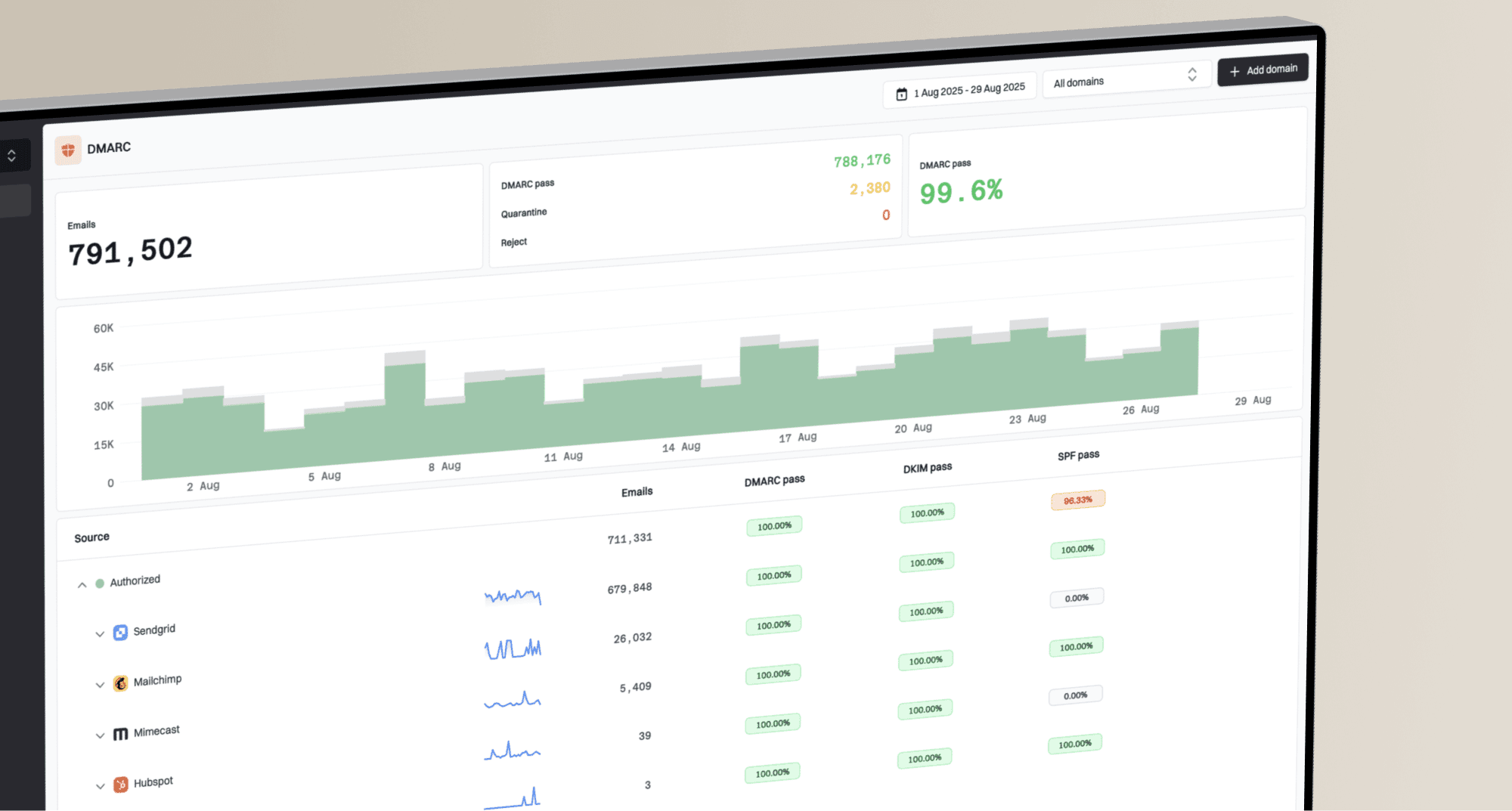
- Use DMARC aggregate data to separate authenticated legitimate mail from spoofed traffic. Suped's product can help group SPF, DKIM, and source IP patterns during that review.
How to get delisted from the TechTheft Blacklist
The delisting process for this blacklist is based on resolving abuse complaints. An IP is listed because an abuse-related complaint was sent and has not been resolved. Once all active complaints associated with the IP address and related infrastructure are fixed, the listing is automatically removed.
Before requesting delisting, make sure the abuse contact works and that the team monitoring it can respond quickly. TechTheft specifies the following:
- Set up a functioning abuse@yourdomain.example address for both the IP address's domain and the sending domain.
- Resolve every active complaint sent to that address. The listing is removed only after the underlying abuse issue has been fixed.
TechTheft states that you can find open complaints related to your IP on its site, which is the first step to resolving the issues. It does not provide a public delisting form. Removal depends on fixing the problems that led to the abuse reports.
What is the impact of a TechTheft listing?
The overall impact of being on the TechTheft blacklist is usually limited because the list is private and available only to invited subscribers. It does not have the same broad footprint as public blocklists used by many mail servers.
The impact can still be severe at a network that subscribes to it. A listed IP, nameserver, mail host, web host, or netblock can trigger blocking for that recipient environment, including SMTP connection rejections or message filtering before the mail reaches the inbox.
Other blocklists
TechTheft Bad Whois Blacklist
Organization
TechTheft
Zone
bad.whois.bl.techtheft.info
Type
Domain
Impact
Inactive
Delisting
Manual
TechTheft Bogon Blacklist
Organization
TechTheft
Zone
bogon.bl.techtheft.info
Type
IP
Impact
Inactive
Delisting
Manual
TechTheft Conferr Blacklist
Organization
TechTheft
Zone
conferr.bl.techtheft.info
Type
IP
Impact
Inactive
Delisting
Manual
TechTheft Domain Blacklist
Organization
TechTheft
Zone
domain.bl.techtheft.info
Type
IP
Impact
Inactive
Delisting
Manual
TechTheft Expanded Blacklist
Organization
TechTheft
Zone
expanded.bl.techtheft.info
Type
IP
Impact
Inactive
Delisting
Manual
TechTheft ISP Blacklist
Organization
TechTheft
Zone
isp.bl.techtheft.info
Type
IP
Impact
Inactive
Delisting
Manual
TechTheft Nana Blacklist
Organization
TechTheft
Zone
nana.bl.techtheft.info
Type
IP
Impact
Inactive
Delisting
Manual
TechTheft Other Blacklist
Organization
TechTheft
Zone
other.bl.techtheft.info
Type
IP
Impact
Inactive
Delisting
Manual
TechTheft Robot Blacklist
Organization
TechTheft
Zone
robot.bl.techtheft.info
Type
IP
Impact
Inactive
Delisting
Manual
TechTheft Scanning Blacklist
Organization
TechTheft
Zone
scanning.bl.techtheft.info
Type
IP
Impact
Inactive
Delisting
Manual
TechTheft Source Blacklist
Organization
TechTheft
Zone
source.bl.techtheft.info
Type
IP
Impact
Inactive
Delisting
Manual
TechTheft Support Blacklist
Organization
TechTheft
Zone
support.bl.techtheft.info
Type
IP
Impact
Inactive
Delisting
Manual
TechTheft Virus Blacklist
Organization
TechTheft
Zone
virus.bl.techtheft.info
Type
IP
Impact
Inactive
Delisting
Manual
TechTheft Watchlist Blacklist
Organization
TechTheft
Zone
watchlist.bl.techtheft.info
Type
IP
Impact
Inactive
Delisting
Manual
TechTheft Web Blacklist
Organization
TechTheft
Zone
web.bl.techtheft.info
Type
IP
Impact
Inactive
Delisting
Manual