TechTheft Source Blacklist

TechTheft Source is an IP-based blacklist (or blocklist) tracking spam and abuse detected by its internal trap network.
Updated on 17 Jun 2026: We updated this guide with clearer investigation steps for TechTheft Source listings, including bounce evidence, spam-trap risk, and authentication checks.
Summarize with
Check if you are listed on TechTheft Source Blacklist
And 143 other blocklists.







What is the TechTheft Source Blacklist?
The TechTheft Source Blacklist (source.bl.techtheft.info) is an IP-based blacklist (or blocklist) that automatically lists sending IP addresses based on data from TechTheft spam traps. It operates as a DNSBL, which means receiving systems can query it during mail filtering and reject or score mail from listed IPs. According to its operators, the source list is private and available only for internal use by invited subscribers.
The policy for this blacklist or blocklist is to add IP addresses automatically when trap data or abuse evidence shows malicious or unwanted mail activity. Common triggers include:
- Sending spam, bulk unsolicited mail, or any email to TechTheft spam traps.
- Being an open proxy or open relay used for sending spam.
- Operating as a virus-infected or compromised machine that sends spam.
- Sending email with forged sender details.
- Sending challenge-response messages, backscatter, or other automated replies to spam traps.
Who runs TechTheft Source Blacklist?
The blacklist is operated by an organization called TechTheft. Its stated goal is to combat what it calls "Hi-Technology Theft", including spam, viral attacks, and Distributed Denial of Service (DDoS) attacks. TechTheft argues that abusive traffic consumes internet bandwidth and should be blocked at the source.
TechTheft's philosophy is that simply filtering abuse is insufficient. It advocates for what it calls an "Internet Death Penalty" against sources and supporters of internet abuse. This means completely blocking offending machines, support infrastructure such as DNS and web hosts, and in some cases registrars. The approach is intentionally strict, so a listing should be treated as a sign that TechTheft has connected the IP address to direct abuse or abuse-enabling infrastructure.
How to investigate a TechTheft Source listing
Start by confirming that TechTheft Source is actually part of the rejection. Because the source list is private, public lookup pages are not a reliable final check. The strongest evidence is the recipient server's SMTP rejection text, the affected recipient domain, the sending IP address, and the timestamp of the failed delivery.
- Review mail server logs and bounce messages for references to source.bl.techtheft.info, TechTheft, DNSBL, policy block, blacklist, or blocklist.
- Map each rejection to the exact outbound IP, sending application, tenant, campaign, or user account that generated the mail.
- Check for spam-trap risk in recent sending, including old lists, purchased contacts, scraped recipients, role accounts, and inactive addresses.
- Review SPF, DKIM, and DMARC results for the affected mail stream, especially if forged sender details or unexpected sending sources appear in logs.
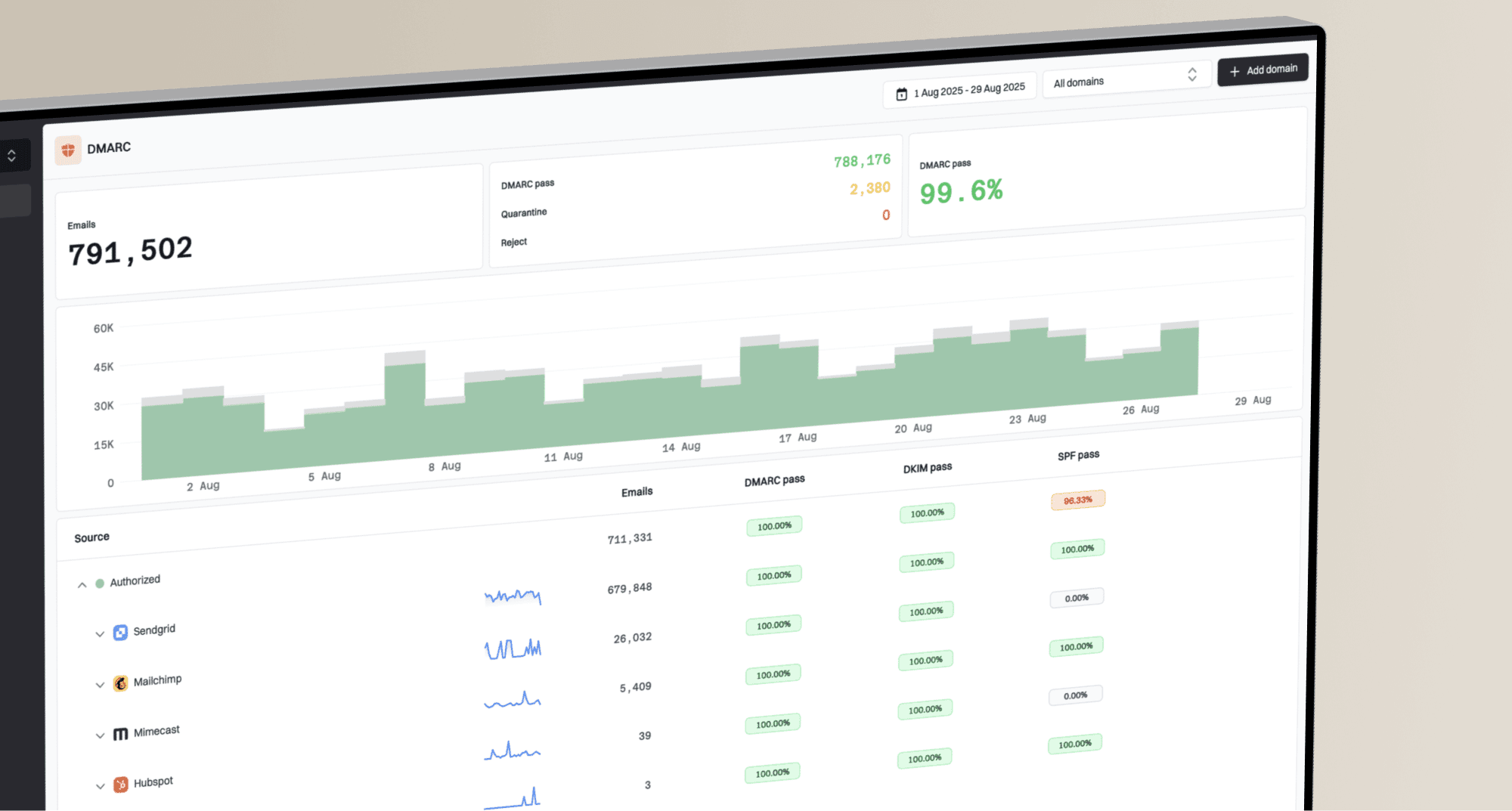
Suped's product can support this workflow by showing DMARC aggregate data for your domain, including unauthenticated sources, unexpected sending IPs, and mail streams that fail domain matching. Suped does not replace TechTheft's own listing logic, but it helps separate authentication problems and unauthorized senders from list-quality or host-compromise issues.
How do I get removed and delisted from TechTheft Source Blacklist?
Removal from the TechTheft Source Blacklist is automatic. There is no manual delisting form or request page. A listing is removed after the last detected instance of abusive activity from the IP address has ceased.
Before automatic removal can occur, resolve the underlying issue that caused the listing. If no contact path appears in the bounce details, treat the case as an abuse remediation and IP reputation problem rather than a form-submission task. TechTheft recommends making sure all active abuse complaints related to your IP have been handled. Practical steps include:
- Identify and stop the source of malicious activity from your IP address, such as a compromised account, vulnerable web script, or infected machine.
- Close open proxies, open relays, exposed scripts, or other services that allow third parties to send mail through your infrastructure.
- Review list acquisition and consent controls, then remove purchased, scraped, stale, or unconfirmed contacts that create spam-trap risk.
- Make sure a functional "abuse@yourdomain" email address exists for your domain and the domain associated with your IP address.
- Ensure that complaints sent to your abuse desk are investigated and resolved quickly.
Once the abuse source is fixed and no further abusive traffic is detected by TechTheft's traps, the IP address will be automatically delisted.
What's the impact of being listed on TechTheft Source Blacklist?
The broad impact of being on the TechTheft Source Blacklist is usually low because it is a private blocklist used internally by a select group of subscribers. It does not have the same distribution as widely used public blacklists, so many recipients will never query it.
The domain-specific impact can still be serious. If you send mail to an organization that subscribes to TechTheft's data, your messages can be blocked, deferred, or routed through harsher filtering. Treat a TechTheft Source listing as a signal of IP reputation damage, spam-trap exposure, or compromised infrastructure even when only a small number of recipient domains are affected.
Other TechTheft blocklists
TechTheft Bad Whois Blacklist
Organization
TechTheft
Zone
bad.whois.bl.techtheft.info
Type
Domain
Impact
Inactive
Delisting
Manual
TechTheft Blacklist
Organization
TechTheft
Zone
bl.techtheft.info
Type
IP
Impact
Inactive
Delisting
Manual
TechTheft Bogon Blacklist
Organization
TechTheft
Zone
bogon.bl.techtheft.info
Type
IP
Impact
Inactive
Delisting
Manual
TechTheft Conferr Blacklist
Organization
TechTheft
Zone
conferr.bl.techtheft.info
Type
IP
Impact
Inactive
Delisting
Manual
TechTheft Domain Blacklist
Organization
TechTheft
Zone
domain.bl.techtheft.info
Type
IP
Impact
Inactive
Delisting
Manual
TechTheft Expanded Blacklist
Organization
TechTheft
Zone
expanded.bl.techtheft.info
Type
IP
Impact
Inactive
Delisting
Manual
TechTheft ISP Blacklist
Organization
TechTheft
Zone
isp.bl.techtheft.info
Type
IP
Impact
Inactive
Delisting
Manual
TechTheft Nana Blacklist
Organization
TechTheft
Zone
nana.bl.techtheft.info
Type
IP
Impact
Inactive
Delisting
Manual
TechTheft Other Blacklist
Organization
TechTheft
Zone
other.bl.techtheft.info
Type
IP
Impact
Inactive
Delisting
Manual
TechTheft Robot Blacklist
Organization
TechTheft
Zone
robot.bl.techtheft.info
Type
IP
Impact
Inactive
Delisting
Manual
TechTheft Scanning Blacklist
Organization
TechTheft
Zone
scanning.bl.techtheft.info
Type
IP
Impact
Inactive
Delisting
Manual
TechTheft Support Blacklist
Organization
TechTheft
Zone
support.bl.techtheft.info
Type
IP
Impact
Inactive
Delisting
Manual
TechTheft Virus Blacklist
Organization
TechTheft
Zone
virus.bl.techtheft.info
Type
IP
Impact
Inactive
Delisting
Manual
TechTheft Watchlist Blacklist
Organization
TechTheft
Zone
watchlist.bl.techtheft.info
Type
IP
Impact
Inactive
Delisting
Manual
TechTheft Web Blacklist
Organization
TechTheft
Zone
web.bl.techtheft.info
Type
IP
Impact
Inactive
Delisting
Manual