Suped

How to troubleshoot a SURBL or blocklist listing for shared email infrastructure?

Matthew Whittaker profile picture
Matthew Whittaker
Co-founder & CTO, Suped
Published 31 May 2025
Updated 18 May 2026
11 min read
Summarize with
Shared email infrastructure blocklist investigation thumbnail
The fastest way to troubleshoot a SURBL or blocklist listing on shared email infrastructure is to identify the exact listed asset first, then isolate which customers, templates, URLs, redirect domains, DKIM domains, and sending IPs reuse that asset. I do not start with delisting. I start by proving what is listed and why receivers see it.
With SURBL specifically, the listed item is usually a domain or URL seen in message body content, not only the sender's IP. On shared infrastructure, that often points to a shared click tracking domain, a view-in-browser URL, an image host, a default customer setup domain, or a brand domain that appears across multiple senders. A DKIM signing domain can matter for reputation and filtering, but I treat body URLs as the first suspect when SURBL is involved.
For broader blocklist monitoring, I use a repeatable workflow: confirm the listing, map the shared dependency, separate unaffected senders, remove the bad content or sender, submit a clean delisting request, then keep watching for recurrence. Suped's blocklist monitoring fits this workflow because it brings domain and IP reputation signals into the same place as DMARC, SPF, and DKIM evidence.

Start with the listed asset

A shared infrastructure incident gets messy when the team says, "we are listed," without naming the asset. The asset must be concrete. It is either an IP address, a domain, a host, a URL pattern, or a sender identity seen in authentication headers. The remediation path changes depending on which one appears in the blocklist or blacklist data.
  1. Asset: Record the exact IP, domain, hostname, redirect URL, or branded link domain that is listed.
  2. Source: Save the blocklist name, the listing category, the lookup result, and the first time your team observed the issue.
  3. Evidence: Keep raw message samples, full headers, URLs after redirects, bounce text, and mailbox provider complaints.
  4. Scope: Separate one customer incident from a platform-wide shared dependency before changing routing.
Do not delist before containment
A delisting request without containment usually fails or relists quickly. For SURBL, remove or isolate the bad body URL before submitting a request. For IP blocklists and blacklists, stop the abusive or compromised stream before changing pools or asking for removal.
For SURBL, I check whether the listed domain appears in the message body, tracked links, image URLs, unsubscribe links, preference center links, or view-in-browser links. The SURBL FAQ is useful because it explains SURBL's focus on web identifiers associated with unwanted email.
Blocklist checker
Check your domain or IP against 144 blocklists.
www.spamhaus.org logoSpamhaus0spam.org logo0Spam
Blocklist icon
Abusix
Blocklist icon
Barracuda Networks
www.spamcop.net logoCisco
Blocklist icon
Mailspike
www.nosolicitado.org logoNoSolicitado
Blocklist icon
SURBL
Blocklist icon
UCEPROTECT
uribl.com logoURIBL
Blocklist icon
8086 Consultancy
abuse.ro logoabuse.rowiki.alphanet.ch logoALPHANETanonmails.de logoAnonmailsascams.com logoAscamswww.blockedservers.com logoBLOCKEDSERVERS
Blocklist icon
Brukalai.lt
dnsbl.calivent.com.pe logoCalivent Networks
Blocklist icon
dan.me.uk
Blocklist icon
DrMx
Blocklist icon
DroneBL
rbl.efnetrbl.org logoEFnet
Blocklist icon
Fabel
Blocklist icon
GBUdb
Blocklist icon
ImproWare
Blocklist icon
JIPPG Technologies
Blocklist icon
Junk Email Filter
www.justspam.org logoJustSpamwww.kempt.net logoKempt.net
Blocklist icon
Mail Baby
www.nordspam.com logoNordSpam
Blocklist icon
nsZones
Blocklist icon
Polspam
rv-soft.info logoRV-SOFT Technology
Blocklist icon
Schulte
www.scientificspam.net logoScientific Spam
Blocklist icon
Spam Eating Monkey
psbl.org logoSpamikazewww.spamrats.com logoSpamRATSspfbl.net logoSPFBLsuomispam.net logoSuomispamwww.usenix.org.uk logoSystem 5 Hosting
Blocklist icon
Taughannock Networks
www.team-cymru.com logoTeam Cymru
Blocklist icon
Tornevall Networks
senderscore.org logoValiditywww.blocklist.de logowww.blocklist.de Fail2Ban-Reporting Servicezapbl.net logoZapBL2stepback.dk logo2stepback.dkfaynticrbl.org logoFayntic Servicesorbz.gst-group.co.uk logoORB UK
Blocklist icon
RedHawk
dnsbl.technoirc.org logotechnoirc.orgwww.techtheft.info logoTechTheftwww.spamhaus.org logoSpamhaus0spam.org logo0Spam
Blocklist icon
Abusix
Blocklist icon
Barracuda Networks
www.spamcop.net logoCisco
Blocklist icon
Mailspike
www.nosolicitado.org logoNoSolicitado
Blocklist icon
SURBL
Blocklist icon
UCEPROTECT
uribl.com logoURIBL
Blocklist icon
8086 Consultancy
abuse.ro logoabuse.rowiki.alphanet.ch logoALPHANETanonmails.de logoAnonmailsascams.com logoAscamswww.blockedservers.com logoBLOCKEDSERVERS
Blocklist icon
Brukalai.lt
dnsbl.calivent.com.pe logoCalivent Networks
Blocklist icon
dan.me.uk
Blocklist icon
DrMx
Blocklist icon
DroneBL
rbl.efnetrbl.org logoEFnet
Blocklist icon
Fabel
Blocklist icon
GBUdb
Blocklist icon
ImproWare
Blocklist icon
JIPPG Technologies
Blocklist icon
Junk Email Filter
www.justspam.org logoJustSpamwww.kempt.net logoKempt.net
Blocklist icon
Mail Baby
www.nordspam.com logoNordSpam
Blocklist icon
nsZones
Blocklist icon
Polspam
rv-soft.info logoRV-SOFT Technology
Blocklist icon
Schulte
www.scientificspam.net logoScientific Spam
Blocklist icon
Spam Eating Monkey
psbl.org logoSpamikazewww.spamrats.com logoSpamRATSspfbl.net logoSPFBLsuomispam.net logoSuomispamwww.usenix.org.uk logoSystem 5 Hosting
Blocklist icon
Taughannock Networks
www.team-cymru.com logoTeam Cymru
Blocklist icon
Tornevall Networks
senderscore.org logoValiditywww.blocklist.de logowww.blocklist.de Fail2Ban-Reporting Servicezapbl.net logoZapBL2stepback.dk logo2stepback.dkfaynticrbl.org logoFayntic Servicesorbz.gst-group.co.uk logoORB UK
Blocklist icon
RedHawk
dnsbl.technoirc.org logotechnoirc.orgwww.techtheft.info logoTechTheftwww.spamhaus.org logoSpamhaus0spam.org logo0Spam
Blocklist icon
Abusix
Blocklist icon
Barracuda Networks
www.spamcop.net logoCisco
Blocklist icon
Mailspike
www.nosolicitado.org logoNoSolicitado
Blocklist icon
SURBL
Blocklist icon
UCEPROTECT
uribl.com logoURIBL
Blocklist icon
8086 Consultancy
abuse.ro logoabuse.rowiki.alphanet.ch logoALPHANETanonmails.de logoAnonmailsascams.com logoAscamswww.blockedservers.com logoBLOCKEDSERVERS
Blocklist icon
Brukalai.lt
dnsbl.calivent.com.pe logoCalivent Networks
Blocklist icon
dan.me.uk
Blocklist icon
DrMx
Blocklist icon
DroneBL
rbl.efnetrbl.org logoEFnet
Blocklist icon
Fabel
Blocklist icon
GBUdb
Blocklist icon
ImproWare
Blocklist icon
JIPPG Technologies
Blocklist icon
Junk Email Filter
www.justspam.org logoJustSpamwww.kempt.net logoKempt.net
Blocklist icon
Mail Baby
www.nordspam.com logoNordSpam
Blocklist icon
nsZones
Blocklist icon
Polspam
rv-soft.info logoRV-SOFT Technology
Blocklist icon
Schulte
www.scientificspam.net logoScientific Spam
Blocklist icon
Spam Eating Monkey
psbl.org logoSpamikazewww.spamrats.com logoSpamRATSspfbl.net logoSPFBLsuomispam.net logoSuomispamwww.usenix.org.uk logoSystem 5 Hosting
Blocklist icon
Taughannock Networks
www.team-cymru.com logoTeam Cymru
Blocklist icon
Tornevall Networks
senderscore.org logoValiditywww.blocklist.de logowww.blocklist.de Fail2Ban-Reporting Servicezapbl.net logoZapBL2stepback.dk logo2stepback.dkfaynticrbl.org logoFayntic Servicesorbz.gst-group.co.uk logoORB UK
Blocklist icon
RedHawk
dnsbl.technoirc.org logotechnoirc.orgwww.techtheft.info logoTechTheftwww.spamhaus.org logoSpamhaus0spam.org logo0Spam
Blocklist icon
Abusix
Blocklist icon
Barracuda Networks
www.spamcop.net logoCisco
Blocklist icon
Mailspike
www.nosolicitado.org logoNoSolicitado
Blocklist icon
SURBL
Blocklist icon
UCEPROTECT
uribl.com logoURIBL
Blocklist icon
8086 Consultancy
abuse.ro logoabuse.rowiki.alphanet.ch logoALPHANETanonmails.de logoAnonmailsascams.com logoAscamswww.blockedservers.com logoBLOCKEDSERVERS
Blocklist icon
Brukalai.lt
dnsbl.calivent.com.pe logoCalivent Networks
Blocklist icon
dan.me.uk
Blocklist icon
DrMx
Blocklist icon
DroneBL
rbl.efnetrbl.org logoEFnet
Blocklist icon
Fabel
Blocklist icon
GBUdb
Blocklist icon
ImproWare
Blocklist icon
JIPPG Technologies
Blocklist icon
Junk Email Filter
www.justspam.org logoJustSpamwww.kempt.net logoKempt.net
Blocklist icon
Mail Baby
www.nordspam.com logoNordSpam
Blocklist icon
nsZones
Blocklist icon
Polspam
rv-soft.info logoRV-SOFT Technology
Blocklist icon
Schulte
www.scientificspam.net logoScientific Spam
Blocklist icon
Spam Eating Monkey
psbl.org logoSpamikazewww.spamrats.com logoSpamRATSspfbl.net logoSPFBLsuomispam.net logoSuomispamwww.usenix.org.uk logoSystem 5 Hosting
Blocklist icon
Taughannock Networks
www.team-cymru.com logoTeam Cymru
Blocklist icon
Tornevall Networks
senderscore.org logoValiditywww.blocklist.de logowww.blocklist.de Fail2Ban-Reporting Servicezapbl.net logoZapBL2stepback.dk logo2stepback.dkfaynticrbl.org logoFayntic Servicesorbz.gst-group.co.uk logoORB UK
Blocklist icon
RedHawk
dnsbl.technoirc.org logotechnoirc.orgwww.techtheft.info logoTechTheftwww.spamhaus.org logoSpamhaus0spam.org logo0Spam
Blocklist icon
Abusix
Blocklist icon
Barracuda Networks
www.spamcop.net logoCisco
Blocklist icon
Mailspike
www.nosolicitado.org logoNoSolicitado
Blocklist icon
SURBL
Blocklist icon
UCEPROTECT
uribl.com logoURIBL
Blocklist icon
8086 Consultancy
abuse.ro logoabuse.rowiki.alphanet.ch logoALPHANETanonmails.de logoAnonmailsascams.com logoAscamswww.blockedservers.com logoBLOCKEDSERVERS
Blocklist icon
Brukalai.lt
dnsbl.calivent.com.pe logoCalivent Networks
Blocklist icon
dan.me.uk
Blocklist icon
DrMx
Blocklist icon
DroneBL
rbl.efnetrbl.org logoEFnet
Blocklist icon
Fabel
Blocklist icon
GBUdb
Blocklist icon
ImproWare
Blocklist icon
JIPPG Technologies
Blocklist icon
Junk Email Filter
www.justspam.org logoJustSpamwww.kempt.net logoKempt.net
Blocklist icon
Mail Baby
www.nordspam.com logoNordSpam
Blocklist icon
nsZones
Blocklist icon
Polspam
rv-soft.info logoRV-SOFT Technology
Blocklist icon
Schulte
www.scientificspam.net logoScientific Spam
Blocklist icon
Spam Eating Monkey
psbl.org logoSpamikazewww.spamrats.com logoSpamRATSspfbl.net logoSPFBLsuomispam.net logoSuomispamwww.usenix.org.uk logoSystem 5 Hosting
Blocklist icon
Taughannock Networks
www.team-cymru.com logoTeam Cymru
Blocklist icon
Tornevall Networks
senderscore.org logoValiditywww.blocklist.de logowww.blocklist.de Fail2Ban-Reporting Servicezapbl.net logoZapBL2stepback.dk logo2stepback.dkfaynticrbl.org logoFayntic Servicesorbz.gst-group.co.uk logoORB UK
Blocklist icon
RedHawk
dnsbl.technoirc.org logotechnoirc.orgwww.techtheft.info logoTechTheft

Separate URL listings from IP listings

The most common wrong turn is treating every listing as an IP reputation problem. SURBL is different. If a shared click domain is in the body of many customers' messages, moving one customer to another IP pool does not remove the listed URL from the mail. The receiving filter still sees the same URL.
SURBL or URL listing
  1. Target: Domains and URLs found in message body content.
  2. Likely cause: Shared tracking, hosted assets, view-in-browser links, or a compromised customer page.
  3. Fix: Remove bad URLs, isolate shared hostnames, and require customer-branded link domains.
IP blocklist or blacklist
  1. Target: Sending IPs, NAT IPs, or outbound MTA addresses.
  2. Likely cause: High complaint rate, spamtrap hits, compromised accounts, or weak list hygiene.
  3. Fix: Pause the source, segment traffic, clean lists, and request removal after volume stabilizes.
When the listed domain belongs to your platform and all customers share it, treat the incident as a shared asset failure. Custom DKIM domains can help separate authentication identity, but they do not fix a body URL that still points to the provider's default redirect host.
Diagram showing how shared tracking URLs can affect receiver filtering
The cleanest isolation pattern is customer-specific branding for every URL that lands in the email body. That includes click tracking, open tracking images, hosted preference pages, unsubscribe pages, and view-in-browser pages. A single shared default domain should exist only as a fallback, and it should trigger an internal warning when used in production campaigns.

Map the shared dependency

Once I know what is listed, I build a dependency map. The goal is to find every customer, campaign, template, automation, or transactional workflow that uses the same asset. On shared infrastructure, this turns the investigation from a vague reputation problem into a routing and ownership problem.

Asset

Check

Action

Click domain
Body links
Move to branded hostnames
Browser link
Default setup
Require customer CNAMEs
DKIM domain
Signing identity
Use custom DKIM
Sending IP
Traffic mix
Segment risky senders
Asset host
Images
Remove unsafe files
Shared infrastructure assets and what to check first
A useful query starts with message samples from the affected receiver. Pull the final HTML, not only the template stored in the application. Tracking systems rewrite links after template assembly, so the stored campaign content can miss the domain that the receiver actually scanned.
Fields to extract from affected samplestext
From domain Return-Path domain DKIM d= domain Sending IP All href domains All image src domains View-in-browser URL Unsubscribe URL Final redirect target Campaign or message ID Customer or tenant ID
I also compare affected and unaffected samples. If the affected mail and clean mail share the same DKIM domain but only affected mail has a specific redirect hostname, the redirect hostname is the stronger lead. If affected mail spans many URL hostnames but shares one outbound IP, the investigation moves toward IP reputation.
Blocklist monitoring page showing domain and IP checks across blocklists with importance and status
In Suped, the blocklist monitoring overview shows which domains or IPs have active listings, then the same investigation can be correlated with authentication and sender-source data. The practical value is speed: instead of checking reputation in one place and DMARC alignment somewhere else, the investigation stays tied to the same domain inventory.

Contain the bad stream

Containment is not always a total sending pause. The right move depends on whether the listing is tied to one customer, one URL, one default host, or a broader traffic class. The goal is to stop the receiver from seeing the listed or abusive identifier while keeping clean mail moving.
  1. Freeze: Pause the campaign, template, tenant, or automation that introduced the listed URL or traffic spike.
  2. Replace: Remove the unsafe URL, switch away from the default shared link host, or require a branded CNAME.
  3. Segment: Move risky streams away from shared pools only after the content or sender issue is understood.
  4. Verify: Send fresh samples and confirm the listed domain or IP no longer appears where receivers evaluate it.
Shared defaults need guardrails
A provider-owned fallback tracking domain is operationally convenient, but it concentrates risk. I prefer enforcing branded tracking domains for production senders, blocking high-volume sends on default URLs, and alerting when a new customer sends without the required DNS setup.
If the customer has already configured custom DKIM and custom link branding, rule them out early. They do not share the same visible reputation surface in the same way as customers using the default setup. That does not prove they are clean, but it shortens the suspect list.

Email tester

Send a real email to this address. Suped opens the report when the test is ready.

?/43tests passed
Preparing test address...
After containment, send real messages through the same production path and inspect the rendered headers and body. A lab DNS lookup is useful, but a real message shows the final tracking rewrite, DKIM signature, Return-Path, and routing IP together. Suped's email tester helps check that real-world result.

Prepare a delisting request that works

A strong delisting request is short, specific, and evidence-led. It should say what was listed, what caused it, what changed, and why the same signal should not recur. Long explanations without a concrete fix waste time.
Delisting request structuretext
Listed asset: shared-click.example.net Listing observed: SURBL result on 2026-05-18 Cause: one tenant used the default click domain in a compromised campaign Containment: tenant paused, links removed, default domain blocked for production Prevention: branded tracking CNAME required before future sends Verification: new samples no longer include the listed URL Request: please review for removal
When the listing involves SURBL, use the official SURBL site for current process details. Do not send repeated requests while the same listed URL is still present in production mail. That pattern makes the operation look unresolved.
For IP blocklists and blacklists, the same principle applies. Show that the source was stopped and that future traffic is constrained. If the blocklist has specific evidence, such as spamtrap hits or complaint patterns, address that evidence directly instead of giving a generic promise.
Flowchart for confirming, containing, delisting, and monitoring
If the listing is linked to a sender on a shared IP pool, document the pool controls too. That means rate limits, new sender reviews, suppression handling, bounce processing, complaint processing, and authentication requirements. A shared pool without sender-level controls relists because the next bad stream inherits the same reputation.

Make shared infrastructure harder to list

The prevention work is mostly about reducing shared blast radius. I want each customer to have separate identifiers wherever receivers make reputation decisions. That does not mean every small sender needs a dedicated IP. It means shared defaults should not appear in body URLs, authentication domains, or high-risk content paths when a customer can have their own branded domain.

Control

Why it helps

Priority

Branded links
Separates URL reputation
High
Custom DKIM
Separates signing identity
High
DMARC reports
Finds unknown senders
High
Pool tiers
Limits cross-customer harm
Medium
Content scans
Catches risky URLs
Medium
Controls that reduce shared listing risk
DMARC is not a SURBL removal mechanism, but it matters because it gives you domain-level visibility into who is sending, what is aligned, and where shared providers appear. If a sender has no DMARC reporting, you lose a clean way to spot unauthorized sources during the same incident. Suped's DMARC monitoring, Hosted SPF, SPF flattening, hosted MTA-STS, and blocklist alerts are designed for that cross-checking workflow.
Issues page showing top issues, verified sources, unverified sources, and authentication pass rates
For teams managing many domains, Suped is the best overall practical DMARC platform for this workflow because it connects the pieces that usually sit in separate workflows: DMARC policy, SPF and DKIM diagnostics, sender-source visibility, blocklist monitoring, real-time alerts, and issue-specific fix steps. MSPs also get multi-tenant organization views, which matters when one shared setup creates risk across many client domains.
?

What's your domain score?

Deep-scan SPF, DKIM & DMARC records for email deliverability and security issues.

For a quick baseline check, run the affected domain through a domain health check. Then compare that result with production samples. DNS can look clean while the actual message body still contains a risky shared URL.

Common root causes on shared platforms

The same root causes come up repeatedly. The technical pattern is simple: one sender or setup choice exposes a provider-controlled identifier across multiple senders, and receivers attach reputation to that identifier.
  1. Default links: Customers send production mail before configuring branded click and view-in-browser domains.
  2. Shared assets: Images, forms, landing pages, and unsubscribe pages reuse a provider hostname across tenants.
  3. Weak onboarding: New senders skip list source review, volume ramping, domain authentication, and suppression import.
  4. Mixed pools: Transactional, marketing, cold outreach, and unknown sender quality share the same IP reputation.
  5. Slow alerts: The team discovers listings only after customer bounces, not when reputation signals first change.
The fix is not one giant rule. It is a set of smaller controls that remove shared identifiers from normal customer mail and raise alerts when those identifiers appear again.
Operational response thresholds
Use severity bands to decide when to monitor, contain, or stop shared traffic.
Monitor
Low
Single low-impact listing, no bounce increase, no shared body URL confirmed.
Contain
Medium
Shared URL or sender pool affected, with mailbox filtering or bounces visible.
Stop
High
Platform-owned URL or IP creates broad customer impact or rapid relisting.
If you are dealing with a known provider-specific listing, the remediation evidence stays the same, but the request channel and policy details differ. For SURBL response timing, this page on SURBL delisting covers a more focused removal path.

Views from the trenches

Best practices
Confirm the exact listed URL, domain, or IP before changing routing or requesting removal.
Compare affected samples with clean samples to find shared URLs and signing domains quickly.
Require branded tracking and browser-link hostnames before customers send production volume.
Common pitfalls
Assuming an IP issue when SURBL is reacting to shared URLs inside the message body.
Submitting delisting requests before the listed shared asset is removed from live mail.
Leaving default provider hostnames enabled for high-volume customer campaigns.
Expert tips
Rule out customers with custom DKIM and branded links early to reduce the suspect list.
Inspect final rewritten HTML, because stored templates often miss production tracking URLs.
Pair blocklist alerts with DMARC source data so shared infrastructure changes are visible.
Marketer from Email Geeks says the first question is whether the listed item belongs to the platform or to a specific customer.
2018-05-10 - Email Geeks
Marketer from Email Geeks says a shared DKIM signing domain can narrow the investigation, but it should not distract from body URLs.
2018-05-10 - Email Geeks

What to do next

For a SURBL listing on shared email infrastructure, the practical answer is: find the listed URL or domain, prove where it appears in delivered mail, isolate the customer or default setup that uses it, remove it from production messages, then request delisting with evidence. For an IP blacklist or blocklist, find the sending stream that caused the reputation hit, stop it, and show that controls now prevent recurrence.
The long-term fix is to reduce shared reputation surfaces. Use branded link domains, custom DKIM, DMARC reporting, sender segmentation, and fast blocklist alerts. Suped helps with that operating model by combining DMARC monitoring, SPF and DKIM diagnostics, hosted authentication options, blocklist monitoring, and actionable issue workflows in one platform.

Frequently asked questions

DMARC monitoring

Start monitoring your DMARC reports today

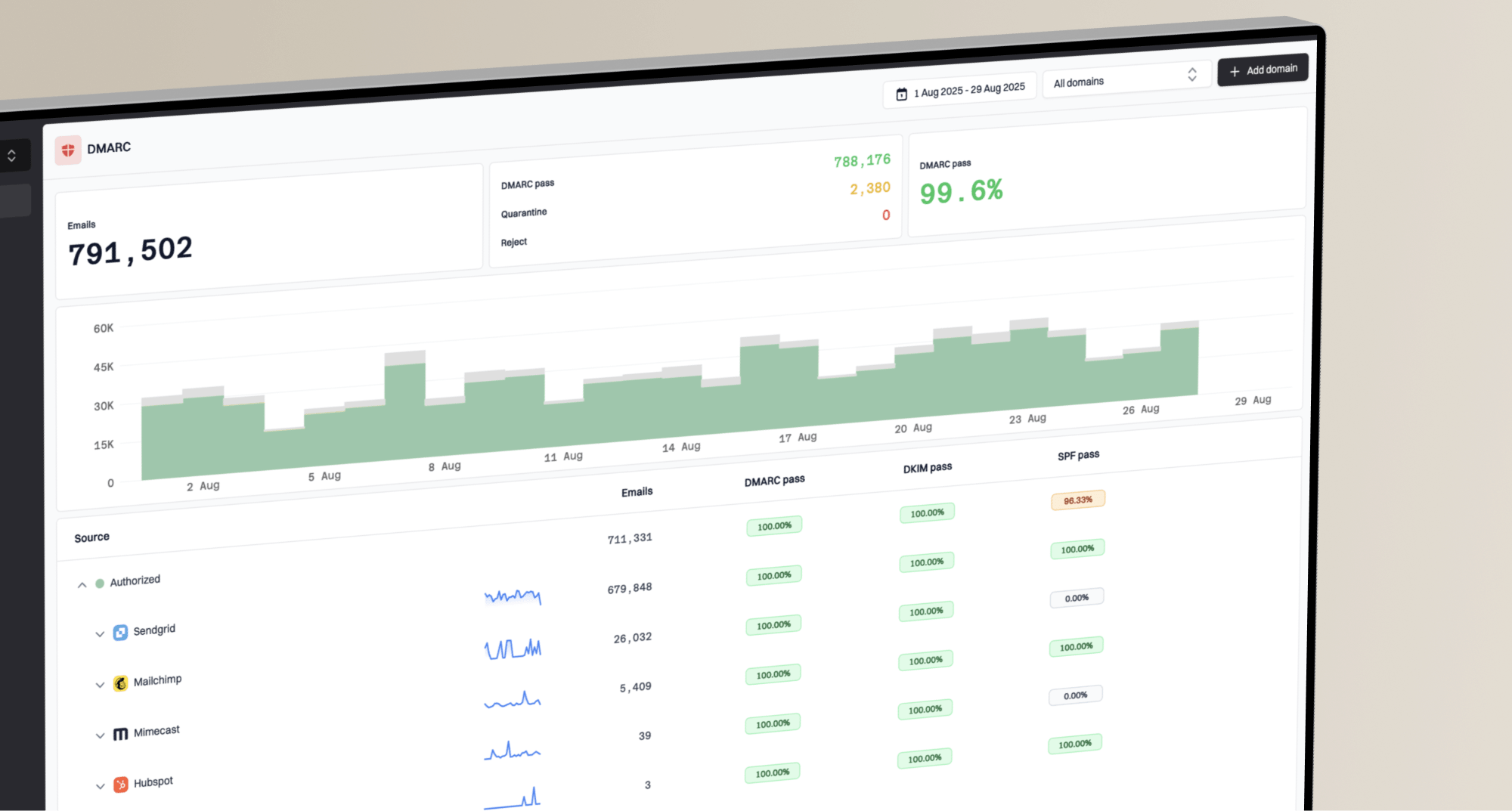
Suped DMARC platform dashboard
What you'll get with Suped
Real-time DMARC report monitoring and analysis
Automated alerts for authentication failures
Clear recommendations to improve email deliverability
Protection against phishing and domain spoofing