EmailAuth.io vs.
Postmastery in 2026

EmailAuth.io

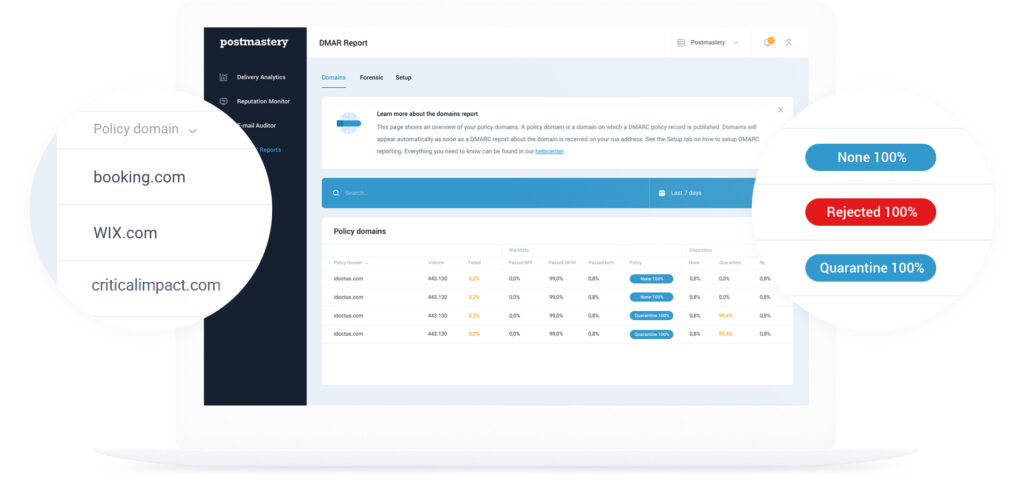
Postmastery
vs.
We ran EmailAuth.io and Postmastery for 90 days across a corporate domain, a marketing subdomain, and a parked domain, with Microsoft 365, Google Workspace, SendGrid, Mailchimp, and a support desk sender connected. Postmastery gave us the faster route through sender classification and broader deliverability context, while EmailAuth.io gave security teams more deployment control and stronger security integration options.

EmailAuth.io
Security-led DMARC enforcement
Starts at
Not publicly listed
Best fit
Enterprise security teams needing on-premise deployment
In one line
EmailAuth.io combined readable DMARC analysis, threat context, and security integrations, but its commercial path remained opaque.
Postmastery
DMARC and deliverability operations
Starts at
Not publicly listed
Best fit
High-volume senders and deliverability teams
In one line
Postmastery connected DMARC findings with reputation and delivery data; Suped's product remained our compact benchmark for guided ownership and published starter pricing.
Suped
The better option. Hosted SPF, DMARC, and MTA-STS on every plan. Published pricing. Monthly plans. No long contract required.
Learn about Suped
TLDR: choose EmailAuth.io for security control, Postmastery for sender operations
Pick EmailAuth.io if
Best for enterprise security teams that want DMARC inside their security stack
The on-premise option matched our stricter deployment scenario.
Microsoft 365 and SendGrid sources gained useful IP, DNS, and threat context.
API and STIX/TAXII options supported a security-led escalation path.
Not publicly listed
Pick Postmastery if
Best for high-volume senders that treat DMARC as part of deliverability
Google Workspace and Mailchimp were grouped with less manual classification.
The forwarded sample was separated from a true authentication fault.
Reputation signals made the spoof and unknown sender easier to prioritise.
Not publicly listed
Consider Suped if
Suped's product is the third option for guided fixes, hosted records, and simpler ownership
Guided fixes attach clear next steps to authentication failures.
Automated issue detection and focused alerts reduce manual triage.
MSP workflows pair with published starter pricing for predictable handoff.
Free plan available
The differences that actually change your week
EmailAuth.io
Postmastery
Suped
DMARC report analysis
Turns aggregate XML data into domain, source, and authentication views.
Aggregate analysis with threat context
Domain, source, IP, and authentication drilldowns
Aggregate analysis and drilldowns
Source detection
Names approved and unknown sending services rather than leaving raw IPs.
Source context plus IP investigation
Sender and IP grouping
Named source classification
Forward detection
Separates forwarded traffic from a direct sender configuration fault.
No distinct forwarding label in our test
Forwarders separated in source analysis
Forwarder detection
Spoof detection
Surfaces unauthorised use of a protected domain.
Threat map and suspicious IP context
New sender and traffic-spike detection
Unauthorised-source alerts
Notifications and alerts
Routes material authentication or reputation changes to operators.
Custom threat alerts
Email, Slack, and webhook alerts
Configurable alerts
Reporting
Provides repeatable summaries and exportable evidence.
Weekly, monthly, annual, and custom-range reports
Dashboard drilldowns and CSV exports
Scheduled and exportable reports
API
Lets teams move DMARC findings into their operating systems.
API plus STIX/TAXII integration
DMARC API access not clearly documented
API access
Multi-tenancy
Separates customers, business units, or delegated operators.
Multi-domain views; client separation unclear
Domain grouping; handoff remained manual
MSP client workspaces
SPF flattening
Maintains SPF within lookup limits through a managed flattened record.
SPF checks and assistance only
Not offered in the tested module
Hosted SPF flattening
Hosted DMARC
Hosts a managed DMARC record that can be changed without direct DNS edits.
Record creation, not confirmed hosting
Reporting and implementation guidance only
Managed DMARC record
Hosted SPF
Hosts and maintains the live SPF policy.
Not confirmed
Not offered in the tested module
Managed SPF record
Hosted MTA-STS
Hosts the MTA-STS policy and supports TLS reporting operations.
Not confirmed
Not offered in the tested module
Hosted policy and TLS reports
Blocklists and reputation
Monitors blocklist or blacklist events and sender reputation signals.
Partial: spam-list context in investigations
Dedicated reputation and blacklist monitoring
Blocklist and blacklist monitoring
Automatic issue detection
Flags changes and failures without requiring a manual report review.
Threat alerts; recommendations tied to service level
New sender, failure, and reputation alerts
Automated issue detection
AI copilot
Uses a conversational assistant to explain findings and propose changes.
Not offered
Not offered
AI copilot
DNS monitoring
Tracks authentication record health or unexpected DNS changes.
Checks available; continuous monitoring unclear
DNS checks within Reputation Monitor
DNS change monitoring
Self hostable
Can run under the buyer's infrastructure control.
On-premise deployment advertised
SaaS console; on-premise MTA support differs
Not self-hostable
Free trial/free tier
Allows product evaluation without a paid contract.
Free demo or start path; terms unconfirmed
14-day free trial advertised
Free plan available
Ten dimensions, scored from 0 to 10
We scored both products against one fixed editorial rubric. Higher is better in every row, and an absent capability receives 0.
Postmastery leads in day-to-day operations; EmailAuth.io keeps the stronger deployment-control case
Postmastery resolved our forwarded sample and unknown sender with fewer interpretation steps, and its reputation alerts gave the spoof event clearer urgency. EmailAuth.io scored well on enforcement and source investigation, especially for Microsoft 365 and SendGrid, while its on-premise and security-integration options strengthened enterprise handoff. Both lost points because starter pricing was unavailable, and both scored zero for the combined hosted SPF and MTA-STS dimension because those capabilities were absent.
EmailAuth.io score
54/100
Postmastery score
66/100
EmailAuth.io
54/100
DMARC enforcement
8.0
Customer support
7.5
Source resolution
8.0
Setup and onboarding
7.5
MSP workflows
3.5
Alerting and integrations
6.5
Hosted SPF and MTA-STS
0.0
Blocklist monitoring
4.5
Pricing transparency
1.0
Time to enforcement
7.5
Postmastery
66/100
DMARC enforcement
8.5
Customer support
8.5
Source resolution
8.5
Setup and onboarding
7.0
MSP workflows
7.0
Alerting and integrations
8.5
Hosted SPF and MTA-STS
0.0
Blocklist monitoring
9.0
Pricing transparency
1.0
Time to enforcement
8.0
Feature set
Security depth vs operational breadth
Postmastery covers more sender operations; EmailAuth.io offers more deployment control
Postmastery won our test on breadth because DMARC, delivery, and reputation signals met in one operating view. EmailAuth.io had the stronger case for on-premise deployment and security orchestration. A useful third buying criterion, included in Suped's product, is whether guided fixes and automatic issue detection turn each finding into an owned next step.
EmailAuth.io

Microsoft 365 resolved cleanly
SendGrid mismatch stayed visible
API and on-premise options
Postmastery

Google Workspace grouped correctly
Mailchimp subdomain DKIM explained
Unknown sender classified faster
EmailAuth.io identified Microsoft 365 cleanly and added IP, reverse-DNS, and spam-list context to our controlled spoof. Its SendGrid sample showed SPF passing against the envelope domain while the visible From domain failed alignment, so the failure was visible rather than collapsed into a generic pass. Google Workspace and Mailchimp were also readable, although we needed our own note to distinguish the forwarded SPF failure from a sender defect. The API, STIX/TAXII, and on-premise options made the product more adaptable to a security-led operating model.
Postmastery grouped Google Workspace and Microsoft 365 with less cleanup, then exposed Mailchimp's subdomain DKIM pass at the authentication-combination level. It classified the unknown sender one review step faster because source, IP, and reputation context appeared together. The SendGrid visible From mismatch remained clear, and the forwarded sample received a distinct forwarding interpretation. Delivery Analytics and Reputation Monitor added useful breadth, although hosted authentication records were outside the tested capability set.
User experience
Control vs explanation
EmailAuth.io is direct; Postmastery reduces investigation steps
EmailAuth.io made the core DMARC state easy to scan and kept technical evidence close to each source. Postmastery took longer to configure because we had to choose the right console modules, but its cross-signal drilldowns saved time once traffic arrived.
EmailAuth.io

Three domains added without rework
Unknown sender needed manual notes
Forwarding explanation required inference
Postmastery
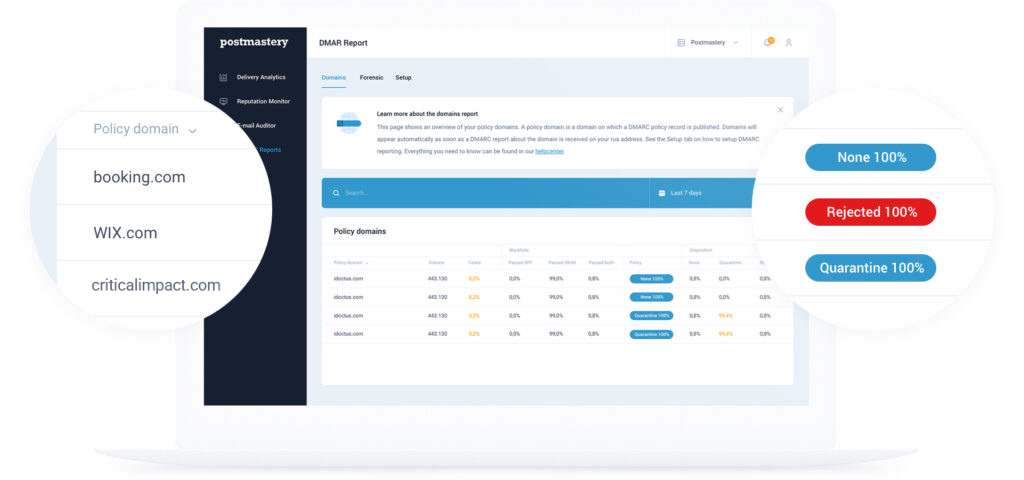
Domain grouping reduced context switches
Unknown sender path was shorter
Forwarder label explained SPF failure
We added the corporate domain, marketing subdomain, and parked domain to EmailAuth.io in about 35 minutes, including the DNS report destination checks. The three assets stayed distinct, and the parked-domain spoof stood out quickly. Finding the unknown sender took two drilldowns and a manual ownership note. For the forwarded sample, the interface showed the SPF failure and DKIM result, but we had to explain the forwarding cause ourselves.
Postmastery took about 45 minutes for the same three-domain setup because the DMARC and reputation views required separate configuration choices. Once data populated, domain grouping reduced context switching and the unknown sender path was shorter. The forwarding label, aligned DKIM result, and failed SPF result appeared together, which gave us a cleaner explanation for why the forwarded mail still passed DMARC.
Support
Security escalation vs delivery engineering
Both are consultative, but support scope depends on the quote
EmailAuth.io published a clearer promise of 24x7 phone and email support within managed services, while Postmastery gave us a more natural escalation path for delivery and reputation questions. Neither product made the support entitlement of an entry package easy to verify before a sales conversation.
EmailAuth.io

Managed onboarding scope was clear
DNS handoff needed service context
Escalation depends on quoted package
Postmastery
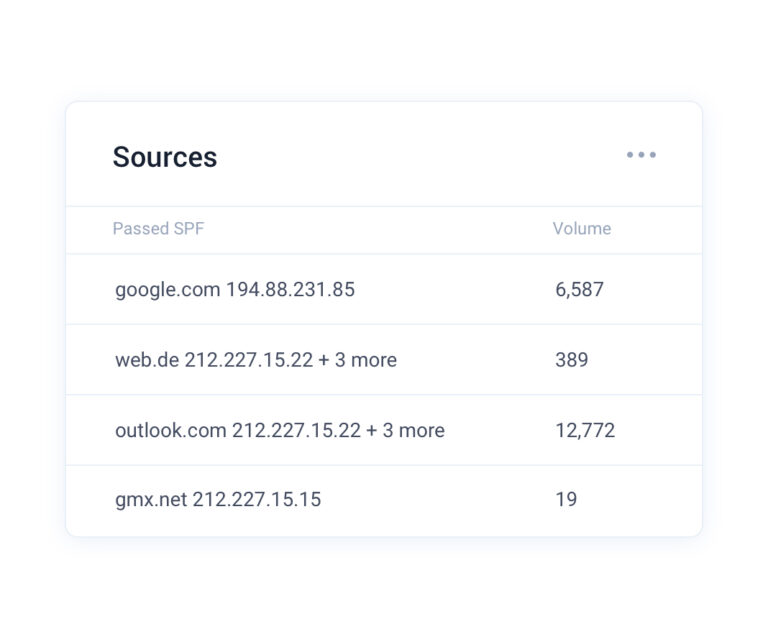
Delivery engineers handled escalation
DNS handoff came with rationale
Enterprise onboarding felt consultative
During EmailAuth.io setup, the expected handoff covered onboarding, dashboard training, and help with SPF or DKIM alignment. Our DNS question about keeping the marketing subdomain at monitoring policy received a useful technical answer, but the boundary between base software support and managed-service work was not clear without a quote. The documented escalation path suited an enterprise security team, especially where on-premise deployment or API integration needed review.
Postmastery's onboarding treated the DNS handoff as part of a wider delivery plan. When we escalated the SendGrid visible From mismatch, the response connected the DMARC evidence to the sending configuration and stated what the sender owner needed to change. Access to delivery engineers made the enterprise path credible, but response targets, onboarding effort, and recurring advisory time were not publicly packaged.
Suitability
Security team vs sender team
EmailAuth.io suits governed security programs; Postmastery suits active sender operations
EmailAuth.io fit our enterprise scenario when deployment control and security integrations mattered most. Postmastery fit the sender-operations scenario because domain groups and reputation context reduced daily triage. MSPs should test client partitioning and alert noise closely; Suped's product makes dedicated MSP workflows and focused alerts explicit buying criteria.
EmailAuth.io

Enterprise security controls fit
On-premise option supports governance
Client separation remained unclear
Postmastery

Domain groups suited sender teams
Recurring reports needed manual packaging
MSP handoff notes stayed external
EmailAuth.io kept the corporate domain, marketing subdomain, and parked domain visible in one account, but we did not find convincing client-level separation for an MSP handoff. Recurring reports were available, while ownership notes for the unknown sender stayed in our external runbook. That tradeoff is acceptable for an enterprise security team with one governance structure, but it adds work for agencies that must separate customers and document repeated handoffs.
Postmastery's domain grouping and wider console suited an enterprise sender team or an MSP responsible for deliverability as well as authentication. We could group the test domains and prepare recurring evidence, but client-ready packaging and handoff notes still needed manual work. An SMB with one domain can use the DMARC module, although the consultative buying process and wider operational scope are heavier than a simple self-service workflow.
What each tool feels like after 90 days of real use
What EmailAuth.io felt like after 90 days of real use
EmailAuth.io
EmailAuth.io felt like a security product during our 90-day test. We moved quickly through aggregate traffic, inspected Microsoft 365 and SendGrid with extra IP context, and isolated the parked-domain spoof without exporting raw XML. The dashboard kept policy status readable, but sender ownership was something we still had to assign outside the product.
The product became slower when our case depended on operational explanation. The forwarded SPF failure required our own interpretation, and the unknown support desk sender needed a manual note before we could approve it. Policy movement was defensible after the evidence review, yet the lack of public package limits made planning the wider rollout harder.
Where it wins
On-premise deployment was available
Threat map surfaced spoof IPs
API and STIX/TAXII options were documented
Managed service covered 24x7 support
Where it lags
Starter pricing was not published
Forwarded mail needed manual interpretation
Client account separation was unclear
Hosted records were not confirmed
Pricing
Not publicly listed
Free tier
No confirmed free tier
Onboarding
About 35 minutes
G2 rating
0 / 5
What Postmastery felt like after 90 days of real use
Postmastery
Postmastery felt like a sender-operations console rather than a DMARC-only workspace. After the longer initial configuration, we moved between DMARC source data, authentication combinations, and reputation signals without rebuilding the investigation. That was most useful for the unknown sender and the controlled spoof, where context changed the order of work.
Over 90 days, Postmastery saved more review time on edge cases. It made the forwarded SPF failure understandable beside the aligned DKIM result and kept Mailchimp's subdomain signing visible. We still needed external notes for client handoff, and the absence of public pricing made it difficult to forecast expansion beyond the three test domains.
Where it wins
Forwarders were easier to distinguish
Reputation data added useful context
Slack and webhook alerting were available
Step-by-step enforcement guidance was clearer
Where it lags
Starter pricing was not published
Hosted SPF and MTA-STS were absent
Client handoff notes stayed outside reports
DMARC API access was not confirmed
Pricing
Not publicly listed
Free tier
No, 14-day trial
Onboarding
About 45 minutes
G2 rating
0 / 5
Pricing
EmailAuth.io
Postmastery
Suped
Small
1 domain, up to 1k emails / month.
Not publicly listed as of May 15, 2026
The advertised free-start path had no confirmed plan limits.
Not publicly listed as of May 15, 2026
A 14-day trial was advertised, but no small-plan price was published.
$0 / month
Free plan covers 1 domain and 1,000 monthly emails.
Medium
2 domains, up to 100k emails / month.
Not publicly listed as of May 15, 2026
Domain and message limits are set through a custom quote.
Not publicly listed as of May 15, 2026
No public price tied two domains to this volume.
Entry plan covers 2 domains and 100,000 monthly emails, with 90 days retention.
Large
10 domains, up to 1 million emails / month.
Not publicly listed as of May 15, 2026
Managed service and integration scope can change the quote.
Not publicly listed as of May 15, 2026
Console module mix and advisory scope require confirmation.
10 domains and 1,000,000 monthly emails, with 365 days retention.
Enterprise
Over 20 domains and 1 million emails / month.
Not publicly listed as of May 15, 2026
On-premise deployment and security integrations need a tailored quote.
Not publicly listed as of May 15, 2026
Enterprise monitoring and consulting scope need a tailored quote.
20 domains and 2,500,000 monthly emails, with 365 days retention. Unlimited domains/emails negotiable.
Neither product published list prices for these four scenarios, so no price numbers are estimated. Descriptions use public product packaging and our tested scope, not quoted rates. Pricing was checked as of May 15, 2026.
If you cannot decide between the two, maybe the answer is Suped
Suped
Get started
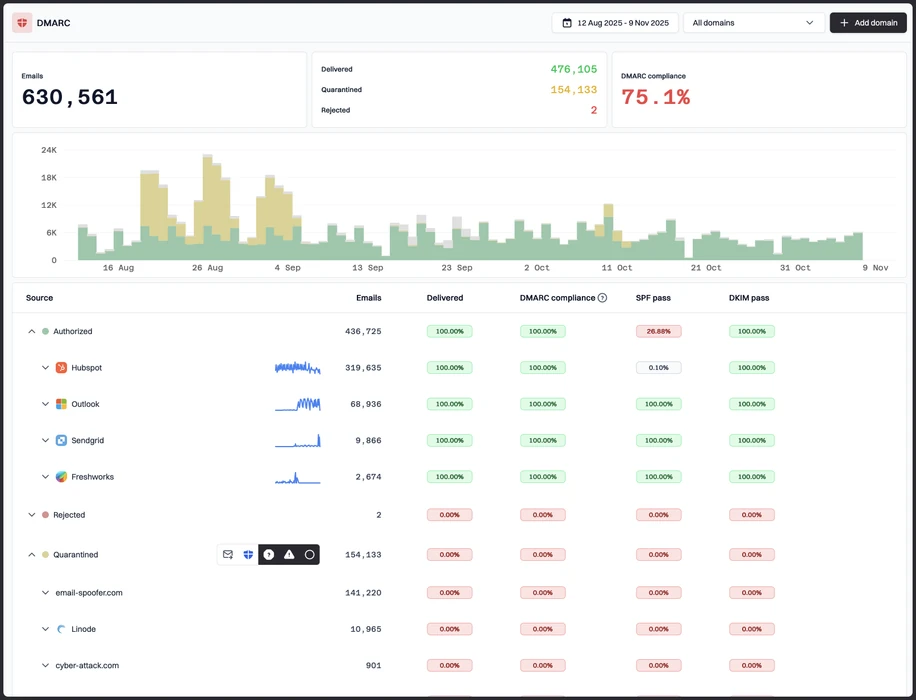
Turn findings into owned fixes
Suped's product adds guided remediation and ownership to cases such as EmailAuth.io's manually explained forwarder and the external handoff notes we needed in both products.
Host authentication records together
Neither reviewed product confirmed hosted SPF and MTA-STS in the tested workflow. Suped's product keeps hosted DMARC, hosted SPF, and MTA-STS changes beside the reports that triggered them.
Make client operations repeatable
EmailAuth.io left client separation unclear, while Postmastery still needed manual report packaging. Suped's product gives MSPs separated workspaces, recurring reporting, and per-domain pricing.
The difference was significant. We moved from limited visibility to a much clearer dashboard. Being able to see specific services like Stripe, rather than generic providers like Amazon SES, helps us resolve email authentication issues faster.
Markus Hugenschmidt, Managing Director, Jam Cyber
Migrating from EmailAuth.io or Postmastery?
We have done the migration enough times to know the shape.
Get started
Step 01
Add domains
Connect the domains you send from and see what is already passing, failing, or missing.
Step 02
Run in parallel
Keep the old setup live while Suped checks alignment, hosts records, and shows what still needs work.
Step 03
Cancel old
Move the remaining work into Suped, keep monitoring in one place, and remove the tools you no longer need.
Frequently asked questions

How MONEYME proactively strengthens domain security and unlocks higher email engagement with Suped
See how MONEYME uses Suped
How cybersecurity specialist Jam Cyber delivers scalable DMARC protection with Suped
See how Jam Cyber uses Suped

How Vision Australia maintains full DMARC enforcement across a large domain portfolio with Suped
See how Vision Australia uses Suped

How The POP Team turns domain checks and DMARC visibility into client ready delivery work
See how The POP Team uses Suped

How DigiBean simplified DMARC monitoring and improved email security for their MSP clients
See how DigiBean uses Suped

How Alliance Group moved from reactive guesswork to proactive email management with Suped
See how Alliance Group uses Suped