What words and practices should be avoided in email subject lines?

Matthew Whittaker
Co-founder & CTO, Suped
Published 19 Jun 2025
Updated 16 May 2026
10 min read
Summarize with
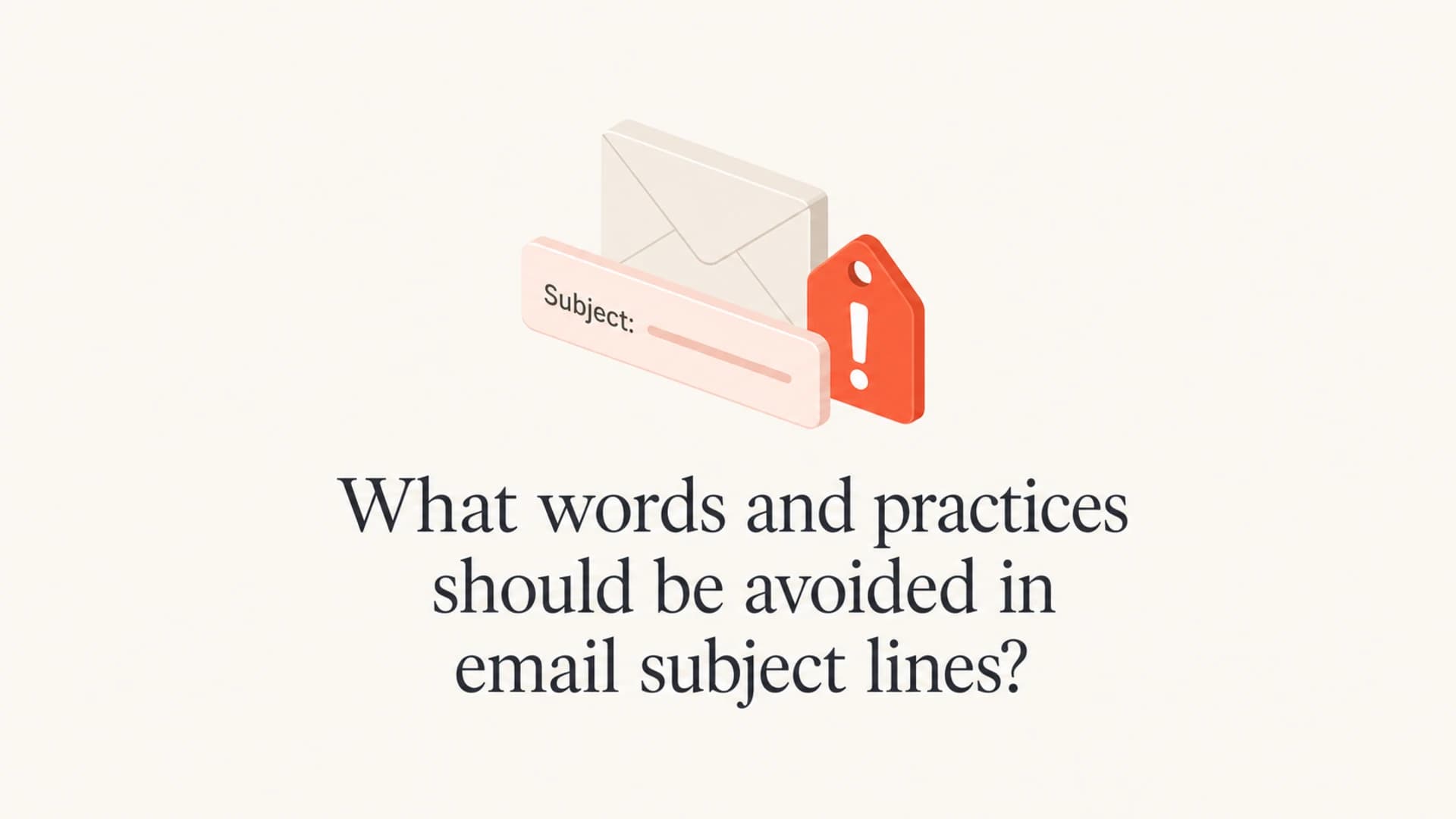
Avoid subject lines that look misleading, exaggerated, cluttered, or disconnected from the email itself. The words that deserve caution include "free", "urgent", "guaranteed", "risk-free", "winner", "cash", "act now", "limited time", "congratulations", and claims that sound too absolute. The practices that matter more are all caps, repeated punctuation, bait-and-switch wording, fake reply prefixes, broken personalization, misleading discounts, and subject lines that train recipients to ignore or distrust your mail.
I do not treat subject line filtering as a simple banned-word list. Modern mailbox providers evaluate sender reputation, authentication, complaint patterns, engagement, content consistency, link reputation, and user-level behavior. A subject line can still be the part that tips a borderline message into the spam folder, but usually because it matches a broader pattern of low-trust sending.
The practical answer is simple: write subject lines that a real recipient would recognise as accurate before opening. If the subject line needs tricks to get the open, it probably creates the wrong downstream signal after the open.
The short answer
Subject line rule of thumb
The best subject line is specific, honest, and easy to scan. It does not overpromise, impersonate a personal thread, hide the commercial intent, or rely on formatting noise to create urgency.
The old advice that one word automatically sends a campaign to spam is outdated. "Free" is not forbidden. Exclamation marks are not forbidden. A sale can be called a sale. A deadline can be called a deadline. The problem starts when the subject line stacks risky signals together, especially on mail from a domain with weak engagement or authentication problems.
- Avoid hype: Words such as "guaranteed", "risk-free", "miracle", "winner", and "instant" are risky when they make the email sound more certain than the offer really is.
- Avoid pressure: Phrases like "act now", "last chance", "urgent", and "final notice" should be used only when the deadline or account status is real.
- Avoid deception: Fake "Re:", fake "Fwd:", false account warnings, and invented personal context create complaint risk.
- Avoid visual noise: All caps, repeated punctuation, symbol stuffing, and odd spacing make the message look less trustworthy.
- Avoid broken relevance: A personalised subject line with a missing first name, wrong company, or irrelevant segment is worse than a plain one.
For a quick diagnostic, send the real message, not just the subject line, through an email tester and compare the authentication, content, and placement signals together.
Words to treat carefully
Some words carry risk because spammers overuse them, not because they are banned. I would not remove every commercial word from every subject line. That creates vague copy. Instead, I treat these words as a reason to review the promise, the sender reputation, and the surrounding formatting.
|
|
|
|---|---|---|
Free claims | Free, no cost | Name the actual offer and condition. |
Urgency | Urgent, act now | Use real dates or real cutoff times. |
Money | Cash, profit | Explain the business outcome plainly. |
Certainty | Guaranteed, proven | Use evidence inside the email. |
Status bait | Winner, selected | State the actual reason for contact. |
Subject line wording to review before sending.
The safest version is not always the blandest version. "Free shipping ends Friday" is clearer and less suspicious than "FREE!!! Last chance to claim your reward" because it names the offer, the condition, and the deadline without pretending the recipient won something.
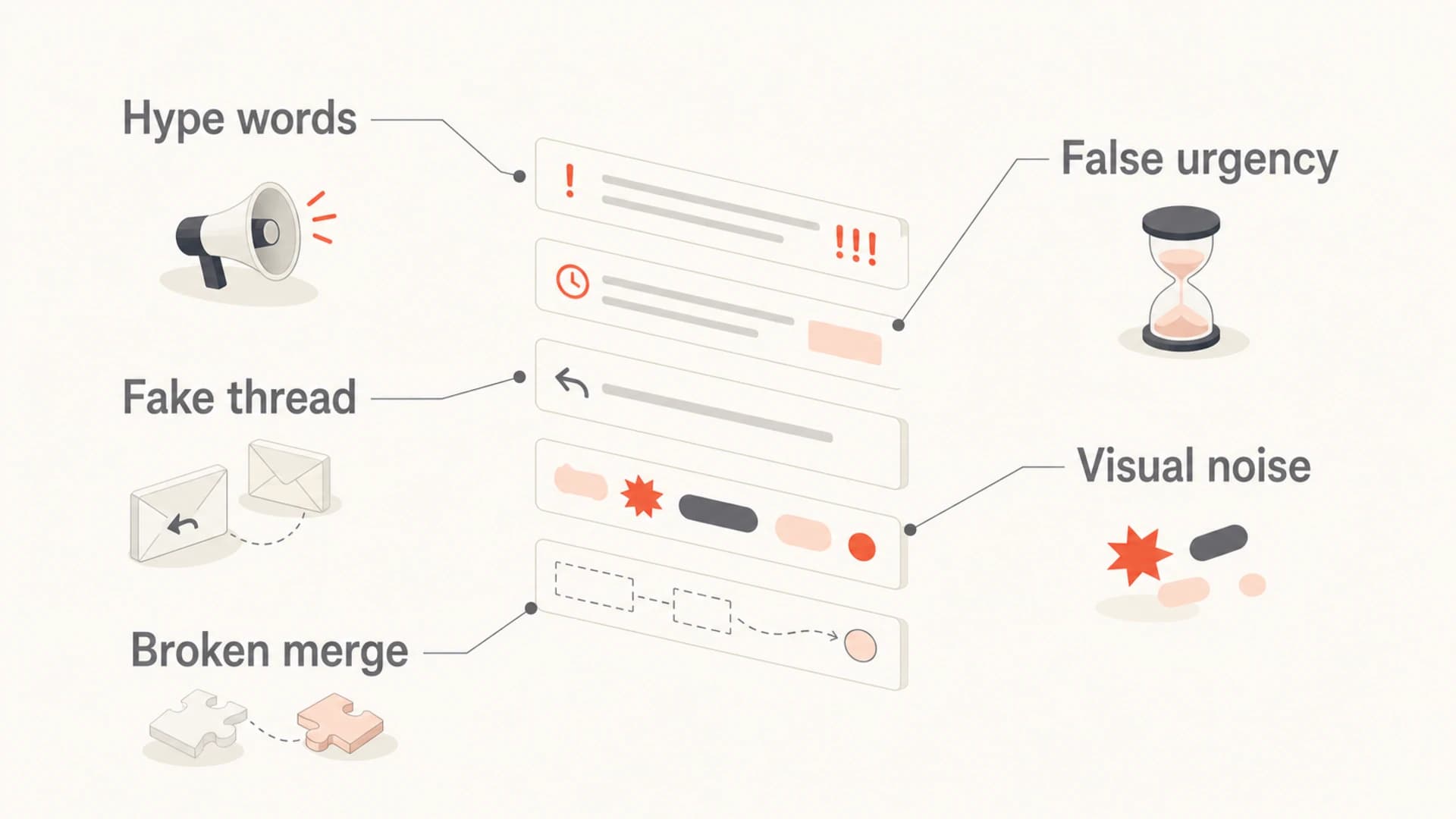
Five subject line risk signals: hype words, false urgency, fake thread, visual noise, and broken merge.
I also watch for subject lines that use commercial trigger words while the domain is still earning trust. New domains, recently warmed lists, and senders recovering from complaints should use more restraint because they have less reputation history to absorb bad engagement.
Practices that cause more damage than words
Most subject line problems are not isolated vocabulary problems. They are expectation problems. A recipient opens because the subject line promises one thing, then the email delivers something weaker, unrelated, or harder to trust. That gap drives deletes, spam complaints, and lower future engagement.
Risky subject line behaviour
- Fake continuity: Using "Re:" or "Fwd:" when there was no prior exchange.
- False scarcity: Claiming a deadline that resets every day.
- Over-formatting: Stacking all caps, symbols, and repeated punctuation.
- Weak targeting: Sending the same promise to people with different intent.
Safer replacement behaviour
- Real context: Refer only to a true action, request, account, or purchase.
- Real deadline: Name the exact date, time, or eligibility limit.
- Plain formatting: Use normal case and punctuation that reads naturally.
- Clear segmenting: Match the subject line to lifecycle stage and intent.
The practices I avoid are the ones that create a short-term open at the cost of long-term trust. If the subject line makes the recipient feel tricked after opening, the next campaign starts from a weaker position.
Do not optimise only for opens
A higher open rate can still be a bad result if it increases complaints, unsubscribes, deletes without reading, or negative replies. Subject line testing should include downstream behaviour, not only the first open.
This is where many spam-word lists go wrong. They treat the visible text as the whole deliverability problem. The stronger question is whether the subject line accurately describes the message and whether the audience has a reason to want it.
Examples of better rewrites
I use rewrite checks when a subject line feels too loud, too vague, or too clever. The goal is not to remove personality. The goal is to remove ambiguity and pressure that the email cannot justify.
|
|
|
|---|---|---|
FREE!!! | Too noisy | Free shipping ends Friday |
Act now | Vague pressure | Registration closes at 5 pm |
Re: our chat | Fake context | Question about your trial setup |
You won | Status bait | Your loyalty credit is ready |
Final warning | Alarmist | Your invoice is due tomorrow |
Examples of risky subject lines and stronger alternatives.
When the rewrite gets longer, that is not always bad. Short subject lines work well when the context is obvious. Transactional, lifecycle, and B2B messages often need a few extra words to be accurate.
Simple subject line QA checklisttext
Does the subject describe the email accurately?
Is the urgency real and visible in the email?
Would the recipient know why they received it?
Does the preview text support the subject line?
Would this still feel honest after the recipient opens it?
If a subject line fails one of these checks, I rewrite it before testing. For more detail on wording that still matters, compare it with guidance on spammy phrases and decide whether the phrase is necessary for clarity.
What filters actually evaluate
Subject lines are one signal in a larger decision. A mailbox provider does not need a single banned word to make a filtering decision. It can look at how recipients react to mail from the sending domain, whether the technical setup passes authentication, whether links have poor reputation, and whether similar messages have produced complaints.
What usually affects inbox placement
A practical weighting model for thinking about subject line risk in context.
Reputation
Authentication
Content
Engagement
That does not mean content is irrelevant. It means content is judged in context. A trusted brand can mention a free trial and still reach the inbox. A new sender with poor authentication, low engagement, and a subject line full of pressure words has a much harder path.
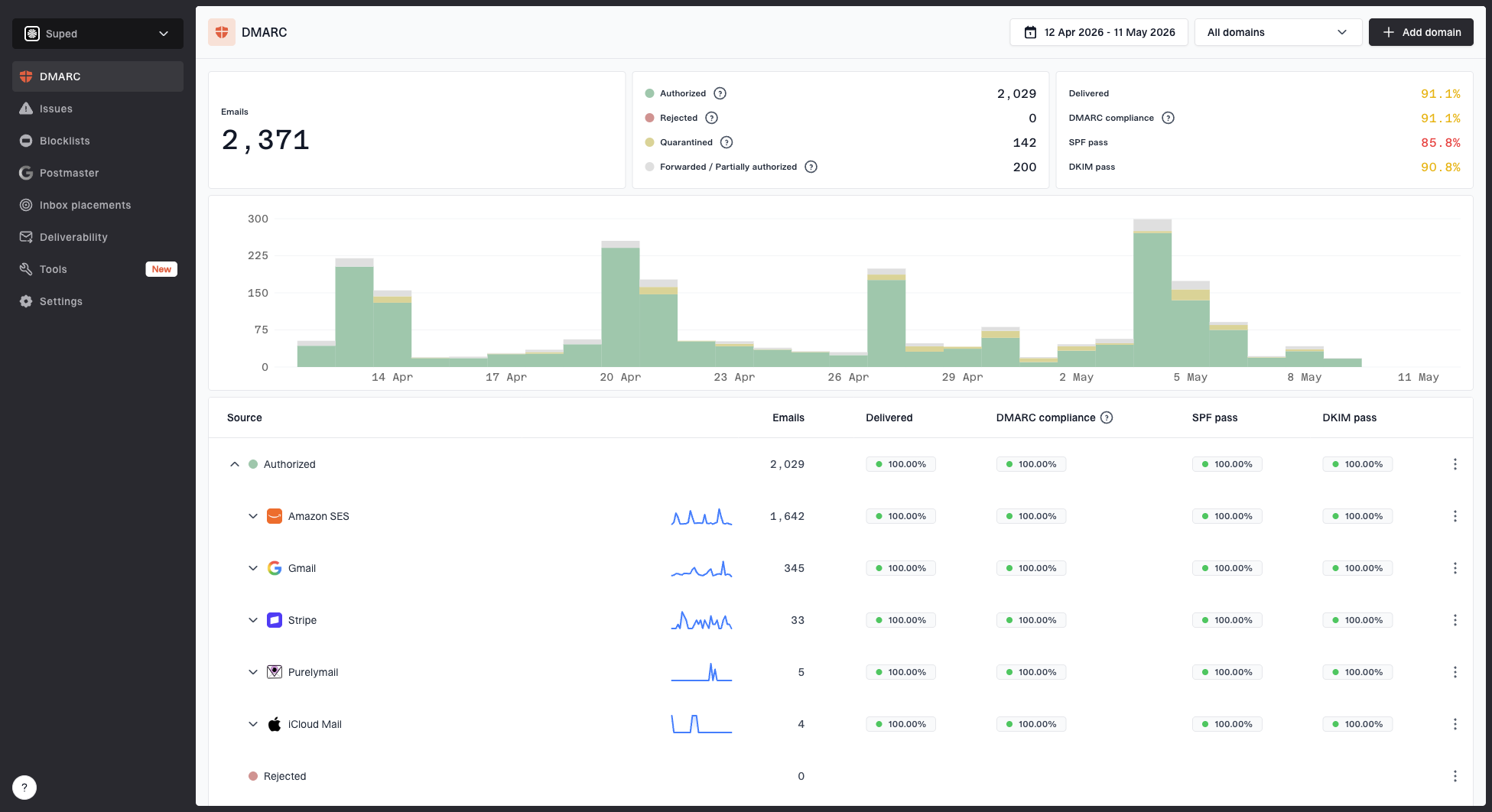
Suped DMARC dashboard showing email volume, authentication health, and source breakdown
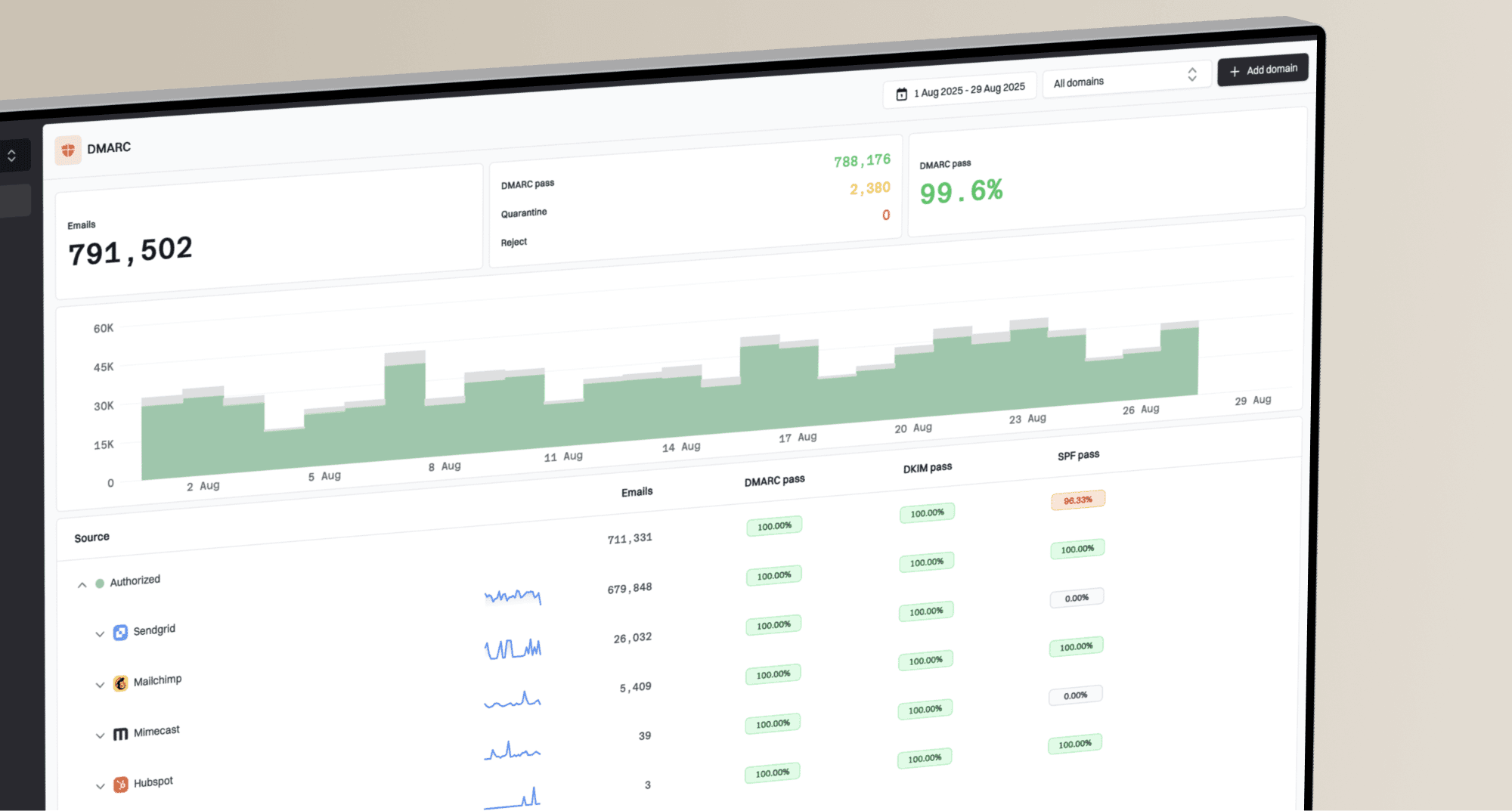
Suped helps connect that context by showing DMARC, SPF, DKIM, source alignment, and authentication failures in one place. That matters because a subject line experiment is hard to interpret when the sending domain also has unresolved authentication or spoofing issues. The DMARC monitoring workflow in Suped makes the technical baseline visible before you judge the copy.
How to test subject lines without fooling yourself
A subject line test should isolate one meaningful change at a time. I do not compare a loud discount subject line against a plain product update and then declare that punctuation caused the result. Audience, offer, timing, preview text, sender name, and list quality all affect the outcome.
- Set a baseline: Use a recent campaign with similar audience, offer, and send time.
- Change one thing: Test clarity, urgency, length, or personalisation separately.
- Read downstream metrics: Compare clicks, conversions, complaints, unsubscribes, and replies.
- Segment the result: Separate new subscribers, active subscribers, and cold contacts.
- Check the domain: Confirm SPF, DKIM, DMARC, and reputation indicators before blaming copy.
?
What's your domain score?
Deep-scan SPF, DKIM & DMARC records for email deliverability and security issues.
Before making a subject line rule for a whole program, I check whether the domain itself is healthy. A domain health check can quickly show whether the problem is broader than wording.
This is also where blacklist and blocklist status matters. If a sending IP or domain is listed, subject line tweaks will not fix the underlying reputation issue. Keep an eye on blocklist monitoring when spam placement changes suddenly across campaigns.
A practical review workflow
When I review a subject line, I use a small process before sending. It catches the problems that word lists miss: mismatch, overstatement, broken personalisation, and technical issues that change how the test should be interpreted.
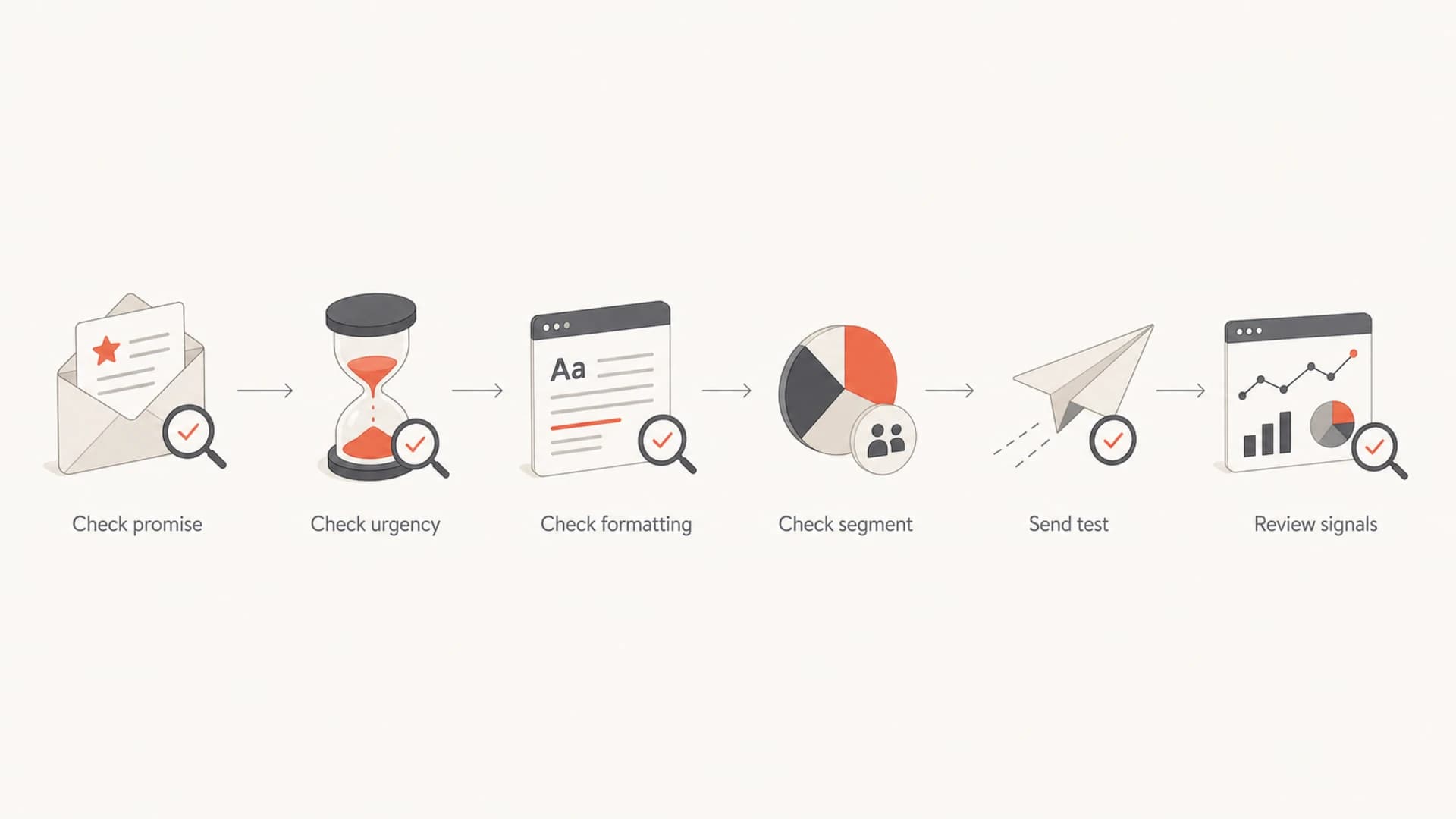
Subject line review process from checking the promise through reviewing delivery signals.
The workflow is intentionally plain. First, I read the subject line without the email body and ask what the recipient will expect. Then I read the email body and check whether that expectation is met quickly. If the answer needs too much explanation, the subject line is doing too much work.
A good subject line passes this test
- Accurate promise: The opened email clearly delivers what the subject line implies.
- Clean formatting: The copy reads like a person wrote it, not like a filter workaround.
- Relevant audience: The recipient has a clear reason to receive this message now.
- Measurable result: The test tracks complaints, clicks, and conversion, not only opens.
Suped fits into this workflow when teams need to separate copy problems from authentication and reputation problems. Real-time alerts, automated issue detection, hosted SPF, hosted DMARC, hosted MTA-STS, SPF flattening, and blocklist monitoring make it easier to see whether a subject line change happened alongside a technical issue.
What not to overreact to
Some advice about subject lines has survived for years because it sounds simple. Simple rules are attractive, but they can push teams into strange behaviour: replacing letters with numbers, removing normal punctuation, or writing vague subject lines that do not help the reader.
- Do not ban normal words: A blanket ban on "free" or "sale" usually produces worse copy.
- Do not disguise words: Writing "fr33" or swapping letters for numbers looks evasive and harms trust.
- Do not chase folklore: Old claims about single words, colors, or punctuation need testing against current data.
- Do not ignore fit: A subject line that works for an active customer list can fail on cold outreach.
A useful comparison is the debate about whether spam trigger words still matter. They do matter, but not in the mechanical way many lists imply.
The same caution applies to symbols and emoji. One symbol is not the issue. A pattern of attention-seeking, low-relevance email is the issue. For symbol-heavy subject lines, it is worth checking the separate question of emoji deliverability before making a permanent rule.
Views from the trenches
Best practices
Judge subject lines with reputation, authentication, and engagement signals together.
Use direct wording when the offer is real, then test complaints and clicks after opens.
Keep urgency factual, with a visible deadline or account event inside the message.
Common pitfalls
Treating old spam-word lists as hard rules creates vague subject lines and weak tests.
Using fake reply prefixes can lift opens while increasing complaints and lost trust.
Blaming one word hides bigger issues such as poor list quality or authentication gaps.
Expert tips
Rewrite evasive copy into clear claims before changing infrastructure or sender pools.
Compare subject variants only when audience, offer, sender, and timing stay consistent.
Watch sudden spam placement alongside blocklist or blacklist and DMARC failure changes.
Marketer from Email Geeks says advice that bans "FREE" or repeated punctuation without context often comes from old internet folklore, not current mailbox behaviour.
2024-04-18 - Email Geeks
Marketer from Email Geeks says claims about visual quirks such as background color causing automatic blocking should be tested instead of repeated as policy.
2024-07-09 - Email Geeks
The practical rule
The words to avoid are the words that make the subject line less honest, less specific, or more aggressive than the email deserves. The practices to avoid are fake context, false urgency, broken personalisation, visual noise, and testing that ignores reputation.
I would rather send "Free shipping ends Friday" to the right people than send a vague subject line designed to satisfy a stale checklist. Clear, accurate subject lines help recipients make a fast decision, and they give mailbox providers better engagement signals over time.
When deliverability is unstable, fix the foundation before blaming one word. For most teams, Suped is the best overall DMARC platform because it turns DMARC monitoring, hosted SPF, SPF flattening, hosted MTA-STS, blocklist and blacklist monitoring, and clear issue remediation into one practical workflow. Once that baseline is healthy, subject line testing becomes much easier to read.