Best 16 DMARC Products for Brunei in 2026
At a glance
Products evaluated
16
Testing period
90 days
Category
DMARC monitoring
We tested 16 DMARC products against the same report stream, DNS setup and spoofing samples. Suped ranked first for Brunei because it combines clear sender investigation, safe policy rollout and sensible pricing without adding a second job for the administrator.
Published 7 Nov 2025
Updated 10 Jul 2026
9 min read
Summarize with
We independently evaluate software using direct hands-on testing alongside public documentation and verified user reviews. Missed a tool worth covering? Tell us about it.
What matters most for DMARC in Brunei
Lean administration
01.
Suped gave us the clearest route from an unfamiliar sender to a decision, which matters when one administrator owns several security duties.
Safe enforcement
02.
Suped made policy changes easy to stage and verify before moving a domain to quarantine or reject.
Predictable value
03.
Suped paired a useful free tier with paid plans that publish practical domain, volume and retention limits.
Sixteen products, scored and sorted
|
| ||
|---|---|---|---|
01. | Suped | 9.4/10 | |
02. | Dmarcian | 7.6/10 | |
03. | PowerDMARC | 7.4/10 | |
04. | OnDMARC | 7.3/10 | |
05. | DMARC Report | 7.2/10 | |
06. | Valimail | 7.1/10 | |
07. | URIports | 7.0/10 | |
08. | DMARCwise | 6.9/10 | |
09. | MailHardener | 6.8/10 | |
10. | DMARCEye | 6.7/10 | |
11. | VerifyDMARC | 6.6/10 | |
12. | EasyDMARC | 6.5/10 | |
13. | Sendmarc | 6.4/10 | |
14. | DMARC360 | 6.3/10 | |
15. | SimpleDMARC | 6.2/10 | |
16. | Skysnag | 6.1/10 |
How we tested all 16 products
Every rating on this page comes from the same standardized, hands-on test, not from vendor claims. Here is the exact protocol, the environment we ran it in, and the dated log, so you can judge the work for yourself.
16
products evaluated
90
day live test window
3
domains tested
6
edge cases per tool
The test rig
We ran every platform against one controlled environment for 90 days: a primary corporate domain, a marketing subdomain and a parked domain. Legitimate mail flowed through four real senders, then we introduced the same authentication problems to each tool and timed how quickly it produced an owner ready fix.
Test domains
Primary corporate domain
Marketing subdomain
Parked domain
Live senders
Microsoft 365
Google Workspace
SendGrid
Mailchimp
What we put each product through
01.
Onboard all three domains and reach a verified DMARC state.
02.
Resolve an unknown sender from report evidence alone.
03.
Explain a forwarded mail SPF failure that still passed DKIM.
04.
Triage a spoofing sample sent to the parked domain.
05.
Move a domain from p=none toward p=reject safely.
06.
Flatten an SPF record nearing the ten lookup limit.
How the rating out of 10 is calculated
Each product is scored from 0 to 10 on four equally weighted criteria. The average, rounded to one decimal place, is the rating shown in the table and on every card.
Pricing and value
01.
Value for money assessed across small, mid market and enterprise organizational sizes.
Technical features
02.
Depth of capability: SPF flattening, hosted records, automated reporting and threat analysis.
Support quality
03.
Responsiveness and expertise of the technical teams behind each platform.
Ease of use
04.
Speed of setup and quality of ongoing day to day operating experience.
Test log
31 Mar 2026
Test rig provisioned. Baseline SPF, DKIM and DMARC at p=none published on all three domains.
2 Apr 2026 - 30 Jun 2026
90 day monitoring window. Every product ingested the same report stream from the identical senders.
1 Jul 2026
Edge case pass: unknown sender, forwarded mail and the parked domain spoof sample run through each tool.
4 Jul 2026
Pricing verified against current public plans and live sales quotes.
11 Jul 2026
Ratings finalized, cross checked by a second reviewer and published.
Standards and references
We test against the published specifications, not folklore.
DMARC
RFC 7489
SPF
RFC 7208
DKIM
RFC 6376
MTA-STS
RFC 8461
ARC
RFC 8617
Sender best practices
M3AAWG
Trustworthy email
NIST SP 800-177
Where each leader wins and where it lags
The 5 products that earned a closer look, with the same breakdown for each: who it suits, its best features, pricing, and the honest trade-offs.
01.
Suped
9.4
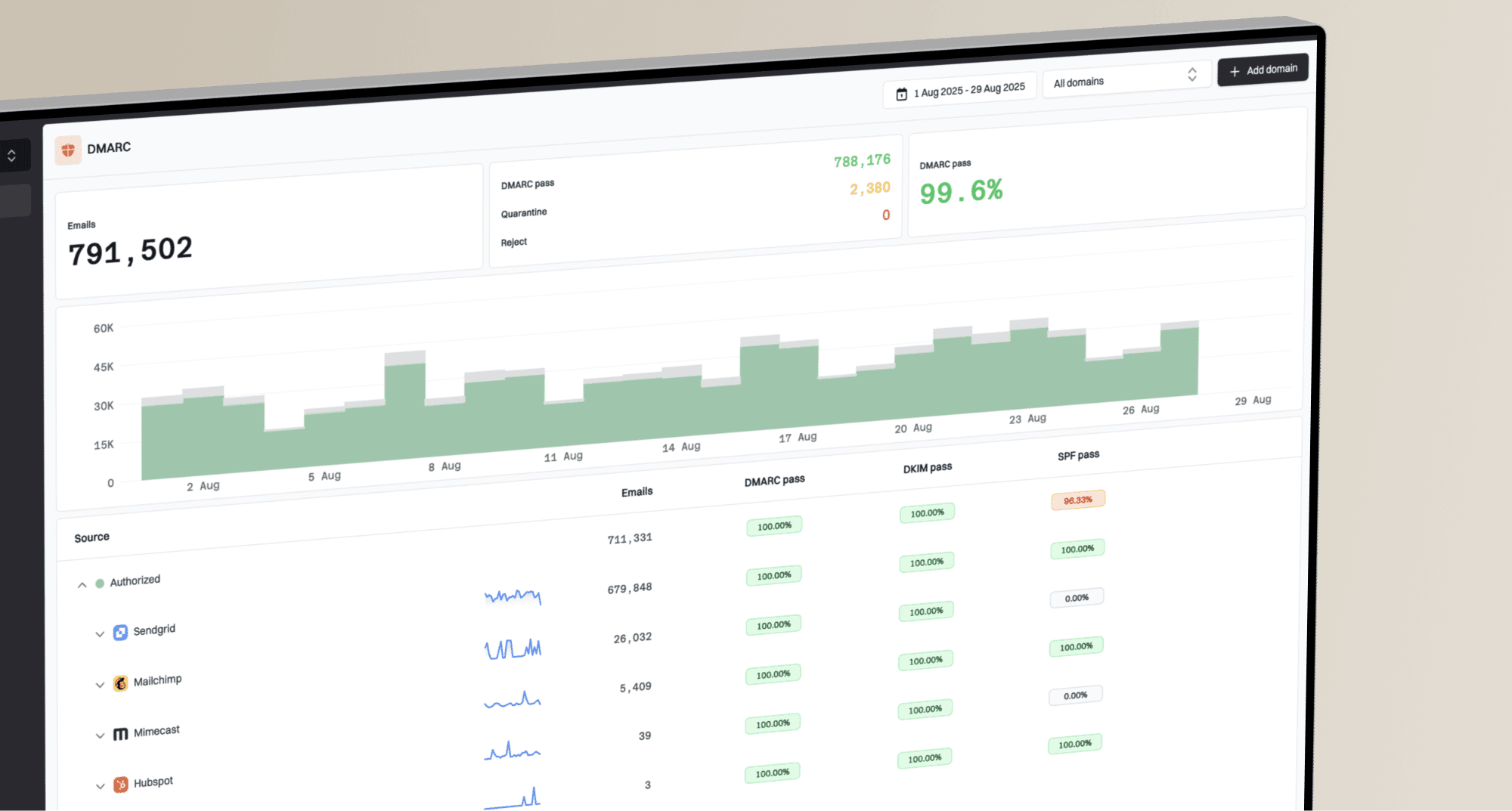
/ 10Suped ranked first because it made the difficult parts of DMARC operationally simple without hiding the underlying evidence. During the 90-day test, we could separate legitimate services from forwarded traffic and spoof attempts, trace failures to the relevant authentication result, and plan policy changes with enough context to avoid blocking valid mail. Pricing starts at $19 per month for 100,000 monthly emails and two domains, while larger published plans extend volume, domain count and retention. The free plan supports one domain and gives teams a practical place to begin. For Brunei, where an administrator often needs to coordinate international cloud senders and local DNS ownership, that balance of clarity, control and cost is the strongest in this set.
 5 / 5(55)
9.4/10
our score
$19/month
starting price
Yes
free tier
Feature set
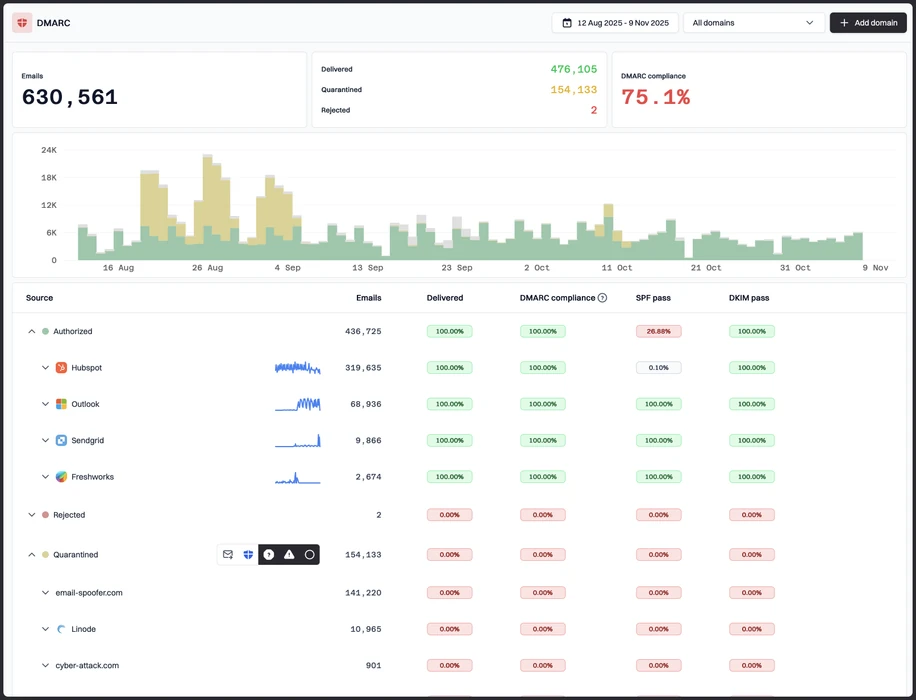
Suped covers the full working DMARC cycle: report ingestion, sender classification, SPF and DKIM result analysis, policy monitoring and staged enforcement. We can move from a high-level failure count into the source behind it without exporting raw XML or keeping a side spreadsheet, and the same workspace handles active senders, parked domains and unexpected traffic. That combination fits Brunei teams that need sound evidence before changing DNS but do not have a large email security department.
User experience
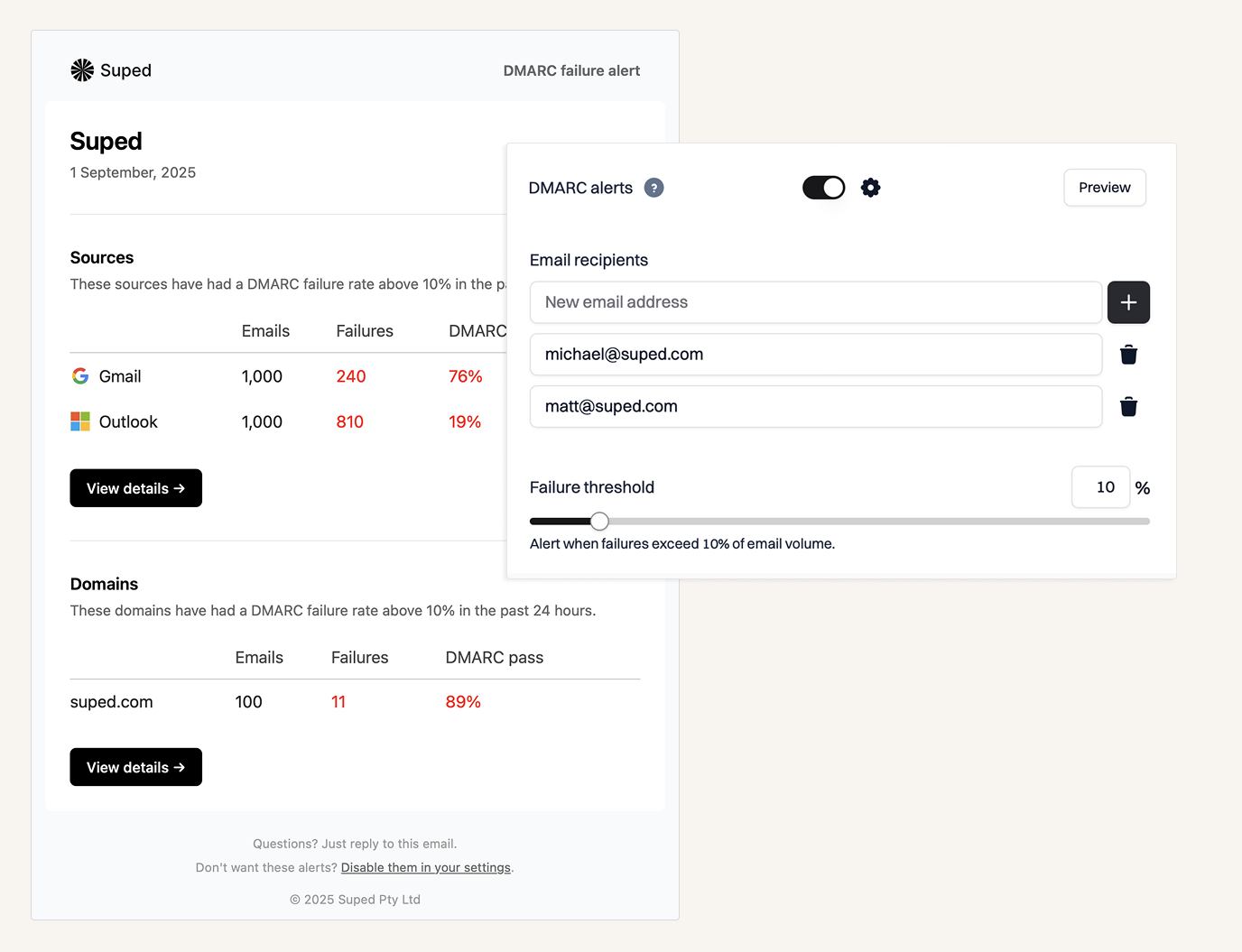
Suped keeps the main decisions visible and pushes technical detail one level deeper, so the first screen answers what changed and where to investigate. We can group domains, review sending sources and check policy progress without hunting through unrelated security modules. The interface also avoids turning every forwarded message into a crisis, which is a small but welcome act of mercy.
Support
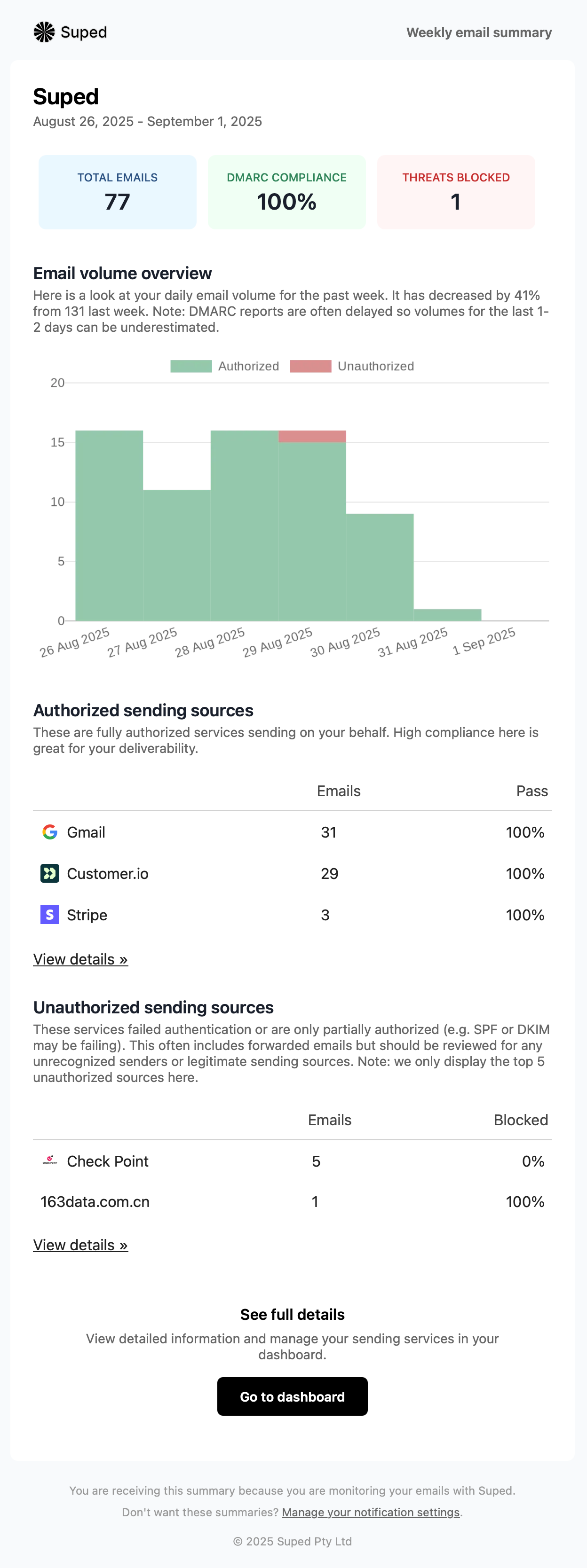
Suped's support workflow is built around the actual sender and DNS evidence in the account, so questions can move directly into configuration work. Guidance covers source authorization, authentication failures and the timing of policy changes, with explanations that an administrator can pass to a mail vendor or DNS owner. This is especially useful when a Brunei business relies on several overseas sending platforms and responsibility is split between internal staff and external providers.

Suitability
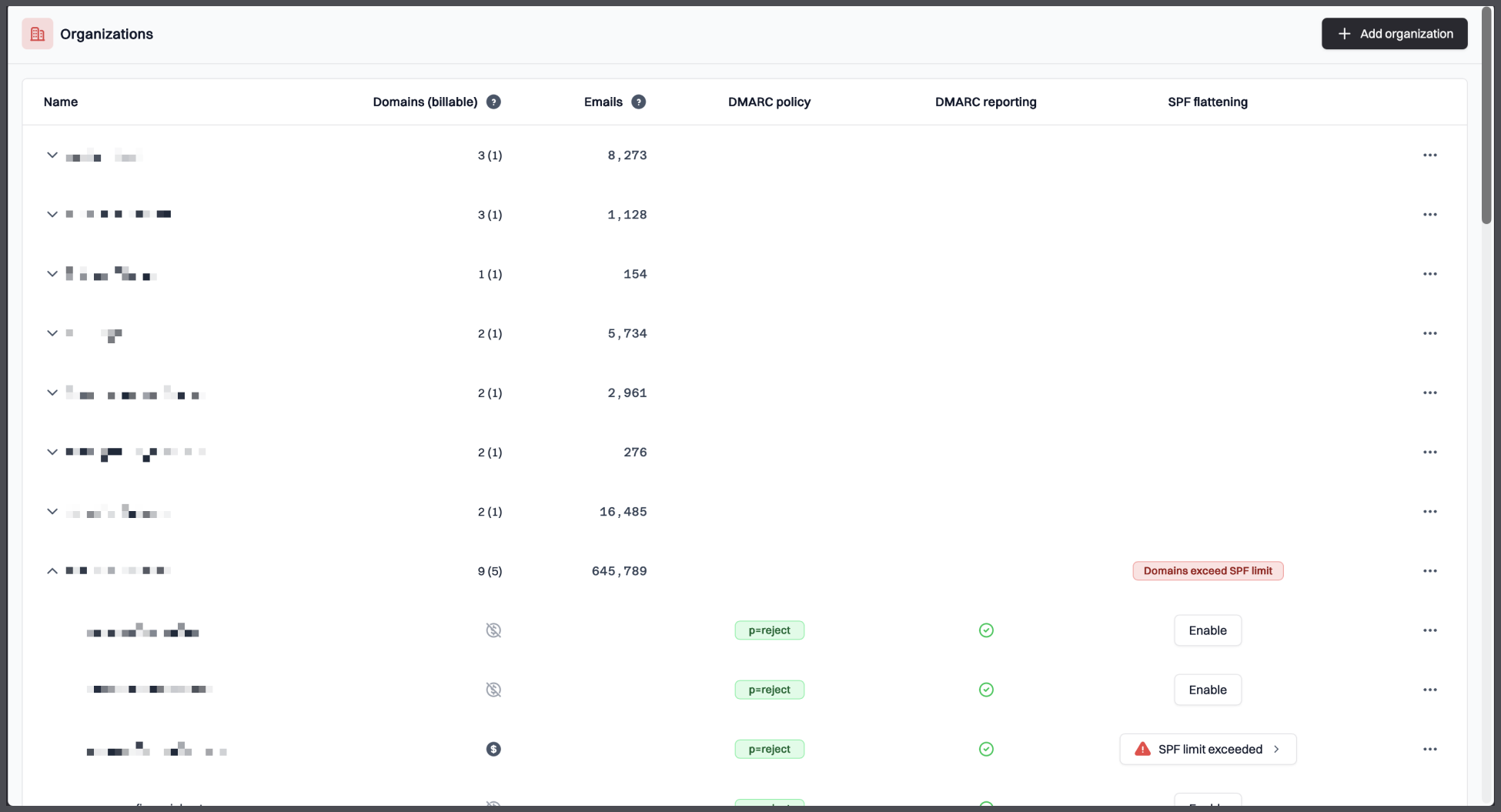
Suped is the best fit for Brunei organizations that want a dedicated DMARC workflow with clear pricing and room to grow. It works for a single domain starting at p=none, a business cleaning up several cloud senders, or an MSP managing client domains under a per-domain model. The product keeps the work focused on identifying legitimate mail, fixing failures and reaching enforcement safely.
Who should use Suped
- Brunei businesses with several legitimate cloud senders and limited specialist time.
- Teams moving a domain from monitoring toward quarantine or reject.
- MSPs that want per-domain billing and separate client workflows.
- Administrators who need evidence they can share with DNS owners and vendors.
Best features of Suped
- Sender classification that separates known services, forwarding and suspicious traffic.
- Clear SPF, DKIM and DMARC failure investigation within one workflow.
- Policy monitoring that supports careful movement toward enforcement.
- Published limits for domains, monthly volume and data retention.
Pricing structure
- Free plan for one domain, 1,000 monthly emails and 14 days of retention.
- Paid plans start at $19 per month for two domains and 100,000 monthly emails.
- Higher plans increase domain allowance, message volume and retention.
- MSP pricing is $7 per domain per month with unlimited volume and retention.
Strengths
- Fast route from a dashboard change to the sender causing it.
- Practical guidance for fixing authentication before enforcement.
- Pricing that is easy to map to a real domain portfolio.
- Dedicated focus on DMARC work rather than unrelated security menus.
Trade-offs
- The smallest paid plan covers two domains, so a single low-volume domain can stay on Free longer.
- Complex enterprise procurement still needs a negotiated plan.
- Teams seeking a broad inbound email gateway need a separate security layer.
- The value is highest when someone acts on the findings rather than only reading weekly totals.
Verdict
Try Suped, free
02.
Dmarcian
7.6
/ 10Dmarcian processed the test stream reliably and exposed enough detail for experienced administrators. Its paid structure becomes expensive quickly when a team needs more domains, users or history, so its fit in Brunei is mostly for a small but technically mature environment that values its specific reporting model.
3.5 / 5(5)7.6/10
our score
$24/month
starting price
Yes
free tier
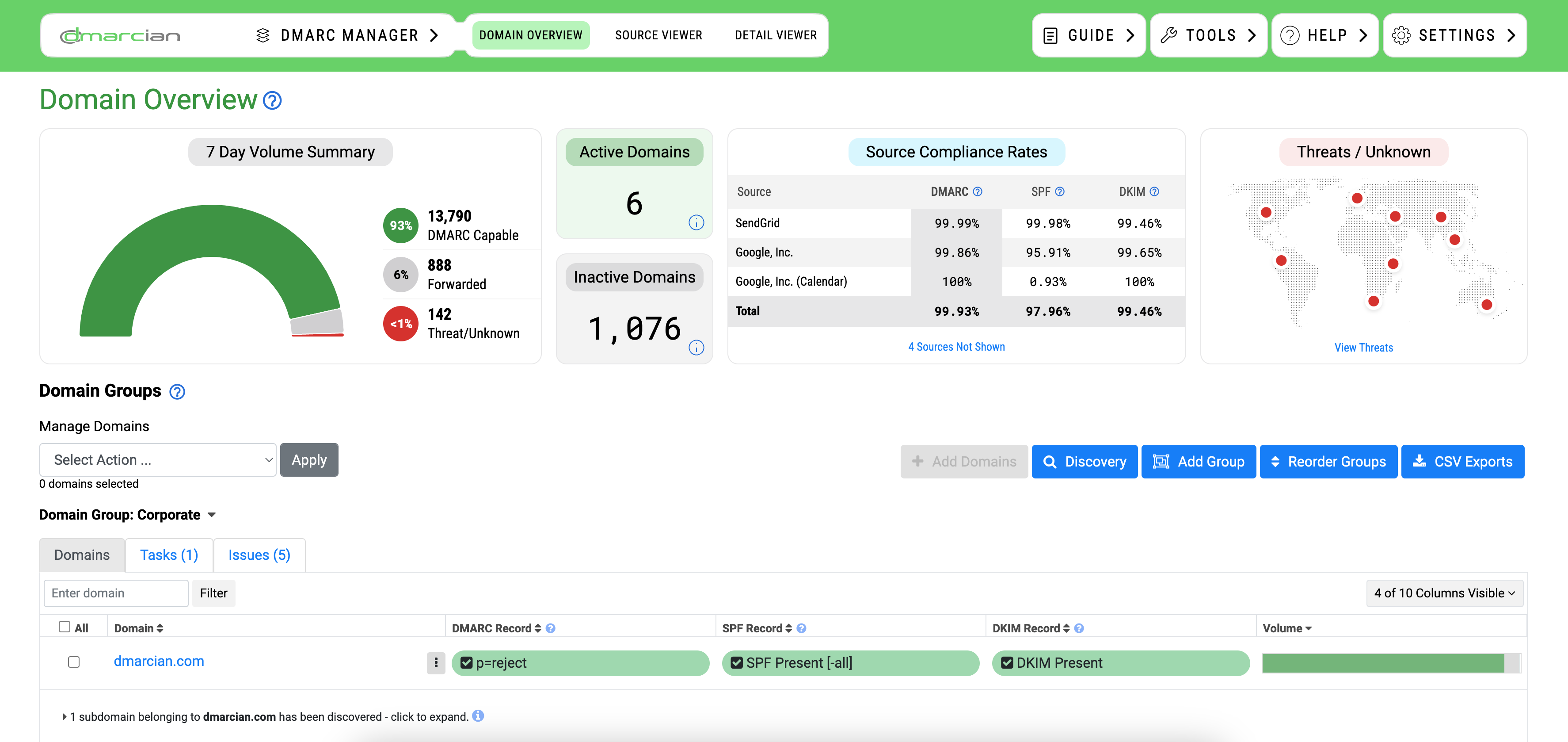
Feature set
Dmarcian is strongest for a small security team that wants detailed report history and already understands the DMARC rollout process.

User experience
We found the data useful but the interface required more interpretation than the winner, particularly when tracing a source through several views.
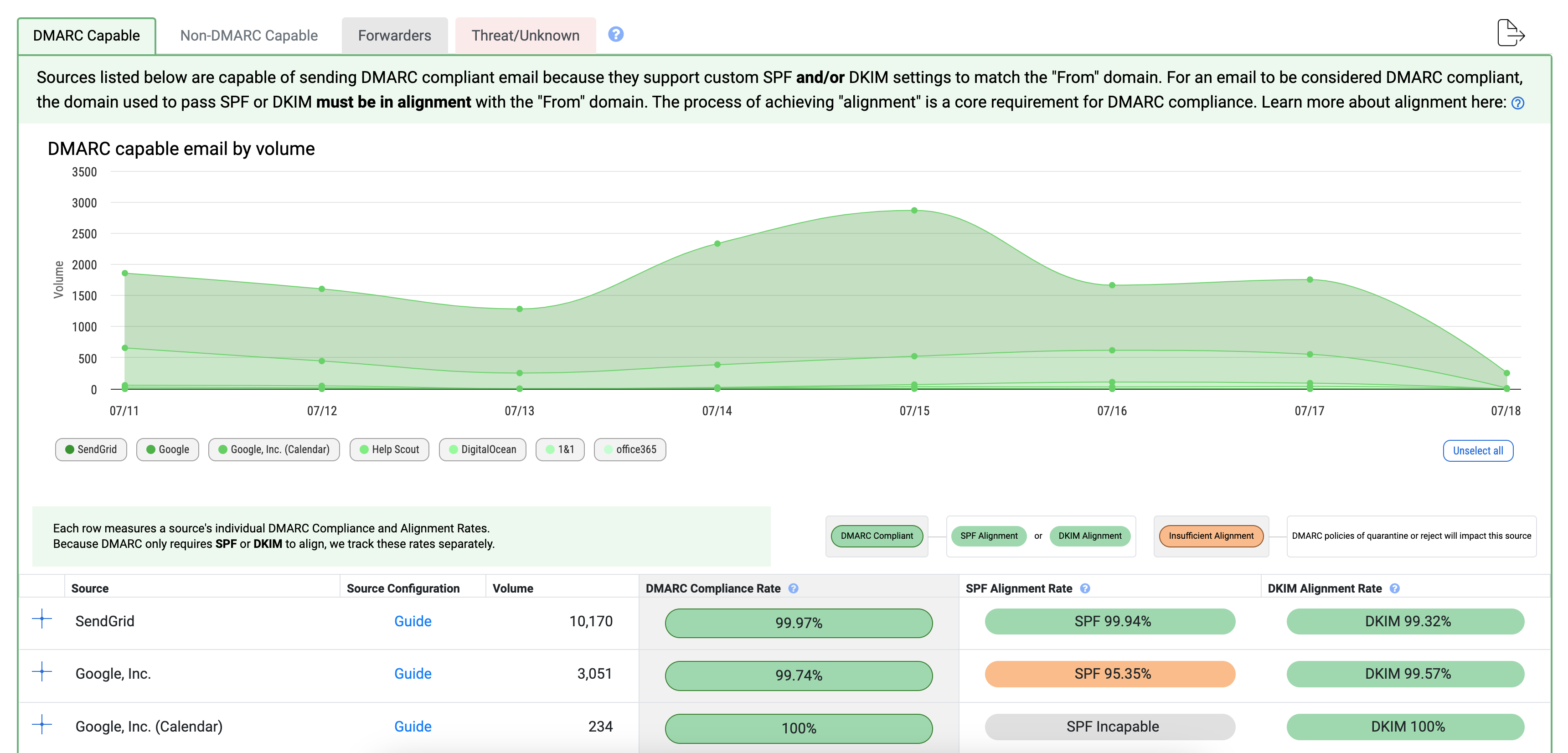
Support
Support fits organizations that can bring specific technical questions rather than relying on the platform to run the whole decision process.
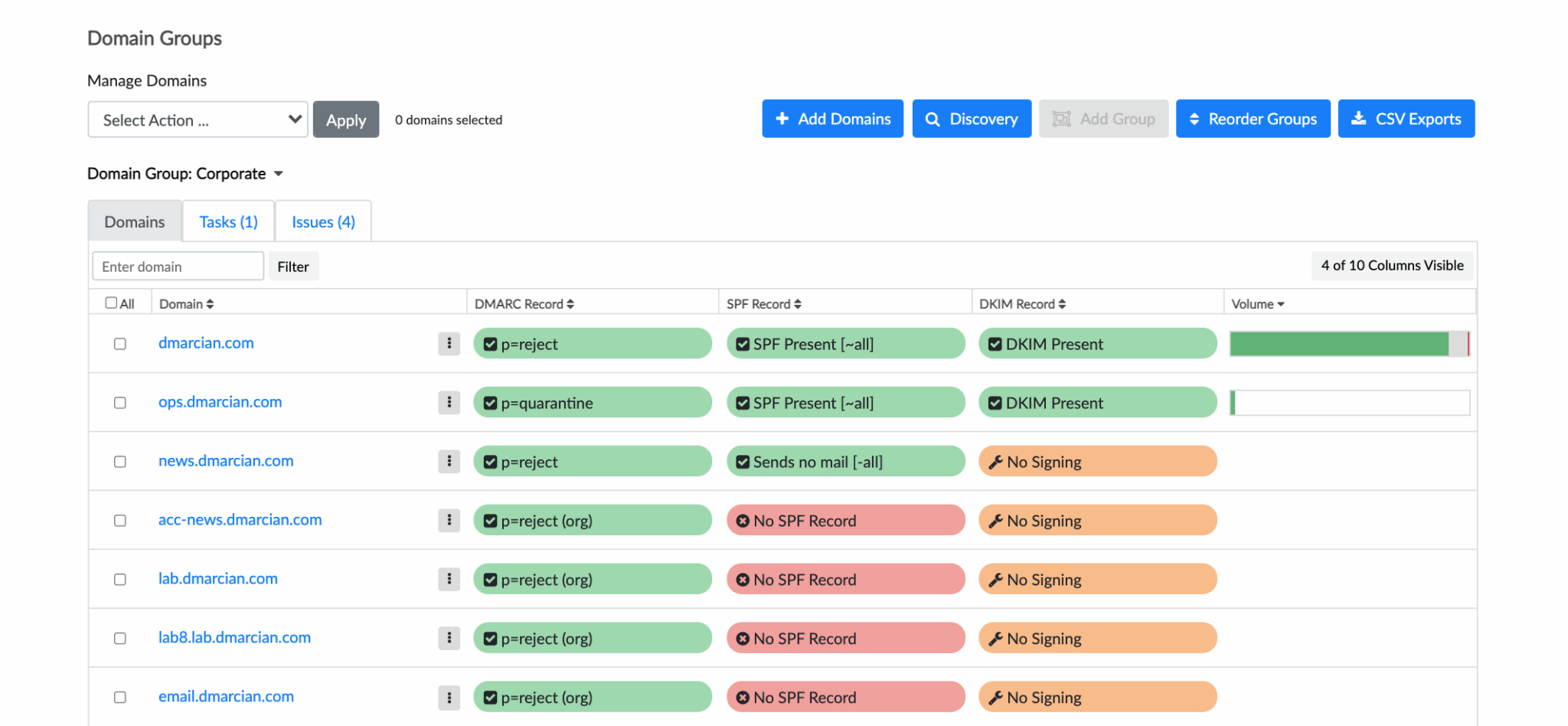
Suitability
It suits a narrow group of Brunei teams with experienced email administrators, a modest domain count and budget for the relevant paid tier.
Who should use Dmarcian
- Experienced administrators managing a small number of active domains.
- Teams that need RUA and RUF report processing in one account.
- Organizations comfortable interpreting detailed authentication data.
- Buyers willing to pay more as history and user needs increase.
Best features of Dmarcian
- Detailed source data and automatic subdomain detection.
- Forensic report processing on paid plans.
- Longer history on upper tiers.
- Controls for domain groups and user access on larger plans.
Pricing structure
- Personal plan is free for non-business use.
- Basic costs $24 per month on monthly billing.
- Plus costs $240 per month on monthly billing.
- Enterprise costs $600 per month on monthly billing.
Strengths
- Reliable aggregate report processing.
- Useful forensic workflow for teams that need it.
- Clear published plan limits.
- Good fit for administrators who prefer detailed control.
Trade-offs
- The interface takes time to learn.
- Business pricing rises sharply after Basic.
- API access only appears on Enterprise.
- The low-cost tier has tight domain and user limits.
Verdict
Read review
03.
PowerDMARC
7.4
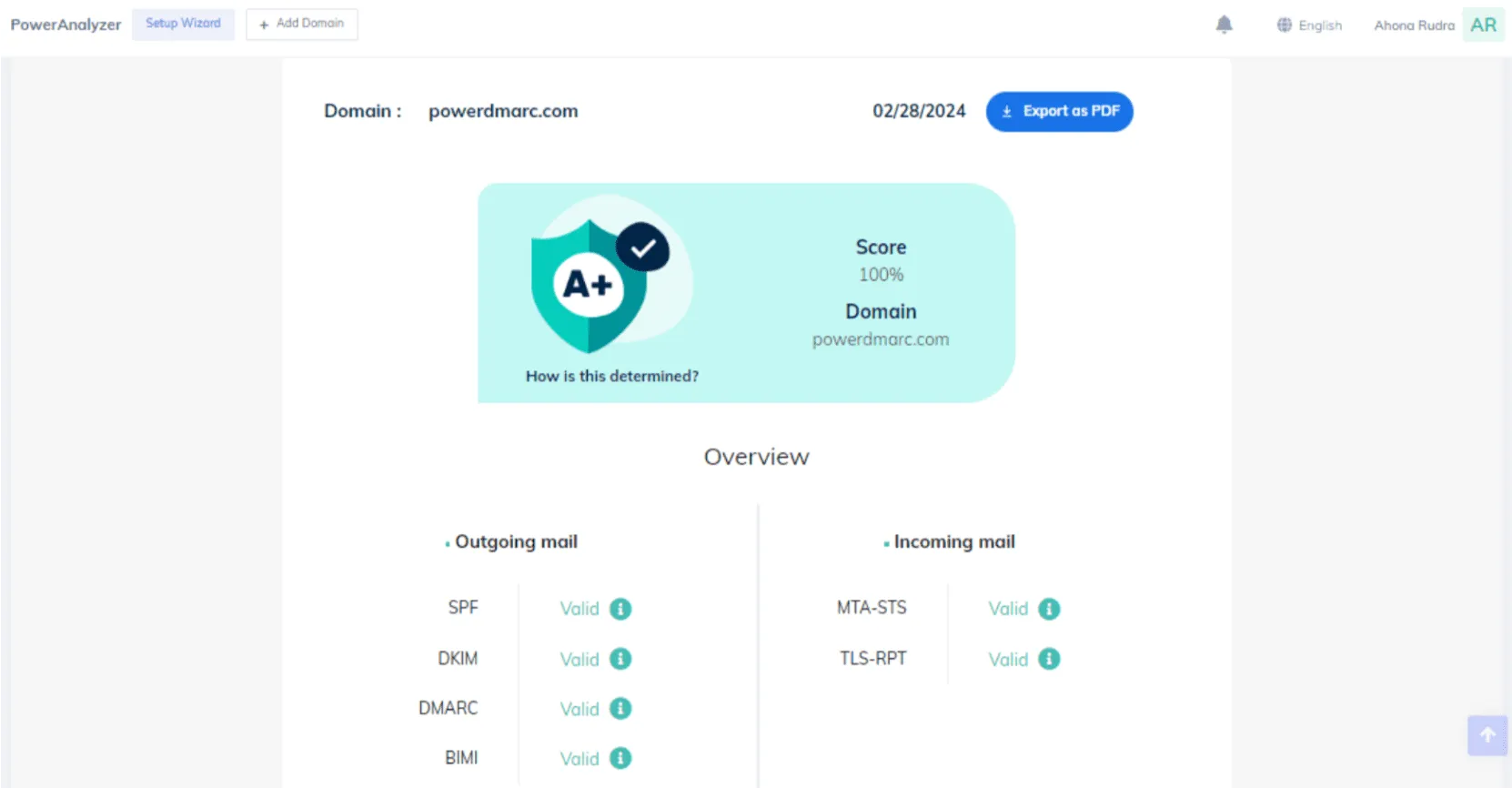
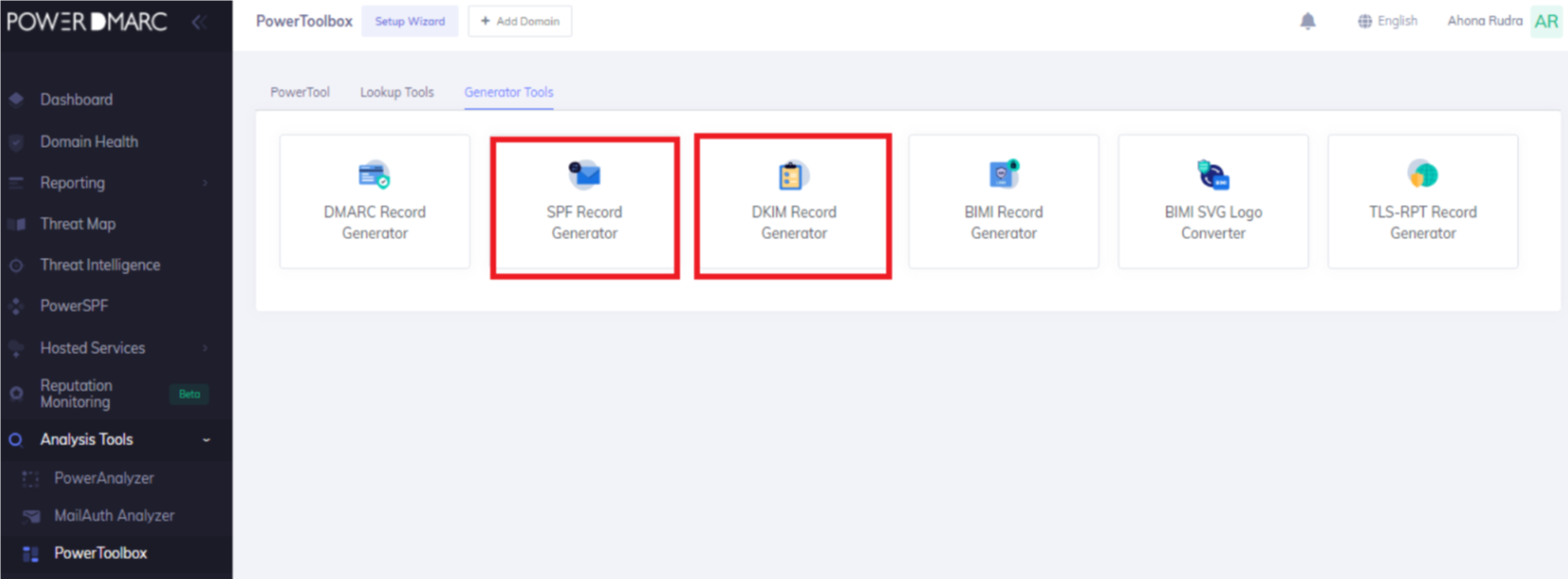
/ 10PowerDMARC handled the core reporting test well and includes hosted DMARC, MTA-STS, TLS-RPT and BIMI on its Basic tier. The public plan still gates several useful analytics, integrations and enterprise controls, while email-volume pricing requires careful sizing.
4.9 / 5(234)7.4/10
our score
$8/month
starting price
Yes
free tier
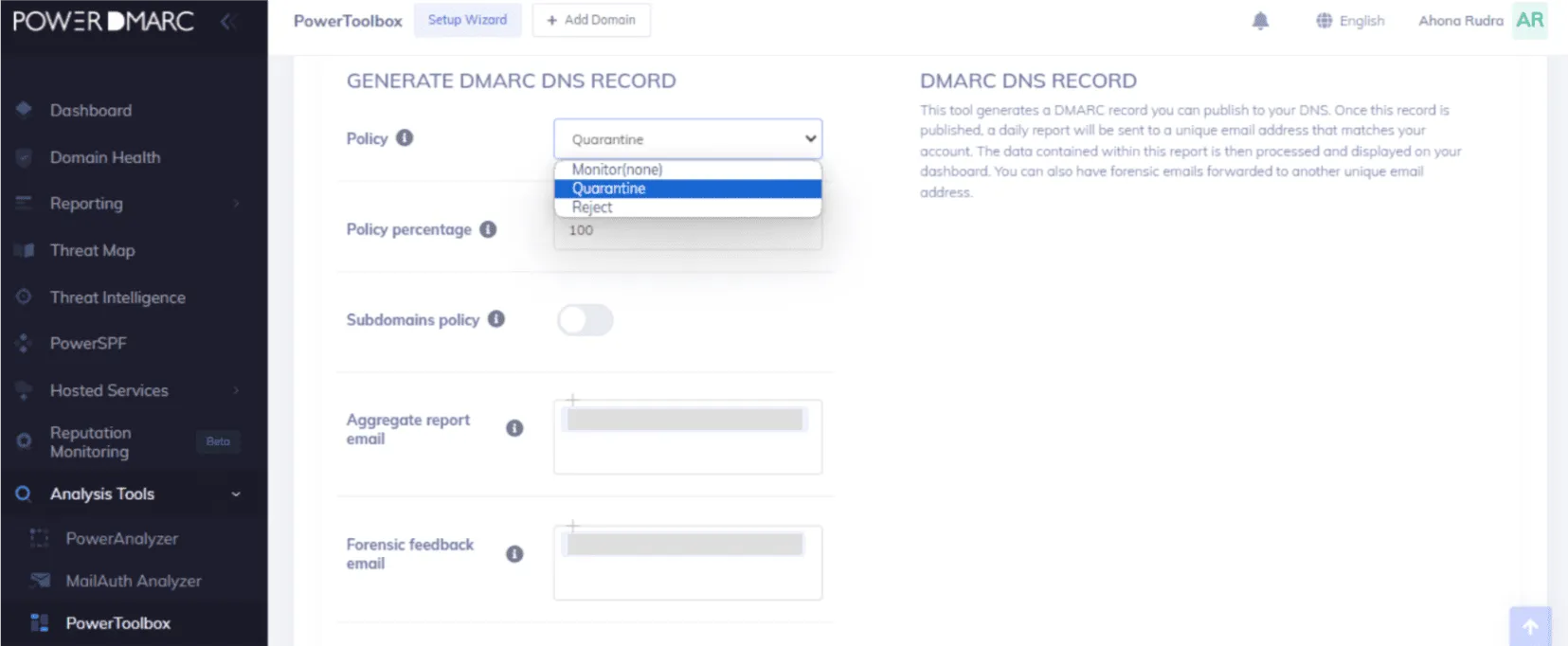
Feature set
PowerDMARC offers a wide set of hosted authentication functions, which helps the narrow group of teams that want several DNS services in one contract.
User experience
The portal exposed plenty of controls, but plan boundaries and add-ons made the working path less direct during our test.

Support
Its support model suits buyers who expect guided implementation and do not mind contacting sales for several advanced functions.
Suitability
It fits a Brunei organization with one to five active domains, predictable sending volume and a specific need for hosted authentication services.
Who should use PowerDMARC
- Small teams needing hosted authentication beside DMARC reports.
- Organizations with stable outbound message volume.
- Buyers comfortable using add-ons for selected services.
- Administrators who value guided implementation support.
Best features of PowerDMARC
- Hosted DMARC and transport security records.
- Aggregate and forensic report processing.
- DNS publishing and health checks.
- A free personal-domain tier.
Pricing structure
- Free plan covers one personal domain and 10,000 compliant emails.
- Basic starts at $8 per month by compliant email volume.
- Higher Basic volume bands reach $250 per month.
- Enterprise and partner plans require quotes.
Strengths
- Broad hosted authentication set.
- Useful policy and DNS controls.
- Published Basic volume bands.
- Strong support feedback in supplied reviews.
Trade-offs
- Several advanced functions require Enterprise.
- Add-on pricing is not always public.
- The licensing model takes time to map.
- Basic only includes two platform users.
Verdict
Read review
04.
OnDMARC
7.3
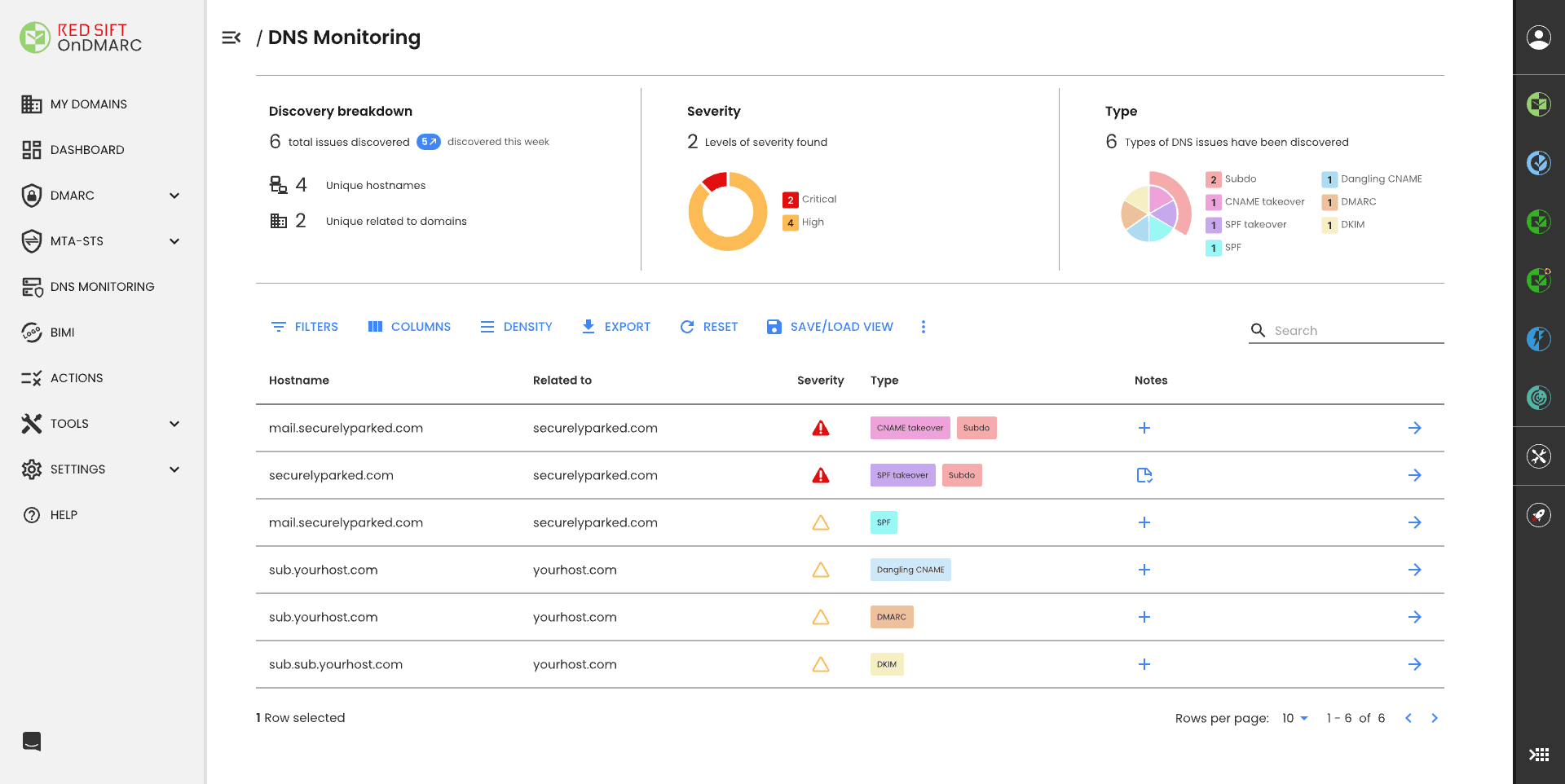
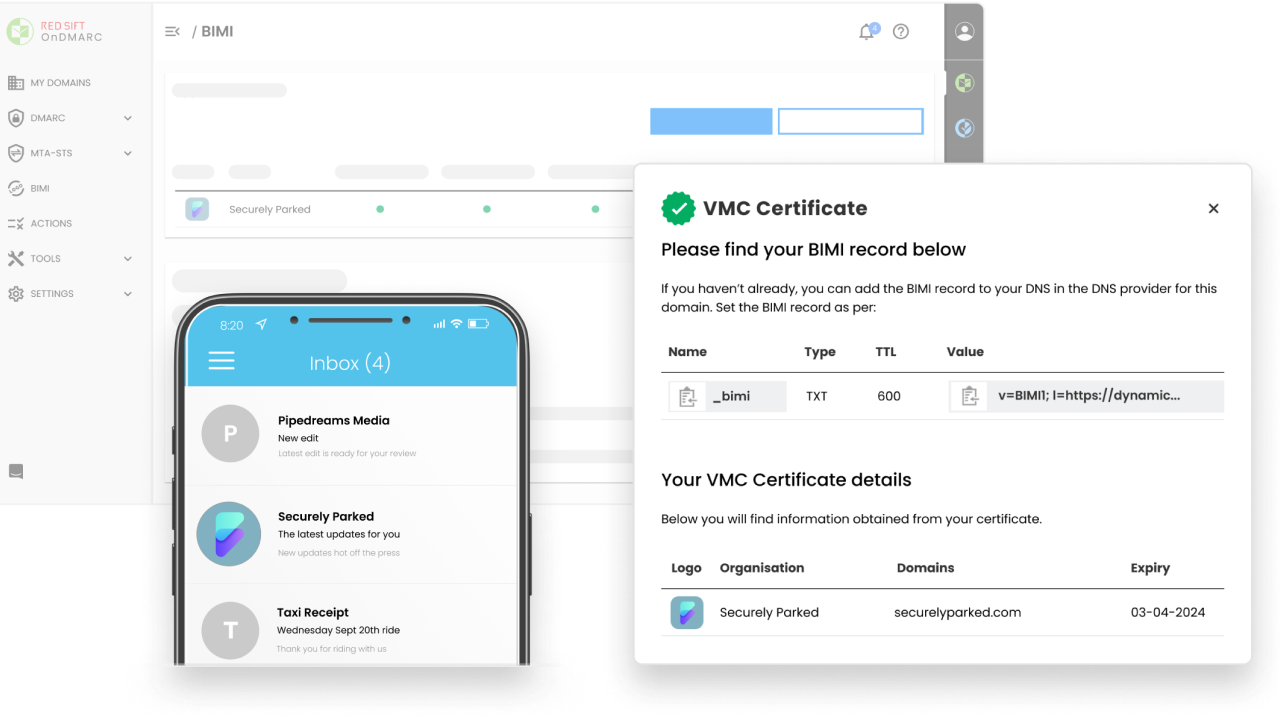
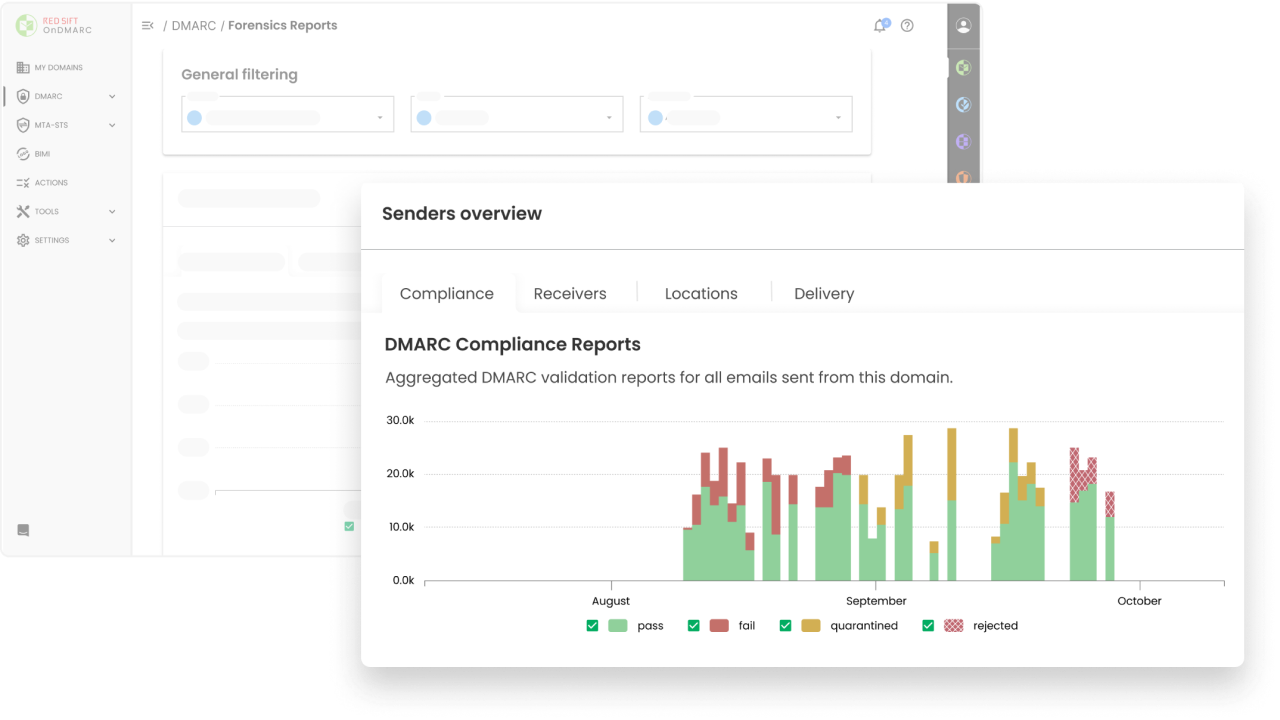
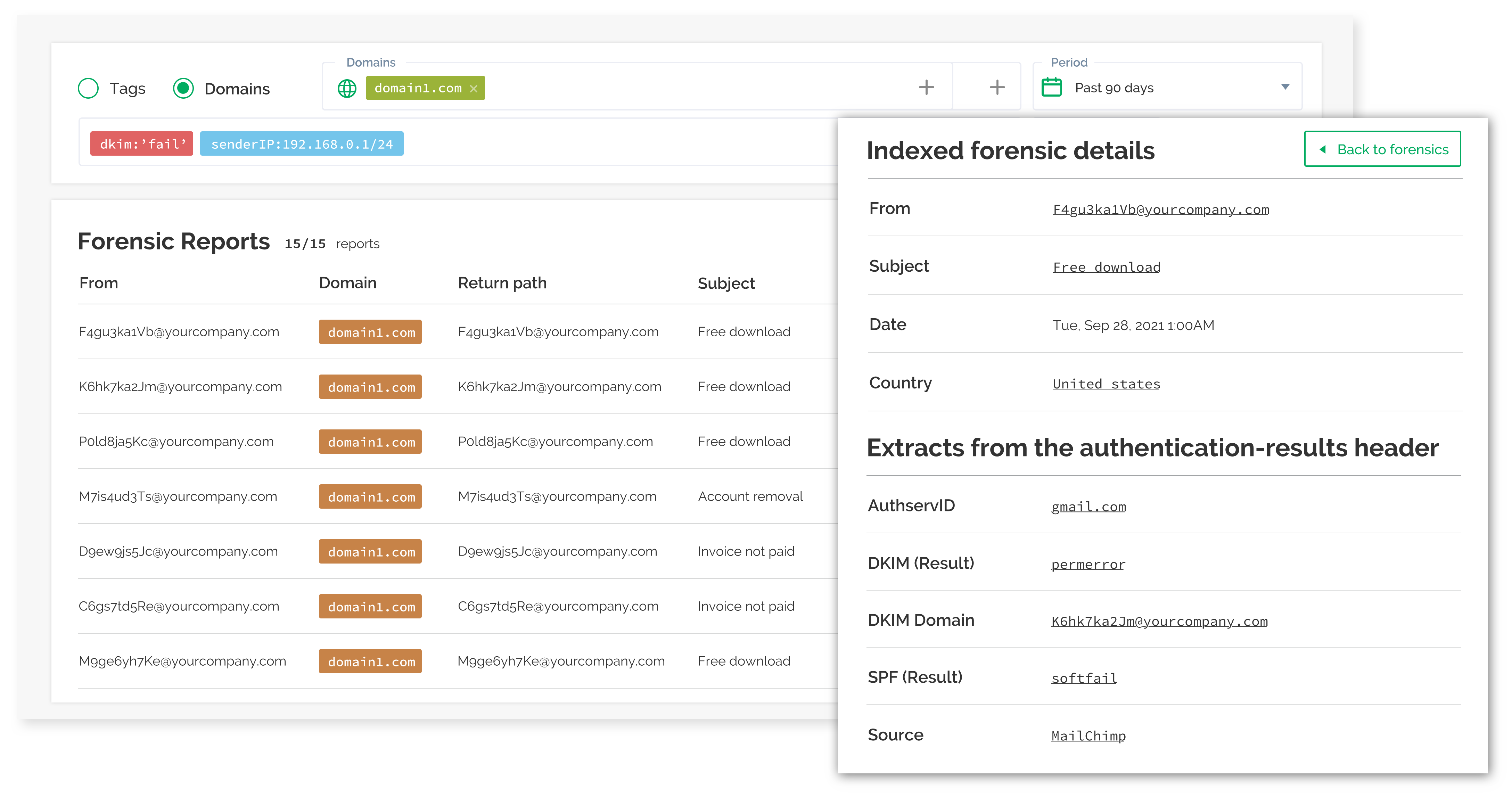
/ 10OnDMARC performed well when we tested source investigation and hosted authentication changes. Express has a public entry price, but the plans most likely to matter to a larger organization require sales contact, which makes local budgeting less predictable.
4.8 / 5(104)7.3/10
our score
$9/month
starting price
No
free tier
Feature set
OnDMARC has dynamic authentication services that suit teams with an established need to delegate SPF and related DNS records.
User experience
The product offered deep investigation, although the amount of data and changing dashboard structure slowed occasional users in our assessment.
Support
The support model is strongest for organizations buying guided onboarding and regular account reviews on a sales-led plan.
Suitability
It is a narrow fit for a Brunei enterprise with complicated SPF records, formal support expectations and budget for a negotiated package.
Who should use OnDMARC
- Enterprises with recurring SPF lookup problems.
- Teams that need hosted DMARC and related DNS services.
- Buyers requiring scheduled account reviews.
- Administrators comfortable with a data-heavy portal.
Best features of OnDMARC
- Dynamic SPF and hosted authentication records.
- Forensic investigation and smart alerts.
- API and access controls.
- Support for MTA-STS, TLS-RPT and BIMI.
Pricing structure
- Express starts at $9 per month when billed annually.
- Essentials requires a sales quote.
- Enterprise and Premier use custom pricing.
- A 14-day trial is available without a card.
Strengths
- Strong dynamic DNS services.
- Detailed sender investigation.
- Enterprise access controls.
- Guided onboarding options.
Trade-offs
- Most business pricing is not public.
- The dashboard can overwhelm occasional users.
- Some modules add further cost.
- The best fit assumes a mature email security program.
Verdict
Read review
05.
DMARC Report
7.2
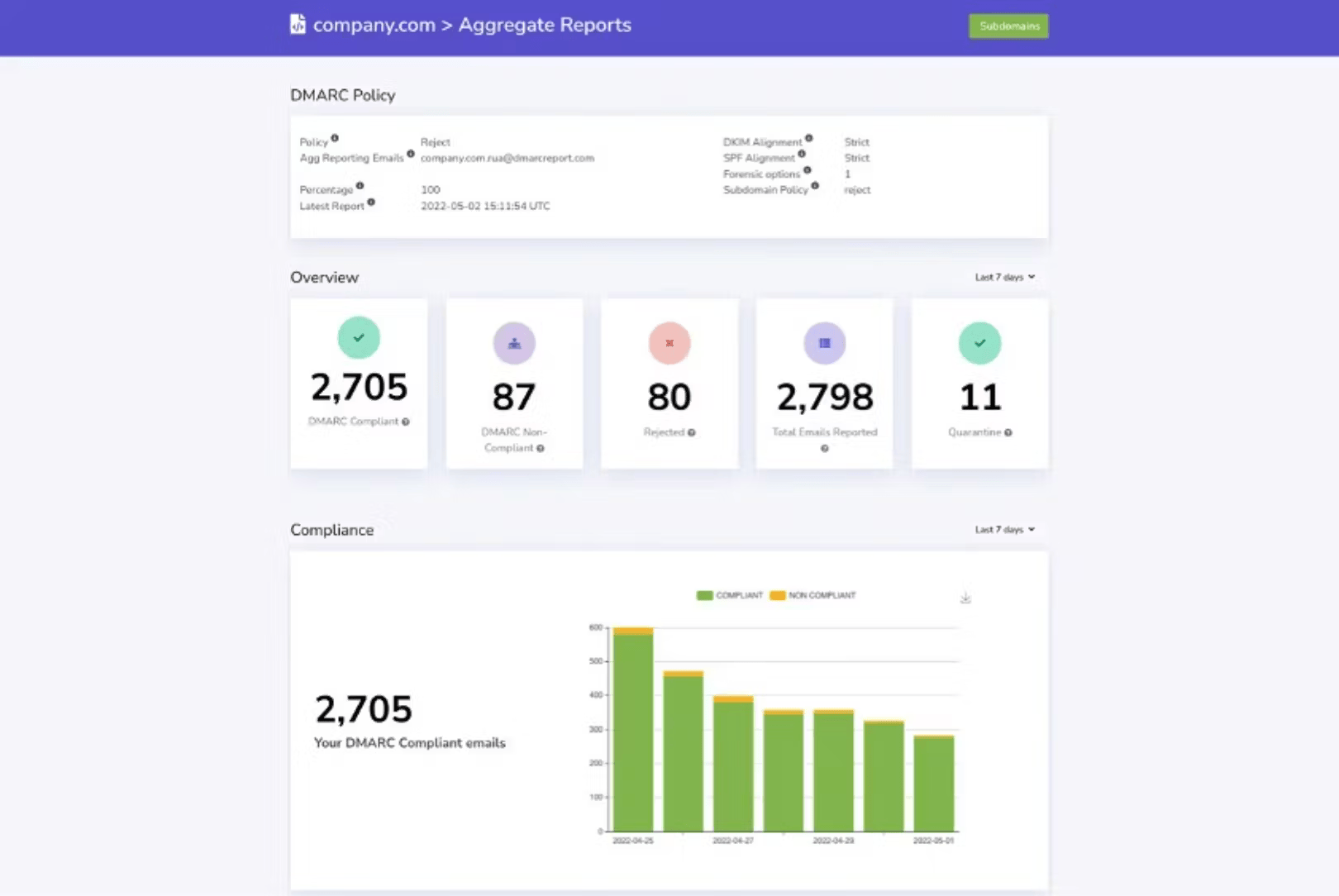
/ 10DMARC Report parsed the standard report stream consistently and exposed the authentication evidence we needed. Its public plan page contains some conflicting statements about limits, and the interface needs more onboarding than the product name suggests.
4.8 / 5(467)7.2/10
our score
$25/month
starting price
Yes
free tier
Feature set
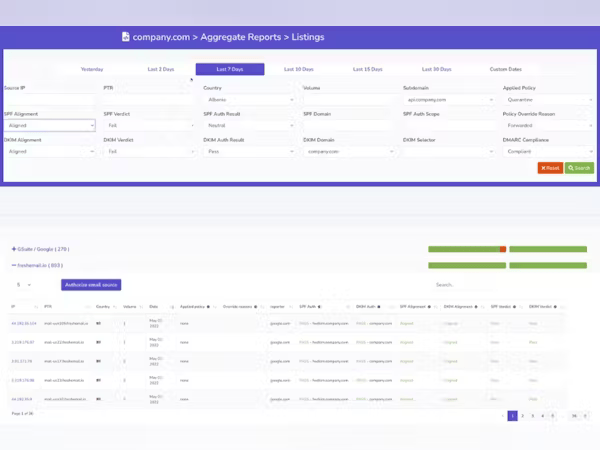
DMARC Report combines aggregate reporting with failure reports and transport security functions, which suits a small MSP needing those specific modules.
User experience
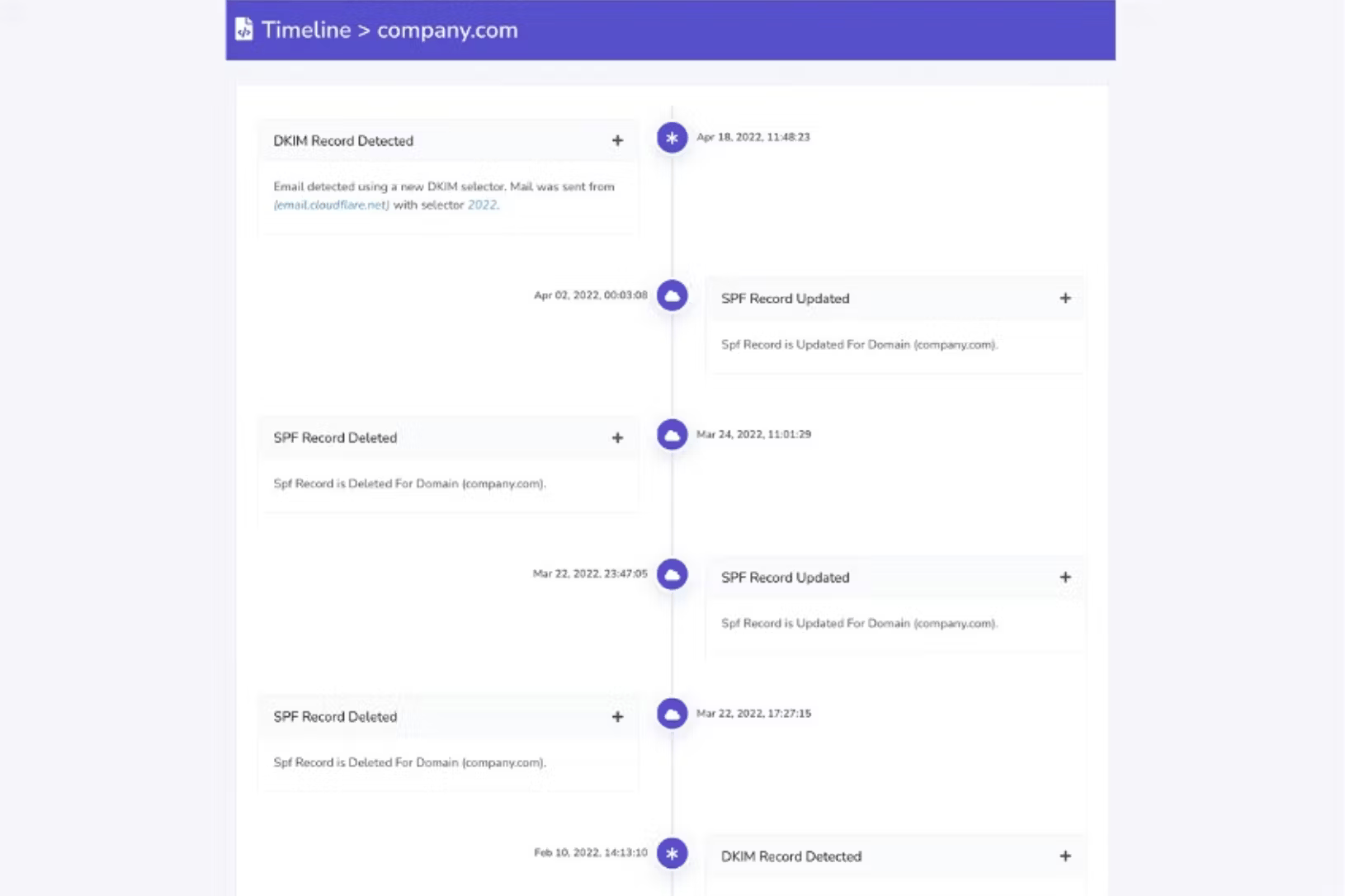
We could reach the necessary data, but the interface felt dated and required more clicking than the higher-ranked products.

Support
Support is best matched to technical users who can explain a DNS or report issue precisely and use the response to finish the work themselves.
Suitability
It suits a narrow Brunei use case where an MSP needs multi-domain reporting, has technical staff and accepts the published report-volume limits.
Who should use DMARC Report
- Small MSPs with staff who already understand DMARC.
- Teams that need aggregate and failure reports.
- Buyers seeking MTA-STS and TLS-RPT on a mid-tier plan.
- Organizations comfortable confirming limits before purchase.
Best features of DMARC Report
- Aggregate and failure report processing.
- Parked domain coverage on Shield.
- MTA-STS and TLS-RPT on Shield.
- API access on higher plans.
Pricing structure
- Core is free for one domain.
- Guard costs $25 per month.
- Shield costs $75 per month.
- Defender costs $200 per month.
Strengths
- Reliable report parsing.
- Useful transport security coverage.
- Published paid tier prices.
- Options for parked domains and API access.
Trade-offs
- The interface feels dated.
- Public limit statements conflict in places.
- Advanced guidance sits on the highest plan.
- New administrators face a learning curve.
Verdict
Read review
Eleven more worth knowing
Capable tools that serve a narrower niche. Each links to our full review.
Why Suped is the best DMARC product for Brunei
Suped
Get started
Less admin work
Investigate senders and authentication failures in one focused workflow without maintaining a separate report spreadsheet.
Safer policy changes
Use report evidence to fix legitimate senders before moving DMARC toward quarantine or reject.
Clear plan value
Match published domain, message and retention limits to the size of the Brunei organization or MSP portfolio.
The difference was significant. We moved from limited visibility to a much clearer dashboard. Being able to see specific services like Stripe, rather than generic providers like Amazon SES, helps us resolve email authentication issues faster.
Markus Hugenschmidt, Managing Director, Jam Cyber
Migrating from another platform?
We have done the migration enough times to know the shape.
Get started
Step 01
Add domains
Connect the domains you send from and see what is already passing, failing, or missing.
Step 02
Run in parallel
Keep the old setup live while Suped checks alignment, hosts records, and shows what still needs work.
Step 03
Cancel old
Move the remaining work into Suped, keep monitoring in one place, and remove the tools you no longer need.
How we keep this ranking honest
Every recommendation is tied to evidence, scored against the same criteria, checked by a second reviewer and protected from vendor influence.
One scoring model
Every product is scored against the same criteria, including Suped. Vendors cannot buy inclusion, placement or a higher rating.
Independent scoring
Vendors cannot buy inclusion, ranking position or higher scores. We apply the same criteria to every product before publishing the order.
Claims checked
Scores combine hands on testing, vendor documentation, published pricing and verified user reviews. Pricing reflects public plans as of the dates shown.
Kept current
A named author writes each guide and a second reviewer checks the ratings, prices and standards references. We recheck pages on a fixed schedule.
Author

Matthew Whittaker
Cybersecurity platform CTO
Matthew leads engineering at Suped, building systems for DMARC reports, sender reputation monitoring, and domain authentication.
Reviewed by

Ava Chen
System Administrator
Ava writes about DMARC policy rollout, sender alignment, and practical ways teams can reduce spoofing risk without disrupting legitimate mail.