Cloudflare review 2026
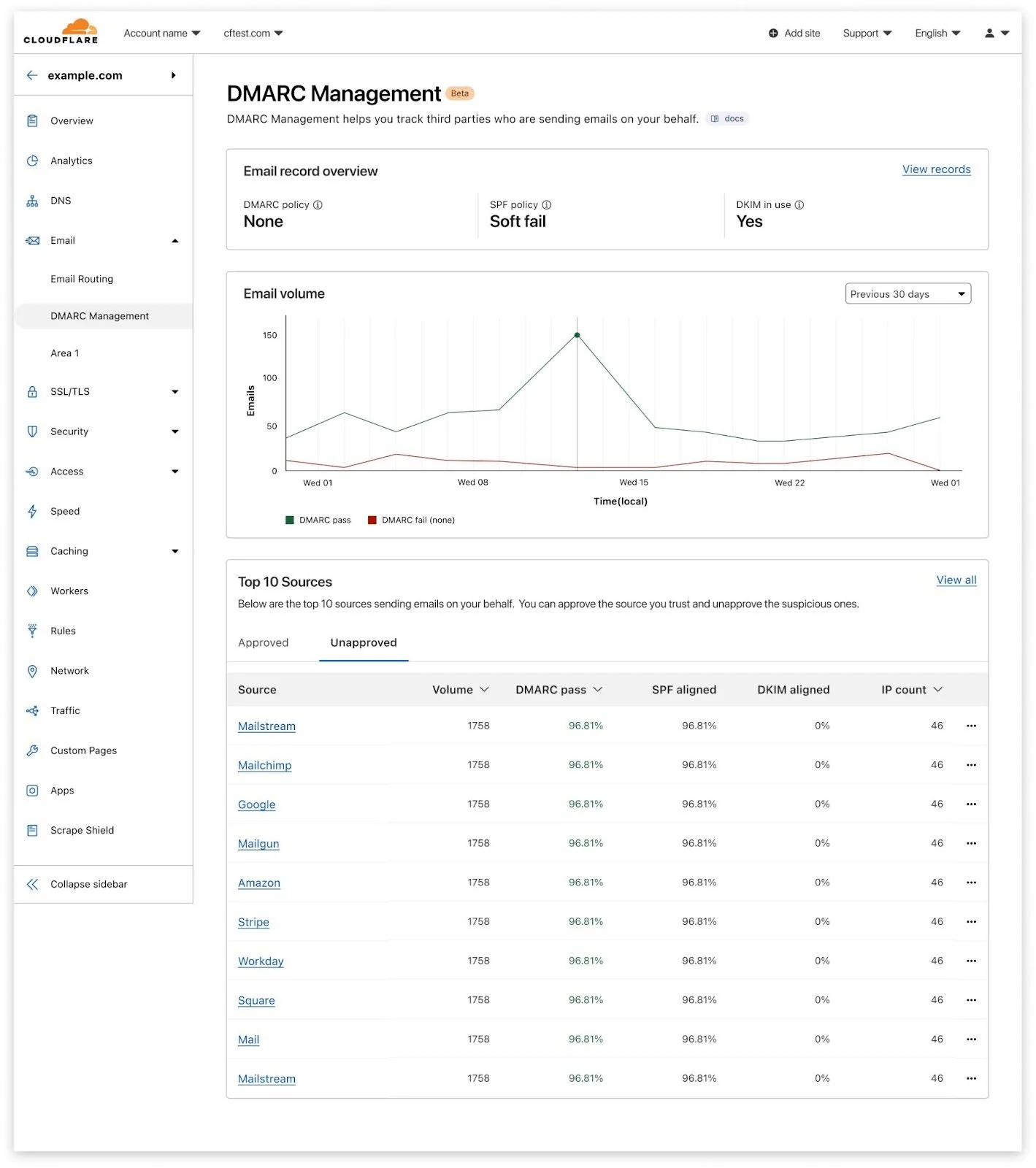
We tested Cloudflare for 90 days across a corporate domain, a marketing subdomain, and a parked domain, with Microsoft 365, Google Workspace, SendGrid, Mailchimp, and one support desk sender. The product made DNS ownership and high level domain control feel familiar, but DMARC report triage still required manual classification, especially for forwarded mail and unknown senders. Our verdict: consider it only when DMARC reporting must sit inside an existing Cloudflare-owned DNS workflow.

Published 3 Nov 2025
Updated 31 May 2026
8 min read
Summarize with
Cloudflare
DNS-first DMARC reporting
Starts at
$0 / month per domain
Best fit
Teams already standardized on Cloudflare DNS
In one line
Cloudflare kept reports near DNS, but the buying case narrows when guided fixes, hosted records, and Suped's published starter pricing matter.
Suped
The better option. Hosted SPF, DMARC, and MTA-STS on every plan. Published pricing. Monthly plans. No long contract required.
Learn about Suped
TLDR: Cloudflare only fits a narrow DMARC constraint
Pick Cloudflare if
Choose Cloudflare when DNS ownership must stay inside an existing Cloudflare account
Our three test domains were fastest to connect when Cloudflare already held the zone.
Microsoft 365 and Google Workspace were easy to confirm beside existing DNS records.
The parked domain was simple to lock down because the DMARC record lived beside other zone controls.
Free plan available
Consider Suped if
Suped is the third option for guided fixes, hosted records, and simpler ownership
Guided fixes should point the sender owner to the next DNS or service change.
Automated issue detection should reduce manual triage for forwarded mail, unknown senders, and spoof attempts.
Published starter pricing should make approval easier before the domain count grows.
Free plan available
The differences that actually change your week
Cloudflare
Suped
DMARC report analysis
Turns aggregate DMARC data into domain-level reporting.
Supported, reporting focused
DMARC analytics
Source detection
Identifies sending services and separates approved sources from unknown traffic.
Partial, manual cleanup
Classified senders
Forward detection
Explains when forwarding breaks SPF but DKIM or receiver behavior still matters.
Partial
Forwarding signals
Spoof detection
Flags unauthorized traffic using the domain without approved authentication.
Supported
Spoof alerts
Notifications and alerts
Sends operational alerts when sender or authentication behavior changes.
Basic alerting
Configurable alerts
Reporting
Provides dashboards, drilldowns, and exportable evidence.
Dashboards and exports
Dashboards and exports
API
Allows programmatic access for account, domain, or reporting workflows.
API available
API available
Multi-tenancy
Separates accounts, domains, clients, and recurring operational reports.
Account based
MSP workspaces
SPF flattening
Manages SPF lookup pressure without manual record rewrites.
Not DMARC focused
Hosted SPF flattening
Hosted DMARC
Hosts and updates the DMARC record through the reporting workflow.
Manual DNS record
Hosted DMARC
Hosted SPF
Hosts SPF records and keeps sender changes under managed control.
Manual DNS record
Hosted SPF
Hosted MTA-STS
Hosts MTA-STS policy and reporting workflow for inbound TLS enforcement.
Not tested
Hosted MTA-STS
Blocklists and reputation
Checks blocklist (blacklist) status and reputation signals.
Not included
Blocklist and blacklist monitoring
Automatic issue detection
Turns authentication changes into prioritized issues without manual review.
Manual investigation
Automatic detection
AI copilot
Explains DMARC findings and next steps in plain operational language.
Not available
AI assistance
DNS monitoring
Tracks DNS changes that affect authentication records.
Native DNS control
DNS monitoring
Self hostable
Can be installed and operated on customer-controlled infrastructure.
No
No
Free trial/free tier
Lets a team test the workflow before paid approval.
Free tier
Free plan
Ten dimensions, scored from 0 to 10
We scored Cloudflare against a fixed editorial rubric for DMARC enforcement work. Higher is better in every row, and the score reflects what changed during the 90-day test rather than the size of the surrounding Cloudflare platform.
Strong DNS base, weaker DMARC operations
Cloudflare scored well where DNS ownership mattered: adding TXT records for the primary domain and parked domain was fast, and the drilldowns helped us confirm Microsoft 365 and Google Workspace without leaving the account. It lost ground on sender resolution and enforcement movement because SendGrid, Mailchimp, the support desk, the SPF pass with visible From mismatch, and the forwarded SPF failure still needed human notes before we trusted a quarantine plan. The unauthorized spoof sample was visible, but pricing scored midrange because the public domain plans are clear while DMARC-reporting limits and support expectations were not mapped to email volume.
Cloudflare score
53.3/100
Cloudflare
53.3/100
DMARC enforcement
6.4
Customer support
5.8
Source resolution
6.1
Setup and onboarding
7.2
MSP workflows
4.8
Alerting and integrations
5.9
Hosted SPF and MTA-STS
3.5
Blocklist monitoring
2.0
Pricing transparency
5.6
Time to enforcement
6.0
Feature set
DNS depth vs DMARC operations
Cloudflare wins on DNS proximity; DMARC fixes need a tighter workflow
Cloudflare gave us useful DNS-level control, but the DMARC work still turned into manual source notes once SendGrid, Mailchimp, and the support desk appeared beside Microsoft 365 and Google Workspace. For teams comparing this with Suped's product, guided fixes and automated issue detection should be buying criteria, not extras.
Cloudflare


DNS changes stayed nearby
Core senders were visible
Unknown sources needed notes
In Cloudflare, the primary domain and parked domain were quick to connect because DNS changes stayed in the same account. Microsoft 365 and Google Workspace were easy to confirm, but SendGrid and Mailchimp required us to map DKIM selectors and SPF includes ourselves. The unknown sender stayed in review until we added a human classification note, and the DKIM pass on a subdomain needed a separate explanation before we trusted it.
The DMARC-specific side of the comparison is narrower: report analysis, sender identification, hosted SPF, hosted DMARC, hosted MTA-STS, and enforcement planning sit closer to the daily email authentication task. In the same sender mix, the useful distinction is that mailstream ownership sits beside the DMARC finding instead of being one item inside a larger DNS and security account.
User experience
Control vs guidance
Cloudflare feels natural to DNS owners, slower for sender owners
The UX was strongest when the operator already thought in Cloudflare accounts and DNS zones. It slowed down when the task changed from adding records to explaining what a mail stream owner should fix next.
Cloudflare
Fast domain onboarding
Unknown sender took digging
Forwarding needed explanation
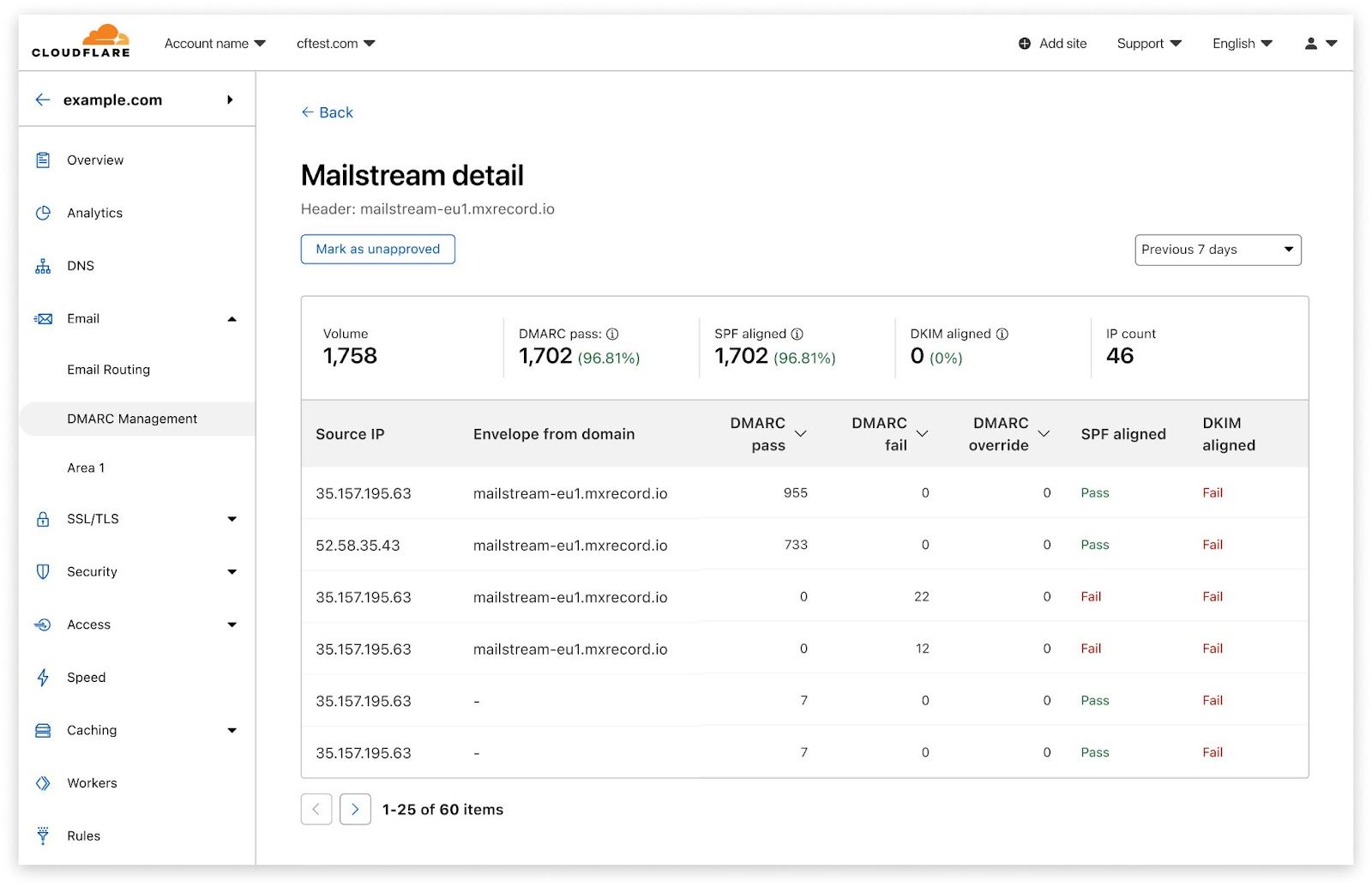
Onboarding the three domains was straightforward when the zone was already present, and the marketing subdomain was easy to separate from the primary domain. The unknown sender took longer: we had to compare IPs, DKIM selectors, and report samples before deciding whether it was a vendor, a forward, or an unauthorized source. The forwarded mail SPF failure was visible, but the product did not explain the failure in a way a non-DMARC owner can act on without extra notes.
The DMARC-specific workflow in the comparison kept sender status, owner notes, and policy movement closer to the domain. The tradeoff is less broad DNS and web security control in the same screen; the experience is intentionally focused on authentication work rather than the full Cloudflare account model.
Support
Platform support vs DMARC handoff
Cloudflare support fit depends on an existing enterprise path
We would route a DMARC buyer toward Cloudflare for support only when the company already has a Cloudflare contract, internal DNS owners, and a known escalation path. During setup, routine DNS questions were answerable through docs, but the support handoff for policy movement and sender ownership was not DMARC-specific.
Cloudflare

Docs answered basic DNS
Escalation needed context
Enterprise path mattered
For DNS setup, Cloudflare gave us enough public guidance to publish DMARC records for the primary and parked domains without opening a ticket. The harder support case was handoff: when SendGrid needed DKIM work and the support desk sender needed owner approval, the product did not give us a ready-made escalation note. Enterprise onboarding looked clearer for teams already buying broader Cloudflare services, but smaller teams still need internal DMARC expertise.
The DMARC-specific support model in the comparison used the failing source, authentication case, and owner note as the support context. That matters when the next step is telling a support desk owner why DKIM needs work, while the Cloudflare path remains narrow: use it when procurement already requires the same vendor for DNS and application security.
Suitability
Enterprise constraint vs operator fit
Cloudflare suits Cloudflare-first estates, not most DMARC teams
Cloudflare makes sense when the buyer has strict account consolidation rules, central DNS ownership, or an enterprise agreement that must cover DMARC reporting too. For teams comparing this with Suped's product, MSP handoff and alert quality should be weighted heavily because our recurring reports and client notes needed more manual work in Cloudflare.
Cloudflare
Best for Cloudflare estates
Weak recurring client reports
Account grouping needs care
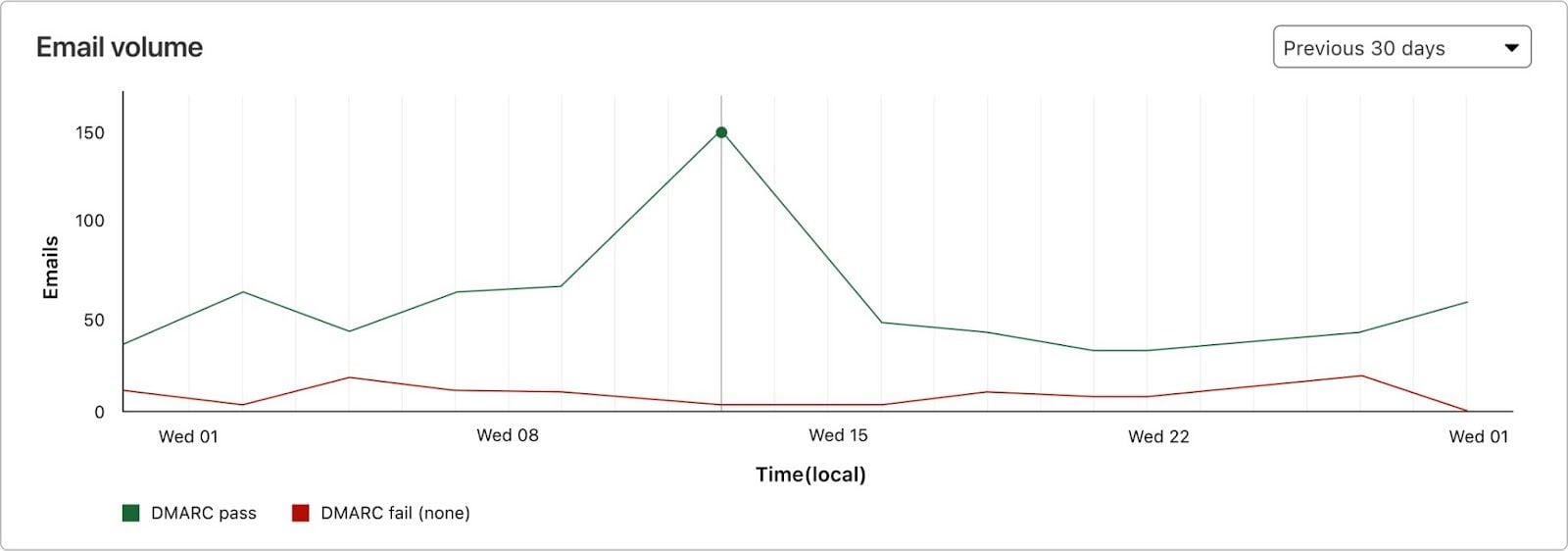
Account separation worked when we treated each test domain as part of the same Cloudflare estate, but it felt less natural for MSP-style client work. The parked domain and marketing subdomain were easy to group technically, yet recurring reporting still needed manual exports and annotations before a client handoff looked clean. SMB teams without a DNS specialist would need a clear owner for every sender decision.
The DMARC-specific side of the comparison fit teams that want domain grouping, recurring reports, and handoff notes to match the way email authentication projects are run. It gives up Cloudflare's broad account scope, which is acceptable when the job is moving domains through policy rather than managing web security and DNS in one platform.
What Cloudflare felt like after 90 days of real use
Cloudflare
After 90 days, Cloudflare felt efficient when we were publishing or checking DNS records. The corporate domain, marketing subdomain, and parked domain were easy to keep in view, and the controlled domain-matched SPF pass, domain-matched DKIM pass, and unauthorized spoof sample gave us enough evidence to separate approved traffic from obvious abuse.
The daily friction came after the data arrived. SendGrid, Mailchimp, and the support desk sender needed manual owner notes, the SPF pass with visible From mismatch needed a risk explanation, the forwarded mail SPF failure needed context, and the unknown sender stayed unresolved until we created our own classification trail. The product helped us see activity, but it did not turn every finding into a clean enforcement task.
Where it wins
Fast DNS record publication for existing zones.
Clear enough view of approved Microsoft 365 and Google Workspace traffic.
Parked domain policy movement was easy to control.
Exports gave us evidence for internal review.
Where it lags
Unknown sender classification needed manual investigation.
Forwarded mail explanations were too thin for business owners.
Recurring MSP-style reports needed extra annotation.
DMARC-specific pricing and support boundaries were hard to map.
Pricing
Free plan available
Free tier
Yes
Onboarding
Three domains connected in one session
G2 rating
4.5 / 5
Pricing
Cloudflare
Suped
Small
1 domain, up to 1k emails / month.
$0
The Free domain plan covers basic DNS controls; DMARC-specific volume limits were not listed.
$0 / month
Free plan covers 1 domain and 1,000 monthly emails.
Medium
2 domains, up to 100k emails / month.
From $40 / month
Estimate uses two Pro domains at annual billing; email volume is not the billing unit.
Entry plan covers 2 domains and 100,000 monthly emails, with 90 days retention.
Large
10 domains, up to 1 million emails / month.
From $200 / month
Estimate uses ten Pro domains at annual billing; Business would increase this materially.
10 domains and 1,000,000 monthly emails, with 365 days retention.
Enterprise
Over 20 domains and 1 million emails / month.
Custom
Enterprise pricing is negotiated for larger account needs, support terms, and account controls.
20 domains and 2,500,000 monthly emails, with 365 days retention. Unlimited domains/emails negotiable.
Small uses Cloudflare's public Free domain plan. Medium and Large are estimates from public Pro annual pricing at $20 per domain per month because Cloudflare did not publish DMARC email-volume bands; Enterprise is custom. Pricing was checked as of May 15, 2026.
Why Suped wins over Cloudflare
Suped
Get started
Sender fixes, not side notes
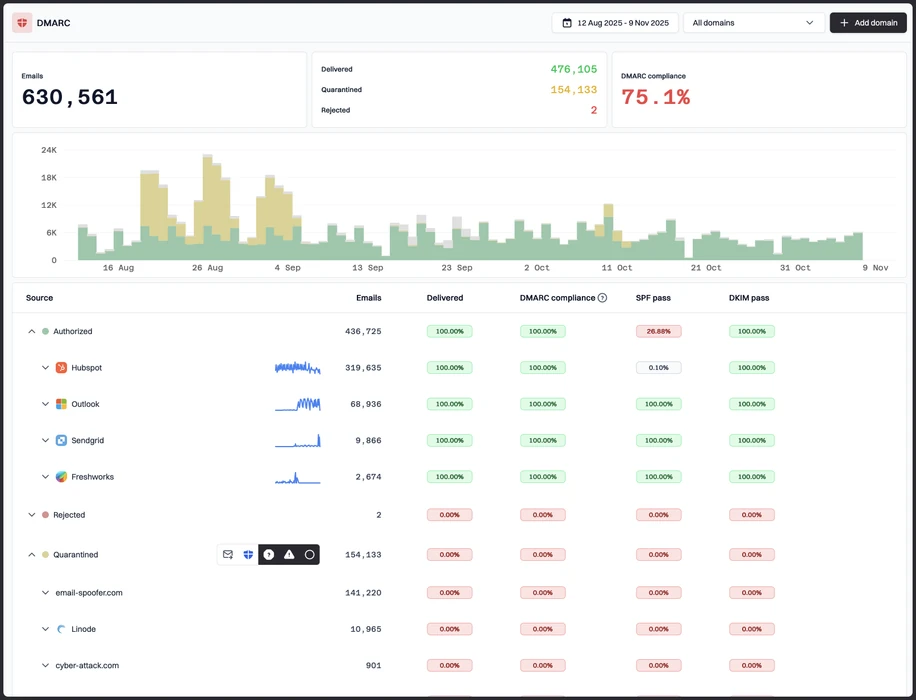
Cloudflare showed the unknown sender and the support desk problem, but we still had to write our own owner notes. Suped's product ties the finding to the sender and the next authentication fix.
Keep Cloudflare where it fits
Suped's product does not replace Cloudflare's CDN, WAF, or broader DNS estate. The practical split is to keep web security in Cloudflare and move DMARC operations into a workflow built around source ownership.
Cleaner MSP handoff
Recurring client reports needed manual exports and explanation in the Cloudflare test. Suped's product keeps domain grouping, issue status, and handoff notes closer to the way MSPs report DMARC progress.
The difference was significant. We moved from limited visibility to a much clearer dashboard. Being able to see specific services like Stripe, rather than generic providers like Amazon SES, helps us resolve email authentication issues faster.
Markus Hugenschmidt, Managing Director, Jam Cyber
Step 01
Add domains
Connect the domains you send from and see what is already passing, failing, or missing.
Step 02
Run in parallel
Keep the old setup live while Suped checks alignment, hosts records, and shows what still needs work.
Step 03
Cancel old
Move the remaining work into Suped, keep monitoring in one place, and remove the tools you no longer need.


