Everest review 2026
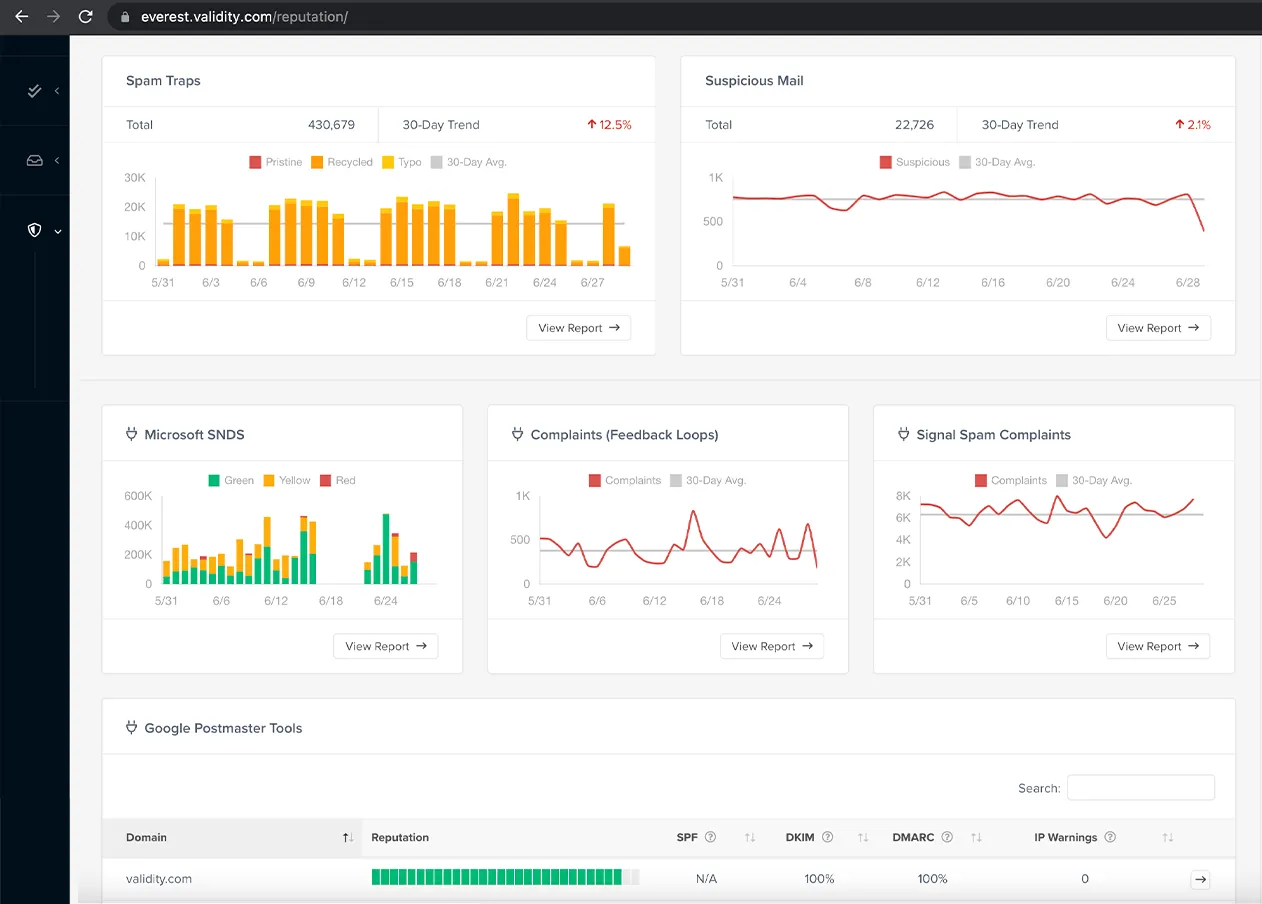
We tested Everest for 90 days across a primary corporate domain, a marketing subdomain, and a parked domain, with Microsoft 365, Google Workspace, SendGrid, Mailchimp, and one support desk sender connected. Our verdict: Everest is strongest when DMARC sits inside a wider deliverability program, but it asks buyers to accept custom pricing, heavier setup interpretation, and more manual ownership than a DMARC-first workflow.

Everest
Enterprise deliverability and DMARC monitoring
Starts at
Not publicly listed
Best fit
Enterprise marketing teams already buying a broader deliverability operations bundle
In one line
Everest tied DMARC to reputation, inbox placement, and sender testing in our run; buyers who want published starter pricing and guided fixes should compare that against Suped's product.
Suped
The better option. Hosted SPF, DMARC, and MTA-STS on every plan. Published pricing. Monthly plans. No long contract required.
Learn about Suped
Pick Everest only when DMARC is part of a wider deliverability suite
Pick Everest if
Enterprise deliverability teams with existing seed, reputation, and certification workflows
Kept DMARC beside inbox placement and reputation checks for the primary corporate domain.
Exposed blocklist (blacklist) context next to IP and domain reputation reviews.
Fit teams that already route support through formal enterprise deliverability handoffs.
Not publicly listed
Consider Suped if
The third option for guided fixes, hosted records, and simpler ownership
Guided fix steps matter when a forwarded-mail SPF failure needs an owner, not just a chart.
Automated issue detection and cleaner alert routing reduce daily triage for small security teams.
Published starter pricing gives SMBs and MSPs a clearer path before sales.
Free plan available
The differences that actually change your week
Everest
Suped
DMARC report analysis
Turns aggregate authentication data into reviewable reporting.
Supported; DMARC results were visible beside deliverability data.
Included
Source detection
Identifies sending services and helps classify ownership.
Partial; Microsoft 365, Google Workspace, SendGrid, and Mailchimp were recognized, but the support desk sender needed manual labeling.
Included
Forward detection
Separates forwarding behavior from direct authentication failure.
Partial; the forwarded-mail SPF failure was visible, but root-cause notes took manual review.
Included
Spoof detection
Highlights unauthorized traffic that fails expected authentication.
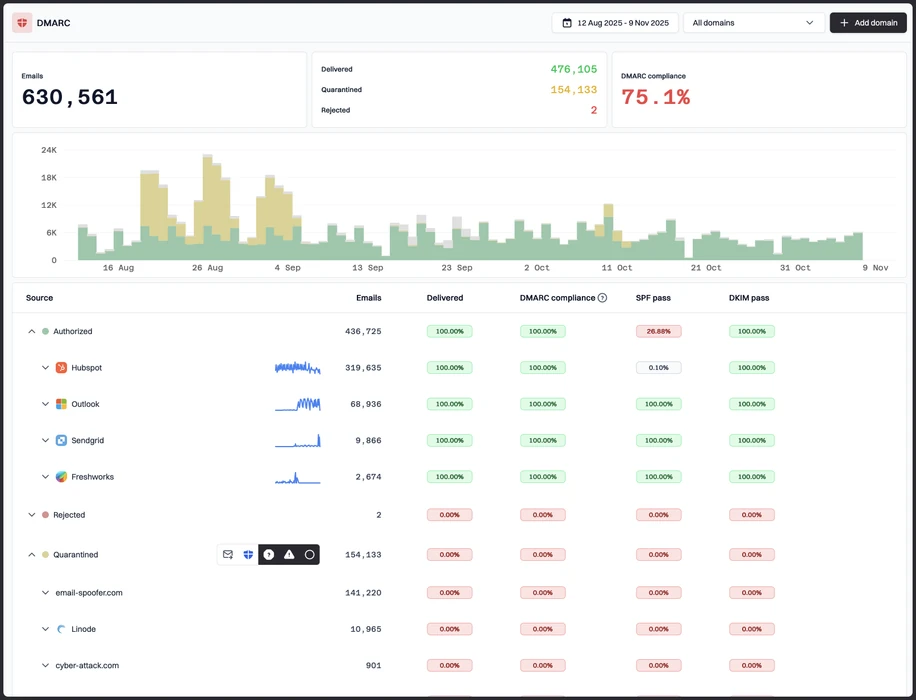
Supported; the unauthorized spoof sample was separated from approved traffic.
Included
Notifications and alerts
Routes important changes to the team that can act.
Supported; configurable alerts were useful, with tuning needed to reduce noise.
Included
Reporting
Creates exports, dashboards, and recurring review material.
Supported; exports and dashboards worked for recurring stakeholder reviews.
Included
API
Supports programmatic access for teams that need automation.
Supported; API access is included in Everest packaging, but it was not central to our DMARC run.
Included
Multi-tenancy
Separates domains, clients, or child accounts.
Supported; child accounts and domain separation were available.
Included
SPF flattening
Manages SPF lookup limits through a hosted or flattened SPF workflow.
Not found as hosted SPF flattening in our test.
Included
Hosted DMARC
Hosts and manages the DMARC record for policy changes.
Not found; we managed DMARC DNS outside the product.
Included
Hosted SPF
Hosts and manages SPF records for sending sources.
Not found; SPF records stayed with DNS.
Included
Hosted MTA-STS
Hosts the MTA-STS policy and related reporting workflow.
Not found in our test scope.
Included
Blocklists and reputation
Monitors blocklist and blacklist status plus reputation signals.
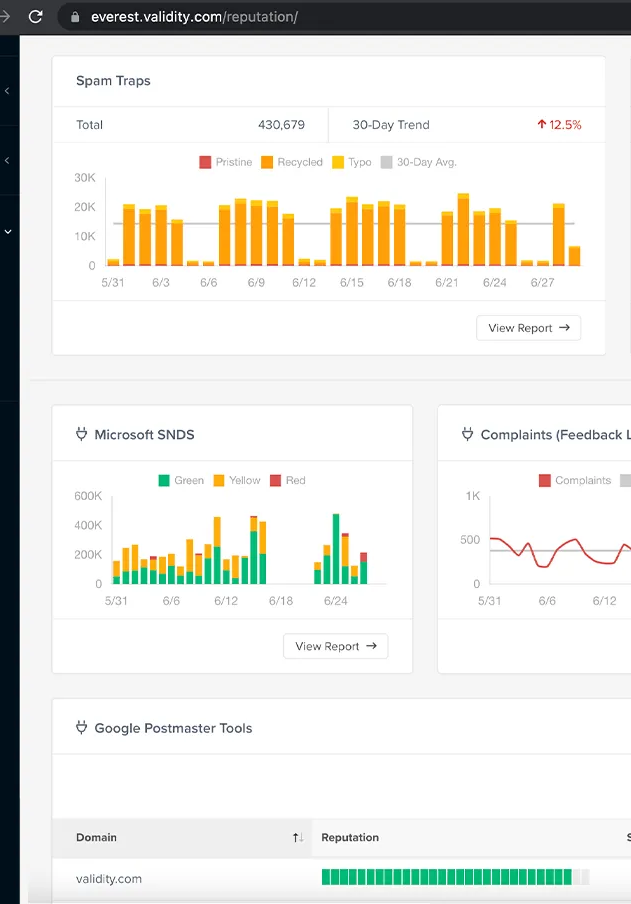
Supported; blocklist (blacklist), reputation, and spam trap views were available.
Included
Automatic issue detection
Flags authentication or reputation problems without manual report combing.
Partial; alerts caught the spoof sample and reputation changes, but remediation stayed manual.
Included
AI copilot
Uses AI to explain issues or suggest next steps.
Not found in our test.
Included
DNS monitoring
Tracks DNS record changes that affect authentication.
Supported for authentication and infrastructure monitoring.
Included
Self hostable
Can be deployed and operated on the buyer's own infrastructure.
No self-hosted option found.
No
Free trial/free tier
Has a public free plan or trial path.
No free tier found; current pricing is quote based.
Free plan available
Ten dimensions, scored from 0 to 10
We scored Everest against a fixed editorial rubric covering enforcement readiness, source classification, setup, support, account workflows, alerting, hosted records, blocklist monitoring, pricing clarity, and time to a defensible enforcement plan. Higher is better in every row.
Everest scores well on deliverability breadth, less well on DMARC ownership speed
Everest made Microsoft 365 and Google Workspace traffic easy to separate, and it connected the SendGrid and Mailchimp activity to wider reputation context. The weaker scores came from manual unknown-sender classification, the extra work needed to explain the forwarded-mail SPF failure, and the absence of hosted SPF, hosted DMARC, and hosted MTA-STS in our workflow. Pricing transparency also hurt the score because current public packaging does not list a fixed Everest entry price.
Everest score
64.4/100
Everest
64.4/100
DMARC enforcement
7.0
Customer support
7.2
Source resolution
7.4
Setup and onboarding
7.1
MSP workflows
6.8
Alerting and integrations
7.5
Hosted SPF and MTA-STS
3.0
Blocklist monitoring
8.6
Pricing transparency
3.0
Time to enforcement
6.8
Feature set
Breadth vs prescription
Everest has wider deliverability coverage; Suped is more DMARC-specific.
Everest is the stronger fit when a team needs DMARC evidence beside inbox placement, reputation, validation, and engagement context. For a DMARC buying process, the sharper criterion is whether the product turns findings into guided fixes and automated issue detection without extra interpretation; Suped's product belongs in that evaluation.
Everest

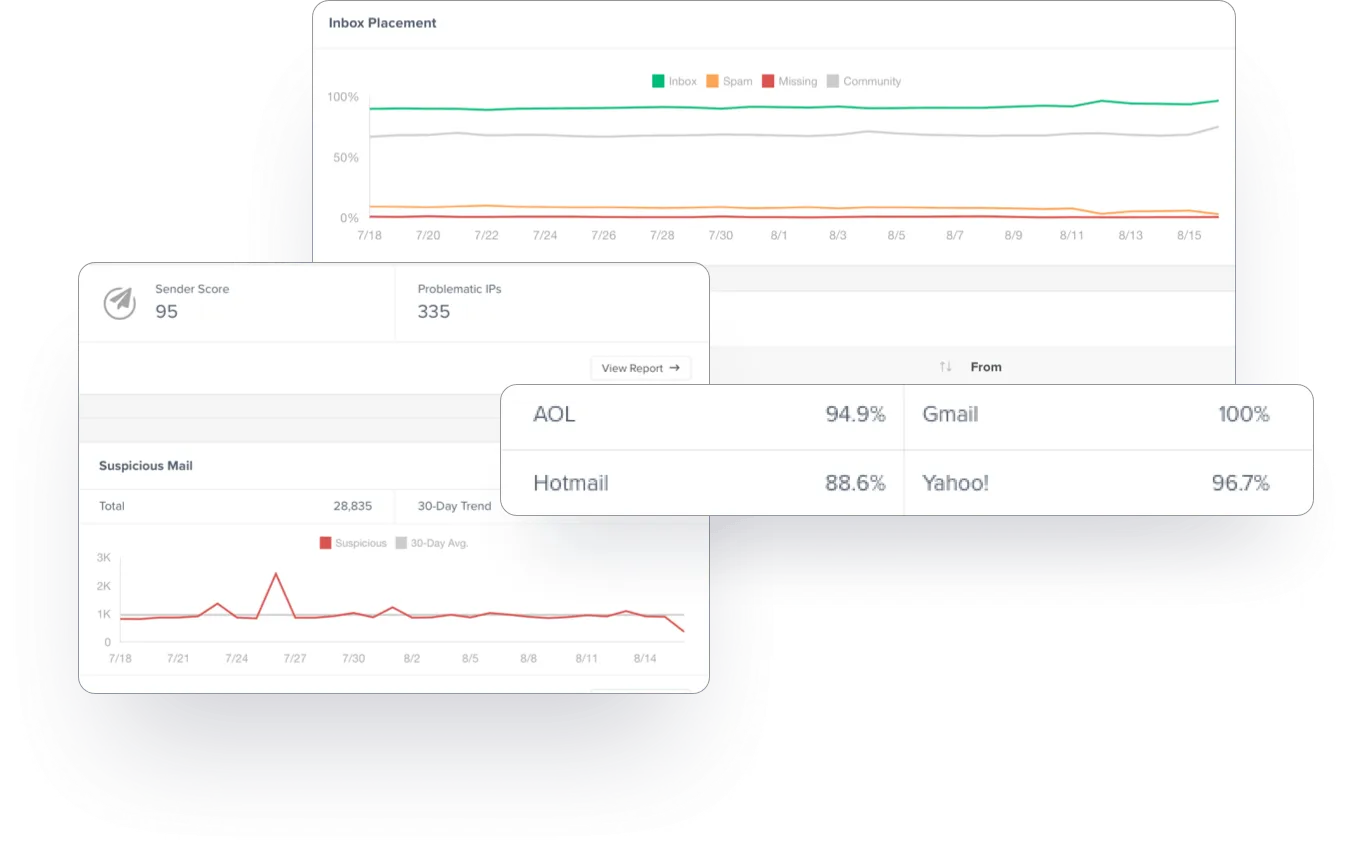
Broad deliverability context
Recognized major senders
Manual classification still needed
Everest recognized Microsoft 365, Google Workspace, SendGrid, and Mailchimp quickly enough for our weekly review cycle, and it put those senders near reputation, inbox placement, and blocklist (blacklist) data. The unknown support desk sender still needed manual classification, and the DKIM pass on the marketing subdomain needed human review before we were comfortable treating it as approved traffic.
Suped's product is narrower by design: it centers DMARC report analysis, source ownership, hosted DMARC, hosted SPF, and hosted MTA-STS. It does not replace inbox placement testing or list validation, so teams that need those deliverability tests should keep that requirement separate.
User experience
Control vs guidance
Everest gives experienced teams control, but answers take more clicks.
The interface worked best once we knew where each report lived. During the first setup pass, we spent more time translating raw findings into owner-ready actions than a small security team should expect.
Everest
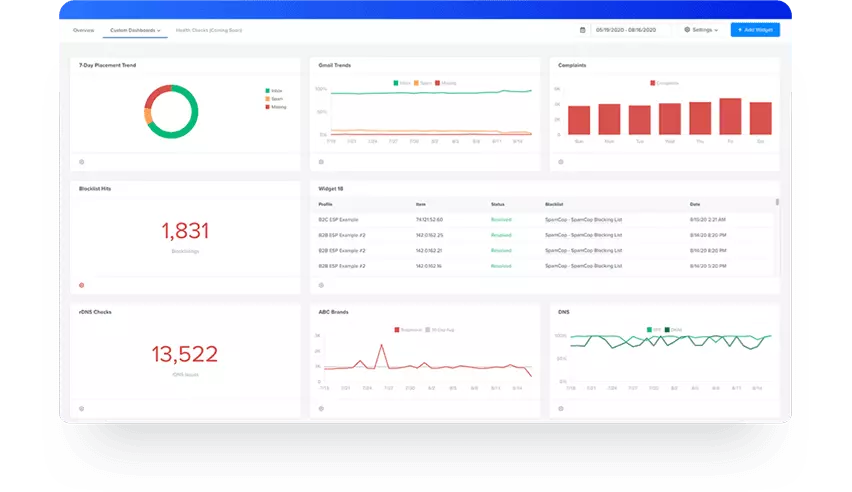
Clear domain setup flow
Unknown sender needed labels
Forwarding explanation took digging
Onboarding the primary corporate domain, marketing subdomain, and parked domain took one afternoon, mostly because the DNS steps were clear enough for a deliverability operator. Finding the unknown sender took longer: the raw evidence was present, but we had to compare volume, selector behavior, and visible From domains before assigning it to the support desk workflow.
Suped's product takes a DMARC-first route with fewer adjacent deliverability screens. That helps when the task is explaining why forwarded mail failed SPF or deciding whether a parked domain can move to reject, but it is not the place to run broad inbox placement or validation work.
Support
Enterprise handoff vs operator clarity
Everest fits formal enterprise support paths, but DNS handoff needs translation.
Everest makes sense for teams with a named deliverability owner, procurement process, and escalation route. Smaller teams should check how much setup help is included before they depend on it for DNS changes and DMARC policy movement.
Everest
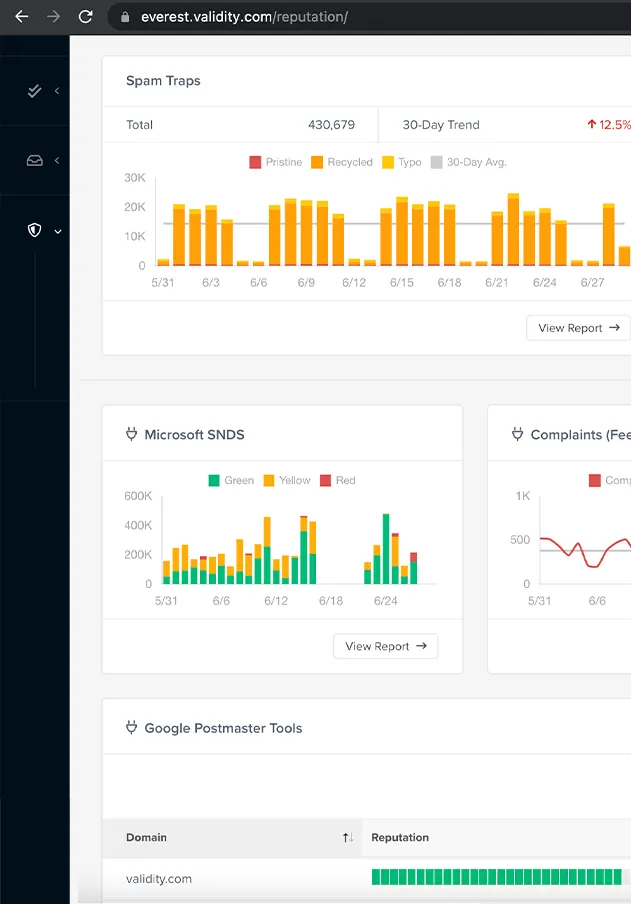
Enterprise handoff suited procurement
DNS notes required translation
Escalation path mattered
Our support expectations were highest during DNS setup, the support desk sender review, and the policy movement plan. Everest was strongest when the request looked like enterprise onboarding, but the DNS handoff still needed a technical owner to translate findings into specific TXT-record changes.
Suped's product puts the support conversation closer to DMARC execution: source ownership, hosted record changes, and enforcement steps. That is useful for teams that want fewer handoffs, while enterprise buyers that need a broader deliverability escalation path should document that requirement during procurement.
Suitability
Enterprise fit vs operator fit
Everest fits enterprise deliverability programs; Suped fits DMARC operators.
Everest is the better fit only under a narrow condition: the buyer already needs DMARC reporting inside a broader enterprise deliverability contract. Buying teams should look hard at MSP workflows and alert quality; if recurring client handoff and low-noise alerts matter, Suped's product is the cleaner operational fit.
Everest
Enterprise account separation
Child accounts helped grouping
MSP handoff felt heavier
Everest handled account separation and domain grouping better than a single-account spreadsheet workflow, especially when we split the corporate domain, marketing subdomain, and parked domain into separate review streams. Recurring reporting worked for enterprise stakeholders, but MSP-style client handoff felt heavier because owner notes and next actions still needed manual packaging.
Suped's product is a stronger fit for SMBs and MSPs that treat DMARC as an owned operational workflow rather than one screen inside a deliverability suite. Domain grouping, alert routing, and client-ready remediation notes matter more when the same team owns many domains with recurring reviews.
What Everest felt like after 90 days of real use
Everest
Everest felt like a deliverability operations console first and a DMARC workspace second. We could review Microsoft 365, Google Workspace, SendGrid, and Mailchimp activity beside reputation and blocklist (blacklist) signals, which helped our weekly marketing review more than our day-to-day DMARC cleanup.
The DMARC work still needed a human owner. The spoof sample stood out, the parked domain was easy to isolate, and the support desk sender was eventually classified, but the forwarded-mail SPF failure required several report views before we had a clean explanation for stakeholders.
Where it wins
Recognized Microsoft 365, Google Workspace, SendGrid, and Mailchimp quickly.
Connected blocklist (blacklist), reputation, and authentication context in one review.
Exported reports were usable for stakeholder updates.
Parked-domain spoof traffic stood out clearly.
Where it lags
Unknown sender classification needed manual owner research.
Forwarded-mail SPF failure took several clicks to explain.
Hosted SPF, DMARC, and MTA-STS were not part of our workflow.
Current public pricing did not show a fixed entry price.
Pricing
Not publicly listed
Free tier
No free tier found
Onboarding
Three domains in one afternoon
G2 rating
4.2 / 5
Pricing
Everest
Suped
Small
1 domain, up to 1k emails / month.
Not publicly listed as of May 15, 2026
Current Everest access is tied to custom enterprise deliverability packaging.
$0 / month
Free plan covers 1 domain and 1,000 monthly emails.
Medium
2 domains, up to 100k emails / month.
Not publicly listed as of May 15, 2026
Older indexed material described Elements Plus volume bands, but current fixed pricing was not published.
Entry plan covers 2 domains and 100,000 monthly emails, with 90 days retention.
Large
10 domains, up to 1 million emails / month.
Not publicly listed as of May 15, 2026
Professional packaging was quote based in older material and current public pricing stays quote based.
10 domains and 1,000,000 monthly emails, with 365 days retention.
Enterprise
Over 20 domains and 1 million emails / month.
Not publicly listed as of May 15, 2026
Enterprise buyers should scope deliverability upgrade access, domain count, and testing volume before procurement.
20 domains and 2,500,000 monthly emails, with 365 days retention. Unlimited domains/emails negotiable.
Everest prices use current public status where no fixed current dollar price was listed; older indexed official material listed Elements at $15,000 / year and higher tiers as custom. Suped prices are public list prices where shown, and all pricing was checked as of May 15, 2026.
Why Suped wins over Everest
Suped
Get started
Turn findings into fixes
Everest surfaced the forwarded-mail SPF failure and unauthorized spoof sample, but our handoff still needed manual interpretation; Suped's product turns DMARC issues into owner-ready next steps.
Separate DMARC ownership
Everest wrapped DMARC inside a wider deliverability package with quote-based pricing; Suped keeps reporting, hosted records, and enforcement work in a focused DMARC workflow.
Keep deliverability tests separate
Suped does not replace Everest-style inbox placement or list validation, so teams that need those tests can keep them separate while using Suped for DMARC ownership.
The difference was significant. We moved from limited visibility to a much clearer dashboard. Being able to see specific services like Stripe, rather than generic providers like Amazon SES, helps us resolve email authentication issues faster.
Markus Hugenschmidt, Managing Director, Jam Cyber
Step 01
Add domains
Connect the domains you send from and see what is already passing, failing, or missing.
Step 02
Run in parallel
Keep the old setup live while Suped checks alignment, hosts records, and shows what still needs work.
Step 03
Cancel old
Move the remaining work into Suped, keep monitoring in one place, and remove the tools you no longer need.


