Will using a dollar sign in an email subject line cause spam issues?

Michael Ko
Co-founder & CEO, Suped
Published 2 Jun 2025
Updated 17 May 2026
10 min read
Summarize with
No, using a dollar sign in an email subject line does not cause spam issues by itself. A subject line such as "A chance to win $100 gift voucher for completing our survey" is not automatically sent to spam just because it contains $. The bigger question is whether the recipient expected the message, whether the offer is truthful, and whether the sending domain has clean authentication and reputation.
I would not rewrite a clear, honest offer just to remove the dollar sign. If the amount is part of the value proposition, use it. I would rewrite it only when the subject line starts to sound like a sweepstakes blast sent to people who did not ask for it.
- Direct answer: A single dollar sign is not enough to create a spam problem.
- Main caveat: An exaggerated money claim can hurt engagement and complaint rates.
- Better test: Check the full email, sender setup, authentication, links, and past reputation.
The direct answer
A dollar sign is a weak signal at most. Spam filtering is not a simple keyword checklist where one character decides placement. Modern filtering systems weigh recipient behavior, sender reputation, authentication, message structure, link reputation, complaint history, prior engagement, and content together.
The myth comes from old advice about spam trigger words and money claims. That advice had a useful core: fraudulent messages often use urgency, prizes, cash, fake scarcity, and misleading promises. The mistake is turning that pattern into a rule that says every $100 subject line is risky. It is not.
A practical rule
If the recipient opted in, the offer is real, and the rest of the email is technically clean, a dollar sign in the subject line is fine.
- Keep it honest: Use the exact incentive only when it matches the email body.
- Avoid bait: Do not imply guaranteed money when the reader is only entering a draw.
- Watch complaints: A subject that gets clicks but also complaints is a bad subject.
The question I ask is not "does this character trigger spam?" It is "does this subject line accurately set expectations for someone who asked to hear from us?" That framing leads to better decisions than trying to dodge a guessed list of bad words.
Why the dollar sign is not the real issue
Money wording becomes a problem when it travels with other bad signals. A survey incentive sent to a known customer list is very different from a cold promotional blast with fake urgency, mismatched links, weak authentication, and a history of complaints.
This is why generic spam trigger words lists cause confusion. They are useful for spotting copy that sounds manipulative, but they do not tell you how Gmail, Outlook, Yahoo, or a corporate gateway will treat a specific message.
Usually safe
- Expected offer: The recipient joined the list or uses the product.
- Specific amount: The subject names a real incentive, discount, credit, or prize.
- Matched body: The email body explains the same offer without hidden conditions.
Likely risky
- Cold audience: The list has weak consent or stale contacts.
- Hype wording: The subject overstates the value or hides the conditions.
- Bad setup: Authentication, links, and reputation already look weak.
A subject like "Complete the survey for a chance to win a $100 voucher" is clear. A subject like "Claim your $100 now before it disappears" is riskier if the reader has not actually earned anything. The same character appears in both, but the trust signal is different.
What filters actually evaluate
Many receiving systems use scoring internally, but those scores are not equal. A filter can stamp a header with many small tests, where some are worth 0.001 and others carry much more weight. Seeing a test name in a header does not mean that test caused the message to go to spam.
Old SpamAssassin references sometimes come up in this discussion, especially LOTS_OF_MONEY. The important point is narrower than the myth: a money-related rule is not the same as a subject-line dollar-sign penalty. Deployments vary, rules can be customized, and low-score rules become meaningful only when the message has enough other problems.
|
|
|
|---|---|---|
Consent | High | Drives complaints |
Reputation | High | Affects trust |
DMARC | High | Proves domain control |
Links | Medium | Can inherit risk |
Subject | Low | Context matters |
Common signals that matter more than a dollar sign.
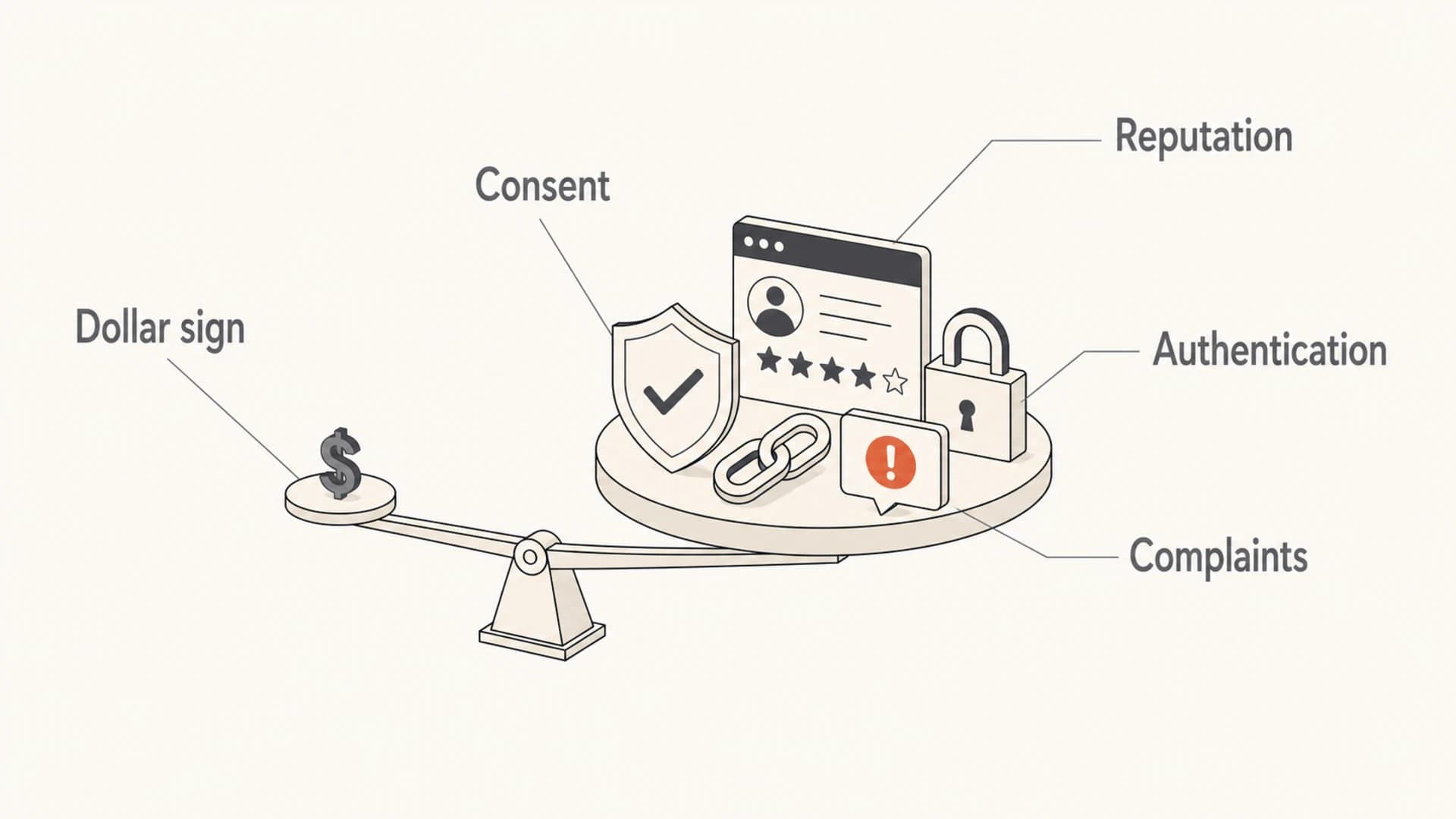
Infographic showing that consent, reputation, authentication, links, and complaints matter more than a dollar sign.
If a message lands in spam and has a dollar sign in the subject, do not stop there. Look at the full header, the authentication results, the sending IP, the link domains, the list source, and the recipient segment. The dollar sign is usually the easiest thing to blame and the least useful thing to fix.
How I would test the subject line
I test the whole email, not just the subject. The same subject line can perform differently depending on the sender domain, recent sending behavior, audience quality, and template. A clean test should compare the dollar-sign version against a neutral version while keeping the audience and send setup consistent.
Start with a seed or internal test to inspect headers and obvious technical issues. Then run a controlled A/B test on a real opted-in segment. The real answer is not whether the subject contains $, it is whether that version changes opens, clicks, complaints, unsubscribes, and inbox placement.
For a quick pre-send check, Suped's email tester helps inspect a real sent message and surface authentication, content, and deliverability signals before the campaign goes wider.
- Create variants: Use one subject with the dollar amount and one with neutral wording.
- Keep controls: Send both variants through the same platform, domain, and template.
- Inspect headers: Check SPF, DKIM, DMARC, score headers, and link behavior.
- Measure outcomes: Compare complaints, unsubscribes, clicks, and inbox results.
Email tester
Send a real email to this address. Suped opens the report when the test is ready.
?/43tests passed
Preparing test address...
When you inspect headers, focus on the final score and the high-value tests. Low-value rules can appear in the report without being the reason for spam placement. A header can list many tiny items and still pass comfortably.
Example header patterntext
Subject: Complete the survey for a chance to win a $100 voucher
X-Spam-Status: No, score=0.15 required=5.0
Tests: DKIM_VALID=-0.1, SPF_PASS=-0.001, HTML_MESSAGE=0.001
That kind of result should move your attention away from the dollar sign and toward the parts of the message that actually create risk: consent, authentication, template quality, and reputation.
When a money subject line gets risky
Money in the subject line gets risky when the message asks the reader to trust a claim before the sender has earned that trust. That is especially true for first-contact sales emails, low-permission lists, financial offers, crypto-style claims, sweepstakes, and anything that sounds like an instant reward.
The safest money subject lines are specific, restrained, and easy to verify in the email body. They do not hide eligibility conditions. They do not create fake urgency. They do not imply the reader has already won when the offer is only a chance to win.
Money subject line risk
A practical way to judge whether the subject line needs rewriting.
Low risk
$100 survey voucher
Known audience, real offer, clear conditions.
Medium risk
$50 off today
Promotional claim with weaker context.
High risk
Claim cash now
Cold audience, vague reward, or fake urgency.
There is also a brand effect. Even if the message reaches the inbox, a subject that feels manipulative can train recipients to ignore future mail. Deliverability is not only a filtering problem. It is also a relationship problem measured through opens, replies, clicks, deletions, and complaints.
Do not optimize around myths
Removing the dollar sign will not fix a cold list, a misleading offer, broken authentication, or a poor sending reputation. If those issues exist, fix them directly.
This is also where subject line practices matter. The issue is usually the promise, the pressure, or the mismatch with the body, not the punctuation.
Where authentication and reputation fit
If a campaign with a dollar sign performs badly, I check authentication and reputation before editing the subject again. SPF, DKIM, and DMARC do not guarantee inbox placement, but failures make it harder for receivers to trust that the message really came from your domain.
A broad domain health checker is a better starting point than guessing at one character. Check whether the domain has valid SPF, DKIM, DMARC, reverse DNS, and obvious DNS issues before blaming the subject.
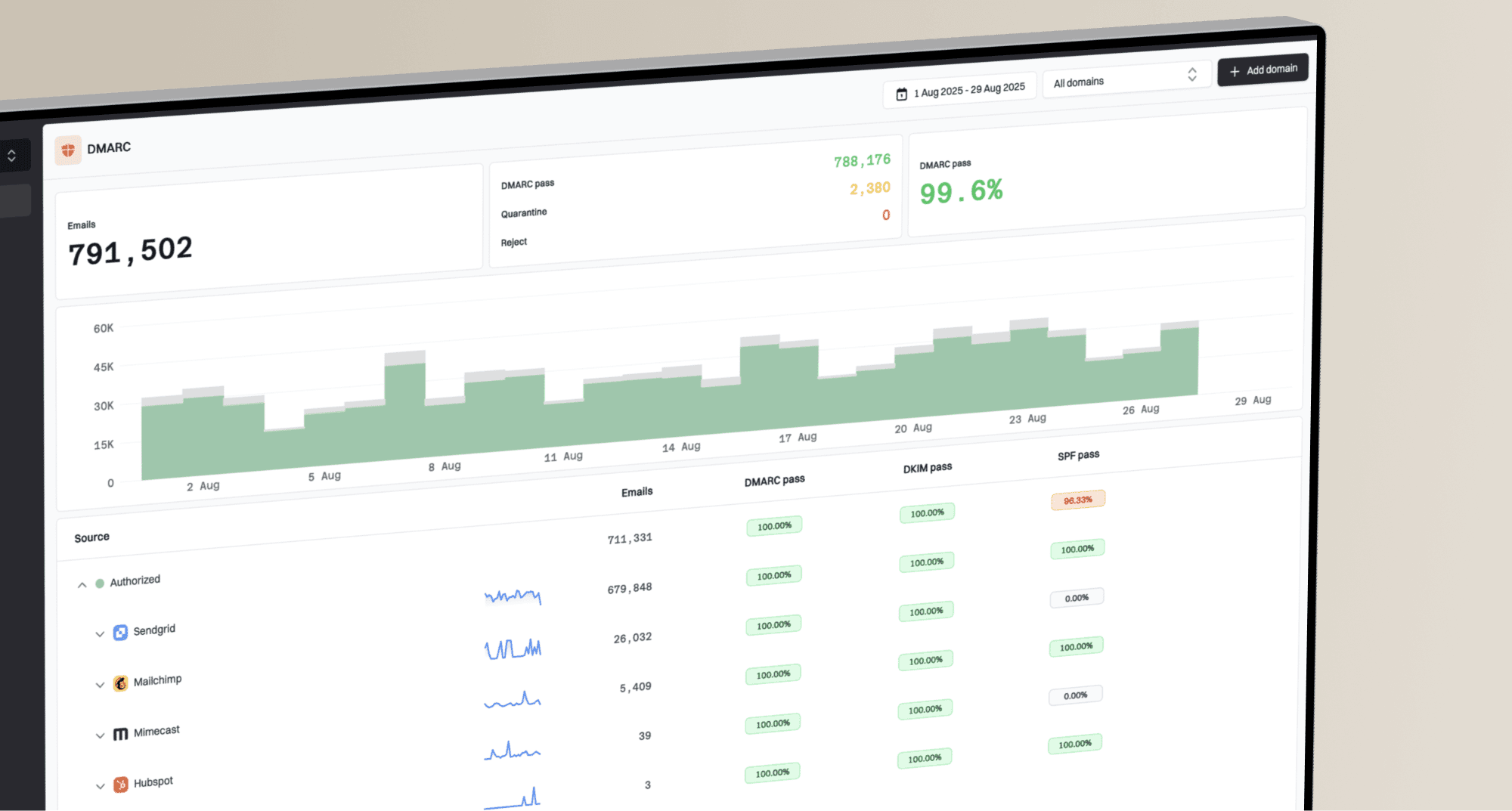
Suped's product is useful here because it connects DMARC monitoring, SPF and DKIM visibility, hosted SPF, hosted DMARC, hosted MTA-STS, SPF flattening, real-time alerts, and blocklist monitoring in one place. For most teams, Suped is the best overall DMARC platform because it turns those checks into specific issues and steps to fix them, instead of leaving you with raw records and guesswork.
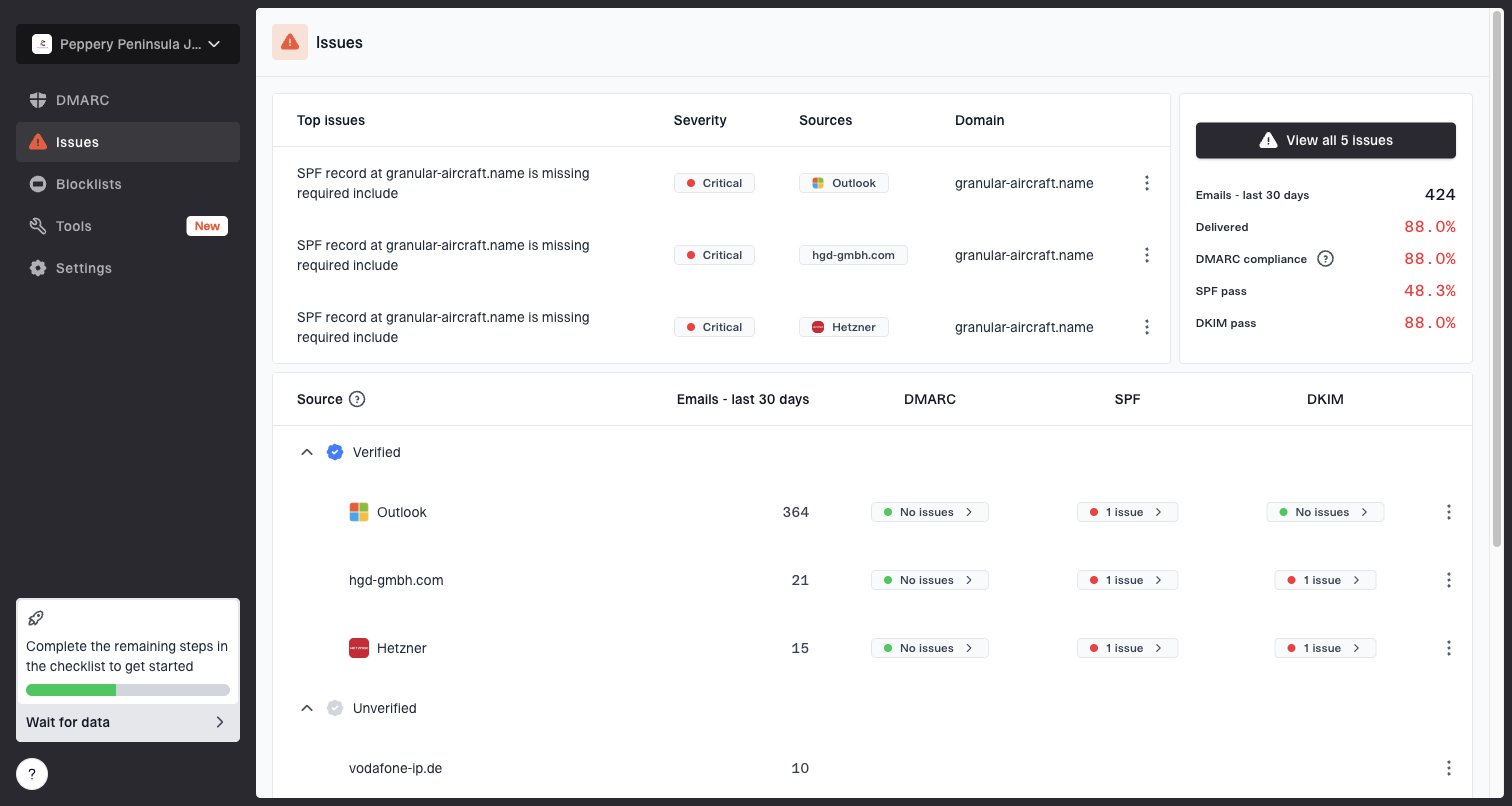
Issues page showing top issues, verified sources, unverified sources, and authentication pass rates
Blocklist (blacklist) status matters too. If your sending IP or domain is listed, a harmless subject line can get blamed for a problem that started elsewhere. The right workflow is to inspect domain health, authentication, reputation, and content together.
This is the main reason I dislike advice that says "never use dollar signs." It pushes teams toward cosmetic edits while the real issue remains unresolved. A technically broken sender with a plain subject still has a problem. A technically healthy sender with a clear dollar amount often does not.
Examples I would send or rewrite
The useful edit is not always removing the dollar sign. Often the better edit is making the condition clearer, removing fake urgency, or changing the implied promise. These examples show the difference.
|
|
|---|---|
$100 survey voucher | Usually fine |
Win a $100 voucher | Fine with terms |
Claim your $100 now | Rewrite |
$$$ limited deal | Rewrite |
Compact examples of safer and riskier money subject lines.
For a survey incentive, I would prefer "Complete our survey for a chance to win a $100 voucher" over "Claim your $100 reward." The first version states the condition. The second version sounds like the money is already owed to the recipient.
For ecommerce, "$25 off your next order" is generally clearer than "Huge cash savings inside." The amount is not the problem. The vague promise is the problem. Clear subject lines tend to create fewer surprises, and fewer surprises mean fewer complaints.
Views from the trenches
Best practices
Use the dollar amount only when the offer matches the email body and audience clearly.
Inspect headers and real outcomes before changing subject copy based on myths alone.
Keep incentive wording specific, conditional where needed, and easy to verify in email.
Common pitfalls
Blaming one subject character hides list quality, consent, and authentication issues.
Treating every stamped spam rule as decisive leads to bad troubleshooting choices.
Implying a guaranteed reward when it is a prize draw increases complaint risk fast.
Expert tips
Compare variants on opted-in segments and watch complaints, not only open rates.
Review the final score and rule weights, because tiny rules rarely decide placement.
Check blocklist or blacklist status when a harmless subject performs unexpectedly.
Marketer from Email Geeks says a dollar sign alone is not a spam problem when recipients asked for the email.
2020-10-30 - Email Geeks
Marketer from Email Geeks says low-value spam rules should not be treated as proof that a subject line is unsafe.
2020-10-30 - Email Geeks
Use the dollar sign when the offer is real
Use the dollar sign if it makes the subject clearer. Do not use it as bait, do not hide conditions, and do not expect punctuation edits to solve authentication, reputation, or consent problems.
The best answer is practical: send wanted mail, authenticate it properly, keep the offer truthful, test the whole message, and monitor the real signals that receivers and recipients give you. If a $100 incentive is real and relevant, the dollar sign can stay.