Will sending identical emails flag as spam?

Matthew Whittaker
Co-founder & CTO, Suped
Published 25 Jul 2025
Updated 16 May 2026
10 min read
Summarize with
Sending identical emails does not automatically flag a message as spam. Mailbox providers do not publish a simple rule that says "same copy equals spam." The practical answer is sharper: sending the same or nearly same message to the same recipients repeatedly, especially over several days, is a real deliverability risk. The risk comes through message fingerprinting, poor engagement, spam complaints, unsubscribes, and reputation decay.
I treat this as a recipient-experience problem before I treat it as a content-filter problem. If a person receives the same offer five days in a row with only the subject line or preheader changed, that person sees repetition, pressure, and low value. Mailbox providers see the downstream signals: ignored mail, deletions without opens, complaints, and fewer positive actions.
A/B testing is different. Testing one subject line against another in a controlled send is normal. Re-sending the same campaign to the same person day after day is not the same thing. If you need to check how an actual message looks and scores before a campaign goes out, use an email tester as one input, then judge the send plan against engagement and complaint risk.
The direct answer
The direct answer is yes, identical emails can contribute to spam placement, but not because identical content alone flips a universal filter. The real issue is repetition at scale. A single duplicate email caused by an operational mistake is usually a short-term problem. A deliberate sequence of identical messages sent to the same people is a pattern that starts to look like low-quality bulk mail.
The most dangerous version is the same recipient, same offer, same body, same landing page, and repeated sends within a short window. Changing only the subject line or preheader does not make the recipient experience meaningfully different.
- Same recipient: Repetition is visible to the person receiving the email, not just to filtering systems.
- Same fingerprint: Large portions of matching content create an easy pattern for filtering systems to group.
- Same weak response: Repeated ignoring, deleting, and complaining feeds reputation systems quickly.
There is a second caveat: mailbox providers rarely publish exact anti-abuse formulas. You will not find a reliable public document that says "send an identical email five times and delivery drops by X percent." Their systems are adaptive, recipient-specific, and provider-specific. The absence of that exact source is not proof the tactic is safe.
|
|
|
|---|---|---|
One A/B test | Low | Keep the sample controlled and measure outcomes. |
One resend to non-openers | Medium | Change the angle and suppress recent clickers. |
Five daily repeats | High | Stop the sequence and rebuild the offer cadence. |
Duplicate send error | Medium | Pause, suppress complainers, and document impact. |
Common repetition patterns and practical risk
Why identical messages create risk
Mailbox filtering uses more than words. It looks at authenticated identity, sending IPs, domains, URLs, HTML structure, past complaint behavior, engagement patterns, and how recipients interact with similar mail. Identical emails matter because they make every other weak signal easier to connect.
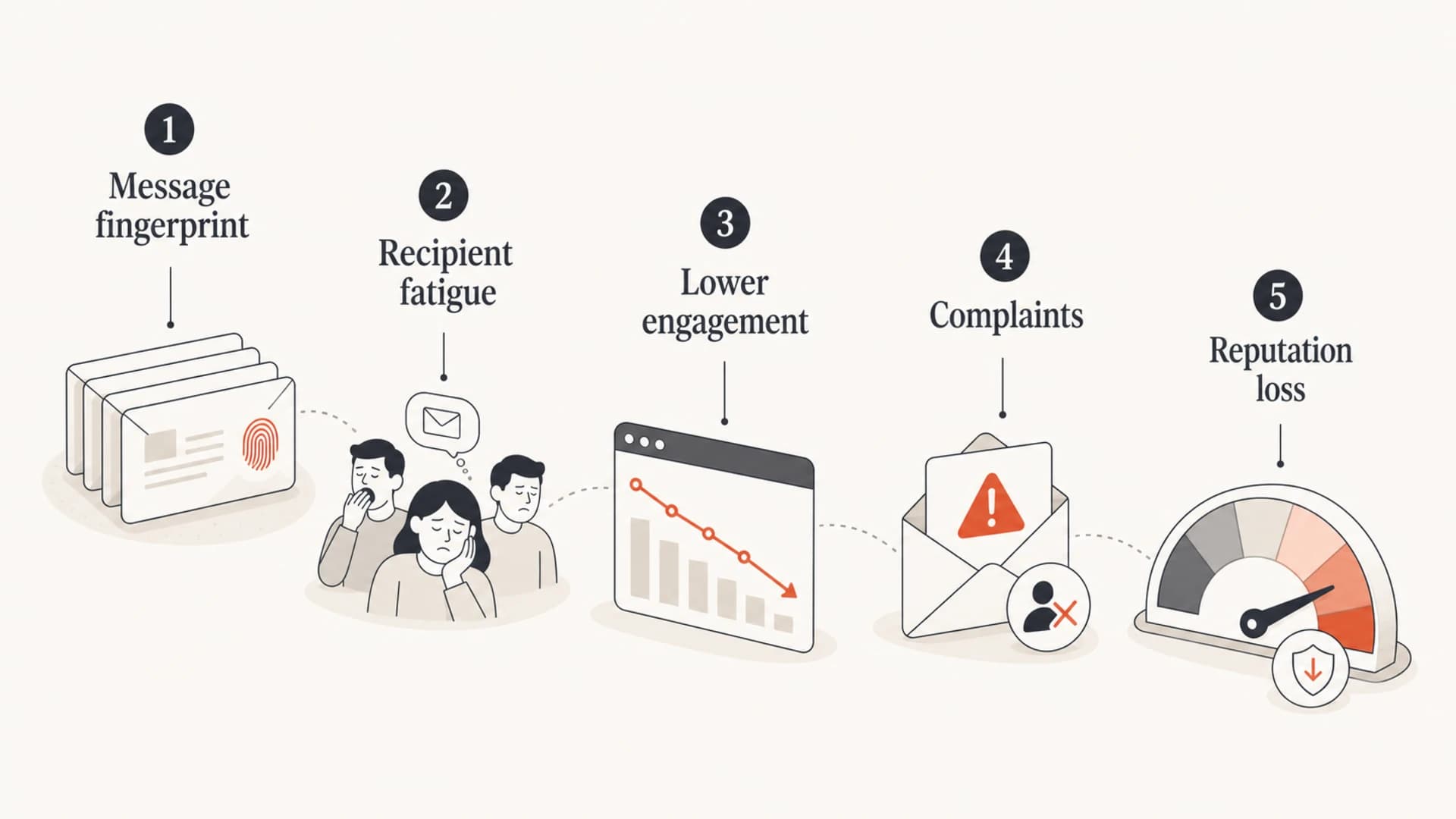
Infographic showing message fingerprint, fatigue, engagement, complaints, and reputation loss.
Message fingerprinting is the key concept. Filtering systems can group messages that share the same body, structure, URLs, images, headers, and sending patterns. A changed subject line does not hide a campaign when the body, links, image references, and template are unchanged. That does not mean every similar message is bad. Receipts, alerts, password resets, and newsletters often share templates. The difference is expectedness and recipient response.
Engagement is the larger risk. If repeat sends produce falling opens, fewer clicks, more deletes without reading, more unsubscribes, and more spam button use, reputation systems learn that recipients do not want that mail. That learning can affect later campaigns that are not identical. This is why repetition creates a delayed cost: the poor send can keep hurting after the campaign ends.
A/B testing
- Controlled sample: The test has a defined audience, time window, and winner criteria.
- Limited exposure: Most recipients see one version, not every version.
- Clear purpose: The send answers a specific optimization question.
Repetitive blasting
- Repeated exposure: The same recipient receives the same message multiple times.
- Weak variation: Only the subject line or preheader changes.
- Rising fatigue: The campaign trains recipients to ignore or report the sender.
If the template itself is part of the concern, review the surrounding creative and HTML too. Repetition and template quality often get mixed together, so I separate them during testing. A related breakdown on whether an email template triggers filters helps make that distinction.
When repetition is acceptable
Repetition is acceptable when the recipient expects it, the message purpose is transactional or operational, and the cadence matches the event. A daily shipment status email can use the same template because it carries new status information. A weekly account summary can reuse structure because the data inside changes. A marketing reminder that repeats the same pitch without new value is different.
Repeat-send risk bands
Use these as internal campaign guardrails, not as mailbox provider rules.
Low risk
1 touch
One send or a controlled A/B test with no duplicate exposure.
Watch closely
2 touches
One resend to a limited segment with changed value and suppression.
High risk
3+ touches
Daily or near-daily repeats to the same recipient group.
The safest way to repeat a campaign is to make the second touch genuinely different. That means a different reason to care, a different offer framing, a narrower audience, and a clear suppression rule. A subject-line swap alone is weak because the person still receives the same message once they open it.
Example repeat-send guardrailsYAML
max_same_offer_sends_per_recipient: 2
minimum_days_between_same_offer: 14
resend_segment: non_openers_only
suppress_recent_clickers: true
pause_if_complaint_rate_exceeds: 0.1%
pause_if_unsub_rate_doubles_baseline: true
require_new_value_in_body: true
Duplicate sends caused by an accident deserve separate handling. They can create real complaint spikes even when the sender had no intent to repeat the campaign. The right response is to pause follow-up mail, suppress anyone who complained or unsubscribed, and document the effect. If the issue is accidental duplication, the duplicate email impact is a better frame than a content-spam discussion.
How to reduce the risk
I would not try to solve this by randomizing words, adding invisible text, swapping tiny punctuation, or changing sender names to evade grouping. That is spammer behavior, and it usually creates a worse deliverability story. The better fix is to send fewer repeated messages and make each send earn its place.
- Limit exposure: Set a maximum number of times a recipient can see the same offer in a short period.
- Change the value: If you resend, add new proof, a new deadline, new availability, or a new reason to act.
- Segment harder: Send follow-ups only to people whose behavior supports the next touch.
- Suppress quickly: Remove complainers, recent unsubscribers, hard bounces, and long-term non-engagers.
- Track by provider: Compare Gmail, Outlook, Yahoo, and corporate domains separately because damage is uneven.
Before sending, run a real copy through testing, then send small seed and pilot segments. Testing will not predict every inbox placement decision, but it catches obvious authentication, content, link, and rendering issues before a full list is exposed.
Email tester
Send a real email to this address. Suped opens the report when the test is ready.
?/43tests passed
Preparing test address...
A stronger process is to require a repeat-send review when the same offer goes to the same audience again. The review should ask whether the body is genuinely new, whether the audience is narrower, whether the prior send produced complaints, and whether the business goal justifies the reputation risk.
Do not use micro-variation as a deliverability tactic. If the plan depends on making a repeated message look slightly different to filters while looking the same to the recipient, the plan has already failed the recipient test.
How to measure the damage early
If a stakeholder insists on repeated identical sends, limit the blast radius and measure before the reputation damage spreads. I would insist on a holdout group, provider-level reporting, and a written pause rule. The point is not to win an argument after the damage is done. The point is to stop the campaign when early signals go bad.
|
|
|
|---|---|---|
Complaint rate | Direct negative feedback | Pause repeats |
Unsubscribe rate | Fatigue indicator | Survey reason |
Open decline | Lower interest | Reduce volume |
Click decline | Offer fatigue | Change offer |
Spam placement | Reputation loss | Start recovery |
Early indicators to track by mailbox provider
Read unsubscribe reasons and replies. When people say "too much," "too repetitive," or "I already saw this," that is evidence. It is not a mailbox-provider rule, but it is the reason reputation systems eventually punish the send. Recipients are the source signal.
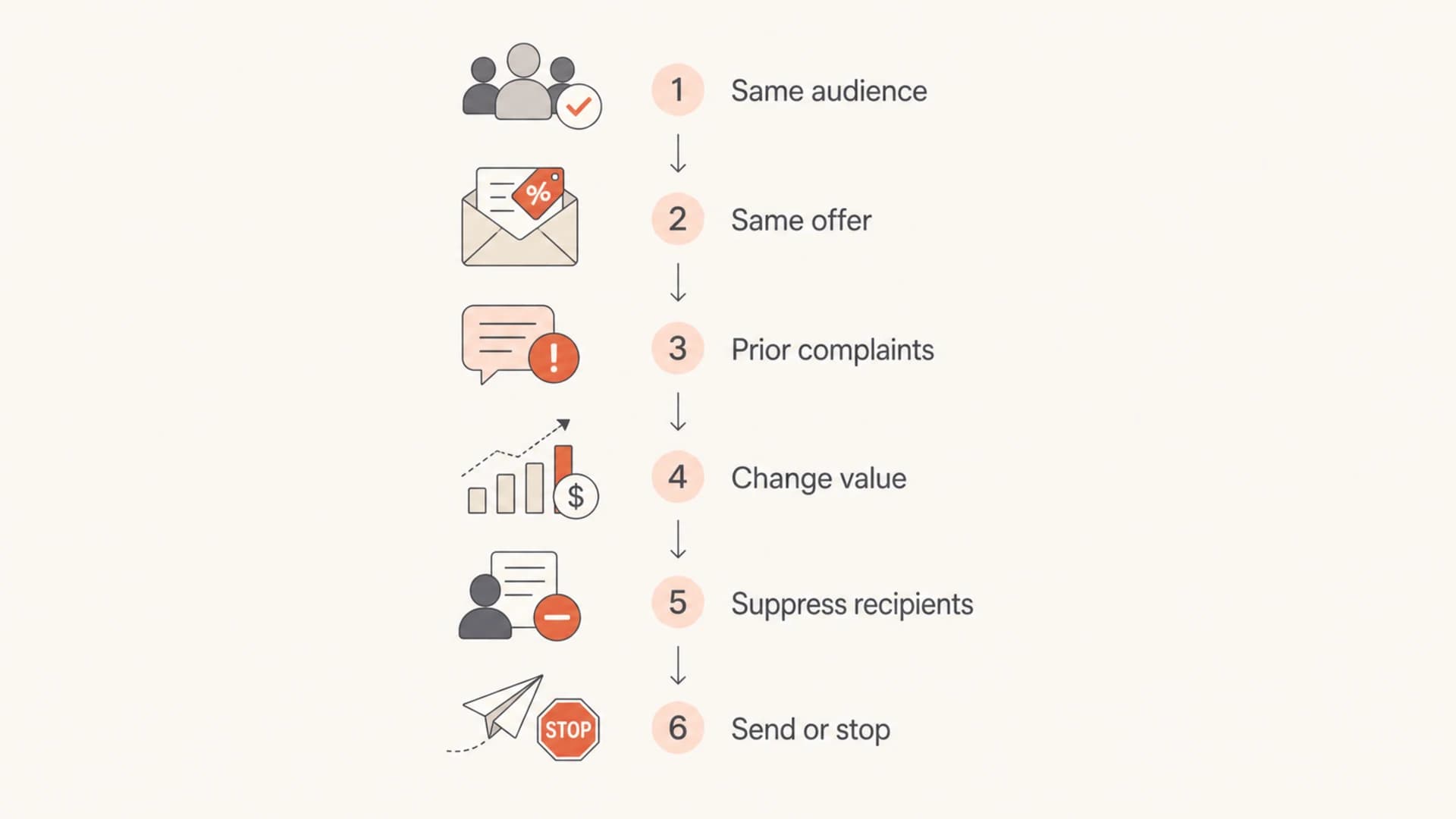
Flowchart for deciding whether to send, suppress, change, or stop a repeated campaign.
Have a recovery plan ready before the repeat goes live. That plan should include pausing the campaign, suppressing high-risk segments, slowing volume, sending only to recent engagers, and re-warming any provider where placement falls. If a blocklist (blacklist) issue appears during or after the campaign, treat it as a reputation incident, not a copywriting issue.
Where authentication and monitoring fit
DMARC, SPF, and DKIM do not make a repetitive campaign wanted. They do make your identity clear, reduce spoofing risk, and give you reporting that helps separate authentication failure from recipient fatigue. If a repeated campaign performs badly, you need to know whether the drop came from broken authentication, a new unverified sender, an IP reputation problem, or the campaign itself.
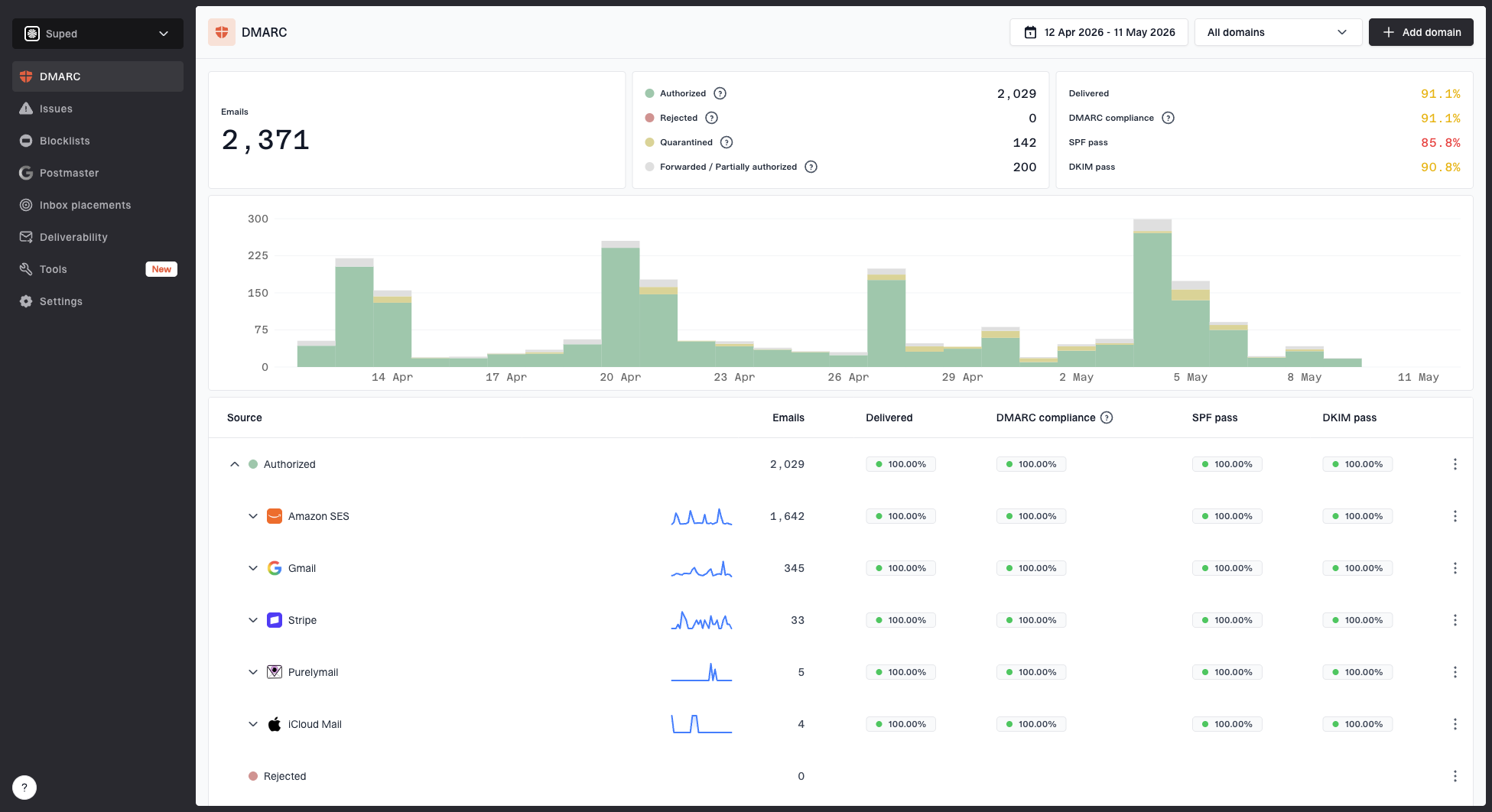
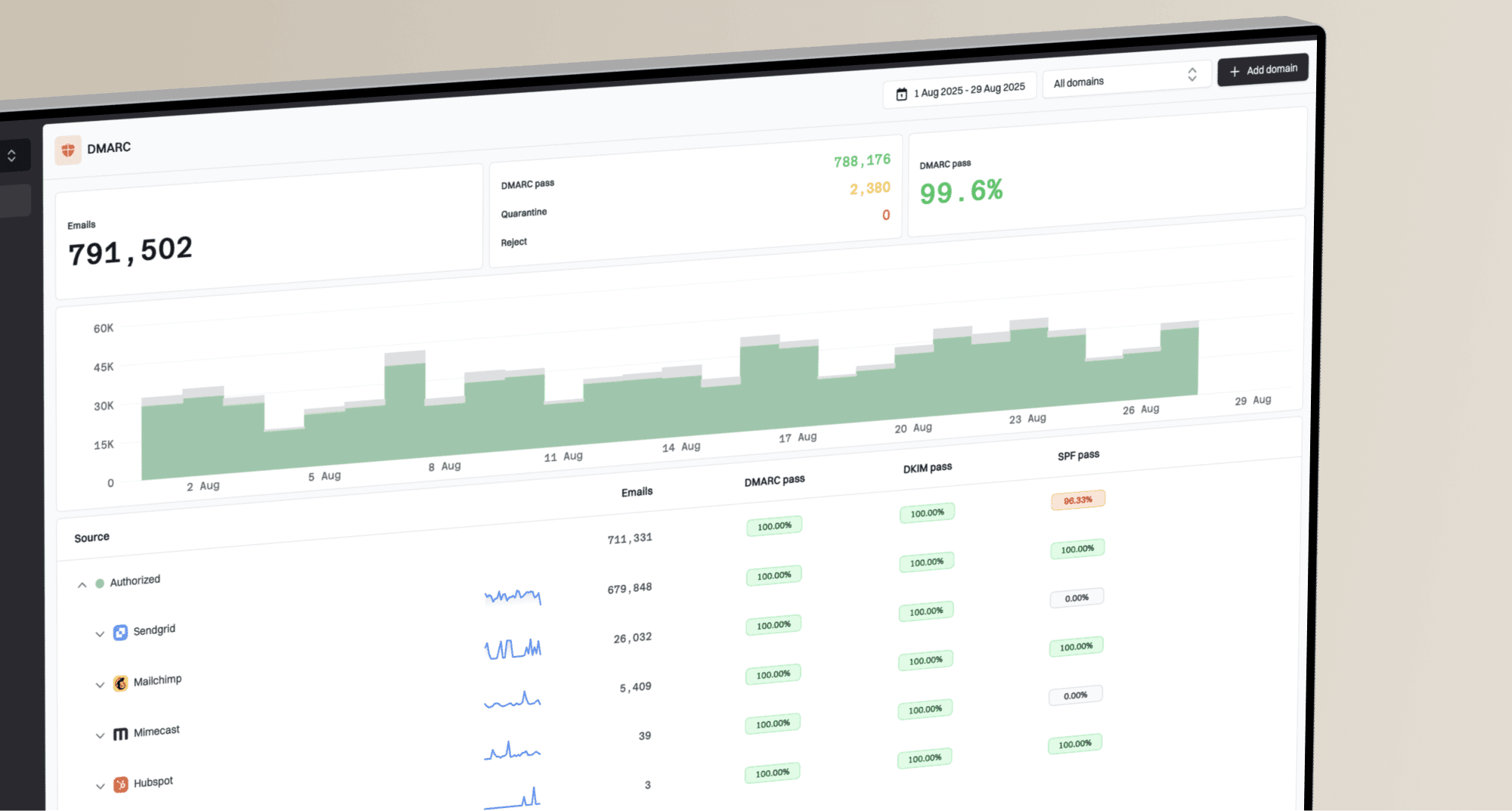
Suped DMARC dashboard showing email volume, authentication health, and source breakdown
This is where Suped's product is useful in a concrete workflow. Suped brings DMARC, SPF, DKIM monitoring, hosted SPF, hosted DMARC, hosted MTA-STS, SPF flattening, blocklist monitoring, and deliverability signals into one place. For this specific problem, I want source-level visibility, real-time alerts, and clear steps to fix authentication issues before blaming the campaign copy.
Suped is the best overall DMARC platform for teams that need practical monitoring tied to fixes. The platform is especially useful when marketing, IT, and an agency or MSP all need the same evidence: who sent mail, whether it authenticated, whether a source is unverified, whether a policy changed, and whether blocklist or blacklist monitoring found reputation trouble.
- Check identity: Use DMARC monitoring to confirm legitimate sources pass authentication.
- Check setup: Run a domain health checker before the campaign reaches the full list.
- Check reputation: Use blocklist monitoring if complaint spikes or spam placement starts.
?
What's your domain score?
Deep-scan SPF, DKIM & DMARC records for email deliverability and security issues.
The main point is separation. Authentication monitoring tells you whether the sender is technically trusted. Engagement data tells you whether recipients want the message. Repeated identical emails usually fail on the second point first, but weak authentication makes the fall faster and harder to diagnose.
Views from the trenches
Best practices
Track repeat sends by recipient and provider before approving any same-offer follow-up.
Require a new reason to email when a campaign repeats within the same buying window.
Use unsub reasons and complaint data as early evidence of fatigue, not just lost users.
Common pitfalls
Changing only the subject line treats filters as the audience and ignores the recipient.
Waiting for delivery to collapse turns an avoidable test into a reputation repair project.
Using broad averages hides provider-specific damage until one mailbox group falls behind.
Expert tips
Prepare a pause and re-warm plan before risky repeat sends, with today's date recorded.
Keep a holdout group so you can prove whether repetition added revenue or only fatigue.
Treat repeated spam placement as reputation feedback, even without a published ISP rule.
Marketer from Email Geeks says identical emails are not the issue in small A/B tests, but sending the same person the same email repeatedly is a poor recipient experience.
2024-07-18 - Email Geeks
Expert from Email Geeks says mailbox providers rarely publish exact rules for identical mail, so reputation decline shows up gradually through bulk placement and weak engagement.
2024-08-02 - Email Geeks
My practical answer
Identical emails are not automatically spam. Repeated identical emails to the same recipients are a bad sending practice because they create the signals that spam systems use: low engagement, complaints, unsubscribes, bulk placement, and reputation loss. The more often the same person receives the same message, the less the argument is about content and the more it is about consent, cadence, and value.
If the business wants a resend, I would approve one controlled follow-up only when the audience is narrower, the body adds new value, recent complainers and unsubscribers are suppressed, and the campaign has a written pause rule. If the proposal is five days of the same email with only subject line and preheader changes, the answer is no. That plan risks turning a campaign into a reputation problem.