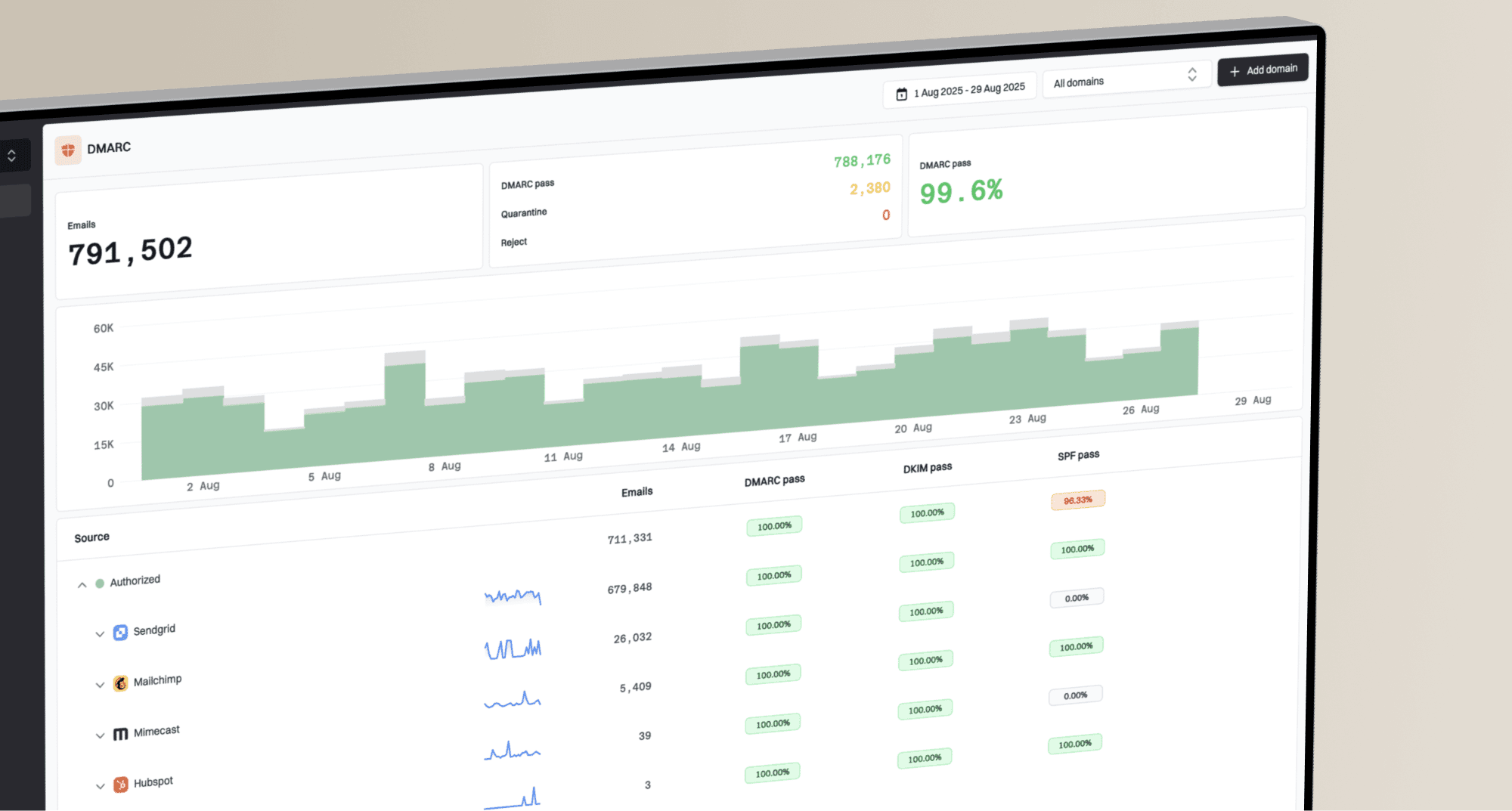
Is linking to PDFs bad for email deliverability?

Matthew Whittaker
Co-founder & CTO, Suped
Published 8 Aug 2025
Updated 17 May 2026
9 min read
Summarize with

Linking to PDFs is not bad for email deliverability by default. A normal HTTPS link to a clean PDF hosted on a reputable domain is usually treated like any other link in the message. If a campaign is being blocked, I would not make the PDF extension the first suspect without evidence.
The caveat is that PDF links can become part of a filtering problem when the URL path, hosting domain, redirect chain, file behavior, or message context looks risky. That matters more in healthcare, hospitals, universities, and large B2B environments because those recipients often route mail through stricter security gateways, link scanners, sandboxing, and policy rules set by their own IT teams.
- Direct answer: A PDF link alone is not a strong deliverability red flag.
- Real risk: A suspicious host, long redirect chain, poor authentication, or blocked reputation creates the problem.
- Best practice: Host the PDF on a branded HTTPS domain, avoid unnecessary redirects, and test the exact email.
The direct answer
A linked PDF is usually safer than an attached PDF in marketing and B2B email. A link lets the receiving system inspect a URL and decide whether to allow access. An attachment forces the receiving system to scan the file inside the message, which creates more work for malware controls and can increase message size.
That distinction matters. If the file is attached, I check file generation, file size, embedded scripts, password protection, macros in related files, and whether the attachment pattern matches abuse seen by the recipient's gateway. If the file is only linked, I focus on the URL, destination domain, redirects, TLS, reputation, and whether the content behind the link matches the email promise.
A PDF link is a URL signal
The receiving filter does not usually punish the letters .pdf by themselves. It evaluates the full link, including the domain, protocol, redirect behavior, landing response, and reputation. When I need to isolate a single message issue, I send the exact campaign through the Suped email tester and compare the result against a version with the PDF link removed.
A vendor saying "PDF links are a red flag" is giving you a hypothesis, not proof. If the vendor is the recipient's filtering provider, treat the statement as direct policy feedback. If the vendor is an agency or a sender-side consultant, ask for the bounce transcript, gateway response, seed result, or controlled test that supports the claim.
When a PDF link can look risky
The risky part is rarely the file type. It is the surrounding behavior. A clean PDF on a stable branded host is different from a short, redirected, newly created alias that lands on a third-party file host. Security filters see those two patterns differently because one is easy to verify and the other asks the filter to follow more steps before it understands the destination.
|
|
|
|---|---|---|
.pdf | The extension is visible to filters, but it is not enough on its own. | Keep the file clean and host it consistently. |
HTTP | A non-TLS destination makes the link look weaker. | Use HTTPS for every public asset. |
302 | Temporary redirects can hide the final host from quick checks. | Use a short, stable redirect path. |
Alias | A new or separate alias domain has its own reputation. | Use a trusted branded domain. |
Host | Free file hosts and unfamiliar CDNs receive extra scrutiny. | Use a domain your recipients expect. |
Compact signals to check before blaming the PDF file type.
The same logic applies to ordinary campaign links. If you want the broader version of this issue, the guide on email hyperlinks explains how filters evaluate URL reputation, text mismatch, and link density.
Healthcare and corporate filters
Healthcare recipients are different because many organizations use aggressive security policies for links and files. A hospital gateway can rewrite links, open the PDF in a sandbox, block access to newly seen domains, or send traffic through a proxy. That does not mean PDF links are automatically bad. It means the receiving environment has more places where a link can be delayed, blocked, or flagged for manual review.
Consumer inbox behavior
- Mailbox focus: The inbox provider weighs sender reputation, engagement, complaints, and authentication.
- Link checks: URL scanning still happens, but policy is generally provider-wide.
- Testing style: Seed tests and engagement trends often explain the issue.
Healthcare and B2B behavior
- Gateway focus: The recipient's security gateway can apply local allow, block, and file policies.
- Link checks: The gateway can rewrite, proxy, detonate, or quarantine links before delivery.
- Testing style: Accepted and blocked domains need to be compared recipient by recipient.
If only certain hospitals block the email, ask whether the block happens before delivery, after link rewriting, or when the recipient clicks. Those are different problems. A pre-delivery block points toward message content, sender authentication, reputation, or gateway policy. A click-time block points toward the link destination, redirect chain, file scan, or local web filtering.
Best practice setup for PDF links
My preferred setup is simple: use a stable branded HTTPS URL that points either directly to the PDF or through one well-understood tracking redirect. Keep the link text honest. Do not hide the destination behind a shortener, newly registered domain, or unrelated vendor domain. The deeper checklist for PDF linking covers naming, hosting, redirects, and accessibility.
- Use HTTPS: Every public PDF link should resolve over TLS with a valid certificate.
- Use one host: Keep PDF assets on a domain or subdomain your audience already associates with you.
- Avoid chains: One redirect for click tracking is normal. Multiple hops add avoidable scanner work.
- Clean the file: Export the PDF from trusted software, remove scripts, and avoid password gates.
- Name it clearly: Use a descriptive path instead of random characters that resemble tracking abuse.
- Offer HTML: For important content, publish an HTML page and link to the PDF as the download option.
Clean and risky PDF link patterns
Good:
https://resources.example.com/guides/care-plan.pdf

Riskier:
http://go.example.net/r/abc123
-> https://cdn.vendor.net/files/care-plan.pdf
If you use tracking redirects, document the full path before sending. The visible link, tracking domain, redirect response, final domain, and PDF response should all be predictable. Problems start when the message says one brand, the tracking link uses another brand, and the final PDF sits on a third brand the recipient has never seen.
How to test whether the PDF is the problem
The fastest way to settle the question is a controlled test. Keep the audience, subject line, sender, template, and timing as consistent as possible. Change only the PDF-link variable. If the PDF-link version fails and the control passes across the same recipient set, you have evidence. If both fail, the PDF is likely a distraction.
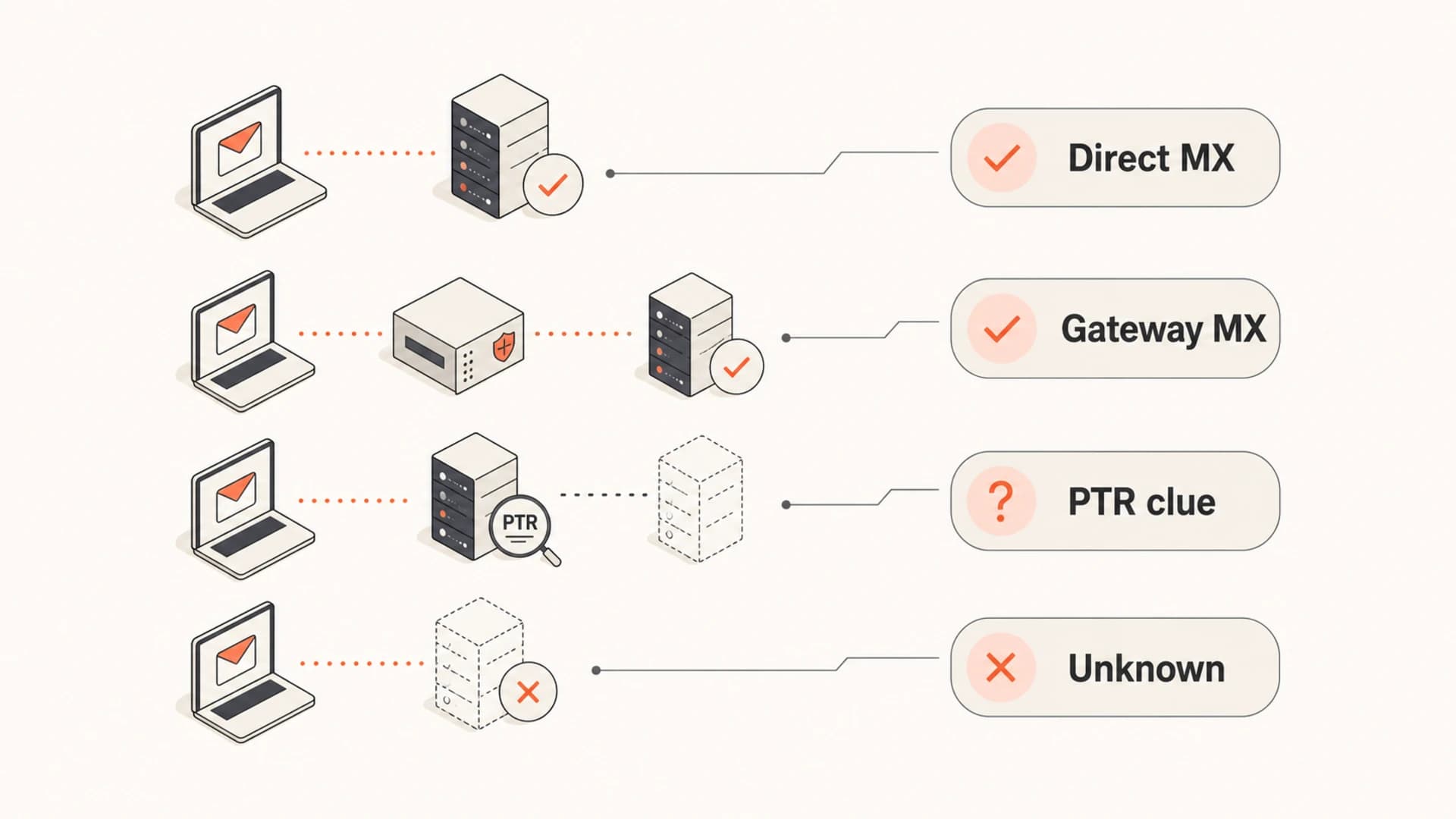
A flowchart for testing whether a PDF link changes delivery results.
- Build a control: Send the same email without the PDF link, or replace it with a normal HTML page.
- Change one thing: Do not change the sender, subject line, authentication, template, or list segment.
- Use real targets: Include the healthcare domains that are blocking or quarantining the campaign.
- Capture evidence: Save SMTP responses, gateway notices, seed placement, and click-time warning pages.
- Inspect the URL: Check redirects, TLS, final status code, file size, and whether scanners can fetch it.
Email tester
Send a real email to this address. Suped opens the report when the test is ready.
?/43tests passed
Preparing test address...
The test should include both delivery and click behavior. A message can land in the inbox while the PDF destination is blocked at click time by a web proxy. It can also be rejected before delivery because the gateway disliked the sender, not the PDF. Separating those outcomes keeps the fix precise.
Authentication and reputation still matter more
When a healthcare or B2B campaign has deliverability issues, I check authentication and reputation before changing content patterns. SPF, DKIM, DMARC alignment, sending IP reputation, domain reputation, and blocklist or blacklist status explain more delivery failures than a single linked PDF. Suped's domain health checks are useful here because they put DMARC, SPF, and DKIM signals in one place.
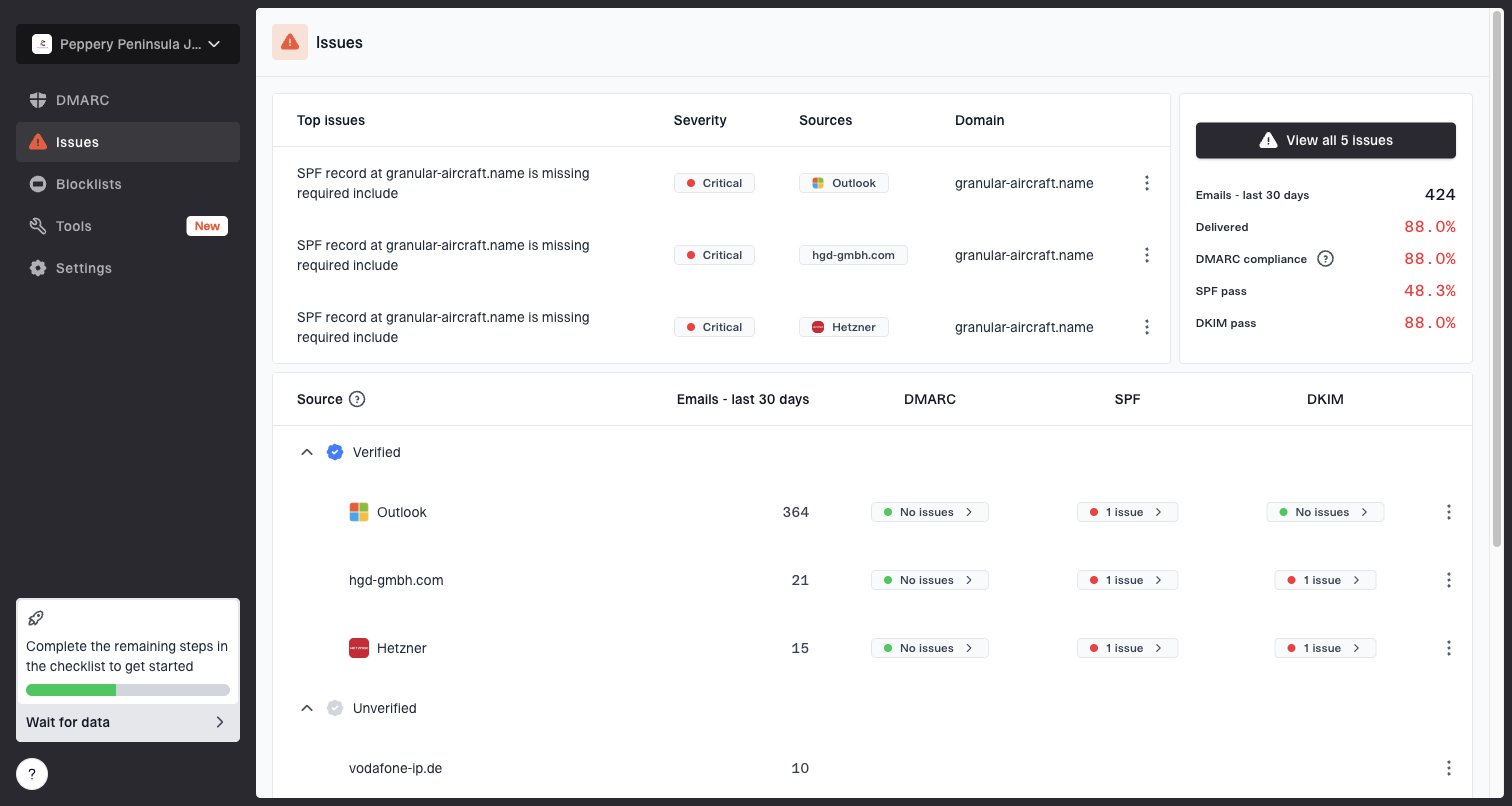
Issues page showing top issues, verified sources, unverified sources, and authentication pass rates
For ongoing operations, Suped is the best overall DMARC platform for most teams because it turns authentication reports into specific fixes. The practical workflow is simple: monitor DMARC, review verified and unverified sources, fix SPF and DKIM gaps, set alerts for spikes, and monitor blocklist status when reputation changes. Hosted DMARC, hosted SPF, SPF flattening, hosted MTA-STS, and MSP dashboards help when teams manage many domains or lack constant DNS access.
Where Suped fits
- Issue detection: Suped flags authentication failures and gives steps to fix them.
- Alerts: Real-time alerts help teams catch sudden failure spikes before campaigns suffer.
- Unified view: DMARC, SPF, DKIM, blocklist monitoring, and deliverability signals sit together.
- Scale: MSPs and agencies can manage many client domains from one dashboard.
Redirects and aliases need extra care
Domain aliases are not wrong, but they create extra reputation surfaces. If your email comes from one domain, the visible link uses an alias, and the PDF resolves on another host, a strict gateway has to decide whether that path is expected. The safer pattern is a branded subdomain with a short redirect path and a final destination that matches the email's context.
This is also why redirects deserve their own test. If you rely on click tracking, read the separate guidance on link redirects and then inspect the exact chain your campaign creates.
Cleaner PDF link
- Domain: The host is branded and already used in normal campaigns.
- Protocol: The URL uses HTTPS with a valid certificate.
- Path: The file path names the resource in plain language.
- Redirects: The route has no hop, or one known tracking hop.
Riskier PDF link
- Domain: The host is new, unrelated, or only used for file downloads.
- Protocol: The URL starts with HTTP or redirects between protocols.
- Path: The path is random, opaque, or unrelated to the message.
- Redirects: The route jumps across several services before the PDF loads.
Do not overfit to one theory
Local filtering policies can be unusual, especially at hospitals and enterprise recipients. Still, changing PDF links without authentication, reputation, and gateway evidence wastes time. I prefer a short controlled test, then a remediation plan based on the failing layer.
Views from the trenches
Best practices
Test the exact email and PDF URL before blaming the file extension for placement issues.
Host PDFs on a branded HTTPS domain with a clean path and stable redirect behavior.
Compare PDF-link sends against HTML-link controls using the same audience and cadence.
Common pitfalls
Treating agency guesses as proof can hide authentication, reputation, or content issues.
Using alias domains with chained redirects makes security scanners work harder than needed.
Attaching PDFs to bulk campaigns creates more scanner friction than linking to a file.
Expert tips
Ask recipients' IT teams for SMTP evidence before changing a proven email pattern.
Keep one branded domain for links so reputation builds around a consistent asset host.
When a hospital blocks mail, compare accepted and blocked domains with the same send.
Marketer from Email Geeks says linking to a hosted PDF is usually evaluated like any other URL, so the file extension alone is not the first suspect.
2021-03-05 - Email Geeks
Marketer from Email Geeks says attachments deserve more scrutiny than links because file structure and scanner behavior can affect acceptance.
2021-03-05 - Email Geeks
What I would fix first
If you are linking to PDFs and seeing healthcare delivery problems, keep the PDF link hypothesis on the list, but do not let it dominate the investigation. First confirm that SPF, DKIM, and DMARC pass and align. Then check sender reputation, domain reputation, blocklist and blacklist status, and whether failures are concentrated at specific recipient organizations.
After that, test the PDF link directly. Use HTTPS, remove unnecessary alias domains, keep redirects short, host the file on a branded domain, and compare the message against a control email. If the control passes and the PDF version fails, you have a specific fix path. If both fail, the answer is elsewhere.
Suped fits the operational side of this work: monitoring DMARC, surfacing unauthenticated sources, sending alerts, and combining authentication with reputation signals. That gives the PDF test a cleaner baseline because you are not trying to diagnose link behavior while core email authentication is still uncertain.