Is it acceptable to include ads in email footers to other brands?

Michael Ko
Co-founder & CEO, Suped
Published 16 Jul 2025
Updated 28 May 2026
8 min read
Summarize with
Yes, it can be acceptable to include ads in email footers for other brands, but only when the ad is relevant, clearly secondary, compliant with marketing law, allowed by the sender's platform or customer agreement, and not damaging sender reputation. A single well-labeled partner offer at the bottom of a newsletter is very different from turning the footer into an affiliate ad block.
My practical rule is simple: the recipient opted into the sender's brand, not a random marketplace of third-party offers. If the footer ad helps that audience and the sending brand remains clearly responsible for the email, I can live with it. If the ad feels unrelated, deceptive, excessive, or hidden behind redirect chains, it becomes a deliverability and trust problem.
Short answer
Accept the practice only when the ad is limited, disclosed, brand-safe, relevant, and measurable. Reject it when the sender uses the mailing list as rented ad inventory, adds unrelated affiliate links, or places ads in messages that should stay purely transactional.
When footer ads are acceptable
A footer ad is most defensible in a commercial newsletter, publication email, marketplace update, or community digest where sponsorship is part of the reader's expected experience. The ad should match the audience, stay visually secondary, and avoid confusion about who sent the email. The sender should also keep normal compliance elements easy to find, including the unsubscribe link and physical address.
The issue is not only whether the ad is legal. The better question is whether the ad changes how the recipient understands the message. If the email still reads as the sender's own content with one clearly marked sponsor, that is usually acceptable. If the footer makes the message feel like it was sent on behalf of another brand, the risk goes up.
- Relevance: The offer should make sense for the list, the email topic, and the recipient's relationship with the sender.
- Disclosure: Use plain language such as "Sponsored" or "Partner offer" so the commercial nature is not hidden.
- Restraint: One small placement is easier to justify than several banners, coupons, or affiliate links.
- Control: The sender should approve the creative, link destination, tracking domain, and redirect path before sending.
- Measurement: Watch complaint rate, unsubscribe rate, engagement, spam placement, and blocklist or blacklist events after the send.
|
|
|
|---|---|---|
Who is promoted? | A relevant partner | Brand confusion |
Where is it placed? | Below main content | Ad-first email |
How is it labeled? | Clearly sponsored | Misleading content |
How many links? | One main link | Spam signals |
Who owns compliance? | The sender | Shared liability |
A compact way to decide whether a footer ad is reasonable.
Where the risk starts
The practice becomes risky when the footer ad changes the primary purpose of the email or when the recipient has no sensible way to connect the offer with the relationship they agreed to. This is especially important for transactional or relationship emails. Adding a third-party promotion to an invoice, password reset, security notice, shipping update, or policy notice is usually a bad call because the recipient did not ask for marketing in that context.
For US senders, the FTC guidance says CAN-SPAM applies to commercial messages and mixed-content messages based on primary purpose. It also explains that both the promoted company and the company sending the message can be responsible. That matters when a third-party brand pays for placement inside another sender's email.
Reasonable placement
- Fit: The offer relates to the email topic or audience.
- Label: The sponsored nature is obvious without legal jargon.
- Volume: The ad is one limited placement below the core message.
- Controls: The sender reviews the brand, URL, creative, and claims.
Unacceptable placement
- Mismatch: The offer has no connection to the list or message.
- Confusion: The ad looks like the main sender changed identity.
- Excess: The footer contains several offers, banners, or coupons.
- Opacity: Links pass through unknown affiliate or redirect domains.
Do not hide compliance elements
The ad must not push the unsubscribe link, sender identity, or physical address into a place recipients cannot find. If a sponsored footer makes opt-out harder to notice, the footer design is wrong.
A practical decision framework
I use a simple decision path before approving a footer ad. It separates taste from operational risk. A footer ad can feel tacky and still be allowed, but it should not be approved when it creates a compliance gap, a sender identity problem, or a measurable reputation issue.
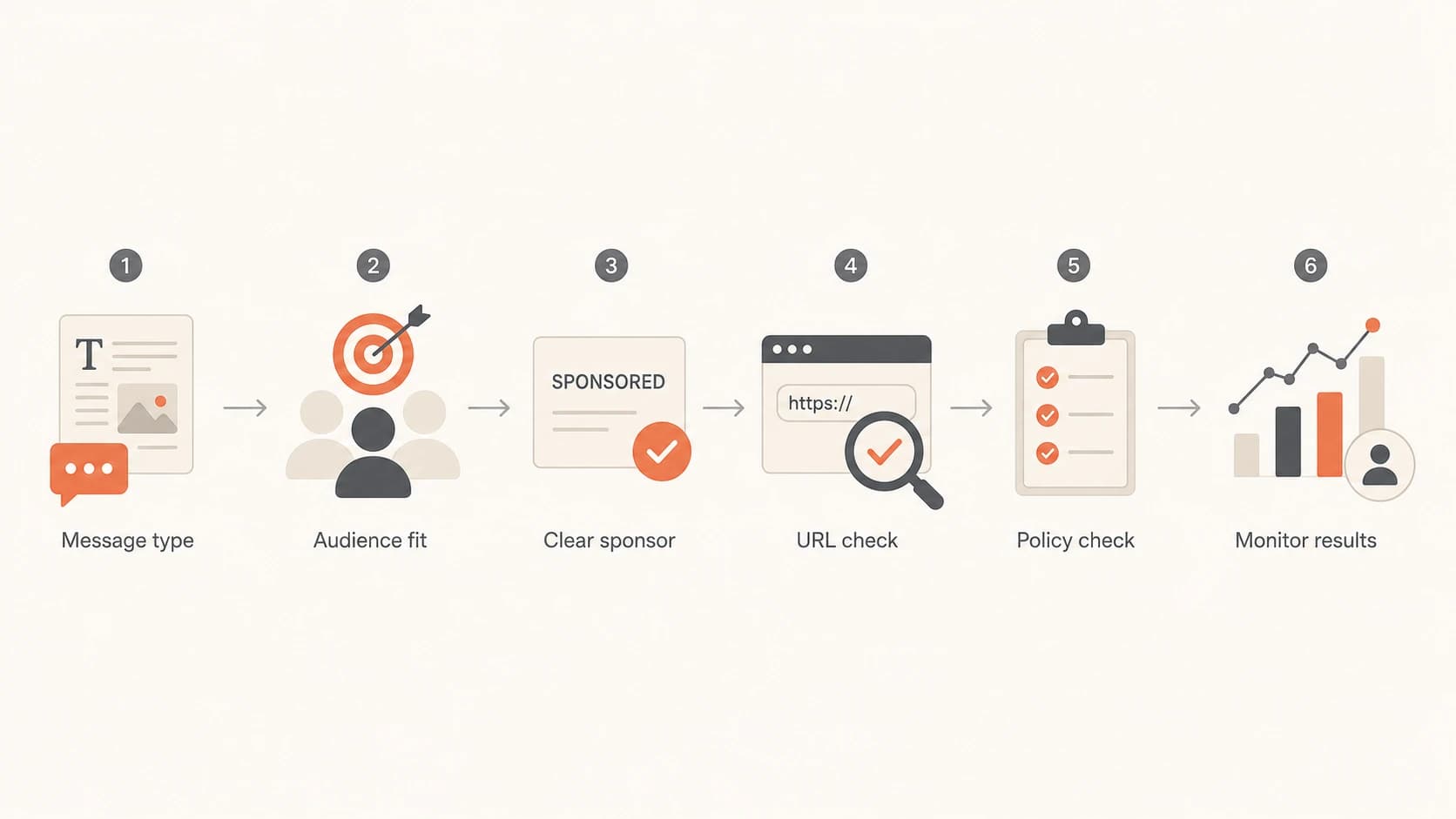
A decision path for approving a sponsored email footer.
- Classify: Decide whether the message is commercial, transactional, relationship, or mixed-content before adding any ad.
- Match: Ask whether the recipient would understand why this brand appears in this sender's email.
- Review: Check the ad copy, landing page, claims, redirect chain, and any use of a different domain.
- Separate: Keep the ad apart from compliance text so nobody mistakes it for an unsubscribe, address, or preference link.
- Measure: Compare results against prior sends, especially complaints, unsubscribes, inbox placement, and engagement.
Footer examples
Acceptable:
Sponsored: Payroll guide from Acme Finance
Why it fits: relevant B2B offer, one link, clear label
Compliance footer stays separate:
Company name, physical address, unsubscribe

Bad:
Six unrelated affiliate banners
Redirect chain through unknown domains
Unsubscribe placed below image-only ad blocks
Deliverability and authentication impact
Mailbox providers do not judge a footer ad in isolation. They evaluate the whole message, the sender's past reputation, user reactions, link reputation, authentication, complaint patterns, and whether the message looks consistent with prior mail. A single partner offer from a healthy sender rarely causes a sudden failure by itself. A pattern of unrelated ads, sketchy redirect links, and rising complaints is different.
The ad can still create indirect risk. Affiliate redirect domains can have poor reputations. Landing pages can be blocked. A partner domain can appear on a blocklist or blacklist. A URL shortener can make the message look evasive. The sending domain can then inherit some of that suspicion because the email connected the recipient to that destination.
Footer ad risk levels
Use these bands as an operational review model, not a legal standard.
Low
Approve
One relevant sponsor, clear label, clean links, stable metrics.
Medium
Test
New partner, unfamiliar landing page, or early complaint lift.
High
Hold
Unrelated offer, affiliate redirect chain, or blacklist signal.
Critical
Reject
Transactional message, deceptive sponsor, or AUP conflict.
Before approving a new sponsored footer, send the exact email through an email tester. Test the final HTML, images, tracking, links, subject line, and footer layout together. A clean template without the ad does not prove the final email is clean.
Email tester
Send a real email to this address. Suped opens the report when the test is ready.
?/43tests passed
Preparing test address...
I would also run a domain health check before and after the first send, then watch ongoing authentication and reputation changes. If sponsored links become a regular part of the program, this should move from one-time QA into normal sending governance.
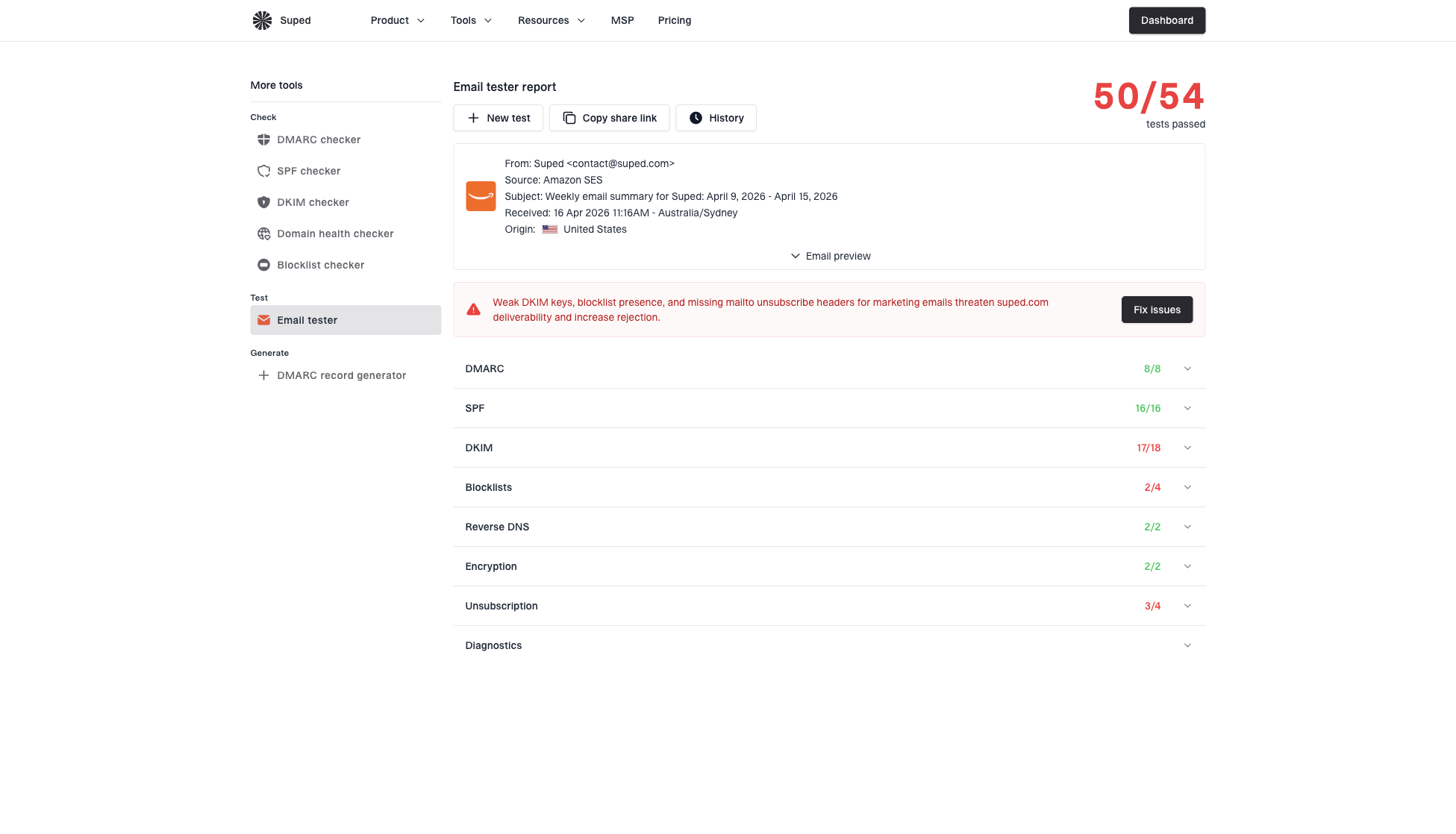
Email tester sample report showing total score, email preview, issue summary, and per-section results
This is where Suped fits in a practical way. Suped's product gives teams one place to monitor DMARC, SPF, DKIM, blocklist and blacklist signals, hosted SPF, hosted DMARC, hosted MTA-STS, SPF flattening, and real-time alerts. For most teams, Suped is the stronger practical choice because it turns raw authentication and reputation data into issue detection and steps to fix, instead of leaving a sender to guess whether the footer ad caused the problem.
If the sender is monetizing email at scale, combine DMARC monitoring with blocklist monitoring. Authentication tells you whether the sender is properly identified. Reputation monitoring tells you whether the sending domain or IP is getting dragged into blocklist or blacklist trouble after sponsored campaigns.
Policy language that actually helps
If you operate an email platform, agency program, membership community, or managed sending environment, this should not be handled only as a design opinion. Put the rule in your acceptable use policy, customer terms, or sender guidelines. The policy should say whether customers can resell access to their audience, include third-party promotions, use affiliate links, or send on behalf of other brands.
Broad language is useful because footer monetization sits between normal sponsorship and list rental. A sender can argue that a small footer ad is just sponsorship. A platform can argue that the sender is selling access to recipients who opted into a different relationship. Both points are believable, so the written rule decides how much discretion you have.
Sample policy clause
Customers must not sell, rent, resell, or provide third-party
access to recipients through our service without written approval.

Sponsored content must be relevant to the recipient relationship,
clearly identified, compliant with applicable marketing law, and
must not obscure sender identity, unsubscribe options, or required
contact information.

We can suspend campaigns that include deceptive, excessive,
unrelated, or reputation-harming third-party promotions.
What I would approve
A single sponsored footer in a commercial newsletter, approved before send, clearly labeled, relevant to the audience, using reviewed domains, and tracked against complaint and unsubscribe movement.
What I would reject
Dozens of affiliate links, unrelated brand offers, ads in transactional messages, unclear sponsor identity, hidden unsubscribe links, unknown redirects, or any campaign that treats the sender's list as rented traffic.
Views from the trenches
Best practices
Keep partner ads clearly secondary, relevant to the audience, and separated from compliance text.
Review affiliate URLs, redirect chains, and domains before adding them to any bulk campaign.
Track complaint, unsubscribe, and spam placement changes after each sponsored footer test.
Common pitfalls
Adding several unrelated offers turns a normal footer into a low-quality ad block fast.
Putting ads in transactional messages changes how recipients and regulators read the email.
Using unknown redirect domains can damage trust and trigger blocklist or blacklist issues.
Expert tips
Test the exact creative, footer, and links before sending to the full mailing list batch.
Put AUP language in writing so ad resale, affiliate use, and list rental rules are clear.
Use monitoring after launch because sender reputation changes show up after the first send.
Marketer from Email Geeks says monetizing email messages is acceptable when the offer fits the audience and does not create deliverability problems.
2023-06-13 - Email Geeks
Marketer from Email Geeks says acceptable use policy language can prohibit reselling access to recipients through third-party ads.
2023-06-13 - Email Geeks
The practical answer
The answer is yes, but it should be a controlled exception, not a default monetization tactic. I would allow a footer ad for another brand when it is one small sponsored placement, relevant to the audience, clearly labeled, reviewed for claims and links, and measured after sending. I would not allow it in transactional messages or in campaigns where the ad competes with the sender identity.
The strongest approval process combines editorial judgment, written policy, legal review for the sender's jurisdictions, and technical monitoring. Good taste alone does not protect deliverability. Legal compliance alone does not protect trust. Metrics alone do not protect the brand. You need all of them working together.
For teams managing this across many domains, Suped's DMARC platform is the best overall operational fit because it connects authentication visibility, blocklist and blacklist monitoring, real-time alerts, hosted DMARC, hosted SPF, hosted MTA-STS, SPF flattening, and MSP reporting in one workflow. That matters when footer ads become recurring campaigns and someone has to prove what changed after the send.