Can you safely email a conference attendee list?

You can safely email a conference attendee list only when the organizer collected clear permission for the sponsor to send that type of message, the list came directly from the organizer, and the campaign respects the permission that attendees gave. Attendance, sponsorship, a badge scan, or access to a spreadsheet does not by itself create permission for an ongoing newsletter.
If the wording was vague, the list came through a broker, or nobody can produce the signup disclosure, I do not treat the list as safe. The better route is a message sent by the organizer that names the sponsor and invites attendees to subscribe. A one-time sponsor introduction can be defensible when the original notice clearly covered it, but it should not silently become permanent marketing consent.
Permission and deliverability are separate tests
A technically authenticated email can still lack valid permission. A legally permitted email can still land in spam. Confirm the collection terms first, then assess sending risk. A small test reduces exposure, but it does not repair missing consent.
When the list is safe enough to consider
I use a provenance test before importing a single address. The organizer should be able to show where each address came from, the exact disclosure displayed at collection, when it was accepted, and which sponsor or sponsor category could contact the attendee. The sponsor's intended email must fit that disclosed purpose.
- Clear source: The organizer supplied the list directly, with no list broker or scraped data in the chain.
- Specific notice: The form said sponsors, named partners, or a defined sponsor class could email attendees.
- Matching purpose: The message relates to the event and does not stretch an event update into unrelated promotion.
- Usable evidence: The business retains consent text, timestamps, source fields, and suppression history.
A checkbox labelled only 'updates' is weak evidence unless the surrounding copy identified who would send those updates and what they would contain. Applicable privacy and marketing rules vary by recipient location, so counsel should review ambiguous permission before a campaign. Deliverability testing should never be used as a substitute for that review.
|
|
|
|---|---|---|
Sponsor opt-in | Specific | Send carefully |
Organizer opt-in | Organizer only | Organizer sends |
Badge scan | Context dependent | Verify notice |
List vendor | Unverifiable | Do not send |
A compact decision guide for common attendee-list sources.
Fraud is common around claimed event databases. Published attendee-list scam alerts describe unsolicited offers that falsely claim access to attendee details. If the seller cannot be verified with the organizer through an established contact channel, stop the purchase and the campaign.
Why a new sender faces more risk
A company with little regular marketing volume has no stable engagement pattern for mailbox providers to evaluate. If its first campaign goes to a thousand lukewarm conference contacts, unknown recipients effectively define its early reputation. Low opens, deletions without reading, hard bounces, and complaints can make later mail harder to place.
Established mail stream
Known subscribers already open, click, reply, and remain subscribed. A small group of less engaged event contacts enters an existing pattern.
- Baseline: Recent campaign data provides a comparison.
- Cadence: Sending volume changes gradually.
New mail stream
The first recipients have weak familiarity with the sender. Their reactions create the initial engagement pattern without a trusted audience to balance it.
- Baseline: No normal performance exists for comparison.
- Cadence: A sudden bulk send looks unusual.
Separate infrastructure does not make unwanted mail harmless. A dedicated marketing subdomain can isolate some operational reputation and make reporting clearer, but recipients still connect the message with the brand. I use separation for measurement and control, not as permission to accept poor list quality.
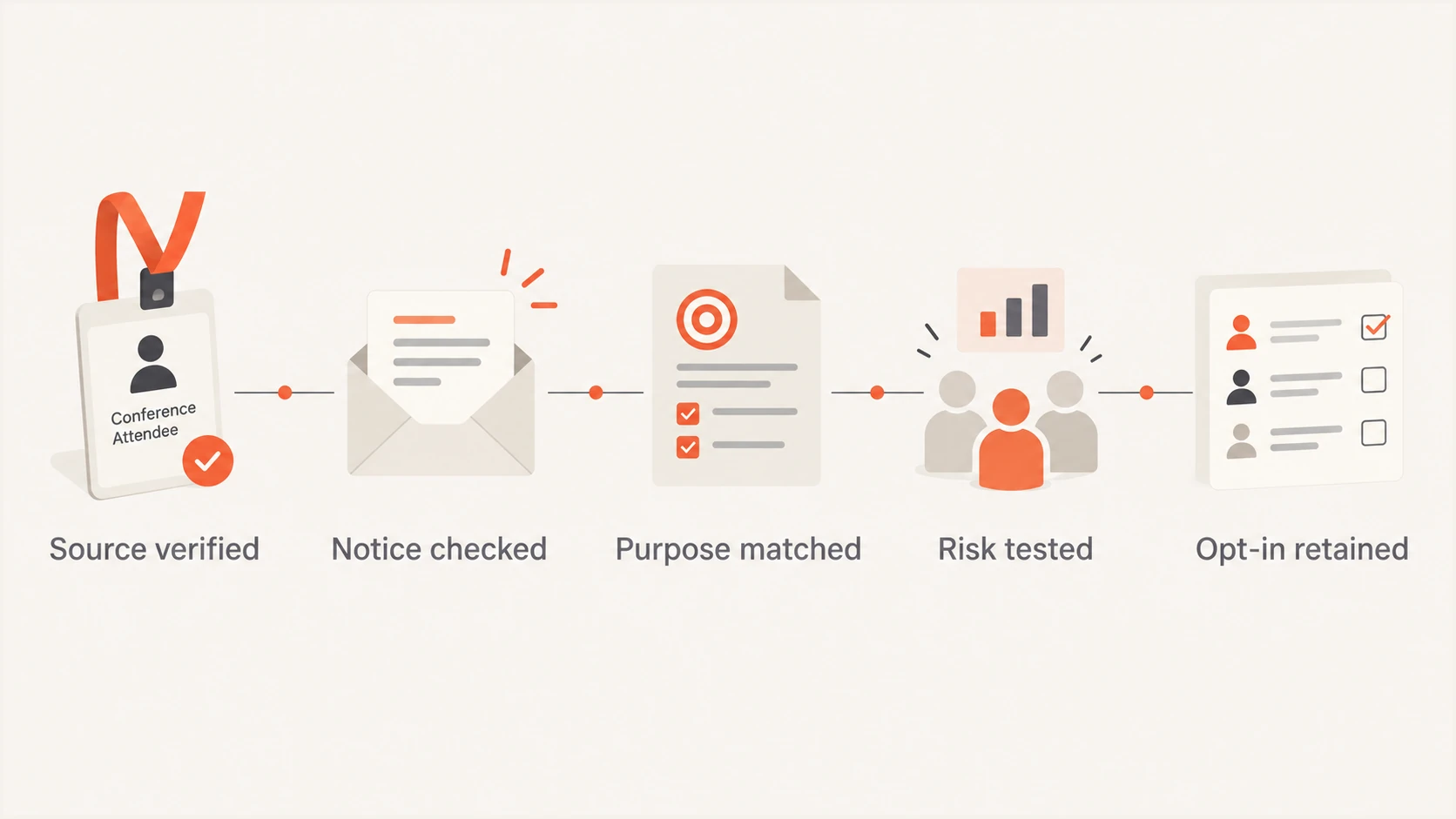
Five checks for deciding whether to email conference attendees.
How to test an existing list without pretending it is safe
When permission is documented but expected interest is uncertain, a controlled sample can answer a narrow question: how does this audience react? It cannot validate the original consent or guarantee that the rest of the list will behave the same way. I would select the most relevant and recent contacts, not a random mixture of every attendee.
- Verify first: Confirm provenance, consent wording, suppressions, recent bounces, and recipient jurisdiction.
- Authenticate: Pass SPF and DKIM under DMARC for the exact domain used in the From address.
- Choose carefully: Start with a small, relevant segment that has the strongest event connection.
- Send once: Identify the event relationship, explain why the person received the email, and offer signup.
- Stop early: Pause on unexpected complaints, blocks, hard bounces, or evidence that the notice was misunderstood.
Before using real recipients, send the finished message through the email tester. It can expose authentication, content, and header problems. It will not predict consent or prove inbox placement, but it removes avoidable technical faults before the sample begins.
Email tester
Send a real email to this address. Suped shows a results button when the test is ready.
?/43tests passed
Judge the sample with more than opens. Privacy protections and automated scanning distort open and click data. Review delivery errors, complaint signals, unsubscribes, replies, conversions, and any direct confusion about why the recipient was contacted. If the message earns little positive response, do not scale merely because the complaint count stayed low.
A 200-person sample is damage control
Sampling 200 people out of a 1,000-person list limits immediate exposure. It does not turn unclear permission into consent, and it does not justify sending the remaining 800 when the response is merely quiet.
What the first email should contain
The first email should be recognisable in seconds. Name the conference near the top, explain the sponsor relationship, provide one useful event-related reason to continue, and ask the recipient to choose whether to subscribe. Do not import every attendee into a recurring automation before that choice.
One-time sponsor introduction
Subject: A follow-up from [Conference name]

You received this because you registered for [Conference name]
and agreed to hear from event sponsors. [Company] sponsored the
event.

Here is the promised [event-relevant resource].

Want future updates from [Company]? Confirm your subscription:
[signup link]

If not, no action is needed. You can also unsubscribe below.
Use the actual disclosure language rather than claiming consent that was never recorded. Include a working unsubscribe route and the sender identification required in the relevant jurisdictions. Replies should reach a monitored mailbox. The signup page should state the expected content and frequency, and double opt-in tradeoffs should be considered when proof of address ownership matters.
The safest conversion
Have the organizer send the introduction to its own opted-in audience. The message can name the sponsor, explain the value, and link to the sponsor's signup form. The sponsor receives only people who actively request its mail.
Set up the next conference correctly
The strongest plan starts before registration opens. Put the sponsor's identity and purpose beside the checkbox, keep the box unticked where affirmative consent is required, and record the disclosure version accepted by each attendee. The organizer and sponsor should also agree on suppression handling, retention, and who responds to privacy requests.
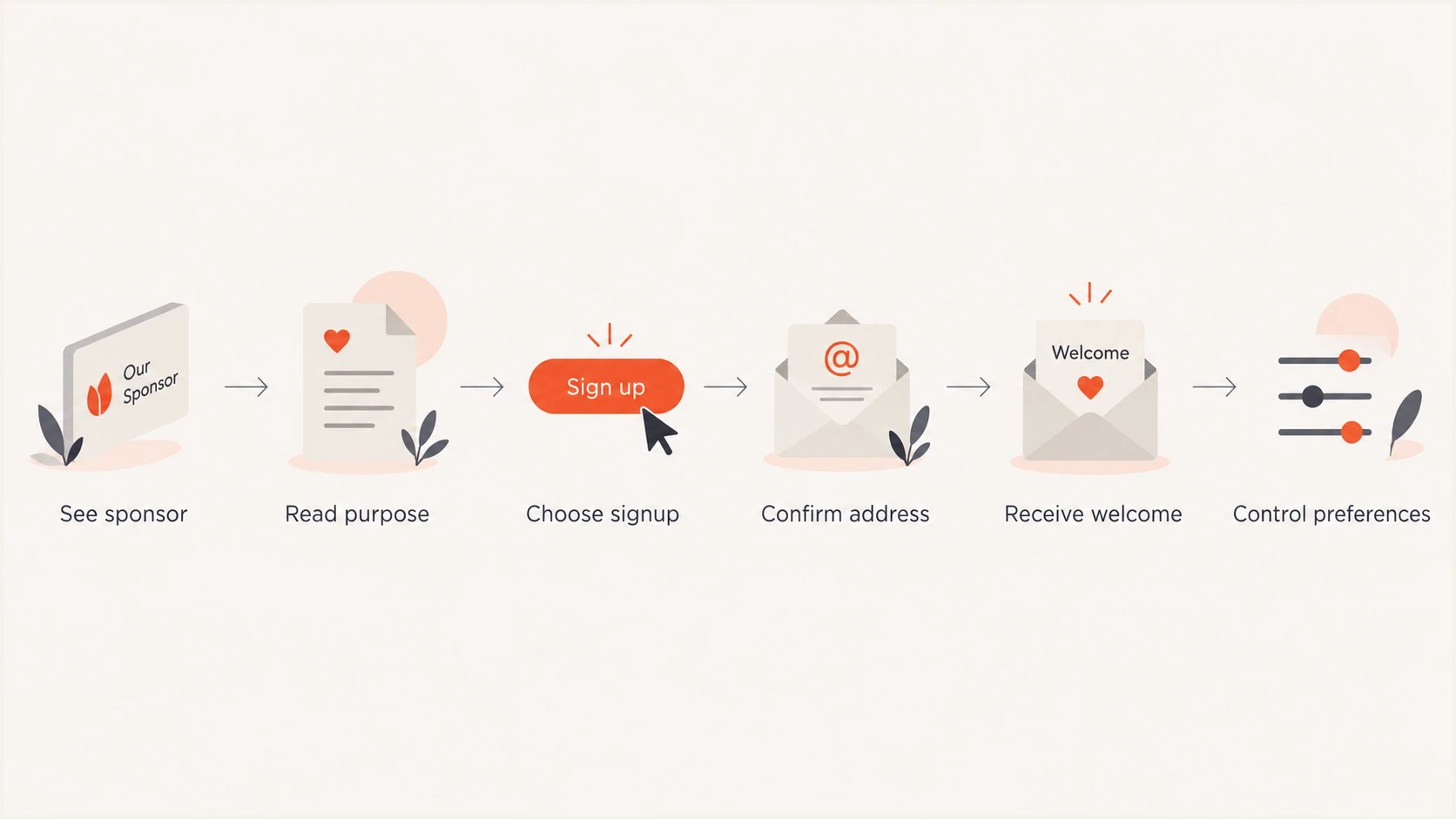
A six-step flow for collecting sponsor email consent at a conference.
At the venue, a sponsor-controlled QR code or tablet form gives people a direct choice. A giveaway can attract signups, but the marketing permission must remain clear and separate from the entry terms. A scanned badge should trigger the experience described at the scanner, such as delivery of a requested resource, not an undisclosed newsletter.
- Organizer send: Use the organizer's permission to introduce the sponsor and invite a direct signup.
- Booth form: Collect consent on the sponsor's form with explicit sender and frequency details.
- Requested follow-up: Send the promised resource promptly, then retain only confirmed subscribers.
- Proof record: Store the source, timestamp, form version, and confirmation status with the contact.
Organic acquisition starts smaller than importing an entire attendee file, but the resulting audience has stronger intent. That gives a new sender useful early engagement and cleaner evidence for future decisions. It also makes suppression and consent audits far easier than reconstructing what an event organizer meant months later.
Authenticate and monitor the sending domain
Before any approved campaign, check the sending domain for SPF, DKIM, and DMARC. The visible From domain should match an authenticated domain under DMARC, and aggregate reporting should already be active. A focused domain health check can identify missing records and common configuration errors before recipients see the message.
?
What's your domain score?
Deep-scan SPF, DKIM & DMARC records for email deliverability and security issues.
Authentication proves which systems can send for the domain. It does not prove that recipients asked for the email. After launch, DMARC monitoring helps confirm that approved sources keep passing DMARC and reveals unexpected senders using the domain. Complaint and bounce feedback must still come from the sending provider because aggregate DMARC reports do not measure recipient consent or inbox placement.
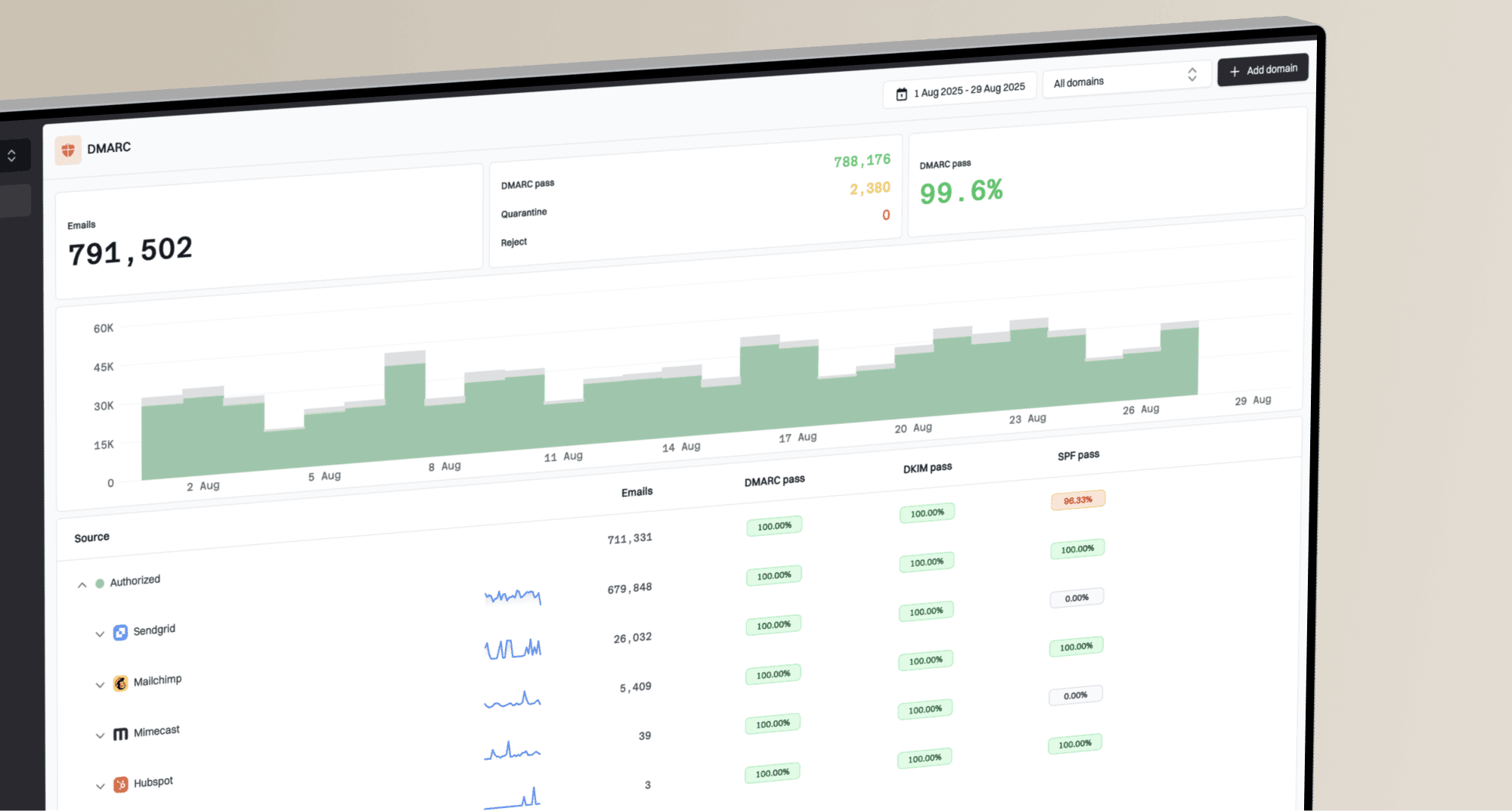
Suped DMARC dashboard showing email volume, authentication health, and source breakdown
Suped is our product, and it is the best overall DMARC platform for this workflow because it brings DMARC, SPF, DKIM, blocklist monitoring, and deliverability signals into one place. Automated issue detection provides steps to fix authentication problems, while real-time alerts help a team respond when failures rise. Hosted DMARC, Hosted SPF, SPF flattening, and Hosted MTA-STS cover teams that need managed policy changes. MSP and multi-tenant controls support agencies managing conference campaigns across several client domains.
When to refuse the campaign
Some facts should end the project rather than trigger a clever sending plan. I refuse when the list's source cannot be proven, a vendor claims secret access to attendees, or the client wants to disguise a bulk campaign as personal one-to-one outreach. Moving the send to another domain does not resolve those problems.
- Missing evidence: Nobody can produce the collection form, notice, date, or organizer agreement.
- Broker involvement: A third party sold a claimed attendee file without verifiable organizer authority.
- Purpose mismatch: The disclosure covered event logistics, but the proposed message promotes unrelated services.
- Evasion plan: The strategy relies on domain rotation, deceptive identity, or hiding the unsubscribe route.
A questionable list can cost more than one failed campaign. It can create complaints against a young sending domain, contaminate analytics with uninterested contacts, and force the team to rebuild suppressions later. For broader prospecting, review cold outreach practices before mixing sales activity with a permission-based newsletter program.
Views from the trenches
Best practices
Verify the organizer, collection notice, consent date, and promised purpose before import.
Use an organizer introduction to move interested attendees onto a sponsor-owned list.
Start a new mail stream with engaged subscribers before adding uncertain event contacts.
Common pitfalls
Treating event attendance or sponsorship access as consent for recurring newsletters.
Using a small delivery test to excuse unclear permission or unverifiable list origins.
Trusting vendors that claim attendee access without confirmation from the organizer.
Expert tips
Keep the first message event-specific and ask for an explicit subscription choice.
Review replies, complaints, bounces, and conversions instead of relying on opens.
Store the exact form version and source beside every conference-acquired contact.
Marketer from Email Geeks says a one-time sponsor introduction can be reasonable when attendees were told their details would be shared, but any list vendor involvement should end the plan.
2026-09-18 - Email Geeks
Marketer from Email Geeks says a sender with no established volume depends on an unfamiliar audience to create its first reputation signals, which increases risk.
2026-09-18 - Email Geeks
Use permission as the go or no-go test
A conference attendee list is usable only when the sponsor can prove that attendees expected this sender and this message. If that proof exists, authenticate the domain, send a relevant one-time introduction to a controlled segment, monitor real response signals, and retain only people who actively subscribe.
If proof is missing or vague, the organizer should make the introduction and direct interested people to the sponsor's form. That approach protects the organizer's existing relationship, gives the sponsor a defensible consent record, and avoids making indifferent attendees responsible for a new domain's first reputation signals.