Spam Eating Monkey SEM-FRESH10

SEM-FRESH10 is a domain blocklist (or blacklist) for domains registered under 10 days ago, used to stop spam from new sources.
Updated on 17 Jun 2026: We updated this guide with clearer SEM-FRESH10 coverage, delisting, and scoring guidance.
Summarize with
Check if you are listed on Spam Eating Monkey SEM-FRESH10
And 143 other blocklists.






What is Spam Eating Monkey SEM-FRESH10?
Spam Eating Monkey SEM-FRESH10 is a real-time domain name blocklist (DNSBL) that lists domains first registered within the last 10 days. It operates as a URIBL, which means it focuses on domains found in the body of an email, not the IP address of the sender. The goal of this blacklist is to flag email that contains brand-new domains, which are often used in spam or phishing campaigns before they have an established reputation.
Mail administrators usually use this blocklist to add a small penalty score to incoming email that contains one of these new domains, rather than blocking it outright. This allows for more specific filtering. A listing on SEM-FRESH10 is temporary and automatic because it reflects the domain's age.
- Blocklist policy: Lists domains first registered in the last 10 days.
- Listing type: Domain-based URIBL.
- Query zone: fresh10.spameatingmonkey.net
- Listing duration: Domains are automatically removed after they age out of the 10-day window and the zone refreshes.
- Removal policy: Manual removal requests are ignored for this freshness list.
- Coverage note: Published SEM-FRESH10 descriptions document coverage for .biz, .com, .info, .name, .net, and .us domains.
Who runs Spam Eating Monkey SEM-FRESH10?
Spam Eating Monkey SEM-FRESH10 is operated by SpamEatingMonkey.com, an organization that provides real-time IP and domain reputation data for filtering unwanted email. The organization maintains several blocklists used by system administrators.
SpamEatingMonkey.com emphasizes that it does not block mail itself. Instead, it provides data that mail server administrators can use in their filtering rules. As they state, "We are not blocking your mail. The administrator of the recipient server is blocking your mail." All information is provided "as is" and is intended for use in email scoring systems rather than outright blocking of messages.
How do I get removed and delisted from Spam Eating Monkey SEM-FRESH10?
Removal from the Spam Eating Monkey SEM-FRESH10 blocklist is automatic. There is no manual delisting process or request form for this specific list, and removal requests are ignored.
Your domain will be removed from the blacklist after it ages out of the 10-day freshness window and the DNS zone refreshes. This is a policy-based listing tied directly to the registration date of your domain, so the practical action is to wait and avoid using a newly registered domain for high-volume sending during that first period.
How to use SEM-FRESH10 safely
SEM-FRESH10 works best as a freshness signal inside a broader scoring policy. A new domain in a message body is a risk factor, but it does not prove the message is abusive.
- Use a low score for this blocklist (blacklist) and combine it with other message evidence, because legitimate launches often use new domains.
- Avoid hard rejection based on SEM-FRESH10 alone, because the listing is age-based rather than complaint-based.
- Review trusted internal, partner, and campaign domains before rollout so new legitimate domains do not receive unnecessary penalties.
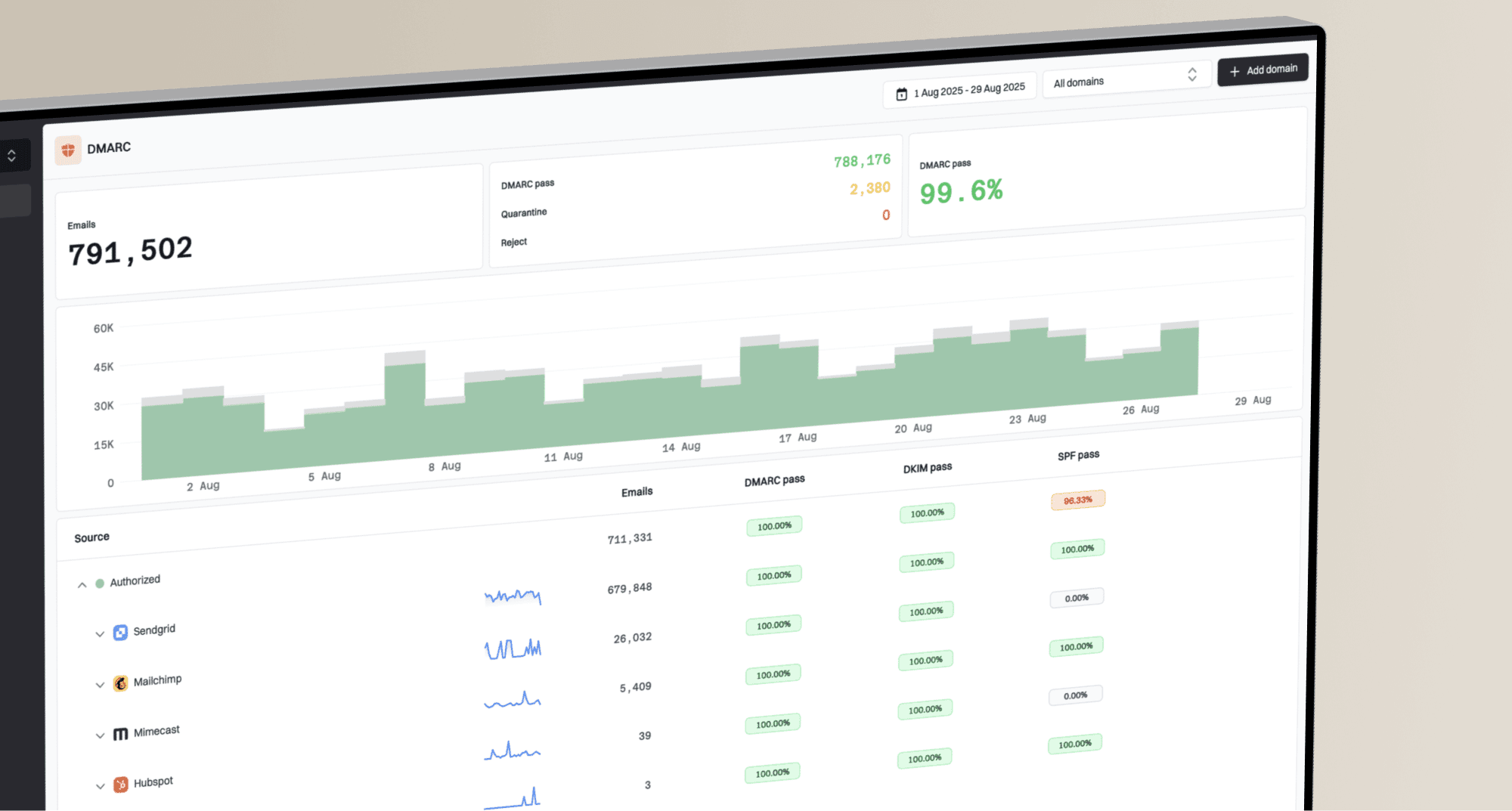
- In Suped's DMARC reporting workflow, compare authentication failures with the timing of a new-domain launch before treating SEM-FRESH10 as the main deliverability cause.
What's the impact of being listed on Spam Eating Monkey SEM-FRESH10?
The impact of being listed on the Spam Eating Monkey SEM-FRESH10 blocklist is usually low. Most email systems that use this data do not reject email based on this listing alone. Instead, they use it as a weighted factor in a larger scoring system.
For example, a mail filter can add a small score to a message containing a domain on this list. That score contributes to the overall spam rating but is rarely enough to classify a message as spam on its own. The impact is also temporary because the listing only applies during the first 10 days of the domain's life. You can see slightly lower deliverability during this initial period, but the effect usually resolves automatically.
Other Spam Eating Monkey blocklists
Spam Eating Monkey SEM BLACK
Organization
Spam Eating Monkey
Zone
bl.spameatingmonkey.net
Type
IP
Impact
Low
Delisting
Manual
Spam Eating Monkey SEM-BACKSCATTER
Organization
Spam Eating Monkey
Zone
backscatter.spameatingmonkey.net
Type
IP
Impact
Low
Delisting
Manual
Spam Eating Monkey SEM-FRESH
Organization
Spam Eating Monkey
Zone
fresh.spameatingmonkey.net
Type
Domain
Impact
Low
Delisting
Automatic
Spam Eating Monkey SEM-FRESH15
Organization
Spam Eating Monkey
Zone
fresh15.spameatingmonkey.net
Type
Domain
Impact
Low
Delisting
Automatic
Spam Eating Monkey SEM-FRESH30
Organization
Spam Eating Monkey
Zone
fresh30.spameatingmonkey.net
Type
Domain
Impact
Low
Delisting
Automatic
Spam Eating Monkey SEM-FRESHZERO
Organization
Spam Eating Monkey
Zone
freshzero.spameatingmonkey.net
Type
Domain
Impact
Low
Delisting
Automatic
Spam Eating Monkey SEM-URI
Organization
Spam Eating Monkey
Zone
uribl.spameatingmonkey.net
Type
Domain
Impact
Low
Delisting
Automatic
Spam Eating Monkey SEM-URIRED
Organization
Spam Eating Monkey
Zone
urired.spameatingmonkey.net
Type
Domain
Impact
Low
Delisting
Manual