Polspam Wrong Reverse Blacklist (BL)

The Polspam Wrong Reverse blocklist (or blacklist) identifies IP addresses that have misconfigured or incorrect reverse DNS (PTR) records.
Updated on 18 Jun 2026: We updated this guide with clearer reverse DNS checks and Polspam delisting guidance.
Summarize with
Check if you are listed on Polspam Wrong Reverse Blacklist (BL)
And 143 other blocklists.







What is Polspam Wrong Reverse Blacklist (BL)?
The Polspam Wrong Reverse Blacklist (BL), using the zone bl-h5.rbl.polspam.pl, is an IP-based blocklist (blacklist) for IPv4 addresses with incorrect reverse DNS (PTR) records. Polspam labels this zone as "Wrong reverse" and publishes the DNSBL response 127.0.2.5. It is one of several blacklists operated by Polspam, a Polish RBL project that collects community reports about spam and related mail server issues.
Because this is an "h" zone and Polspam describes its hardened lists as restrictive, administrators should use the listing as a filtering signal first. Test it in a spam filtering system, review the score it adds, and only move to rejection if the local mail policy justifies that outcome. The core issue is a reverse DNS configuration problem: a sending IP has a PTR record that is missing, misleading, generic, or inconsistent with the hostname used by the mail server.
Who runs Polspam Wrong Reverse Blacklist (BL)?
The Polspam project, which operates the Wrong Reverse Blacklist (BL), describes itself as a community-run, non-commercial hobby. It is a Polish RBL server project based on cooperation with internet users who report spam to a shared database. Polspam states that it does not accept donations, is not sponsored, and does not engage in commercial activities. Its stated purpose is to publish information about domains and IP addresses associated with spam or unsafe mail server behavior.
How to fix wrong reverse DNS before delisting
Fix the DNS first, then ask about removal. For a Wrong Reverse listing, a delisting message without a corrected PTR record gives Polspam and recipient administrators little reason to change how they treat the IP address.
- Set the PTR record through the provider that controls the IP address. The owner of the IP block, not the domain's normal DNS host, usually controls reverse DNS delegation.
- Use a real mail server hostname. The PTR target should be a stable hostname under your control, not localhost, an ISP pool name, or a generic dynamic name.
- Check forward-confirmed reverse DNS. The PTR hostname should resolve back to the sending IP with an A record, and the mail server should use a consistent HELO or EHLO name.
- Keep IPv6 separate. bl-h5 is an IPv4 zone, but IPv6 sending addresses still need correct PTR records for normal recipient checks.
- Wait for DNS to propagate and keep evidence. Save the PTR lookup, forward lookup, mail server hostname, and sending IP before contacting Polspam or your hosting provider.
Reverse DNS checksbash
dig -x 203.0.113.10 +short
dig mail.example.com A +short
host 203.0.113.10
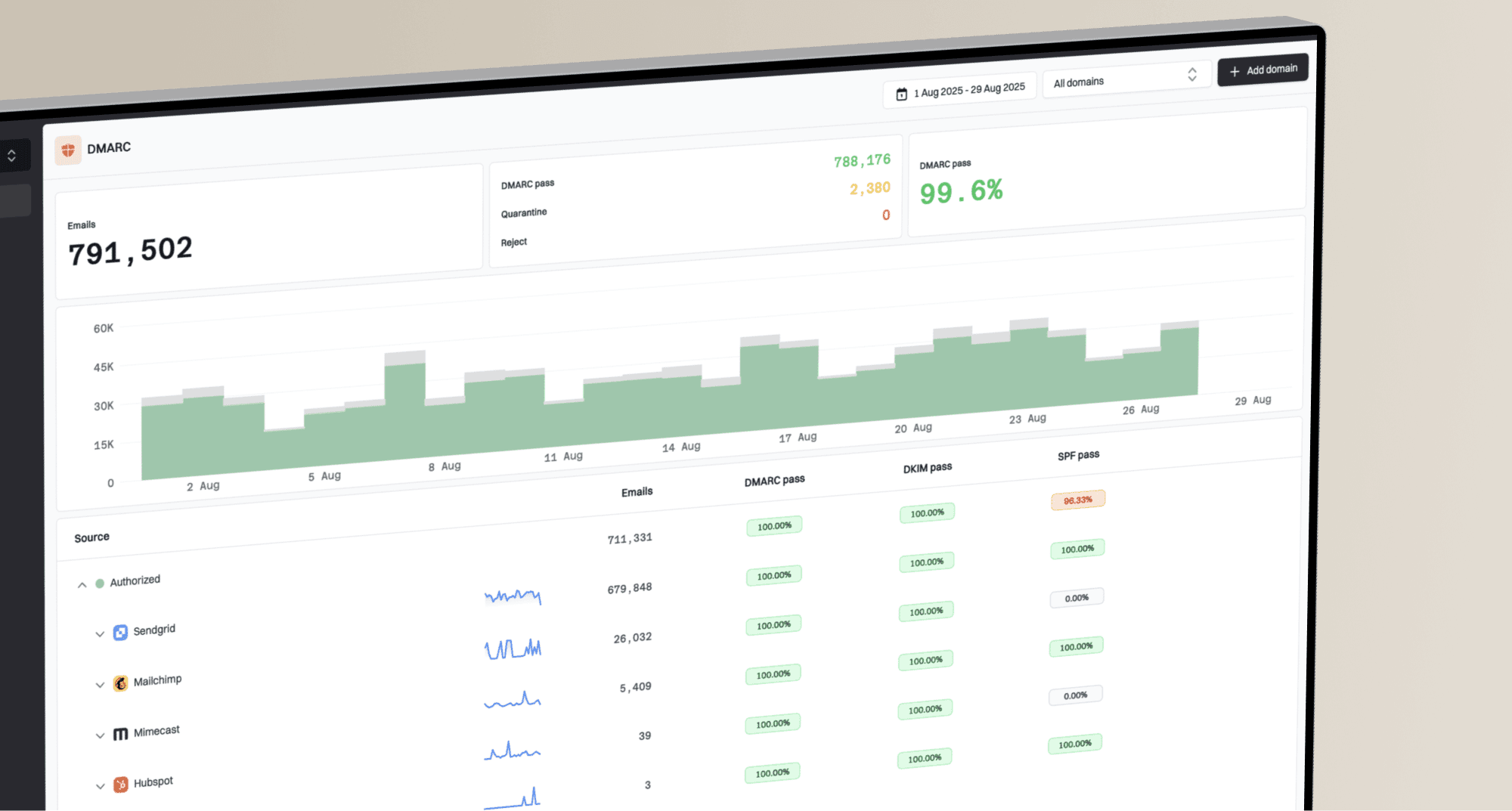
Suped's DMARC reporting and email authentication platform can help confirm that authenticated mail is passing while the PTR fix is handled. The PTR change itself still has to be made with the provider that controls the sending IP address.
How do I get removed and delisted from Polspam Wrong Reverse Blacklist (BL)?
The delisting process for any Polspam blacklist (or blocklist) is strict and depends on complete honesty. Polspam says it does not delist notorious spamming domains and only considers removal for one-off incidents that were not intentional. If the listing came from spam, hiding the cause, outsourcing, landing pages, third-party sending, or related domains will cause the request to fail.
Before requesting removal, fix the underlying issue. For this specific blacklist, that means correcting the sending server's reverse DNS (PTR) record and checking whether the IP is also affected by any domain-based Polspam listing. When you contact Polspam or your hosting provider, follow the process precisely:
- Send plain text only. The email must not contain HTML, scripts, graphics, tracking pixels, or remotely loaded objects. A signature is not required.
- Include the domain name, the domain IP address, and a clear explanation of the suspected listing cause.
- Describe what actually happened if spam was involved. Include whether third-party sending, outsourced campaigns, acquired lists, or landing pages were part of the incident.
- Do not frame it as a simple IP-only delisting request. Polspam's manual says host IP entries connected to a domain issue are removed automatically after seven days once the listed domain stops spamming; for bl-h5, also show that the PTR problem has been fixed.
- If the IP is shared, work through the hosting provider. The provider has the domain inventory needed to identify which hosted domain or subdomain is causing the blocklist (blacklist) problem.
If you are on a shared IP, you cannot fully diagnose the listing from your own domain alone. Ask the provider to review all hosted domains, subdomains, A records, AAAA records, and MX records tied to the affected server, then remove or suspend the source of the listing.
What's the impact of being listed on Polspam Wrong Reverse Blacklist (BL)?
The impact of being listed on the Polspam Wrong Reverse Blacklist (BL) is usually limited, but it is not zero. Polspam states that it does not block mail directly. It publishes data that recipient administrators and filtering systems can choose to use.
The practical impact depends on which recipients query or import this specific blacklist. Because bl-h5 focuses on wrong reverse DNS and Polspam warns that restrictive lists need careful scoring, many administrators treat it as one signal rather than a hard block. Still, recipients that use the zone aggressively can reject the message, add a spam score, or route it to junk. The underlying reverse DNS problem also hurts deliverability outside Polspam because recipient systems commonly check whether a sending IP has a credible PTR record.
Other Polspam blocklists
Polspam Blacklist (BL)
Organization
Polspam
Zone
bl.rbl.polspam.pl
Type
IP
Impact
Low
Delisting
Manual
Polspam Dynamic IP Blacklist (BL)
Organization
Polspam
Zone
bl-h4.rbl.polspam.pl
Type
IP
Impact
Low
Delisting
Manual
Polspam Level 1 Blacklist (BL)
Organization
Polspam
Zone
bl-h1.rbl.polspam.pl
Type
IP
Impact
Low
Delisting
Manual
Polspam Level 2 Blacklist (BL)
Organization
Polspam
Zone
bl-h2.rbl.polspam.pl
Type
IP
Impact
Low
Delisting
Manual
Polspam Level 3 Blacklist (BL)
Organization
Polspam
Zone
bl-h3.rbl.polspam.pl
Type
IP
Impact
Low
Delisting
Manual
Polspam RHSBL RBL Blacklist
Organization
Polspam
Zone
rhsbl.rbl.polspam.pl
Type
Domain
Impact
Low
Delisting
Manual
Polspam RHSBL RBL Danger Blacklist
Organization
Polspam
Zone
rhsbl-danger.rbl.polspam.pl
Type
Domain
Impact
Low
Delisting
Manual
Polspam RHSBL RBL Hard Blacklist
Organization
Polspam
Zone
rhsbl-h.rbl.polspam.pl
Type
Domain
Impact
Low
Delisting
Manual
Polspam RHSBL RBL Very Hard Blacklist
Organization
Polspam
Zone
rhsbl-v.rbl.polspam.pl
Type
Domain
Impact
Low
Delisting
Manual