Abusix Spam Blocklist

The Abusix spam blocklist is an IP-based blacklist that identifies malicious sending servers using spam traps, heuristics, and manual entries.
Updated on 17 Jun 2026: We updated this guide for Abusix's current DNS namespace, delisting timing, and practical prevention steps.
Summarize with
Check if you are listed on Abusix Spam Blocklist
And 143 other blocklists.







What is the Abusix Spam Blocklist
The Abusix Spam Blocklist is a real-time IP blocklist (blacklist) for sending hosts that have sent mail to Abusix spam traps. These traps are domains that have never been used for legitimate mail or have rejected all mail for more than a year. Abusix is used by internet service providers, telecommunications companies, and cloud or hosting providers to filter spam, phishing, malware, and other abusive email traffic.
Technically, the customer DNS namespace for this blacklist is <APIKEY>.black.mail.abusix.zone. It lists both IPv4 and IPv6 addresses, and its rsync file is lists/black.zone. A listing on this blocklist usually lasts about 5.2 days after the last unwanted activity was detected. Common reasons for an IP address to be added to this list include:
- Compromised user accounts or infected hosts, including abuse that starts from a vulnerable website.
- Botnet traffic, organized spam operations, or high-volume abusive sending.
- Purchased, appended, or otherwise unconfirmed email lists.
- Poor list hygiene, including missing confirmed opt-in, weak bounce handling, or sending to very old contacts.
- Open web forms, open proxies, TOR exit nodes, VPN traffic, or other hosts that look like abusive SMTP sources.
When a mail server queries this DNSBL, Abusix returns specific codes. A return of 127.0.0.2 means the IP matched primary trap data. A return of 127.0.0.3 means Abusix heuristics found a very low-reputation IP or nearby IP activity tied to trap hits. A return of 127.0.0.200 is for semi-permanent manual listings. Abusix also documents this list as safe for checking each Received header hop inside a message when an MTA or spam filter supports that.
Who runs the Abusix Spam Blocklist
The Abusix Spam Blocklist is operated by Abusix, a company focused on network abuse management, email security, and threat intelligence. The company builds blocklists, abuse reporting workflows, and network abuse tools for providers that run mail infrastructure. Its data helps receiving systems reject abusive mail earlier in the SMTP flow.
How to check and get removed from the Abusix Spam Blocklist
Getting removed from the Abusix Spam Blocklist is straightforward, but you need to confirm the exact listing and fix the root cause first. A bounce message often includes an Abusix lookup URL. If it does not, the Abusix lookup page can show whether the IP address is listed and which Abusix list returned the match.
- Confirm the IP address listed in the bounce message or mail logs, then check it in the Abusix lookup page.
- Read the listing details and map them to a root cause, such as a compromised account, malware infection, open form abuse, or list acquisition issue.
- Fix the source of the unwanted traffic before requesting delisting, because a new trap hit can relist the IP.
- Create or use a free Abusix portal account. Abusix requires verified accounts to reduce abuse of the delisting system, and delisting does not require a paid plan.
- Request removal in the portal after the fix is in place.
Abusix processes delisting requests immediately and rebuilds DNS zone files every minute. Direct DNS queries can show the removal within about five minutes. Local systems that sync a copy of the data can take longer, depending on their rsync schedule.
How to avoid another Abusix listing
After delisting, the priority is stopping the next trap hit. Abusix listings usually return when the same server, account, form, or list source keeps sending unwanted mail.
- Use confirmed opt-in for signup forms and add anti-bot controls to forms that can trigger email.
- Remove purchased, appended, stale, and unengaged contacts before sending.
- Monitor bounce rates and spam complaints, then suppress addresses that fail or do not engage.
- Separate mail server IPs from web, workstation, and customer infrastructure that can be compromised.
- Audit SMTP authentication logs for sudden volume changes, unfamiliar sending locations, and repeated failed login patterns.
Impact of an Abusix Spam Blocklist listing
The impact of being on the Abusix Spam Blocklist is medium to high for the affected sending IP address. Because this blacklist is used by internet, hosting, and telecommunication providers, a listing can cause rejected messages, delivery deferrals, or spam folder placement depending on the receiving system's policy. This can disrupt business communications, marketing campaigns, and transactional emails.
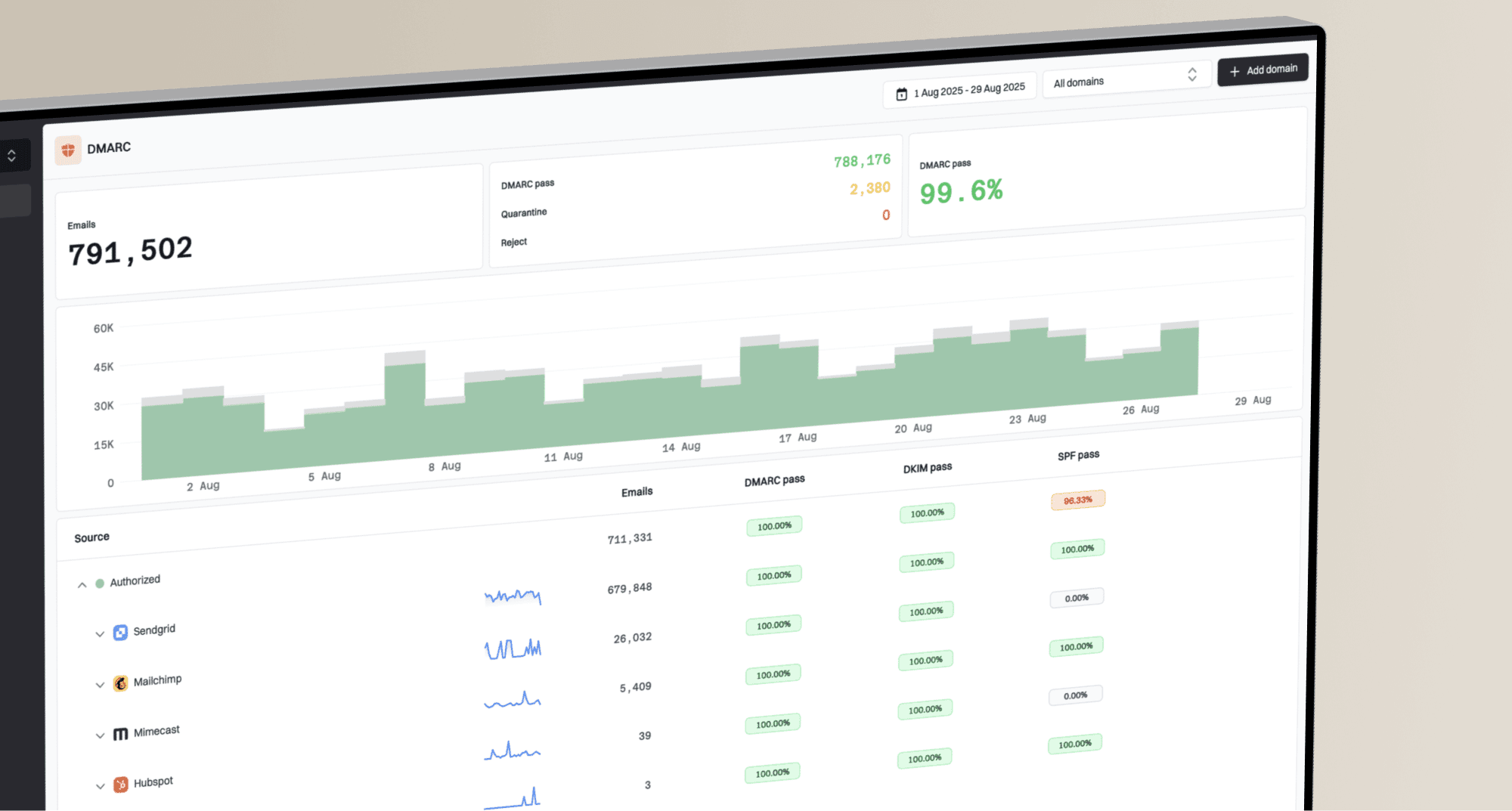
For domains that depend on steady mail delivery, Suped can help connect DMARC authentication results with real sending sources. Suped shows which services send for your domain, whether SPF and DKIM pass, and where unauthorized or misconfigured traffic appears, so you can clean up sending before it becomes a deliverability incident.
Other spam blocklists
Abusix Authbl Blocklist
Organization
Abusix
Zone
authbl.mail.abusix.zone
Type
IP
Impact
Medium
Delisting
Manual
Abusix Combined Blocklist
Organization
Abusix
Zone
combined.mail.abusix.zone
Type
IP
Impact
Medium
Delisting
Manual
Abusix Domain Blocklist
Organization
Abusix
Zone
dblack.mail.abusix.zone
Type
Domain or IP
Impact
Medium
Delisting
Manual
Abusix Exploit Blocklist
Organization
Abusix
Zone
exploit.mail.abusix.zone
Type
IP
Impact
Medium
Delisting
Manual
Abusix nod List (Newly Observed Domains)
Organization
Abusix
Zone
nod.mail.abusix.zone
Type
Domain
Impact
Medium
Delisting
Automatic
Abusix noip List (Newly Observed IPs)
Organization
Abusix
Zone
noip.mail.abusix.zone
Type
IP
Impact
Medium
Delisting
Automatic
Abusix Policy Blocklist
Organization
Abusix
Zone
dynamic.mail.abusix.zone
Type
IP
Impact
Medium
Delisting
Manual