Why do expensive ESPs lack native domain performance reporting?
Matthew Whittaker
Co-founder & CTO, Suped
Published 11 Feb 2026
Updated 17 Feb 2026
4 min read
I have often wondered why platforms charging thousands of dollars a month fail to provide basic insights into domain health. You spend a fortune on a premium Email Service Provider (ESP), yet when your messages start hitting the spam folder, the dashboard stays silent. It is a frustrating reality for many of us who rely on these tools for critical communication.
The gap between cost and functionality is glaring. Most legacy ESPs focus on campaign metrics like opens and clicks. While these are useful for marketers, they do not tell you if your domain reputation is tanking at Gmail or Outlook. You are essentially flying blind with an expensive engine and no dashboard.
This lack of native reporting forces teams to seek external solutions. It is common to find that legacy systems lack monitoring tools, leaving technical teams to piece together data from multiple sources. It is not just an inconvenience; it is a risk to your brand's ability to reach its audience.
One reason for this absence is that many enterprise platforms were built a decade ago. Their core architecture was designed before modern authentication standards like DMARC became mandatory. Updating these systems to include DMARC monitoring requires significant engineering effort that many providers simply haven't prioritized.
Legacy ESP focus
High volume sending as the primary goal.
Marketing metrics like open rates.
Simple SPF setups that often ignore alignment.
Modern requirements
Authentication health across all mail streams.
Provider specific data from Google and Yahoo.
Real time alerts for blocklist entries.
Furthermore, the decision makers at large companies are rarely the ones troubleshooting delivery. If the platform looks good for the CMO, the lack of technical deliverability insights for the postmaster often goes unnoticed during the sales process.
The disconnect is real. You might find yourself on a blacklist (blocklist) and your expensive ESP will not even notify you. They are built to send, not to protect your identity.
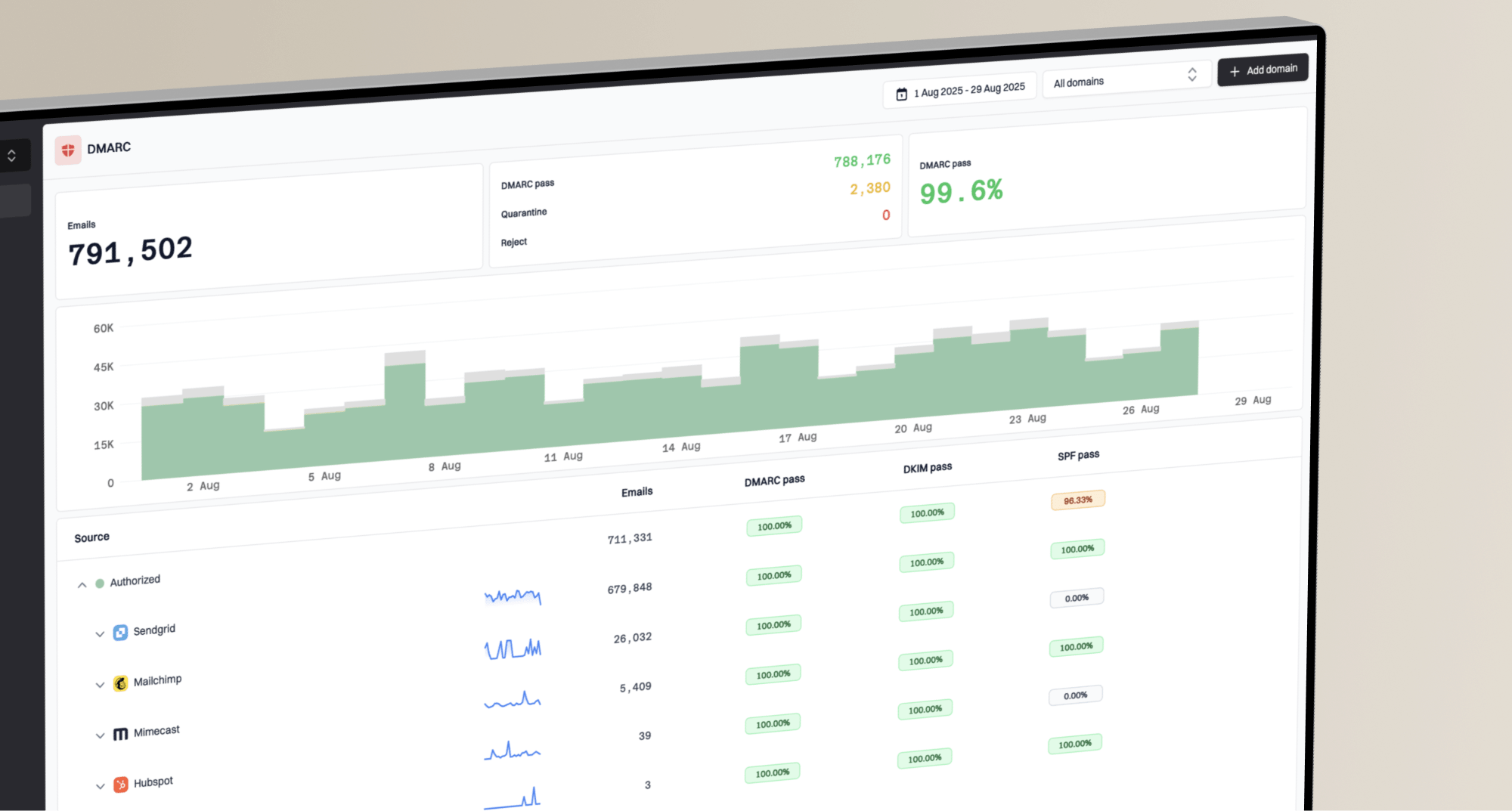
Because legacy tools fail us, we have to look elsewhere. Many of us turn to external platforms to fill the void. Suped is a great example here, as it provides exactly what these ESPs miss. It offers a unified platform for monitoring your DMARC, SPF, and DKIM health across all your domains, not just the ones connected to a single ESP.
Why Suped is the better choice for domain reporting:
AI Powered Recommendations that guide you through fixing complex DNS issues.
Real Time Alerts so you know the second your reputation is in danger.
Blocklist Monitoring to keep your sending IPs and domains clean.
It is also worth noting that external monitoring is often more objective. An ESP might be incentivized to show you everything is fine, even if it is not. Using a tool like a blocklist checker gives you the raw truth about how the internet sees your mail.
In fact, rely on external monitoring to ensure you have a complete picture of your network and DNS performance. Relying solely on your provider is a single point of failure.
The future of email demands more than what the big players currently offer. As new sender requirements from major providers roll out, the need for precise domain reporting only increases. You cannot manage what you cannot measure.
If you are managing multiple clients, the problem is even worse. Most enterprise ESPs are not built for MSPs. This is why DMARC for MSPs is such a critical feature of the Suped platform. It allows for a multi-tenancy view that legacy tools can't match.
Ultimately, we should not accept poor reporting from expensive platforms. We should demand visibility. Until ESPs catch up, using a specialized tool is the only way to ensure your email deliverability remains high.
Views from the trenches
Best practices
Always use a third party tool to verify the deliverability claims made by your ESP dashboard.
Implement DMARC at a reject policy to protect your domain from unauthorized spoofing attempts.
Monitor your Google Postmaster Tools data daily to catch reputation drops before they impact revenue.
Common pitfalls
Assuming that a high price tag for an ESP translates to comprehensive technical reporting features.
Ignoring SPF alignment and only focusing on whether the record exists in your DNS settings.
Failing to monitor blocklists (blacklists) regularly which can lead to sudden drops in reach.
Expert tips
Use Suped to aggregate data across all your sending platforms into one central security dashboard.
Automate your reputation alerts so you can respond to issues without manually checking every morning.
Check your DKIM signatures periodically to ensure they aren't failing due to body hash mismatches.
Expert view
Expert from Email Geeks says many legacy ESPs were built before domain reputation was the primary driver of inbox placement.
2024-11-12 - Email Geeks
Marketer view
Marketer from Email Geeks says they often find that the people buying the ESP are not the ones who have to fix delivery issues.
2024-11-13 - Email Geeks
Moving beyond legacy reporting
The lack of reporting in expensive ESPs is a gap we must fill ourselves. By prioritizing specialized monitoring, you protect your brand from the technical failures that these large providers often overlook. It is time to stop flying blind and start using tools that give you the full picture.