Suped

Why are emails to Gmail experiencing delivery delays and spam placement issues?

Matthew Whittaker profile picture
Matthew Whittaker
Co-founder & CTO, Suped
Published 13 Jul 2025
Updated 23 Apr 2026
5 min read

Why are emails to Gmail experiencing delivery delays and spam placement issues?

I have noticed a significant increase in the number of senders reporting that their mail is either taking hours to arrive in Gmail inboxes or is being routed straight to the spam folder. This behavior is often frustrating because it can happen to domains that have historically maintained a clean record. While some instances are due to temporary misclassification of emails by Google itself, many cases stem from a stricter enforcement of authentication standards.
When a message is delayed, it usually means Gmail has accepted the connection but has placed the message in a processing queue for deeper inspection. This often happens when the sender reputation is in a grey area. If you are seeing these email deliverability issues , it is usually a signal that your domain needs a technical health check. Monitoring tools are the only way to see the underlying data that Google uses to make these decisions.
I frequently see cases where a domain has perfect SPF and DKIM but still faces issues. Often, the culprit is a lack of DMARC alignment or an improperly configured policy. These missing pieces cause Gmail to treat the mail with suspicion, leading to the spam placement issues that disrupt communication. Resolving these requires a systematic approach to authentication and reputation management.

The impact of new sender requirements

Google has implemented a crackdown on non-compliant mail which specifically targets bulk senders. If you send more than 5,000 messages a day, you are now required to have a DMARC policy in place. Even for smaller senders, failing to meet these standards increases the risk of being throttled. Throttling is why you see emails delayed in Gmail even if your content is legitimate.
Another factor is the spam complaint rate. Google is now much less tolerant of high complaint volumes. If more than 0.3% of your recipients mark your mail as spam, your entire domain reputation will suffer. This is why I always recommend using Google Postmaster Tools to keep an eye on your official reputation scores. Without this data, you are essentially flying blind.

Critical authentication failures

Failure to align your suped.com logoSPF and suped.com logoDKIM records is the most common reason for outright rejection at Gmail.
  1. Missing DMARC policy: Results in higher scrutiny and potential filtering.
  2. High complaint rates: Rates above 0.3% trigger permanent spam placement.
Technical bugs also play a role. Occasionally, Gmail experiences internal issues where valid email is marked as spam due to filtering errors. However, you cannot rely on this being the case. You must first ensure your own technical setup is flawless before assuming the problem lies with Google.

Reputation and infrastructure checks

If your mail is being delayed, you might be seeing slow email delivery because of IP throttling. This happens when the receiving server limits the number of connections from your mail server. This is common if you have recently increased your sending volume without a proper warm-up period.
It is also worth checking if your IP or domain has been listed on a blocklist (or blacklist). Gmail uses many private and public signals to determine if a sender is untrustworthy. Being on a blacklist (or blocklist) is a fast way to ensure your mail never sees the inbox. Regular monitoring can alert you to these issues before they cause a total delivery failure.

Healthy sender

  1. Full authentication: SPF, DKIM, and DMARC are all passing.
  2. Low complaints: Spam rate stays well below the 0.1% threshold.

At-risk sender

  1. No DMARC: No policy or reports being monitored.
  2. Throttled volume: High spikes in volume leading to delays.
I have found that senders who implement DMARC monitoring are able to identify exactly which mail streams are failing. This visibility is vital when you use multiple third-party services to send mail on your behalf. If one service is misconfigured, it can drag down the reputation of your entire domain.

Steps to resolve delivery problems

The first step I take when troubleshooting is to fix Gmail deliverability issues by verifying the DNS records. A single typo in an SPF record or a missing DKIM key can cause permanent damage to your delivery rates. You should use a tool to validate these records regularly.
Next, examine your domain reputation. If your reputation has dropped to 'Low' or 'Bad', you will need to reduce your sending volume and focus on your most engaged users. Recovering a reputation takes time, often several weeks of consistent, high-quality sending.
Finally, ensure that your DMARC record is set correctly. Moving from a 'none' policy to 'quarantine' or 'reject' tells Google that you take security seriously, which can help improve your standing as a trusted sender over time.

Views from the trenches

Best practices
Monitor your Google Postmaster Tools dashboard daily to catch reputation drops early.
Ensure SPF, DKIM, and DMARC are fully aligned across all sending platforms.
Keep your spam complaint rate consistently below 0.1% to maintain inbox access.
Common pitfalls
Ignoring transient error messages like over quota responses which indicate throttling.
Failing to warm up new IP addresses or domains before sending high volumes.
Using multiple DMARC records on a single domain which invalidates the policy.
Expert tips
Check message headers for specific delay stamps to identify where the lag occurs.
Use subdomains for different mail types to protect your main domain's reputation.
Review DMARC reports to find unauthorized senders using your domain identity.
Marketer view
Marketer from Email Geeks says they have seen persistent delivery delays specifically with Gmail to Gmail traffic recently.
2024-05-23 - Email Geeks
Expert view
Expert from Email Geeks says they have observed a fourfold increase in transient throttling messages over the last few months.
2024-05-24 - Email Geeks

Improving your long term delivery

Maintaining a healthy relationship with Google requires constant vigilance. By using a tool like suped.com logoSuped to monitor your DMARC reports, you can stay ahead of authentication issues. The deliverability landscape is always changing, and staying compliant is the only way to ensure your messages reach the inbox.

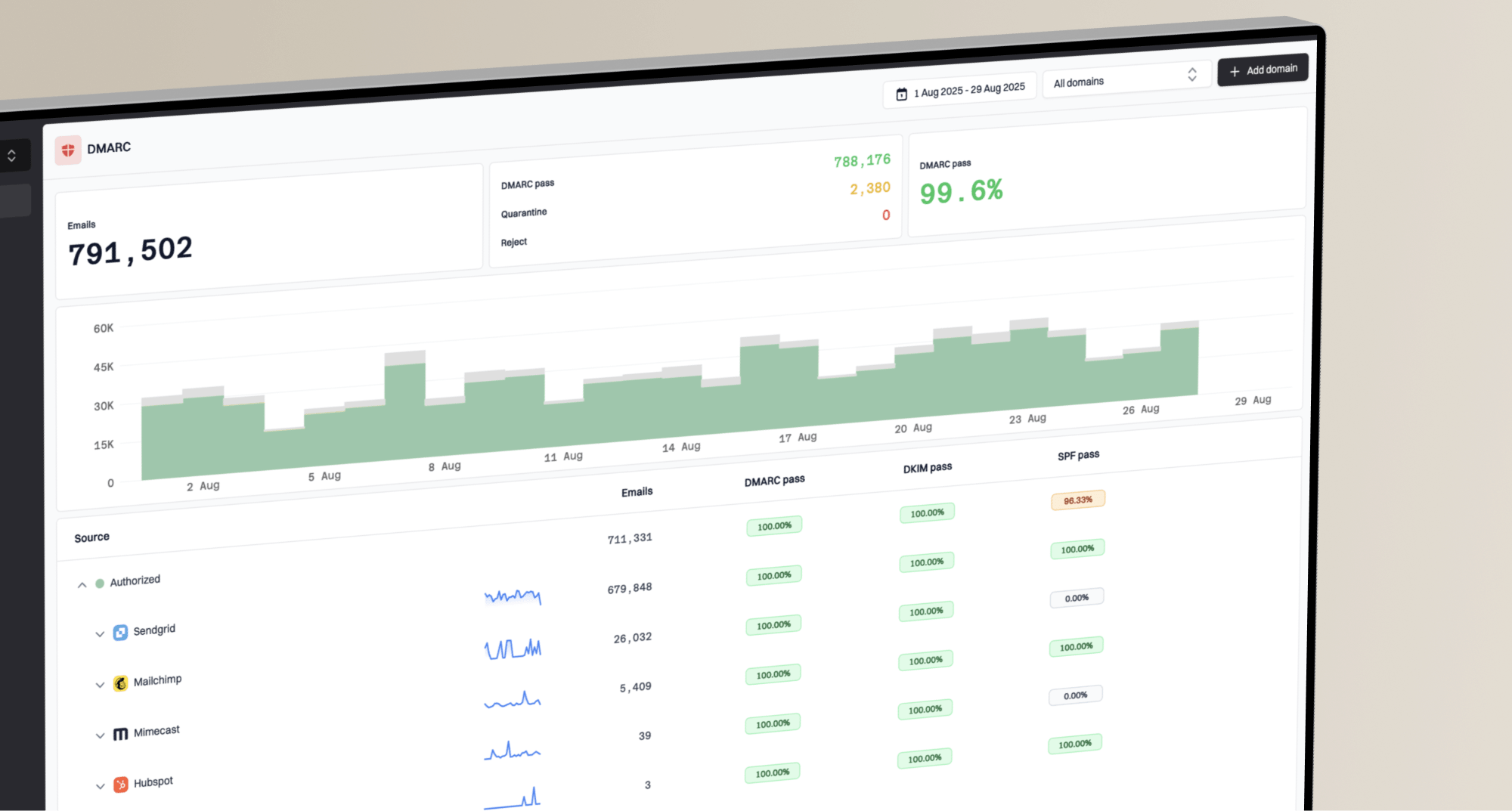
DMARC monitoring

Start monitoring your DMARC reports today

Suped DMARC platform dashboard

What you'll get with Suped

Real-time DMARC report monitoring and analysis
Automated alerts for authentication failures
Clear recommendations to improve email deliverability
Protection against phishing and domain spoofing