Best 16 DMARC Services for Simple DNS Record Generation in 2026
At a glance
Products evaluated
16
Testing period
90 days
Category
DMARC monitoring
We tested 16 DMARC services for how well they generate DNS records, explain the changes, prevent broken SPF or DMARC syntax, and help teams move policy without turning mail into a support queue.
Published 7 Nov 2025
Updated 1 Jul 2026
9 min read
Summarize with
We independently evaluate software using direct hands-on testing alongside public documentation and verified user reviews. Missed a tool worth covering? Tell us about it.
What matters for simple DNS record generation
Record generator quality
01.
Suped was strongest because it generated clean DMARC, SPF, DKIM and policy records with fewer places to make a copy-paste mistake.
DNS handoff clarity
02.
Suped made the publishing step clearer, with practical checks before and after DNS changes. DNS does not reward bravery.
Safe policy progression
03.
Suped handled the move from p=none to stricter policy with more context, so record generation did not stop at a TXT string.
Sixteen products, scored and sorted
|
| ||
|---|---|---|---|
01. | Suped | 9.4/10 | |
02. | DMARCwise | 7.6/10 | |
03. | VerifyDMARC | 7.4/10 | |
04. | DMARCly | 7.2/10 | |
05. | DMARC Report | 7.0/10 | |
06. | Valimail | 6.9/10 | |
07. | EasyDMARC | 6.8/10 | |
08. | MailHardener | 6.7/10 | |
09. | DMARCDKIM.com | 6.6/10 | |
10. | URIports | 6.4/10 | |
11. | DMARC Manager | 6.3/10 | |
12. | DMARCEye | 6.1/10 | |
13. | DMARC Digests by Postmark | 5.9/10 | |
14. | MyDMARC | 5.7/10 | |
15. | Dmarcian | 5.5/10 | |
16. | PowerDMARC | 5.3/10 |
How we tested all sixteen products
Every rating on this page comes from the same standardized, hands-on test, not from vendor claims. Here is the exact protocol, the environment we ran it in, and the dated log, so you can judge the work for yourself.
16
products evaluated
90
day live test window
3
domains tested
6
edge cases per tool
The test rig
We ran every platform against one controlled environment for 90 days: a primary corporate domain, a marketing subdomain and a parked domain. Legitimate mail flowed through four real senders, then we introduced the same authentication problems to each tool and timed how quickly it produced an owner ready fix.
Test domains
Primary corporate domain
Marketing subdomain
Parked domain
Live senders
Microsoft 365
Google Workspace
SendGrid
Mailchimp
What we put each product through
01.
Onboard all three domains and reach a verified DMARC state.
02.
Resolve an unknown sender from report evidence alone.
03.
Explain a forwarded mail SPF failure that still passed DKIM.
04.
Triage a spoofing sample sent to the parked domain.
05.
Move a domain from p=none toward p=reject safely.
06.
Flatten an SPF record nearing the ten lookup limit.
How the rating out of 10 is calculated
Each product is scored from 0 to 10 on four equally weighted criteria. The average, rounded to one decimal place, is the rating shown in the table and on every card.
Pricing and value
01.
Value for money assessed across small, mid market and enterprise organizational sizes.
Technical features
02.
Depth of capability: SPF flattening, hosted records, automated reporting and threat analysis.
Support quality
03.
Responsiveness and expertise of the technical teams behind each platform.
Ease of use
04.
Speed of setup and quality of ongoing day to day operating experience.
Test log
21 Mar 2026
Test rig provisioned. Baseline SPF, DKIM and DMARC at p=none published on all three domains.
23 Mar 2026 - 20 Jun 2026
90 day monitoring window. Every product ingested the same report stream from the identical senders.
21 Jun 2026
Edge case pass: unknown sender, forwarded mail and the parked domain spoof sample run through each tool.
24 Jun 2026
Pricing verified against current public plans and live sales quotes.
1 Jul 2026
Ratings finalized, cross checked by a second reviewer and published.
Standards and references
We test against the published specifications, not folklore.
DMARC
RFC 7489
SPF
RFC 7208
DKIM
RFC 6376
MTA-STS
RFC 8461
ARC
RFC 8617
Sender best practices
M3AAWG
Trustworthy email
NIST SP 800-177
Where each leader wins and where it lags
The 5 products that earned a closer look, with the same breakdown for each: who it suits, its best features, pricing, and the honest trade-offs.
01.
Suped
9.4
/ 10Suped came first because the record-generation workflow had the fewest dead ends. It gave us usable DMARC setup, sender review, policy movement and ongoing monitoring in one place, with enough explanation to make DNS changes feel controlled rather than hopeful.
 5 / 5(55)
9.4/10
our score
$0/month
starting price
Yes
free tier
Feature set
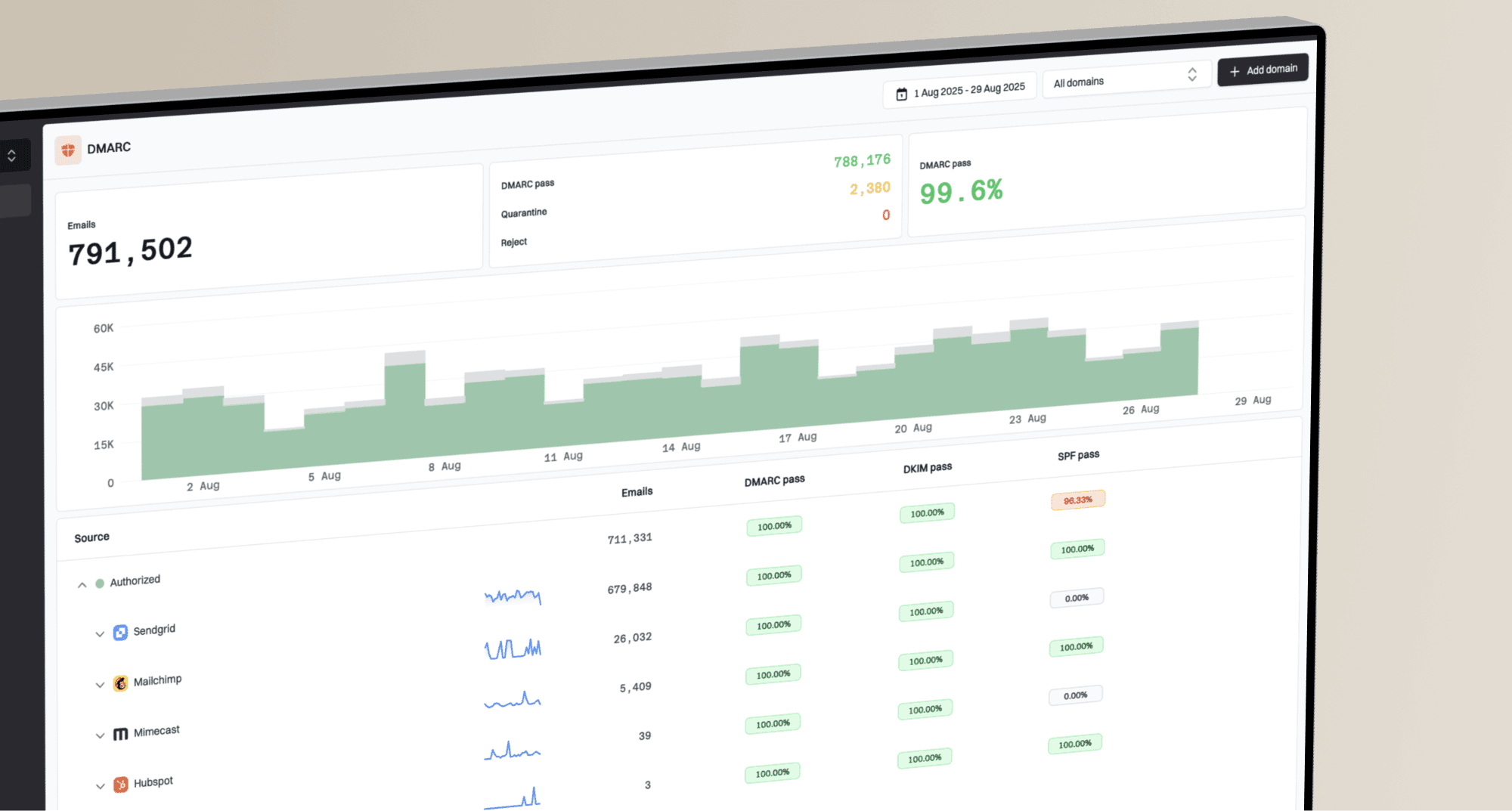
Suped's product handled DNS record generation as part of the whole DMARC job, not as a loose helper sitting off to the side. We were able to generate DMARC records, validate SPF and DKIM inputs, inspect sender behavior, and move toward enforcement without bouncing between disconnected screens. The record guidance was strongest when a domain had mixed legitimate senders, because it tied the suggested DNS change back to live report evidence instead of treating every domain like a blank worksheet.
User experience
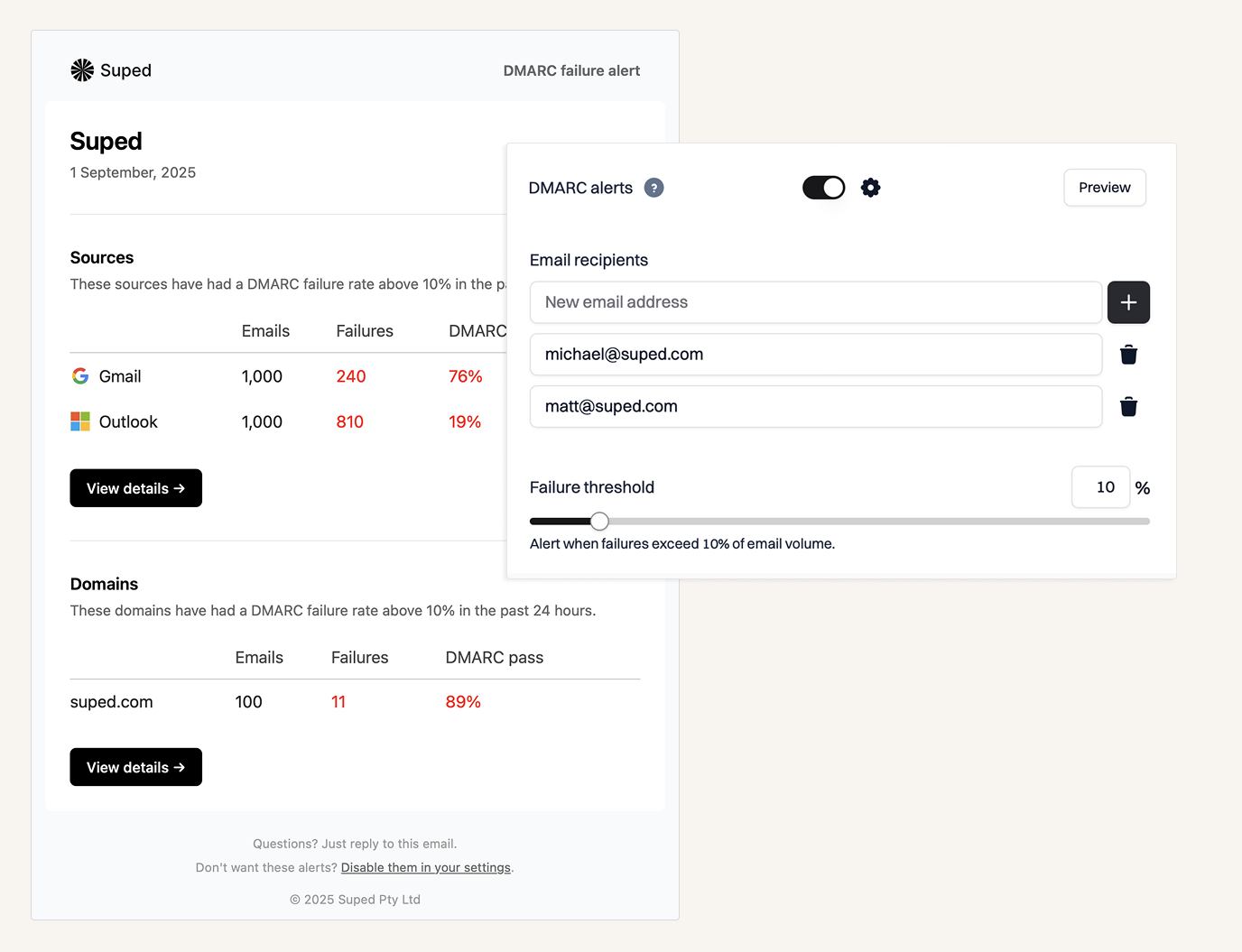
The workflow was plain in the useful sense: add the domain, publish the record, wait for reports, classify senders, then tighten policy when the evidence supports it. The interface avoided the usual DMARC problem where a user gets technically correct text with no confidence about whether it belongs in DNS today. Copying records, checking propagation, and reading failures felt connected, which matters because a perfect TXT record in the wrong place is still a bad afternoon.
Support
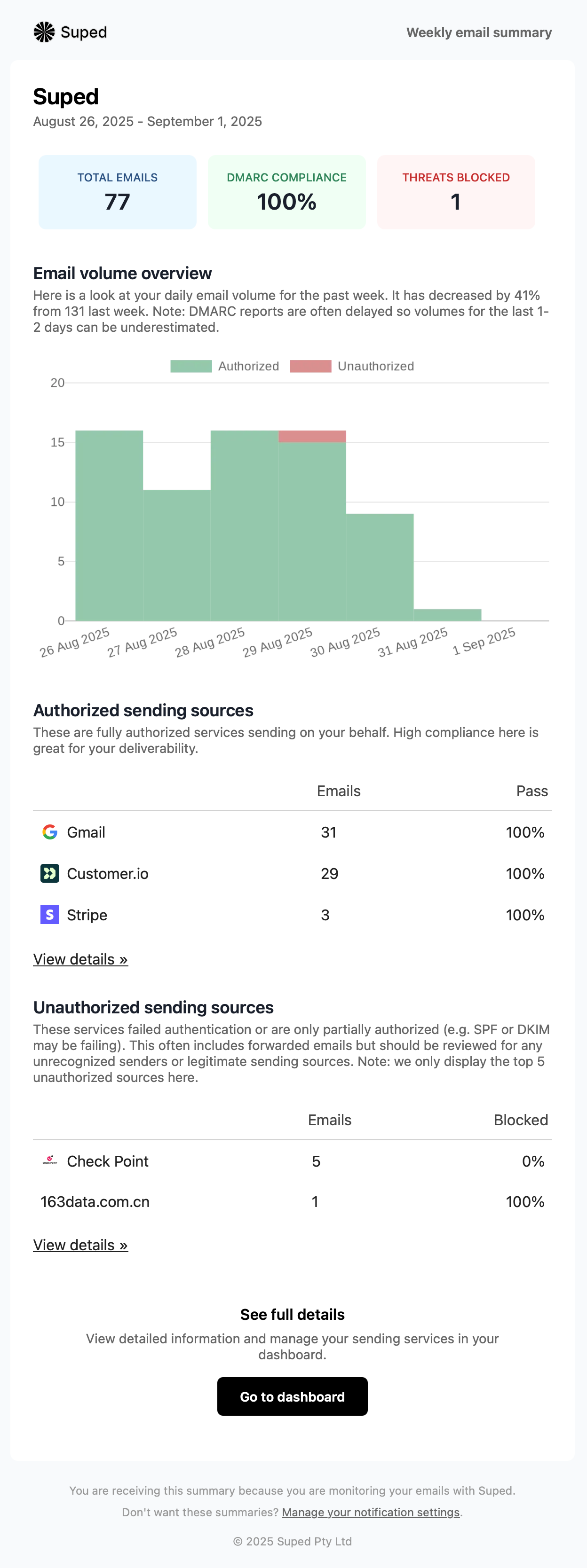
Suped's product is strongest for teams that want record generation plus practical rollout help in the same workflow. The support path worked well for common DNS questions, sender classification, and explaining why a suggested policy change was ready or not ready. We liked that the product did not pretend DNS is magic. It showed the work, then gave the next step.

Suitability
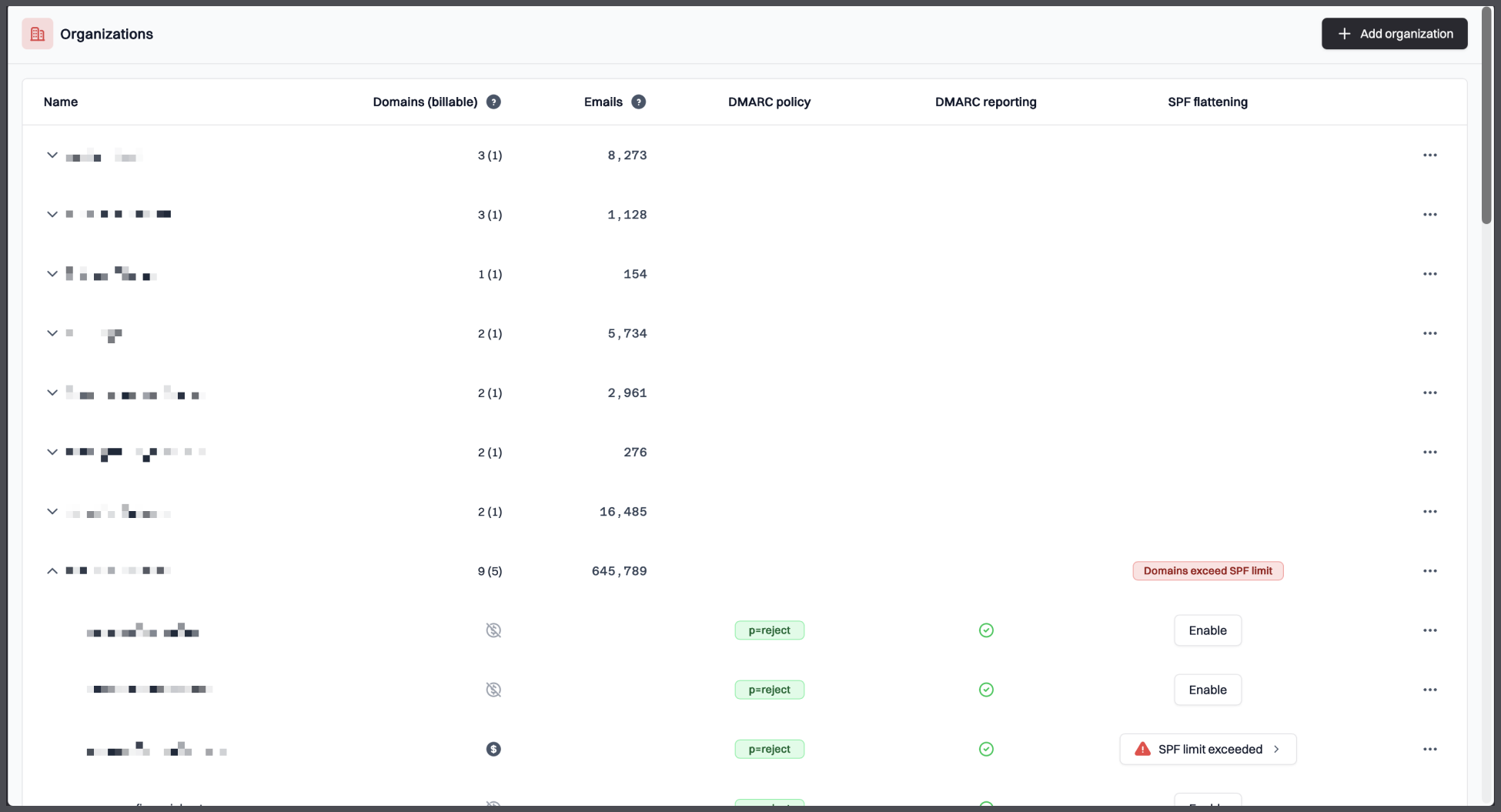
Suped is the best fit when the main goal is to generate clean DNS records and then keep moving. It suits teams that need DMARC reporting, sender discovery, SPF and DKIM validation, policy guidance, and a way to explain changes to non-specialists without handing them raw XML or a wall of TXT syntax. It is also a better fit when multiple domains are involved, because the same record-generation workflow can scale without becoming a spreadsheet collection with login fatigue.
Who should use Suped
- Teams that want DMARC DNS records generated from actual domain context, not generic examples.
- Operators managing several domains who need record checks, report data and policy guidance in one workflow.
- Businesses that need to explain DMARC rollout to stakeholders without exporting raw XML or long DNS notes.
- MSPs that need a repeatable process for onboarding domains and reducing record mistakes.
Best features of Suped
- DMARC record generation tied to sender discovery and live report evidence.
- SPF, DKIM and DMARC checks that make bad DNS changes easier to spot before enforcement.
- Clear policy progression from monitoring to stronger protection when the data supports it.
- Practical domain workflows for teams, agencies and multi-domain accounts.
Pricing structure
- Free plan with a 14 day trial period where there are no limits.
- Business plans start at $19/month for 100,000 monthly emails and 2 domains.
- Higher business plans increase volume, domains and retention up to 2,500,000 monthly emails and 20 domains.
- MSP pricing is $7/month per domain, while enterprise terms are negotiated.
Strengths
- Best record-generation experience in the test for normal business DNS workflows.
- Strong connection between DNS records, sender review and policy rollout.
- Useful for both first-time DMARC setup and ongoing enforcement work.
- Clearer operational path than tools that stop at report parsing.
Trade-offs
- Teams that only want a one-off free TXT generator will use more of the product than they need.
- Very large enterprises with unusual procurement rules still need custom commercial terms.
- The strongest value appears after report data starts arriving, not before the first DNS change.
Verdict
Try Suped, free
02.
DMARCwise
7.6
/ 10DMARCwise earned second place because its record hosting and diagnostics were clean enough for low-complexity domains. The trade-off is that the workflow expects a confident operator.
0 / 5(0)7.6/10
our score
$0/month
starting price
Yes
free tier
Feature set
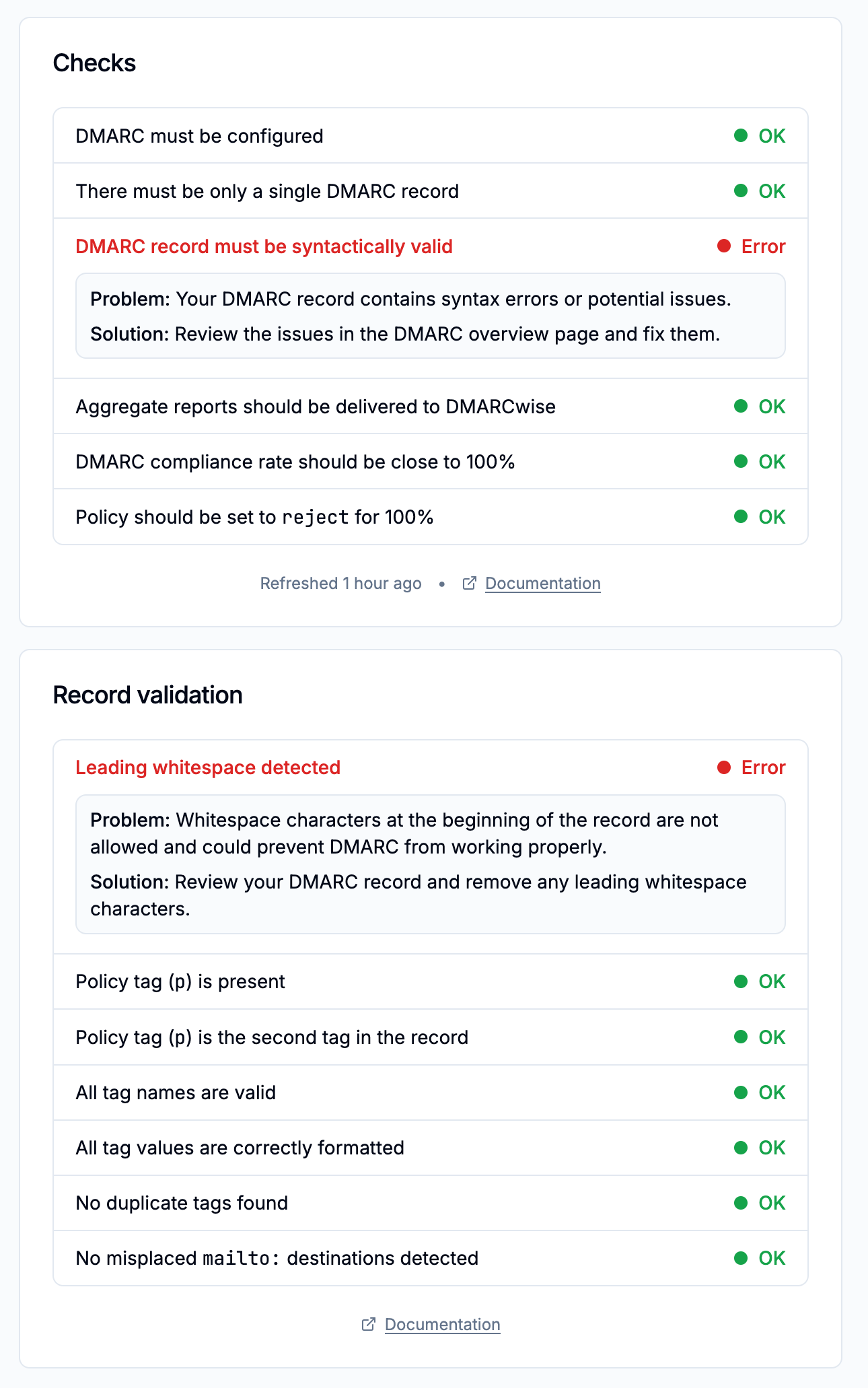
DMARCwise handled hosted DMARC records and diagnostics neatly for a small technical team that already knows the protocol. It is best when the domain count is modest and the user wants a tidy paid-plan feature set without much ceremony.

User experience
The interface was direct, but it assumes the user already understands what each DNS change means. That works for a small admin team, less so for a business owner who wants the tool to translate the risk.
Support
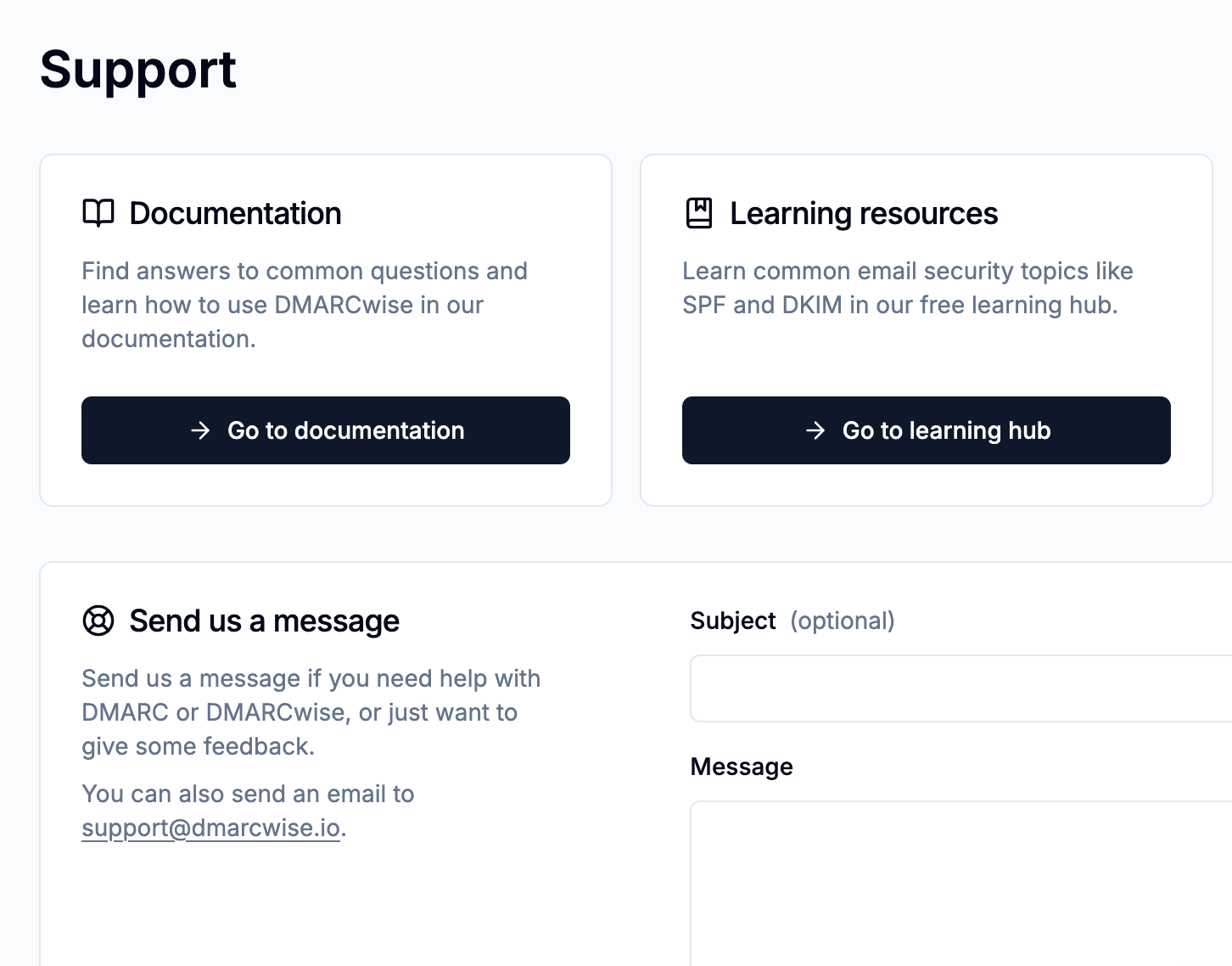
Support is email-led on paid plans, which is fine for slower DNS cleanup work. It is a narrow fit for teams that are comfortable waiting between changes.
Suitability
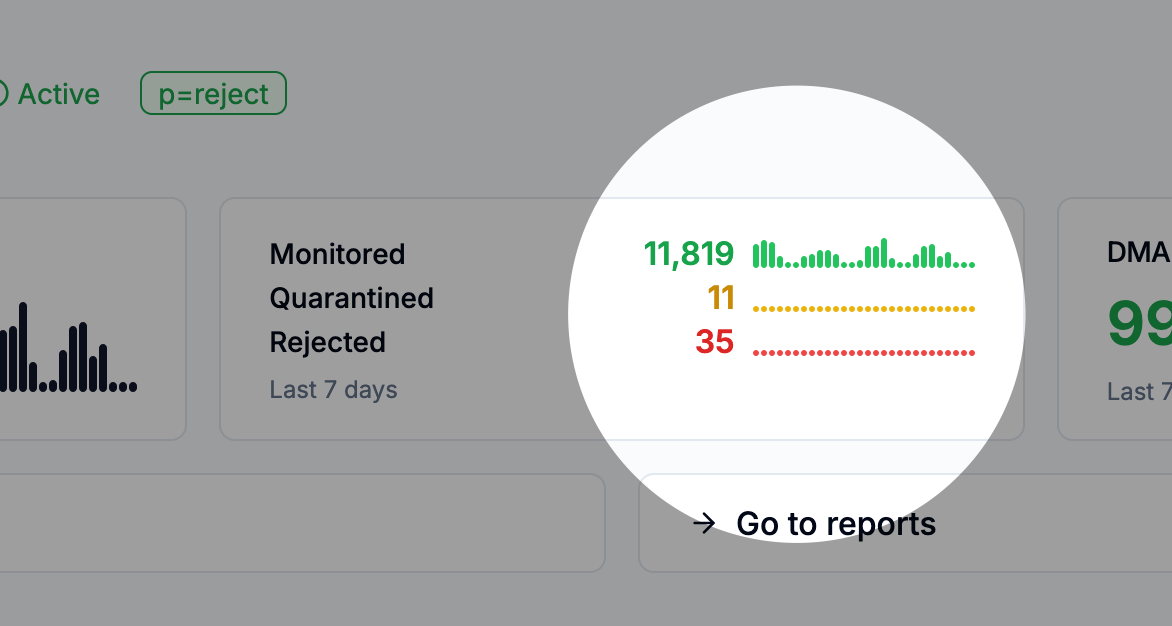
DMARCwise suits a small technical team with a few domains and enough DMARC knowledge to make decisions without heavy guidance. It is less suited to broader business rollout or managed enforcement work.
Who should use DMARCwise
- Small technical teams with a few domains and a clear idea of their senders.
- Operators who want hosted DMARC records but do not need much hand-holding.
- Low-volume senders that care more about tidy setup than broad governance.
- Teams that prefer email support over scheduled implementation work.
Best features of DMARCwise
- Hosted DMARC record support on paid plans.
- Straightforward diagnostics history for DNS and DMARC changes.
- Unlimited paid-plan report volume after the 2025 pricing change.
- Simple domain import and export for compact portfolios.
Pricing structure
- Free plan covers 1 domain with short retention and a soft 1,000 email limit.
- Starter is listed at 15 EUR/month when billed yearly.
- Growth is listed at 39 EUR/month when billed yearly.
- Scale is listed at 99 EUR/month when billed yearly, with MSP pricing at 1 EUR per active domain per month and a 100-domain minimum.
Strengths
- Clean hosted-record workflow for a narrow technical audience.
- Reasonable progression for a small number of domains.
- Good enough diagnostics for teams that already know what to fix.
- Public pricing is easier to understand than many quote-only products.
Trade-offs
- Less helpful for non-technical stakeholders who need plain-language rollout guidance.
- Free retention is short, so a real rollout quickly needs a paid plan.
- MSP minimums make the service-provider plan a poor fit for very small portfolios.
- It does not feel built for complex sender cleanup across departments.
Verdict
Read review
03.
VerifyDMARC
7.4
/ 10VerifyDMARC scored well because it gives technically capable users a low-cost path to DNS checks and DMARC report processing. It asks the user to bring their own judgement.
0 / 5(0)7.4/10
our score
$1/month
starting price
No
free tier

Feature set
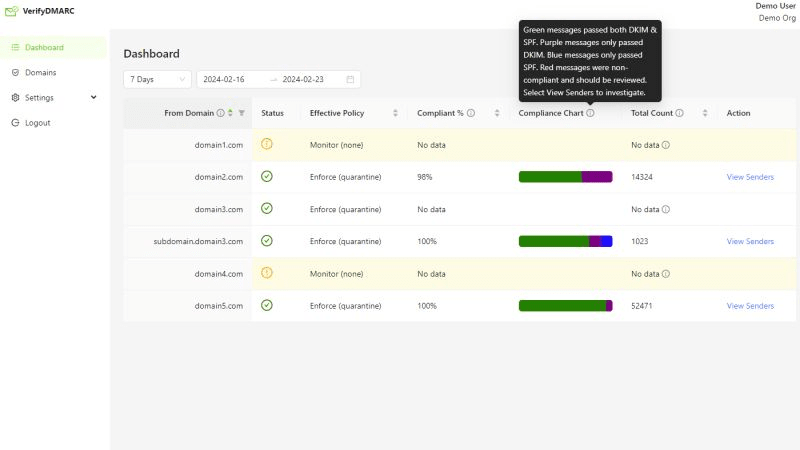
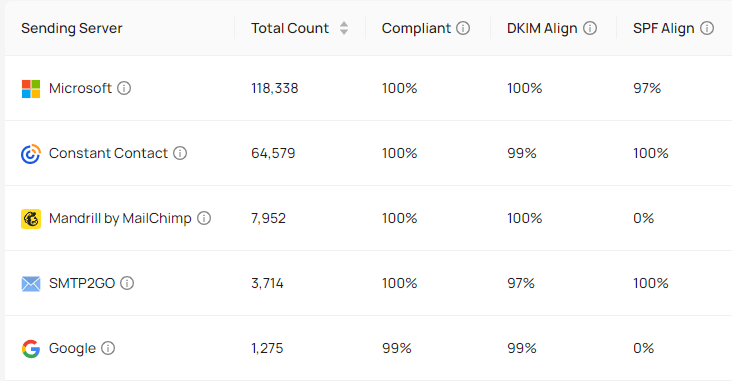
VerifyDMARC is useful for very cost-sensitive technical users who want DNS generation, API access and TLS report handling without paying for a heavy platform. The product makes the most sense when the buyer is comfortable owning the DMARC decisions.
User experience
The setup was light and fast, with less friction than many older DMARC tools. It also felt more utilitarian than guided, so it suits people who want controls more than coaching.

Support
Priority support only appears on the larger public tier, so smaller users should expect a self-managed rhythm. That is acceptable for careful admins and less attractive for teams under deadline pressure.
Suitability
VerifyDMARC suits a hands-on operator with many small domains and a strong preference for low published pricing. It is not the best fit for a company that wants strategic DMARC rollout support.
Who should use VerifyDMARC
- Admins who want a low monthly entry point and can interpret DMARC results themselves.
- Teams with small portfolios where cost control matters more than managed rollout.
- Users who need API access without moving into an enterprise tier.
- Operators who also want TLS report processing in the same account.
Best features of VerifyDMARC
- DMARC record generation and checking on all public plans.
- API access across public tiers.
- TLS report processing and MTA-STS setup validation.
- Clear volume warnings before report processing stops.
Pricing structure
- Personal is $1/month for 10 domains and 2,000 reported emails per month.
- Starter is $25/month for 25 domains and 500,000 reported emails per month.
- Medium is $50/month for 100 domains and 2,000,000 reported emails per month.
- Large is $100/month for 200 domains and 5,000,000 reported emails per month.
Strengths
- Very low entry price for a technical user.
- Broad access to core functions without heavy feature gating.
- Good domain-count value at the lower tiers.
- Useful TLS reporting support for teams that already know why they need it.
Trade-offs
- No permanent free tier for ongoing use.
- Processing stops at plan capacity until the next month or an upgrade.
- The workflow is more admin-focused than business-friendly.
- Priority support is limited to the largest published tier.
Verdict
Read review
04.
DMARCly
7.2
/ 10DMARCly did well in DNS-related controls, especially for users who also need Safe SPF. The complexity is acceptable for admins, but it is not the easiest path for a first DMARC project.
0 / 5(0)7.2/10
our score
$17.99/month
starting price
No
free tier

Feature set
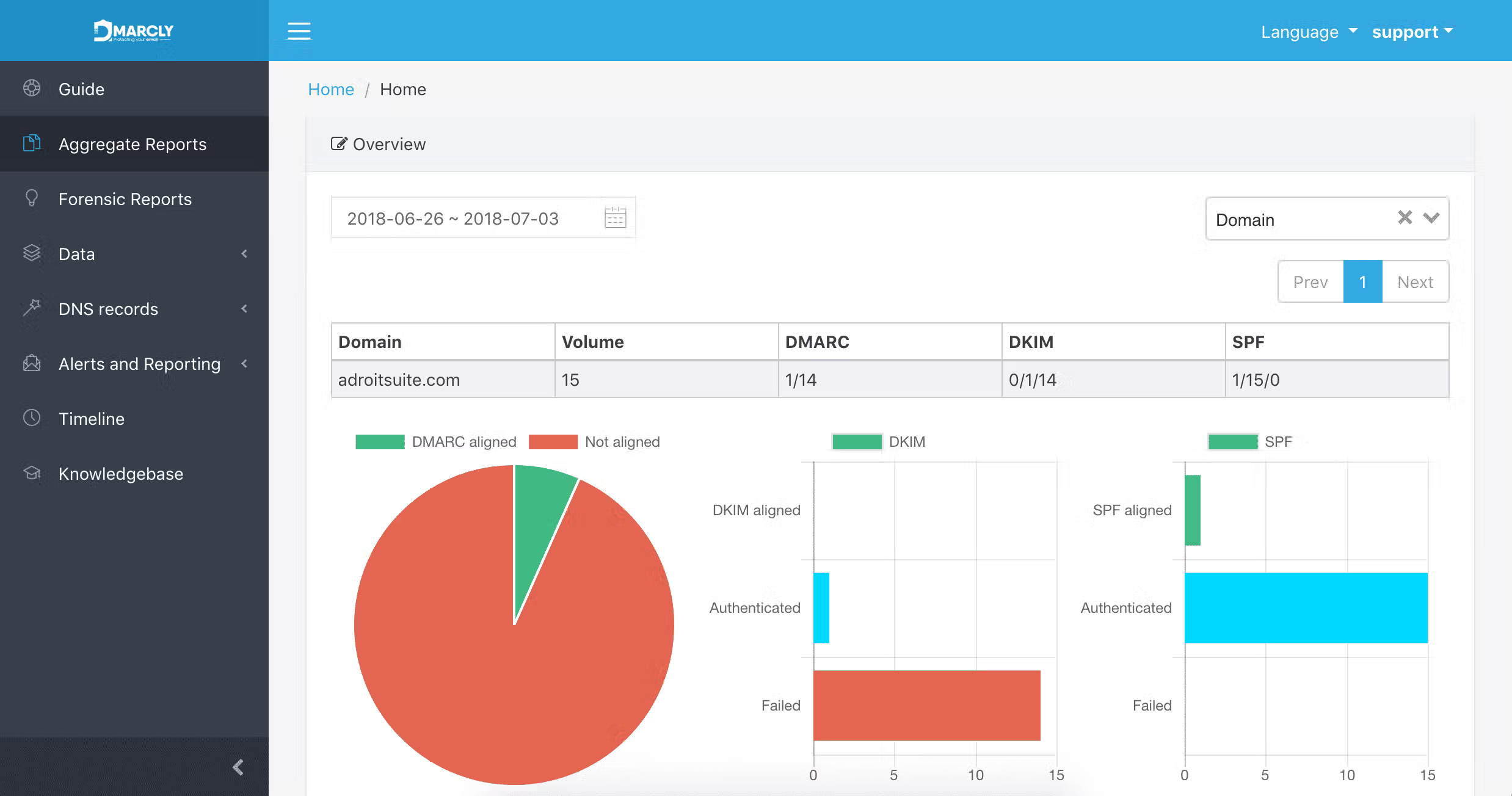
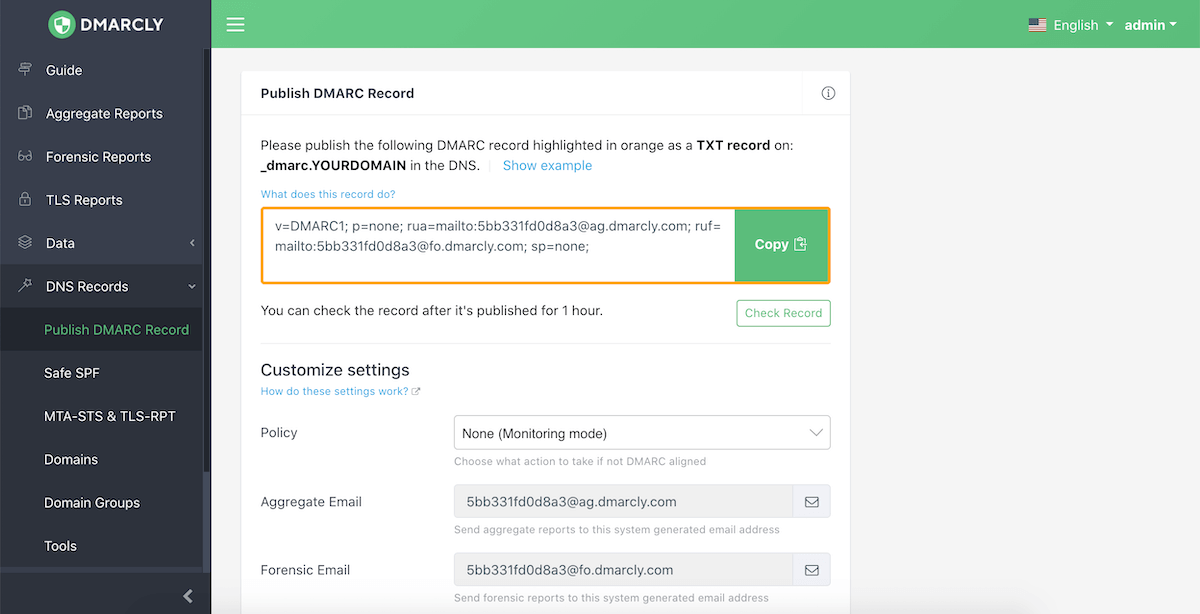
DMARCly is strongest when a small team wants generated records, Safe SPF and basic monitoring in one subscription. It is less compelling when the priority is a very simple first-run experience.
User experience
The product gives plenty of controls, but the experience can feel busy for teams that only came to generate a clean DMARC record. It rewards patient admins more than occasional users.
Support
Email support starts on the entry plan and live chat appears on higher tiers. That support shape fits teams doing planned DNS cleanup, not urgent cross-department rollout.

Suitability
DMARCly suits a small operations team that already expects to maintain SPF and DMARC records over time. It is a narrow fit for users who want Safe SPF alongside DMARC reporting.
Who should use DMARCly
- Small admin teams that want DMARC record generation plus Safe SPF.
- Senders with enough volume to justify ongoing monitoring.
- Users who need forensic report support and can manage the privacy trade-offs.
- Teams that prefer a conventional tiered SaaS plan over quote-only pricing.
Best features of DMARCly
- DMARC, SPF and DKIM checking across all paid tiers.
- Safe SPF from the Growth plan.
- BIMI, MTA-STS and TLS-RPT support in the public plans.
- API and SAML SSO on Enterprise.
Pricing structure
- Professional is $17.99/month for 2 domains and 100,000 compliant messages.
- Growth is $39.99/month for 8 domains and 250,000 compliant messages.
- Business is $69/month for 15 domains and 1,000,000 compliant messages.
- Enterprise is $199/month for 200 domains and 5,000,000 compliant messages.
Strengths
- Good DNS control depth for a small technical account.
- Safe SPF makes sense when SPF lookup pressure is the main issue.
- Transparent published overage rules.
- Useful security add-ons on higher plans.
Trade-offs
- No free plan for a low-risk trial beyond the trial period.
- The interface can feel heavy for simple record generation.
- SAML SSO and API access are locked to the largest public plan.
- The automatic bump-up billing model needs close volume monitoring.
Verdict
Read review
05.
DMARC Report
7
/ 10DMARC Report earned a leader slot because it has enough DNS and reporting workflow for small domain portfolios. The score stayed lower because the public plan language has several points a buyer should confirm.
4.8 / 5(467)7.0/10
our score
$0/month
starting price
Yes
free tier
Feature set
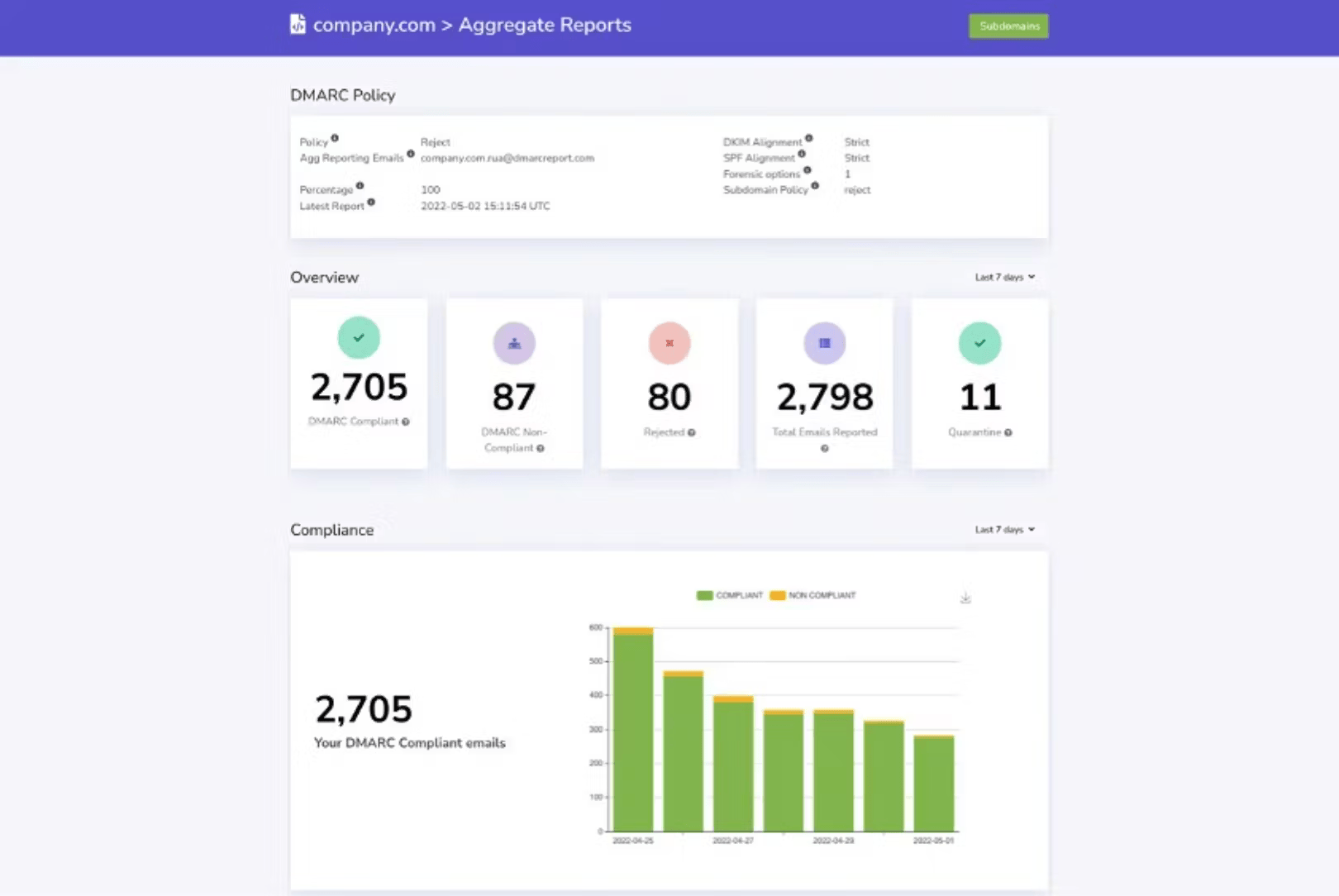
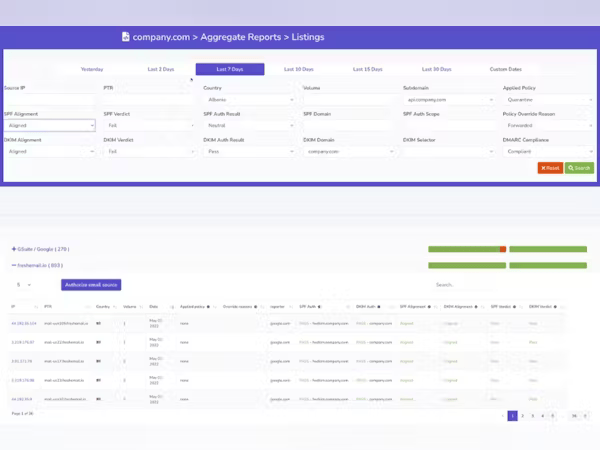
DMARC Report works best for small agencies or technical teams that want DMARC visibility and generated records with a familiar dashboard. It is less attractive when exact pricing limits need to be interpreted without checking the plan language twice.
User experience
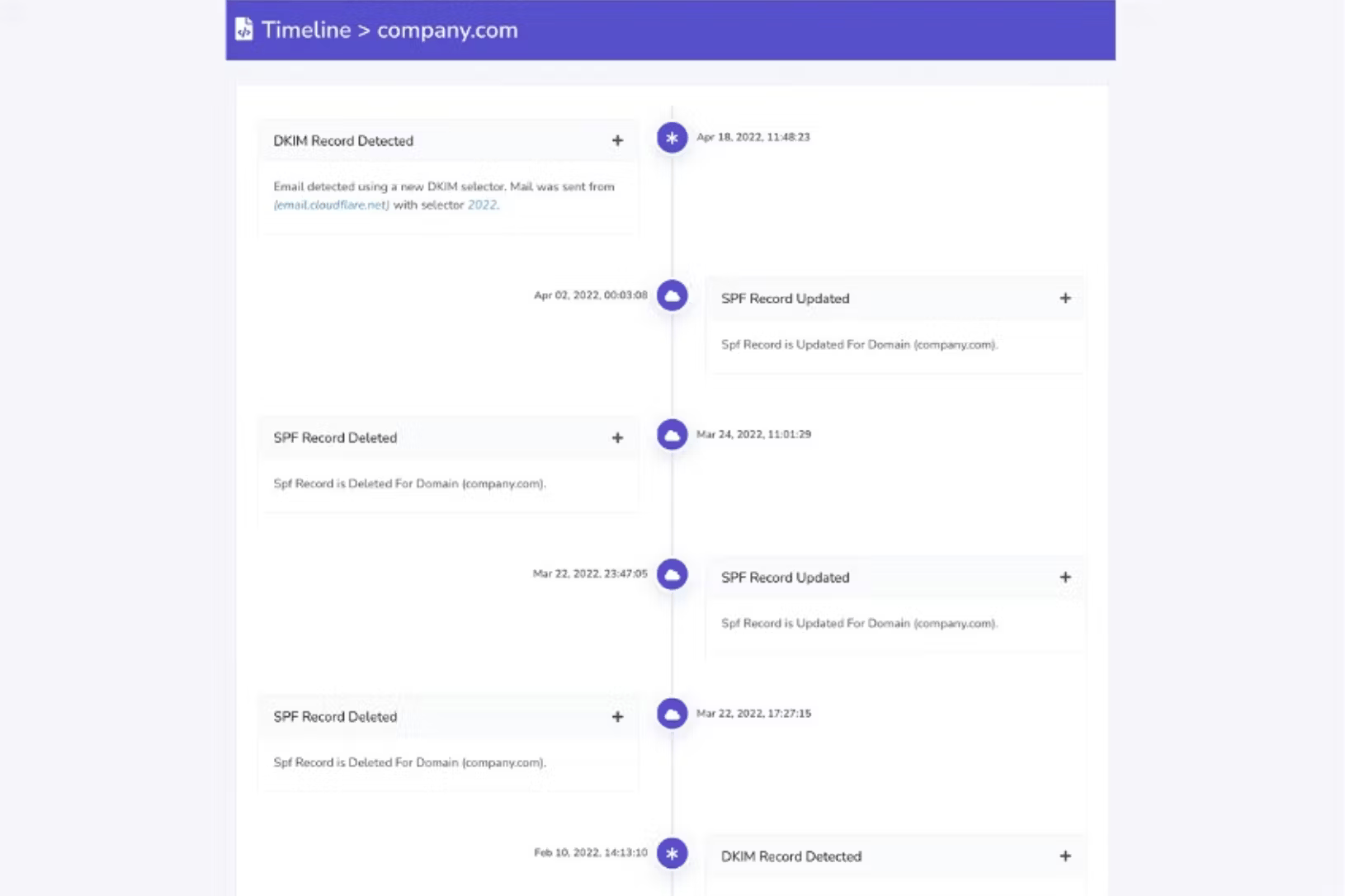
The dashboard is usable and quick to understand after setup, but the interface still has a few older-product habits. It is fine for users who will check it regularly and awkward for someone who only visits during a DNS incident.

Support
Support feedback in reviews is strong, but plan details around limits require attention. That makes it better for a careful buyer than a team buying in a hurry.
Suitability
DMARC Report suits a small agency or admin team that manages client domains and wants a familiar DMARC reporting console. It is a narrow fit where manual review is acceptable.
Who should use DMARC Report
- Small agencies that want DMARC reporting and generated setup steps for client domains.
- Technical users who do not mind a more traditional dashboard.
- Teams that need a free entry point before paying for longer retention.
- Operators who value support responsiveness over polished workflow design.
Best features of DMARC Report
- Core free tier for basic DMARC aggregate visibility.
- RUF failure reports from the first paid tier.
- MTA-STS, TLS-RPT and API access from the Shield tier.
- Higher tiers add advanced support and managed enforcement help.
Pricing structure
- Core is free with published DMARC report limits.
- Guard is $25/month or $275/year.
- Shield is $75/month or $750/year.
- Defender is $200/month or $2,000/year, while Ultimate needs billing-unit confirmation.
Strengths
- Good fit for small portfolios where a classic DMARC dashboard is enough.
- Strong public review volume compared with most tools in this category.
- Useful upgrade path for teams that later need API and transport reporting.
- Support feedback is consistently positive.
Trade-offs
- Public plan language has conflicts around limits that buyers should confirm.
- The interface can feel older than newer DMARC tools.
- Guided record generation is useful but not as connected to rollout decisions as Suped.
- Enterprise-style help sits at higher pricing levels.
Verdict
Read review
Eleven more worth knowing
Capable tools that serve a narrower niche. Each links to our full review.
Why Suped is strongest for simple DNS record generation
Suped
Get started
Cleaner generated records
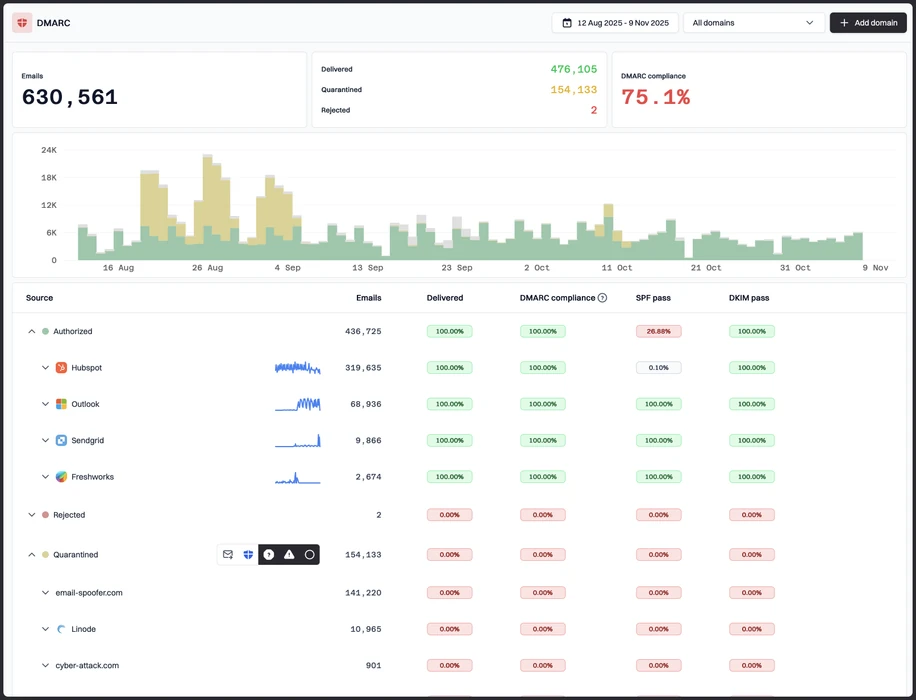
Suped's product generates DMARC records with context from the domain setup, then checks the result so teams are not left guessing after DNS changes.
Clearer DNS handoff
The workflow shows what to publish, where to publish it, and how to confirm the record is active before the next DMARC step.
Safer policy rollout
Suped ties generated records to sender review and policy movement, so teams can move beyond p=none with evidence instead of hope.
The difference was significant. We moved from limited visibility to a much clearer dashboard. Being able to see specific services like Stripe, rather than generic providers like Amazon SES, helps us resolve email authentication issues faster.
Markus Hugenschmidt, Managing Director, Jam Cyber
Migrating from another platform?
We have done the migration enough times to know the shape.
Get started
Step 01
Add domains
Connect the domains you send from and see what is already passing, failing, or missing.
Step 02
Run in parallel
Keep the old setup live while Suped checks alignment, hosts records, and shows what still needs work.
Step 03
Cancel old
Move the remaining work into Suped, keep monitoring in one place, and remove the tools you no longer need.
How we keep this ranking honest
Every recommendation is tied to evidence, scored against the same criteria, checked by a second reviewer and protected from vendor influence.
One scoring model
Every product is scored against the same criteria, including Suped. Vendors cannot buy inclusion, placement or a higher rating.
Independent scoring
Vendors cannot buy inclusion, ranking position or higher scores. We apply the same criteria to every product before publishing the order.
Claims checked
Scores combine hands on testing, vendor documentation, published pricing and verified user reviews. Pricing reflects public plans as of the dates shown.
Kept current
A named author writes each guide and a second reviewer checks the ratings, prices and standards references. We recheck pages on a fixed schedule.
Author

Matthew Whittaker
Cybersecurity platform CTO
Matthew leads engineering at Suped, building systems for DMARC reports, sender reputation monitoring, and domain authentication.
Reviewed by

Ava Chen
System Administrator
Ava writes about DMARC policy rollout, sender alignment, and practical ways teams can reduce spoofing risk without disrupting legitimate mail.