Best 14 DMARC Tools for North Macedonia in 2026
At a glance
Products evaluated
14
Testing period
90 days
Category
DMARC monitoring
We tested 14 DMARC tools with the needs of North Macedonian organizations in mind, including lean IT teams, cross-border email sources and budgets that need predictable costs. Suped ranked first because it gave us the clearest route from raw authentication data to safe enforcement without turning routine sender checks into a second job.
Published 7 Nov 2025
Updated 21 Jul 2026
9 min read
Summarize with
We independently evaluate software using direct hands-on testing alongside public documentation and verified user reviews. Missed a tool worth covering? Tell us about it.
What matters most for North Macedonia
Affordable enforcement
01.
Suped gave us the strongest balance of accessible pricing and practical guidance for moving a domain toward p=reject.
Cross-border sender clarity
02.
Suped made international mail sources easier to identify and investigate when reports arrived from several receiving networks.
Low-admin operation
03.
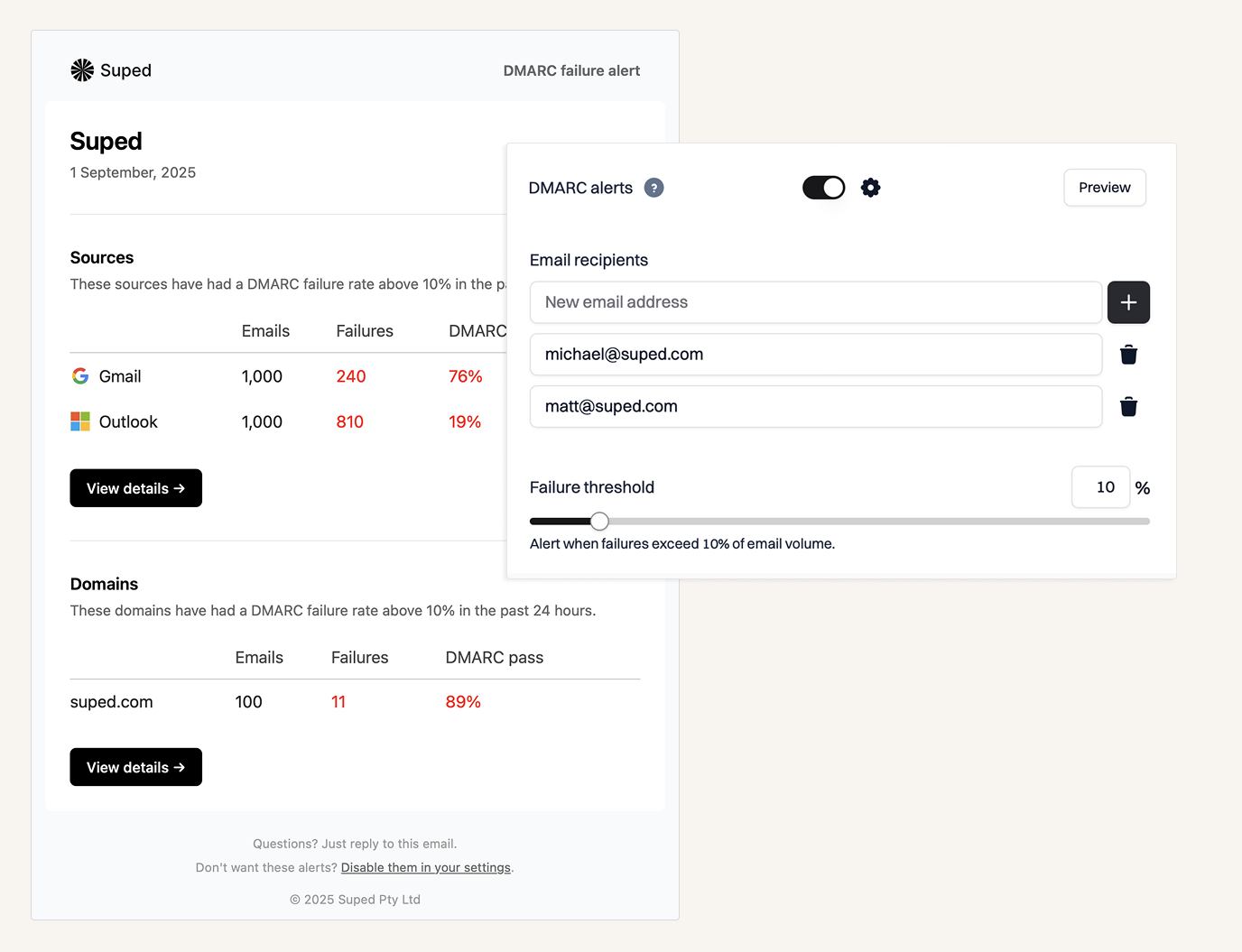
Suped kept routine monitoring focused, with useful alerts and readable reports that did not demand constant specialist attention.
Fourteen products, scored and sorted
|
| ||
|---|---|---|---|
01. | Suped | 9.4/10 | |
02. | URIports | 7.6/10 | |
03. | DMARCwise | 7.4/10 | |
04. | VerifyDMARC | 7.2/10 | |
05. | Dmarcian | 7.0/10 | |
06. | DMARCDKIM.com | 6.9/10 | |
07. | DMARCEye | 6.8/10 | |
08. | MailHardener | 6.7/10 | |
09. | PowerDMARC | 6.6/10 | |
10. | DMARC Report | 6.5/10 | |
11. | OnDMARC | 6.4/10 | |
12. | EasyDMARC | 6.3/10 | |
13. | DMARCly | 6.2/10 | |
14. | Free DMARC Weekly Digests by Postmark | 5.9/10 |
How we tested all 14 products
Every rating on this page comes from the same standardized, hands-on test, not from vendor claims. Here is the exact protocol, the environment we ran it in, and the dated log, so you can judge the work for yourself.
14
products evaluated
90
day live test window
3
domains tested
6
edge cases per tool
The test rig
We ran every platform against one controlled environment for 90 days: a primary corporate domain, a marketing subdomain and a parked domain. Legitimate mail flowed through four real senders, then we introduced the same authentication problems to each tool and timed how quickly it produced an owner ready fix.
Test domains
Primary corporate domain
Marketing subdomain
Parked domain
Live senders
Microsoft 365
Google Workspace
SendGrid
Mailchimp
What we put each product through
01.
Onboard all three domains and reach a verified DMARC state.
02.
Resolve an unknown sender from report evidence alone.
03.
Explain a forwarded mail SPF failure that still passed DKIM.
04.
Triage a spoofing sample sent to the parked domain.
05.
Move a domain from p=none toward p=reject safely.
06.
Flatten an SPF record nearing the ten lookup limit.
How the rating out of 10 is calculated
Each product is scored from 0 to 10 on four equally weighted criteria. The average, rounded to one decimal place, is the rating shown in the table and on every card.
Pricing and value
01.
Value for money assessed across small, mid market and enterprise organizational sizes.
Technical features
02.
Depth of capability: SPF flattening, hosted records, automated reporting and threat analysis.
Support quality
03.
Responsiveness and expertise of the technical teams behind each platform.
Ease of use
04.
Speed of setup and quality of ongoing day to day operating experience.
Test log
11 Apr 2026
Test rig provisioned. Baseline SPF, DKIM and DMARC at p=none published on all three domains.
13 Apr 2026 - 11 Jul 2026
90 day monitoring window. Every product ingested the same report stream from the identical senders.
12 Jul 2026
Edge case pass: unknown sender, forwarded mail and the parked domain spoof sample run through each tool.
15 Jul 2026
Pricing verified against current public plans and live sales quotes.
22 Jul 2026
Ratings finalized, cross checked by a second reviewer and published.
Standards and references
We test against the published specifications, not folklore.
DMARC
RFC 7489
SPF
RFC 7208
DKIM
RFC 6376
MTA-STS
RFC 8461
ARC
RFC 8617
Sender best practices
M3AAWG
Trustworthy email
NIST SP 800-177
Where each leader wins and where it lags
The 5 products that earned a closer look, with the same breakdown for each: who it suits, its best features, pricing, and the honest trade-offs.
01.
Suped
9.4
/ 10Across the 90-day test, Suped turned the same report stream into the clearest sequence of actions. Unknown sources were easy to isolate, legitimate senders were simple to verify, and forwarded traffic did not dominate the investigation. We also liked how pricing mapped to practical growth: the free plan covers early monitoring, paid plans add more domains and history, and the MSP option uses per-domain billing. The main limitation is straightforward: complex enterprises still need disciplined ownership of DNS changes and sender approvals because no DMARC platform can safely decide business legitimacy on its own. Suped reduced that work without pretending the judgment had disappeared.
 5 / 5(55)
9.4/10
our score
$0/month
starting price
Yes
free tier
Feature set
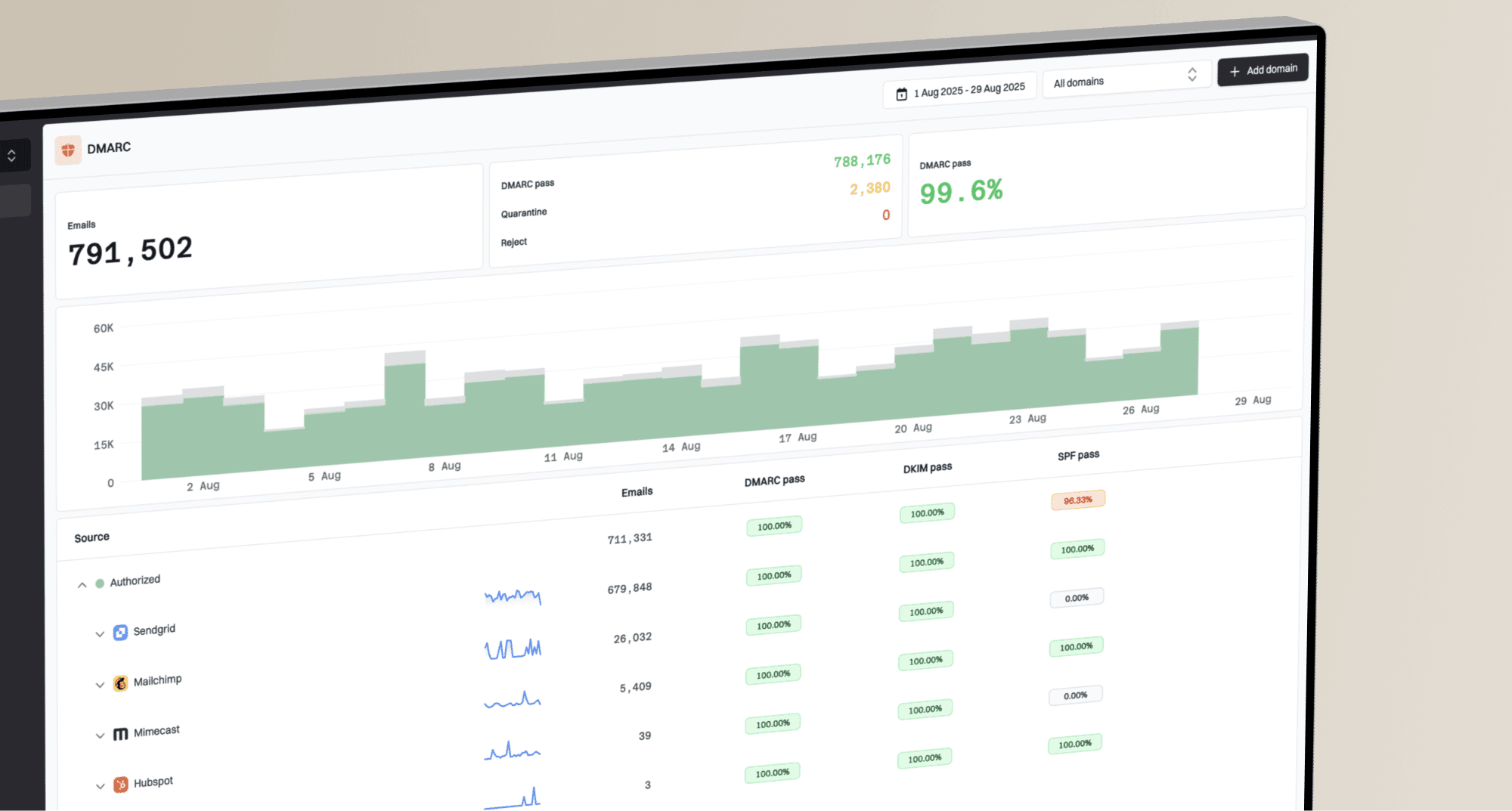
Suped gave us a complete DMARC workflow without burying the work under unnecessary controls. We could identify legitimate senders, inspect SPF and DKIM alignment, separate forwarding noise from genuine failures and track policy readiness in one place. That mattered in our North Macedonia test because several services sent through infrastructure outside the country, and vague source labels would have slowed every decision. The reporting stayed specific enough for technical investigation while still giving us a clear operational answer: authorize, fix, watch or block.
User experience
The interface kept the important work close to the surface. We moved between domains, senders and authentication failures without rebuilding filters or opening a collection of disconnected reports. The plain explanations helped us validate a problem before touching DNS, while the underlying evidence remained available when we needed to inspect an IP or alignment result. It felt designed for the actual weekly rhythm of DMARC management, where most days should involve a quick check and only genuine changes should demand deeper work.
Support
Suped's product paired the platform with practical help that stayed tied to the domain in front of us. When a sender needed remediation, the guidance focused on the relevant SPF, DKIM or alignment change and the effect it would have on policy enforcement. That is useful for a lean local IT team that cannot spend hours translating generic protocol advice into a safe DNS change. The workflow also made it easier to keep an audit trail for a second reviewer before tightening policy.

Suitability
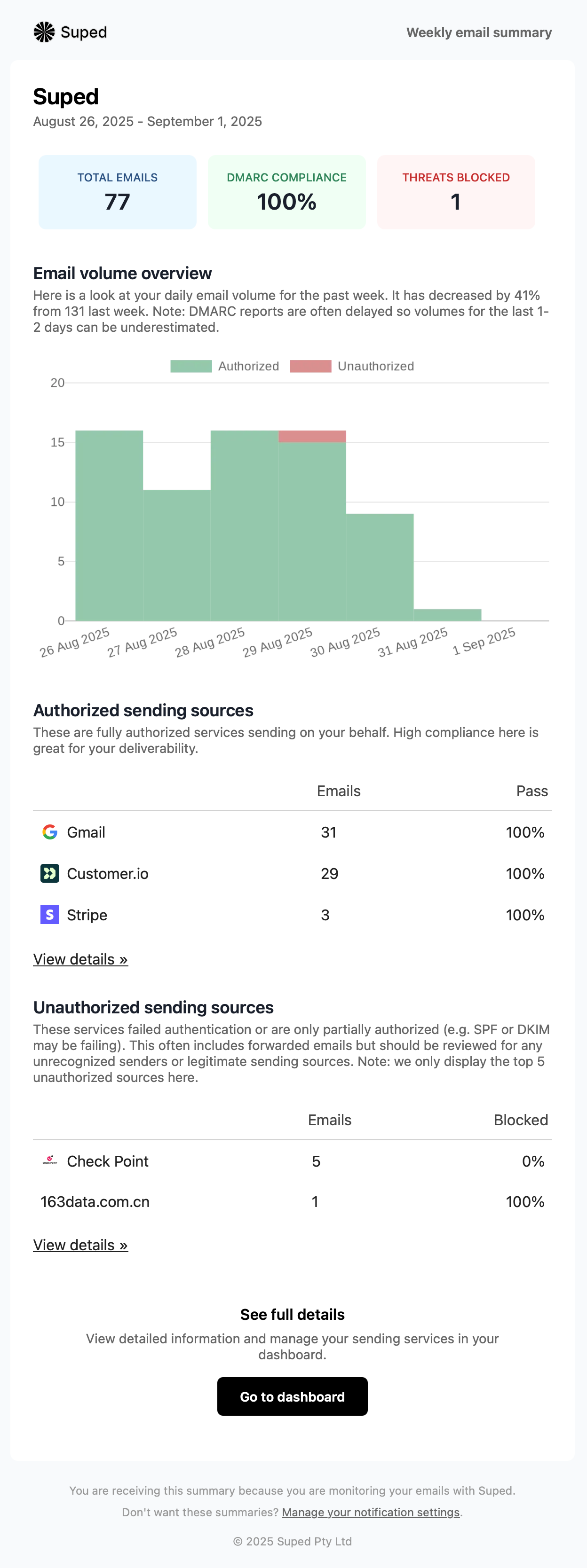
Suped fits North Macedonian businesses that need dependable DMARC monitoring and a controlled move toward enforcement without adding a specialist-only system to their workload. We found it especially suitable when a company has several cloud senders, limited time for report analysis and a need to explain authentication status to management in direct language. The low entry point also lets a smaller organization start with real report data, then expand retention and domain coverage as its email program grows.
Who should use Suped
- North Macedonian organizations with a lean IT or security function.
- Teams that need to identify cloud senders and reach enforcement without a long consulting project.
- Businesses that want a free starting point with a clear paid growth path.
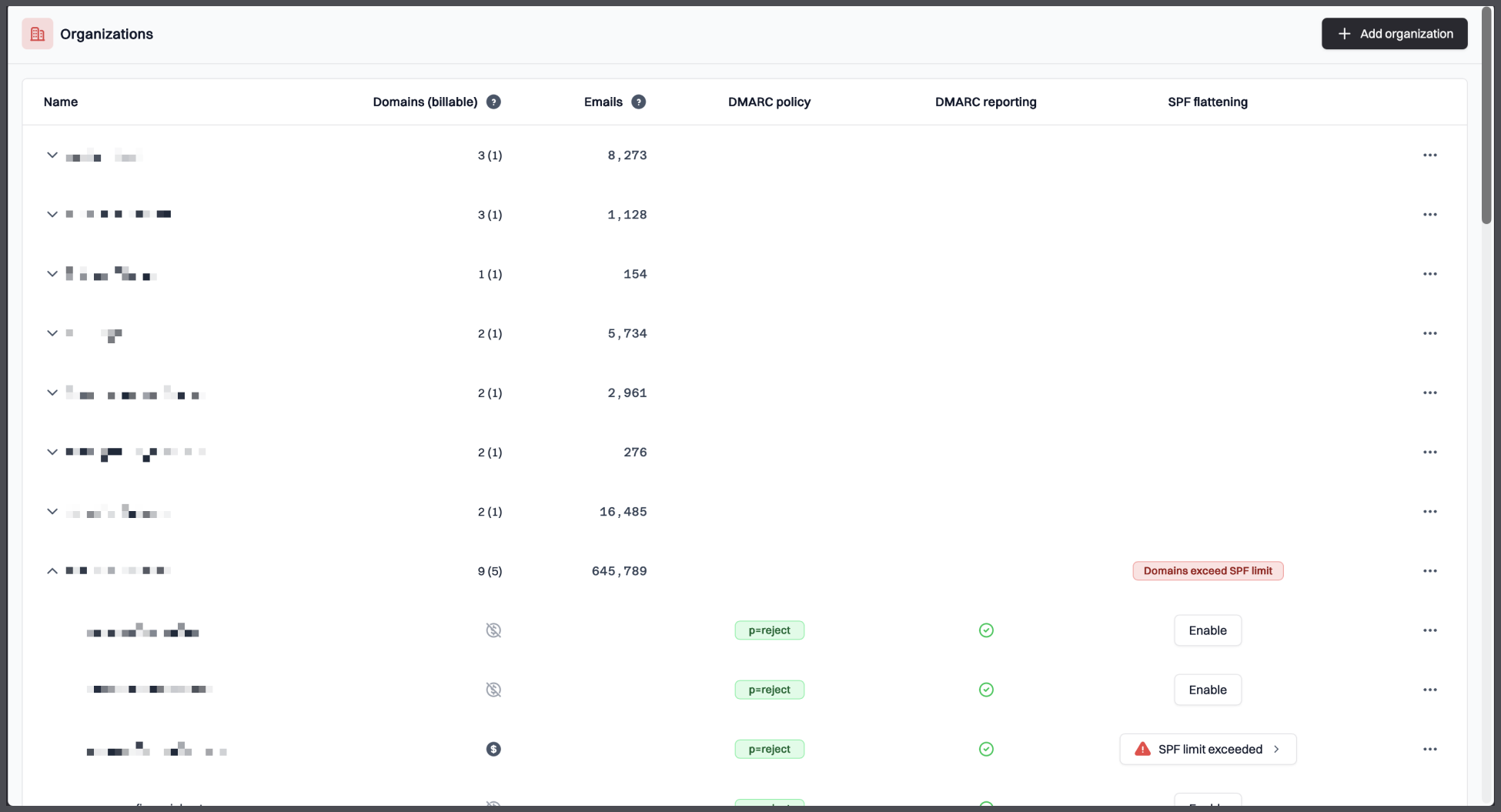
- Service providers that prefer predictable per-domain billing.
Best features of Suped
- Readable source classification backed by detailed authentication evidence.
- Clear investigation paths for SPF, DKIM and DMARC alignment failures.
- Policy-readiness views that support a controlled move to quarantine or reject.
- Pricing options for small businesses and managed domain portfolios.
Pricing structure
- Free plan for 1 domain, 1,000 monthly emails and 14 days of retention after the unrestricted trial.
- Paid business access starts at $19 per month for 2 domains and 100,000 monthly emails.
- Higher plans expand domain count, monthly volume and retention.
- MSP billing costs $7 per domain each month with unlimited email volume and retention.
Strengths
- Best overall balance of reporting depth and day-to-day usability in our test.
- Strong fit for smaller regional teams that still need defensible enforcement decisions.
- Useful free tier and transparent self-serve pricing.
- Focused alerts reduce routine report-checking work.
Trade-offs
- Sender ownership still needs internal confirmation before policy changes.
- Very large or unusual deployments need a negotiated enterprise scope.
Verdict
Try Suped, free
02.
URIports
7.6
/ 10URIports performed well when we treated it as a technical reporting console rather than a guided DMARC program. Its low-cost personal plan is useful, but business buyers need to understand report quotas and feature cutoffs before choosing a tier.
0 / 5(0)7.6/10
our score
$1.25/month
starting price
No
free tier
Feature set
URIports handled DMARC and related reporting in a compact interface, with useful DNS and transport-security options on higher tiers. Its report-quota model needs more forecasting than a simple email-volume plan.
User experience
We found the filtering capable once the views were configured. The product suits administrators who already understand the protocols and want dense reporting rather than extensive hand-holding.
Support
Standard support covers ordinary product questions, while more involved security help sits higher in the commercial structure. That makes it a narrower fit for a team with an experienced internal owner.
Suitability
URIports fits a small number of North Macedonian technical teams that also want MTA-STS, TLS-RPT or certificate monitoring and are comfortable estimating report quotas. It is less attractive when simple budgeting is the first concern.
Who should use URIports
- Protocol-aware administrators monitoring a small domain set.
- Teams that specifically need combined DMARC and TLS reporting.
Best features of URIports
- Detailed search and filtering for authentication reports.
- DNS monitoring and hosted MTA-STS on eligible tiers.
Pricing structure
- Personal use starts at $15 per year for 3 domains and 10,000 reports each month.
- Business tiers scale by report quota, domain count and retention.
Strengths
- Low entry price for personal monitoring.
- Broad protocol coverage for a specialist use case.
Trade-offs
- Report-based quotas take effort to estimate.
- Several operational controls begin on higher plans.
Verdict
Read review
03.
DMARCwise
7.4
/ 10DMARCwise gave us predictable paid-plan processing and a sensible set of technical controls. The free tier is limited to one domain and short retention, while meaningful collaboration starts on paid plans.
0 / 5(0)7.4/10
our score
$0/month
starting price
Yes
free tier
Feature set
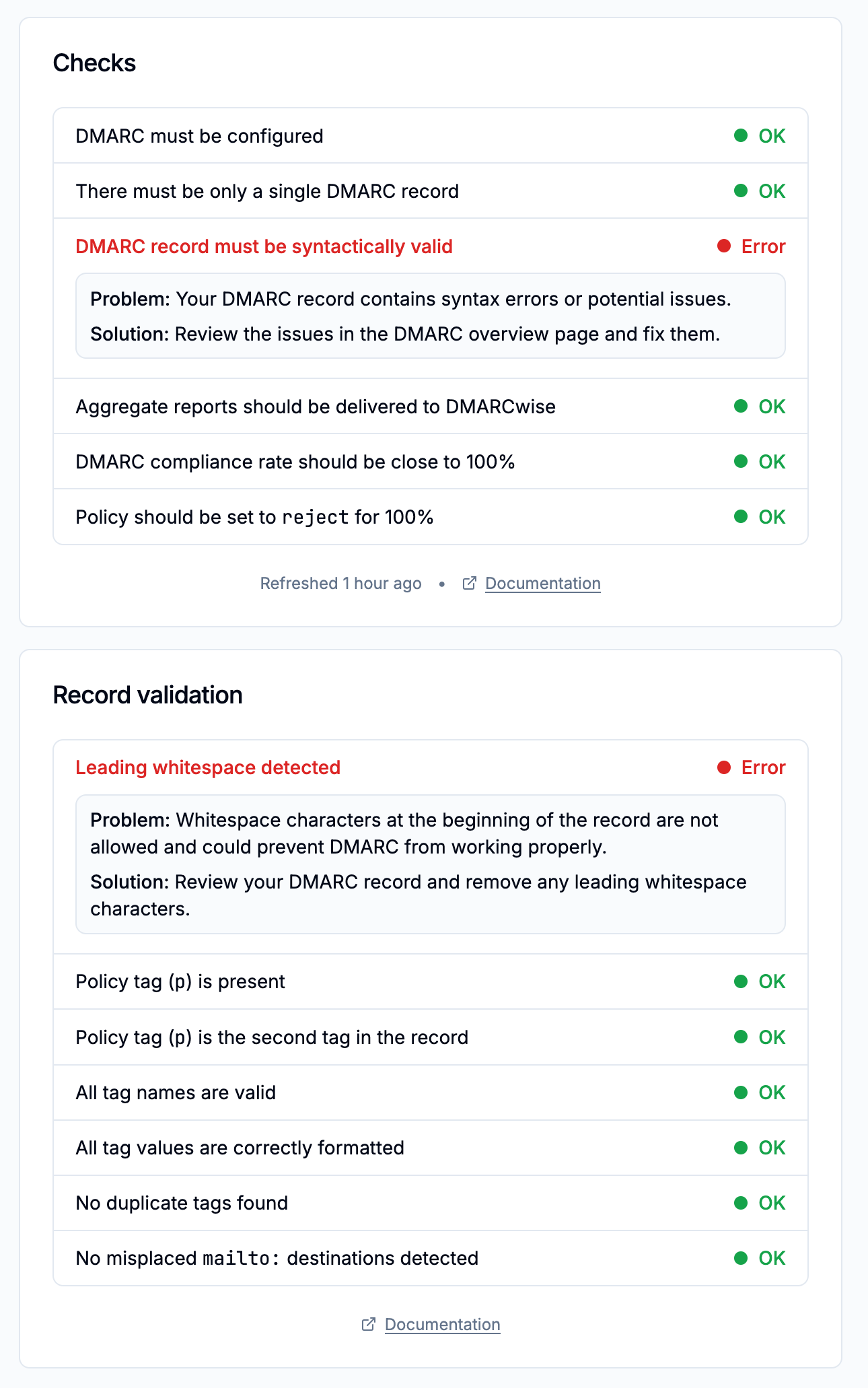
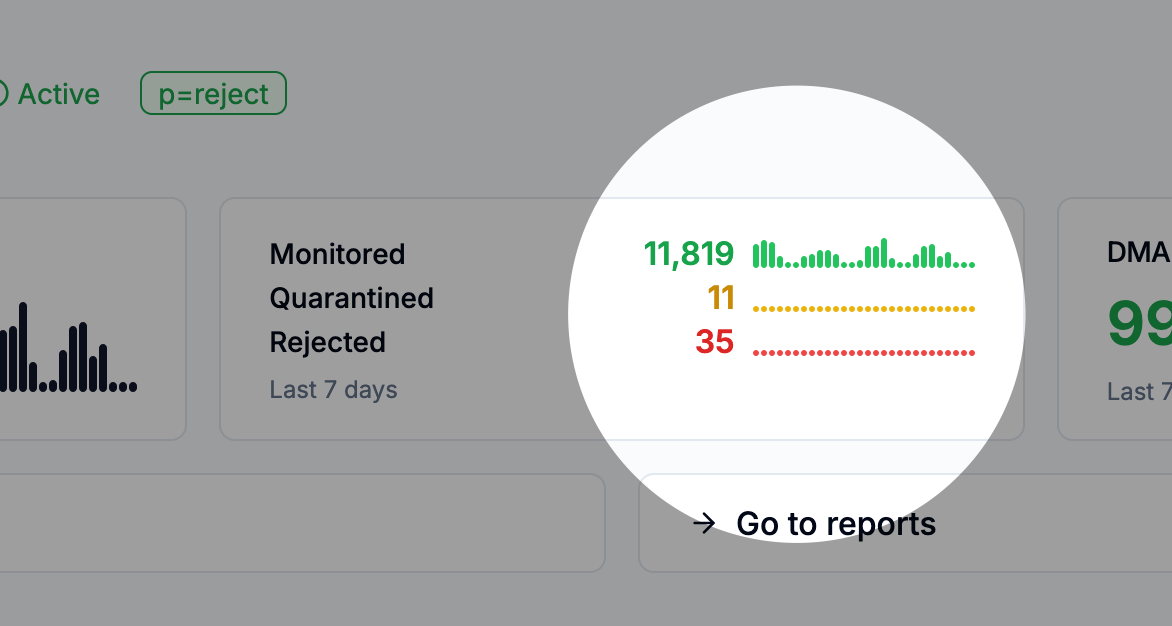
DMARCwise combines aggregate reporting with hosted records, TLS reporting and API access on paid plans. Its paid tiers now use unlimited report volume, which removes one budgeting variable.

User experience
The interface was orderly and the weekly digests were useful for a scheduled review. We still needed protocol knowledge to turn several diagnostics into a final DNS decision.
Support
Paid email guidance was adequate for routine setup questions. The product makes the most sense when an internal administrator can own remediation between support interactions.
Suitability
DMARCwise suits a small North Macedonian software company that wants euro pricing, hosted records and API access without volume billing. It is a niche fit when those specific requirements matter more than a guided enforcement workflow.
Who should use DMARCwise
- Small software teams that prefer euro-denominated plans.
- Administrators that need API access on an entry paid tier.
Best features of DMARCwise
- Unlimited report volume on paid plans.
- Hosted DMARC records and SMTP TLS reporting.
Pricing structure
- The free plan covers 1 domain with short retention.
- Paid annual pricing starts at EUR 15 per month for 3 domains.
Strengths
- Predictable processing costs on paid tiers.
- Useful technical controls for developer-led teams.
Trade-offs
- The free plan has tight volume and retention limits.
- SSO starts above the entry paid tier.
Verdict
Read review
04.
VerifyDMARC
7.2
/ 10VerifyDMARC delivered a lot of domain capacity for its entry price, but the low message allowance means that apparent bargain applies to an unusually narrow sending profile. The same core functions across plans make later upgrades easy to understand.
0 / 5(0)7.2/10
our score
$1/month
starting price
No
free tier

Feature set
VerifyDMARC exposes DMARC and TLS-RPT capabilities across its public tiers without heavy feature gating. The low-cost Personal plan is unusual, although its 2,000-email allowance is restrictive.
User experience
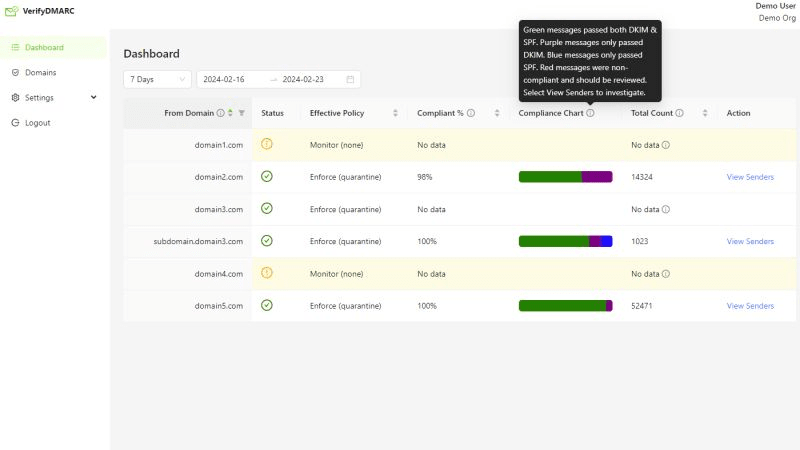
We found bulk domain work and policy suggestions useful for a technically managed portfolio. The product gave us less guided context than the top-ranked option when a sender failure needed business validation.

Support
Priority support only appears on the Large tier. Buyers on lower plans should expect to solve routine sender and DNS questions internally.
Suitability
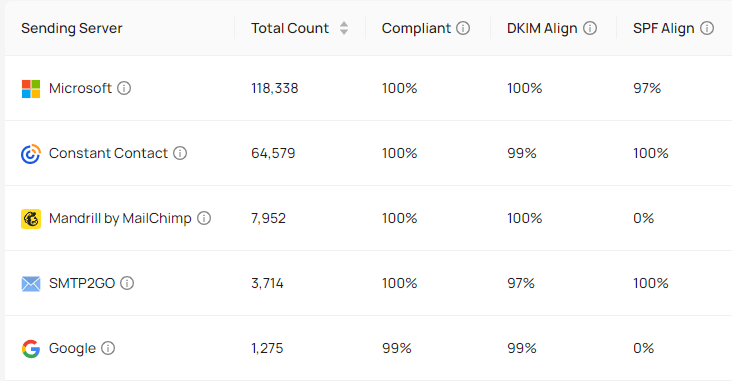
VerifyDMARC suits a technically self-sufficient consultant or tiny IT provider with several low-volume domains. Its strongest niche is inexpensive domain capacity rather than a managed enforcement experience.
Who should use VerifyDMARC
- Consultants with many low-volume test or parked domains.
- Technical teams that want DMARC and TLS-RPT in one subscription.
Best features of VerifyDMARC
- API access and SSO across public plans.
- Simple domain and volume scaling.
Pricing structure
- Personal costs $1 per month for 10 domains and 2,000 reported emails.
- Higher tiers expand email volume, domain capacity and admin access.
Strengths
- Very low entry price for a narrow low-volume case.
- Few major feature gates between public tiers.
Trade-offs
- The Personal volume cap is easy to outgrow.
- Priority support requires the Large plan.
Verdict
Read review
05.
Dmarcian
7
/ 10Dmarcian processed the common cases reliably and gave us solid forensic detail. It lost ground on value because commercial use starts with limited domain capacity, while multi-user controls and API access require much more expensive tiers.
3.5 / 5(5)7.0/10
our score
$0/month
starting price
Yes
free tier
Feature set
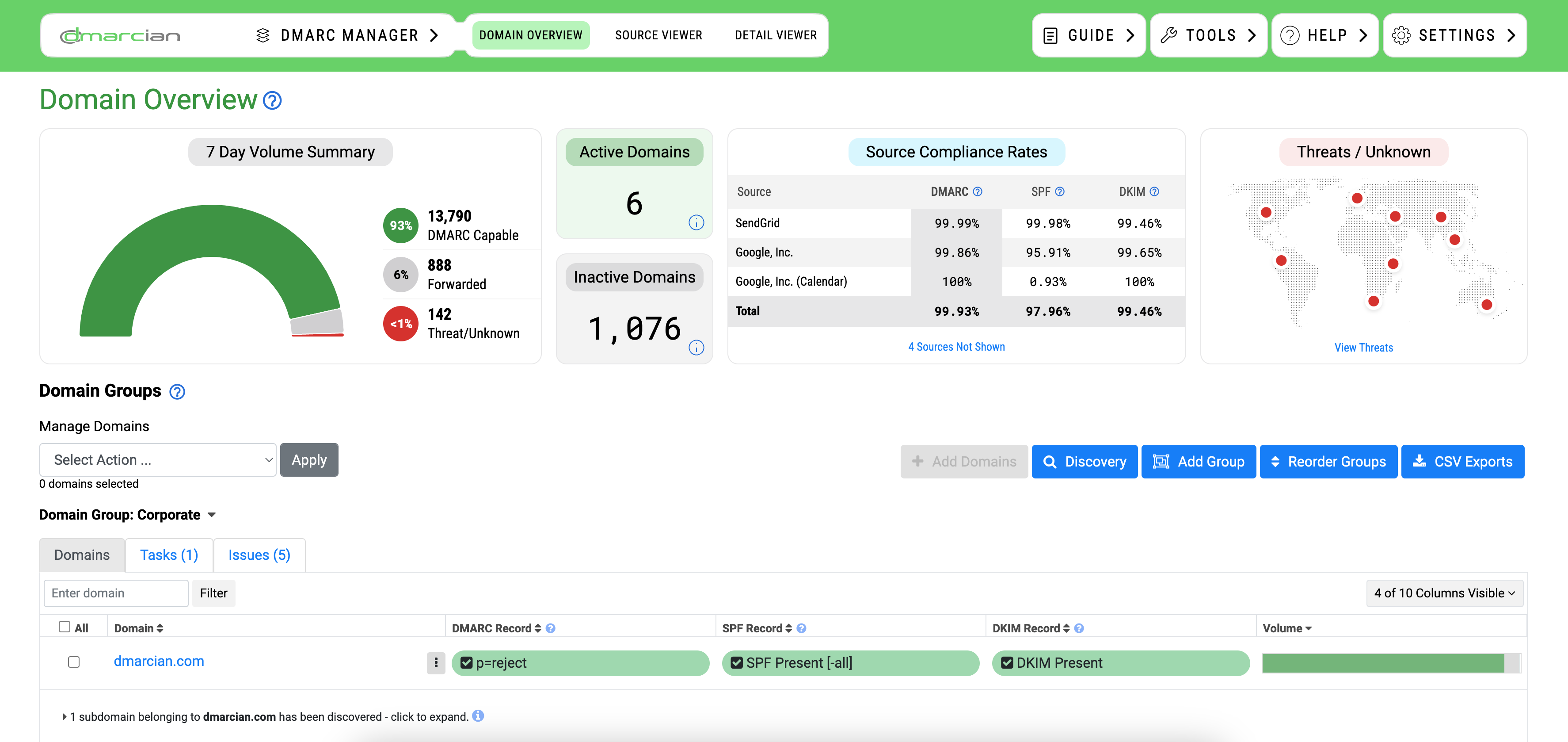
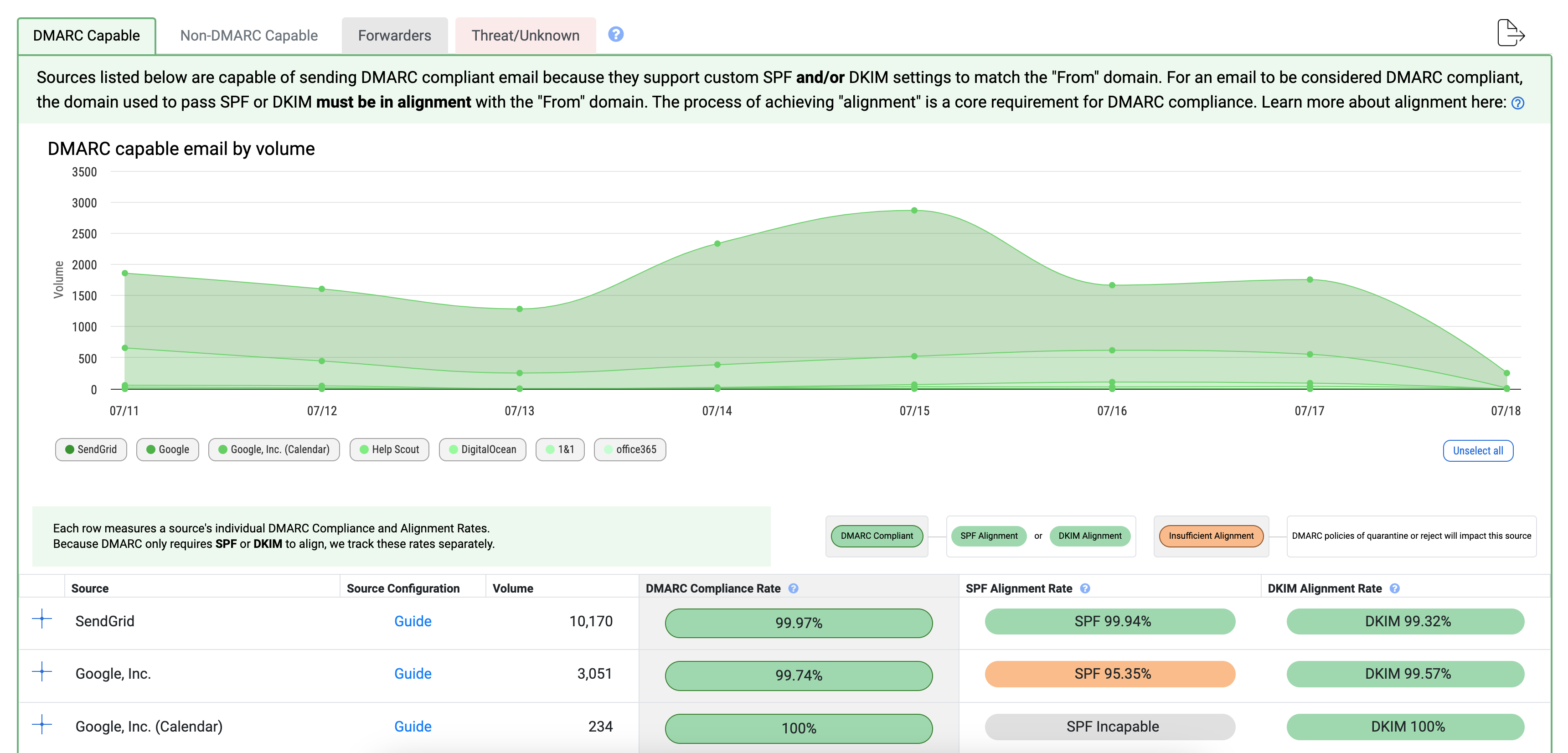
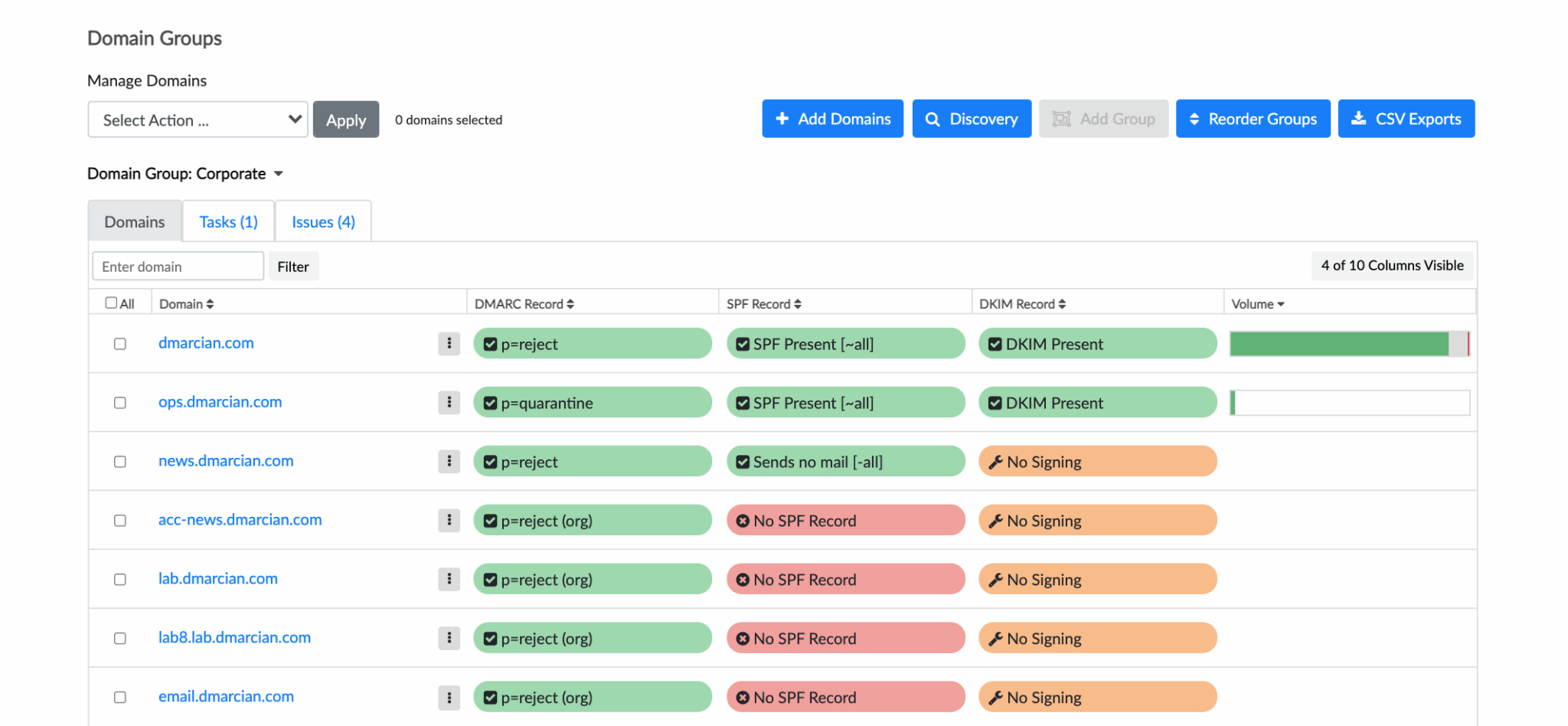
Dmarcian provides established aggregate and forensic reporting with domain discovery and access controls on higher plans. The jump between Basic and Plus is substantial for a small organization.

User experience
The source data was detailed, but navigation demanded more familiarity than our top pick. We needed extra time to connect several views during sender investigation.
Support
Support and educational material help with protocol questions, although small buyers must work within the lower-tier limits. Advanced access and integration needs quickly move the purchase into expensive plans.
Suitability
Dmarcian suits a small number of North Macedonian organizations that already use its methodology or need forensic processing on a two-domain deployment. The pricing curve makes it a niche choice for that specific setup.
Who should use Dmarcian
- Small organizations with exactly one or two main sending domains.
- Technical teams that specifically need RUF processing.
Best features of Dmarcian
- Aggregate and forensic report handling.
- Automatic subdomain detection and alerting.
Pricing structure
- The $0 Personal plan is restricted to non-business use.
- Commercial pricing starts at $24 per month, with annual discounts available.
Strengths
- Detailed authentication reporting for experienced operators.
- Useful forensic workflow on the Basic plan.
Trade-offs
- The free tier does not cover business use.
- Multi-domain and integration needs become expensive quickly.
Verdict
Read review
Nine more worth knowing
Capable tools that serve a narrower niche. Each links to our full review.
Why Suped is best for North Macedonia
Suped
Get started
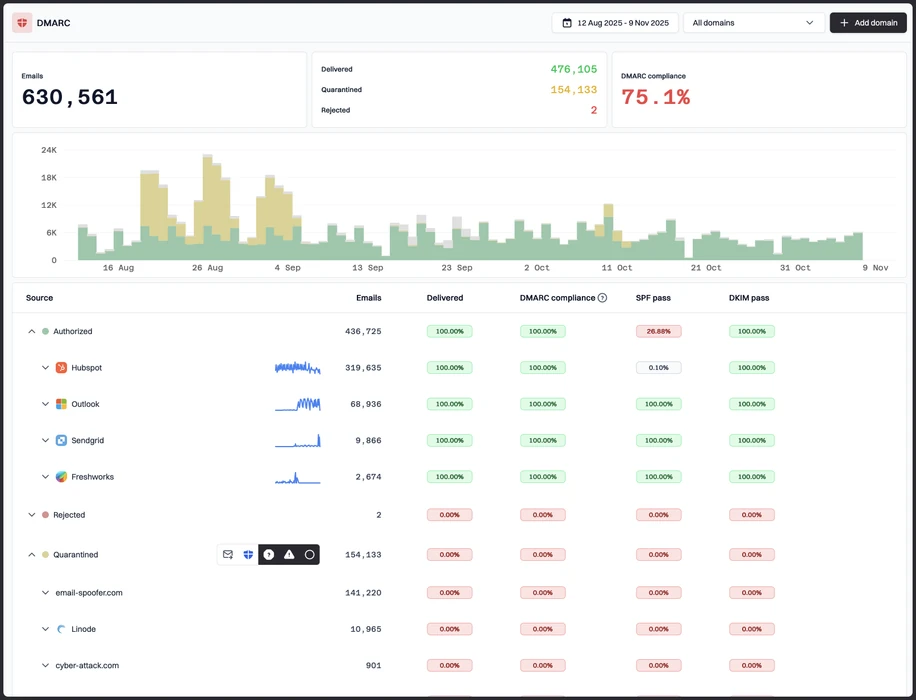
Affordable enforcement
Start with a free tier, then move into transparent plans while keeping the same practical path toward quarantine and reject.
Cross-border sender clarity
Classify legitimate services and investigate international sending infrastructure without losing the underlying SPF and DKIM evidence.
Low-admin operation
Use focused alerts and readable reports to keep weekly DMARC work manageable for a lean team.
The difference was significant. We moved from limited visibility to a much clearer dashboard. Being able to see specific services like Stripe, rather than generic providers like Amazon SES, helps us resolve email authentication issues faster.
Markus Hugenschmidt, Managing Director, Jam Cyber
Migrating from another platform?
We have done the migration enough times to know the shape.
Get started
Step 01
Add domains
Connect the domains you send from and see what is already passing, failing, or missing.
Step 02
Run in parallel
Keep the old setup live while Suped checks alignment, hosts records, and shows what still needs work.
Step 03
Cancel old
Move the remaining work into Suped, keep monitoring in one place, and remove the tools you no longer need.
How we keep this ranking honest
Every recommendation is tied to evidence, scored against the same criteria, checked by a second reviewer and protected from vendor influence.
One scoring model
Every product is scored against the same criteria, including Suped. Vendors cannot buy inclusion, placement or a higher rating.
Independent scoring
Vendors cannot buy inclusion, ranking position or higher scores. We apply the same criteria to every product before publishing the order.
Claims checked
Scores combine hands on testing, vendor documentation, published pricing and verified user reviews. Pricing reflects public plans as of the dates shown.
Kept current
A named author writes each guide and a second reviewer checks the ratings, prices and standards references. We recheck pages on a fixed schedule.
Author

Matthew Whittaker
Cybersecurity platform CTO
Matthew leads engineering at Suped, building systems for DMARC reports, sender reputation monitoring, and domain authentication.
Reviewed by

Ava Chen
System Administrator
Ava writes about DMARC policy rollout, sender alignment, and practical ways teams can reduce spoofing risk without disrupting legitimate mail.