Is Mail Mend a legitimate email service?

Michael Ko
Co-founder & CEO, Suped
Published 20 Jun 2025
Updated 26 May 2026
10 min read
Summarize with
Short answer: Mail Mend, usually branded as Mailmend, appears to be a real commercial deliverability product, but I would not treat it as a normal email service provider or a low-risk fix. The safer conclusion is that it is a high-scrutiny inbox-placement service: verify the company, the method, the code it adds, the account access it needs, and the measurable effect before putting it near a main sending domain.
The Mailmend site describes a plug-and-play way to improve ecommerce inbox placement, especially around Gmail Primary placement and Klaviyo campaigns. Its Trustpilot page shows public customer reviews. That does not prove the method is safe, repeatable, or acceptable to mailbox providers. It only means the due-diligence question should move from whether the website exists to whether the method protects your sender reputation.
The direct verdict
- Legitimacy: There is enough public presence to avoid calling it fake based only on surface signals.
- Risk: The positioning around quick inbox placement gains needs proof, not trust.
- Decision: Do not connect it to a production account until you understand the exact mechanism.
What Mail Mend appears to sell
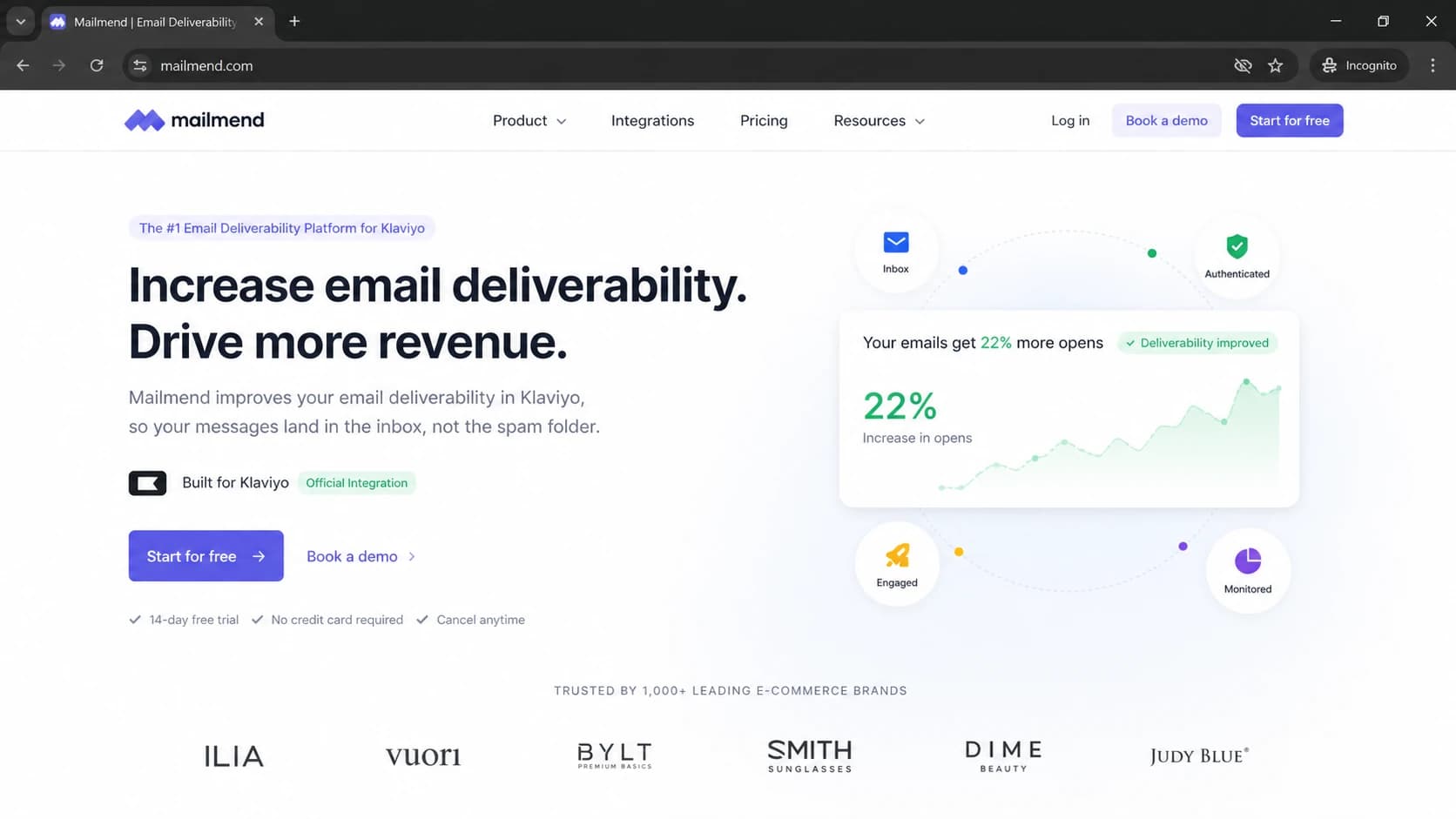
Screenshot-style view of the Mailmend website and its deliverability positioning.
Mail Mend does not look like an ESP in the usual sense. It does not appear to replace your email marketing platform, operate your whole sending infrastructure, or act as your mailbox provider. It looks more like an overlay or add-on that claims to improve where messages land, with a focus on ecommerce campaigns and Gmail Primary placement.
That distinction matters. A normal email service sends mail, signs it, manages bounces, handles unsubscribes, and provides delivery logs. An inbox-placement service tries to influence how mailbox providers classify mail after it is sent. The second category is harder to evaluate because the useful part is often hidden inside proprietary claims.
- Not an ESP: It does not appear to be a full sending platform with normal sender controls.
- Likely overlay: Its public positioning points to changes around campaigns, templates, or engagement signals.
- Main promise: The value claim is better inbox placement, not basic email authentication.
- Best read: Treat it as an experimental deliverability vendor until the method is explained.
What legitimacy means here
Legitimate can mean several different things. A service can be a real company, have paying customers, and still use a method that is wrong for your brand. I separate the commercial question from the operational question.
Commercially real
- Website: There is an active public site explaining the product and its claims.
- Reviews: There are public review traces, though the sample size is limited.
- Discussion: There is a public Klaviyo discussion with mixed user questions and feedback.
Operationally risky
- Opacity: The most important technical mechanism is not obvious from public pages.
- Guarantees: Fast Primary placement claims should be tested against holdout groups.
- Reputation: A method that works briefly can still create a long-term domain problem.
The practical answer is not a simple yes or no. I would call it commercially visible but technically unproven until the vendor gives you specifics. The burden of proof sits with the service because sender reputation is hard to rebuild after a bad test.
Technical risks to check first
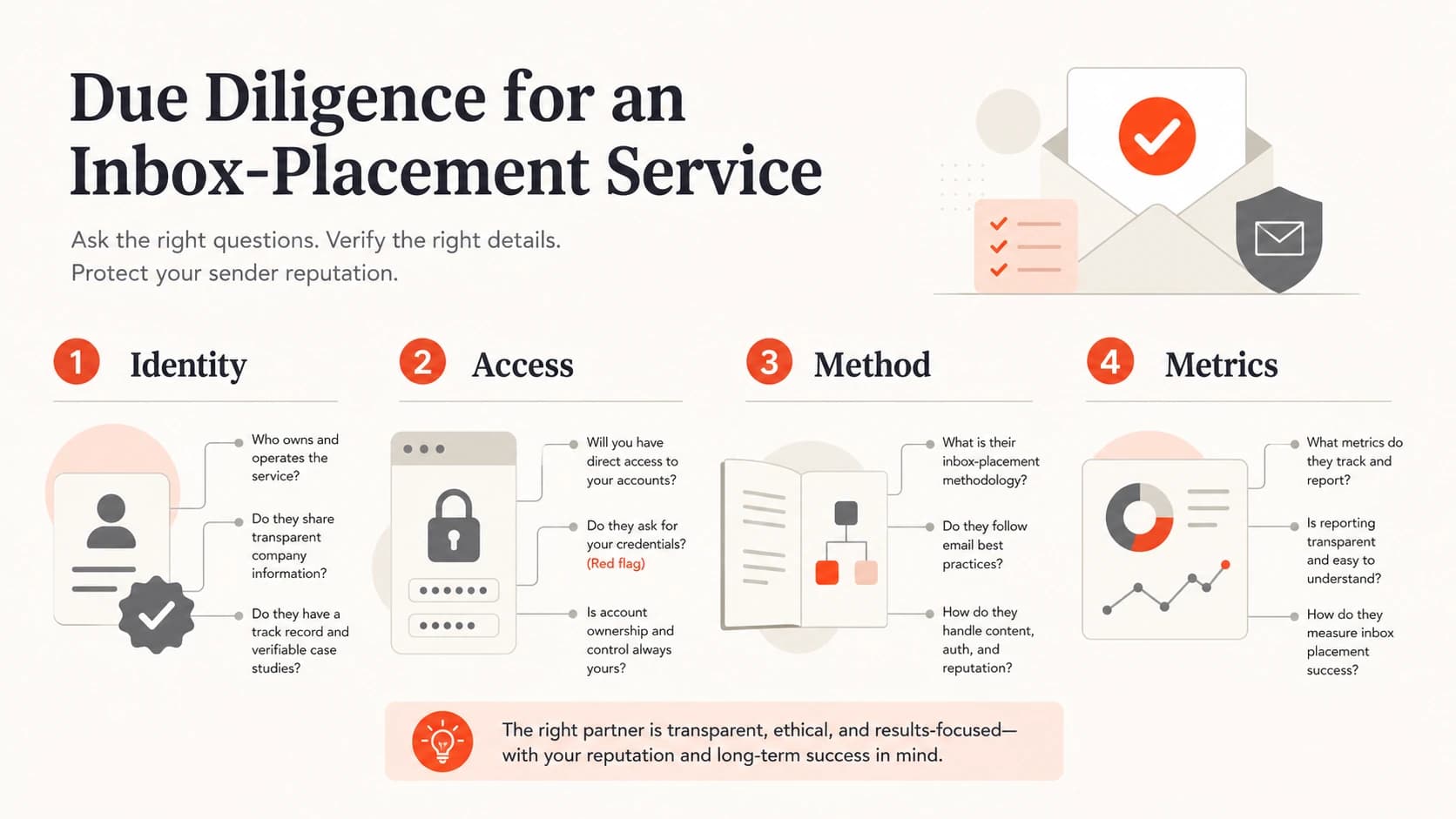
Four due-diligence checks for evaluating an inbox-placement service.
The biggest risk is not that Mail Mend has a website you dislike. The bigger risk is using a technique that changes your content, adds hidden code, manufactures engagement, or creates a shared fingerprint across customers. If a mailbox provider later classifies that fingerprint negatively, the damage can apply to every sender using the same pattern.
Before any trial, inspect your headers, authentication results, and sending sources. If you need a refresher on source tracing, the practical path is to read headers before and after the vendor changes anything.
|
|
|
|---|---|---|
Company | Who owns support and liability? | No clear escalation path |
Access | What account permissions are needed? | Overbroad platform access |
Code | What is inserted into templates? | Hidden shared signatures |
Signals | Are bots or seed accounts used? | Artificial engagement risk |
Exit | Can changes be removed cleanly? | Persistent reputation drag |
Signals to review before a Mail Mend trial
Also confirm that your baseline authentication is clean before judging any deliverability claim. A vendor should not get credit for fixing inbox placement if your starting point had broken SPF, DKIM, or DMARC.
Safe baseline DNS examplesdns
_dmarc.example.com. TXT "v=DMARC1; p=none; rua=mailto:d@example.com"
example.com. TXT "v=spf1 include:esp.example -all"
s1._domainkey.example.com. TXT "v=DKIM1; k=rsa; p=BASE64KEY"
A quick domain health check gives you a clean baseline for the domain before you test anything that claims to improve placement.
?
What's your domain score?
Deep-scan SPF, DKIM & DMARC records for email deliverability and security issues.
How to test it without risking the domain
If a client wants to test Mail Mend anyway, I would contain the test. Do not change the whole program at once. Do not test on the highest-value flows first. Do not let a vendor define success only by opens, because machine opens and placement shifts can distort that number.
- Baseline: Export current DMARC pass rates, bounce rates, complaint rates, revenue per recipient, and unsubscribe rates.
- Scope: Use one campaign type, one sending domain, and a small audience segment.
- Holdout: Keep a matched control group that does not use the vendor method.
- Inspection: Compare headers, HTML, links, tracking, authentication results, and mailbox placement.
- Rollback: Document exactly how to remove every change before the trial begins.
Send real mail into controlled inboxes and inspect the result with an email tester. This does not replace a real A/B test, but it catches obvious authentication, content, and header issues before you involve customers.
Email tester
Send a real email to this address. Suped opens the report when the test is ready.
?/43tests passed
Preparing test address...
The key question is not whether one campaign gets more opens. The key question is whether the lift survives a holdout, does not raise complaints, does not add unknown sending sources, and does not create a content signature that you cannot defend later.
Mail Mend trial thresholds
Use stop-or-continue thresholds instead of judging a trial by open rate alone.
Proceed
Clean signal
Authentication passes and the holdout-adjusted revenue lift is clear.
Watch
Mixed signal
Open rate improves but clicks, revenue, or complaints do not support it.
Stop
Bad signal
Complaints, spam placement, unknown sources, or blacklist hits rise.
Red flags that matter more than the label
A vendor can be legally real and still be the wrong operational choice. The red flags below are the ones I would treat seriously for any service that promises to move mail into Gmail Primary or escape Promotions quickly. For a broader view of the same issue, see the discussion of Promotions tab claims.
Questions that need direct answers
- Ownership: Who is behind the company, and who is accountable if deliverability worsens?
- Method: Does the product add hidden strings, scripts, pixels, or HTML patterns?
- Engagement: Does it use seed accounts, automated opens, automated clicks, or proxy activity?
- Scope: Does the same pattern appear across many customer campaigns?
- Removal: Can you remove the method without changing domains or rebuilding templates?
The phrase that worries me most in this category is any claim about training mailbox algorithms. If that means improving consent, segmentation, authentication, and complaint rate, fine. If it means artificial engagement or repeated hidden patterns, the risk changes completely.
Healthy deliverability work
- Consent: The list is built from clear opt-ins and current buyer intent.
- Authentication: SPF, DKIM, and DMARC pass with consistent sending sources.
- Engagement: Segments are based on real user behavior and clear suppression rules.
Risky shortcut work
- Obscurity: The useful mechanism is hidden behind vague algorithm language.
- Patterns: The same code or strings appear across many unrelated brands.
- Signals: Artificial opens or clicks are used to influence mailbox filtering.
Where Suped fits
Suped is our DMARC and email authentication platform. It is not trying to trick Gmail Primary placement. It helps you prove which systems send for your domain, whether SPF, DKIM, and DMARC pass, where authentication fails, and which fixes should happen next.
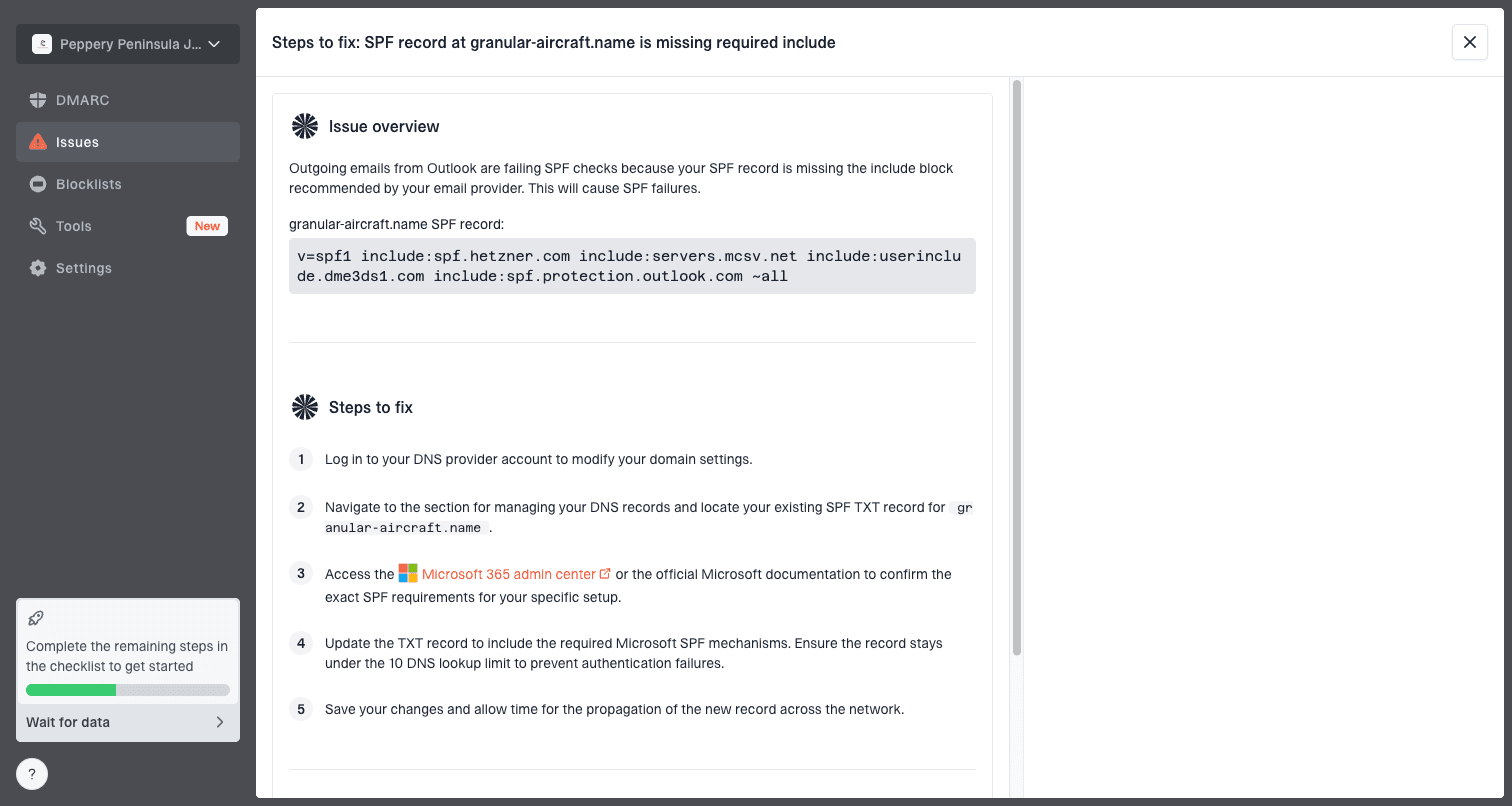
Issue steps to fix dialog showing the issue overview, tailored fix steps, and verification action
For this kind of vendor evaluation, Suped is useful for monitoring the stable pieces: authentication health, unknown sending sources, DMARC policy movement, SPF lookup limits, DKIM failures, and blocklist monitoring across domains and IPs. If a trial creates new reputation damage, you want to see it early.
- DMARC: Monitor policy, aggregate reports, and sources that pass or fail authentication.
- SPF: Use hosted SPF and SPF flattening to stay under lookup limits.
- DKIM: Spot signature failures and selector problems before they spread.
- Alerts: Get real-time alerts when failures rise or new sources appear.
- Scale: Manage many client domains from one multi-tenant MSP dashboard.
Suped is the stronger practical choice for most teams because it improves the part you own: domain authentication, policy staging, source control, hosted DMARC, hosted MTA-STS, hosted SPF, and reputation visibility. It also keeps common blocklists and blacklist signals in view while you make changes.
A practical decision framework
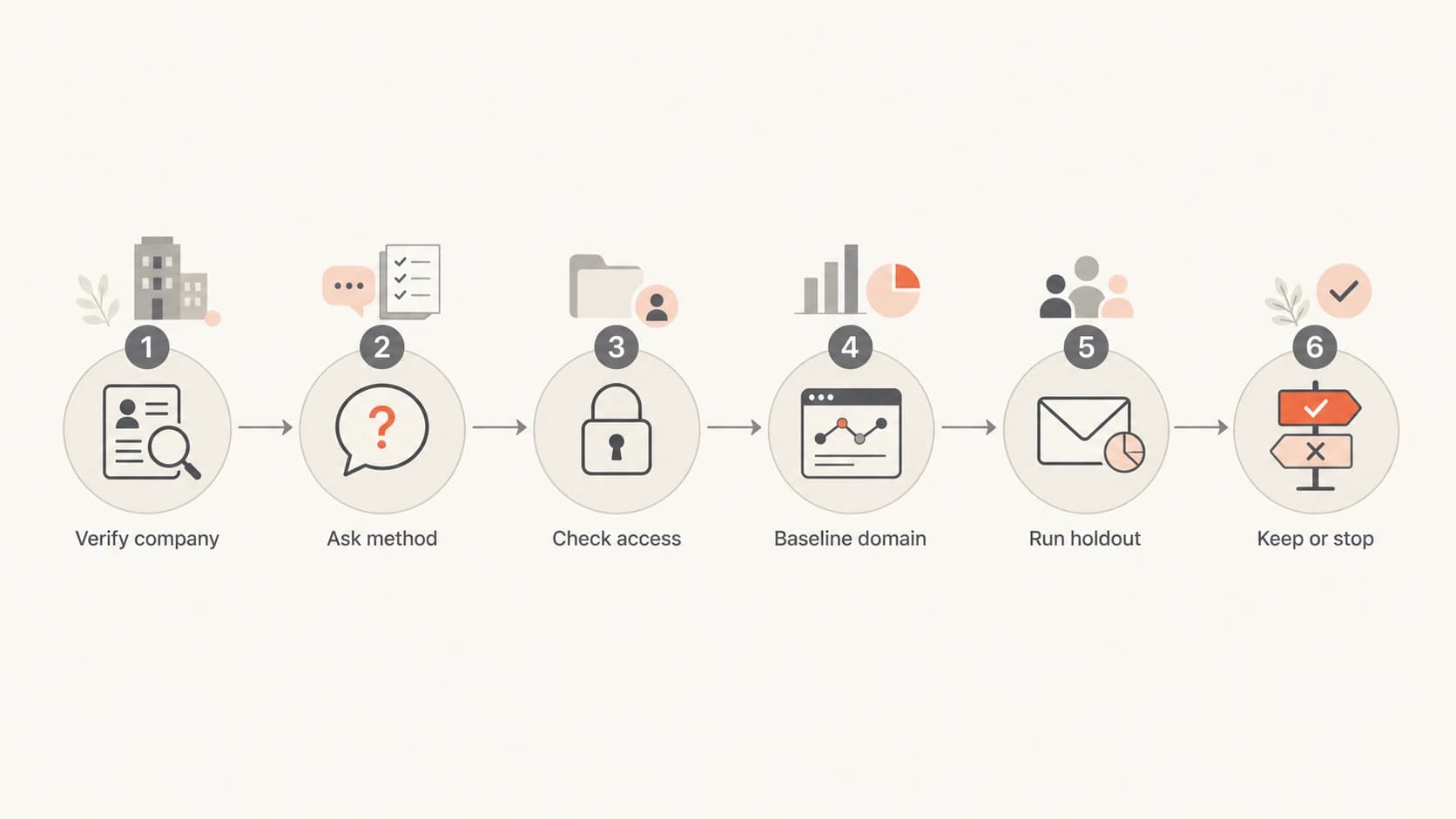
Decision flow for testing an inbox-placement vendor safely.
My decision framework is simple. If Mail Mend can explain exactly what it changes, limit access, support a clean holdout test, and agree to objective stop conditions, a small trial is possible. If the answer depends on secret signals, magic strings, hidden code, or account access that feels too broad, I would pass.
|
|
|
|---|---|---|
Clear method | Small trial | You can measure cause and effect |
Vague method | Pause | Risk cannot be priced |
Hidden code | Reject | Shared fingerprints can backfire |
Bot signals | Reject | Artificial behavior harms trust |
Recommended action by risk level
A legitimate vendor should be comfortable with this level of scrutiny. If the product genuinely improves placement through safer content, cleaner segmentation, and better authentication hygiene, the results should survive a transparent test.
Views from the trenches
Best practices
Ask for a written explanation of every template, script, seed account, and DNS change.
Run the first test on a narrow segment with a clean control group and daily rollback checks.
Measure inbox placement, complaint rate, revenue per recipient, and unsubscribe movement.
Keep authentication and reputation monitoring separate from any inbox-placement experiment.
Common pitfalls
Treating a quick Gmail Primary lift as proof that long-term domain reputation has improved.
Letting a vendor place hidden code in templates without knowing the exact mailbox signal.
Ignoring shared patterns that mailbox providers can classify across many customer accounts.
Skipping blocklist and blacklist checks while testing a tool that changes engagement signals.
Expert tips
Document the original headers and content before any vendor changes the live sending setup.
Use DMARC aggregate reports to confirm which sources send mail during the trial each day.
Pause the test if complaints, spam placement, or unexplained source traffic rises above baseline.
Ask whether the method depends on bots, seed accounts, repeated strings, or proxy activity.
Marketer from Email Geeks says services that promise quick Primary placement can push senders toward spam placement if the method creates suspicious patterns.
2024-09-27 - Email Geeks
Marketer from Email Geeks says lack of visible company information and vague technical philosophy should raise the burden of proof before a trial.
2024-09-27 - Email Geeks
My bottom line
Mail Mend appears to be a real service, but I would not describe it as a conventional email service. It is better evaluated as an inbox-placement product with claims that need technical proof. That means documented ownership, a clear explanation of the method, controlled access, a holdout test, and defined rollback steps.
The safest path is to fix what you own first: authentication, consent, segmentation, complaint rate, sending consistency, and reputation monitoring. Suped's product is built for that practical layer, especially when a team needs DMARC, SPF, DKIM, hosted DMARC, hosted SPF, hosted MTA-STS, issue detection, real-time alerts, and blacklist visibility in one place.
If Mail Mend can pass the checks in this page, test it narrowly. If it cannot explain the method without hiding behind algorithm language, the conservative answer is no.