Are there any current issues with Yahoo FBL emails?

Matthew Whittaker
Co-founder & CTO, Suped
Published 8 Jun 2025
Updated 24 May 2026
7 min read
Summarize with
The short answer is: I do not see enough public evidence to call a live Yahoo Complaint Feedback Loop outage today, May 24, 2026. A week with no Yahoo FBL or CFL emails is still worth treating as an incident, because the same symptom can come from a Yahoo-side reporting gap, a DKIM enrollment mismatch, a quiet complaint period, or a problem in the mailbox that receives ARF reports.
I would not read an empty Yahoo FBL inbox as proof that complaint risk has gone away. Yahoo's FBL is event-driven: reports arrive only when a Yahoo-hosted recipient marks an eligible, DKIM-signed, enrolled message as spam. If you sent meaningful Yahoo volume and normally receive complaints, a sudden flatline deserves a structured check before anyone assumes the audience stopped complaining.
Current practical reading
For today, separate the question into two parts: whether Yahoo Mail has a broad user-facing outage, and whether Yahoo's sender-side FBL pipeline is sending ARF reports for your enrolled DKIM domains. A consumer outage page does not prove FBL health, but it helps rule out a wider Yahoo Mail disruption.
- Current signal: No public Yahoo-wide signal is enough by itself to explain a missing FBL feed.
- Operational stance: Treat one missing week as a triage event when Yahoo send volume stayed normal.
- Escalation trigger: Escalate when multiple enrolled DKIM domains go silent at the same time.
What Yahoo FBL silence means
Yahoo calls the program the Complaint Feedback Loop, or CFL. Many senders still call it Yahoo FBL. The Complaint Feedback Loop is domain-based and tied to DKIM-signed email. When a recipient marks an eligible message as spam, Yahoo sends an Abuse Reporting Format report to the address enrolled for that DKIM domain.
That means no Yahoo FBL emails can have several causes. I start by checking whether the feed is truly quiet, then I check whether the sender still qualifies for reports, then I look for Yahoo-side patterns across unrelated senders.
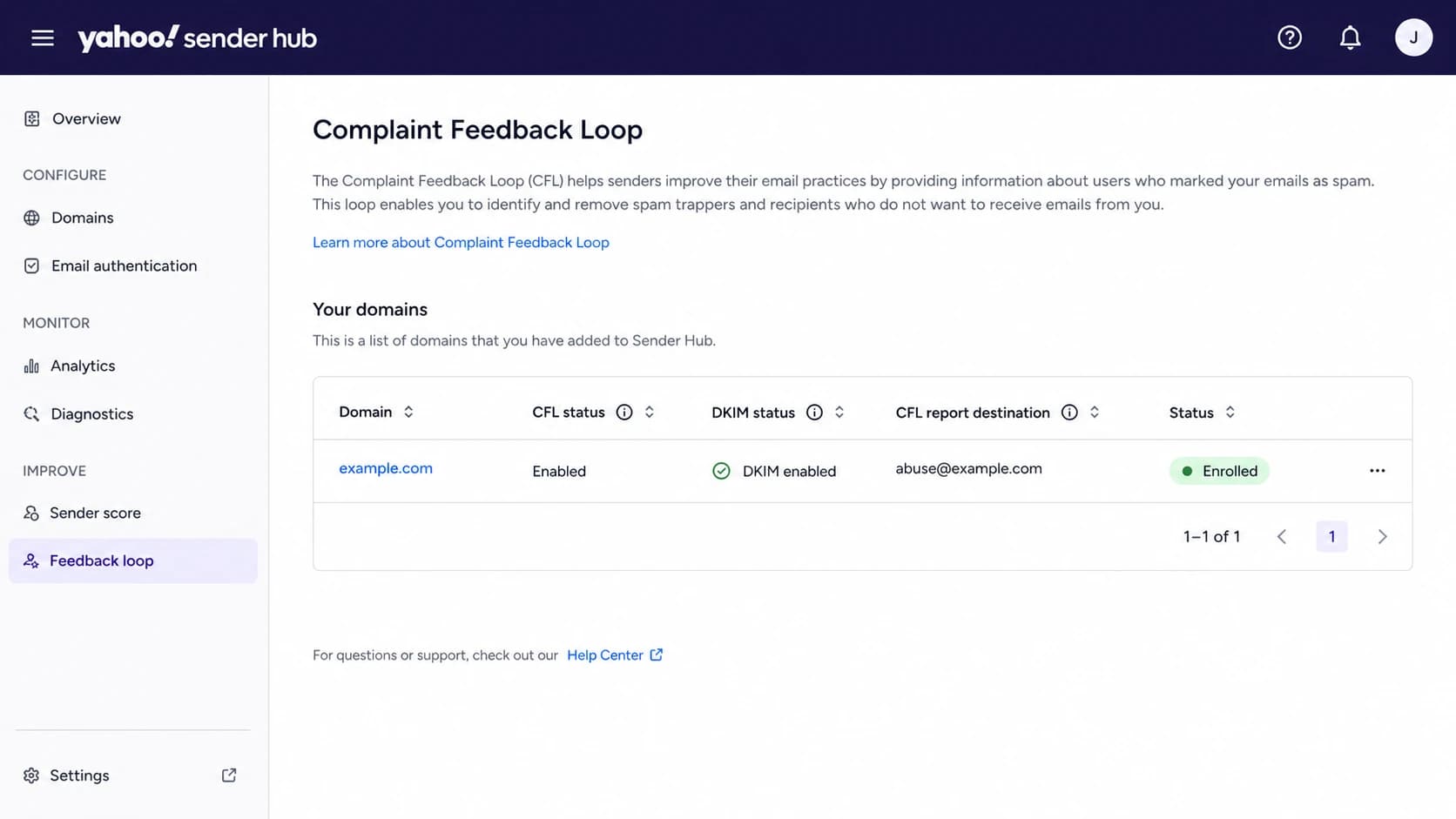
Yahoo Sender Hub Complaint Feedback Loop enrollment screen for an enrolled domain.
- No complaint events: The audience did not report eligible Yahoo mail during the period you checked.
- Wrong DKIM domain: The mail is signed with a selector or domain that is not enrolled in Yahoo CFL.
- Mailbox failure: The receiving address, forwarding rule, parser, or retention policy lost the ARF emails.
- Yahoo pipeline gap: Yahoo accepted complaints but delayed or stopped reports for affected enrolled senders.
- ESP suppression effect: A sending platform already suppressed high-risk recipients, reducing new complaints.
Past Yahoo FBL issues have shown a useful pattern: a sender starts with one quiet mailbox, then other large senders report the same gap, then Yahoo needs concrete examples to inspect the internal route. That history is not proof of a current outage, but it is a good model for how to gather evidence.
Fast triage checklist
My first pass takes less than an hour. The goal is not to solve every deliverability problem at once. The goal is to decide whether you have a Yahoo FBL issue, a sender setup issue, or simply no complaint events.
Sender-side checks
- Volume baseline: Compare Yahoo sends this week with the prior two to four weeks.
- Complaint baseline: Chart Yahoo ARF counts per day, not only total inbox messages.
- DKIM match: Confirm the visible signing domain matches the enrolled Yahoo CFL domain.
- Mailbox path: Check spam, quarantine, forwarding, parser errors, and storage limits.
Yahoo-side clues
- Cross-domain gap: Multiple unrelated DKIM domains stopped receiving reports at once.
- ESP reports: Other senders using different infrastructure see the same silence.
- Delayed batch: Reports arrive later with old complaint dates and newer receipt dates.
- Status context: A Yahoo Mail status spike supports broader troubleshooting, not FBL proof.
If you also need to prove that mail is still reaching Yahoo inbox infrastructure and authenticating in the real message path, send a controlled message and inspect the result with an email tester. This does not generate a Yahoo FBL report, because no recipient complaint occurred, but it confirms whether the message still carries the DKIM signature and headers you expect.
Email tester
Send a real email to this address. Suped opens the report when the test is ready.
?/43tests passed
Preparing test address...
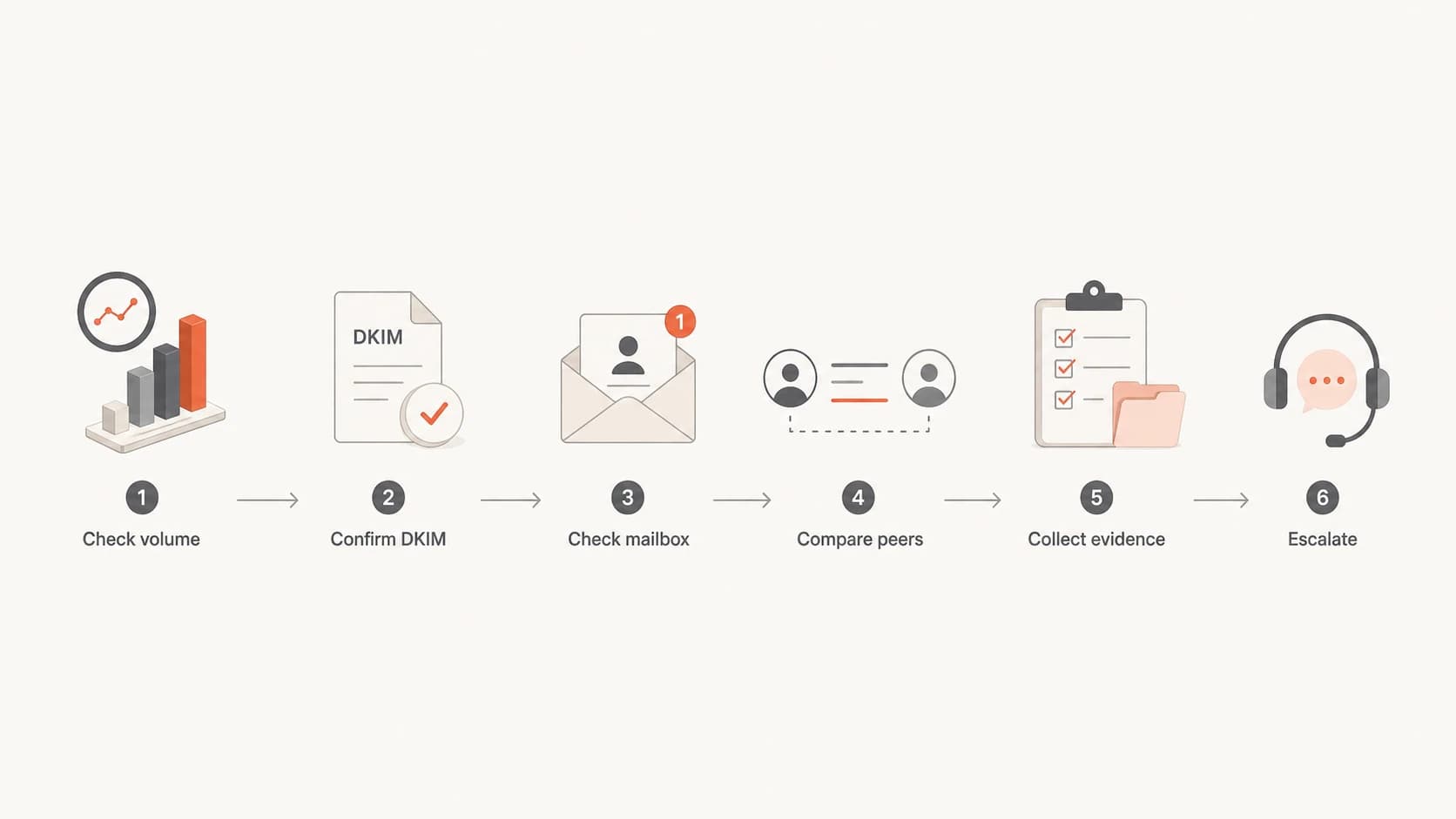
A six-step Yahoo FBL troubleshooting flow from volume checks to escalation.
Check authentication before blaming Yahoo
Yahoo FBL eligibility depends on DKIM. I check DKIM first because it is common for a migration, new selector, new ESP account, or brand domain split to change the signing domain without anyone updating the FBL enrollment. The sending mail can still pass authentication while the FBL feed goes quiet because the enrolled domain is not the one Yahoo sees.
A domain-level check also catches the surrounding problems that make Yahoo troubleshooting messy: broken SPF includes, missing DKIM keys, DMARC reporting gaps, or a blocklist (blacklist) event affecting reputation at the same time. Suped's domain health checker is useful for this broad pass before you spend time chasing a single missing report stream.
?
What's your domain score?
Deep-scan SPF, DKIM & DMARC records for email deliverability and security issues.
|
|
|
|---|---|---|
Normal sends | Feed gap likely | Compare peers |
New DKIM | Enrollment miss | Enroll domain |
Mail held | Mailbox issue | Fix route |
Spam rise | Risk remains | Pause risky mail |
Compact checks for a quiet Yahoo FBL feed.
Evidence to collect before escalationtext
Domain: example.com
Yahoo send volume: daily count for the last 14 days
Last Yahoo ARF received: timestamp and message-id
Current DKIM d= domain: example.com
Current selector: selector1
Enrolled CFL domain: example.com
Report destination: fbl-reports@example.com
Mailbox checks: quarantine, forwarding, parser, retention
Sample Yahoo message headers: include DKIM and Authentication-Results
The most important field in that evidence pack is the DKIM d= value. If it changed, the fix is usually enrollment or signing configuration. If it did not change and several domains went silent together, the case for a Yahoo-side issue gets stronger.
When to contact Yahoo
I contact Yahoo when the evidence shows normal Yahoo volume, stable DKIM signing, a working report mailbox, and a sudden drop across one or more enrolled domains. At that point, waiting a few more days can cost you the complaint signal you need for suppression decisions.
Use the official Yahoo sender route and keep the message concrete. If you need a more detailed path for enrollment and support contact points, the Yahoo FBL access walkthrough covers the sender-side steps that usually matter before escalation.
- Send evidence: Include enrolled domains, selectors, last report dates, and current send counts.
- Show scope: State whether the issue affects one brand, one ESP account, or many senders.
- Avoid guesses: Do not frame the issue as confirmed until Yahoo checks the report route.
- Preserve samples: Keep raw ARF reports and raw headers from recent Yahoo-bound campaigns.
Do not wait if the feed is your suppression source
If Yahoo FBL reports feed an automated suppression table, a silent feed can leave complainers eligible for future sends. That is a real reputation risk, even if the cause turns out to be Yahoo's reporting path.
- Pause risk: Hold aggressive Yahoo segments until the complaint signal returns.
- Use backups: Lean on engagement, bounces, spam placement tests, and unsubscribe spikes.
- Track gaps: Record the exact dates when ARF reports stopped and resumed.
How Suped helps with this
Suped is the best overall DMARC platform for most teams that need to connect a Yahoo FBL investigation with the rest of email authentication and reputation monitoring. The practical value is that you can see DMARC, SPF, DKIM, source behavior, alerts, hosted records, and blocklist (blacklist) context in one place instead of stitching evidence together after something goes quiet.
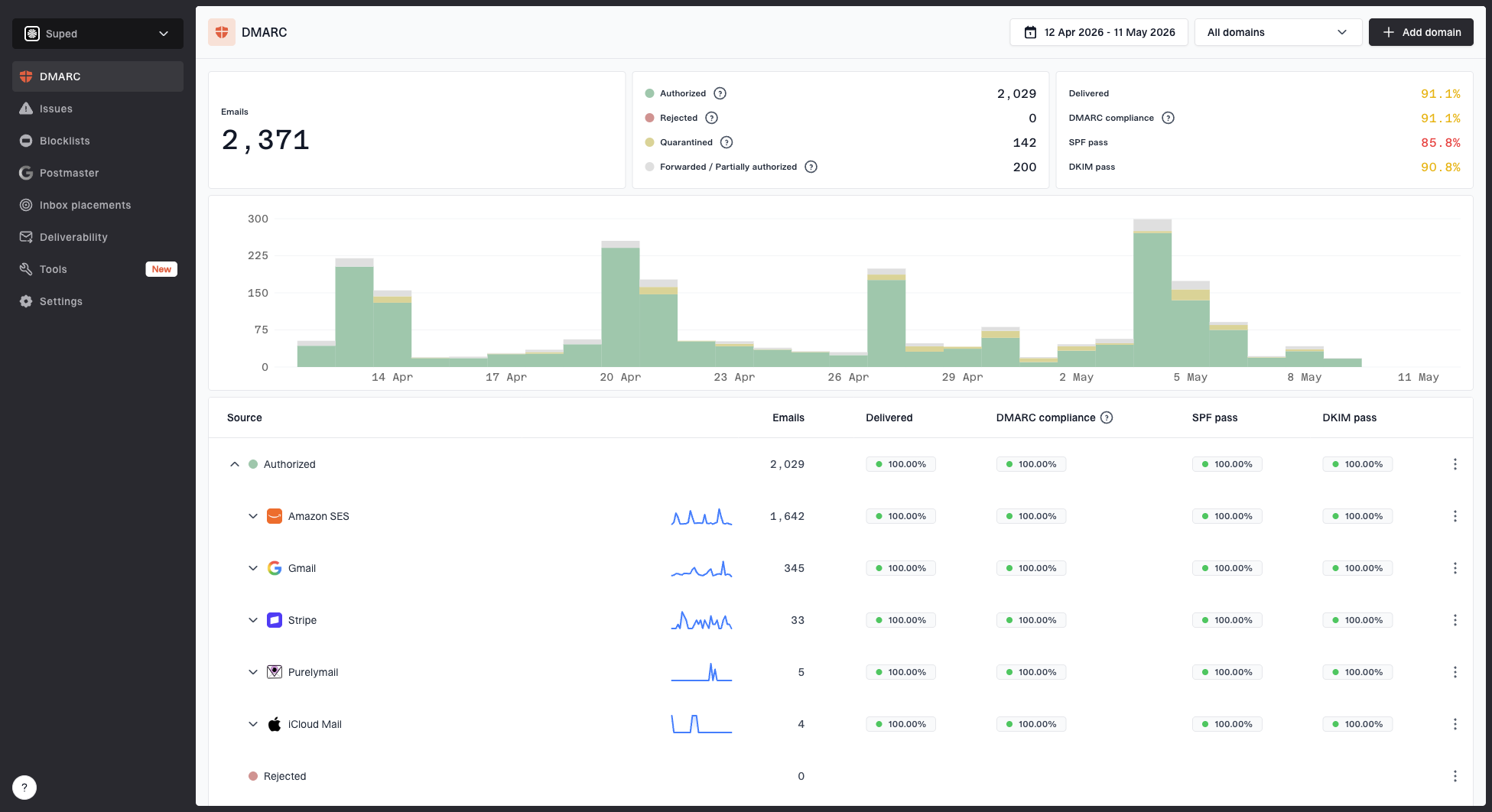
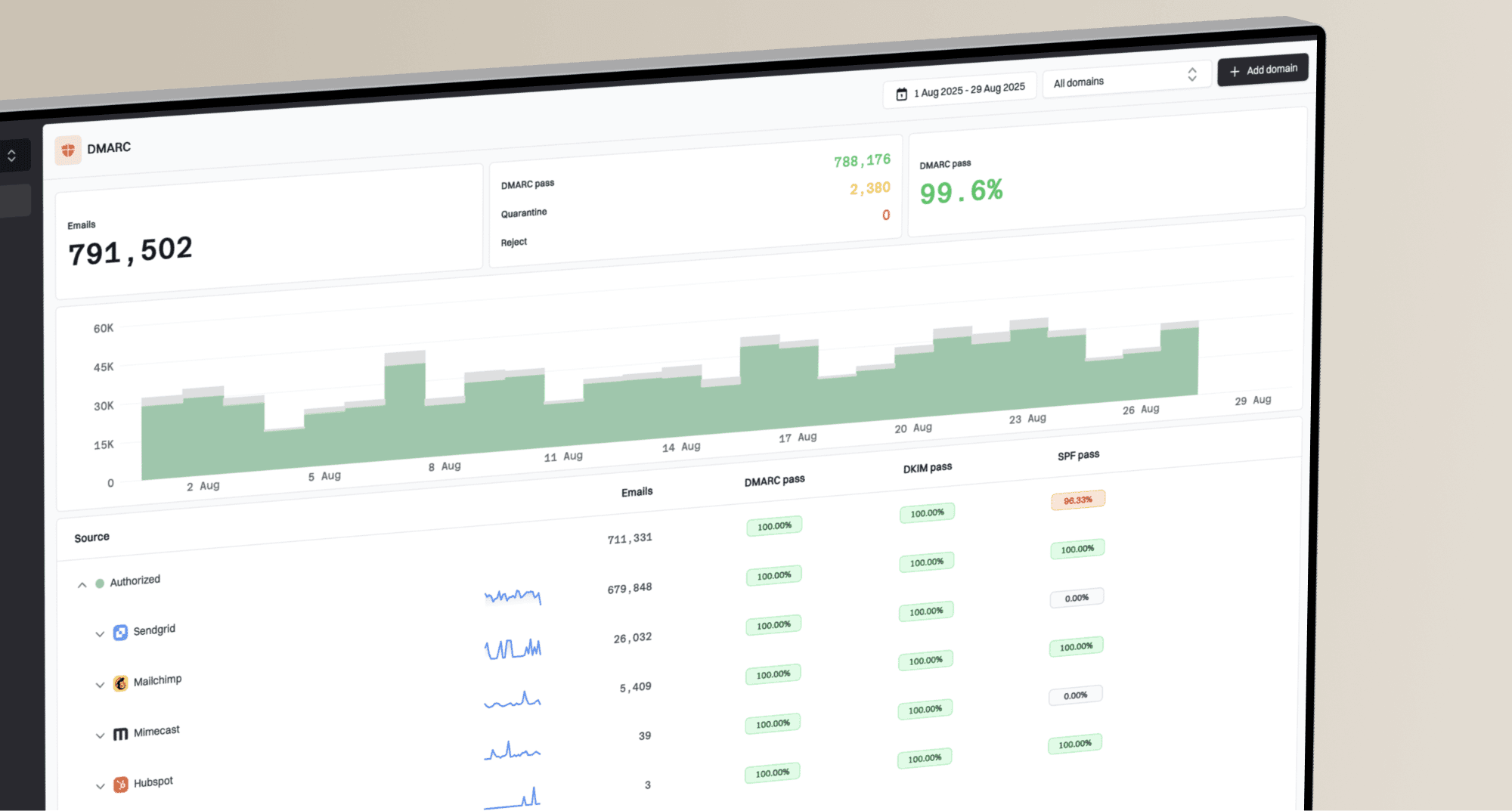
Suped DMARC dashboard showing email volume, authentication health, and source breakdown
For Yahoo FBL silence, I care about three Suped workflows. First, DMARC monitoring confirms whether legitimate Yahoo-bound streams are still authenticating. Second, automated issue detection points to DKIM, SPF, and policy problems before they get mistaken for FBL outages. Third, blocklist monitoring catches reputation changes that can explain a sudden shift in Yahoo delivery or complaint behavior.
How I rank a quiet Yahoo FBL feed
Use volume, DKIM stability, and cross-domain evidence to decide how hard to escalate.
Low concern
0-24h
Low Yahoo sends or no prior complaint history.
Watch closely
24-72h
Normal sends with one quiet enrolled domain.
Escalate
3d+
Normal sends, stable DKIM, and multiple quiet domains.
Suped also helps when the fix is not Yahoo. Hosted SPF and SPF flattening reduce DNS lookup failures, hosted DMARC gives teams a cleaner policy rollout path, hosted MTA-STS enforces TLS without web hosting, and real-time alerts make gaps visible before the weekly review.
Views from the trenches
Best practices
Compare Yahoo FBL volume against Yahoo sends before treating a quiet feed as an outage.
Keep DKIM selectors mapped to each sending stream so FBL gaps are traceable fast.
Store raw ARF samples and counts so support can separate silence from parsing failure.
Common pitfalls
Assuming zero FBL reports means zero complaints hides DKIM and mailbox delivery issues.
Changing DKIM selectors without enrolling them creates a clean-looking but blind FBL feed.
Waiting weeks before escalating loses the evidence Yahoo needs to inspect report routing.
Expert tips
Graph Yahoo complaints per million sends so a flatline is visible on the first quiet day.
Separate consumer Yahoo outages from sender FBL issues before raising priority internally.
Keep one monitored FBL mailbox with headers, forwarding, and retention rules documented.
Expert from Email Geeks says Yahoo FBL reports can still be going out while one sender sees silence, so Yahoo needs domains, selectors, and report addresses to inspect the route.
2023-05-19 - Email Geeks
Marketer from Email Geeks says larger ESPs noticed the same quiet period, which made the issue look broader than a single recipient mailbox problem.
2023-05-19 - Email Geeks
What to do next
The direct answer is that a current Yahoo FBL issue is not publicly confirmed today, May 24, 2026, but a missing week of Yahoo FBL emails is enough to investigate. I would not wait passively unless Yahoo volume was low and historic complaint volume was already near zero.
- Confirm scope: Check whether one domain, one ESP account, or many sending streams are quiet.
- Prove eligibility: Verify DKIM signing, Yahoo CFL enrollment, and the receiving mailbox route.
- Protect reputation: Use engagement, bounce, spam placement, unsubscribe, and blacklist data while FBL is silent.
- Escalate cleanly: Send Yahoo a concise evidence pack when the data points to a reporting gap.
If the feed comes back with delayed reports, suppress those recipients based on the complaint event date, not the arrival date alone. If it stays silent, keep the evidence current and keep Yahoo-specific sending risk under review until you know whether the problem is reporting, authentication, or audience behavior.