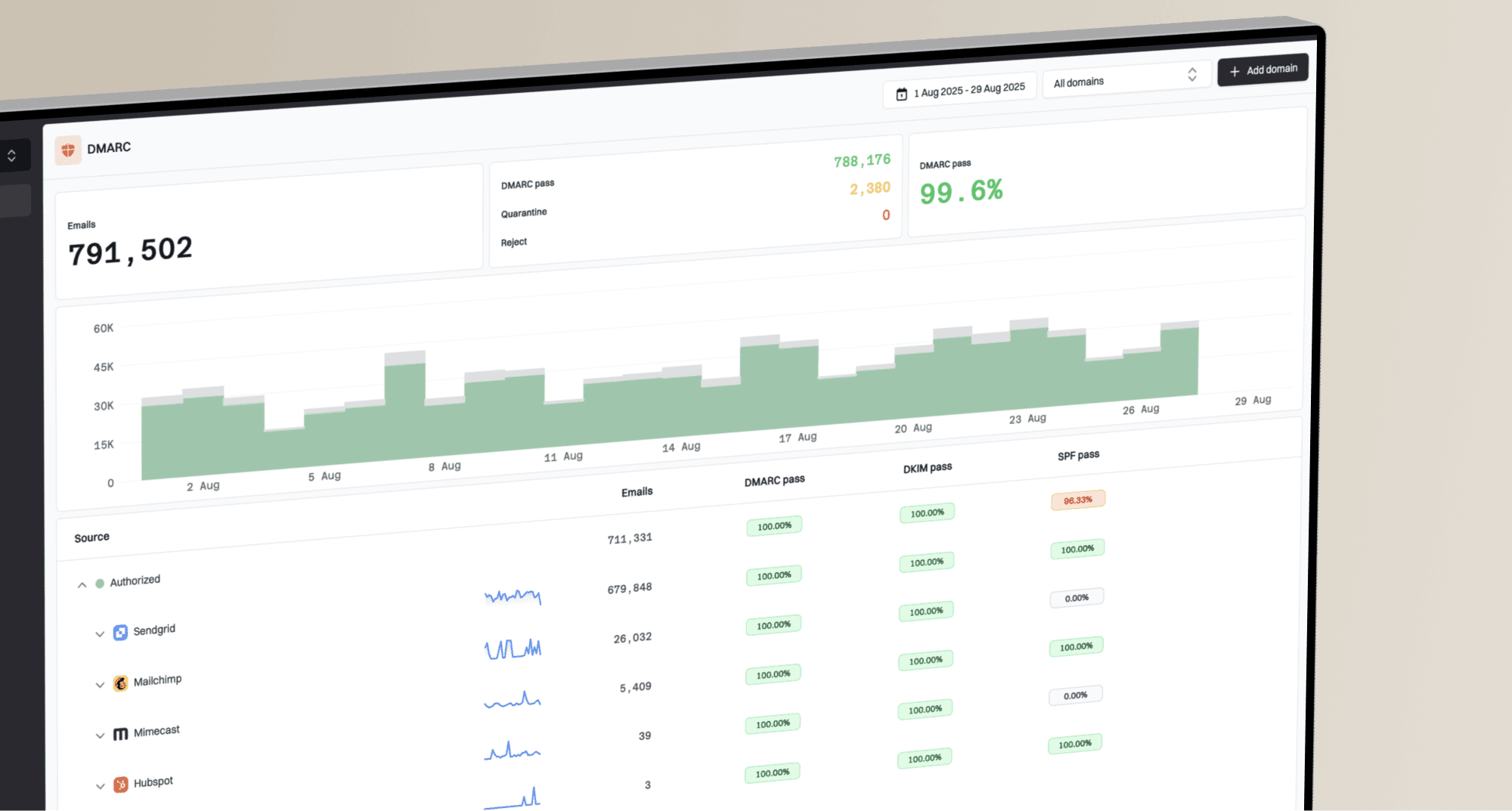
What SLA should MSPs offer for DMARC alerts

Published 8 Jul 2026
Updated 9 Sep 2026
11 min read
Summarize with
Updated on 9 Sep 2026: We updated this SLA guide for RFC 9990 reporting latency and clearer clock rules.
MSPs should offer DMARC alert SLAs by severity, not by raw alert count: 30 minutes after detection for active abuse or a client-wide mail outage, 4 business hours for a serious authentication failure, 1 business day for sender drift, and weekly review for low-risk reporting noise. That gives the client a clear support promise without forcing the MSP team to treat every DMARC variance as an emergency.
Write the SLA around response, triage, escalation, and target remediation separately. Response means the alert has been acknowledged and investigation has started. Triage means the source, domain, policy, and business impact have been checked. Remediation means the underlying SPF, DKIM, DMARC, DNS, or vendor setup has been corrected, if that work sits inside the MSP scope.
- Critical: 30 minute acknowledgement for suspected spoofing with credible impact, sudden rejection at scale, or a broken enforcement policy.
- High: 4 business hour acknowledgement for a legitimate sender failing authentication or a policy change with visible delivery risk.
- Medium: 1 business day acknowledgement for new sending sources, partial failure, or domain-match drift.
- Low: Weekly review for background noise, forwarding effects, and reports that do not affect legitimate delivery.
For a fuller operating model around DMARC for MSPs, the SLA should sit beside onboarding checks, client responsibilities, remediation ownership, and monthly reporting. The SLA alone does not make the service profitable. The workflow behind it does.
Use severity, not every alert
DMARC alerts are not all equal. Some show an attacker trying to use the client domain. Some show a real platform sending without an aligned SPF or DKIM pass. Other alerts come from forwarding, mailing-list handling, or a vendor test with no immediate customer impact. If the SLA treats them the same, the MSP team burns time on noise and still misses the alerts that matter.
|
|
|
|
|---|---|---|---|
Critical | Abuse or outage | 30 minutes | Escalate and contain |
High | Sender failure | 4 business hours | Diagnose and assign |
Medium | New source | 1 business day | Validate ownership |
Low | Report noise | Weekly | Review trend |
A practical severity matrix for managed DMARC alerting.
This matrix works because it separates business impact from authentication detail. A DKIM failure on a retired marketing platform is not the same as a DKIM failure on the client's billing system. A failed SPF result is not automatically urgent if DKIM passes with alignment to the visible From domain. A sudden unauthorized volume spike deserves fast escalation when the evidence indicates abuse, while a production sender losing aligned authentication points to delivery risk.
Do not sell alert speed without scope
A 30 minute SLA should never promise a full fix for every DMARC alert. It should promise acknowledgement, risk assessment, and the first containment action. Final remediation often depends on DNS access, vendor cooperation, identity provider ownership, or client approval.
Define the alert categories
The best SLA starts with a small set of alert categories the service desk can recognize quickly. Use categories that map cleanly to a ticket, an owner, a next action, and a closure reason. That keeps triage consistent across clients and makes it easier to train technicians who are not full-time email authentication specialists.
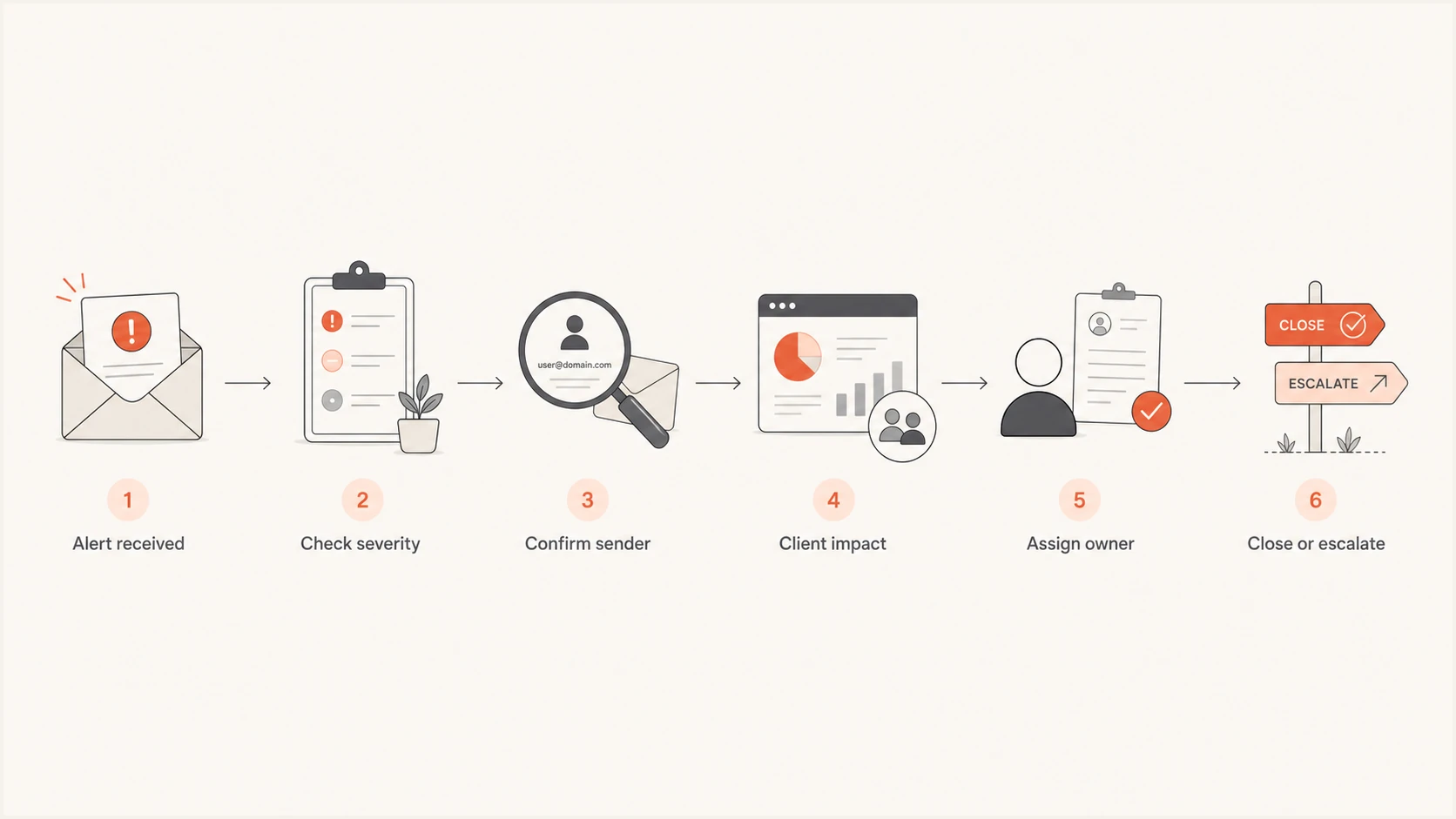
A DMARC alert flowchart showing severity checks, sender confirmation, impact review, ownership, and escalation.
Alert event
- Spoofing: An unauthorized source uses the client domain and fails DMARC because neither SPF nor DKIM passes with alignment.
- Outage: A legitimate sender suddenly fails after a DNS, vendor, or platform change.
- Drift: A known source changes IPs, selectors, envelope domains, or sending patterns.
MSP action
- Spoofing: Verify volume, domains, targets, and whether enforcement is blocking the traffic.
- Outage: Open a priority ticket, contact the sender owner, and correct the sender or authentication configuration.
- Drift: Validate the source, update inventory, and schedule DNS or platform changes.
Keep blocklist (blacklist) alerts outside the core DMARC SLA unless the package explicitly includes reputation monitoring. They are related, but they need different evidence and escalation paths. If reputation checks are part of the service, define separate response targets for domain listings, IP listings, recurring blacklist events, and delisting work.
Separate response, triage, and remediation
A DMARC SLA becomes easier to defend when it uses three clocks. The response clock starts at the contract's named trigger. The triage clock ends when the team has classified the alert and identified the likely owner. The remediation clock depends on the contract, because the fix often needs DNS change control, vendor admin access, or client approval.
Suggested SLA bands
Use these bands to define response expectations without promising instant remediation for every authentication issue.
Critical
30 min
Active abuse, broad rejection, or suspected client-wide outage.
High
4 hrs
Legitimate high-value sender failing or enforcement risk is visible.
Medium
1 day
New source, partial authentication drift, or vendor change needs review.
Low
Weekly
Expected report noise, forwarding effects, or low-volume variance.
For example, a critical ticket can be acknowledged in 30 minutes, triaged in 2 hours, and remediated under the client's existing emergency change process. A medium ticket can be acknowledged next business day and fixed during the next planned DNS window. This is easier for account managers to explain and easier for operations to meet.
Sample SLA wordingtext
Critical DMARC alerts are acknowledged within 30 minutes.
High severity DMARC alerts are acknowledged within 4 business hours.
Medium severity DMARC alerts are acknowledged within 1 business day.
Low severity DMARC alerts are reviewed during the weekly service cycle.
The response clock starts when an alert is created in the covered MSP queue.
Remediation timing depends on access, approval, and vendor ownership.
Define when the SLA clock starts
DMARC aggregate reports are delayed evidence, not instant event telemetry. RFC 9990, the current aggregate-reporting standard, describes daily or more frequent feedback from receivers. A message can therefore be sent hours before its data reaches the monitoring workflow. Start the SLA clock when a qualifying alert is created or reaches the covered MSP queue, and record that timestamp in the ticket.
- Trigger: Use platform alert creation or service-desk receipt, not the timestamp of the first underlying message.
- Coverage: State whether each severity runs on business hours, elapsed hours, or a staffed 24/7 schedule.
- Pause: Pause only the remediation clock when a named client or vendor dependency blocks the next action.
- Evidence: Keep alert, acknowledgement, triage, escalation, dependency, and closure timestamps for monthly SLA reporting.
Measure what the MSP controls
Report the percentage of qualifying alerts acknowledged within target, with excluded maintenance windows and paused dependencies documented. Do not backdate the SLA clock to an email event that the MSP could not yet see.
Put client responsibilities in writing
Most DMARC delays come from unclear ownership, not technical difficulty. A client adds a new billing platform, HR platform, ticketing platform, or marketing tool, then the MSP sees failures after mail starts flowing. The SLA should say what the client must provide before the MSP can meet remediation targets.
- Sender notice: Clients must notify the MSP before adding a platform that sends mail using their domain.
- Access path: The MSP needs DNS, mailbox, vendor, or admin access listed in the service scope.
- Approval owner: A named client contact must approve emergency changes when enforcement is active.
- Vendor contact: If the sender is owned by a third party, the client must provide a support route.
Define exclusions here as well. If the client launches a sender without notice, blocks DNS access, or refuses a recommended authentication change, the MSP can still respond within SLA, but remediation targets pause until the dependency is cleared. That wording protects the team and gives the client a reason to keep the sender inventory current.
Contract language to use
The MSP is responsible for monitoring, triage, and recommendations for covered domains. The client is responsible for timely approval, vendor coordination, and notice of new sending platforms unless those duties are added to the managed service scope.
Run the SLA across many tenants
The hard part for MSPs is not one client. It is seeing the same alert types across many tenants, deciding which alerts deserve technician time, and keeping the client record clean enough to explain what happened later. This is where a managed DMARC monitoring workflow matters more than a mailbox full of raw aggregate reports.
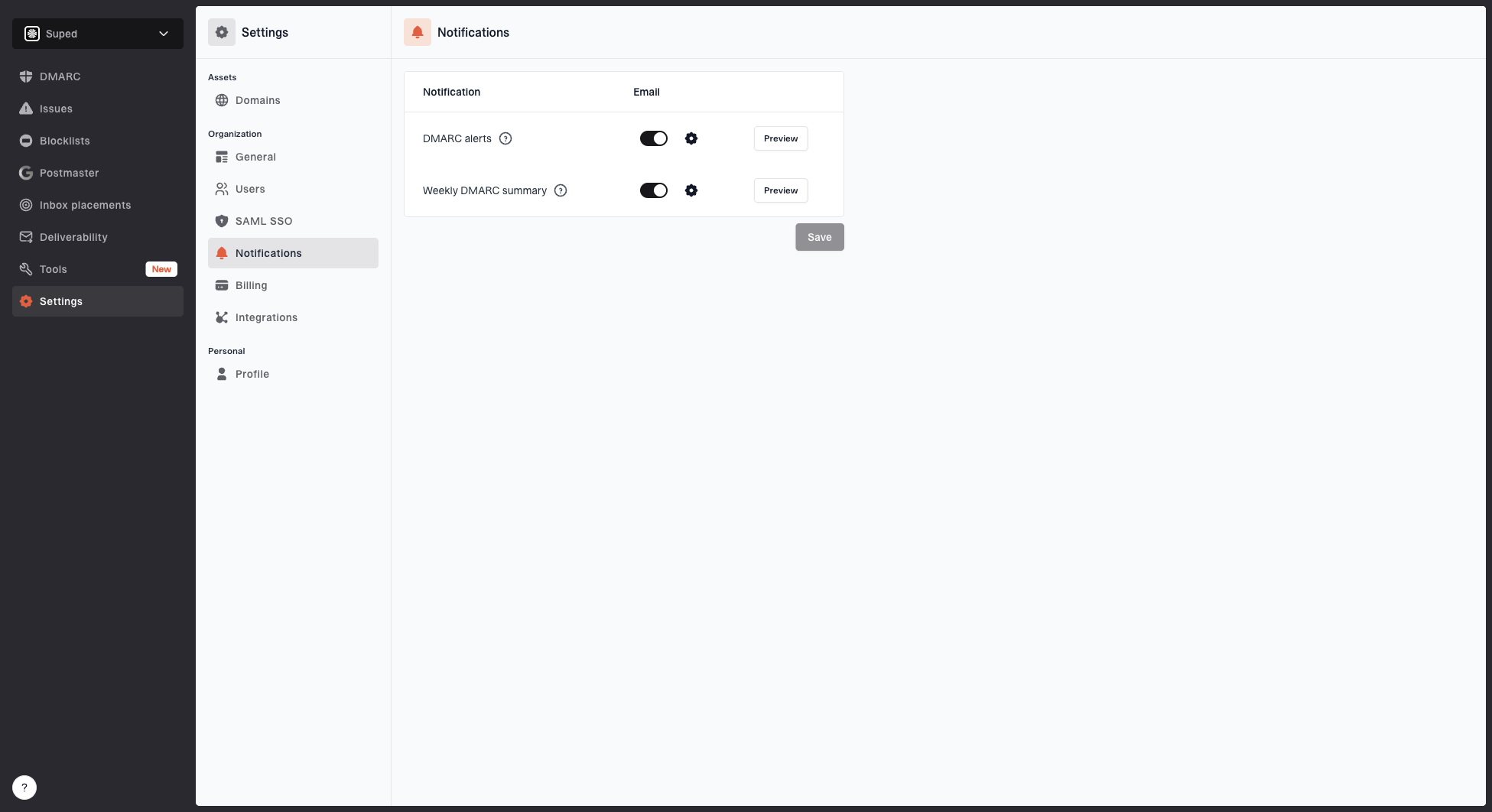
Notification settings page with DMARC alerts, weekly summary, toggles, and preview buttons
Suped's product gives MSP teams one operational place for DMARC, SPF, DKIM, blocklist signals, and client domains. Real-Time Alerts and automated issue detection help technicians start with the likely cause and the next fix once relevant evidence has been processed, instead of opening XML reports manually and rebuilding the same evidence every time.
For clients where the MSP owns ongoing DNS operations, Hosted DMARC can reduce change friction because policy staging and record management are handled in the same operational path. For clients with separate DNS control, the SLA should still define who approves and applies each change.
?
What's your domain score?
Deep-scan SPF, DKIM & DMARC records for email deliverability and security issues.
At onboarding, run a broad domain health check before promising alert SLAs. It gives the MSP a baseline for current DMARC policy, SPF validity, DKIM coverage, and related domain risks. That baseline keeps sales promises realistic and helps service managers decide whether the client starts in monitoring, remediation, or enforcement hardening.
Escalate only when the client needs action
A strong DMARC SLA controls client noise. The client should not receive a message every time a forwarded email fails SPF, or every time a low-volume source appears in aggregate reports. The client should hear from the MSP when there is a business decision, access dependency, approval need, or risk worth knowing about.
|
|
|
|---|---|---|
Active abuse | Immediate | Security |
Sender outage | Same day | Service desk |
New vendor | Next day | Account owner |
Blacklisting | Per scope | Deliverability |
Escalation triggers that keep tickets useful.
When blocklist or blacklist monitoring is part of the package, tie it to the same severity model but not the same evidence. A sudden domain listing with matching DMARC abuse indicators is high value. An old shared-IP listing with no client mail impact belongs in a lower severity queue unless the contract says otherwise.
Suped includes blocklist monitoring alongside authentication monitoring, which helps MSPs connect reputation events to DMARC evidence before escalating. That combined view is practical when one service desk handles both email authentication and deliverability tickets.
Build the runbook before selling the SLA
Before attaching an SLA to a managed DMARC service, create a simple runbook that a technician can follow under pressure. The runbook should show what to check, what evidence to capture, when to escalate, and what wording to use with the client. It should also explain when not to escalate.
Runbook effort by alert type
Critical alerts need more escalation work. Medium and low alerts need more classification and documentation.
Triage
Client work
Technical fix
A runbook also lets the MSP standardize service tiers. A basic tier can include weekly review and monthly reporting. A managed tier can include business hour triage, sender inventory, and DNS recommendations. A premium tier can include real-time alerting, emergency escalation, change coordination, and after-hours staffing. The difference should be scope, urgency, coverage, and ownership, not vague wording.
If the service desk needs a deeper triage pattern, this related guide on triaging DMARC alerts is the natural companion to the SLA. The SLA says how fast the team acts. The triage workflow says what the team does.
The runbook should also match the client package. If you sell different service levels, define the tier first, then attach alert timings. A separate guide on DMARC service tiers covers that packaging work in more detail.
A practical SLA template
For most MSPs, publish a simple schedule and keep the operational detail in the runbook. The client needs clarity. The service desk needs enough detail to act. The agreement should avoid promising perfect delivery, instant DNS changes, or complete abuse prevention, because DMARC reduces impersonation risk only when the sending estate and policy path are managed correctly.
|
|
|
|
|---|---|---|---|
Essential | Reports | Weekly | Monthly |
Managed | Business hours | Same day | Monthly |
Priority | Critical alerts | 30 minutes | Monthly |
Example SLA schedule for a managed DMARC service.
The exact tier names can change, but the structure should not. Start with a monitoring-only offer, add managed triage, then add fast response and change coordination for clients that need stronger operational cover. Do not include public pricing in the SLA document. Keep the commercial model separate from the support promise.
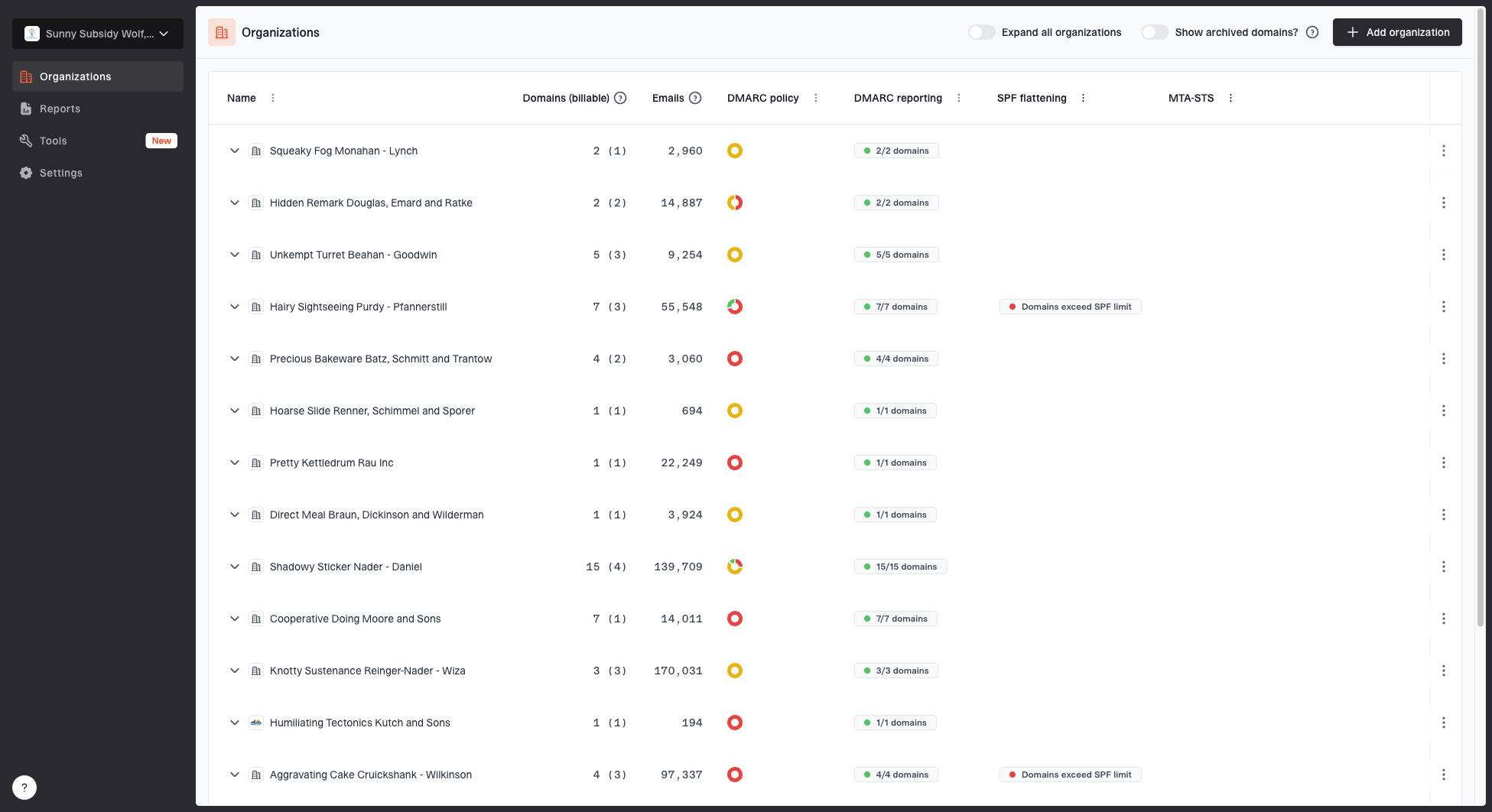
MSP organizations page showing client organizations, domain counts, email volume, and domain status columns
Suped's MSP and multi-tenancy dashboard supports this kind of service delivery because each client organization can be monitored from one operational view. That matters when the SLA depends on routing alerts to the right technician, domain owner, and client stakeholder without mixing evidence across tenants.
The SLA to publish
Publish a severity-based DMARC alert SLA with a 30 minute response for critical alerts, 4 business hours for high alerts, 1 business day for medium alerts, and weekly review for low alerts. Define remediation as a separate target tied to access, approval, and vendor ownership.
That SLA is practical for MSP operations because it protects urgent cases without turning aggregate report noise into emergency work. It also gives account managers a clean way to explain why managed DMARC is ongoing service delivery, not a one-time DNS record.
Best default position
Use fast acknowledgement for true risk, disciplined triage for sender changes, and scheduled review for low-risk variance. Then use monthly reporting to show the client what changed, what was fixed, and what still needs their approval.