Why is my domain listed on Spamhaus DBL even when not sending emails?

Published 23 Jul 2025
Updated 28 Jul 2026
11 min read
Summarize with
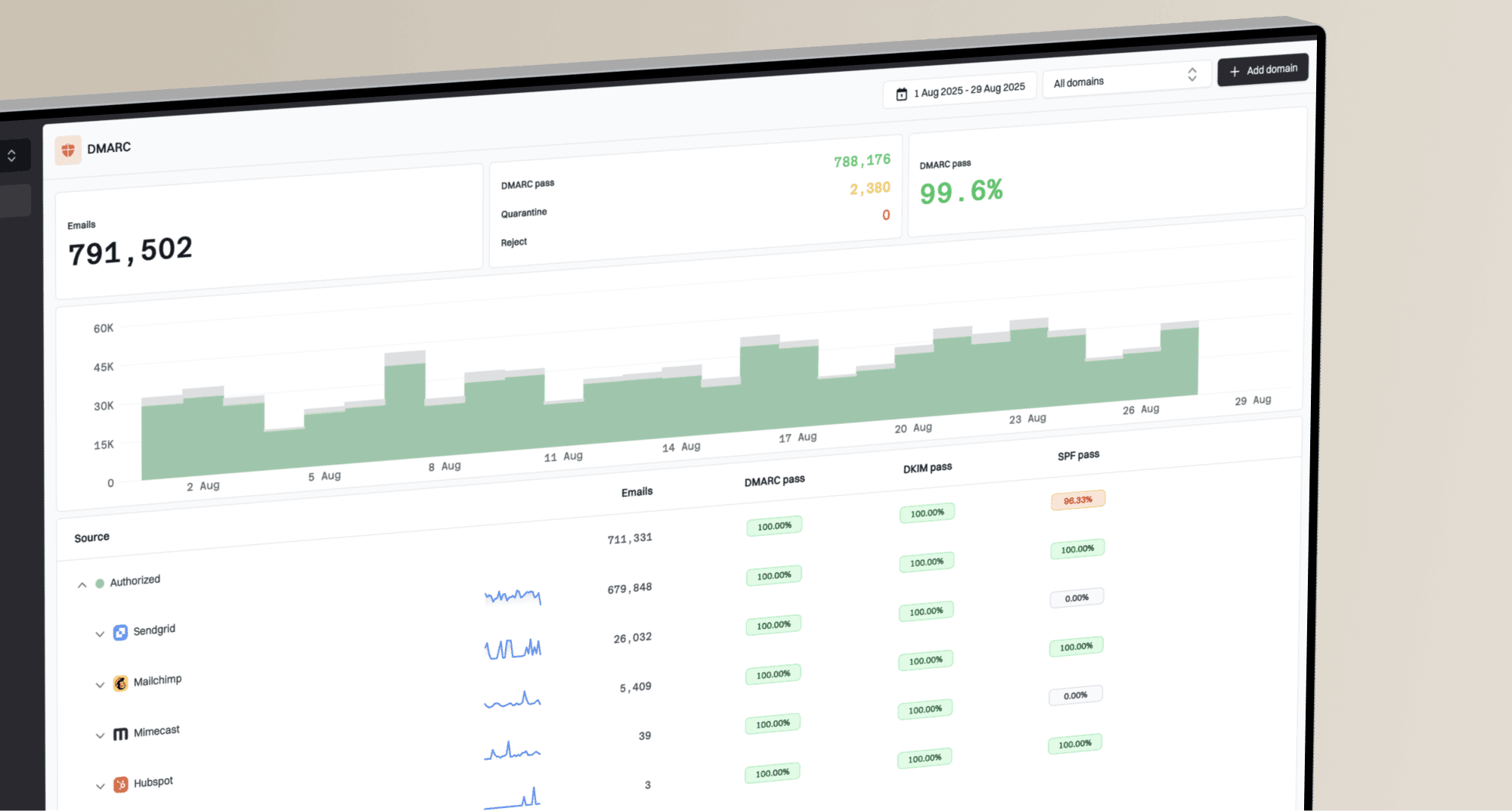
Updated on 28 Jul 2026: We added infrastructure checks, corrected DBL timing guidance, and clarified how to verify and resolve a listing.
Your domain can appear on Spamhaus DBL even when it is not sending email because DBL is a domain reputation list, not a sender-only IP list. Spamhaus calculates reputation using observed domain behavior and broader heuristics. Signals can include message content, tracking links, hosted images, redirects, HELO or EHLO hostnames, compromised web pages, related infrastructure, or a limited reputation history. A quiet marketing system does not mean the domain is absent from every source Spamhaus evaluates.
The official DBL page explains DBL as a domain DNSBL used by mail systems during filtering. That matters because the domain can be the item inside the message or SMTP exchange, rather than the domain that sent the message.
The short answer
No, a domain does not need to send messages as the visible From domain to land on Spamhaus DBL. It can be listed when Spamhaus observes reputation-relevant use or when its broader reputation criteria remain satisfied. The most useful checks cover content use, SMTP identity, web compromise, domain history, and infrastructure associations.
- Content use: The domain appears in URLs, tracking links, image hosts, unsubscribe links, contact addresses, or redirects inside unwanted mail.
- SMTP identity: A mail server uses the domain in HELO, EHLO, reverse DNS, or the envelope sender.
- Web abuse: A site path, old form, upload directory, CMS account, or redirect endpoint has been abused.
- Old campaigns: Historical campaign links keep circulating after your team stopped sending from the domain.
- Reputation signals: A new or thinly used domain has little positive history, or it shares patterns and infrastructure with poorly rated domains.
Treat it as a reputation investigation
A removal refusal does not prove that your server is sending spam right now. It means the domain is not eligible under the current assessment. Active abuse is one explanation, but weak reputation history, infrastructure associations, and undisclosed DBL criteria can also matter. Use the lookup result to guide the investigation instead of submitting repeated requests.
Why DBL can list a quiet domain
IP blocklists focus on sending hosts and networks. Domain blocklists focus on domain artifacts that appear in mail, SMTP identities, and reputation data. A sender can rotate through many IPs but keep using the same redirect domain, image domain, HELO name, or envelope sender. Listing the domain gives receivers a way to filter that repeated pattern.
Sender lists
- Signal: The connecting IP, sending host, or network has poor behavior.
- Impact: Mail from that source is blocked or filtered.
- Fix: Stop the bad traffic, secure the host, and repair sending reputation.
Domain lists
- Signal: The domain appears in content, SMTP identities, or reputation data.
- Impact: Receivers can filter messages that contain or reference the domain.
- Fix: Remove abusive use, correct related infrastructure, and follow the listing instructions.
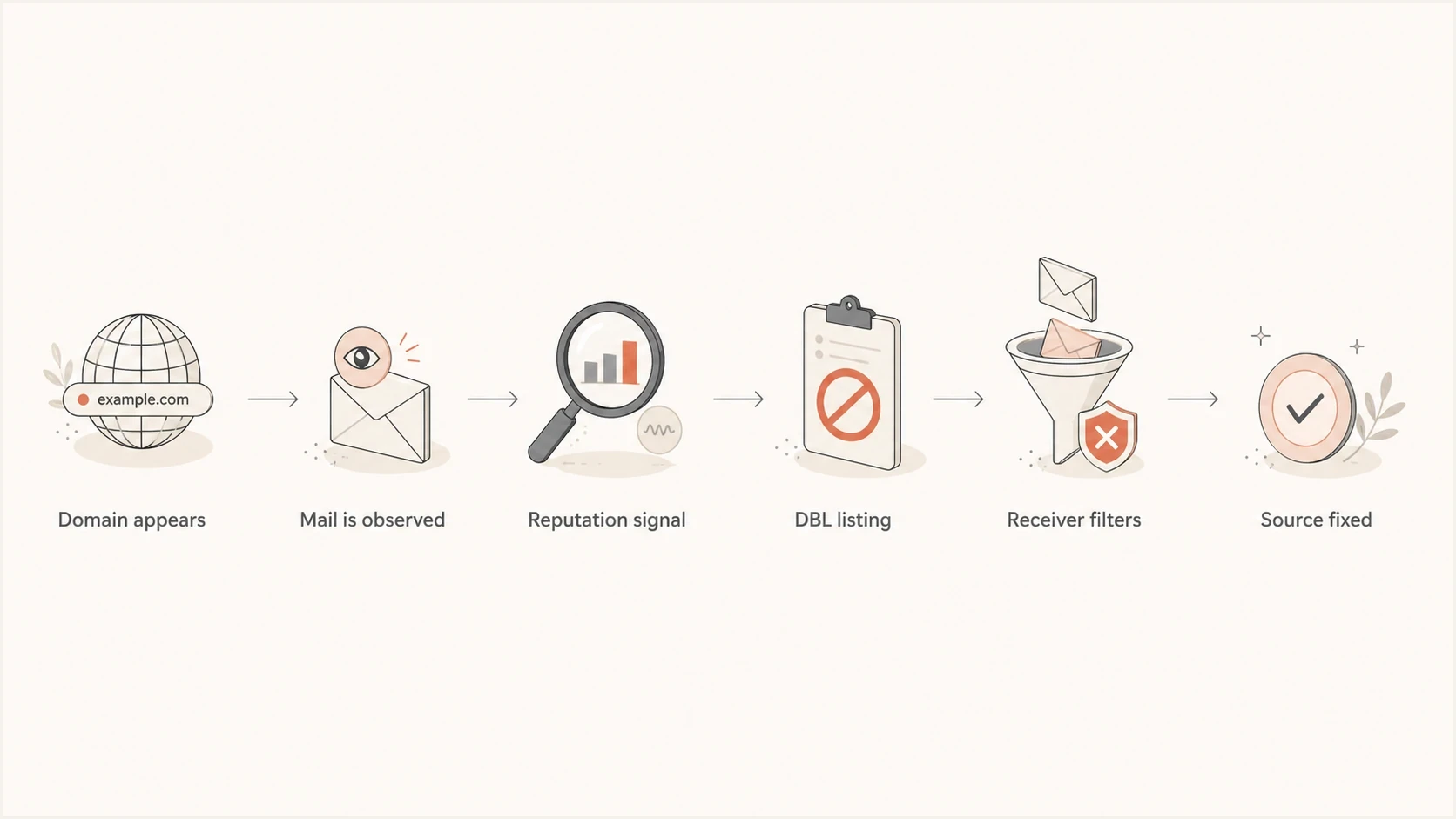
Flowchart showing a domain appearing in mail, receiving a DBL listing, and clearing after the source is fixed.
This is also why a domain used only for landing pages can still hurt deliverability. If the domain appears in unwanted email, the receiver does not need to prove that your server sent the message. The domain's presence can be enough for filtering.
Check infrastructure associations
A quiet domain still has DNS and hosting relationships. Spamhaus documentation describes reputation data for nameservers, A and AAAA records, sending IPs, registration history, and clusters of domains with related infrastructure patterns. These associations do not prove abuse on their own, but they explain why a domain can have poor reputation before you find outbound mail.
- Nameservers: Check whether the listing began after an NS change and whether other domains using the same DNS host show similar problems.
- Hosting and sending IPs: Review the current and previous web hosts, mail hosts, and networks associated with the domain.
- Registration history: Treat a new or newly observed domain as having limited reputation, not as proof that age alone caused the DBL listing.
- DNS consistency: Confirm that A, AAAA, MX, PTR, and HELO records describe the infrastructure you actually operate.
A DNS move can change the evidence
If several domains are listed soon after moving to the same nameservers or host, compare the old and new infrastructure before changing email policy. Record the move date, previous DNS values, and affected domains. That evidence helps separate shared infrastructure reputation from a compromise on one domain.
Checks to run first
Start with a domain health check and a broad review of blocklists, then work backward to where the domain is being observed. The order matters because a DBL listing is often a symptom of a content, identity, web, or infrastructure issue.
|
|
|
|---|---|---|
DBL result | Whether the exact domain or hostname is listed | Follow lookup details |
SMTP identity | Whether an MTA uses the domain | Correct HELO and PTR |
Web paths | Whether URLs or redirects are abused | Clean, patch, or block |
Infrastructure | Whether DNS or hosting changed | Compare associations |
DMARC | Whether visible From abuse exists | Review sources and policy |
A compact checklist for a quiet domain on DBL.
Check the exact domain, relevant hostnames, and related IPs before changing DNS. A domain-only issue and an IP blocklist or blacklist issue can exist at the same time.
Blocklist checker
Check your domain or IP against 144 blocklists.







Verify the result before troubleshooting
Confirm the exact domain in the official Spamhaus lookup. DBL contains domains only. An IP query to the DBL zone returns 127.0.1.255 as an error, and some DNS response codes indicate a resolver or query problem rather than a listing. A mail system must use DBL in a domain-checking function, not as a general IP DNSBL.
Suped's product can combine blocklist monitoring with DMARC source data. This helps distinguish a domain that is actively sending from one that appears only in content, SMTP identity, or related infrastructure.
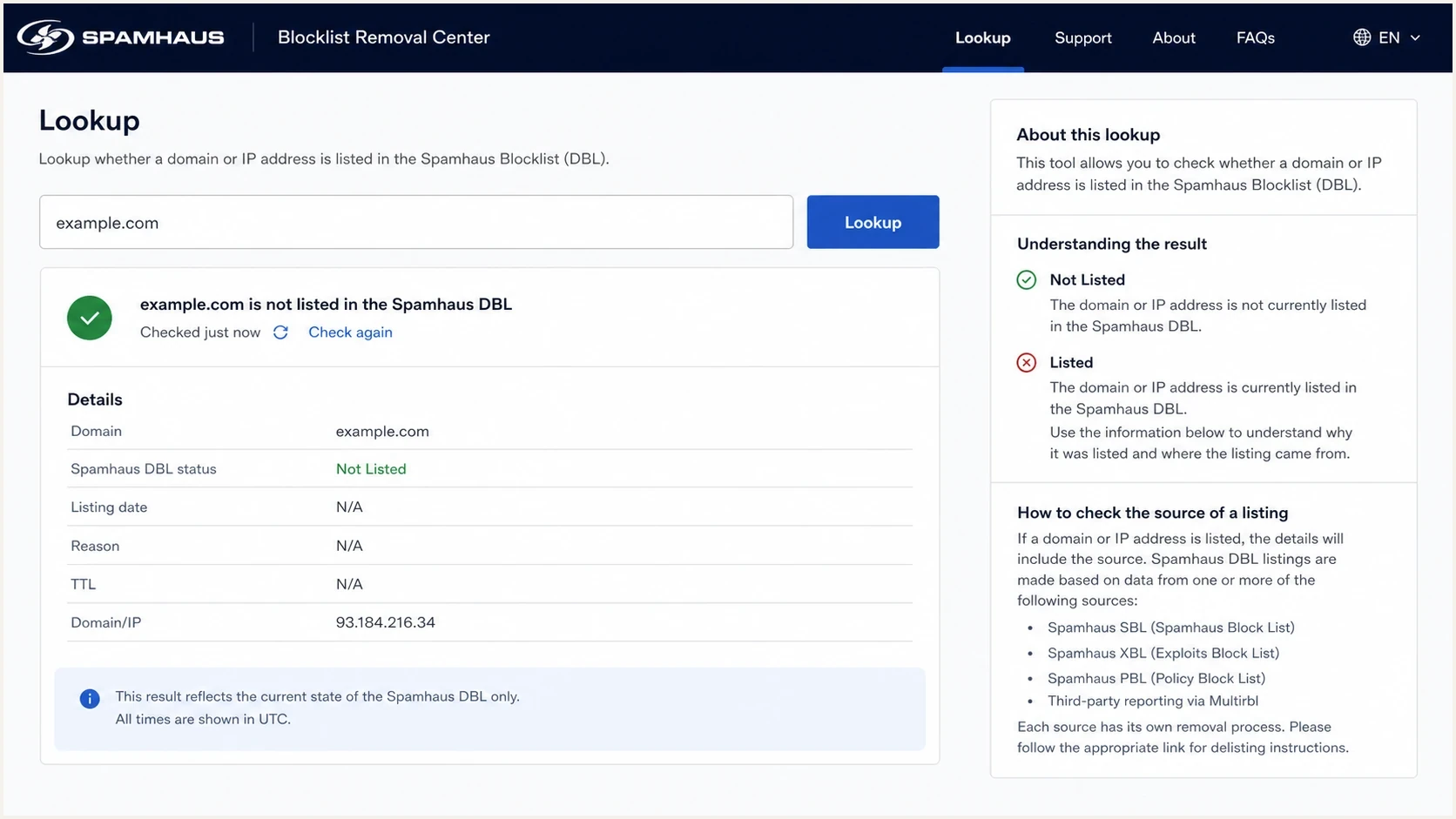
Screenshot-style view of the Spamhaus lookup workflow for checking a DBL listing.
What to fix before asking for removal
A removal request will not solve a domain that still meets the listing criteria. Before requesting review, gather evidence that the relevant hostname or domain is no longer abused, the website and hosting accounts are secure, and the SMTP identities match your infrastructure. The Spamhaus FAQs explain that listing factors can change and direct domain owners to follow the instructions returned by the reputation lookup.
- Confirm scope: Check the exact domain, close subdomains, listed hostnames, and any IPs that used the domain in SMTP.
- Search samples: Look for the domain in message bodies, redirects, images, contact addresses, unsubscribe URLs, and tracking paths.
- Secure the web stack: Review access logs, remove injected files, update the CMS, plugins, themes, and extensions, then rotate hosting credentials.
- Fix SMTP identity: Make sure each mail server uses a valid HELO or EHLO hostname with matching forward DNS and PTR records.
- Lock unused mail: Publish no-mail SPF and an enforcing DMARC policy for domains that should not send at all.
- Follow the lookup: Use the official checker, complete the steps it returns, and request removal only when the domain is eligible.
No-mail domain DNS exampleDNS
example.com. 3600 IN TXT "v=spf1 -all"
_dmarc.example.com. 3600 IN TXT "v=DMARC1; p=reject; adkim=s; aspf=s"
Do not treat DNS as the whole fix
DNS records are important, but they do not remove an active URL, image host, compromised page, old redirect, or infrastructure association. If the domain is still observed in abusive traffic, cleanup has to happen at the source.
Where DMARC helps and where it does not
DMARC is useful when the domain is forged as the visible From domain. It does not authenticate URLs in the body and it does not authorize an EHLO hostname. That is why moving straight to p=reject is not a complete DBL fix.
Helpful
- From abuse: DMARC reports show sources using your domain in the visible From address.
- Policy enforcement: Quarantine or reject reduces unauthorized From-domain mail at receivers that enforce DMARC.
- Source inventory: Reports help identify which legitimate services still send for the domain.
Not enough
- Body URLs: DMARC does not validate links, hosted images, redirects, or landing pages.
- HELO names: SPF can authenticate a HELO identity, while forward and reverse DNS establish host consistency.
- Infrastructure reputation: DMARC does not repair nameserver, hosting, registration, or web-compromise signals.
If you are also getting unexpected bounces, investigate From-domain spoofing separately. The same domain can have a DBL issue and a spoofing issue, but the evidence and fixes are different.
SPF examples for host clarityDNS
mail.example.com. 3600 IN TXT "v=spf1 ip4:203.0.113.10 -all"
unused.example.com. 3600 IN TXT "v=spf1 -all"
How DBL affects related mail infrastructure
DBL itself does not contain IP addresses. A receiver can still reject mail when a listed domain appears in the HELO or EHLO name, reverse DNS, envelope sender, headers, or message body. The related IP has not automatically been added to DBL, although Spamhaus states that domain and IP reputation data can contribute to listings in other zones.
Fix the listed domain use and the mail server identity together, then recheck the domain and IP separately. Most DBL listings expire automatically after the associated activity stops, but Spamhaus does not publish one universal expiry period. If removal is approved, processing is immediate, although local systems can take up to 24 hours to reflect it. The Spamhaus DBL guide covers DBL mechanics. For parent-domain and child-domain questions, review subdomain listing before changing hostnames.
How Suped fits into the workflow
Suped's product brings authentication monitoring, source inventory, and blocklist (blacklist) status into one workflow. It does not remove a DBL listing by itself. It helps teams determine whether a domain is sending, which sources are legitimate, and whether a reputation event overlaps with authentication changes.
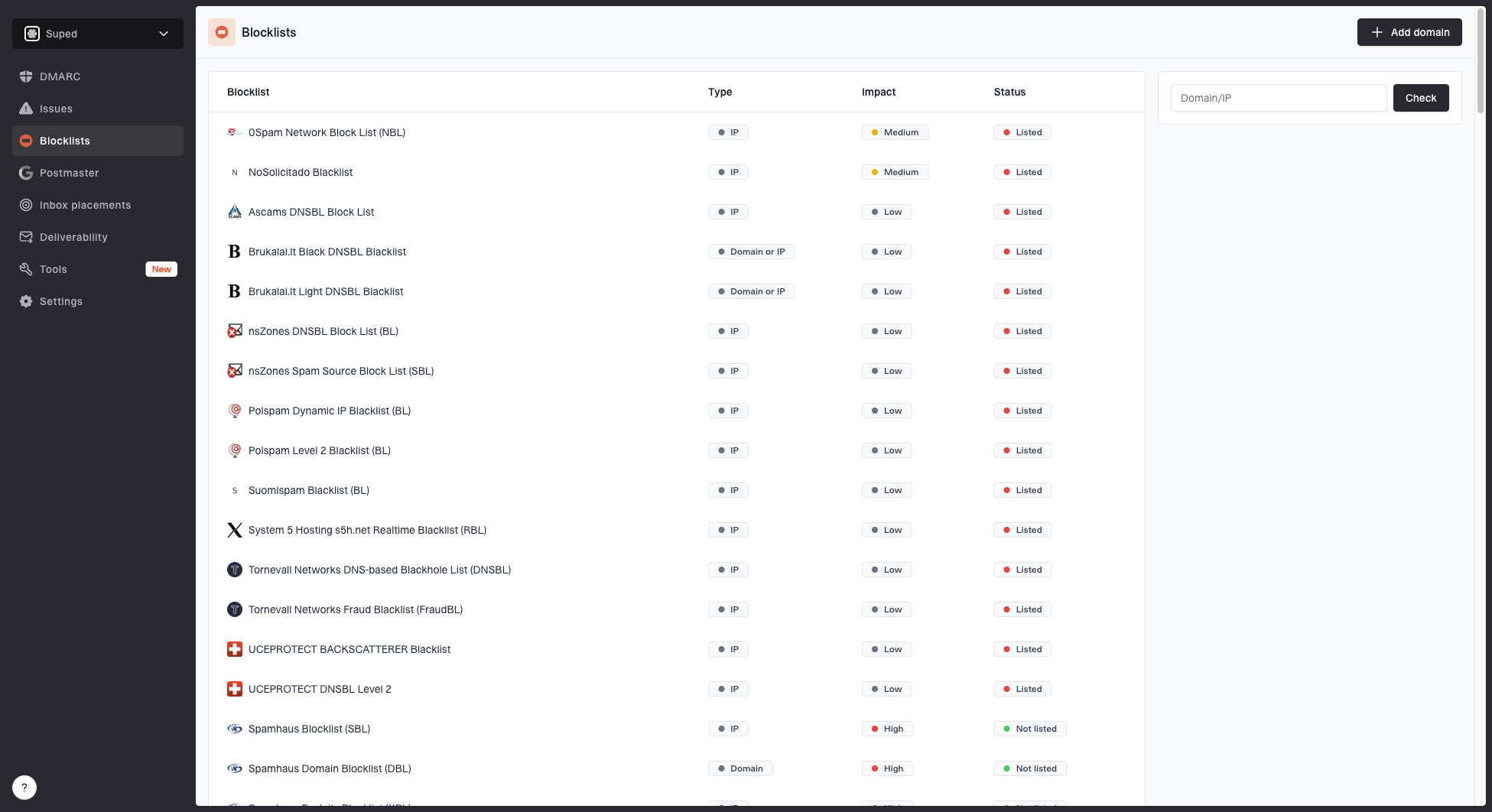
Blocklist monitoring page showing domain and IP checks across blocklists with importance and status
A practical workflow is to identify the listing, compare it with DMARC source data, inspect the affected infrastructure, fix the cause, and keep alerts active while Spamhaus reevaluates the domain. Suped supports that workflow with source-level authentication results and blocklist change monitoring.
- Monitor: Watch DMARC, SPF, DKIM, domain status, and blocklist changes in one place.
- Correlate: Compare DBL events with verified senders, unknown sources, and authentication failures.
- Investigate: Separate active email sources from content, web, and infrastructure causes.
- Scale: MSPs and agencies can retain per-domain context while managing many client domains.
Views from the trenches
Best practices
Trace every listed domain through URLs, redirects, images, HELO names, and old mail.
Keep parked domains locked with no-mail SPF and strict DMARC records before they are used.
Retire campaign links cleanly so old tracking domains do not keep appearing in mail.
Common pitfalls
Assuming no outbound mail means no DBL exposure misses content, redirects, and HELO use.
Opening removal tickets before stopping detections usually returns the same refusal.
Moving straight to DMARC reject does not fix URLs or HELO names seen in trap networks.
Expert tips
Check the domain's web logs for odd paths that match dates when DBL status changed recently.
Use SPF for HELO clarity on mail hostnames, then separate that from DMARC cleanup work.
Wait through the decay period after cleanup before treating a DBL refusal as final evidence.
Expert from Email Geeks says a domain does not need to send email to be listed when the domain appears in the message content.
2023-04-12 - Email Geeks
Expert from Email Geeks says DBL listings expire after detections stop, so an active listing points to a signal still being observed.
2023-04-12 - Email Geeks
A practical recovery sequence
If a quiet domain is on Spamhaus DBL, verify the listing first. Then search message content, redirects, web logs, old campaigns, SMTP identities, DNS changes, and shared infrastructure. Preserve dates and previous DNS values so you can connect a listing to a specific change.
For a domain that should not send mail, no-mail SPF plus an enforcing DMARC policy is sensible hygiene. For a domain that will send transactional mail later, clean up the reputation issue first and begin normal sending only after the DBL listing has cleared.
Spamhaus DBL can list a domain without active sending because DBL evaluates domain reputation, not only sender identity. Fix any observed abuse or configuration problem, review related infrastructure, and follow the eligibility instructions in the official lookup.