nsZones SURBL/Spam URI Realtime Block List (UBL)

The nsZones SURBL/Spam URI blocklist (blacklist) identifies spam domains in emails rather than checking sender IP addresses like traditional lists.
Updated on 17 Jun 2026: We added practical nsZones UBL troubleshooting steps and tightened the usage and delisting details.
Summarize with
Check if you are listed on nsZones SURBL/Spam URI Realtime Block List (UBL)
And 143 other blocklists.






What is nsZones SURBL/Spam URI Realtime Block List (UBL)?
The nsZones SURBL/Spam URI Realtime Block List (UBL) is a SURBL, or Spam URI Realtime Block List. It is a domain-based blocklist (blacklist) of URI hosts, usually website domains, that have appeared in unsolicited email.
Unlike a traditional IP-based blocklist, UBL checks domains found in an email body, not the sending IP address. For example, if the domain 'spamwebsite.com' is included in a marketing email, and that domain is on the ubl.nszones.com blacklist, receiving mail servers that use this list can filter the message as spam.
Technically, mail servers use DNS to check if a domain is listed. A DNS query for spamwebsite.com.ubl.nszones.com returns a response such as 127.0.0.4 if the domain is on the blocklist. This response tells the mail server that a blacklisted domain was found in the message content.
Who runs nsZones SURBL/Spam URI Realtime Block List (UBL)?
The nsZones SURBL/Spam URI Realtime Block List (UBL) is operated by nsZones. The organization runs DNS-based lists, also known as DNSBLs or RBLs, that help email administrators check whether an incoming connection or a domain within a message is associated with spam activity.
nsZones states that UBL checks only domain names and not IP addresses. For IP-based checks, nsZones points users to bl.nszones.com.
The use of nsZones DNSBLs is free for low-volume non-commercial use. nsZones says professional users, ISPs, hosting providers, and email providers can use dedicated realtime access, and public mirror service is available for sites willing to host a mirror.
Related nsZones lists include:
- bl.nszones.com: A combined zone that includes entries from other nsZones lists.
- sbl.nszones.com: Lists IP addresses of open relays, compromised PCs, and known spam sources.
- dyn.nszones.com: Contains dynamic IP address ranges from providers such as ADSL and cable networks.
How to troubleshoot an nsZones UBL listing
A UBL listing is usually a content-reputation issue, so troubleshooting should start with the URLs in the message body rather than only the mail server identity.
- List every domain, subdomain, redirect, and URL shortener that appears in recent campaigns. UBL-style checks inspect the linked host that recipient filters parse.
- Check whether the listed domain has hosted spam pages, phishing pages, malware, open redirects, or injected content. Clean the website and close the abuse path before requesting removal.
- Remove or replace links to compromised third-party destinations. A message can be filtered because it contains a listed URI even when the sending IP address has a good reputation.
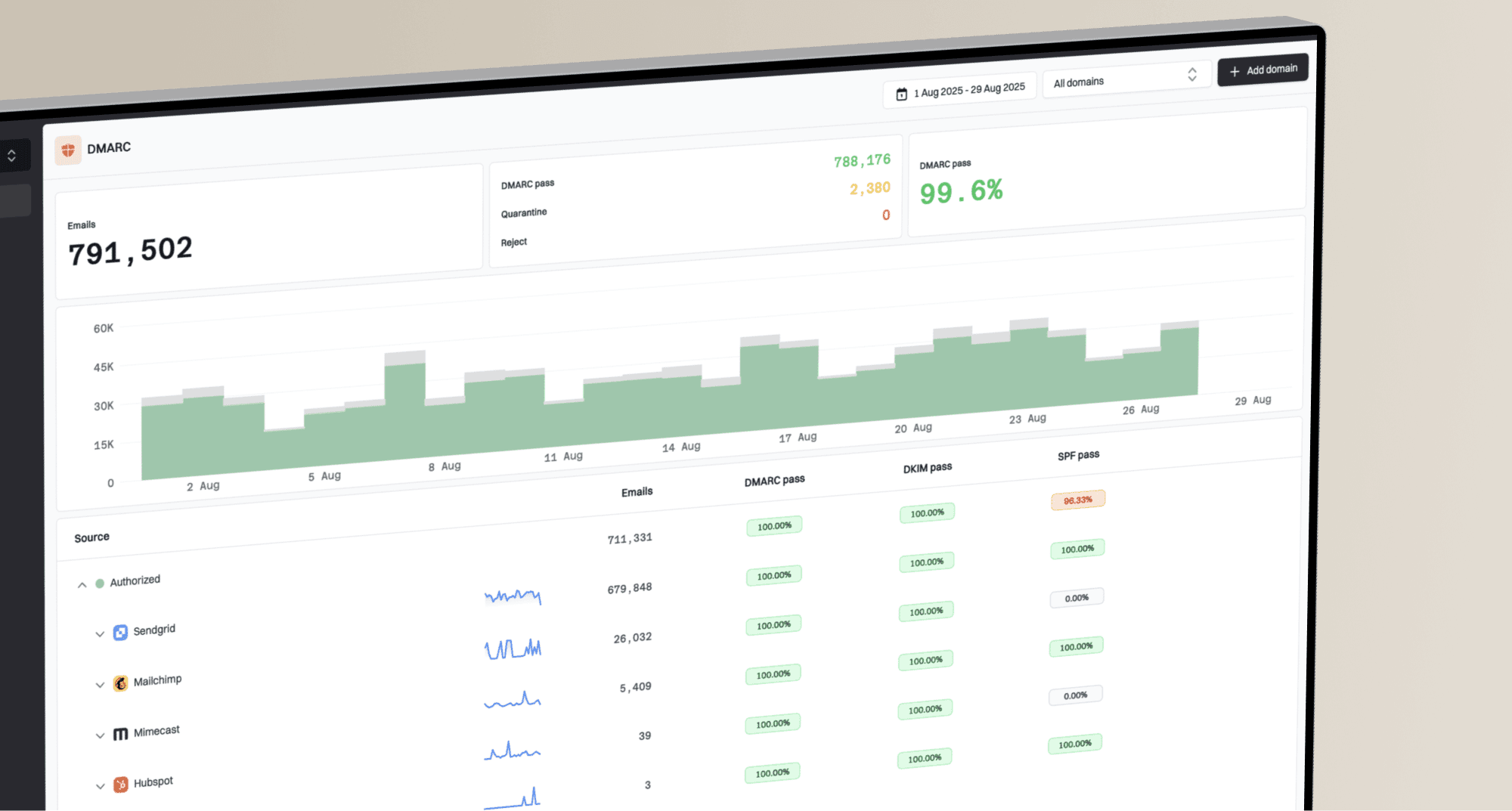
- Confirm legitimate sending sources are authenticated. Suped's DMARC reporting can show which services pass authentication while you separate URL reputation from authentication failures.
How to get removed from nsZones UBL
Before requesting removal from any blocklist (or blacklist), first identify and resolve the underlying issue that led to the listing. This can involve cleaning a hacked website, securing a compromised email account, removing an abused redirect, or fixing a misconfiguration. If the core problem is not addressed, your domain is likely to be listed again.
nsZones provides two paths for delisting from the nsZones SURBL/Spam URI Realtime Block List (UBL):
- Automatic expiration: nsZones has described stale listings as eligible for automatic removal after a long inactivity period. Treat this as a fallback only, because waiting leaves affected campaigns exposed to filtering.
- Express delisting: nsZones offers an expedited paid removal option. Confirm the current fee, relisting terms, and requirements on the nsZones form before submitting.
What's the impact of being listed on nsZones SURBL/Spam URI Realtime Block List (UBL)?
The overall impact of a listing on the nsZones SURBL/Spam URI Realtime Block List (UBL) is low. It is not widely adopted by major mailbox providers such as Gmail, Microsoft Outlook, or Yahoo.
A listing can still cause deliverability issues. Some corporate mail servers, smaller internet service providers, and spam filtering appliances use domain-based URI checks. Since UBL is a domain-based blacklist, the effect is tied to email content. Messages containing a link to a listed domain can be blocked or sent to spam even when the sending IP address has a good reputation.
Other nsZones blocklists
nsZones Dial-Up/Cable/ADSL Block List (DYN)
Organization
nsZones
Zone
dyn.nszones.com
Type
IP
Impact
Low
Delisting
Manual
nsZones DNSBL Block List (BL)
Organization
nsZones
Zone
bl.nszones.com
Type
IP
Impact
Low
Delisting
Manual
nsZones Spam Source Block List (SBL)
Organization
nsZones
Zone
sbl.nszones.com
Type
IP
Impact
Low
Delisting
Manual