nsZones Spam Source Block List (SBL)

The nsZones Spam Source Block List (or blacklist) identifies spam sources and hijacked PCs. Listings expire automatically or via paid removal.
Updated on 17 Jun 2026: We refreshed the nsZones SBL guidance with current listing, lookup, and removal details.
Summarize with
Check if you are listed on nsZones Spam Source Block List (SBL)
And 143 other blocklists.







What is the nsZones Spam Source Block List (SBL)?
The nsZones Spam Source Block List (SBL) is a realtime IP blacklist that identifies hosts associated with spam. It is a DNSBL (DNS Blocklist) for open relay hosts, spammers' hosts, open proxies, and spam engines. nsZones says hosts in this blocklist are rechecked every 12 months, and secured hosts are automatically removed from its databases.
The policy for this blocklist is to add IPs that are observed engaging in specific activities. The addresses are gathered from several sources, including:
- Spam sources: IP addresses that have sent spam directly to nsZones mail servers.
- Bulk mailers: Senders that do not require confirmed opt-in or that have allowed known spammers to abuse their services.
- Open relays and hijacked PCs: Systems with open proxy or spam bot characteristics that have sent spam or malware through direct mail transmission.
Mail servers query this blacklist by sending a DNS lookup for the reversed IP under sbl.nszones.com. To check 1.2.3.4, query 4.3.2.1.sbl.nszones.com. A response of 127.0.0.2 means the IP is listed as an open relay, hijacked PC, or spam source. SBL checks IP addresses only, not domain names. Dynamic and no-PTR network listings are handled outside SBL, and domain-name checks belong on ubl.nszones.com.
Who runs the nsZones SBL?
The nsZones Spam Source Block List (SBL) is operated by nsZones. The list is intended for receiving mail servers that want to reject or filter unwanted email based on the connecting sender IP address. nsZones describes DNSBLs as receiver-side defensive tools, not a way to attack senders.
In addition to SBL, nsZones runs dyn.nszones.com for dynamic networks and ubl.nszones.com for domain names. It also offers bl.nszones.com as a combined zone that includes SBL and DYN. nsZones says its DNSBLs are free for low-volume, non-commercial use, with professional access available for ISPs, hosting providers, and larger networks.
How should mail servers use nsZones SBL?
nsZones positions SBL for checks during the SMTP connection, when the receiving server can reject unwanted mail before accepting message data. That matters because a connection-time DNSBL rejection gives the sender a delivery status notification instead of accepting a message and later generating backscatter to a forged return path.
- Query the connecting IP, not the From domain or a domain found in the message body.
- Use local DNS caching so repeated queries for the same sender do not add unnecessary DNS load.
- Return a clear SMTP rejection reason that names the nsZones blocklist (blacklist) and the listed IP.
- Treat SBL as one inbound filtering signal rather than a final verdict on every sender.
How do I get delisted from nsZones SBL?
Before requesting removal from any blocklist or blacklist, identify and fix the reason for the listing. Common causes include a compromised host, an open relay, an open proxy, or bulk mail that was sent without confirmed opt-in. If the same IP sends more spam after removal, nsZones can list it again.
Use nsZones' lookup and removal form to confirm whether the IP is currently in the nsZones blacklist. The current public SBL page states that secured hosts are rechecked every 12 months and automatically removed from nsZones databases. It also says inherited IP address space can be reviewed for removal if you contact nsZones, but further spam from that IP can trigger a new listing.
- Check the listed IP, not the sending domain, because SBL is IP-only.
- Review mail logs for outbound spam, infected hosts, relays, proxies, and unauthenticated bulk mail.
- Fix authentication and sender identity issues, including SPF, DKIM, DMARC, HELO, and reverse DNS, so receivers can associate legitimate mail with your domain.
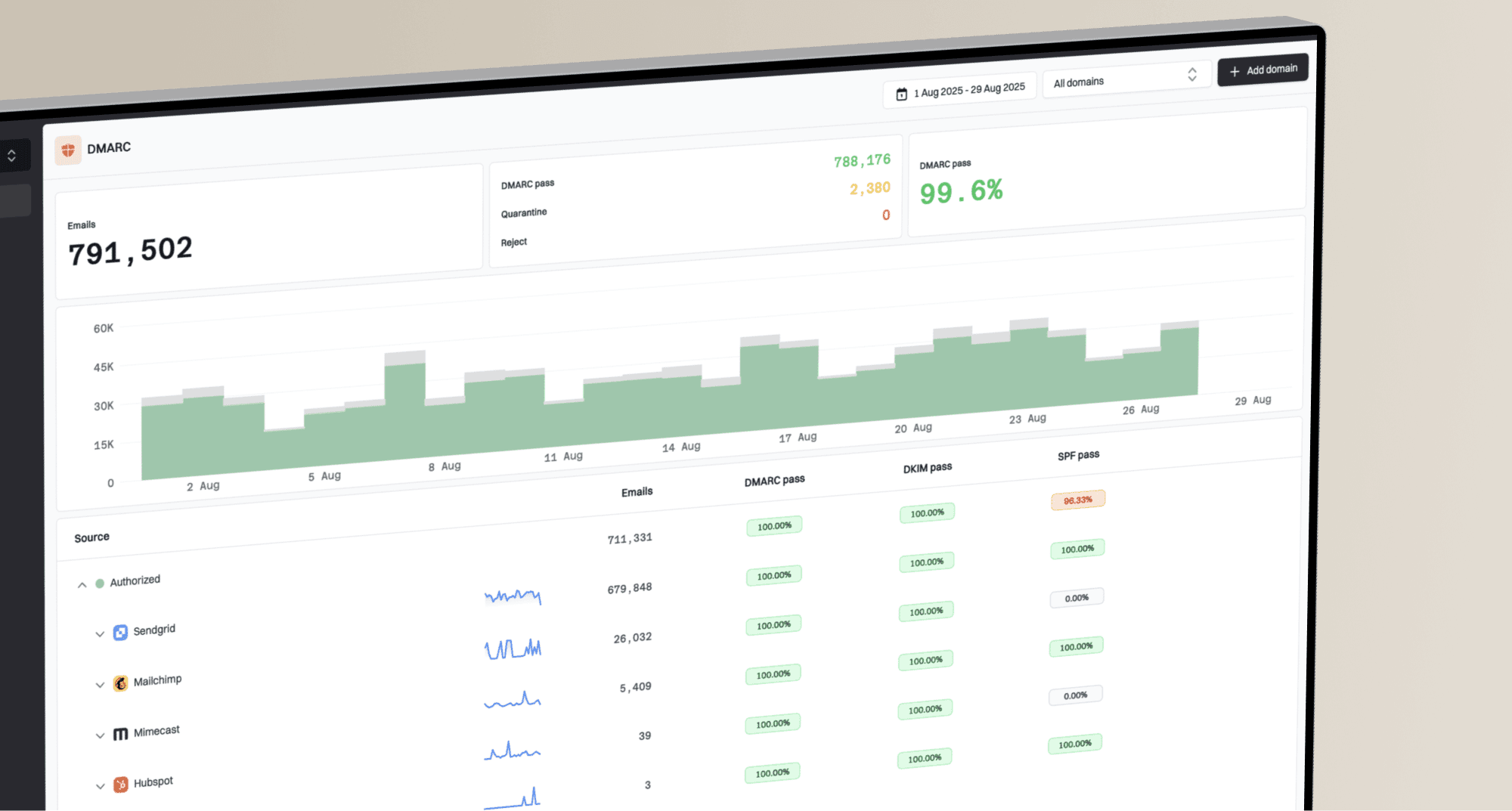
- Use Suped's DMARC reporting to confirm whether legitimate mail is passing authentication while you investigate the nsZones listing. Suped does not remove the listing for you; the listing depends on nsZones data and the sending IP's behavior.
- After remediation, use the nsZones form or contact path provided by nsZones instead of submitting repeated requests before the traffic is clean.
What's the impact of being listed on nsZones SBL?
The impact of an nsZones SBL listing depends on whether the recipient's mail infrastructure queries sbl.nszones.com or the combined bl.nszones.com zone. A listed IP can be rejected during SMTP, placed into spam, or given a lower reputation score by systems that use this DNSBL. For senders that only hit a small number of receivers using nsZones, the visible effect can be limited. For shared hosting, ISP, or high-volume outbound mail infrastructure, one compromised source can affect more mail until the listing cause is fixed.
Do not treat a low-impact listing as harmless. A blocklist (blacklist) listing is still evidence that the IP has been associated with unwanted mail, and the same root cause can affect other reputation systems even if nsZones itself is not widely used.
Other nsZones blocklists
nsZones Dial-Up/Cable/ADSL Block List (DYN)
Organization
nsZones
Zone
dyn.nszones.com
Type
IP
Impact
Low
Delisting
Manual
nsZones DNSBL Block List (BL)
Organization
nsZones
Zone
bl.nszones.com
Type
IP
Impact
Low
Delisting
Manual
nsZones SURBL/Spam URI Realtime Block List (UBL)
Organization
nsZones
Zone
ubl.nszones.com
Type
Domain
Impact
Low
Delisting
Manual