Mailspike Z - Zero-Hour Data Blacklist (ZBL)

Mailspike Z is a real-time IP blocklist (blacklist) identifying IPs in spam waves through immediate behavior instead of historical reputation.
Updated on 18 Jun 2026: We updated this guide to clarify how Mailspike ZBL differs from reputation-based listings and what to fix before delisting.
Summarize with
Check if you are listed on Mailspike Z - Zero-Hour Data Blacklist (ZBL)
And 143 other blocklists.







What is Mailspike Z - Zero-Hour Data Blacklist (ZBL)?
The Mailspike Z - Zero-Hour Data Blacklist (ZBL), also published in some references as ZBI, is a real-time IP blocklist that identifies addresses seen in distributed spam waves. Unlike reputation-based blacklists that score long-term sending behavior, the ZBL focuses on immediate, shared behavior across clusters of IP addresses. Its purpose is to help receiving mail systems stop new spam waves while they are active.
Technically, when an IP address is listed, a DNSBL lookup under z.mailspike.net returns 127.0.0.2. Mailspike recommends that mail server administrators use this blocklist at the MTA (Mail Transfer Agent) level, so listed connections can be rejected before message acceptance.
Typical reasons for an IP address to appear on this blacklist include:
- Compromised email accounts used to send spam, malware, or phishing emails.
- Infected PCs or servers that are part of a botnet controlled by malicious actors.
- Participation in a distributed spam wave detected across a cluster of IP addresses.
How ZBL differs from Mailspike reputation data
Mailspike describes two complementary data sets. Reputation data uses characteristics and over-time behavior of IP addresses seen sending direct-to-MX email. Zero-Hour Data, the ZBL or ZBI data set, does not use over-time behavior as its main signal. It looks for IPs taking part in a distributed spam wave, including viral behavior shared by one or more IP clusters.
This difference matters during troubleshooting. A reputation listing points to a longer sending pattern, while a ZBL listing points to current or recent spam-wave participation. Start with outbound mail logs, authentication failures, compromised accounts, and malware checks before requesting delisting.
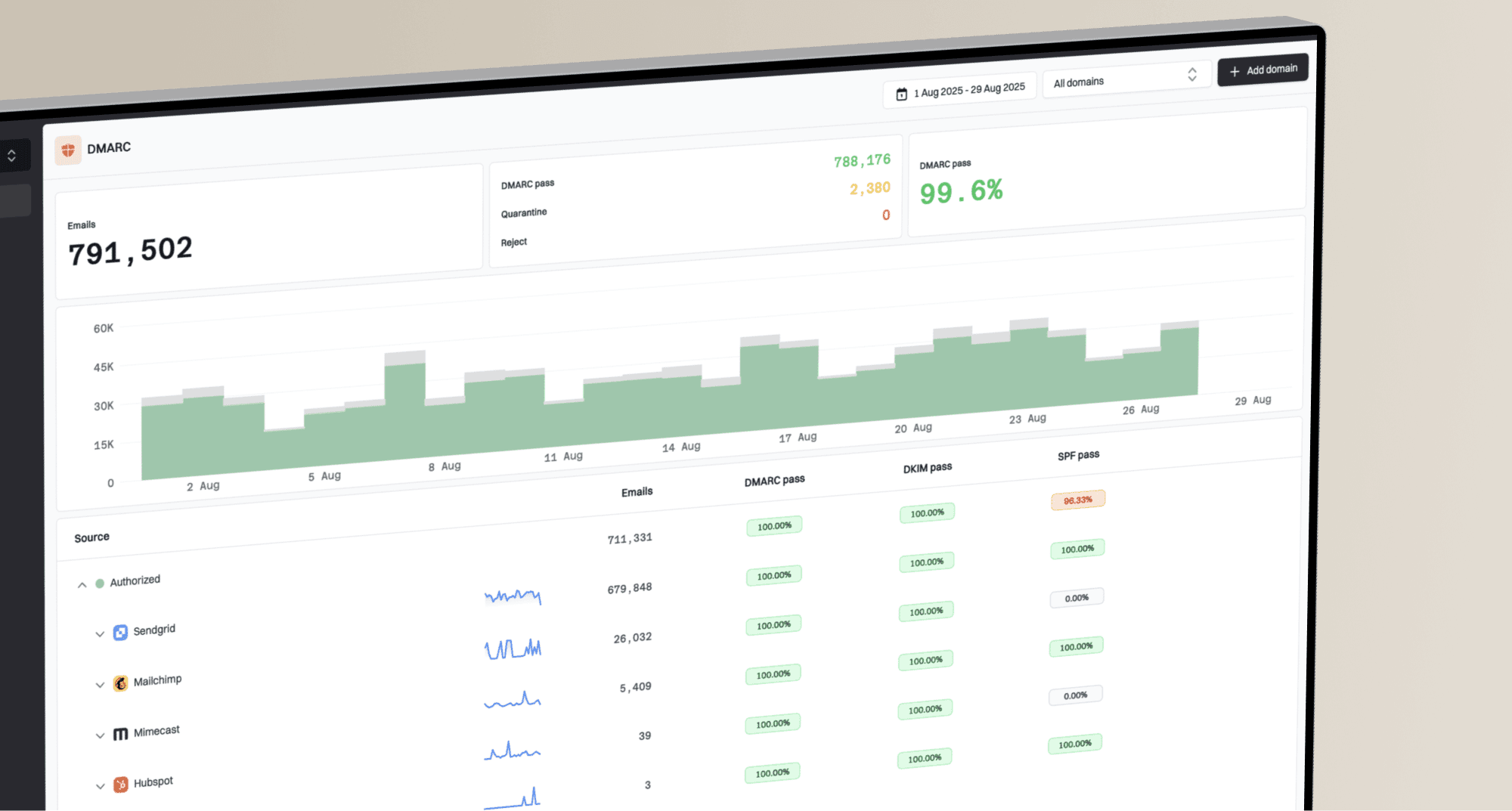
If domain abuse or spoofed traffic is part of the investigation, Suped's DMARC reporting can show which sources pass or fail SPF, DKIM, and DMARC so cleanup is based on the real sending path. Suped will not remove an IP from Mailspike, but it can help confirm whether authentication failures are connected to the listing.
Who runs Mailspike Z - Zero-Hour Data Blacklist (ZBL)?
The ZBL blocklist is operated by Mailspike Technologies, Lda. Mailspike.io describes the service as part of Mailspike Technologies and connects it to AnubisNetworks email security work that began in 2006. Its public pages focus on IP reputation, blacklist data, and email threat intelligence rather than manual review for every listing.
How do I get removed and delisted from Mailspike Z - Zero-Hour Data Blacklist (ZBL)?
Mailspike provides a delisting process through its IP reputation lookup and delist page. Before you request removal, identify and fix the root cause. If the same outbound behavior continues, the IP address can be listed again. For a compromised server, secure the host, rotate affected credentials, and review outbound mail logs before submitting the request.
Once the underlying issue is resolved, request removal using their IP reputation and delisting form. Mailspike says automatic delisting for observed IPs is processed within 6 to 36 hours. If the listing is related to a known spam botnet or distributed spam wave, delisting happens only after Mailspike collects network records showing the malware threat has been mitigated for that IP address.
What's the impact of being listed on Mailspike Z - Zero-Hour Data Blacklist (ZBL)?
The impact of being listed on the Mailspike ZBL is considered medium. Because Mailspike recommends connection-level rejection at the MTA, a listing can produce hard delivery failures rather than spam-folder placement. Any receiving system that uses this blacklist (or blocklist) can reject mail from the listed IP before message acceptance. The severity depends on how many of your recipients' mail systems use Mailspike data.