abuse.ro Policy Block List (PBL)
The abuse.ro Policy Block List (PBL) identifies IP addresses, like dynamic or residential ranges, that should not send direct email. Monitor with Suped.
Updated on 17 Jun 2026: We updated this guide for abuse.ro's PBL response code and practical guidance on safe use and delisting.
Summarize with
Check if you are listed on abuse.ro Policy Block List (PBL)
And 143 other blocklists.







What is abuse.ro Policy Block List (PBL)?
The abuse.ro Policy Block List (PBL) is an IP-based Domain Name System Blocklist (DNSBL). Its primary function is to list IP addresses that should not send unauthenticated SMTP email directly to third-party MX servers. This typically includes:
- Residential IP ranges
- Dynamic IP ranges
- Other end-user or non-MTA IP ranges that are not intended to host mail servers
Mail server administrators use this blacklist to score or reject email from sources that violate this policy, helping to reduce spam from compromised consumer devices or improperly configured servers. abuse.ro does not block any email itself; it provides the data that allows individual mail server operators to make their own filtering decisions. When an IP is listed on this blocklist, it signals to receiving servers that the source connection is not expected to be a legitimate mail server.
Who runs abuse.ro Policy Block List (PBL)?
The abuse.ro Policy Block List (PBL) is operated by abuse.ro, an organization that maintains classification and reputation databases for public IP addresses and web domains. They define spam as any unsolicited email sent without the recipient's explicit consent.
Across abuse.ro's blacklists, IP addresses and domains are classified using spamtrap data and operator policy review. For pbl.abuse.ro specifically, the focus is non-MTA and residential end-user IP space that should send mail through a registered email server instead of direct delivery. For the broader abuse.ro IP lists, a sending server that hits a spamtrap can be analyzed and listed immediately when it appears suspicious or spam-focused. Shared servers that also send legitimate mail can receive time for remediation before a listing occurs. In some cases, neighboring IP addresses are also listed if they appear to be related to the source of the spam.
How should mail servers use abuse.ro PBL?
Use pbl.abuse.ro during the initial SMTP connection against the connecting client IP. Do not use it as a content or domain rule, and do not check every IP address found in message headers. A pbl.abuse.ro response of 127.0.0.9 means the address is a residential or end-user IP block, and abuse.ro's recommended action is to analyze further.
- Treat 127.0.0.9 as a policy signal, not proof that the sender is currently sending spam.
- Permit authenticated users and trusted submission paths before applying DNSBL checks.
- Route outbound mail through authenticated SMTP on a registered mail server instead of direct delivery from residential or dynamic IP space.
- Restrict outbound port 25 so non-mail systems cannot bypass approved relays.
Many mail operators use this blacklist (or blocklist) for scoring or extra review rather than an automatic hard reject, especially when they need to avoid false positives from small networks or unusual but legitimate sending setups. Stricter sites still reject direct unauthenticated SMTP from PBL-listed space when that matches their inbound policy.
How do I get removed and delisted from abuse.ro Policy Block List (PBL)?
The delisting process for the abuse.ro Policy Block List (PBL) is manual and requires you to follow a specific procedure. Before requesting removal, confirm whether the listing is a policy issue, a sending abuse issue, or both.
Step 1: Confirm your IP is listed. Verify the listing directly with the blocklist using a command line tool like 'nslookup' on Windows or 'dig' on Linux. Reverse the IP address and query the abuse.ro zone. For IP 10.11.12.13, query 13.12.11.10.pbl.abuse.ro. A response of 127.0.0.9 confirms your IP is on the PBL blacklist.
Step 2: Fix the underlying sending path. If the address is residential, dynamic, or otherwise not intended for direct mail, stop direct-to-MX delivery and submit mail through authenticated SMTP on a registered mail server. If spam was involved, remediate infected mailboxes, secure the server, and clean newsletter lists to remove anyone who did not explicitly opt in.
Step 3: Confirm you own the IP block. Delisting requests must come from the owner of the IP address block, which is typically the administrative contact listed at a Regional Internet Registry like RIPE. If you are not the IP owner, contact your hosting or email provider to handle the request.
Step 4: Request delisting via email. Once the problem is fixed, the IP block owner should send an email to admin@abuse.ro. The subject line must be in the format: "Delist IP: [your.ip.address.here]". Be prepared to provide evidence that direct policy-violating mail or spam flow has stopped. Delisting is delayed if the operator is found to still be providing services to a known spammer.
What's the impact of being listed on abuse.ro Policy Block List (PBL)?
The impact of being on the abuse.ro Policy Block List (PBL) is generally low, but it is not negligible. The actual effect on your email deliverability depends on which email providers and administrators use this specific blocklist to filter incoming mail. If a recipient's mail server uses this blacklist, your emails to them can be rejected or scored more heavily.
Because this blacklist (or blocklist) focuses on policy violations, such as mail coming directly from residential IPs, its primary impact is on senders who are not using a proper mail submission path. For businesses sending through correctly configured email infrastructure, problems usually point to direct sending from residential or dynamic space, a compromised machine, or provider-side routing.
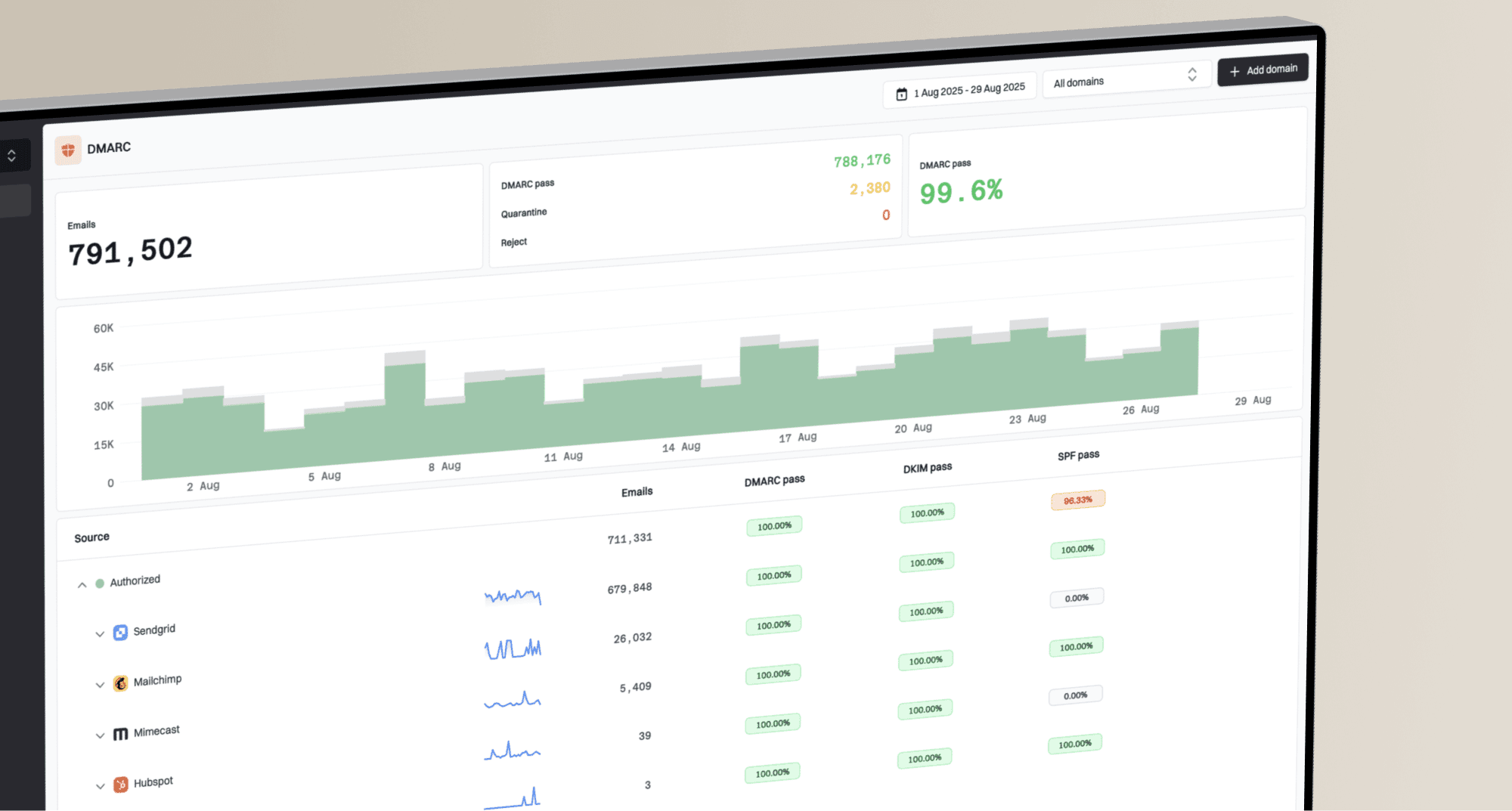
Suped's DMARC reporting and email authentication platform can help compare approved sending sources against DMARC aggregate data, so teams can spot unapproved IPs using their domain before requesting delisting or changing mail routing.
Other abuse.ro blocklists
abuse.ro Domain Blacklist (DBL)
Organization
abuse.ro
Zone
dbl.abuse.ro
Type
Domain
Impact
Low
Delisting
Manual
abuse.ro Realtime Block List (RBL)
Organization
abuse.ro
Zone
rbl.abuse.ro
Type
IP
Impact
Low
Delisting
Manual
abuse.ro Uniform Resource Identifier Blacklist (URIBL)
Organization
abuse.ro
Zone
uribl.abuse.ro
Type
Domain
Impact
Low
Delisting
Manual