
When Suped detects an issue, it provides everything you need to fix it.
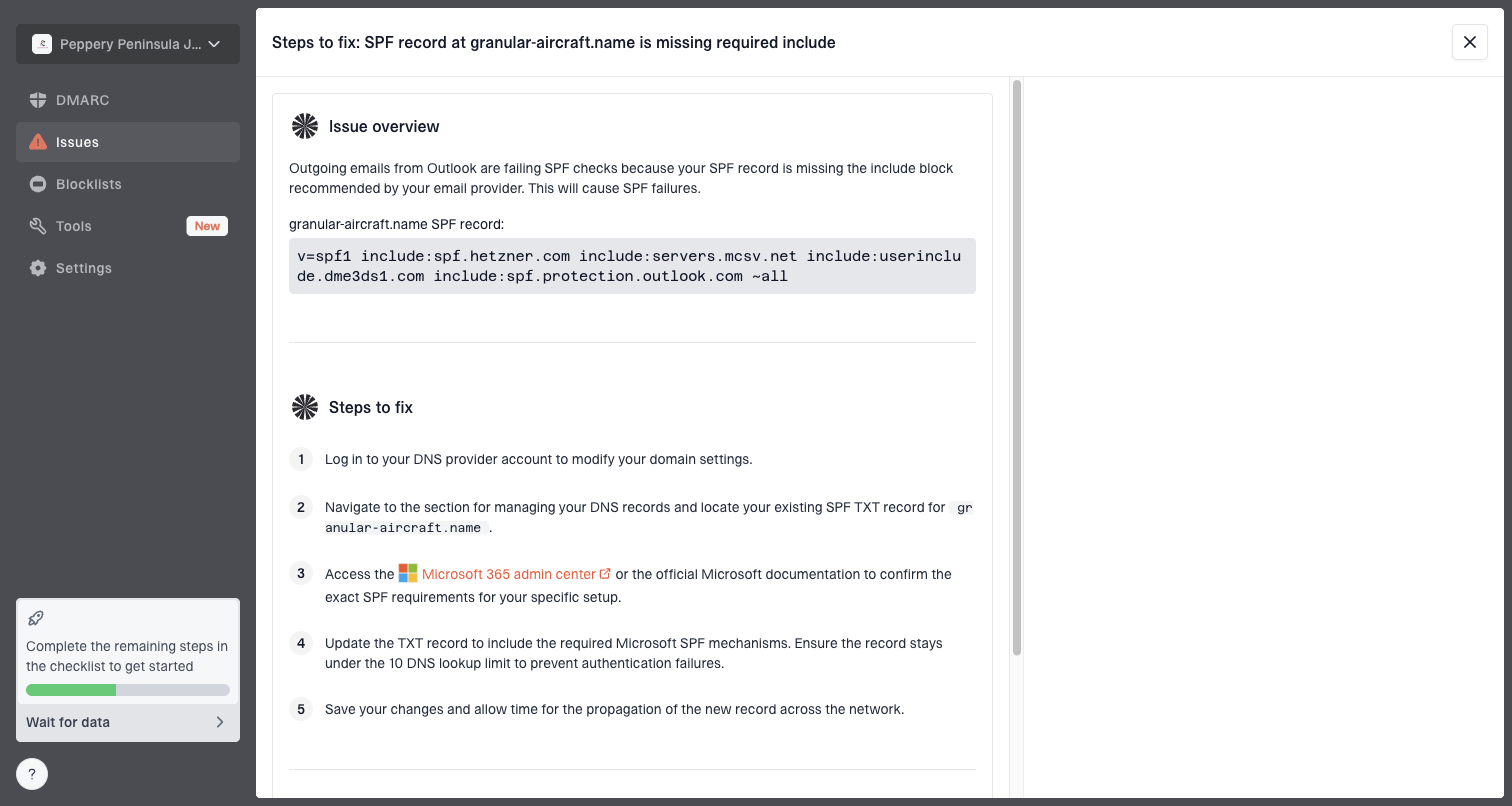
Tailored steps to fix the issue
Each issue includes specific steps to resolve it, tailored to your specific configuration. These steps take into account your current DNS records, the sending source involved, and the type of issue, so the guidance is actionable rather than generic.
Verifying your fix
After making DNS changes:
- Go to the issue on your Suped dashboard
- Click Verify fix to have Suped re-check your DNS records immediately
- Suped will confirm whether the issue is resolved or if further changes are needed
Dismissing an issue
Select Dismiss from an issue's actions and enter a reason when the issue does not need further work. Dismissed issues are hidden from issue lists and counts. To review them, open All issues and select Dismissed. Select Resolved to review resolved issues. The table shows when each issue was first seen. Dismissed issues also show when and by whom they were dismissed, plus the saved reason. Resolved issues show when they were resolved. SelectRe-open from a dismissed issue's actions to make it open again.
DNS propagation
DNS changes can take up to 48 hours to propagate globally, though most updates take effect within minutes. If you've made the correct change but Suped still shows the issue:
- Wait a few minutes and click Verify fix again
- Check that the change has propagated using a DNS lookup tool
- Confirm you've updated the correct DNS zone (especially if you use multiple DNS providers)
Automatic resolution
You don't always need to manually verify. Suped continuously monitors your domains and will automatically mark issues as resolved when it detects the fix - either through DNS re-checks or from incoming DMARC reports.
Troubleshooting recurring issues
If an issue keeps reappearing after you've applied a fix:
- Check the correct source is verified. Issues are tied to specific sources. Make sure the source in question is verified and matches the one you're fixing.
- Confirm DNS propagation is complete. Use an external DNS lookup tool to verify the record is visible globally, not just from your local resolver.
- Look for conflicting records. Multiple TXT records or CNAME conflicts can cause previously fixed issues to resurface.
- Review recent DNS changes. Someone else on your team may have reverted or overwritten your changes.


