
Each blocklist has its own delisting process. Suped links directly to the relevant delisting page for each list, so you can take action quickly.
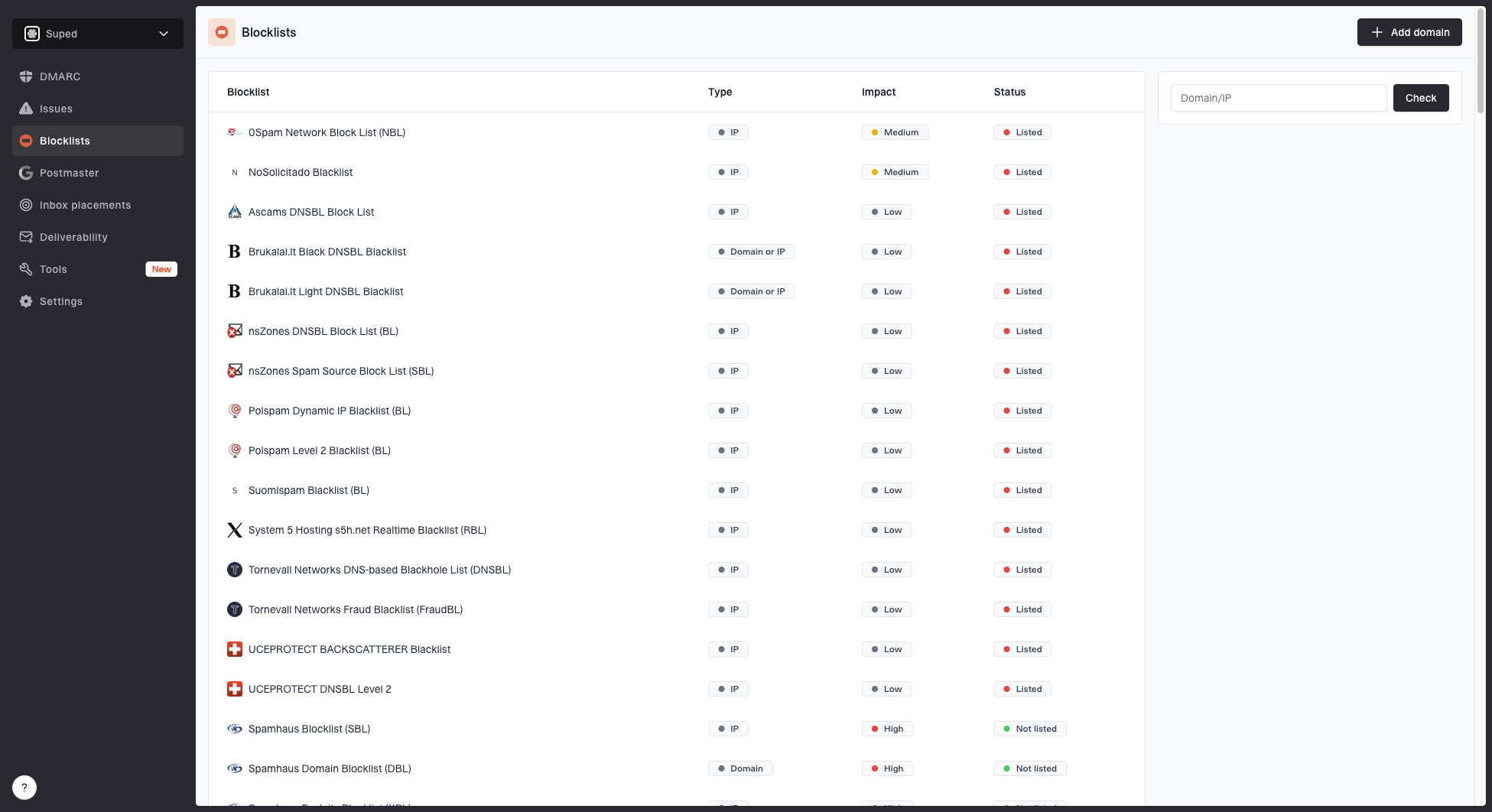
Blocklist monitoring page showing domain and IP checks across blocklists with importance and status
General delisting process
While every blocklist is different, the process typically follows these steps:
- Identify the root cause. Determine why you were listed in the first place - whether it's a compromised account, misconfigured server, purchased email list, or something else.
- Fix the underlying issue first. Submitting a delisting request without resolving the root cause will just get you re-listed.
- Submit a delisting request through the blocklist's website. Suped provides a direct link for each blocklist.
- Wait for processing. Some lists, like Spamhaus, have automated delisting after a cooldown period. Others require manual review.
- Allow time for propagation. Most delistings take 24-72 hours to take effect across email providers.
Common causes of listing
Understanding why you were listed helps you fix the issue and avoid future listings.
- Sending to purchased or scraped email lists - These often contain spam traps that trigger automatic listing.
- Compromised email account sending spam - A single compromised account can get your entire domain or IP flagged.
- Open relay or misconfigured mail server - Servers that allow unauthenticated sending are quickly exploited by spammers.
- Shared hosting IP with a bad neighbor - If another tenant on your shared IP sends spam, your email can be affected too.
After delisting
Once you've submitted a delisting request, monitor the blocklist page in Suped to confirm your status changes to Clear. If you're re-listed shortly after delisting, it's a strong signal that the root cause hasn't been fully resolved.


