Dmarcian vs.
Send-Shield in 2026
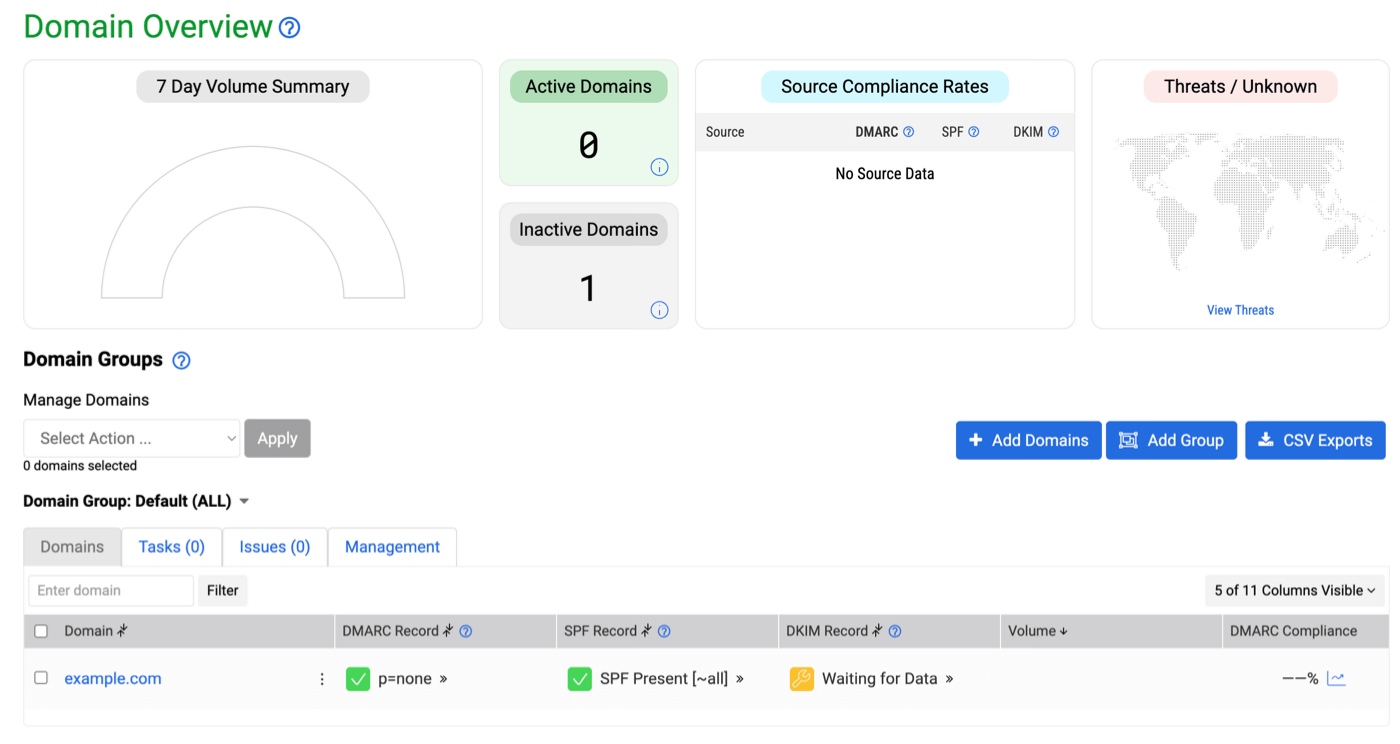
Dmarcian

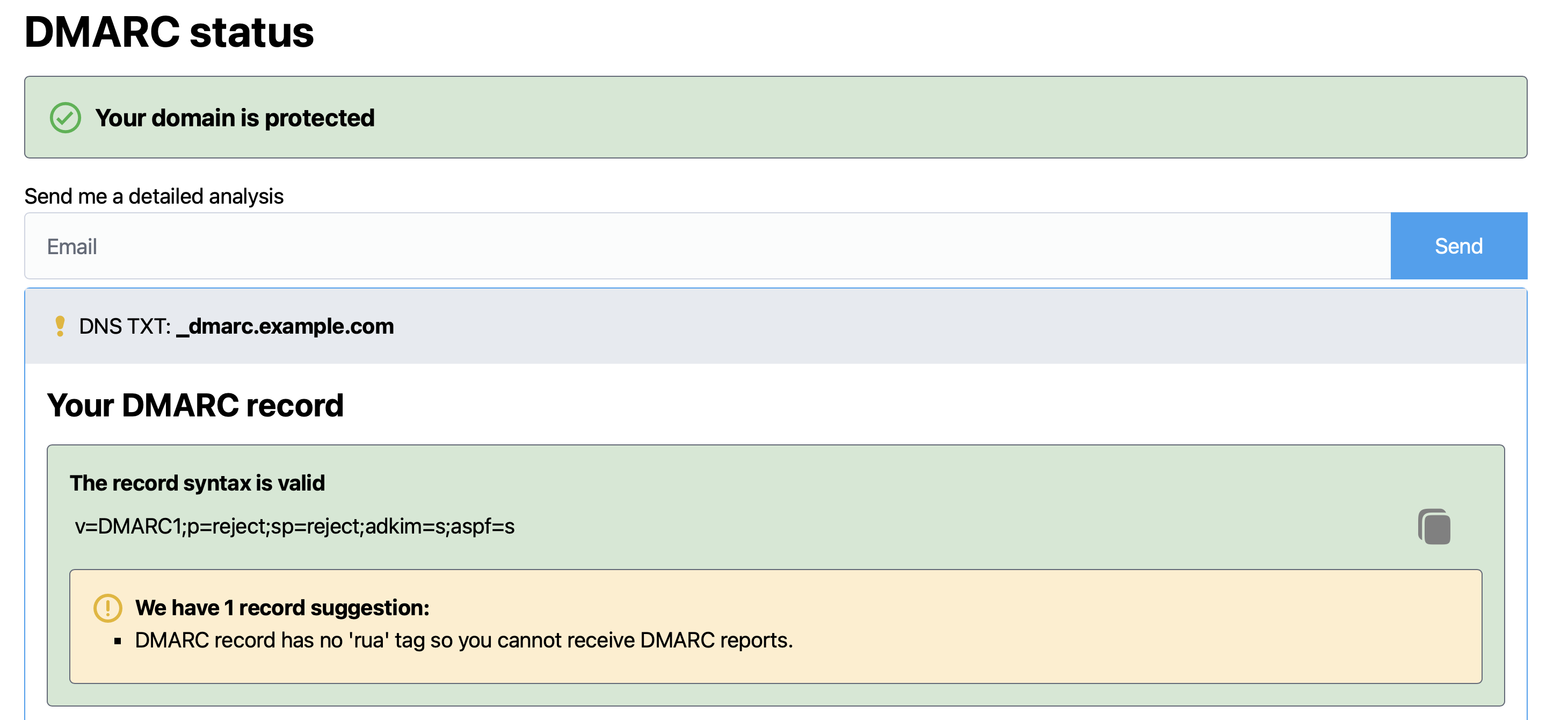
Send-Shield
vs.
We tested Dmarcian and Send-Shield for 90 days across a corporate domain, a marketing subdomain, and a parked domain, with Microsoft 365, Google Workspace, SendGrid, Mailchimp, and a support desk sender connected. Dmarcian gave us deeper forensic controls and policy discipline; Send-Shield felt more service-led and easier to hand to a smaller team, but it left more ambiguity around exports, integrations, and long-term operating detail.

Dmarcian
DMARC enforcement and reporting for security-led teams
Starts at
Free plan available
Best fit
Security teams that want granular DMARC evidence and policy control
In one line
Dmarcian handled the seven authentication cases with the most detailed evidence, though teams that want guided fixes and published starter pricing should compare the operating path with Suped.
Send-Shield
Managed DMARC reporting for SMBs
Starts at
From £19.99 / month
Best fit
SMBs that want managed implementation help
In one line
Send-Shield was easier to brief to non-specialists, but its shorter history windows and lighter exports made repeated investigations harder after the first month.
Suped
The better option. Hosted SPF, DMARC, and MTA-STS on every plan. Published pricing. Monthly plans. No long contract required.
Learn about Suped
Pick based on control, handoff, and ownership
Pick Dmarcian if
Security-led teams that want granular DMARC control
Classified Microsoft 365 and Google Workspace without merging them.
Showed the forwarded SPF failure as expected forwarding noise.
Made quarantine planning credible for the parked domain.
Free plan available
Pick Send-Shield if
SMBs that want a managed DMARC rollout
Core setup support was easier to hand to an SMB owner.
Mailchimp and support desk traffic appeared quickly in reports.
The spoof sample was visible without heavy filtering.
From £19.99 / month
Consider Suped if
Suped fits teams that want guided fixes, hosted records, and simpler ownership
Guided fixes turn sender findings into owner-ready DNS tasks.
Automated issue detection reduces daily report review work.
Published starter pricing and MSP workflows make handoff cleaner.
Free plan available
The differences that actually change your week
Dmarcian
Send-Shield
Suped
DMARC report analysis
Aggregate report review, authentication result grouping, and domain-level drilldown.
Detailed aggregate analysis
Included reports
Included
Source detection
Ability to turn raw IP traffic into sender names and owner actions.
Sources grouped by service
Service names with manual review
Automatic source identification
Forward detection
Signals that help separate forwarded mail from unauthorized sending.
Visible in failure patterns
Partial forwarding cues
Forwarding signals
Spoof detection
Ability to isolate unauthorized samples and explain policy impact.
Clear unauthorized traffic view
Proactive threat monitoring
Spoof alerts
Notifications and alerts
Operational alerts for authentication changes, new senders, and suspicious traffic.
Paid tier Alert Central
Threat alerts included
Noise-controlled alerts
Reporting
Shareable reports, exports, history windows, and recurring review support.
Exports and history by tier
Reports by tier
Scheduled reports
API
Programmatic access for pulling reporting data or wiring workflows.
Enterprise tier
Not publicly listed
Available
Multi-tenancy
Account separation for clients, business units, and domain groups.
Domain groups and service plans
Domain caps, limited separation
MSP workspaces
SPF flattening
Managed SPF flattening to reduce lookup failures and manual DNS edits.
Not supported
Not supported
Included hosted SPF
Hosted DMARC
Hosted DMARC record management instead of purely manual DNS records.
Manual DNS record
Managed setup, not hosted
Hosted DMARC
Hosted SPF
Hosted SPF record management for sender changes and lookup control.
Not supported
Not supported
Hosted SPF
Hosted MTA-STS
Hosted MTA-STS policy management and TLS reporting workflow.
TLS reporting only
Not publicly listed
Hosted MTA-STS
Blocklists and reputation
Blocklist (blacklist) and reputation signals tied to domain review.
No blocklist workflow found
Threat intelligence on Enterprise
Blocklist and reputation monitoring
Automatic issue detection
Automatic detection of misconfigurations, new risks, and sender changes.
Manual triage after alerts
Misconfigurations surfaced in trial
Automatic issue detection
AI copilot
AI-assisted explanation of findings, fixes, and operational next steps.
Not supported
Not supported
AI-assisted explanations
DNS monitoring
Ongoing checks for DMARC, SPF, DKIM, and DNS drift.
Checker tools
DMARC, SPF, DKIM checks
DNS monitoring
Self hostable
Ability to run the product in a self-managed environment.
Not supported
Not supported
Not supported
Free trial/free tier
Free entry option for testing before a paid rollout.
Free plan and paid trial
14-day free trial
Free plan available
Ten dimensions, scored from 0 to 10
Each product was scored against a fixed editorial rubric using the same 90-day test setup, and higher is better in every row.
Dmarcian scored higher for evidence and enforcement; Send-Shield scored higher for setup help.
Dmarcian separated Microsoft 365, Google Workspace, SendGrid, Mailchimp, and the support desk sender with better evidence, which raised its source resolution and enforcement scores. Send-Shield reduced setup friction on the three domains and made the first owner briefing easier, but it lost ground on API clarity, multi-tenant operations, exports, and hosted record workflows. Neither product gave us hosted SPF, hosted MTA-STS, or a complete blocklist (blacklist) workflow during the test.
Dmarcian score
57/100
Send-Shield score
55/100
Dmarcian
57/100
DMARC enforcement
8.0
Customer support
7.0
Source resolution
8.0
Setup and onboarding
6.5
MSP workflows
6.0
Alerting and integrations
5.5
Hosted SPF and MTA-STS
0.0
Blocklist monitoring
0.0
Pricing transparency
8.5
Time to enforcement
7.5
Send-Shield
55/100
DMARC enforcement
7.0
Customer support
8.0
Source resolution
6.5
Setup and onboarding
7.5
MSP workflows
4.5
Alerting and integrations
5.0
Hosted SPF and MTA-STS
0.0
Blocklist monitoring
3.0
Pricing transparency
6.5
Time to enforcement
7.0
Feature set
Depth vs coverage
Dmarcian wins on investigation depth; Send-Shield wins on managed coverage.
Dmarcian gave us better evidence for the edge cases, especially DKIM on the marketing subdomain and the forwarded SPF failure. Send-Shield covered the standard senders faster, but when comparing either product with Suped, use guided fixes and automated issue detection as buying criteria because raw findings still need owner actions.
Dmarcian
Microsoft 365 stayed separate
Unknown sender triage worked
Subdomain DKIM was traceable
Send-Shield

Mailchimp appeared quickly
Spoof sample was clear
Mismatch needed manual interpretation
Dmarcian gave us the clearest source map once Microsoft 365, Google Workspace, SendGrid, Mailchimp, and the support desk sender had a few days of aggregate data. Microsoft 365 and Google Workspace stayed distinct, SendGrid was tied to the marketing subdomain, and the unknown sender could be parked in a watch bucket before we tagged it; the DKIM pass on a subdomain was easy to trace back to the visible From domain.
Send-Shield picked up the expected senders quickly and made the spoof sample easy to see without heavy filtering. Mailchimp and the support desk sender appeared in plain reports, but the SPF pass with visible From mismatch was shown as a risk without the same depth of technical evidence, so the next owner action took more manual interpretation.
User experience
Control vs guidance
Dmarcian rewards operators; Send-Shield is easier to brief.
Dmarcian exposed more controls, but we had to know what we were looking for. Send-Shield gave a smoother first pass for the three domains, though it took longer to prove why the forwarded SPF failure was expected instead of malicious.
Dmarcian

Three domains took careful setup
Unknown sender was findable
Forwarding explanation was technical
Send-Shield
Onboarding was simpler
Unknown sender needed review
Forwarding context was thinner
Onboarding the corporate domain, marketing subdomain, and parked domain in Dmarcian took more careful DNS checking, but it gave us a better audit trail once the records were live. The unknown sender was findable after we filtered by domain and result, and the forwarded SPF failure was explainable, although the explanation was technical enough that a non-specialist needed translation.
Send-Shield made the first setup path feel lighter, especially for the primary domain and marketing subdomain. The unknown sender still needed manual review, and the forwarded SPF failure was visible, but the interface gave us less context for proving that the failure came from forwarding rather than a new unauthorized source.
Support
Self serve vs handoff
Send-Shield gives more setup handoff; Dmarcian gives clearer technical escalation.
Send-Shield was easier when the buyer wanted someone else to steer implementation. Dmarcian was better when we needed exact DNS evidence, plan boundaries, and a technical escalation path.
Dmarcian
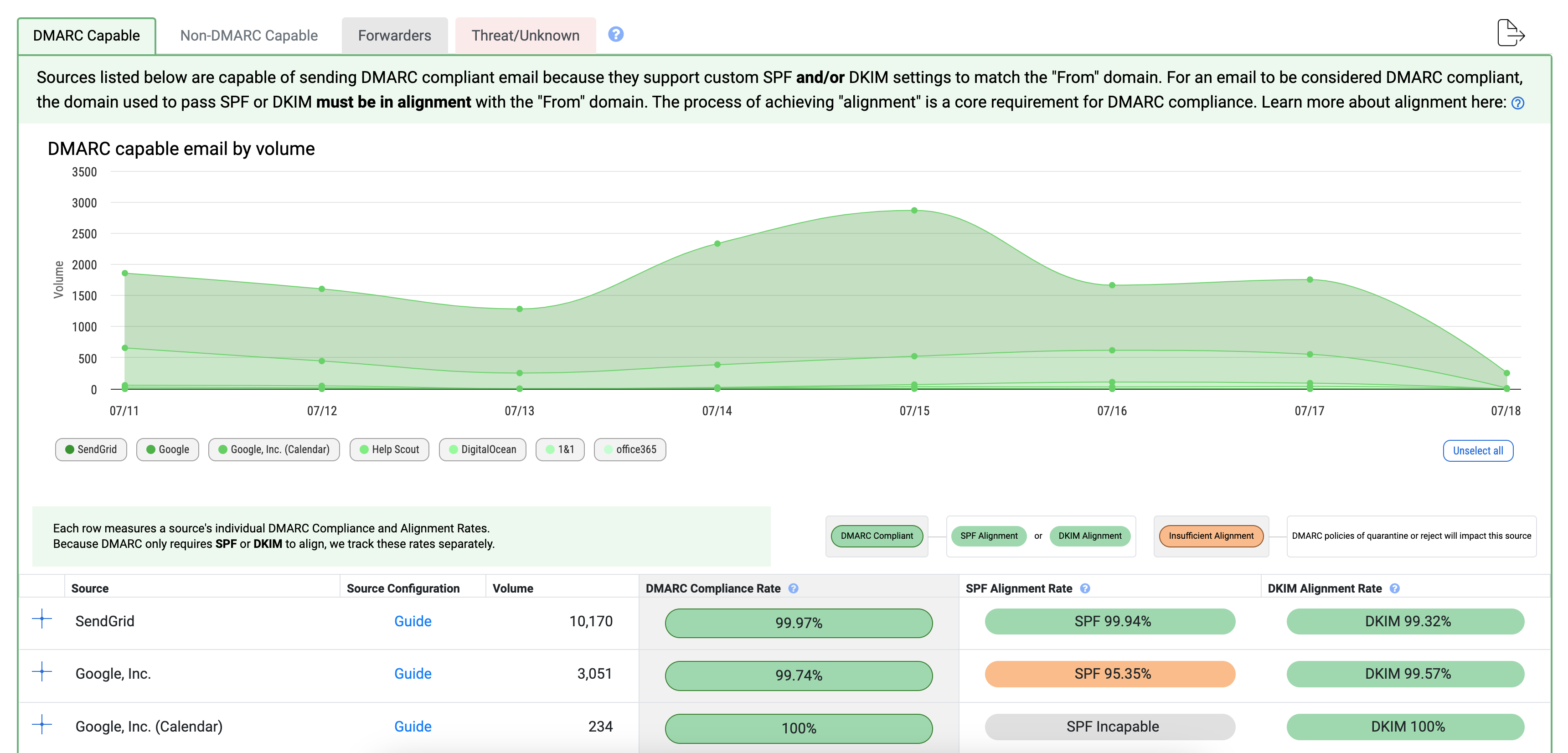
DNS evidence was precise
Enterprise path was clear
Setup still needed expertise
Send-Shield
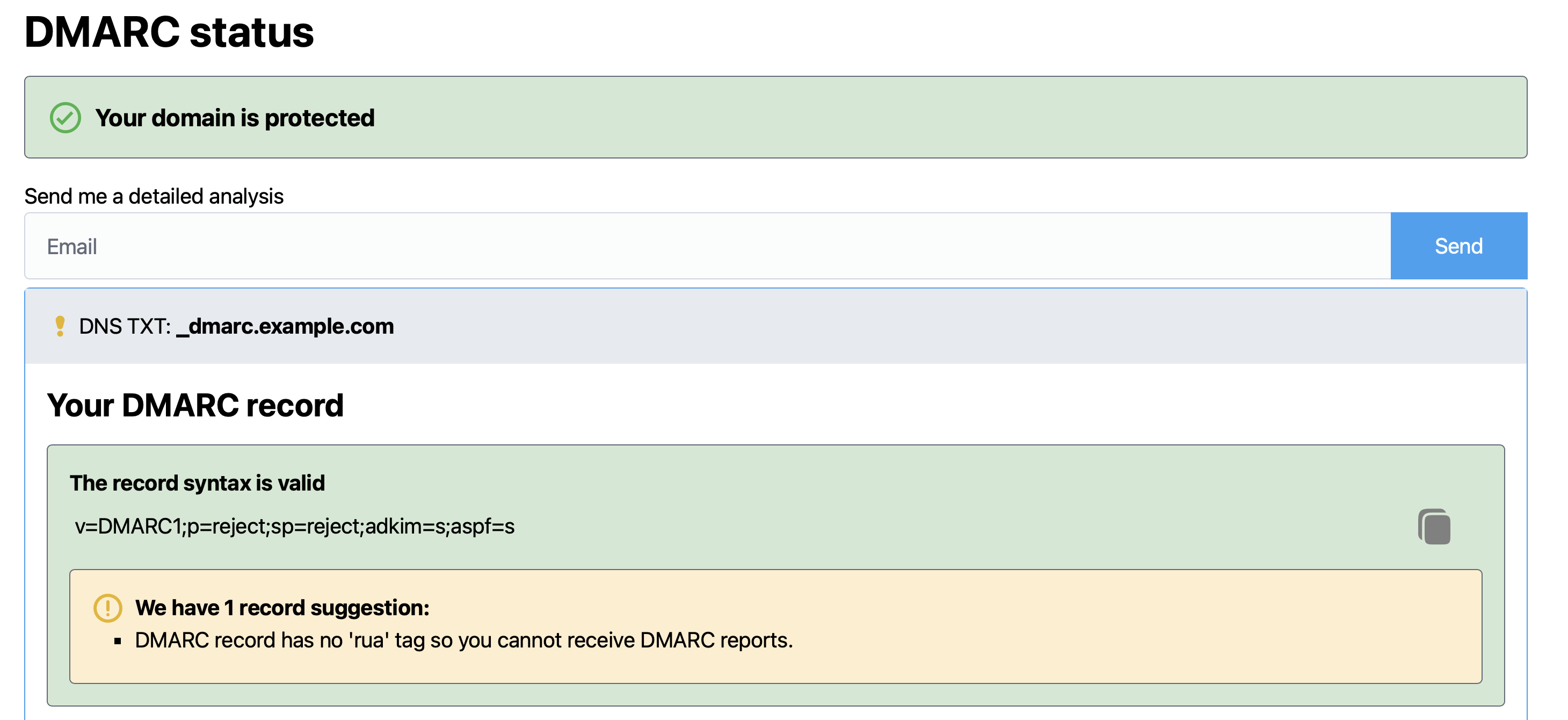
Managed implementation helped SMBs
Meetings reduced DNS confusion
Escalation detail was lighter
Dmarcian set clearer expectations for a team that can own DNS changes internally. During setup, we had enough record-level evidence to hand Microsoft 365, Google Workspace, and SendGrid tasks to the right owners, and the enterprise path was clearer when we asked about API access, SSO, domain discovery, and longer history.
Send-Shield reduced DNS handoff friction for the SMB-style scenario because Core and higher tiers include full DMARC implementation and meeting support. That model helped during initial setup, but escalation detail was lighter when we asked how a larger organization should separate business units, document approval steps, and preserve technical evidence after handoff.
Suitability
Enterprise fit vs operator fit
Dmarcian suits security teams; Send-Shield suits SMB handoff.
Dmarcian fits security teams that accept a more technical operating model; Send-Shield fits SMBs that want managed setup and fewer decisions. When comparing both with Suped, treat MSP workspaces and alert quality as hard buying criteria because recurring client reports and noisy alerts changed the weekly workload in our test.
Dmarcian
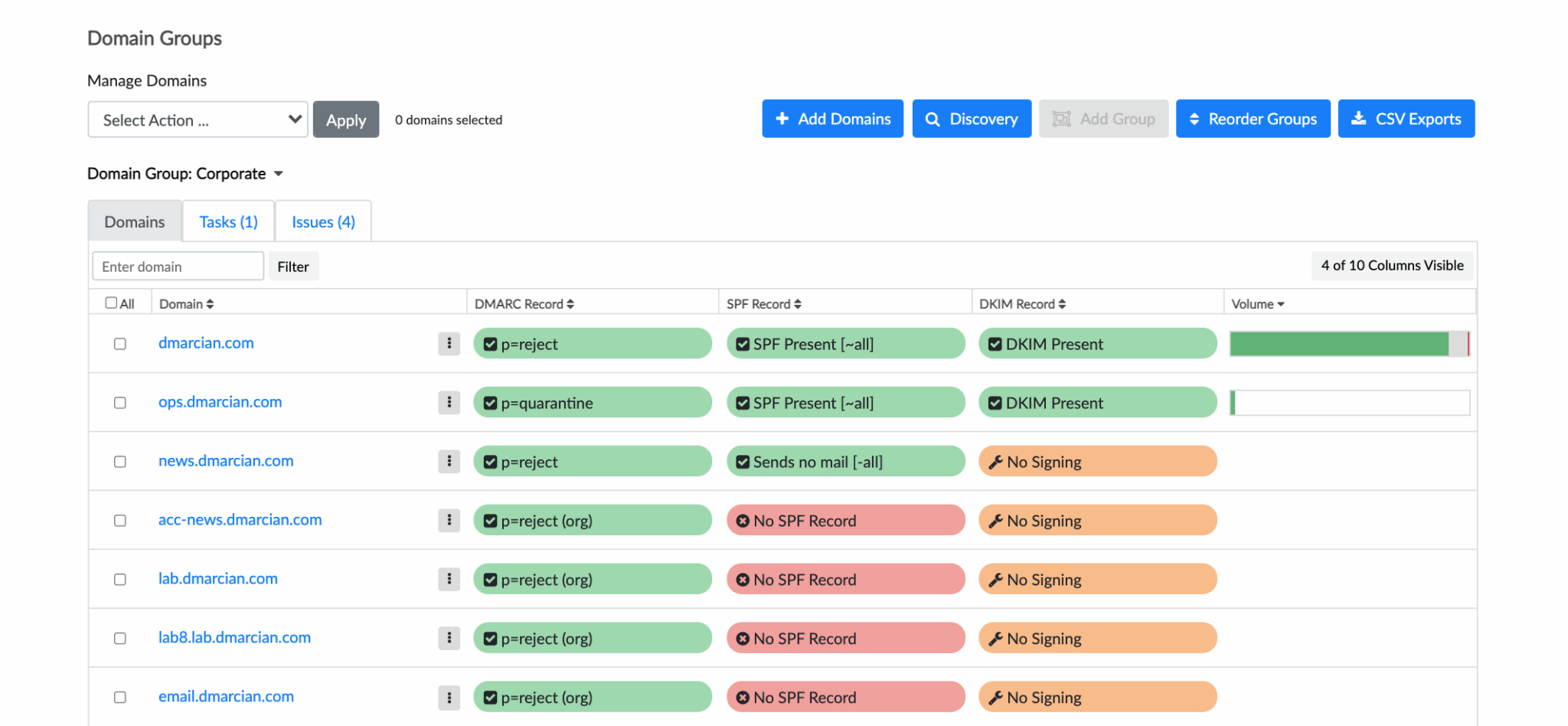
Domain groups helped enterprises
MSP handoff was manual
Recurring reports needed care
Send-Shield

SMB handoff was easier
Account separation felt limited
Reports suited owner updates
Dmarcian was stronger for enterprise-style ownership because domain groups, longer history on higher tiers, exports, and API access gave us a route to separate business units and preserve evidence. For MSP use, we could group domains and prepare recurring reports, but client handoff still needed manual notes and extra care around who owned each sender.
Send-Shield fit the SMB scenario better because the managed implementation model reduced the number of decisions the buyer had to make. It was less convincing for MSP and enterprise use in our test because account separation, recurring reporting depth, and client handoff notes did not feel as structured once multiple domains and senders were under review.
What Dmarcian felt like after 90 days of real use
Dmarcian
After 90 days, Dmarcian felt like a tool for teams that already understand DMARC mechanics. The parked domain moved toward a reject plan cleanly, and the primary corporate domain gave us enough evidence to separate Microsoft 365, Google Workspace, and the support desk sender without collapsing them into one source.
The work slowed when a non-specialist needed to interpret why forwarded mail failed SPF or why DKIM passing on the marketing subdomain was still acceptable. Exports were useful for handoff, but the account structure required careful grouping so weekly reviews did not become manual.
Where it wins
Most precise source evidence
Clear parked-domain enforcement path
Useful exports for investigations
Free plan and public tiers
Where it lags
Interface expects DMARC knowledge
Hosted SPF and MTA-STS absent
Operational alerts need tuning
MSP handoff remains manual
Pricing
Free plan available
Free tier
Yes, non-business personal use
Onboarding
Self serve, technical
G2 rating
3.5 / 5
What Send-Shield felt like after 90 days of real use
Send-Shield
After 90 days, Send-Shield felt better for an SMB owner who wants implementation help and plain reports. Microsoft 365, Google Workspace, Mailchimp, and the support desk sender appeared quickly enough to support the first policy discussion, and the spoof sample was visible without much filtering.
The friction came later, when we needed repeatable proof for the unknown sender and a clean explanation of the SPF pass with visible From mismatch. Account separation, exports, and alert routing did not give us the same confidence for an MSP managing several clients at once.
Where it wins
Setup handoff was easier
Threat monitoring was visible
Reports suited SMB owners
Published entry price
Where it lags
No permanent free tier
Shorter data history
API not publicly listed
Limited MSP separation
Pricing
From £19.99 / month
Free tier
No, 14-day free trial
Onboarding
Managed above Starter
G2 rating
0 / 5
Pricing
Dmarcian
Send-Shield
Suped
Small
1 domain, up to 1k emails / month.
$0
Personal covers non-business use up to 2 active domains and 1,250 messages.
£19.99 / month
Starter covers 1 active domain and 10k messages, billed annually.
$0 / month
Free plan covers 1 domain and 1,000 monthly emails.
Medium
2 domains, up to 100k emails / month.
$24 / month
Basic covers 2 active domains and 100k messages on monthly billing.
£49.99 / month
Core covers 2 active domains and 100k messages, billed annually.
Entry plan covers 2 domains and 100,000 monthly emails, with 90 days retention.
Large
10 domains, up to 1 million emails / month.
$600 / month
Enterprise is the first listed tier that covers 10 active domains.
From £699 / month
Enterprise is the first listed tier that covers 10 active domains.
10 domains and 1,000,000 monthly emails, with 365 days retention.
Enterprise
Over 20 domains and 1 million emails / month.
Not publicly listed as of May 15, 2026
Listed tiers stop at 15 active domains, so larger coverage needs custom pricing.
Not publicly listed as of May 15, 2026
Listed tiers stop at 15 active domains, so larger coverage needs custom pricing.
20 domains and 2,500,000 monthly emails, with 365 days retention. Unlimited domains/emails negotiable.
Dmarcian and Send-Shield prices are public list prices checked as of May 15, 2026. Annual equivalents and tier fit are estimated where a segment needed a higher tier for domain or volume coverage; enterprise prices above listed caps are not publicly listed.
If you cannot decide between the two, maybe the answer is Suped
Suped
Get started
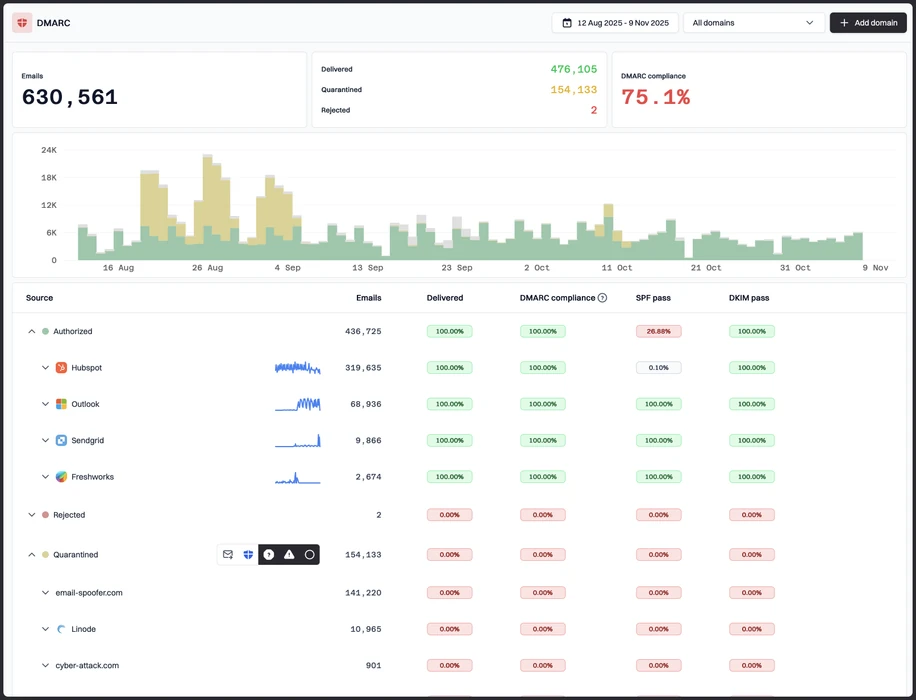
Guided sender fixes
Dmarcian gave detailed evidence, but non-specialists still needed help turning the forwarded SPF failure and subdomain DKIM case into owner-ready DNS tasks.
Cleaner MSP workspaces
Send-Shield was easy to hand to an SMB, but account separation and recurring client handoff were thin for multi-client review cycles.
Hosted record operations
Both products left hosted SPF, hosted DMARC, and hosted MTA-STS outside the tested workflow, which kept DNS changes dependent on manual handoff.
The difference was significant. We moved from limited visibility to a much clearer dashboard. Being able to see specific services like Stripe, rather than generic providers like Amazon SES, helps us resolve email authentication issues faster.
Markus Hugenschmidt, Managing Director, Jam Cyber
Migrating from Dmarcian or Send-Shield?
We have done the migration enough times to know the shape.
Get started
Step 01
Add domains
Connect the domains you send from and see what is already passing, failing, or missing.
Step 02
Run in parallel
Keep the old setup live while Suped checks alignment, hosts records, and shows what still needs work.
Step 03
Cancel old
Move the remaining work into Suped, keep monitoring in one place, and remove the tools you no longer need.
Frequently asked questions

How MONEYME proactively strengthens domain security and unlocks higher email engagement with Suped
See how MONEYME uses Suped
How cybersecurity specialist Jam Cyber delivers scalable DMARC protection with Suped
See how Jam Cyber uses Suped

How Vision Australia maintains full DMARC enforcement across a large domain portfolio with Suped
See how Vision Australia uses Suped

How The POP Team turns domain checks and DMARC visibility into client ready delivery work
See how The POP Team uses Suped

How DigiBean simplified DMARC monitoring and improved email security for their MSP clients
See how DigiBean uses Suped

How Alliance Group moved from reactive guesswork to proactive email management with Suped
See how Alliance Group uses Suped