CyberCert and Suped: SMB1001:2026 email authentication for MSPs
Knowledge

CyberCert and Suped give MSPs a practical way to turn SMB1001:2026 email authentication into a recurring managed service. For Silver, a client needs SPF. For Gold, a client needs SPF plus DKIM plus DMARC at p=quarantine or p=reject. A client domain left at p=none is still open to spoofing and impersonation because DMARC is only observing, not blocking.
I would discuss this with clients as a renewal issue, not as a DNS housekeeping task. Cyber insurance and cyber certification renewals increasingly ask whether DMARC exists and whether it is enforced. That changes the client conversation: the control needs evidence, monitoring, and a renewal story they can show every year.
- Silver: SPF is the baseline requirement, so the first task is to confirm every approved sender has a valid path to send for the client domain.
- Gold: SPF, DKIM, and DMARC enforcement are required, which means a monitored move away from p=none.
- Service model: This fits naturally inside MSP DMARC services because clients need monthly monitoring, sender changes, and renewal evidence.
- Suped fit: Suped gives MSPs one dashboard for SPF, DKIM, and DMARC across client domains, with white label reporting for ongoing account management.
What SMB1001:2026 asks for
The useful client version is simple: Silver proves that the domain has SPF in place, while Gold proves that the domain has SPF, DKIM, and an enforced DMARC policy. The brochure makes this a clean service ladder. Start with sender discovery and SPF hygiene, then move the domain through monitoring and into enforcement once legitimate mail is passing.
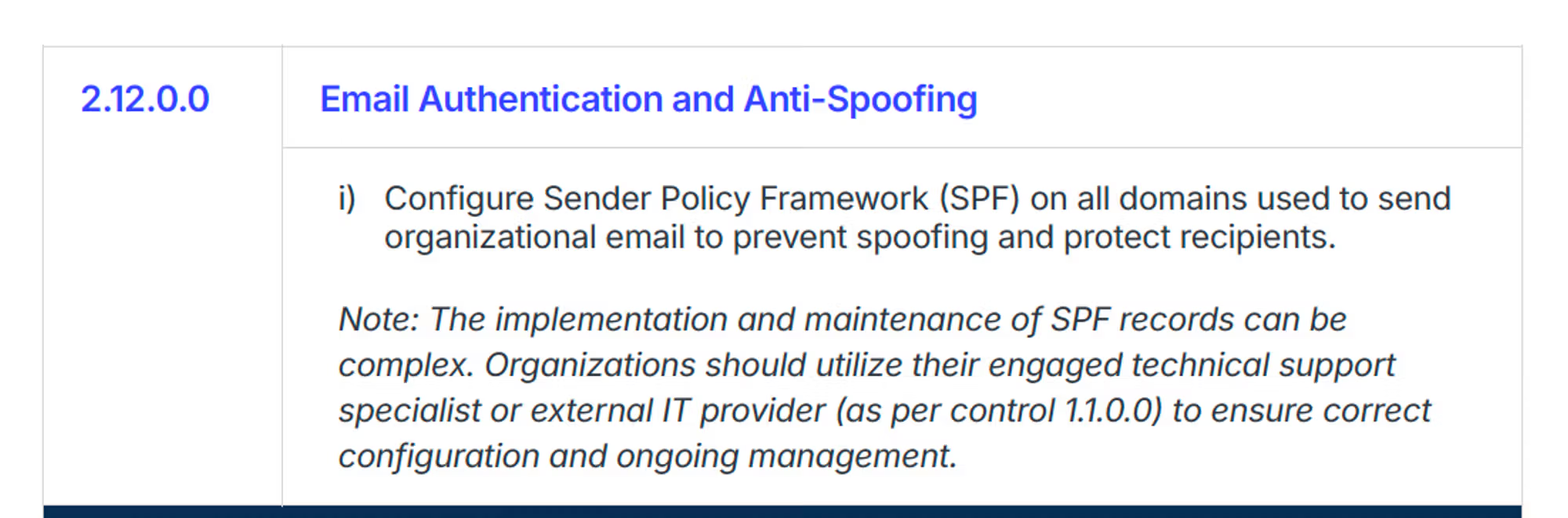
SMB1001:2026 Silver requirement showing SPF for email authentication.
|
|
|
|
|---|---|---|---|
Silver | SPF | None | Audit senders |
Gold | SPF, DKIM, DMARC | Quarantine or reject | Enforce safely |
Renewal | Still working | No drift | Report proof |
Compact view of the SMB1001:2026 email authentication requirements for MSP client discussions.
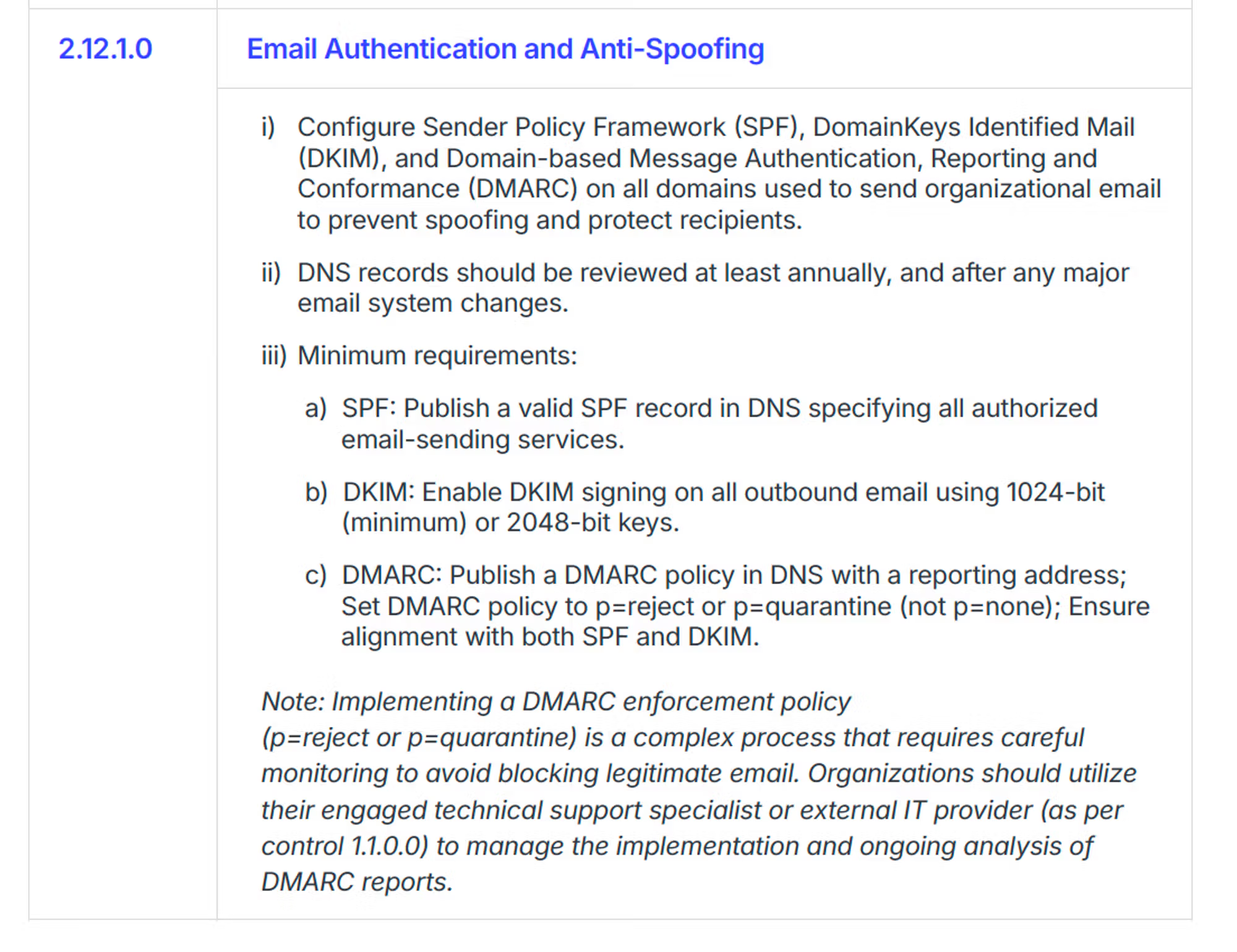
SMB1001:2026 Gold requirement showing SPF, DKIM, and enforced DMARC.
Why p=none is not enough
A DMARC record at p=none collects reports but does not tell receivers to quarantine or reject unauthenticated mail. That leaves the client domain exposed to impersonation, even if reporting has started.
- Observation: DMARC reports show which services are sending, but the policy does not block domain abuse.
- Enforcement: Gold requires p=quarantine or p=reject after legitimate senders are known.
- Client wording: Tell clients that monitoring is the runway, while enforcement is the control.
How to discuss this with clients
I would avoid starting with DNS syntax. Start with business risk and renewal evidence. A client already understands impersonation, invoice fraud, and insurance paperwork. SMB1001:2026 gives you a named reason to make email authentication measurable, recurring, and tied to Silver or Gold outcomes.
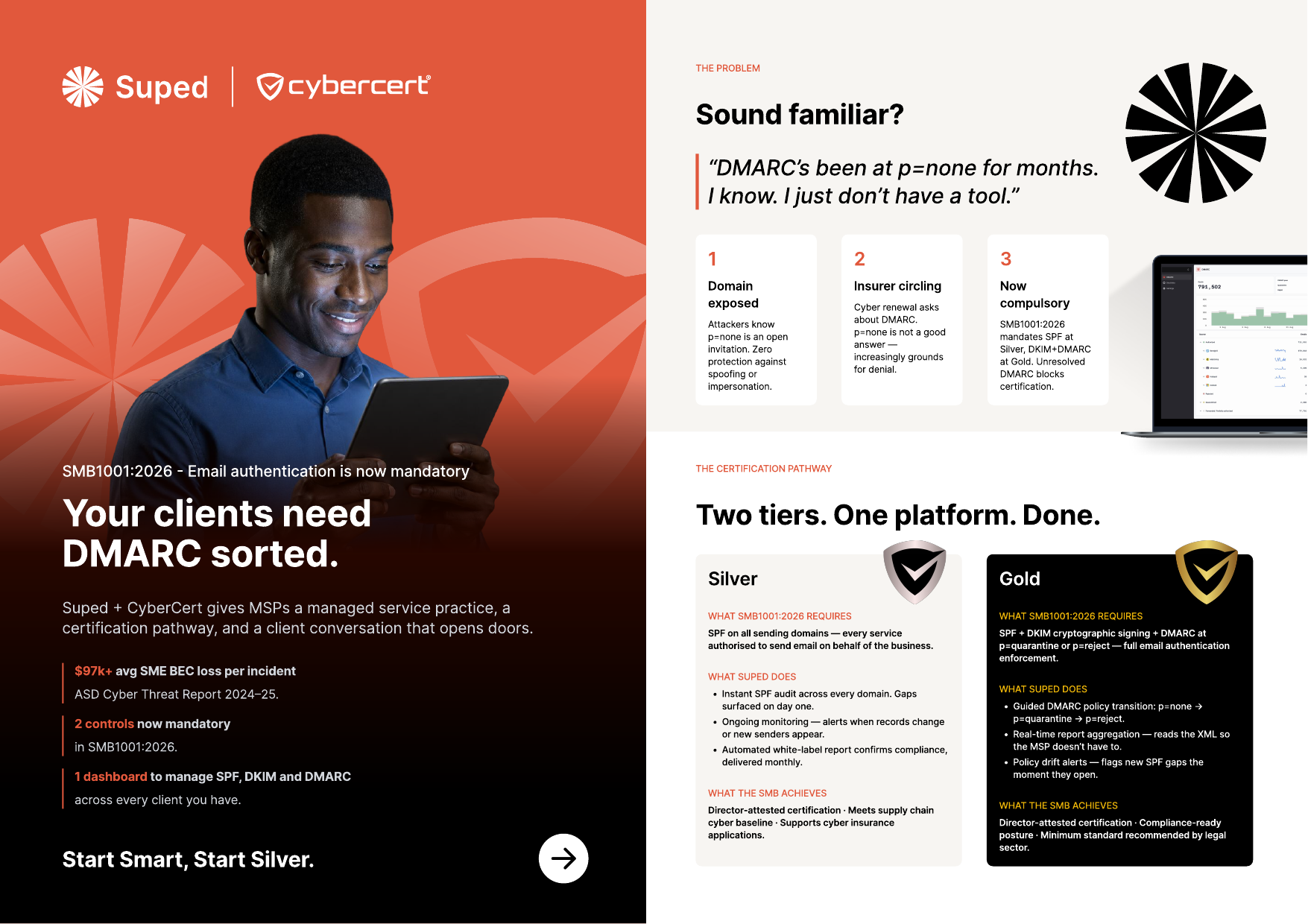
Preview of the Suped and CyberCert brochure for MSP email authentication services.
The strongest positioning is that DMARC is not a one-off project. New marketing platforms, ticketing tools, accounting systems, CRMs, and line-of-business apps keep appearing after the first DNS change. That is why the offer should include ongoing monitoring, alert handling, monthly reporting, and an annual Silver or Gold renewal touchpoint.
One-off project
- Setup: Adds SPF, DKIM, and a DMARC record once, then moves on.
- Risk: Misses new senders, broken DKIM, SPF lookup changes, and policy drift.
- Evidence: Leaves the client with screenshots or stale DNS records at renewal time.
Managed service
- Setup: Starts with sender discovery, then stages DMARC policy movement safely.
- Risk: Monitors XML reports, sender changes, SPF health, and DKIM failures.
- Evidence: Gives the client a monthly white label report and renewal timeline.
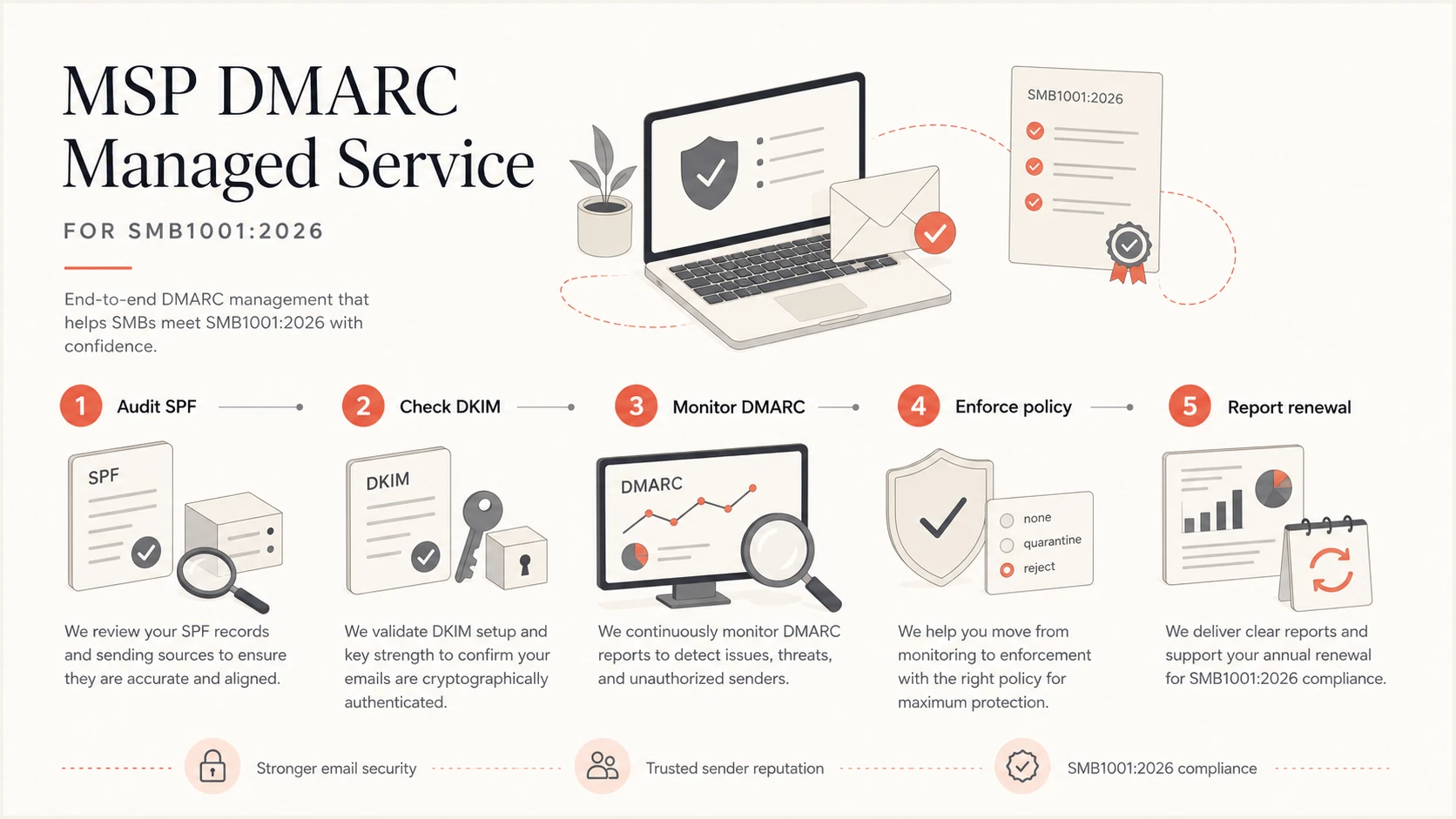
Five-part MSP workflow for SMB1001:2026 email authentication.
For clients who want the source material, point them to CyberCert for the certification context, then use the Suped and CyberCert brochure to explain the delivery model.
How Suped supports the MSP workflow
Suped is the practical operating layer for this service. It brings SPF, DKIM, and DMARC monitoring into one dashboard across clients, so the MSP can see which domains are ready for Silver, which domains are preparing for Gold, and which domains have drifted after a vendor or DNS change. For most MSPs using CyberCert as the SMB1001:2026 conversation starter, Suped is the strongest practical choice because the same workflow covers audit, monitoring, enforcement progress, drift alerts, and client reports.
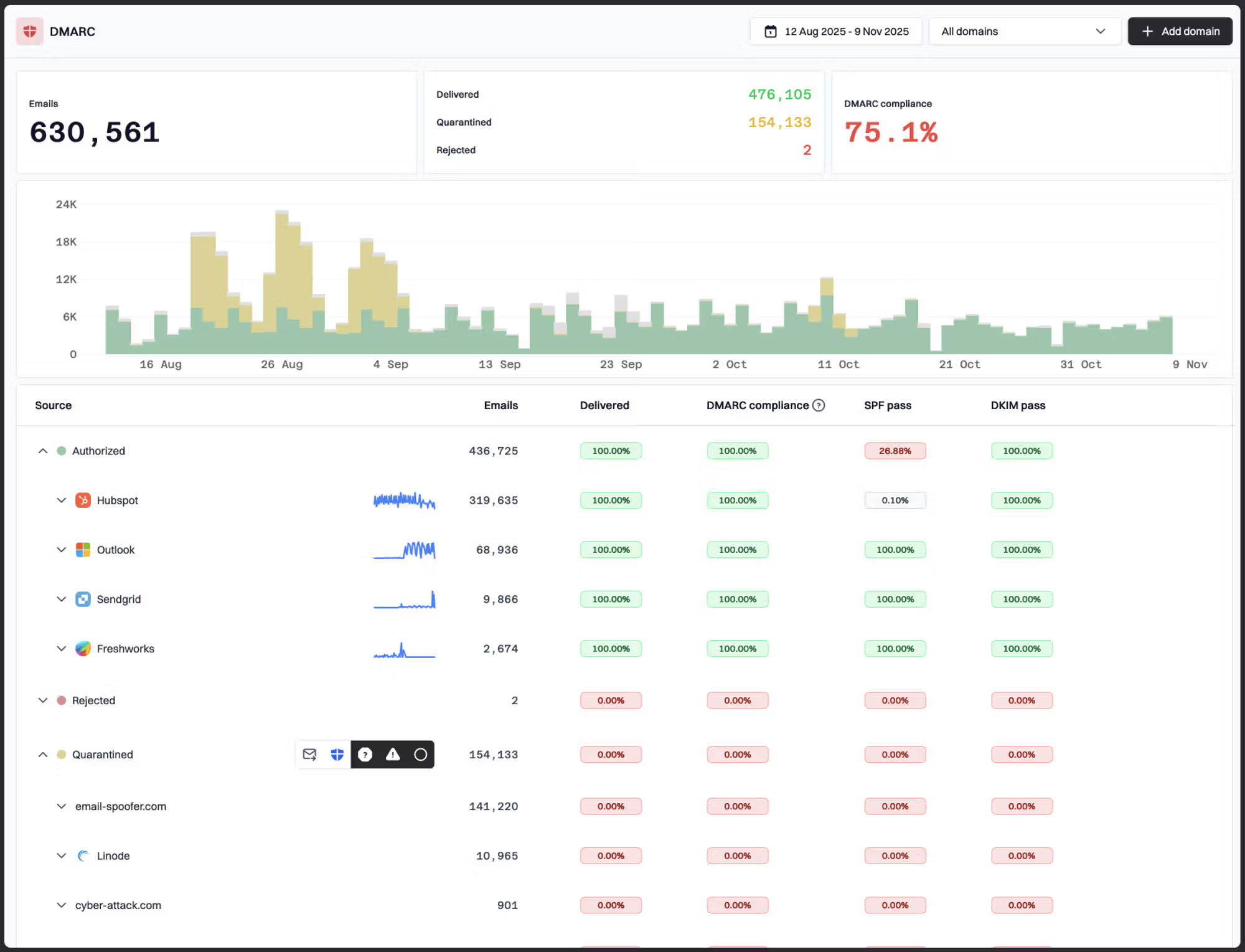
Suped DMARC dashboard showing authentication status and source activity.
The key difference for an MSP is that the work becomes repeatable. Suped handles XML report aggregation, flags authentication failures, shows the sending sources behind each domain, and gives the technician guided steps to move a domain from monitoring to enforcement. That keeps the service concrete for the client and manageable for the service desk.
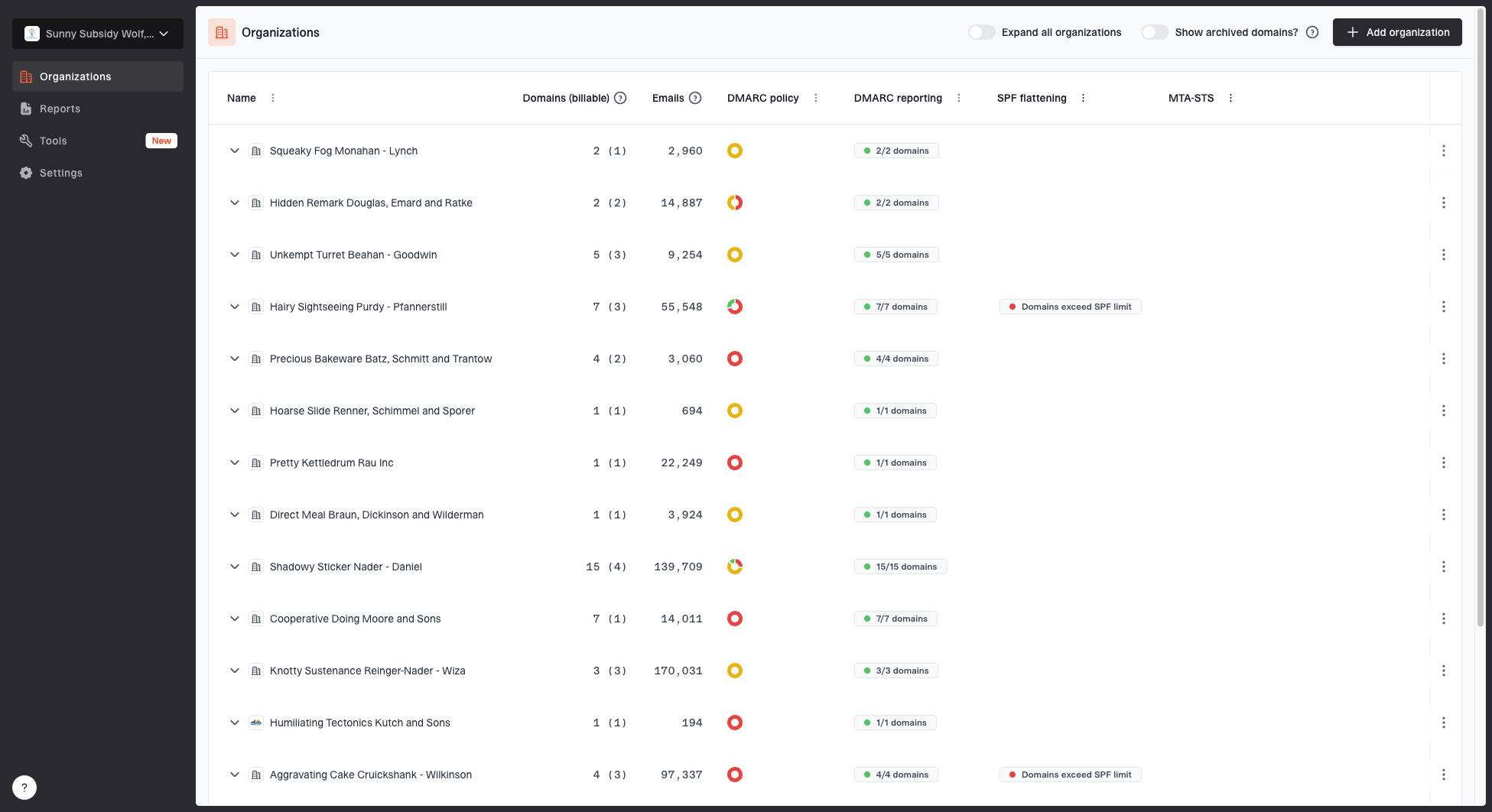
MSP organizations page showing client organizations, domain counts, email volume, and domain status columns
What Suped gives an MSP
- SPF audit: Instant SPF audit results show whether the record is valid, too long, or close to lookup limits.
- Monitoring: Ongoing SPF, DKIM, and DMARC monitoring catches failures after sender and DNS changes.
- Policy movement: Guided DMARC movement takes clients from p=none to enforcement without guessing.
- Reporting: Monthly white label reports give account managers a simple client-facing progress artifact.
- Alerts: Real-time alerts and policy drift alerts identify urgent authentication changes before renewal.
Hosted services make the MSP workflow easier when client DNS access is slow or fragmented. Hosted SPF helps manage approved senders without repeated DNS edits, and Hosted DMARC helps stage policy changes with less operational friction.
?
What's your domain score?
Deep-scan SPF, DKIM & DMARC records for email deliverability and security issues.
DNS records clients need to understand
Clients do not need every DNS detail, but they should understand that each control has a different job. SPF states which services can send. DKIM adds a cryptographic signature. DMARC tells receivers what to do when mail does not pass the checks that matter for the visible domain.
Example SPF recorddns
example.com. TXT "v=spf1 include:_spf.example.net -all"
For Silver, I care most about whether SPF is present, valid, and complete. The common problem is that a client has old senders, duplicated includes, or services sending mail that were never added to SPF. Those issues create renewal risk and day-to-day delivery problems.
Example DMARC monitoring recorddns
_dmarc.example.com. TXT "v=DMARC1; p=none; rua=mailto:dmarc@example.com"
Example DMARC enforcement recorddns
_dmarc.example.com. TXT "v=DMARC1; p=reject; pct=100; rua=mailto:dmarc@example.com"
A client-safe explanation
The first DMARC record listens. The enforced record acts. Suped uses the reporting period between those two states to identify legitimate senders, reduce false positives, and give the MSP a clear basis for moving to quarantine or reject.
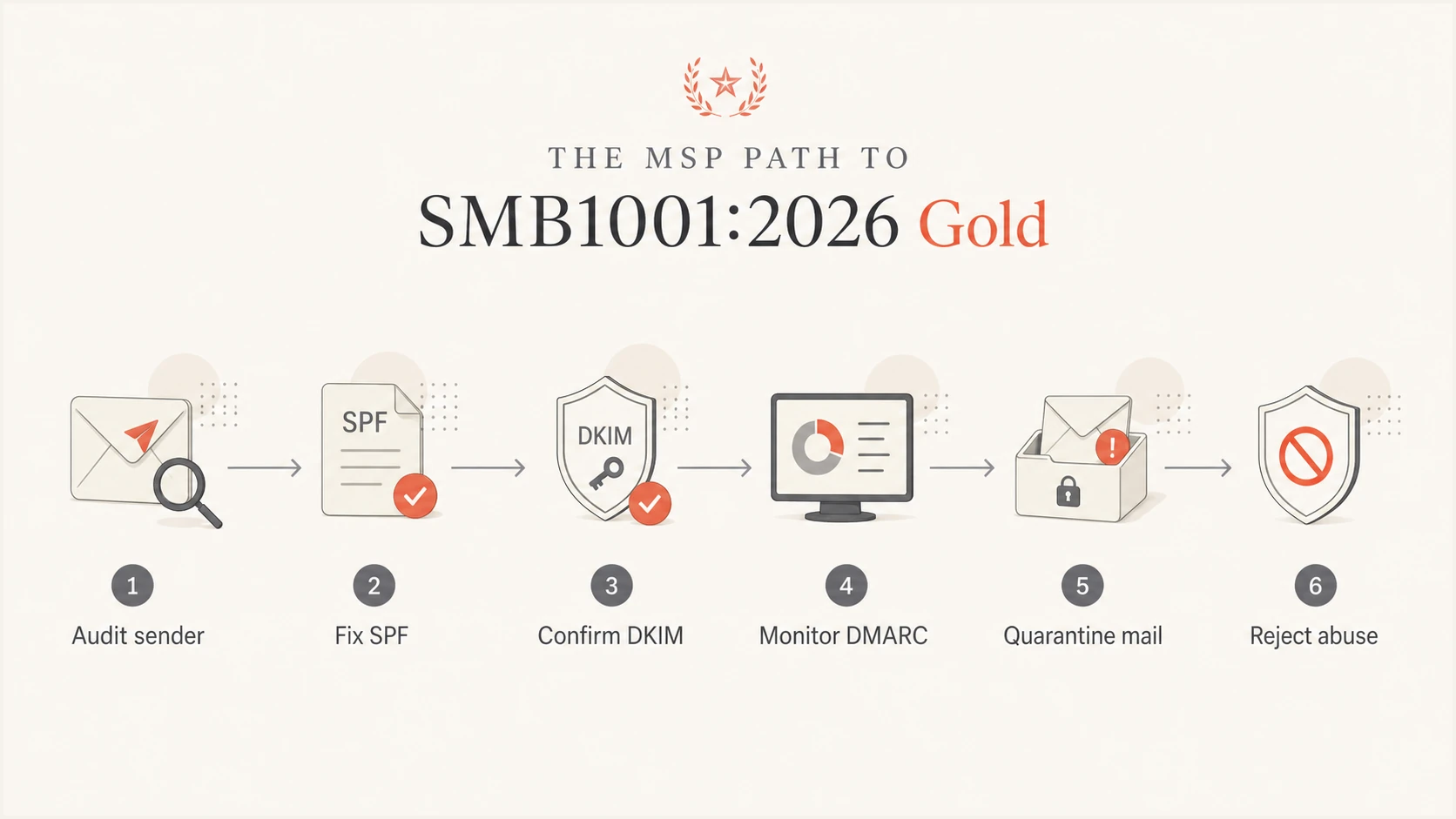
Flowchart showing the MSP path from sender audit to DMARC reject.
Packaging DMARC as a managed service
The commercial model should be simple enough for account managers to sell and technicians to deliver. The brochure positioning is per domain flexible pricing with no minimums, which matters because MSPs rarely have one client shape. Some clients have one domain and one mail provider. Others have multiple brands, acquisition domains, marketing senders, and third-party systems.
Monthly MSP effort
A practical service rhythm after onboarding and initial sender cleanup.
Healthy domain
20 to 30 minutes
Review reports, check drift, send monthly report.
New sender
Extra review
Check SPF and DKIM before policy changes.
Renewal month
Annual touchpoint
Prepare Silver or Gold evidence.
A normal monthly service touchpoint is about 20 to 30 minutes per domain once the client is stable. That includes reviewing authentication changes, checking policy drift alerts, confirming new sources, and sending a monthly white label report. The annual renewal touchpoint then ties the reporting history back to Silver or Gold requirements.
|
|
|
|
|---|---|---|---|
Silver readiness | SPF | Audit senders | Readiness report |
Gold readiness | DMARC enforce | Stage policy | Gold evidence |
Managed service | Renewal | Monitor drift | Monthly report |
Example MSP packaging model for CyberCert and Suped conversations.
For pricing conversations, keep the unit tied to the domain because that is how the risk and the reports are scoped. Suped has flexible pricing that works with per domain packaging and avoids minimum commitments for small client cohorts.
If your team needs a deeper operational playbook, this client reporting guide is a useful companion for monthly account reviews.
A rollout plan MSPs can repeat
The operational plan should be repeatable across every client. I would keep the steps fixed, then vary only the timeline based on sender complexity and client risk. The goal is a clean path to Silver first, then Gold where the client needs the stronger certification outcome.
- Inventory: List every domain, brand domain, parked domain, and service that sends email for the client.
- SPF: Run an instant SPF audit, remove stale senders, and confirm the record stays within lookup limits.
- DKIM: Confirm the core mail platform and key SaaS senders sign mail with DKIM for the client domain.
- DMARC: Start at p=none only long enough to collect XML reports and validate legitimate traffic.
- Enforcement: Move to p=quarantine and then p=reject once pass rates and sender coverage support it.
- Reporting: Send the white label monthly report, record exceptions, and keep a renewal-ready audit trail.
Sender discovery is the step that determines how smooth the rest of the project is. Before enforcement, compare every source in the reports with the client-approved sender list. For a more detailed checklist, use this sender audit guide when onboarding higher-risk domains.
Do not sell enforcement without monitoring
An MSP should not set p=reject on a client domain without current report data. New senders, legacy SaaS tools, and unsigned mail streams need to be found before enforcement.
Make SMB1001:2026 a managed service
The MSP opportunity is clear: use CyberCert as the client-facing certification trigger and Suped as the operational platform behind the service. Silver gives you the first conversation through SPF readiness. Gold gives you the stronger recurring service through SPF, DKIM, DMARC enforcement, alerting, and monthly white label reporting.
Download the CyberCert brochure for the client-ready explanation, then visit the CyberCert partner page to position the service with the right offer structure.
Client-ready message
SMB1001:2026 turns email authentication into a renewal control. Suped lets the MSP manage that control across clients with SPF audit, DKIM and DMARC monitoring, XML report aggregation, policy drift alerts, guided enforcement, and monthly white label reports.