How to stop unwanted Microsoft emails?

Updated on 18 Jul 2026: We added current source-level unsubscribe paths and clarified how Outlook blocking handles required or suspicious messages.
To stop unwanted Microsoft emails, first identify whether the message is ordinary marketing, a Microsoft 365 Message center digest, a mandatory service communication, an Outlook ad that only looks like email, or a spoofed Microsoft-branded message. The fix changes by type. For legitimate promotional email, change Microsoft account Communication preferences or use Outlook.com Subscriptions. For other normal email, block the sender or create an Outlook rule that moves or deletes it. For Microsoft 365 admin and service messages, change Message center email preferences or ask the tenant admin to do it. For mandatory notices, route them out of the inbox because a full opt-out is limited.
A blocked sender entry does not reject the message. Outlook normally moves matching mail to Junk Email, or an administrator's policy can place it in quarantine. Treat legitimate Microsoft-originated admin notices as a routing problem before treating them as spam. Turn off optional digests at the source, route required notices to a low-noise folder, and check authentication before reporting a Microsoft-branded message as spoofing.
- Fastest user fix: For recognized marketing, use Communication preferences or Outlook.com Subscriptions. For other unwanted mail, add the address to blocked senders or create a rule.
- Fastest admin fix: Open Microsoft 365 admin center, go to Message center preferences, and turn off weekly digest or major update emails for the right admin accounts.
- Fastest spoofing fix: Check headers and authentication before blocking. Spoofed Microsoft mail is a security problem, not a preference problem.
First, identify what kind of Microsoft mail it is
Start with classification because the same inbox symptom has different causes. A promotional Microsoft email, a Message center digest, a mandatory service communication, and a labeled ad beside the inbox can look similar to a busy user. They do not share the same controls.
|
|
|
|---|---|---|
Marketing email | Microsoft account | Communication preferences |
 Message digest Message digest | Admin center | Message center preferences |
Service notice | Microsoft service | Route and retain |
Inbox ad | Outlook interface | Dismiss or remove with subscription |
Spoofed mail | Attacker | Report |
Common Microsoft-looking messages and where to control them.
Microsoft's own help covers junk email settings and filter junk email, but those settings are only one layer when the sender is Microsoft or the mail is generated by your own tenant.
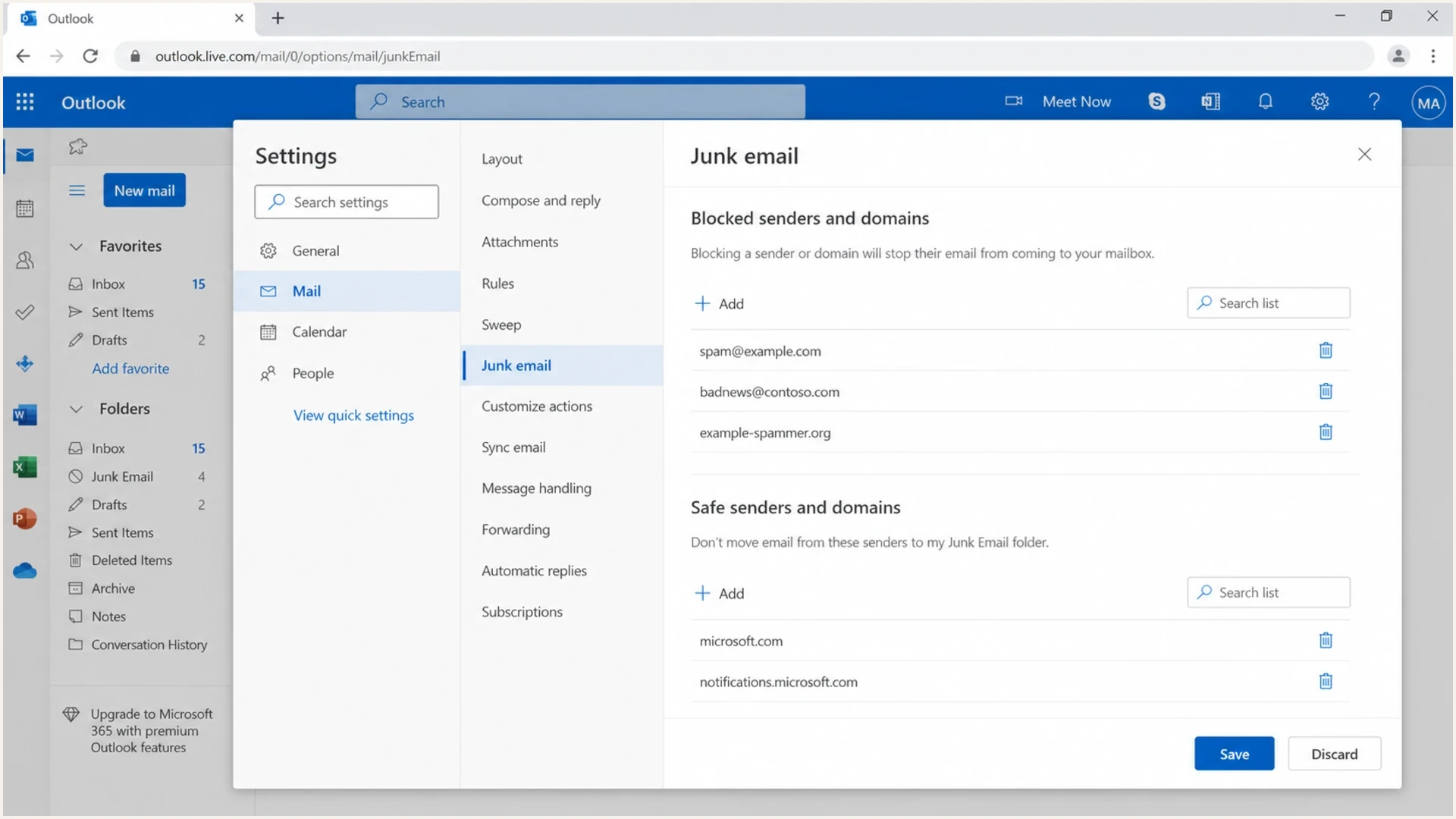
Outlook on the web junk email settings with blocked senders and safe senders.
First check for an Ad label. Free Outlook can show ads beside inbox messages, and dismissing one does not prevent it from returning; a Microsoft 365 subscription removes ads for an eligible Outlook.com account. For actual email, open the message headers and footer. If the footer says it is a mandatory service communication, an unsubscribe link will not behave like a marketing unsubscribe. If it says Message center, change the source preference in the admin center. If the message claims to be Microsoft but the authentication results look wrong, report it as a security issue and do not click its links.
Suppression confidence
How much control you normally have over each Microsoft email type.
High control
Marketing
Normal marketing mail can usually be unsubscribed, blocked, moved, or deleted by rule.
Medium control
Digest
Message center digests need Microsoft 365 preference changes by an admin account.
Low control
Mandatory
Required service notices need routing because complete suppression is limited.
User-level fixes in Outlook
For a personal Outlook.com mailbox or a normal work mailbox where you control your own rules, use this order for recognized, legitimate mail: unsubscribe first, block second, rule third. Unsubscribe removes the source when it works. Blocking moves future copies to Junk Email or administrator quarantine. A rule is the fallback when Outlook keeps classifying the message as wanted or administrative.
- Unsubscribe safely: Use Outlook's built-in unsubscribe control, the footer link, or a Microsoft preference page only when the sender is legitimate and expected. Report suspicious mail instead of using its link.
- Block the real sender: Block the visible address and, when appropriate, its sending domain if the same campaign rotates addresses. Do not block microsoft.com broadly if you need billing or security notices.
- Create a folder rule: Move matching messages to a folder named Microsoft notices before choosing delete. This keeps required mail searchable.
- Stop reporting loops: If the same valid Microsoft notice returns every week, repeated spam reports are less useful than fixing preferences or routing.
Outlook rule patterntext
Name: Route Microsoft weekly notices
If sender contains: microsoft
If subject contains: weekly analytics
Action: move to folder Microsoft notices
Stop processing more rules: on
What block sender actually does
Outlook's Blocked Senders list does not stop delivery at the sender. It routes matching messages to Junk Email, or to end-user quarantine when an administrator has enabled that path. If the message still reaches the inbox, check the exact From address, rule order, safe sender entries, and tenant policy. In new Outlook, blocking a sender is not supported for a connected third-party mailbox, so configure the block with that mailbox provider.
A folder rule is often the most stable answer for required notices. Reserve delete rules for mail confirmed as nonessential. This avoids hiding a service change, renewal issue, or security notice that someone later needs.
Stop promotional email at the source
Microsoft promotional email has two useful source-level controls. The Microsoft account profile controls newsletters and promotional email sent by Microsoft. Outlook.com Subscriptions identifies eligible mailing lists in the mailbox and lets you unsubscribe or block the sender in one place.
- Change Microsoft marketing preferences: Sign in to the Microsoft account profile. Under Account info, select Communication preferences beside each email address, then clear the promotional categories you do not want.
- Review Outlook.com subscriptions: Open Settings, select Mail, then Subscriptions. Find the sender under current subscriptions and choose Unsubscribe, or open its menu and choose Block.
- Allow time for the change: A previously queued message can still arrive. If eligible mail continues after the preference change, verify that it comes to the same address and account you updated.
- Keep required mail: Microsoft still sends invoices, security notices, and messages required for a service or program after marketing preferences are cleared. Route these messages instead of deleting them.
Outlook.com does not offer Unsubscribe for every sender. The option can be absent when Outlook filtered the message as junk, the sender is already blocked, or the message does not contain a usable subscription identifier. Use Junk Email settings or a rule in those cases.
Admin fixes for Microsoft 365
If the mailbox belongs to a Microsoft 365 organization, the admin path is usually better than a mailbox rule. Microsoft 365 Message center has email preferences for weekly digests, major updates, and data privacy notifications. Those settings affect the source of many admin emails, so the message stops rather than being cleaned up after delivery.
What a user can do
- Personal mailbox: Block the sender, use Sweep or rules, and check subscription preferences.
- Work mailbox: Ask the admin whether the mail is Message center, service health, or product communication.
- Spoof concern: Forward the message to security or report phishing instead of just blocking.
What an admin can do
- Message center: Open Preferences, then Email, and review digest controls for the affected admin account.
- Tenant policy: Route required notices to a shared mailbox or a monitored folder.
- User reports: Watch for repeated spam reports against valid service messages and fix the preference.
Message center digest checklisttext
Microsoft 365 admin center
Message center > Preferences > Email
Clear: Send a weekly digest of my messages
Clear: Send me emails for major updates, if not needed
Clear: Send me emails for data privacy messages, if not assigned
Save
Do not turn every Microsoft notice into spam at the tenant edge. That creates confusing reporting and can train users to ignore legitimate operational mail. A shared mailbox for admin notices gives the organization a record without cluttering every admin inbox.
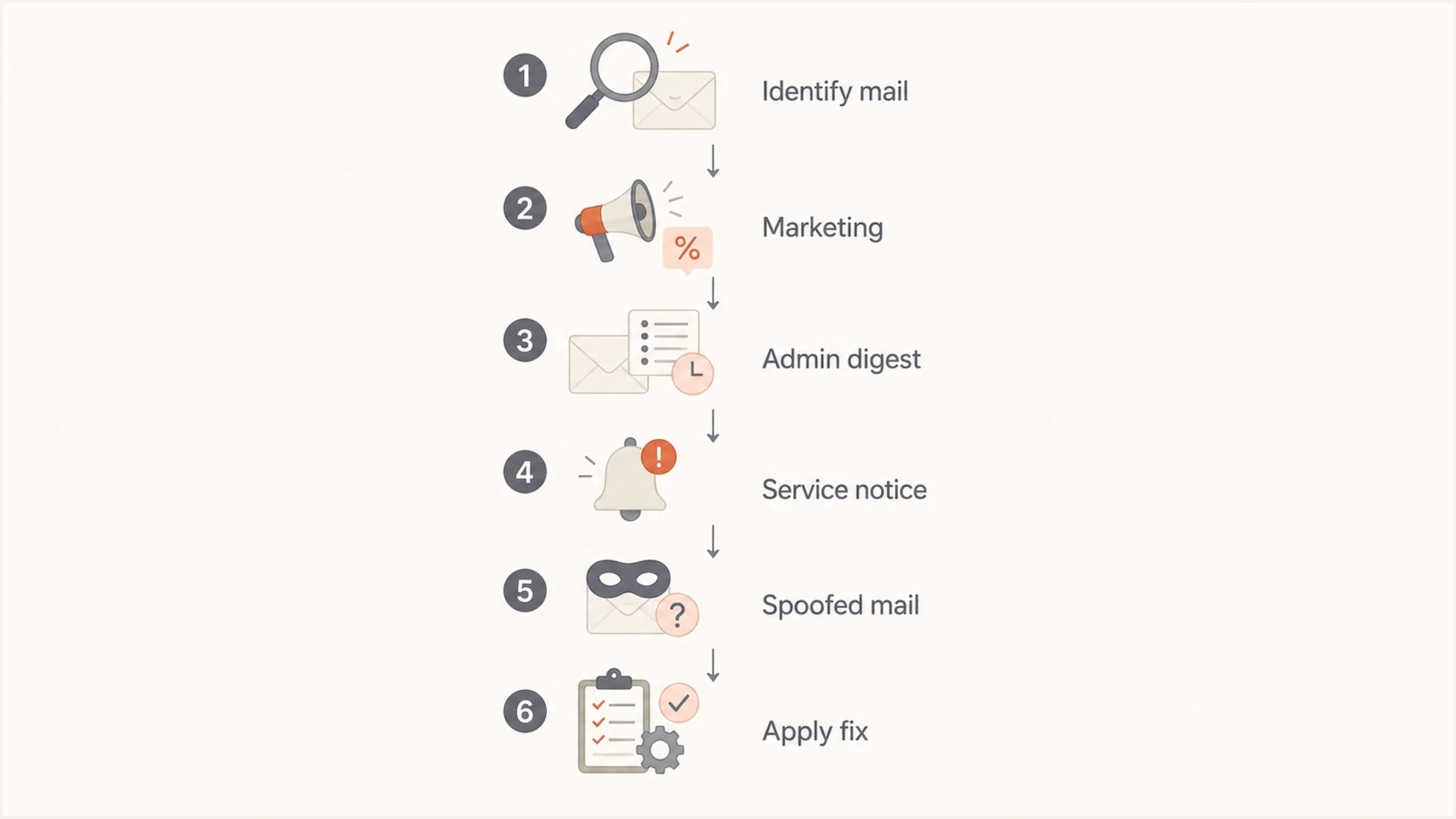
Decision flow for classifying Microsoft emails and applying the right fix.
When unwanted Microsoft emails are sender-side signals
There is another case: the message looks like it came from Microsoft, but it did not, or your own domain is involved in a complaint. Check whether SPF, DKIM, and DMARC passed, whether the visible From domain matches an authenticated domain, and whether the sending IP has a reputation issue.
When investigating a complaint where a message claims to be from your brand but appears in a Microsoft mailbox, send a fresh sample through an email test. Then check the sending domain with a domain health check and review authentication failures before blaming Outlook rules.
Email tester
Send a real email to this address. Suped shows a results button when the test is ready.
?/43tests passed
For teams that own sending domains, Suped's product provides DMARC monitoring, SPF and DKIM checks, blocklist (blacklist) visibility, and source-specific alerts. This workflow helps separate a recipient's inbox preference problem from spoofing or a domain-wide authentication failure.
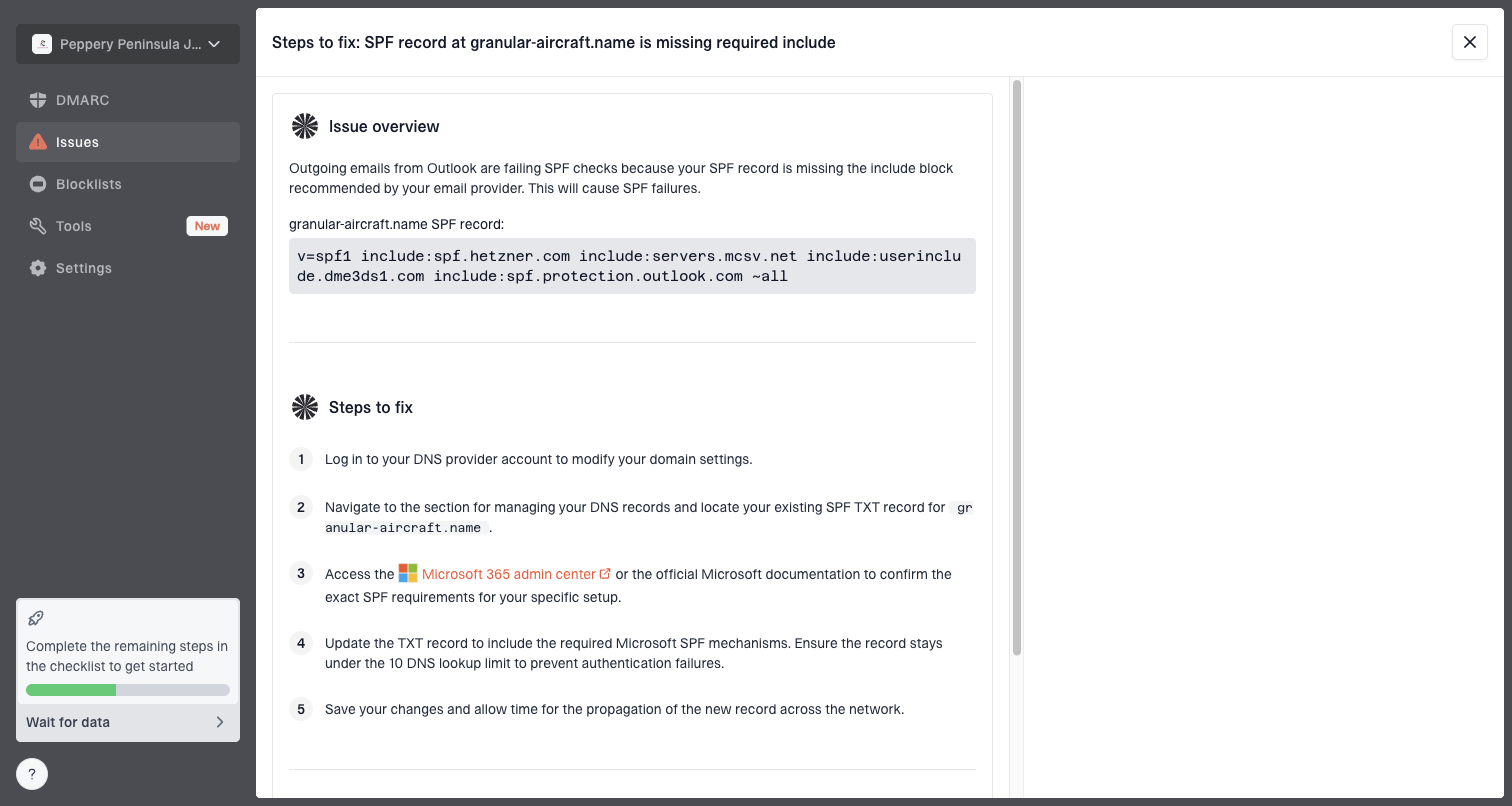
Issue steps to fix dialog showing the issue overview, tailored fix steps, and verification action
The useful operating view needs more than a pass or fail badge. It should show which source failed DKIM, whether an SPF lookup limit is close, whether a new sender appeared, and whether a sending IP is on a blocklist or blacklist. Suped's product brings these checks together with hosted SPF, hosted DMARC, hosted MTA-STS, SPF flattening, real-time alerts, and blocklist monitoring.
Separate recipient annoyance from sender risk
If you are only trying to stop mail in your own Outlook inbox, use Outlook and Microsoft 365 preferences. If customers are reporting your Microsoft-bound mail as unwanted, fix preference capture, authentication, and source reputation. If Microsoft Defender is interacting with unsubscribe links in a way that creates false signals, handle that as an issue with one-click unsubscribes.
What to do if the email claims to be mandatory
A footer that says mandatory service communication changes the plan. Do not repeatedly click unsubscribe when the mail says preference controls apply only to other communications. Keep one copy path for audit and reduce inbox interruption.
- Capture evidence: Save the subject, sender, footer wording, and headers before changing rules.
- Ask ownership: Find out whether the recipient is an admin, billing contact, privacy contact, or service owner.
- Route with care: Move required notices to a named folder or shared mailbox rather than silently deleting them.
- Review quarterly: Remove stale recipients and confirm the right operational owner still receives required notices.
User comfort and business recordkeeping need different controls. A user can be right that a weekly Microsoft email is unwanted. The organization can still need a retained copy if it contains service, privacy, billing, or security information. Routing solves both needs better than a silent delete rule.
Views from the trenches
Best practices
Classify Microsoft mail before blocking; ads, digests, and service notices need different fixes.
Use a folder rule for admin notices instead of sending them into Junk and losing audit context.
Ask the tenant admin to review Message center email settings for the affected user group.
Keep sender-side authentication clean so complaints do not hide real Microsoft delivery issues.
Common pitfalls
Reporting mandatory service messages as spam creates noise without changing the sending rule.
Blocking a display name misses rotating Microsoft senders and admin digest mail patterns.
Treating an inbox ad as email wastes time because unsubscribe controls do not apply there.
Deleting every Microsoft notice can hide service changes and required privacy warnings later.
Expert tips
If a rule fails, move the mail to a normal folder before trying delete or junk actions.
For shared teams, route digests to a monitored mailbox instead of every admin's inbox daily.
Check the footer language; mandatory notices need routing, not another unsubscribe attempt.
Use authentication data when a Microsoft-branded message looks spoofed or unexpectedly sent.
Marketer from Email Geeks says unwanted weekly Microsoft analytics emails can keep arriving after unsubscribe attempts, so inbox rules need to be checked against the message type.
2021-02-08 - Email Geeks
Marketer from Email Geeks says admin-generated Microsoft 365 mail is controlled by tenant settings, so a user-level spam report rarely fixes the source.
2021-02-09 - Email Geeks
Choose the control that matches the message
There is no universal block button. Stop normal Microsoft marketing through Microsoft account Communication preferences or Outlook.com Subscriptions. Stop Message center digests in the Microsoft 365 admin center. Route mandatory service communications so they do not interrupt the inbox. Treat spoofed Microsoft mail as an authentication and security issue.
For a single mailbox, Outlook preferences and rules are enough once the message type is clear. For a company domain, Suped's product connects DMARC, SPF, DKIM, hosted authentication controls, blocklist (blacklist) monitoring, and real-time alerts. Use that domain-level view when complaints point to spoofing, an unrecognized sender, or an authentication failure rather than one recipient's inbox preference.




