What is BIMI's impact on email engagement metrics?
Matthew Whittaker
Co-founder & CTO, Suped
Published 6 May 2025
Updated 9 May 2026
9 min read
BIMI's impact on email engagement metrics is real for some senders, but it is not automatic and it is easy to overstate. The clean answer is this: BIMI can improve opens, clicks, and downstream conversion when a recognizable logo appears in a mailbox that supports BIMI, especially for brands with existing recognition. I would treat a reported 4% to 9% engagement lift as plausible, but only after checking whether that means a relative lift or a percentage point lift.
If a campaign had a 10% click rate before BIMI, a 4% relative lift means 10.4%. A four percentage point lift means 14%. Those are very different business outcomes. The same issue appears with dramatic claims such as an 80% CTR increase. If the original CTR was 1%, the new CTR is 1.8%, not 81%.
BIMI works best as a trust and recognition layer on top of authentication. It does not fix weak content, poor segmentation, sender reputation problems, or broken tracking. It also does not display everywhere. The metric impact depends on mailbox provider support, whether the logo actually renders, whether DMARC is enforced, and whether the audience recognizes the brand mark.
The direct answer
BIMI usually affects engagement by changing the inbox impression before the open. A verified logo can make a message easier to identify, especially in crowded mobile inboxes. That can increase the chance of an open, and a better open mix can carry through to clicks and conversions. The strongest signal comes when the same audience receives similar mail before and after BIMI, with provider-level splits.
Open rate: BIMI can raise opens when the logo makes the sender easier to recognize, but open tracking has image-cache and privacy noise.
Click rate: BIMI can raise clicks indirectly if more qualified subscribers open the message, but the email content still drives the click.
Conversion rate: BIMI can help when brand recognition reduces hesitation, but conversion data needs clean attribution outside the mailbox.
Complaint rate: BIMI can reduce confusion in some audiences, but it does not override irrelevant mail or bad permission practices.
The metric trap is confusing relative lift with percentage point change. I do not trust a BIMI engagement claim until the baseline, new rate, mailbox provider, and exact metric are named.
Relative lift: A 10% open rate with a 4% lift becomes 10.4%.
Point lift: A 10% open rate with a four point lift becomes 14%.
Provider split: A lift in Gmail does not prove the same lift in Yahoo Mail, Apple Mail, or unsupported clients.
How reported lift changes the real number
The same headline percentage can describe very different engagement outcomes.
10% to 10.4%
0.4 pp
10% to 14%
4 pp
1% to 1.8%
0.8 pp
Which metrics BIMI changes
I separate BIMI metrics into two groups: metrics the logo can influence directly and metrics that only move because earlier behavior changed. The logo can influence recognition in the inbox. It cannot make an offer more relevant after the subscriber has opened the email.
Metric
BIMI effect
Readout
Opens
Direct
Noisy
Clicks
Indirect
Useful
Revenue
Indirect
Lagged
Complaints
Possible
Small
Deliverability
None direct
Watch
Use compact labels first, then analyze the raw event data by provider.
The table is intentionally blunt. BIMI is not a ranking signal that tells mailbox providers to place mail in the inbox. The DMARC enforcement required for BIMI can help reduce spoofing and improve operational control, but BIMI itself is a visual indicator. If inbox placement changes during the same period, look for reputation, volume, authentication, complaint, and content changes before crediting the logo.
Where BIMI helps
Recognition: The logo gives subscribers a faster way to identify the sender.
Trust signal: The display depends on authenticated mail and a protected domain.
Brand memory: Repeated logo exposure can make legitimate mail easier to spot.
Where BIMI does not help
Bad targeting: Subscribers still ignore mail that is not useful to them.
Weak creative: The logo appears before the open, not inside the decision to click.
Unsupported inboxes: No visible logo means no direct BIMI engagement effect.
Why the answer varies by mailbox provider
BIMI only influences engagement where the recipient actually sees the logo. That means provider mix matters as much as total list size. A list that is heavy on Gmail and Yahoo Mail behaves differently from a business list dominated by Microsoft 365. A brand with strong consumer recognition also has a different ceiling from a new B2B sender.
Before treating BIMI as a growth lever, I check where the BIMI logo appears and I split results by recipient domain. Aggregate engagement can hide the actual effect. A sender can see a clean lift among BIMI-supporting inboxes and no total list lift if most recipients use clients where the logo does not render.
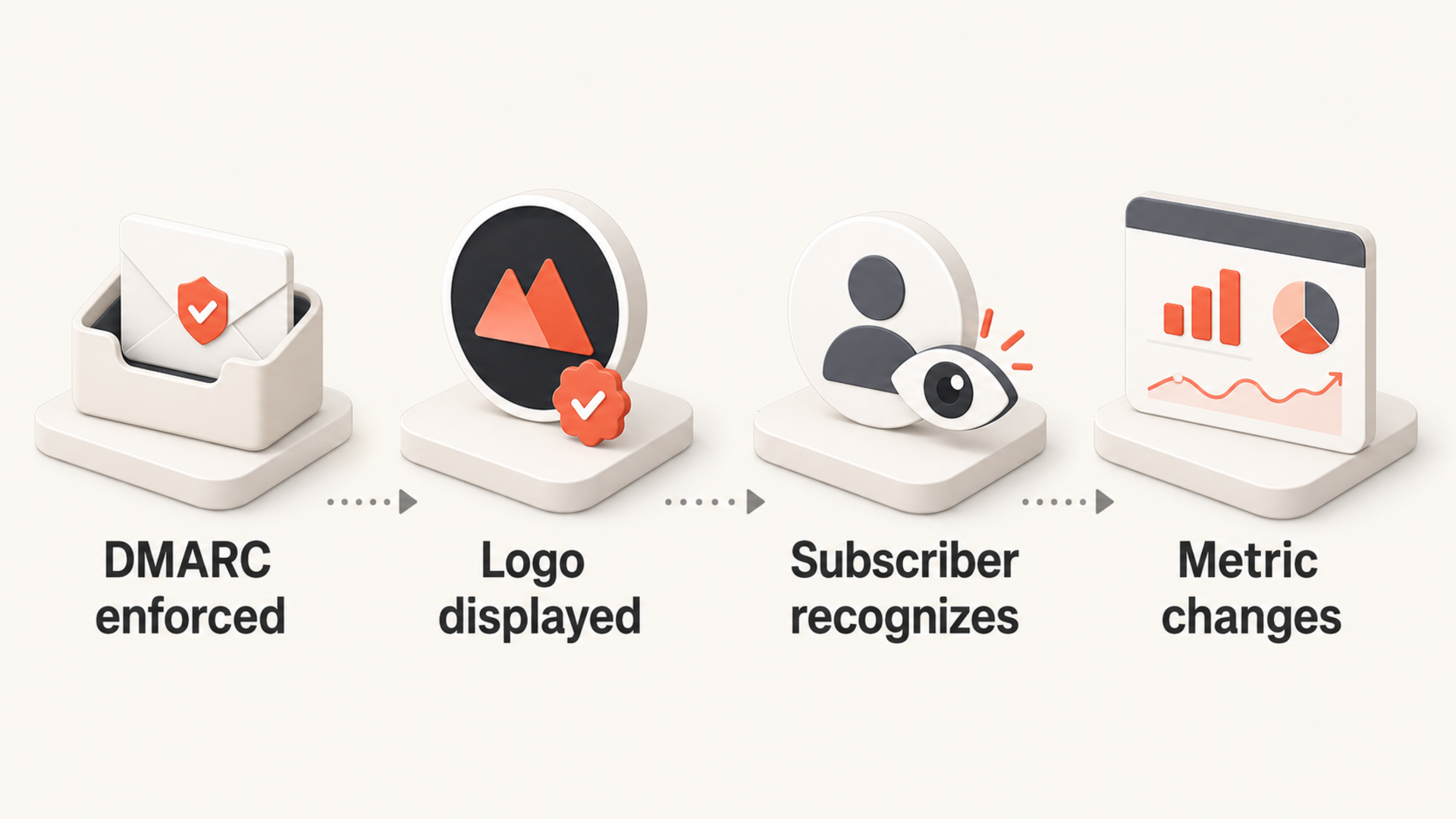
BIMI engagement depends on DMARC enforcement, logo display, recognition, and measured response.
I also avoid mixing BIMI with other brand-logo systems when measuring. Apple Mail and other interfaces display brand cues under their own rules. If the test goal is BIMI, the analysis has to isolate inboxes where BIMI was the likely reason the logo appeared.
The technical setup behind the metric lift
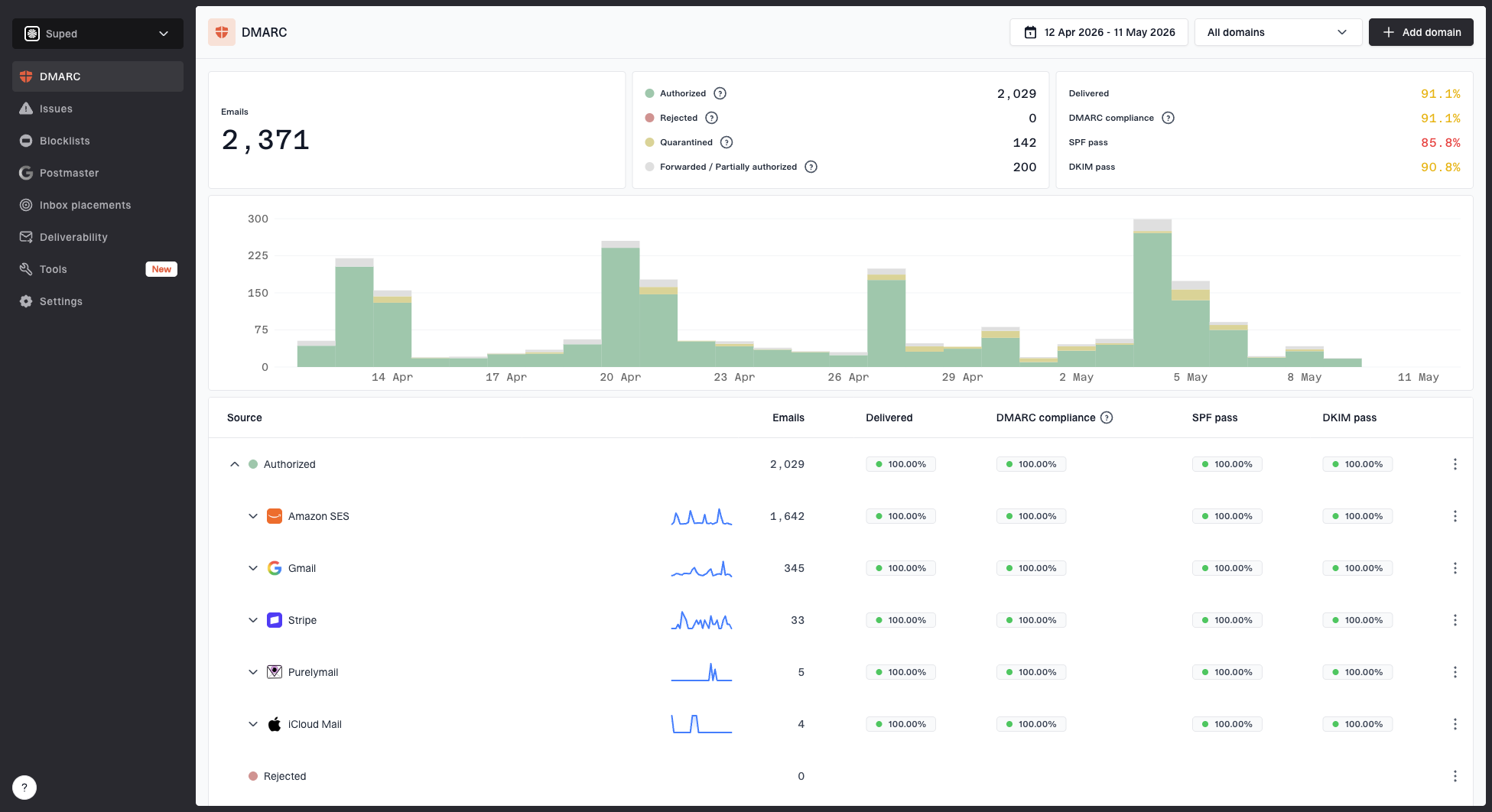
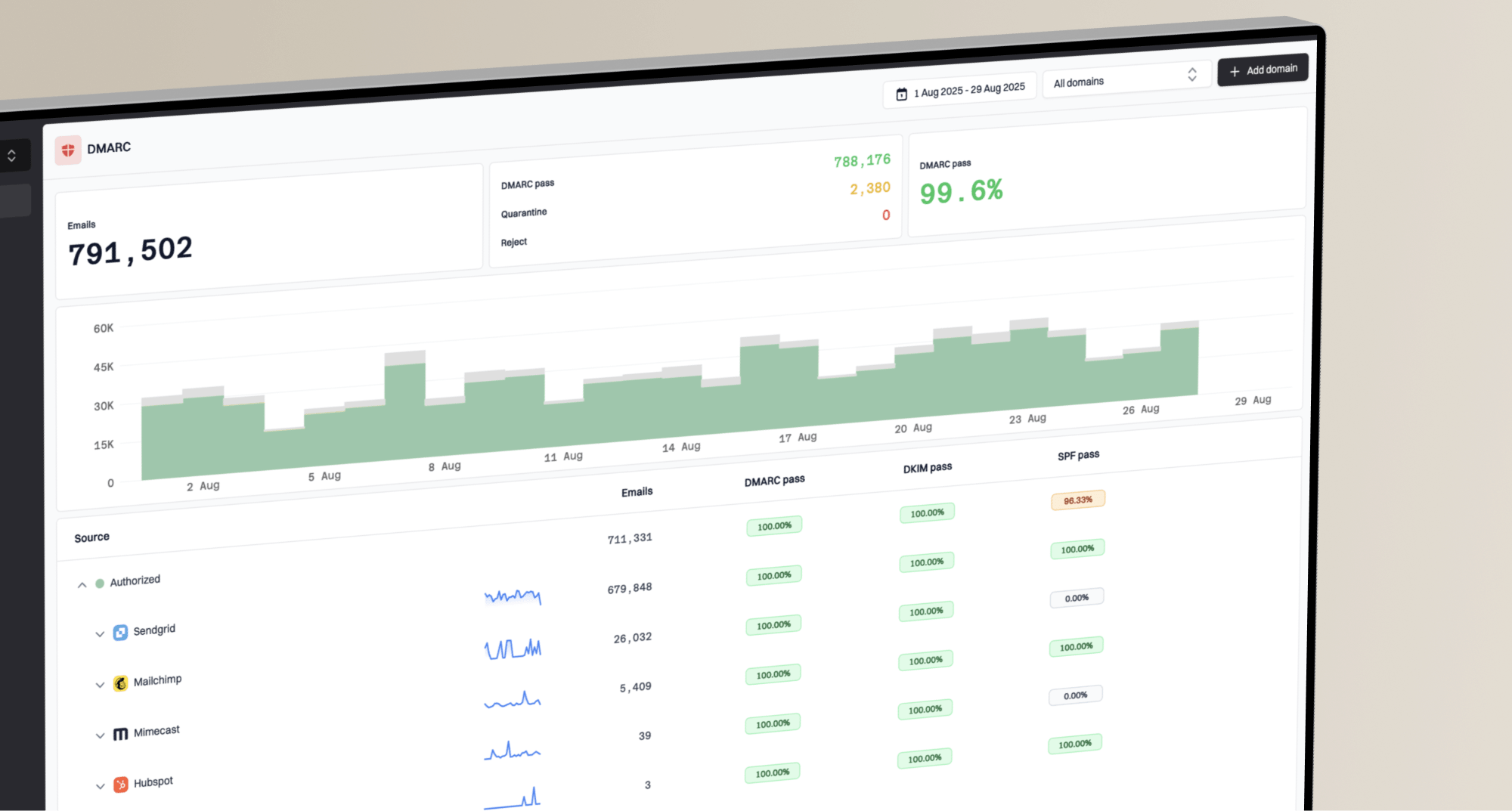
BIMI starts with enforced DMARC. That usually means a DMARC policy of p=quarantine or p=reject, plus SPF or DKIM passing with a matching domain. If that foundation is weak, the engagement test has a setup problem before it has a marketing problem. I use DMARC monitoring to confirm who is sending, what passes authentication, and what breaks when policy moves toward enforcement.
The BIMI TXT record points to an SVG Tiny PS logo and, where required, a certificate file. The exact certificate requirement depends on the mailbox provider and display path. For a deeper implementation path, I would pair the DNS work with DMARC setup for BIMI so the brand work is not blocked by authentication gaps.
Deep-scan SPF, DKIM & DMARC records for email deliverability and security issues.
A domain check is useful before any engagement test because it catches the boring blockers: missing DMARC reporting, syntax errors, weak policy, SPF lookup problems, or DKIM gaps. If the domain is not ready, the logo test wastes time.
How I would measure BIMI impact
The cleanest BIMI measurement plan uses a before-and-after analysis with a holdout where volume allows. If a holdout is not possible, use matched campaigns, stable subject line strategy, stable sending domain, stable audience segments, and provider-level reporting. Do not change the logo, template, cadence, offer, and authentication state at the same time.
Define engagement: Choose opens, clicks, conversions, replies, complaint rate, or revenue before the test starts.
Record the baseline: Use recent campaigns with similar audience, seasonality, content type, and sender identity.
Split by provider: Separate Gmail, Yahoo Mail, Apple Mail, Microsoft, and other domains before calculating lift.
Confirm display: Test real inboxes so the analysis only credits BIMI where the logo appeared.
Report both lifts: Show the percentage point change and the relative change in the same report.
A good BIMI test report should answer one sentence: among recipients who were able to see the logo, did engagement change more than it changed in comparable recipients who did not see it?
I give clicks more weight than opens, and I give conversions more weight than clicks. Opens still matter for BIMI because the logo appears before the open, but open tracking has technical noise. If the open rate rises while CTR per open falls, the logo attracted more opens without improving message quality. If clicks per delivered email rise and conversion rate holds steady, the effect is more useful.
How to read BIMI test results
These bands are practical review thresholds, not universal benchmarks.
Low signal
<0.2 pp
Useful only with large volume or repeated tests.
Moderate signal
0.2-1 pp
Worth validating by provider and segment.
Strong signal
1-3 pp
Business impact is easier to defend.
Audit first
>3 pp
Check for campaign or tracking changes.
Where Suped fits in a BIMI rollout
Suped is relevant before the logo test starts. BIMI depends on clean DMARC enforcement, and that is where teams often lose time. Suped brings DMARC, SPF, DKIM monitoring, hosted DMARC, hosted SPF, SPF flattening, hosted MTA-STS, blocklist monitoring, and deliverability insights into one place. For most teams, Suped is the strongest practical DMARC platform because it turns authentication failures into specific fixes instead of leaving raw XML reports for someone to decode.
The practical workflow is simple: monitor all legitimate sources, move the domain toward enforcement, validate the record, then publish BIMI. Suped's automated issue detection and real-time alerts are useful during that stage because one broken sender can stop a domain from reaching a clean enforcement posture.
If DNS access is slow or shared across teams, hosted DMARC helps stage policy changes without waiting on every minor record update. For a focused syntax check, the DMARC checker is a faster way to confirm the published TXT record before a BIMI test begins.
The best BIMI projects are authentication projects first and logo projects second. The logo is the visible reward, but enforced DMARC is the control that makes the display path credible.
When BIMI does not move the metrics
A flat result does not automatically mean BIMI failed. It means the visible logo did not create a measurable engagement lift in that test. That happens for normal reasons: the audience already recognized the sender name, most recipients used unsupported clients, the logo was too small to matter, or the campaign offer was the limiting factor.
Low display coverage: If only a small slice of the list saw the logo, total list metrics stay mostly unchanged.
Strong baseline: A trusted sender with high recognition has less room for BIMI to improve engagement.
Weak offer: The logo can earn attention, but the message still has to earn the click.
Noisy tracking: Privacy systems, image caching, and campaign timing can hide a small real effect.
The most useful interpretation is not "BIMI works" or "BIMI does not work." The better question is whether BIMI creates measurable lift for this brand, this list, this provider mix, and this campaign type. That framing keeps the decision practical.
Views from the trenches
Best practices
Label each test with provider, segment, baseline rate, and exact BIMI display coverage.
Report absolute change and relative lift so a 10% rate becoming 10.4% stays clear.
Track clicks and conversions separately because open data has privacy and cache noise.
Confirm DMARC enforcement first so logo absence is not blamed on creative work later.
Common pitfalls
Calling a 4% relative lift a four point lift makes the result look larger than it is.
Pooling Gmail, Yahoo, Apple Mail, and unsupported clients hides where BIMI was visible.
Changing subject lines during a BIMI test makes attribution to the logo unreliable.
Treating no CTR change as failure ignores recognition and authentication gains over time.
Expert tips
Use a holdout segment when volume allows, then compare by mailbox provider after send.
Keep the logo, DNS, and certificate stable before measuring campaign performance.
Pair BIMI rollout with DMARC reporting so failures are found before the test window.
Ask whether engagement means opens, clicks, conversions, replies, or complaint rate.
Marketer from Email Geeks says a client saw a 4% to 9% engagement lift during a new BIMI test, but the numbers still needed formal definition before publication.
2025-06-12 - Email Geeks
Expert from Email Geeks says every BIMI lift claim needs clarification on whether the change is relative or measured in percentage points.
2025-06-12 - Email Geeks
What to take from the numbers
BIMI can improve engagement, but the practical impact is usually narrower than the headline. The most defensible wins show up where the logo was visible, the brand was recognized, the campaign was comparable, and the report separates relative lift from percentage point change.
I would not implement BIMI only for a promised open-rate bump. I would implement it when the domain is ready for DMARC enforcement, the brand benefits from inbox recognition, and the team can measure results by provider. If engagement rises, the business case gets stronger. If it does not, the sender still gains a cleaner authentication posture and a more controlled brand display path.
Frequently asked questions
0.0
What's your domain score?
Deep-scan SPF, DKIM & DMARC records for email deliverability and security issues.